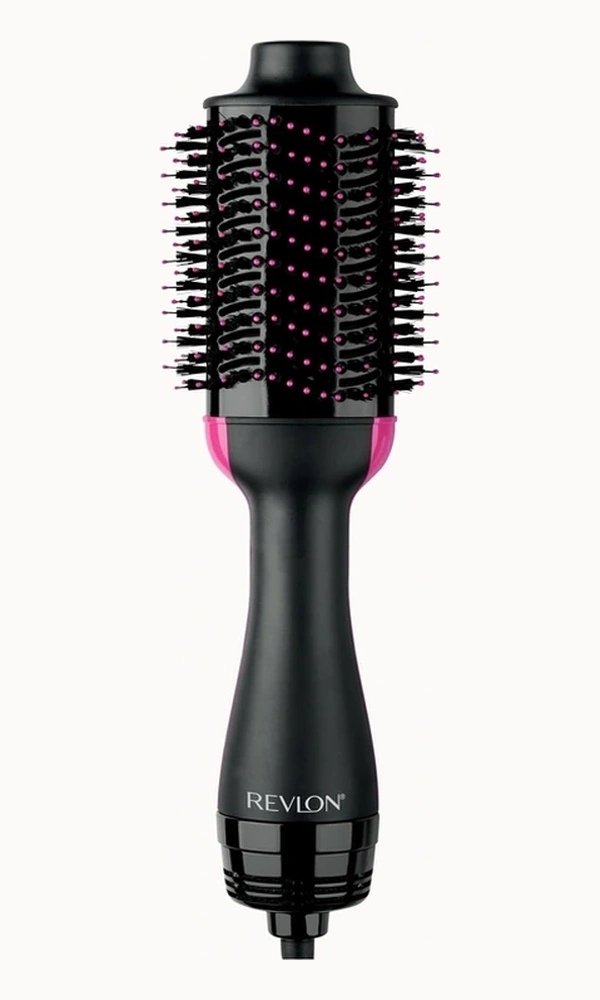
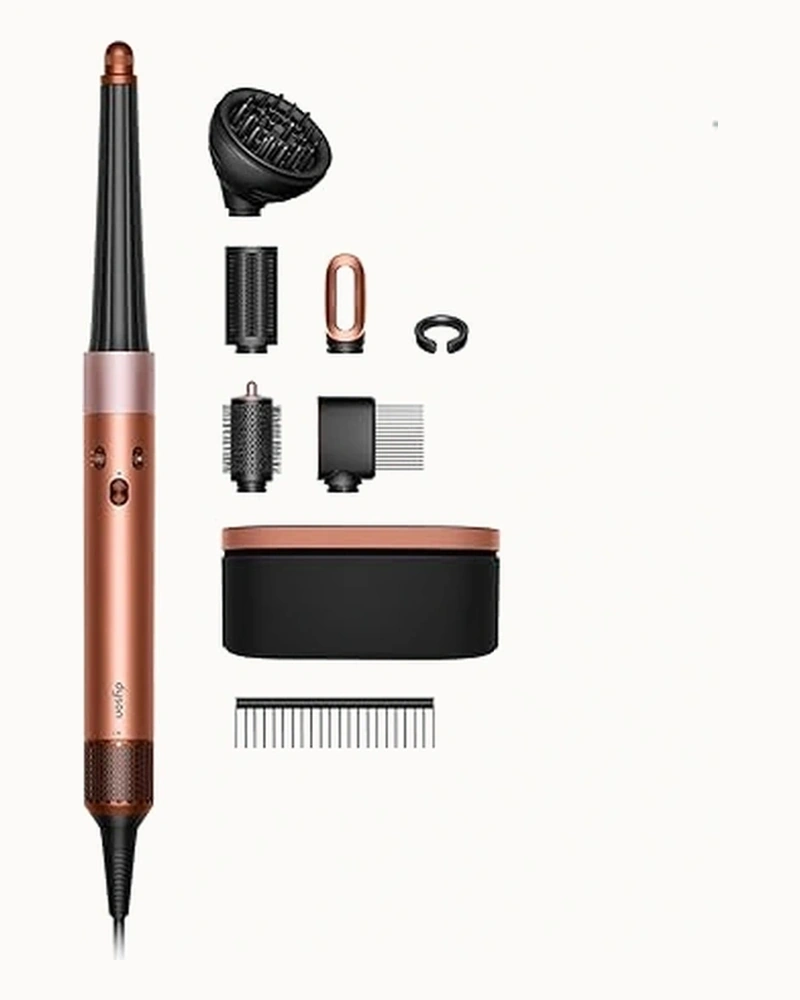
In short: The best blow dryer brush for most hair textures is the Revlon One-Step Volumizer Plus 2.0 due to its refined 2.4-inch ceramic-titanium barrel, upgraded motor longevity, and exceptional price-to-performance ratio. However, for fragile, bleached, or heat-sensitive hair seeking zero extreme heat damage, the Dyson Airwrap Multi-Styler remains the undisputed gold standard in convective aerodynamic styling.
There was a time when achieving a salon-grade blowout required juggling a high-wattage hair dryer in one hand, a heavy ceramic round brush in the other, and the coordination of a professional stylist. Today, the hot air styling brush has fundamentally transformed at-home hair care by merging high-velocity convective airflow and calibrated mechanical tension into a single ergonomic tool. By maintaining continuous contact with the hair shaft as it dries, these hybrid tools smooth the cuticle scales, realign hydrogen bonds, and deliver lasting root lift in a fraction of traditional styling time.
Core Selection Rules at a Glance
Moisture Management (The 80% Rule): Never apply a hot air brush to dripping wet hair. Rough-dry or towel-blot until hair is 75% to 80% dry to prevent cortex boiling and tensile fractures.
Barrel Diameter & Shape: Oval barrels (2.0″–2.4″) maximize root volume; round barrels (1.25″–1.5″) create defined bends and curls for short hair; flat paddle heads deliver ultra-sleek, pin-straight finishes.
Barrel Metallurgy: Ceramic provides gentle, far-infrared heat for fine or fragile strands; Titanium offers ultra-fast heat transfer for coarse, low-porosity hair; Tourmaline boosts negative ion output to eliminate static frizz.
Temperature Regulation: Fine, color-treated, or bleached hair must stay below 300°F (150°C), while coarse or textured patterns require 350°F–385°F (175°C–195°C) to reform hydrogen bonds effectively.
Whether you require a compact travel blow dryer brush for carry-on convenience, a dual-voltage thermal hair brush for international styling, or a high-torque hair blow dryer brush capable of taming dense Type 3 and Type 4 coils, selecting the wrong tool can lead to severe heat blisters and mechanical breakage. Below, we break down the underlying hair physics, evaluate the 12 leading market performers across every budget and texture, and share the step-by-step styling framework recommended by trichological research.
The Physics and Hair Science of Hot Air Styling
Understanding how a heated hair brush transforms hair requires examining the fundamental structure of the hair cortex and its bonding mechanisms. Human hair consists predominantly of fibrous keratin proteins held together by three types of chemical bonds: disulfide bonds, salt bonds, and hydrogen bonds.
Disulfide bonds provide structural permanence and are only altered through chemical processing (such as perms or relaxers). In contrast, hydrogen bonds are temporary and highly sensitive to water and heat. When hair is wet, water molecules penetrate the porous cortex, breaking the hydrogen bonds and placing the keratin structure into a pliable, plasticized state.
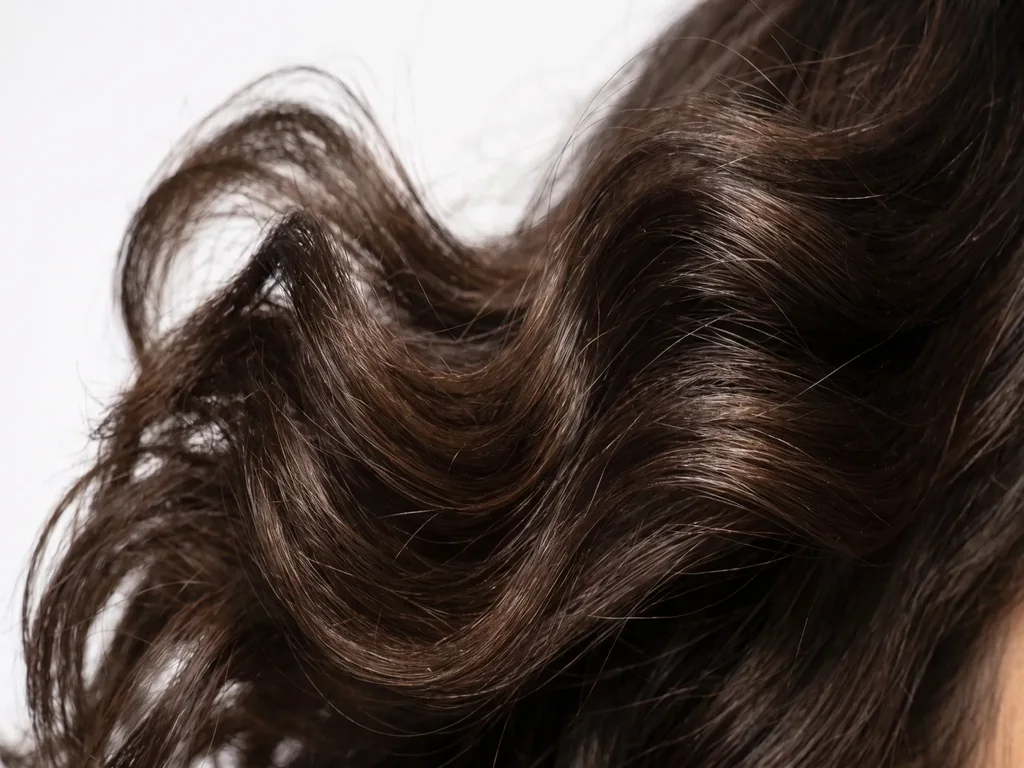
As hair dries under the controlled tension of a best hair brush for blow drying, water evaporates, allowing hydrogen bonds to reform in the exact geometric shape dictated by the brush barrel. Concurrently, the mechanical drag of nylon and tufted bristles smooths the overlapping scales of the outer cuticle layer (the exocuticle and epicuticle), flattening them against the shaft. This flat surface reflects light evenly, producing the mirror-like shine characteristic of professional salon blowouts.
Trichological Alert: The Glass Transition Temperature (Tg)
Keratin possesses a “glass transition temperature” (Tg)—the thermal threshold at which hair transitions from a rigid, glassy state to a moldable, rubbery state. In completely dry hair, Tg exceeds 140°C (284°F). In wet hair, water acts as a plasticizer, dropping Tg to approximately 60°C–80°C (140°F–176°F). Applying hot conductive surfaces to soaking wet hair causes rapid steam expansion inside the cortex, resulting in irreversible “bubble hair” deformities and structural splitting.
Barrel Metallurgy: Ceramic vs. Tourmaline vs. Titanium vs. 24K Gold
The material coating the barrel determines how heat transfers from the internal heating element to your hair strands. Choosing the wrong metallurgy can result in either insufficient smoothing power or severe thermal degradation.
Material
Thermal Conduction
Ionic Emission
Best Hair Match
Primary Advantage
Ceramic
Moderate & Uniform
Low to Medium
Fine, damaged, color-treated, or fragile hair
Emits gentle far-infrared heat; completely eliminates hot spots.
Tourmaline Ceramic
Uniform & Stable
Ultra-High (Negative Ions)
Frizz-prone, dry, high-porosity hair
Neutralizes positive static charges; collapses water droplets for 30% faster drying.
Titanium
Rapid & Intense
Medium
Thick, coarse, resistant, Type 3/4 curls
Heats instantly; delivers maximum cuticle-flattening power on stubborn hair.
24K Gold Surface
High & Consistent
Low
Medium to thick hair, salon-density locks
Superior heat conductivity maintains constant temperature throughout thick passes.
Coanda Aerodynamics
Convective Airflow Only
Variable (Engineered)
All hair types, especially compromised strands
Uses high-velocity airflow curvature rather than extreme contact heat.
Quick Comparison: The 12 Top-Rated Blow Dryer Brushes
Compare the technical specifications, barrel geometry, temperature profiles, and optimal hair suitability for our top tested picks:
Product
Winner Category
Barrel Specs
Technology
Heat / Speed
Weight
Revlon One-Step Plus 2.0
Best Overall Value
2.4″ Oval (Slim)
Ceramic + Titanium
4 Settings (Low/Med/High/Cool)
1.63 lbs
Dyson Airwrap Multi-Styler
Best Luxury Splurge
Multi-Attachment
Coanda Airflow System
3 Heat / 3 Speed + Cold Shot
1.50 lbs
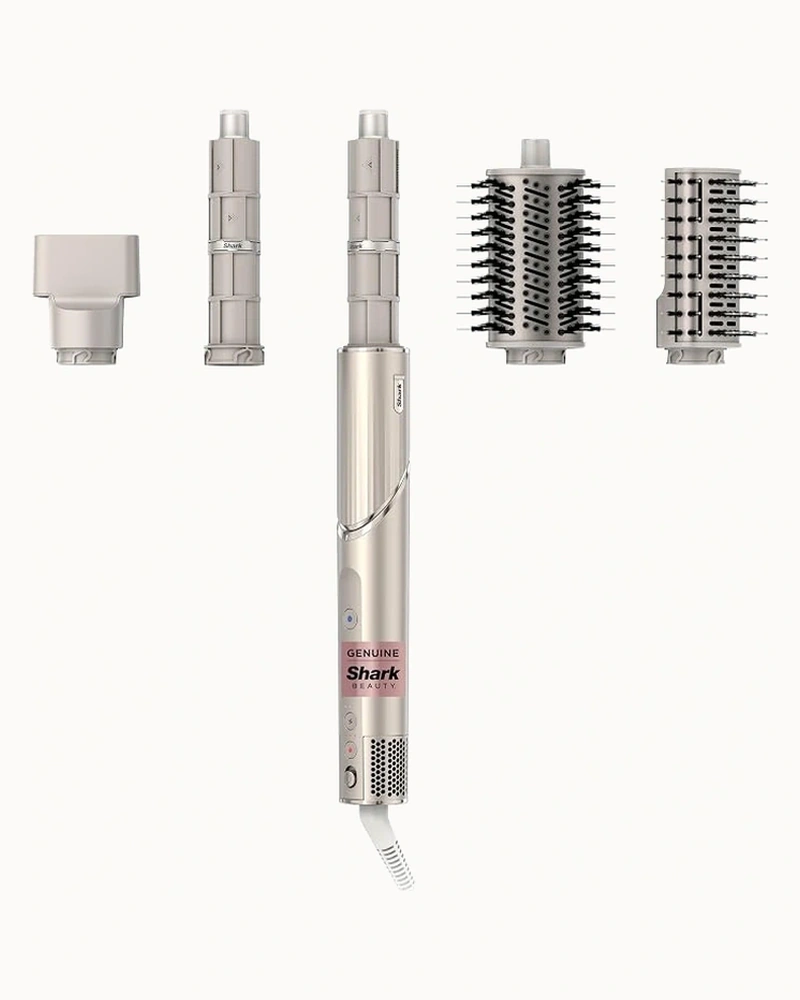
Shark FlexStyle System
Best Versatility
Multi-Attachment (Rotates)
High-Velocity Airflow
4 Heat / 3 Airflow + Cool Shot
1.54 lbs
Drybar The Double Shot
Best for Thick Hair
2.44″ Oval
Ionic + Ceramic Core
3 Settings (Cool/Med/High)
1.70 lbs
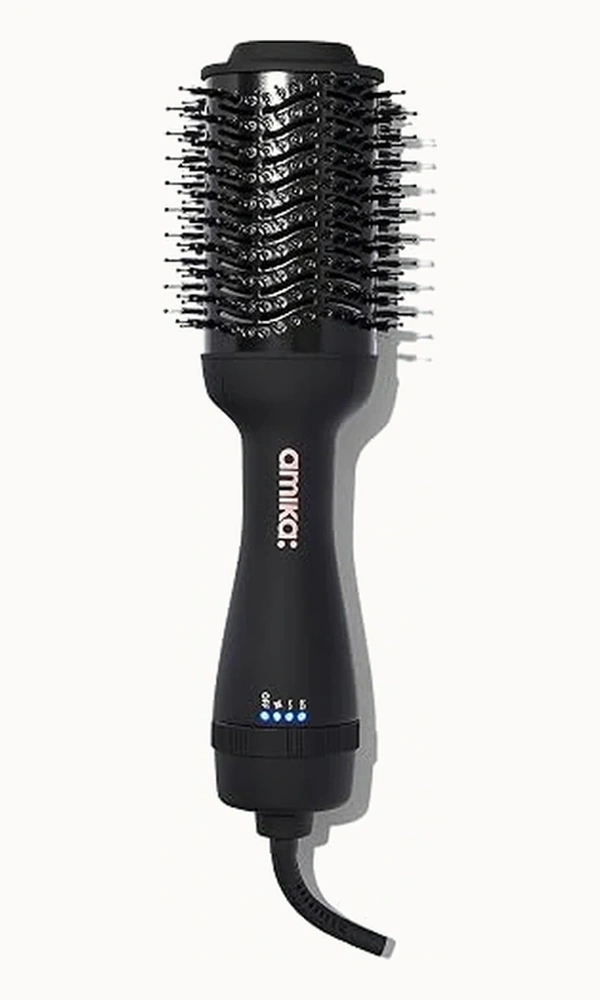
Amika Hair Blow Dryer Brush
Best Smooth & Anti-Frizz
2.4″ Oval
Tourmaline + Negative Ion
3 Settings (Cool/Low/High)
1.16 lbs
T3 AireBrush Duo
Best Interchangeable
2.5″ Round + 3.0″ Paddle
IonFlow Technology
15 Heat/Speed Combinations
1.30 lbs
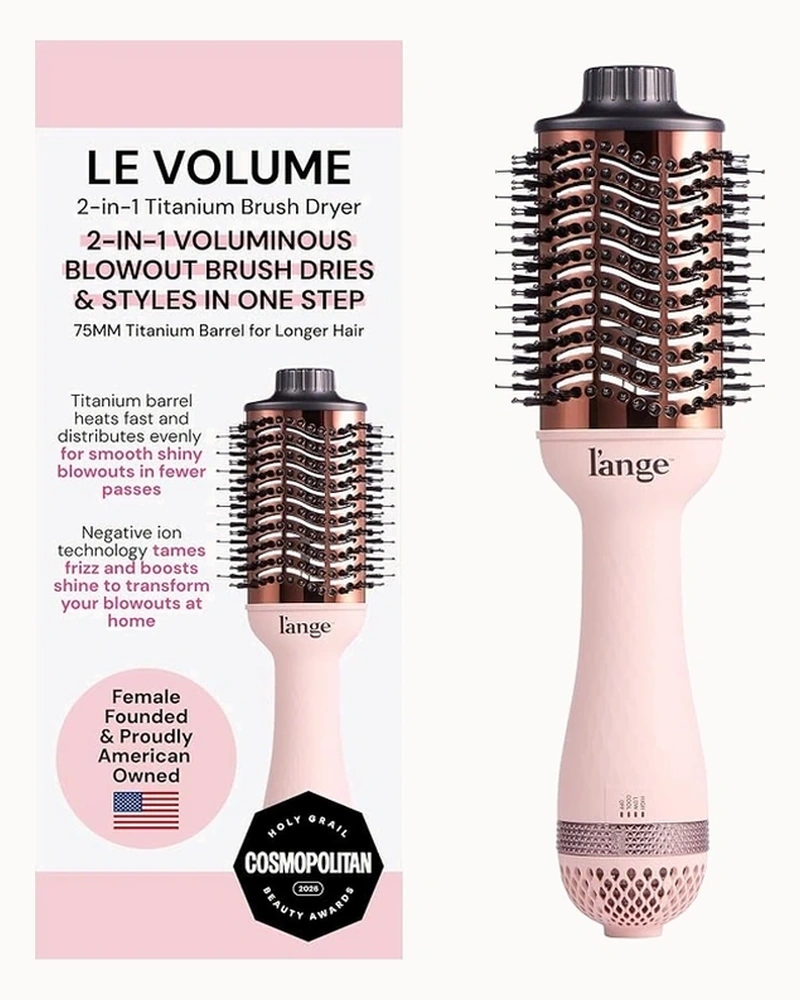
L’Ange Le Volume 2-in-1
Best Sleek Finish
75mm Teardrop Titanium
Pure Titanium Barrel
3 Settings (Low/High/Cool)
1.25 lbs
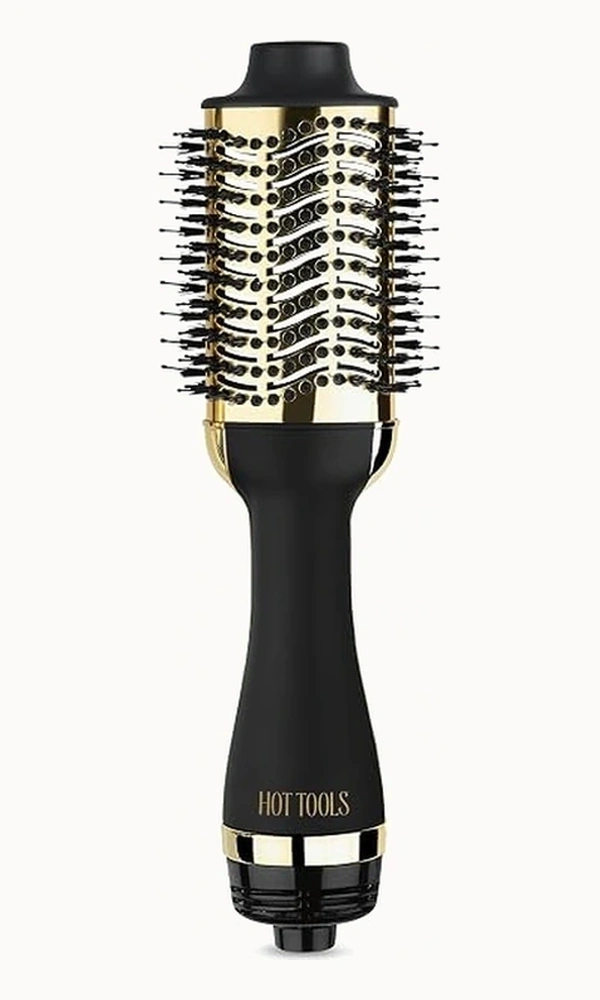
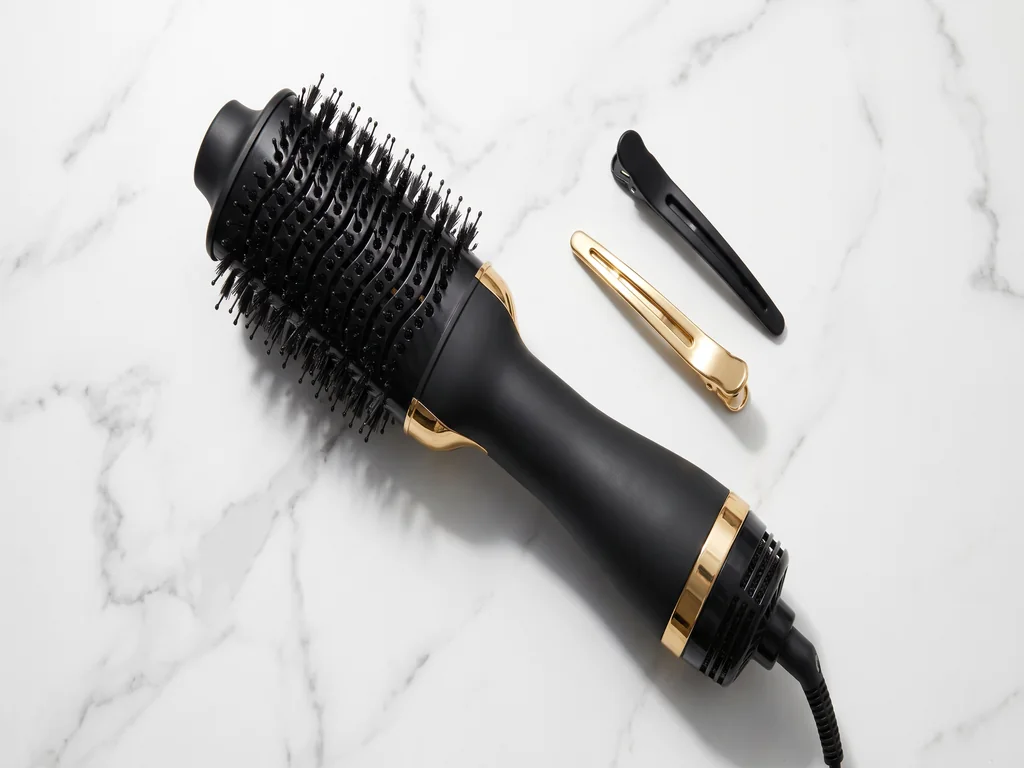
Hot Tools Pro Artist 24K
Best Heat Conduction
2.8″ Oval
24K Gold Technology
Variable Rheostat Control
1.60 lbs
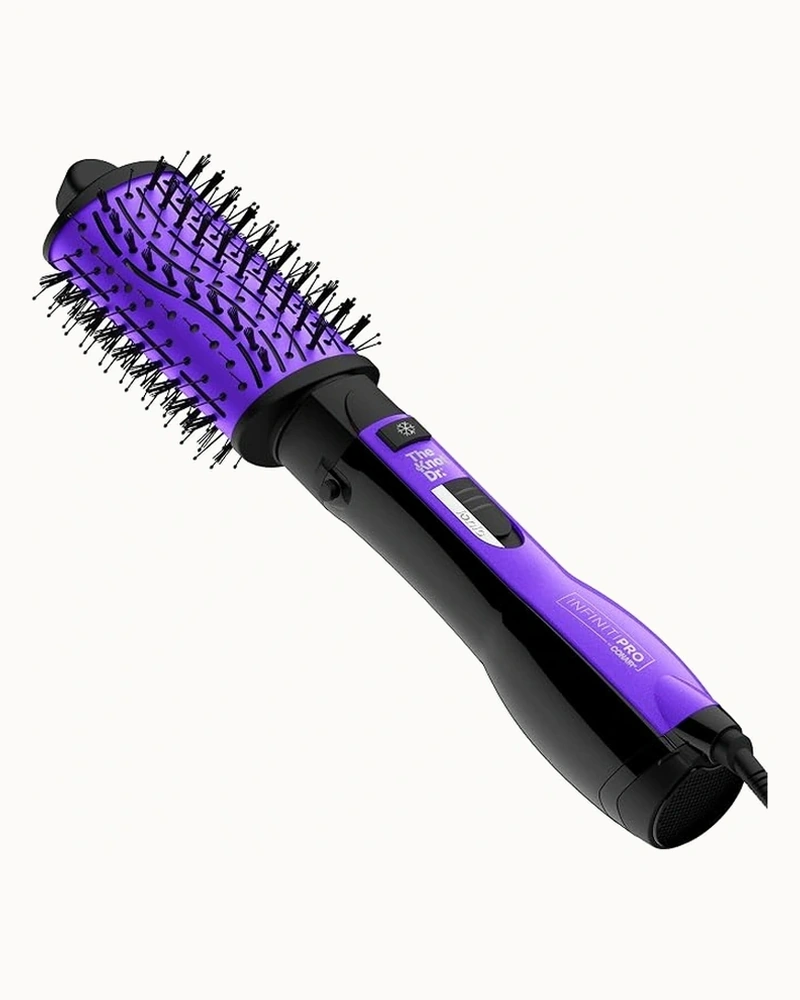
Conair InfinitiPro Knot Dr.
Best for Detangling
Oval with Flexalite Pins
Tourmaline Ceramic
3 Heat Settings + Cool
1.10 lbs
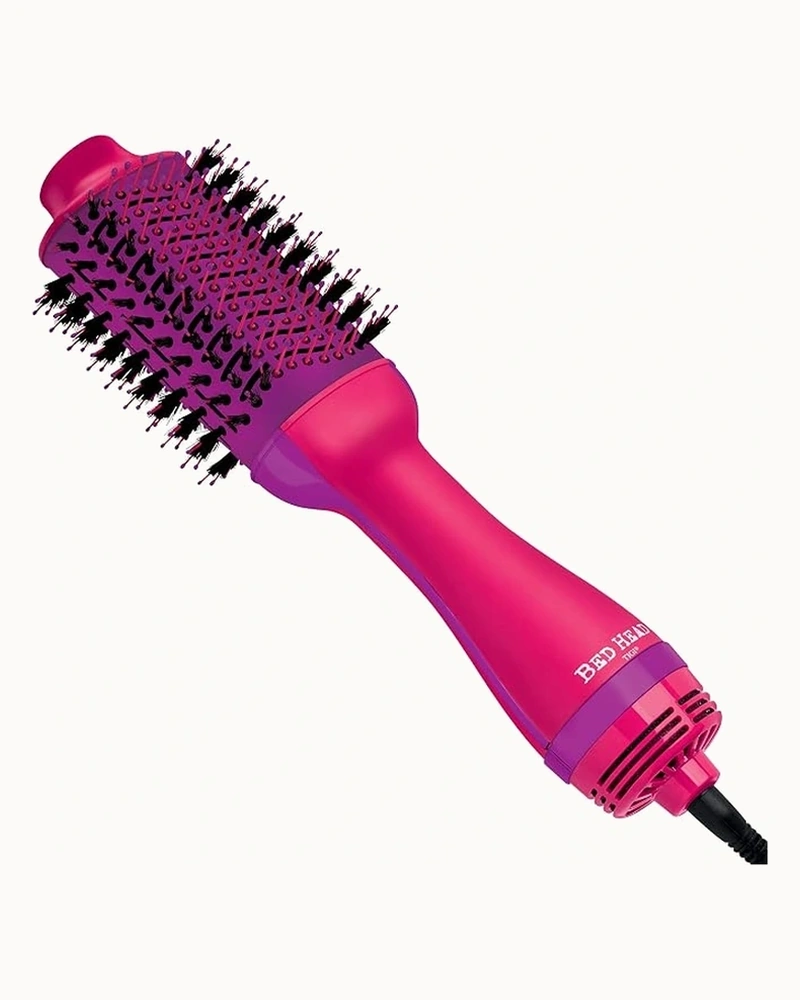
Bed Head One-Step Volumizer
Best for Short Hair
1.5″ Small Oval
Tourmaline Ceramic
3 Settings (Low/High/Cool)
1.15 lbs
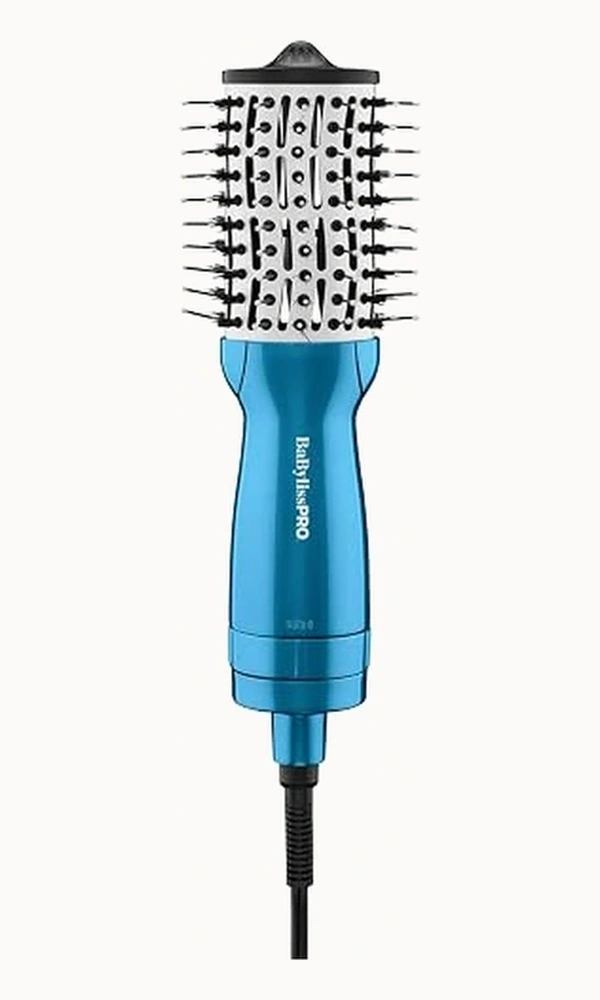
BaBylissPRO Rotating Brush
Best Professional Spin
2.0″ Bi-Directional Barrel
Nano Titanium
3 Heat / 2 Speed Controls
1.45 lbs
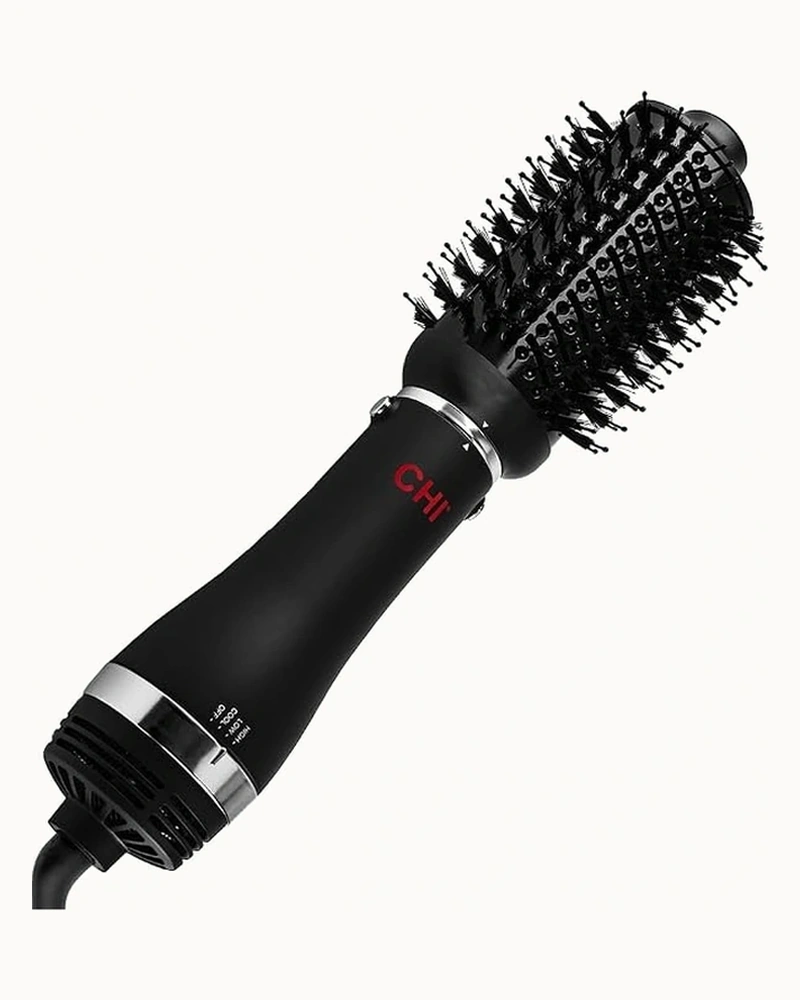
CHI Volumizer 4-in-1
Best Multi-Head Kit
4 Interchangeable Heads
Ceramic + Ion Generator
3 Settings (Low/High/Cool)
1.20 lbs
The 12 Best Blow Dryer Brushes of 2026: Expert Breakdown
Swipe or navigate through our curated lineup below to compare specifications, editorial verdicts, and key performance trade-offs for each model.
How to Choose the Right Blow Dryer Brush for Your Hair Type
Selecting the optimal hot air styling brush requires matching three core physical variables to your unique hair profile: barrel geometry, bristle stiffness, and thermal wattage.
1. Barrel Geometry & Hair Length Matching
Short Hair (Above Shoulders / Bobs / Pixies): Require barrels under 1.5 inches (such as the Bed Head Volumizer or compact round attachments). Large barrels simply cannot capture sufficient length to form tension, causing strands to slip out.
Medium Shoulder-Length Hair: The sweet spot is a 2.0″ to 2.4″ oval barrel (e.g., Revlon Plus 2.0, Amika). The curved edge provides volume at the crown while the flatter surface smooths mid-lengths.
Long & Waist-Length Hair: Benefit from 2.8″ or wider barrels (e.g., Hot Tools 24K Gold, Drybar Double Shot) to process larger hair panels in fewer total passes, minimizing thermal exposure time.
2. Bristle Architecture: Nylon Pins vs. Tufted Boar
Top-tier brushes employ a hybrid bristle matrix. Rigid nylon pins with ball tips penetrate deeply into the root section to detangle and guide hair into airflow channels. Interspersed tufted boar (or synthetic vegan boar) bristles create micro-drag, pulling the cuticle taut to align surface scales and distribute natural sebum from root to tip.
3. Weight & Motor Ergonomics
Blow-drying thick hair takes between 15 and 30 minutes. Tools weighing over 1.7 lbs (such as older generation stylers) cause significant wrist and deltoid fatigue. Look for balanced DC or brushless digital motors located lower in the handle (under 1.3 lbs) for effortless maneuvering.
The 5-Stage Salon Blowout Protocol
To maximize volume, shine, and structural longevity while minimizing thermal stress, follow this 5-stage salon method:
Step-by-Step Styling Framework
Stage 1: Pre-Drying (The 80% Rule): Squeeze excess water with a microfiber towel. Use a standard blow dryer or rough-dry until hair is approximately 80% dry. Never style soaking wet hair.
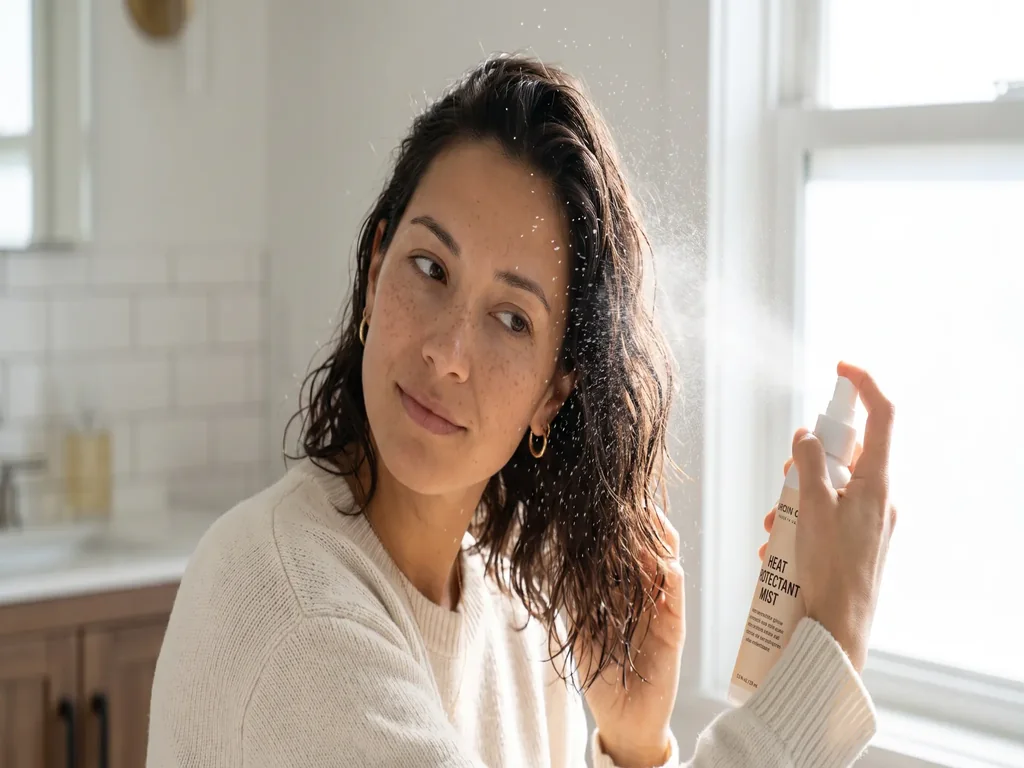
Stage 2: Thermal Barrier Application: Mist evenly with a lightweight, broad-spectrum heat protectant rated to at least 450°F (232°C). Distribute using a wide-tooth comb.
Stage 3: 4-Quadrant Sectioning: Divide hair into four clean quadrants: two lower nape sections and two upper crown sections. Secure with non-crease alligator clips.
Stage 4: 90° Root Tension & Elevation: Starting at the nape, place the brush underneath a 1-to-2-inch subsection directly at the root. Lift upwards at a 90-degree angle from the scalp, holding for 3 seconds to create volume, then glide slowly down to the ends with consistent tension.
Stage 5: Cold Shot Cuticle Lock: Once a section is dry, trigger the Cool Shot button for 5 seconds over the curve of the barrel to rapid-cool and lock the reformed hydrogen bonds in place.
Frequently Asked Questions
How to blow dry hair?
To effectively blow dry your hair without causing thermal damage, begin by towel-blot damp strands with a microfiber cloth and rough-drying until hair is approximately 75% to 80% dry. Apply a broad-spectrum thermal protectant evenly from mid-lengths to ends. Next, divide hair into 1-to-2-inch workable quadrants using alligator clips. Working from the bottom nape layers upward, place your round brush or hot air styling brush directly beneath the root, lift upwards at a 90-degree angle to create root volume, and glide steadily toward the ends under consistent tension. Finish each section with a blast of cool air to lock the cuticle in place.
How to get volume in hair?
Achieving maximum, long-lasting volume requires lifting the hair shaft against its natural growth pattern at the root. Apply a lightweight root-lifting mousse or volumizing spray to damp roots. Place a high-torque hair blow dryer brush underneath the crown section, pull vertically upward away from the scalp at a 90-to-180-degree over-directed angle, and apply warm airflow for 3 to 5 seconds. Allow the roots to cool completely in this elevated position—or secure the warm section in a velcro roller while styling the rest of your hair—to permanently set the hydrogen bonds in a voluminous lifted structure.
Does blow drying damage hair?
Blow drying can cause severe structural damage if performed incorrectly, but modern convective styling is significantly safer than flat ironing when proper protocols are followed. Thermal damage occurs primarily when hot tools are applied to dripping wet hair (causing internal moisture to boil and form cortex bubble deformities) or when temperatures exceed 180°C (356°F), degrading the hair’s natural 18-MEA lipid layer. To prevent damage, always pre-dry hair to 80%, apply a verified heat protectant, use the medium heat setting, keep the brush continuously gliding, and choose tools equipped with ceramic or ionic temperature regulation.
What is a round brush used for?
A round brush is primarily designed to create mechanical tension and geometric curvature while styling with heat. The circular bristle bed grips hair evenly across 360 degrees, allowing you to pull strands taut to flatten the outer cuticle scales, eliminate humidity-induced frizz, and direct airflow uniformly. Depending on barrel diameter, a round brush can be manipulated to produce dramatic root lift, polished straight finishes, soft romantic flips, or bouncy voluminous barrel waves.
How to use a blow dryer brush?
To use a thermal hair brush or hot air brush correctly, start with clean, damp hair that has been detangled and rough-dried to 80%. Mist a thermal shield throughout. Clip your hair into four manageable sections. Take a 2-inch panel, position the brush barrel underneath near the roots, and slowly glide down the length of the strand, rolling the barrel slightly outward at the ends to create a beveled flip. For extra volume, roll the brush up to the crown, hold for 3 seconds on warm heat, trigger the cool shot to set the shape, and gently unroll.
How to clean a hair brush?
Properly cleaning a heated hair brush or electric hot air styler is critical for hygiene and motor longevity. First, ensure the device is completely unplugged and cool. Use a rat-tail comb or brush cleaning tool to gently lift out trapped hairs and lint from the bristle bed without yanking. Lightly dampen a microfiber cloth with warm water and a drop of gentle clarifying shampoo, and wipe down the barrel surface and bristle pins, ensuring no water drips into the internal air vents. Finally, use a dry toothbrush to clear dust and lint from the bottom air intake filter to maintain optimal airflow and prevent motor overheating.
Scientific References & Editorial Methodology
American Academy of Dermatology Association (AADA). (2023). How to Style Hair Without Damaging It: Thermal & Mechanical Grooming Guidelines.
Gavazzoni Dias, M. F. (2015). Hair Cosmetics: An Overview. International Journal of Trichology, 7(1), 2–15. DOI: 10.4103/0974-7753.153450.
Robbins, C. R. (2012). Chemical and Physical Behavior of Human Hair (5th ed.). Springer-Verlag Berlin Heidelberg.
Lee, Y., Kim, Y. D., & Hyun, H. J. (2011). Hair Shaft Damage from Heat and Drying Time of Hair Dryer. Annals of Dermatology, 23(4), 455–462. DOI: 10.5021/ad.2011.23.4.455.
Sinclair, R. D. (2007). Healthy Hair: What Is It and How Is It Maintained? Journal of Investigative Dermatology Symposium Proceedings, 12(2), 2–5.
The Opening EditionThoughtful beauty, sent with purpose.
The Beautyisles Letter
Make room for beauty worth reading.
Join for clear skincare, hair and beauty notes, plus opening guides as they publish. Delivered every Sunday with zero sponsored placements.
By joining, you agree to receive Beautyisles editorial emails. Unsubscribe anytime. Privacy policy.