

- Skip the foam: Creamy facial cleansers are vastly superior to foaming gels when repairing a compromised barrier.
- Keep it simple: A basic facial cleanser at a low pH prevents the stratum corneum from swelling and losing essential lipids.
- Affordable is fine: The best drugstore face wash options perform just as well as luxury brands, as they focus entirely on gentle surfactants.
Why You Need Creamy Facial Cleansers for Barrier Repair
When building a skincare routine for damaged skin barrier, the very first step dictates whether your skin will heal or remain inflamed.
Most traditional face washes use high-lathering surfactants (like sodium lauryl sulfate) to remove dirt and oil. Unfortunately, these strong cleansing agents cannot distinguish between the excess oil you want to wash down the drain and the vital intercellular lipids (ceramides, cholesterol) holding your skin cells together.
Creamy facial cleansers, however, use significantly milder surfactants suspended in a lotion-like base. These cleanse without aggressively degreasing the face. If you are struggling with redness, tightness, or flaking, switching to a non-foaming lotion texture is mandatory.
What Is A Good Cleanser?
Readers constantly ask us, “what is a good cleanser for sensitive skin?” Beyond texture, the most critical factor is finding a basic facial cleanser that is slightly acidic. Your skin’s natural barrier, known as the “acid mantle,” hovers around a pH of 5.5.
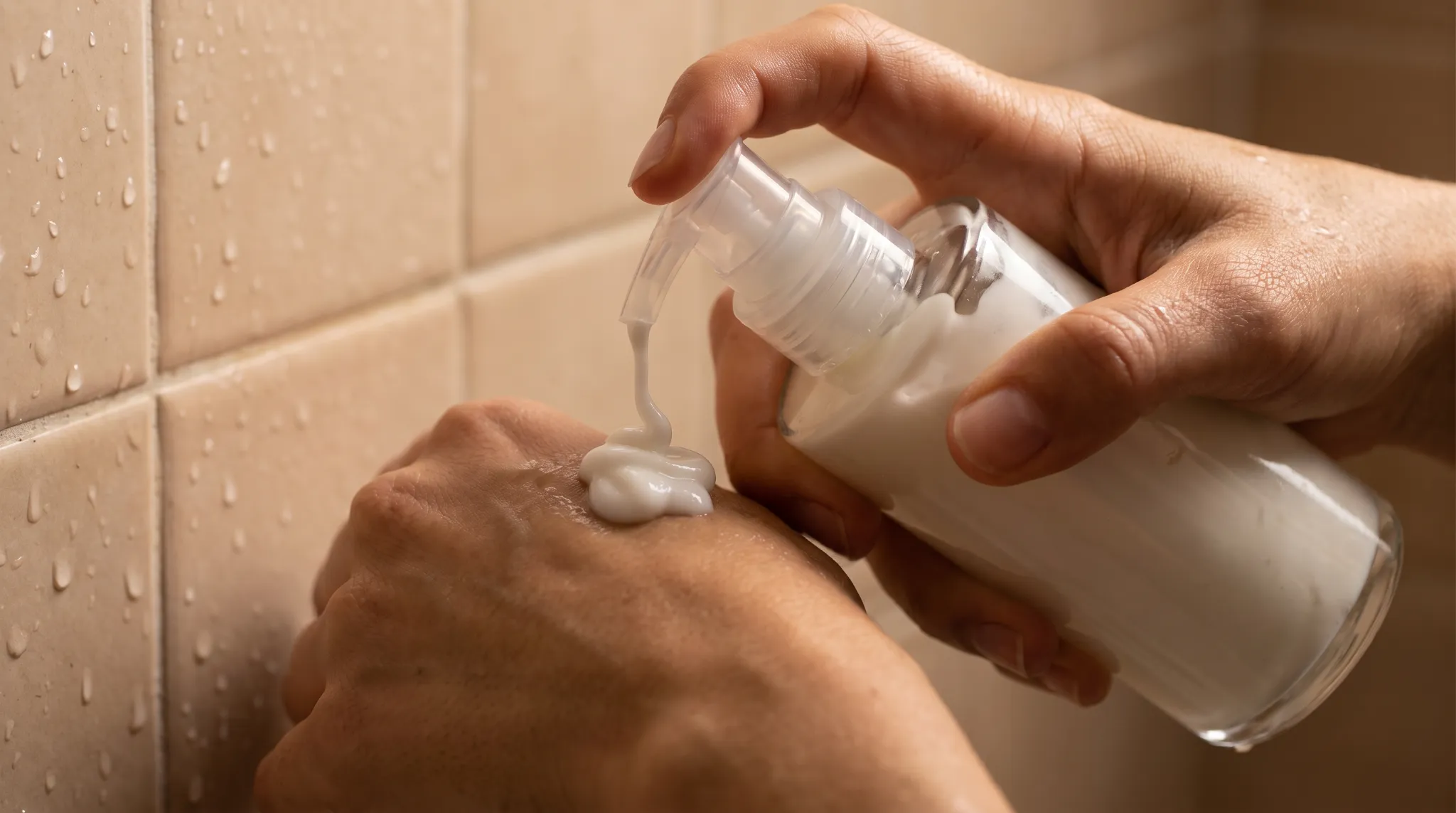
When you use an alkaline product, it disrupts this acidic environment, causing the stratum corneum to swell and lose moisture. Great facial cleansers will always be formulated at a slightly acidic pH (between 4.5 and 6.0) to match the skin’s natural chemistry, and they skip unnecessary fragrances and essential oils.
How to Wash Your Face the Right Way
Having the right product is only half the battle. Knowing exactly how to safely wash is just as critical for compromised skin:
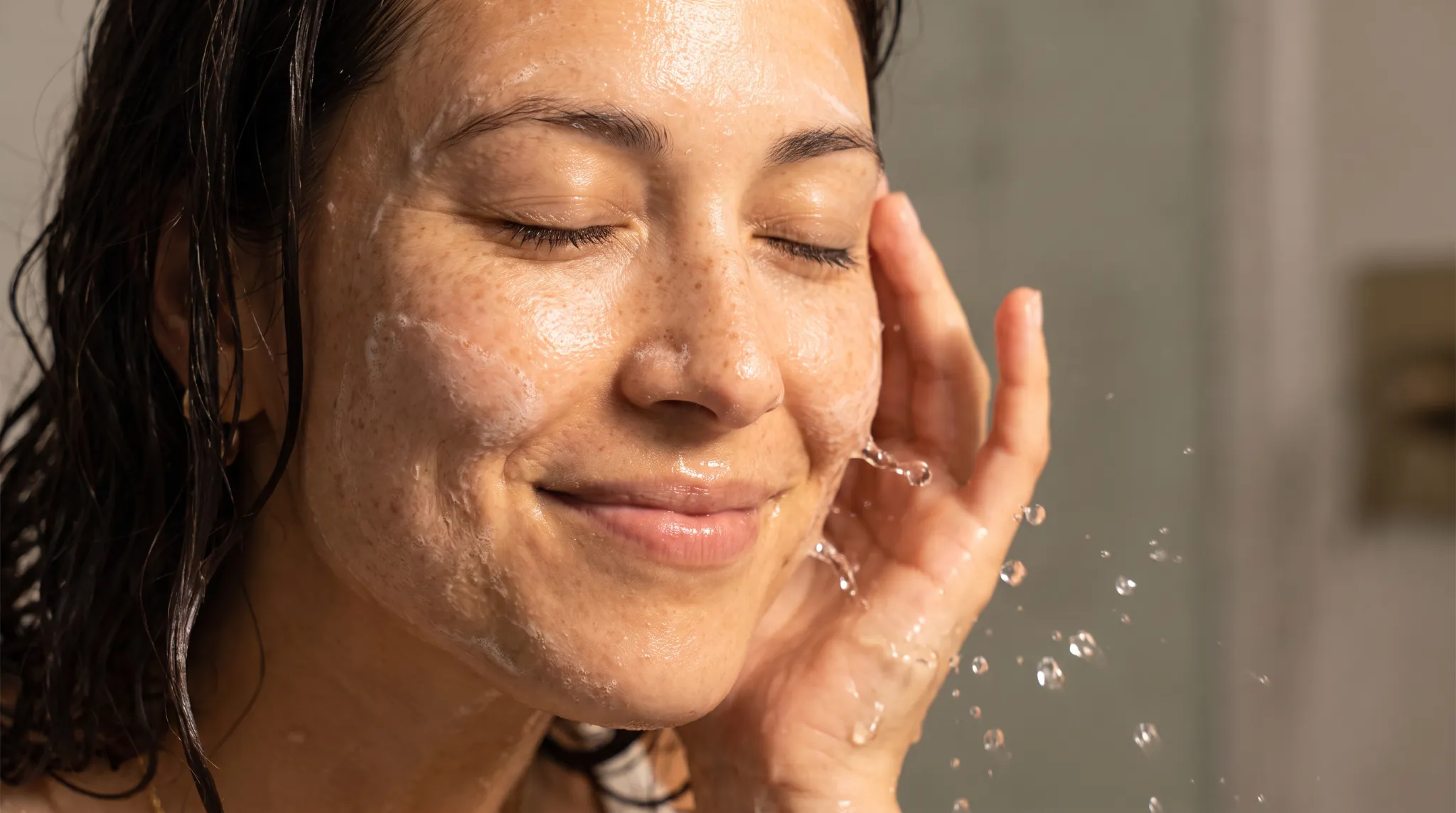
- Temperature Check: Always use lukewarm water. Hot water melts your skin’s natural lipids, while freezing cold water fails to effectively emulsify oils.
- Fingertips Only: Apply your cleanser using only your fingertips. Washcloths, sponges, and electronic cleansing brushes introduce physical friction that triggers inflammation.
- The 60-Second Rule: Massage the cleanser in gentle, circular motions for no more than 60 seconds. Rinse thoroughly.
- Pat Dry: Never rub your face with a towel. Pat it gently, leaving the skin slightly damp before applying your ceramide moisturizer.
The Best Drugstore Face Wash: Our Editorial Picks
You do not need to spend fifty dollars to gently clean your face. In fact, many of the most effective, barrier-respecting formulas are found in the pharmacy aisle.
Rather than listing all the best products here, we’ve compiled our complete, evidence-backed list of recommendations in our main guide. If you are looking for a reliable facial cleanser Amazon delivers or our top drugstore face wash picks that meet our strict pH and formulation standards, check out our full review:
Frequently Asked Questions (FAQ)
The best face wash is one that effectively removes sunscreen, dirt, and excess oil without disrupting your skin’s natural moisture barrier. Dermatologists typically recommend non-foaming, fragrance-free cream cleansers with a pH between 4.5 and 5.5, such as the CeraVe Hydrating Facial Cleanser or Cetaphil Gentle Skin Cleanser.
To wash your face correctly, start by splashing your skin with lukewarm water. Apply a dime-sized amount of a gentle facial cleanser to your fingertips. Gently massage it into your skin using circular motions for 30 to 60 seconds. Rinse thoroughly with lukewarm water, and pat your face dry with a clean towel—never rub.
A face wash uses mild surfactants to break down and bind to sebum, makeup, dirt, and environmental pollutants on the surface of your skin. This allows the debris to be easily rinsed away with water. Unlike harsh body soaps, a dedicated cleanser for face washing is formulated to leave the skin’s essential lipid barrier intact.
Use cleansers twice daily—once in the morning and once at night. In the evening, if you wear heavy makeup or water-resistant sunscreen, you may need to “double cleanse” by using an oil-based cleanser first to break down the products, followed by a water-based cream cleanser to clean the skin itself.
A facial cleanser (also known as face wash) is a skincare product specifically formulated to clean the delicate skin on the face. It removes impurities to prepare the skin to properly absorb serums and moisturizers. Unlike traditional soaps, which are often highly alkaline and stripping, a gentle facial cleanser is pH-balanced to respect the skin’s acidic mantle.
Commercial Transparency & Affiliate Disclosure
Beautyisles participates in affiliate programs (including Amazon Associates) and accepts disclosed commercial partnerships. When you purchase through our links, we may earn a commission at no extra cost to you. Commercial relationships are disclosed, and recommendations are evaluated against the same evidence-led editorial standards.
AI Editorial Disclosure
Avery is Beautyisles’ AI editorial host. Content on Beautyisles is researched and synthesized with artificial intelligence and undergoes documented human editorial review to ensure evidence accuracy and safety boundaries. Content is for informational purposes and does not constitute individual medical diagnosis or treatment.