- The V is the stitch: Count V crowns after every row so the count does not drift.
- Same height: Slide each loop onto the full shank before you pull through both loops.
- Foundation row: Foundation single crochet builds the first row without a hollow chain.
- Decrease is two as one: Insert in two stitches, then pull through all loops at once.
What a Single Crochet Stitch Is
A single crochet stitch is one short stitch that makes a V on the fabric. Kit charts assume this stitch before the first row. This lesson sits on the Beautyisles DIY isle. It teaches you how to single crochet, how to count, and how to decrease. It does not teach a full scarf, a blanket, or a stuffed round.
Use the yarn and hook from your crochet kit. This page does not pick a kit. Light yarn on a darker surface makes each V clearer to find. Nagy and Sanchez measured how a small color gap slows a visual search.
- Hook: The size that came with the kit yarn, often 4.0 mm to 5.0 mm.
- Yarn: A smooth, light strand. Dark yarn hides the V.
- Marker: A locking clip for the first stitch of a row.
- Terms: US terms. A US single crochet is a UK double crochet.
How to Single Crochet on a Starting Chain
If the chart asks how do you do a single crochet, the answer is five short moves. A yarn over is a wrap of working yarn over the hook. A starting chain is a row of empty loops that you then stitch into.
Hold the hook in the hand you write with unless a kit video shows the other hand. Sainburg found that the dominant arm leads trajectory in reaching tasks.
- Make a slip knot and place it on the hook.
- Yarn over and pull through the loop on the hook to make one chain.
- Chain eleven times for a ten-stitch drill plus one turning chain.
- Skip the chain nearest the hook and insert the hook under the top loop of the second chain.
- Yarn over and pull up a loop so the hook holds two loops.
- Yarn over and pull through both loops to complete one single crochet.
- Insert the hook in each remaining chain and repeat the two yarn-overs.
- If the count is not ten V crowns, pull the row out and start the row again.
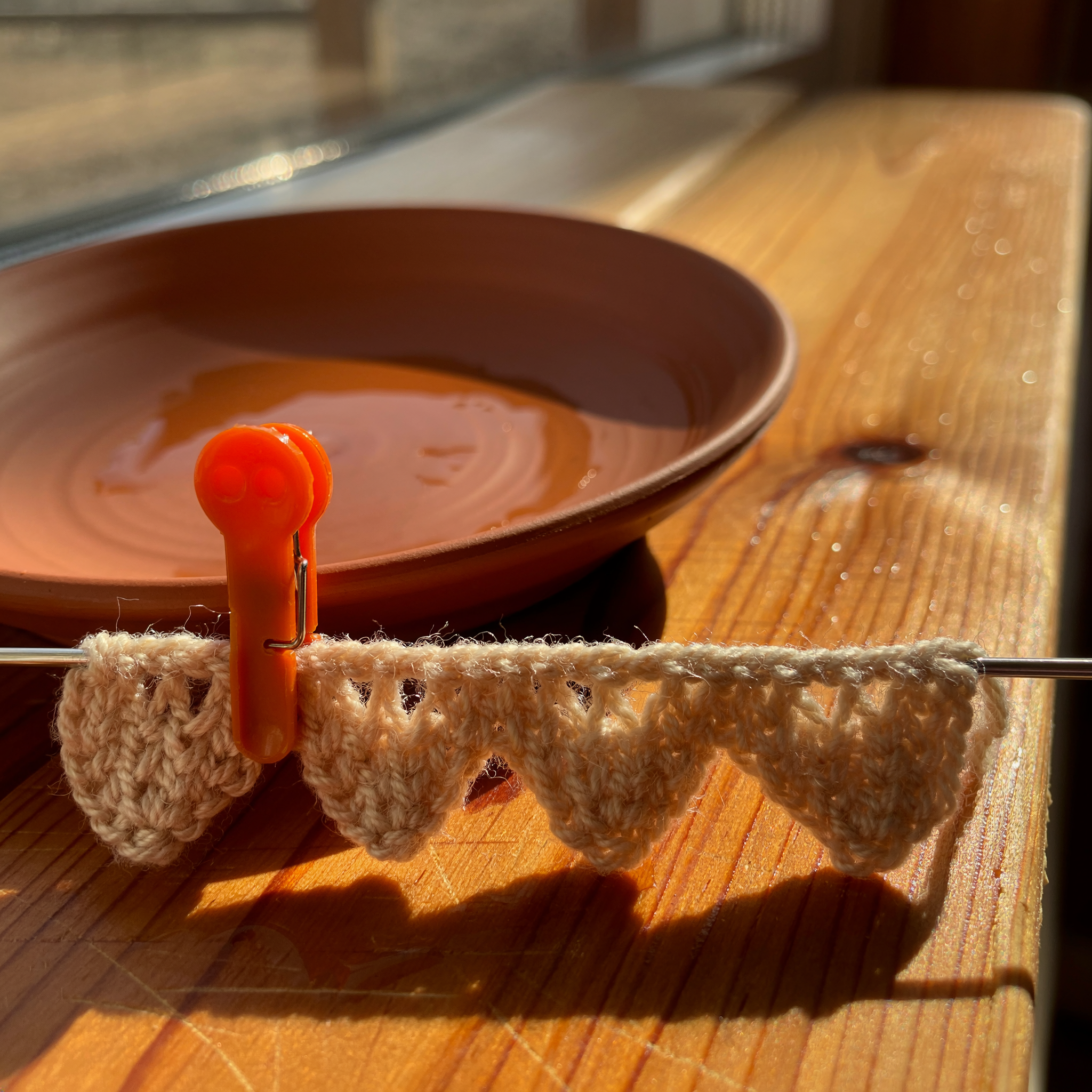
At the end of the row, chain one. Turn the work like a page. The chain-one is a turning chain, a short lift for the hook. For single crochet, that chain does not count as a stitch. Insert the hook under both loops of the first V.
Both loops are the front loop and the back loop that form the V on top. The last stitch hides at the edge. Clip a marker in it before you turn. A missed last stitch makes the row shrink.
Foundation Single Crochet Without a Separate Chain
A foundation single crochet is a start that builds the chain and the first row together. Each stitch has a chain-like base and a single crochet on top. Use this start when a pattern says fsc. Skip it when the pattern needs a decorative chain edge. Work them in this order:
- Chain two.
- Insert the hook in the first chain, the one farthest from the hook tip.
- Yarn over and pull up a loop so the hook holds two loops.
- Yarn over and pull through the first loop only to form the new base chain.
- Yarn over and pull through the two remaining loops to form the single crochet on top.
- For the next stitch, insert the hook under both strands of that base chain.
- Yarn over, pull up a loop, yarn over, pull through one, yarn over, pull through two.
- Repeat until you have the stitch count the pattern names.

The foundation row stands taller than a bare chain of the same count. Do not add extra stitches to match the old chain height. The base-chain count and the V-crown count must match.
Count the V, Match Height, and Stack a Turning Stitch
Each finished single crochet shows a V on the top edge. Count those V crowns after every row. Do not count the turning chain or the loop that still sits on the hook. If the count is wrong, pull the row out to the last correct stitch.
Height must stay even. The shank is the full-width shaft behind the hook throat. If you pull the yarn through while the loop sits on the thin throat, the stitch is too small. Slide every working loop onto the shank, then pull through.
A stacked single crochet is two single crochets built in one vertical column to replace a turning chain. For a stack that matches double-crochet height, work in this order:
- Do not chain at the end of the previous row.
- Turn the work.
- Insert the hook in the first stitch and complete one single crochet.
- Insert the hook under the left vertical bar of that stitch.
- Complete a second single crochet on top of the first.
- Continue the row in the stitch the pattern names.
If the row is single crochet only, use chain one and work into the first V. Save the stack for rows that must match a taller stitch.
| Move | What it does | When you use it |
|---|---|---|
| Single crochet | One short stitch with a V on top. | Kit rows that say sc. |
| Foundation single crochet | First row with no hollow chain. | When the pattern says fsc. |
| Stacked single crochet | Two sc in one column as a turning post. | To skip a tall turning chain. |
| Standing single crochet | New yarn starts on a stitch. | To join a new color. |
| Reverse single crochet | Crab stitch, a twisted cord on the edge. | For a firm border. |
| Decrease (sc2tog) | Two stitches become one. | When the fabric must narrow. |
Crochet Decreasing Stitches, Standing Starts, and Reverse Edges
Crochet decreasing stitches take two stitches and finish them as one. The common decrease is sc2tog, single crochet two together. It narrows a row without a hole if both insertions sit under both loops. Work them in this order:
- Insert the hook under both loops of the next stitch.
- Yarn over and pull up a loop so the hook holds two loops.
- Insert the hook under both loops of the following stitch.
- Yarn over and pull up a loop so the hook holds three loops.
- Yarn over and pull through all three loops.
- Count the new V as one stitch.
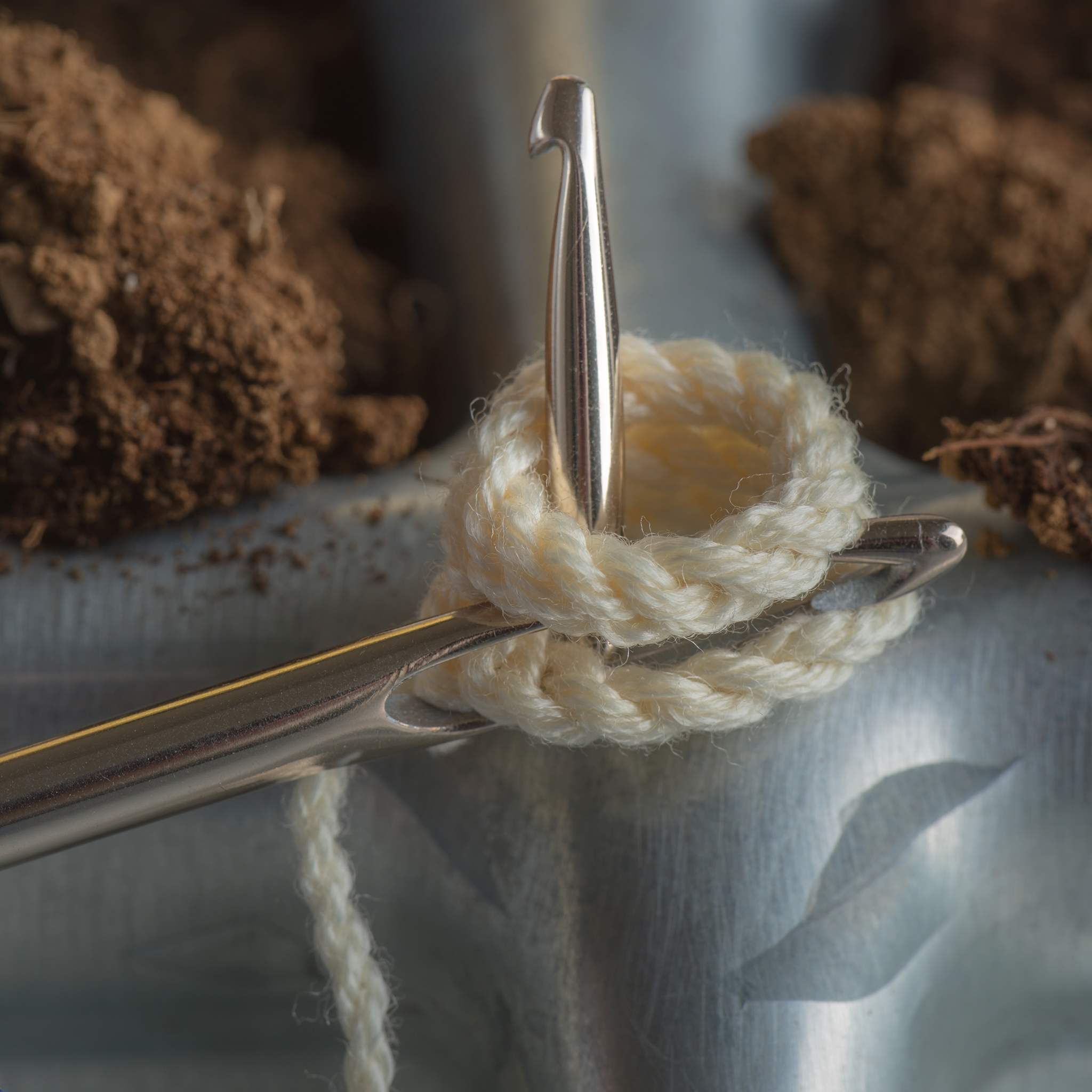
A standing single crochet starts a new yarn on a stitch without a slip-stitch join. Put a slip knot on the hook, insert in the named stitch, then complete a single crochet. Weave the tail under the back of the next few stitches.
Reverse single crochet is the crab stitch, a single crochet worked toward the opposite direction. For a right-handed path, reverse work goes left to right along the same edge. The stitch twists and sits like a cord. Work them in this order:
- Do not turn the work at the end of the last row.
- Chain one.
- Insert the hook in the stitch to the right of the hook.
- Yarn over and pull up a loop, and keep that loop tall.
- Yarn over and pull through both loops.
- Repeat in each stitch along the left-to-right path.
If the reverse stitch is too tight to enter, pull the loop up to shank height before the last yarn over. When the stitch is even, a later lesson covers how to crochet a scarf. Cluster motifs live on how to crochet a granny square.
- Row shrinks: You skipped the last stitch. Mark it before you turn.
- Row grows: You worked into the turning chain. Skip that chain.
- Stitches too tight: You sized the loop on the throat. Slide it onto the shank.
- Yarn splits: The hook entered between plies. Catch the whole strand.
Why the Loop Tightens and How You Keep Even Tension
Yarn friction is the drag between fibers, and between fiber and metal. Gupta and El Mogahzy mapped that drag in fibrous materials. Tight yarn plus a dry hook makes the second loop hard to pull through. Smooth cotton slides. Fuzzy acrylic grabs the throat and splits.
If the yarn grabs, pause and open the hand. Resume with the loop on the shank. Armstrong and colleagues linked pinch force, repetition, and a bent wrist to hand and wrist tendinitis. Silverstein, Fine, and Armstrong tied repeated hand-wrist load to cumulative trauma in industry. Keep the wrist straight and rest when the pinch aches.
Practice on a ten-stitch swatch. Work eight rows and count after every row. If every row holds ten V crowns, the stitch is ready for a kit pattern.
Frequently Asked Questions About the Single Crochet Stitch
How do you do a single crochet?
Insert the hook under both loops of the next stitch. Yarn over and pull up a loop so the hook holds two loops. Yarn over and pull through both loops. That is one single crochet. Count the new V before you move on.
What is foundation single crochet?
Foundation single crochet is a start that builds the chain and the first row together. Each stitch has a base chain and a single crochet on top. The V on each stitch is already visible for the count.
What is reverse single crochet?
Reverse single crochet is a single crochet worked toward the opposite direction along the edge. The stitch twists and sits like a cord. Patterns also call it the crab stitch. Use it as a border, not as the fabric.
What is stacked single crochet?
A stacked single crochet is two single crochets built in one vertical column. The second stitch goes under the left bar of the first. The stack replaces a tall turning chain. For a single-crochet row, chain one and skip the stack.
What is a standing single crochet?
A standing single crochet starts a new yarn on a stitch without a slip-stitch join. Place a slip knot on the hook, insert in the named stitch, and complete a single crochet.
What is a crab stitch?
A crab stitch is reverse single crochet. You work along the edge in the opposite direction so each stitch twists. Keep the loop on the full shank or the next stitch is too small to enter.
What is single vs double crochet?
A single crochet is short. You insert, pull up a loop, then pull through two. A double crochet is taller. You yarn over first, insert, pull up a loop, then pull through two, then two again.
How do you do a US single crochet?
A US single crochet is insert, yarn over, pull up, yarn over, pull through both loops. In UK charts that same short stitch is called double crochet. Beautyisles uses US terms.
Editorial Sources
- Gupta BS, El Mogahzy YE. (1991). “Friction in Fibrous Materials.” Textile Research Journal, 61(9):547–555. DOI: 10.1177/004051759106100907.
- Nagy AL, Sanchez RR. (1990). “Critical color differences determined with a visual search task.” Journal of the Optical Society of America A, 7(7):1209–1217. DOI: 10.1364/josaa.7.001209. PMID: 2370588.
- Sainburg RL. (2002). “Evidence for a dynamic-dominance hypothesis of handedness.” Experimental Brain Research, 142(2):241–258. DOI: 10.1007/s00221-001-0913-8. PMID: 11807578.
- Armstrong TJ, Fine LJ, Goldstein SA, Lifshitz YR, Silverstein BA. (1987). “Ergonomics considerations in hand and wrist tendinitis.” The Journal of Hand Surgery, 12(5 Pt 2):830–837. DOI: 10.1016/s0363-5023(87)80244-7. PMID: 3655257.
- Silverstein BA, Fine LJ, Armstrong TJ. (1986). “Hand wrist cumulative trauma disorders in industry.” British Journal of Industrial Medicine, 43(11):779–784. DOI: 10.1136/oem.43.11.779. PMID: 3790459.