
One global edition Opening guides in progress

Hair, understood

Healthy-looking hair starts at the scalp.

Work with your texture, wash for your scalp, and spend on products that solve a real problem. Good hair care is maintenance, not punishment.

Scalp before trendsTexture mattersHeat has a cost
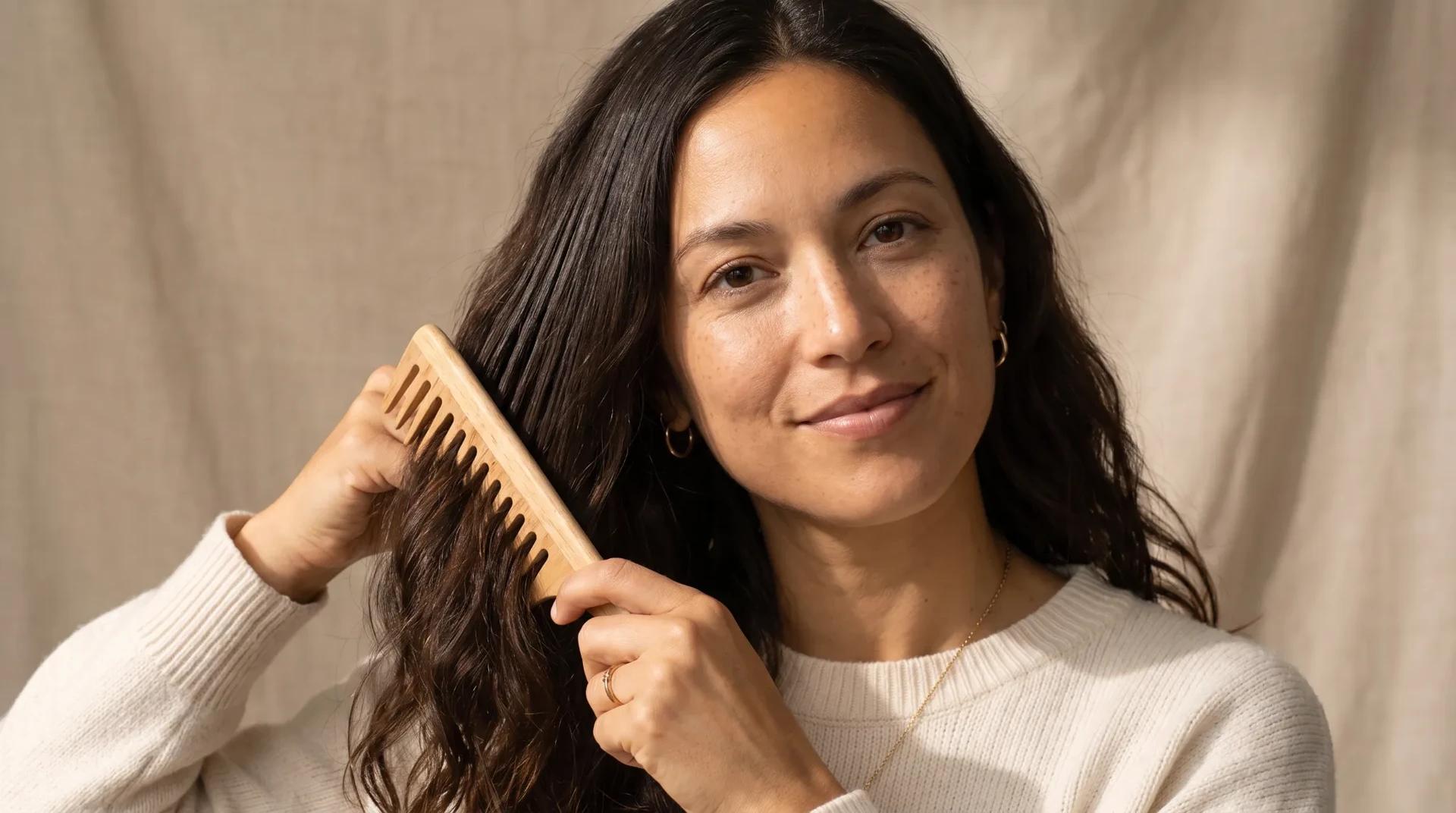
Woman gently combing long dark hair
Start with the scalpOil, flakes and irritation are scalp questions before they are styling questions.

Shine comes from condition, not a shelf full of promises.

Hair changes with humidity, hard water, heat, colour and the way you handle it. Build around those facts before adding another treatment.

Choose the wash

Clean enough. Never stripped.

Wash frequency is personal. The useful test is simple: your scalp feels clean, your lengths stay manageable, and the routine fits your week.

Amber shampoo and conditioner bottles in a shower
01

Oily scalp

Wash as often as needed with a comfortable cleanser. Stretching wash day is not a virtue.

02

Dry lengths

Concentrate shampoo at the scalp and conditioner through the lengths and ends.

03

Build-up

Use a clarifying wash when residue is real, then return to your normal routine.

Oil, used well

A finishing step, not a cure-all.

Hair oils can add slip, soften the surface and reduce friction. They cannot repair a split end or reverse damage inside the fibre.

Botanical hair oil bottle beside rosemary and lavender
01

Use less

Begin with one or two drops. Fine hair is easily overwhelmed.

02

Place it carefully

Keep oil on mid-lengths and ends unless your scalp specifically tolerates it.

03

Judge the finish

Soft and mobile is the goal. Greasy and flat means the dose is wrong.

Read the fibre

Breakage changes the plan.

Snapping, roughness and split ends call for less friction, lower heat and more careful handling. Growth products do not fix mechanical damage.

Close view of glossy dark hair fibres
01

Detangle gently

Work from the ends upward and stop pulling when the comb meets resistance.

02

Control the heat

Lower temperature and fewer passes matter more than a dramatic heat-protectant claim.

03

Trim what is split

A split end cannot be sealed permanently. Cutting it prevents the split travelling higher.

Tools and technique

The brush should suit the job.

Wide teeth for gentle detangling, a cushioned brush for dry hair, and clean tools for every routine. Technique does most of the work.

Wooden combs, brushes and hair oils arranged on a tray
01

Wet hair

Use a wide-tooth comb or flexible detangling brush with plenty of slip.

02

Dry hair

Choose spacing and bristle tension that do not snag your texture.

03

Clean tools

Remove trapped hair often and wash product residue from brushes and combs.

The Beautyisles filter

What earns a recommendation.

We start with the job, examine the relevant evidence and formula or specifications, then judge the experience, price and realistic alternatives.

01

Purpose

Does it solve a clear problem?

02

Support

What justifies the claim?

03

Use

Is it practical to live with?

04

Value

Is there a better route?

The Sunday Letter

Better hair days begin with fewer guesses.

Get practical hair and scalp guidance in the Sunday Letter.

Join the Sunday Letter