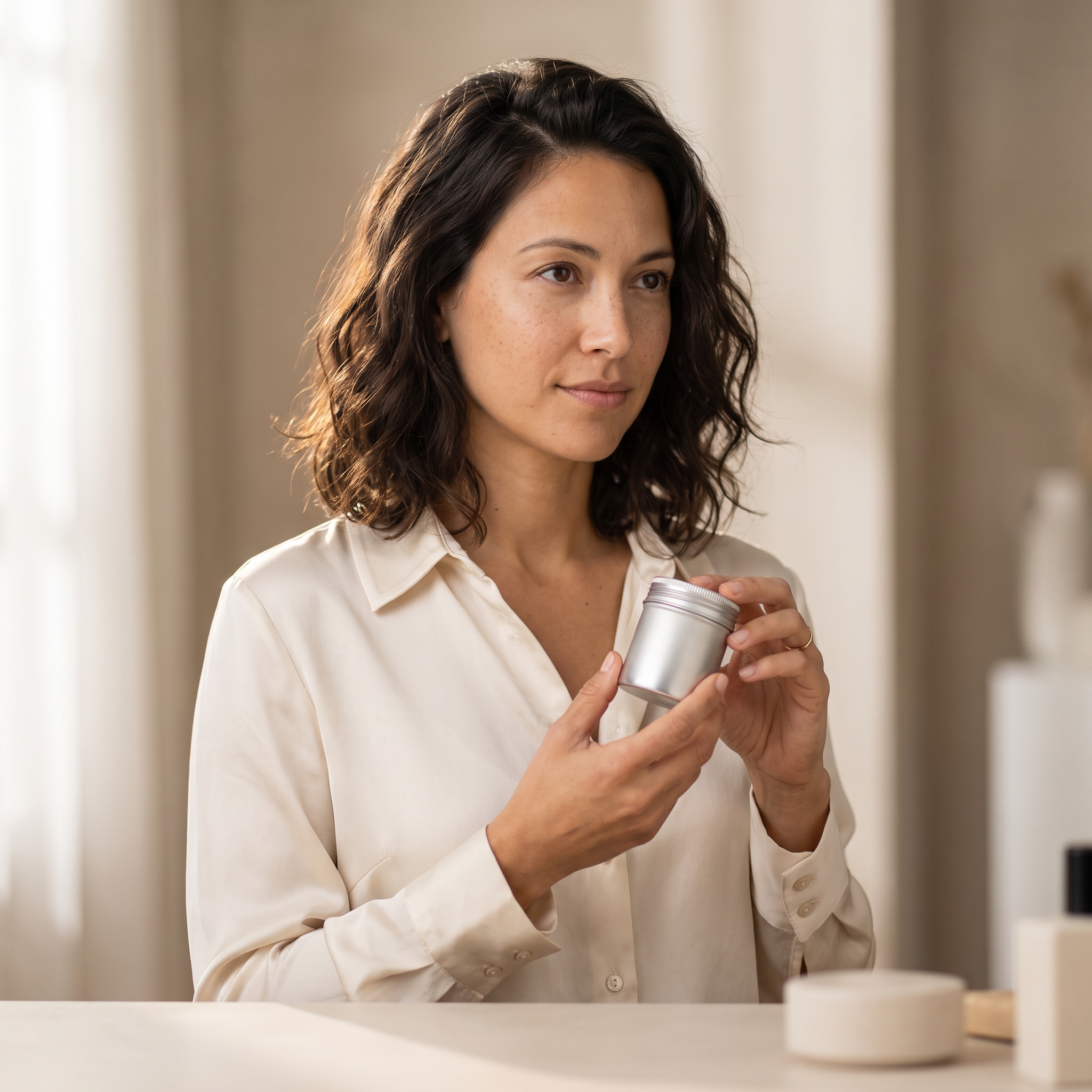
- Texture powder for hair is a dry particulate you shake onto the root of dry hair. It adds lift with no water, heat or drying time.
- Its main job is friction. Particles sitting on the hair surface raise the friction between fibres, so a lifted root stays lifted.
- Silica, rice starch and kaolin clay are the usual active ingredients. Regulators have assessed all three as safe in cosmetics.
- Start with far less than feels right. Over-application leaves a visible white cast that you cannot brush out.
- Wash it out the same day or the next day. Inert silica does not dissolve, so water alone will not rinse it away.
Texture powder for hair is a dry styling product that lifts the root and adds grip. You shake a small amount onto dry hair at the scalp, then work it in with your fingertips. It needs no water, no heat and no drying time. This guide explains how it works, what is inside it, and where it falls short.
What Is Texture Powder for Hair?
Texture powder for hair is a fine, dry styling powder that you shake onto the root of dry hair. It adds lift, grip and texture without water, heat or drying time. Silica, starches and clays do the work. They absorb oil at the scalp and roughen the hair surface so the fibres grip each other.
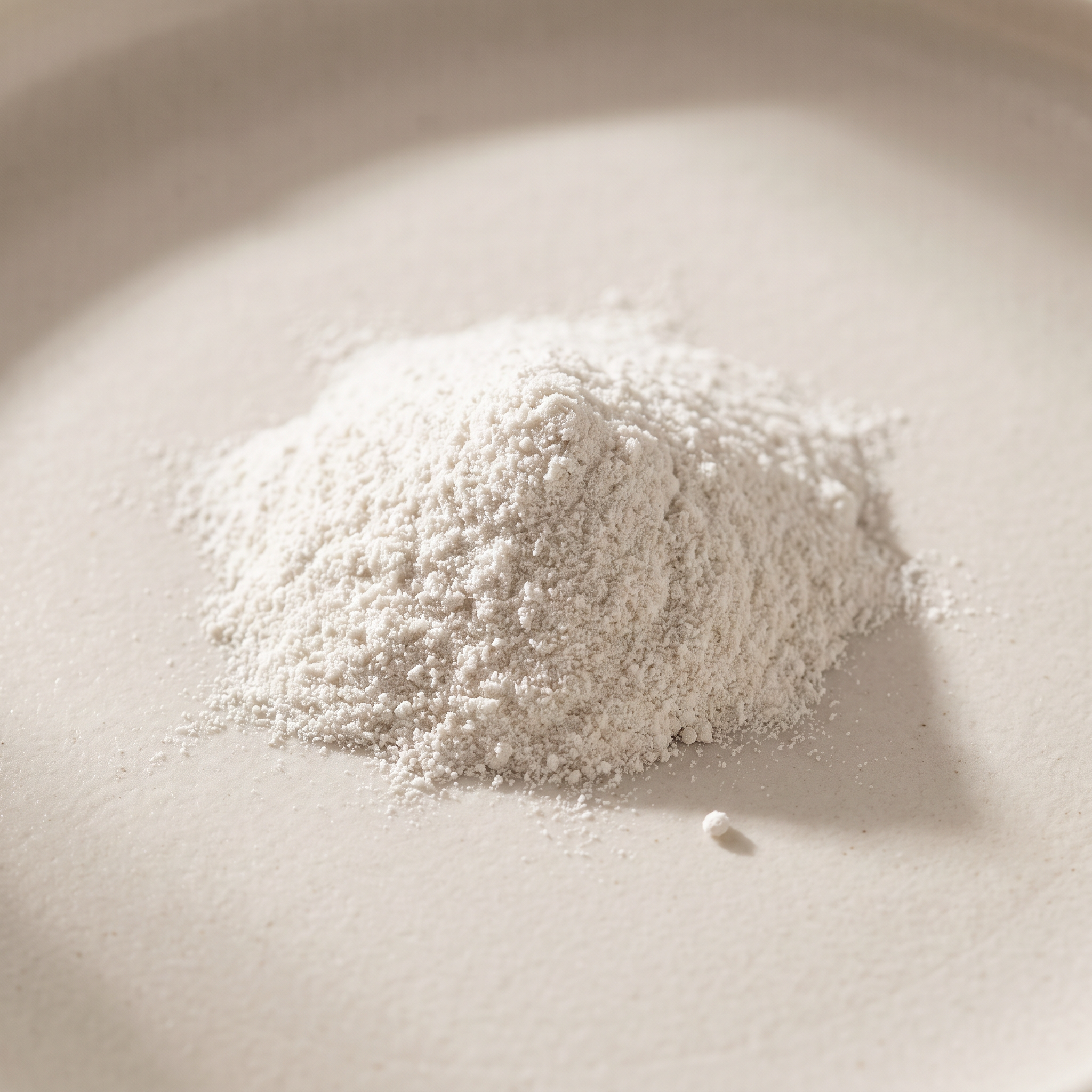
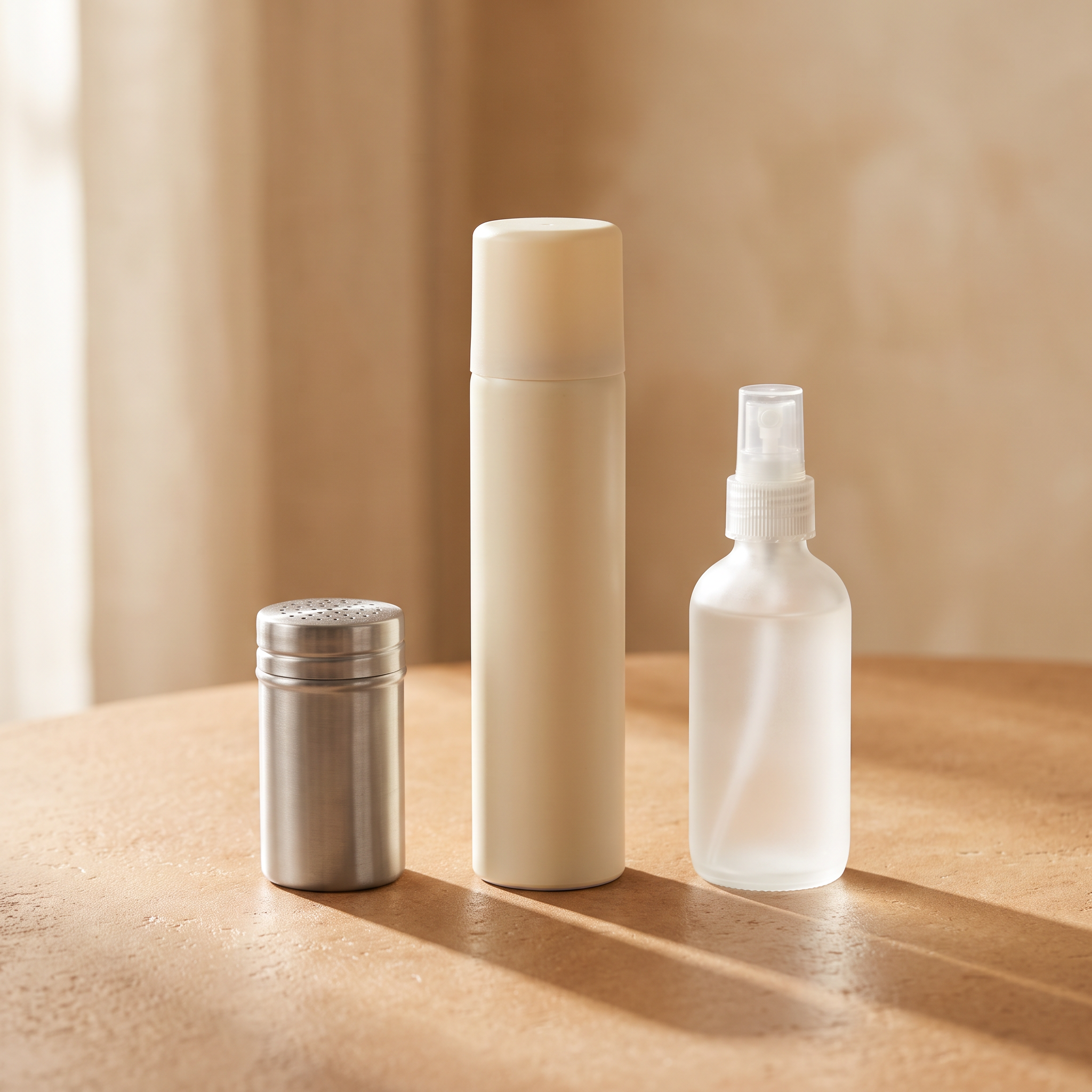
The product arrives in a shaker with a perforated cap, a pump, or a squeeze bulb. You tip it, tap it, or puff it. The powder is very fine and free-flowing, and it is applied to hair that is already dry.
Why the dry format matters
Wet styling works by a different route. Water breaks the hydrogen bonds inside the hair shaft. The fibre then dries in whatever shape you set it. Hairspray works another way again. It lays down a polymer film that welds fibres together where they cross.
Powder does neither. It works entirely at the surface, entirely dry. There is no solvent to evaporate and no film to set. The hold comes from the physical presence of particles between the fibres.
That difference is the reason a powder can lift a root in seconds. It is also the reason the result feels different from a spray. The hair carries a small amount of grit rather than a coating.
If you have fine, flat hair that collapses at the root within an hour, a texture powder is a sensible tool. If you have a dry or flaky scalp, or you rarely wash your hair, it is the wrong one.
How Texture Powder Lifts the Root
Hair holds a style when the fibres resist sliding past one another. Deposited particles raise the friction between fibres, so a lifted root stays lifted. The powder also bulks the fibre and absorbs the oil that makes hair lie flat. The physics here is well established, though it has never been tested on texture powder itself.
Hair has a built-in ratchet
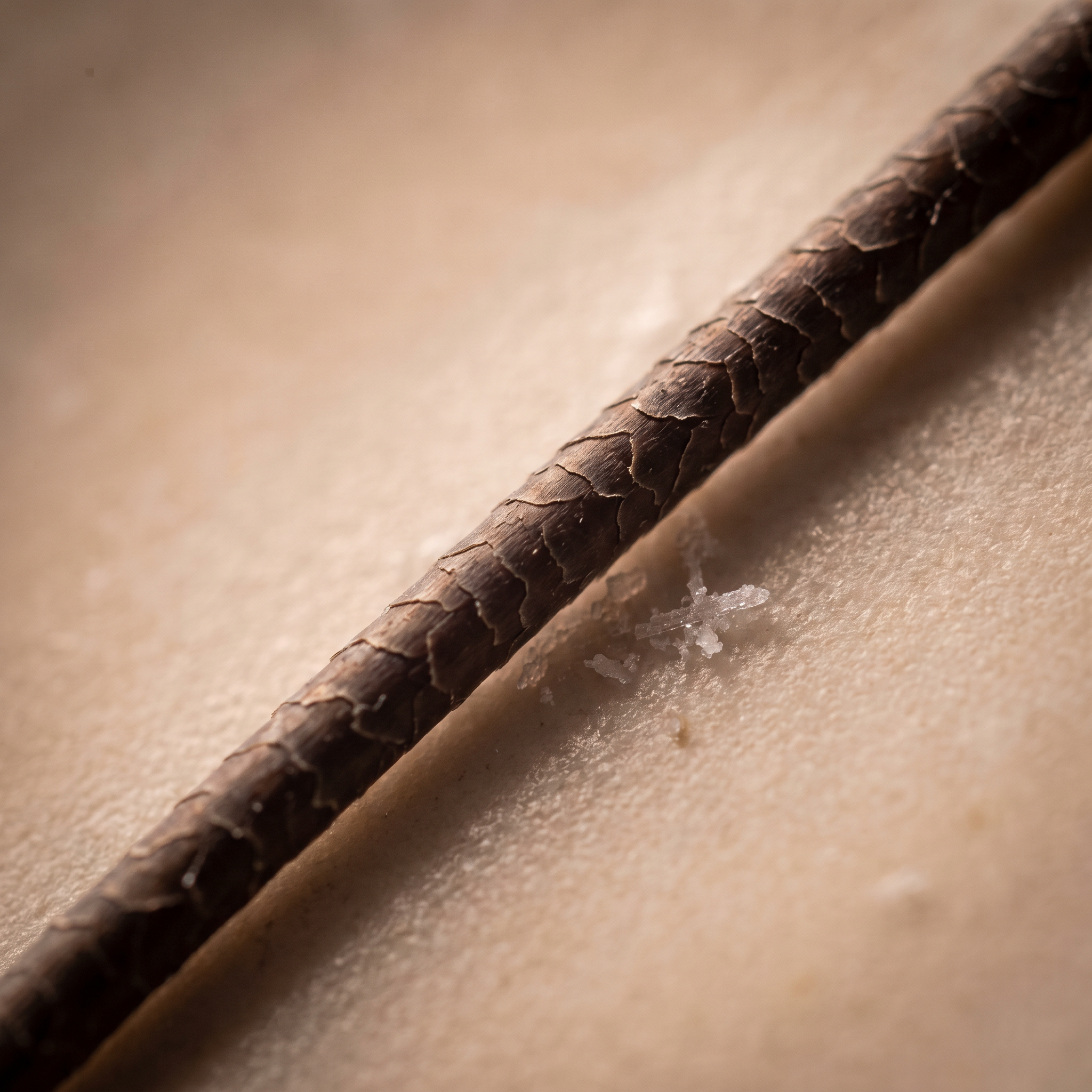
A hair fibre is not a smooth cylinder. Its surface is covered in overlapping cuticle scales. The exposed edges of those scales create friction that differs by direction. Hair slides more easily toward the tip than toward the root.
A 2025 review in Advances in Colloid and Interface Science describes this plainly. Hair “displays anisotropic friction due to the protruding edges of the cuticles, which can interlock when sliding towards the root of hair” [1]. In other words, hair has a natural ratchet. A style holds when the fibres are set so the ratchet works against them sliding back down.
The same review explains that the outer lubricating layer is a fatty acid called 18-methyleicosanoic acid. Hair loses this layer as it ages and weathers, and friction rises as a result. Chemical and heat treatments speed up that loss.
Measured friction differs by hair shape
A 2024 study in the Journal of Oleo Science measured friction against a probe, sliding inward toward the root. The coefficients were 0.47 for straight hair, 0.51 for curly hair and 0.54 for wavy hair [2]. Wavy hair scored highest, which the authors link to a larger true contact area.
The key evidence: particles raise friction
This is the closest direct measurement to what a texture powder does. A 2017 study in the International Journal of Cosmetic Science deposited particulate matter onto hair swatches. The researchers tested both in the laboratory and under real heavy air pollution.
They found that particles of many sizes settle on the hair surface. Sebum increased the amount that stuck, and it favoured larger particles. The friction coefficient of the exposed swatches then rose significantly, and shine fell significantly [3].
That study used pollution particles, not silica. It is not a texture powder study, and it should not be described as one. But it is direct experimental evidence that particulate on a hair shaft raises friction between fibres.
Why the fibre resists bending
Lift also depends on stiffness. A 1995 theoretical analysis in the International Journal of Cosmetic Science showed that bending resistance depends steeply on the fibre’s minor elliptic diameter [4]. Small changes in thickness therefore matter a great deal. A stiffer fibre stands away from the head instead of draping over it.
The oil problem
Sebum is a lubricant, and it spreads. A 2019 study tracked regreasing in vivo and found measurable sebum at the root 48 hours after shampooing, with a steady progression over time. Oilier scalps spread sebum further down the shaft [5].
Because silica, starches and clays are classified as absorbents, they can take up some of that oil. This is a plausible part of the mechanism. Be careful with the claim though. No study has demonstrated that oil absorption is the reason powder creates hold.
No published study has measured how much lift a texture powder actually produces. No study has measured whether it thickens a strand by a meaningful amount. Treat any specific volume claim you read, including on the packaging, as a marketing statement rather than a finding.
What Is Inside a Texture Powder
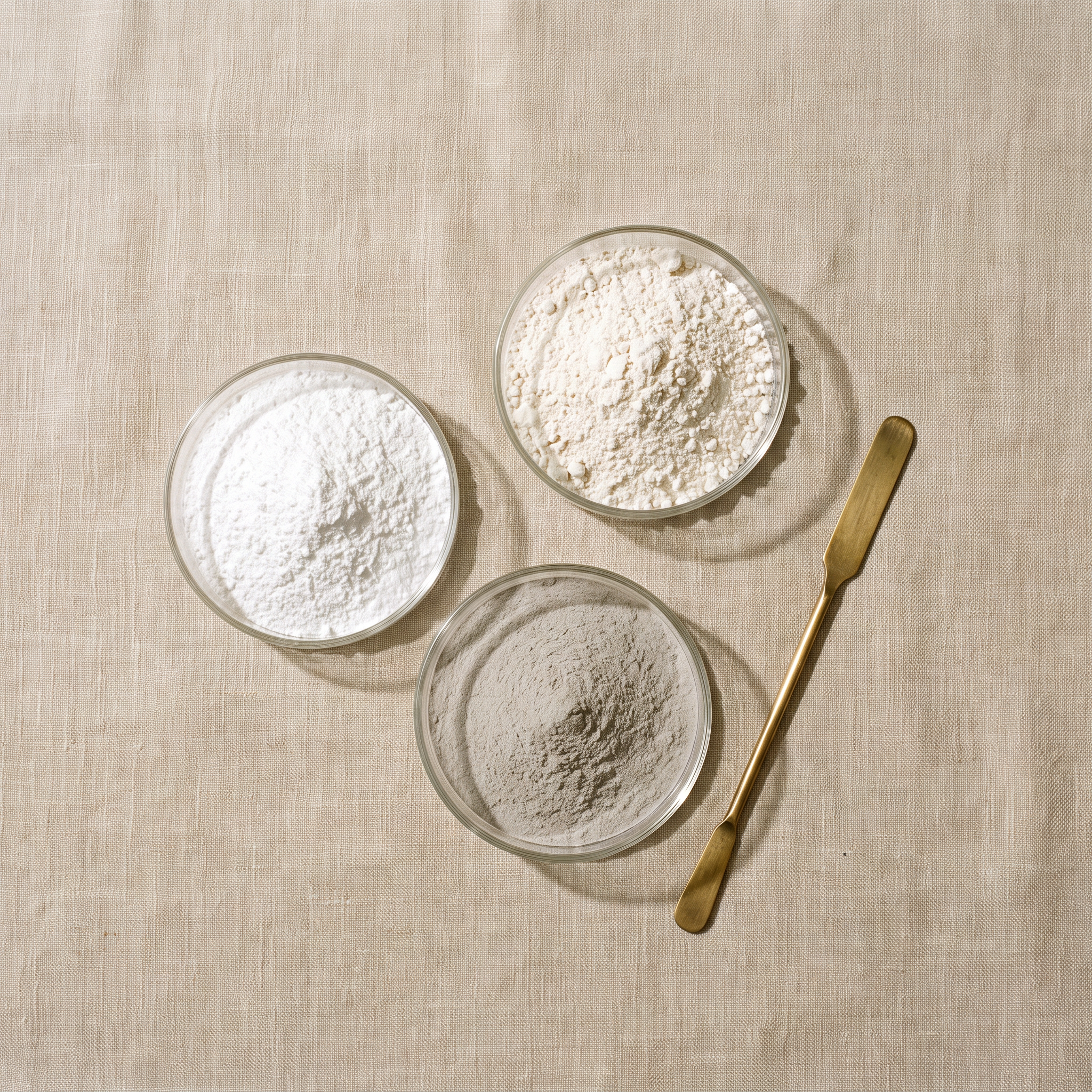
Most texture powders build on one or more absorbent particulates. Silica, rice or tapioca starch, and kaolin clay are the common choices. Some add a small amount of styling polymer. Exact formulas stay proprietary, and no published ingredient analysis of a commercial texture powder exists.
Silica is not silicone
Silica is silicon dioxide, a hard mineral particulate. Silicones such as dimethicone are synthetic polymers that form films. The two are chemically unrelated, and consumer articles confuse them constantly. A texture powder contains silica, not silicone.
The Cosmetic Ingredient Review Expert Panel lists the functions of synthetically manufactured amorphous silica as abrasive, absorbent, anticaking, bulking and opacifying agents. For a texture powder, the absorbent and bulking functions are the ones that matter. The panel concluded these ingredients are safe in current practices of use [6].
One 2024 study concluded that synthetic amorphous silica does not penetrate skin [7]. Worth knowing: that paper had a co-author employed by a silica manufacturer. Treat it as industry-supported rather than independent.
Starches
A 2025 review in Carbohydrate Polymers describes starch as offering absorbency, smooth texture and ease of application across skincare, body care, hair care and makeup. Different botanical sources behave differently, so corn, potato and tapioca starches are not interchangeable [8].
Aluminum starch octenylsuccinate is a very common modified starch in this category. The CIR Expert Panel reaffirmed in 2023 that it is safe as a cosmetic ingredient in the described practices of use [9].
Clays, and one caveat worth knowing
A 2026 CIR amended assessment of eight naturally sourced clays confirms that all of them work as absorbents and bulking agents. It concludes that kaolin is safe in cosmetics [10].
The same report carries a caveat that matters for a shake-on powder. For the other seven clays, the panel found the available data insufficient to determine safety in products that may be incidentally inhaled. A powder you shake into your hair near your face is exactly that kind of product. See the inhalation section below.
A note on talc
Talc is the powder most consumers associate with controversy. The CIR assessment of talc covered only grades that did not contain asbestos. Cosmetic-grade talc is specified to contain no detectable fibrous asbestos [11]. Texture powders typically use silica and starches instead. Do not read the talc literature as a risk of texture powder.
Texture Powder vs Dry Shampoo vs Hairspray
These three products solve different problems, and they are easy to confuse. Dry shampoo absorbs oil so hair looks less greasy. Hairspray welds fibres with a polymer film. Texture powder raises friction and bulks the fibre to create lift. Only one of the three is built for root volume. Shops also shelve a volumizing powder beside the dry shampoo, and the two are easy to mix up: one removes oil, the other adds grip.
| Feature | Texture powder | Dry shampoo | Hairspray |
|---|---|---|---|
| Physical form | Fine dry particulate in a shaker or pump | Powder, or powder in an aerosol | Polymer solution as an aerosol mist |
| Main ingredients | Silica, starches, clays, sometimes polymers | Starches, clays, silica, sometimes alcohol | Film-forming polymers plus solvent |
| How it works | Raises friction between fibres and bulks them | Absorbs surface oil | Polymer film stiffens the fibre assembly |
| Main purpose | Root lift and grip | Stretching time between washes | Holding a finished style |
| Behaviour in humidity | Not a film, so not plasticised the same way | Not applicable | Loses cohesive strength as humidity rises |
| How you remove it | Shampoo. Silica will not rinse with water alone. | Shampoo. Use a clarifying wash for build-up. | Shampoo. Polymers are designed to wash out. |
| Suits best | Fine to medium hair that needs root lift | Oily scalps | Setting a finished style |
| Suits worst | Dry or flaky scalps, very dark hair | Dry scalps | Fine hair, humid climates |
The humidity point is the clearest mechanical difference between the three. Hairspray depends on a polymer film, and moisture plasticises that film. A 2009 paper in the Journal of Cosmetic Science explains the trade-off between adhesion and cohesion. It notes that at high humidity electrostatic adhesion takes over [12]. A powder has no film to plasticise.
Do not read that as proof that powder beats hairspray in humid weather. Nobody has measured that comparison. It is a mechanistic reason to expect a difference, and nothing more.
The Best Texture Powders for Root Lift
We picked five powders that are sold as dry root-lift products rather than as dry shampoo. Every one is a professional or prestige salon formula, because that is where the category lives on Amazon. All five are available in the United States.
A note on positioning, stated plainly. Amazon Luxury Beauty does not carry a texture powder. We searched the category and the obvious luxury houses. Two of the best-known luxury options, Aveda Pure Abundance Hair Potion and Bumble and bumble Prêt-à-Powder, have no US listing at all. The ceiling here is prestige professional salon, and Davines is the closest to true luxury in the set.
Davines This Is A Texturizing Dust Powder
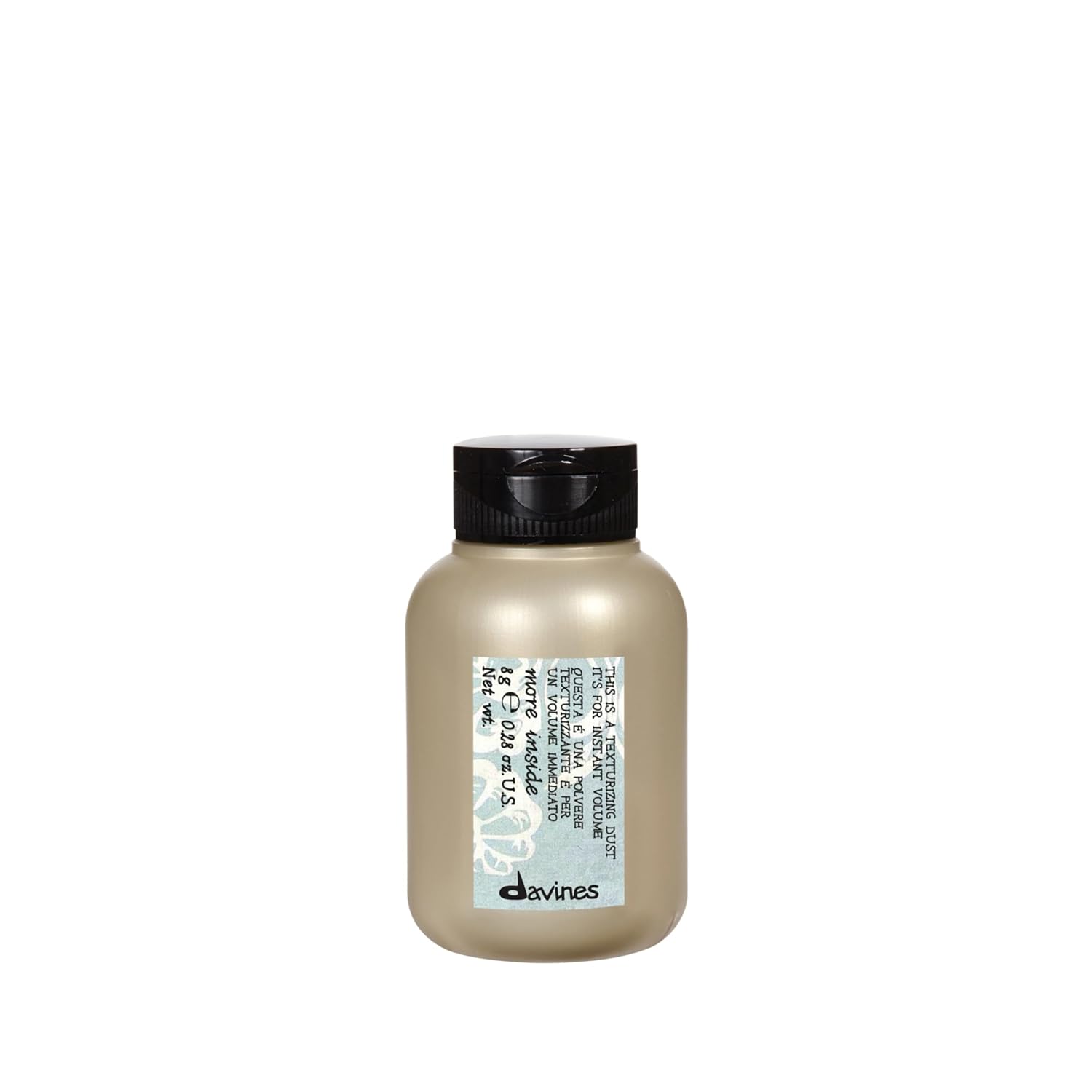
A fine finishing dust from an Italian professional house. It lifts the root on contact and leaves a matte finish, with no visible powder in dark hair when you use it sparingly. The tin is small and the price sits at the top of this list. Buy it if you want the most refined result and you will use it often.
— Avery, Beautyisles AI Editorial Host
- Genuine luxury positioning
- Invisible in dark hair
- Strong root lift from a small amount
- The fine dust needs a light hand or it can look powdery
- Small tin runs out quickly
Kevin Murphy Powder Puff Volumising Powder
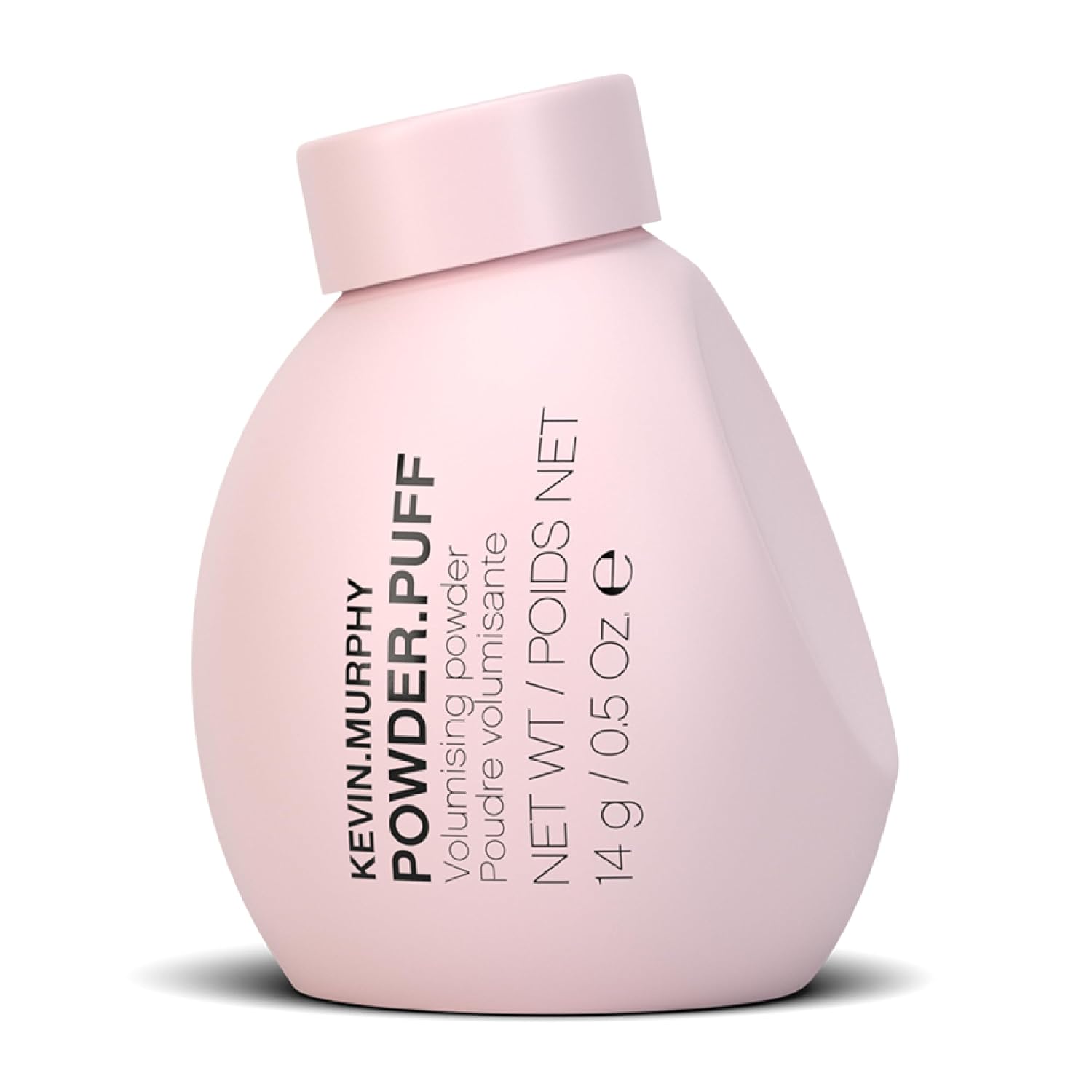
This one behaves differently from a dry dust. Squeeze the bottle and the powder meets your fingers as a soft wax. That makes it easy to place exactly where you want lift, with very little waste. The finish is matte and the grip is strong, so it suits short styles and layered cuts.
— Avery, Beautyisles AI Editorial Host
- Precise placement
- Strong grip for short hair
- Very little product needed
- Wax texture feels unusual at first
- Can look heavy on very fine hair
L’Oréal Professionnel Paris Volume Dust
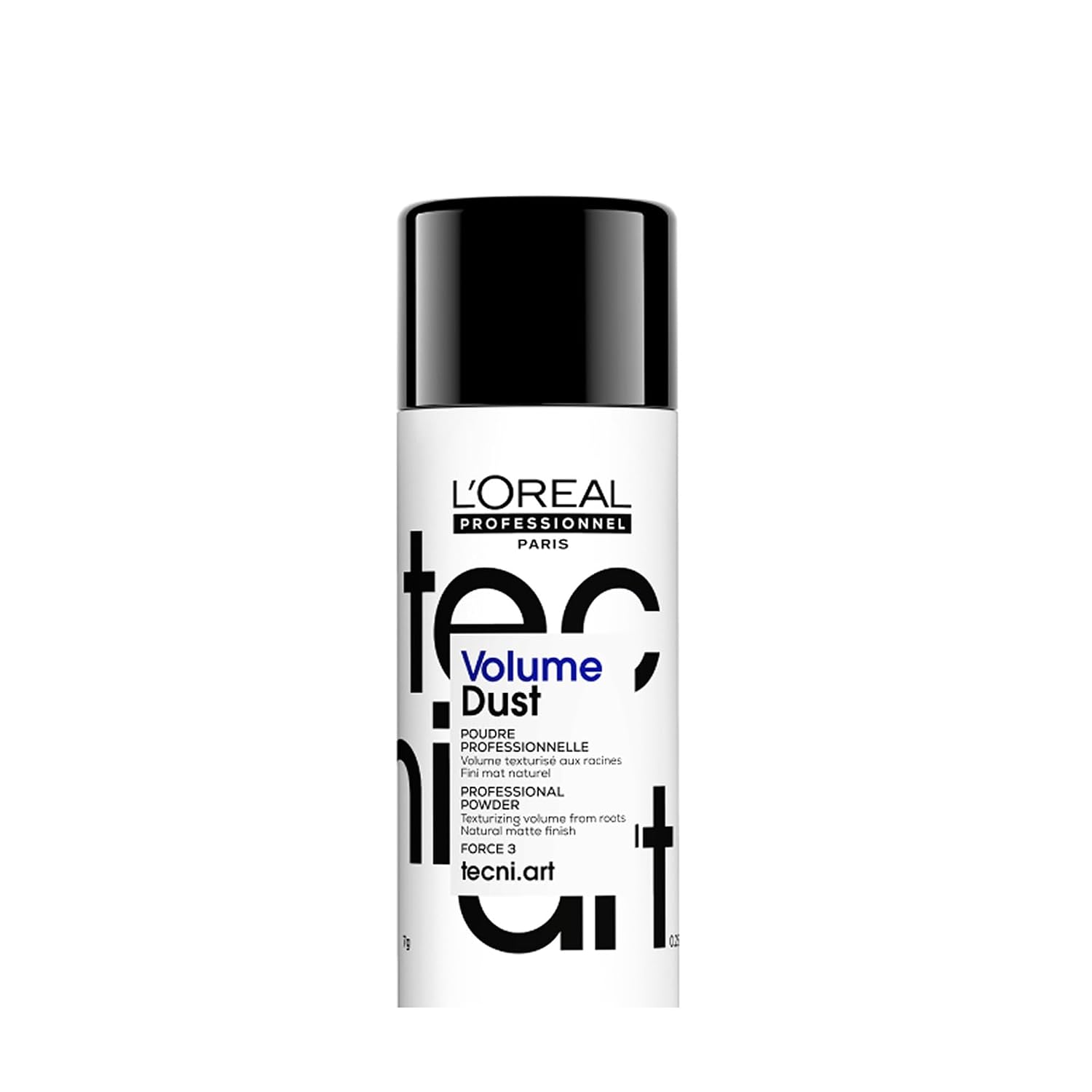
The most widely reviewed powder in this set, and the easiest to find. The powder is very fine, so it disappears quickly and needs only a light tap per section. It works well for updos and braids where you want volume along the scalp line. The parent company is a mass-market group, so treat the luxury claim with care.
— Avery, Beautyisles AI Editorial Host
- Very fine, blends quickly
- Good for braids and updos
- Mass-market parent company
- Can leave a cast if you over-apply
ELEVEN AUSTRALIA I Want Body Volume Texture Powder
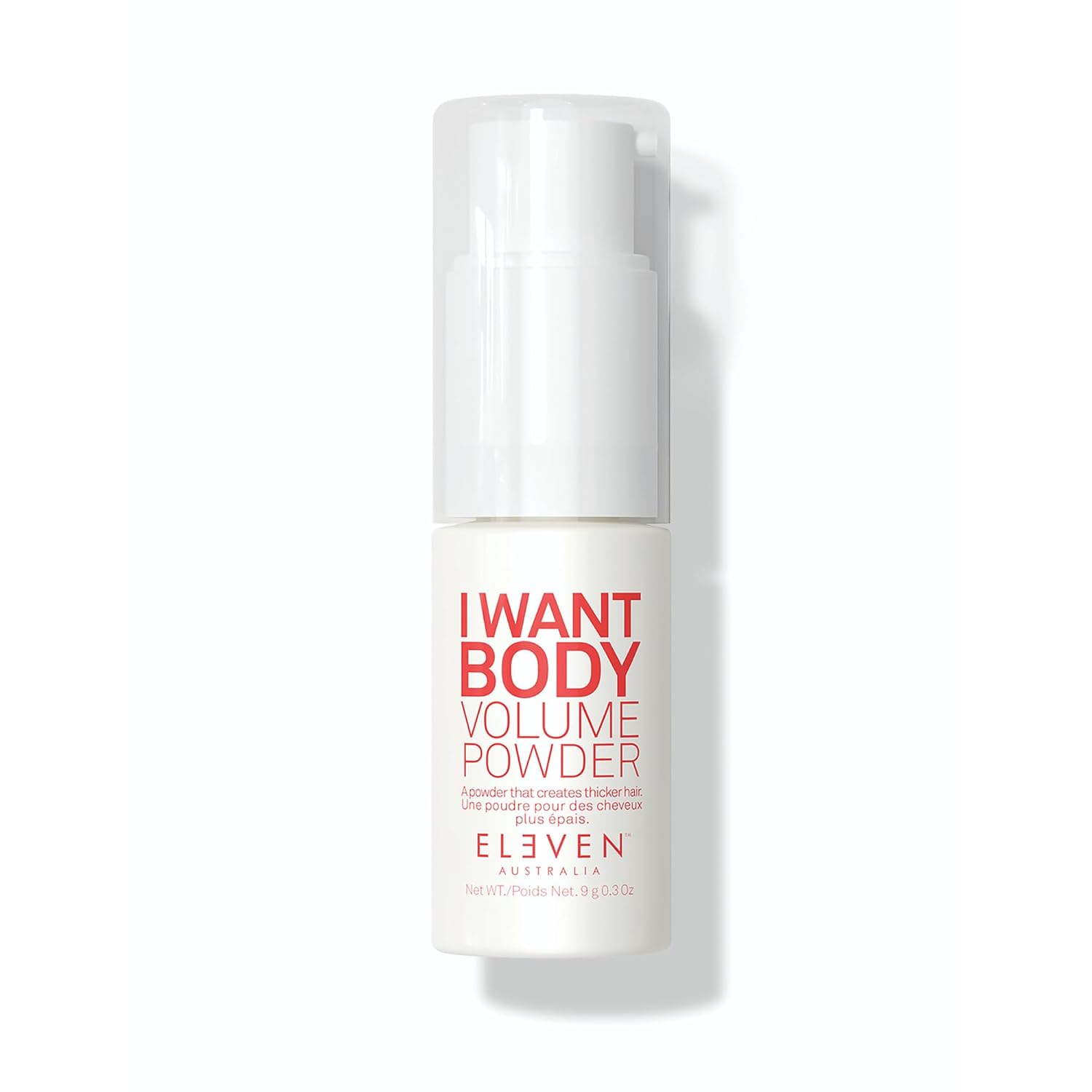
Built for fine to medium hair, which is the group that gains the most from a root powder. The lift is noticeable and the finish stays matte. It is Australian salon stock, so restocking takes longer than a high-street brand. A good choice if fine hair is your main complaint.
— Avery, Beautyisles AI Editorial Host
- Targeted at fine hair
- Matte, non-greasy finish
- Vegan formula
- Best suited to fine to medium hair
- Smaller bottle than some rivals
IGK BEACH CLUB Texture Powder
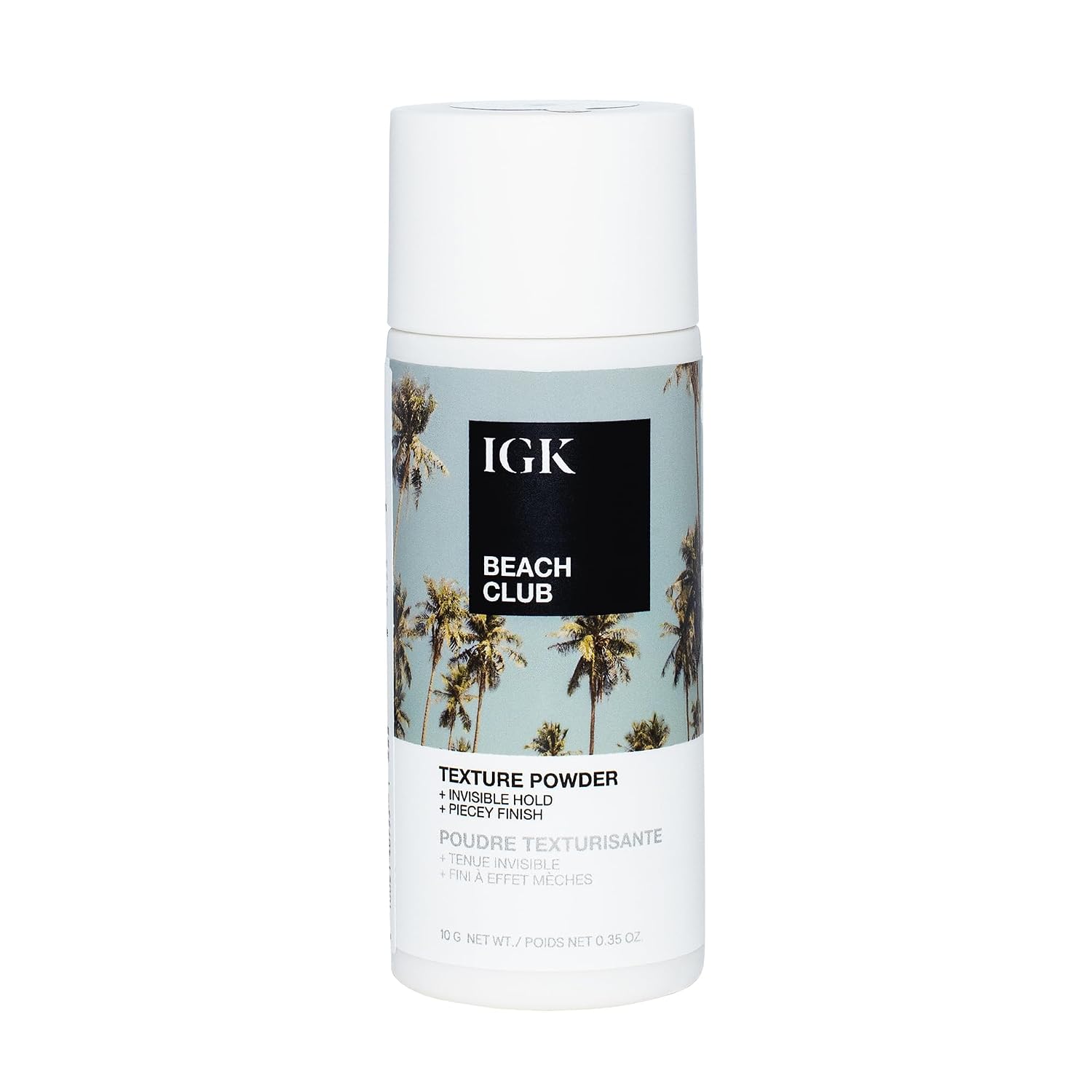
A prestige salon powder with the most invisible finish of the five. It also absorbs oil, so it doubles as a light refresh on second-day hair. It is the newest product here and carries the fewest reviews, so the track record is shorter. Worth trying if visible powder in dark hair has put you off before.
— Avery, Beautyisles AI Editorial Host
- Disappears in dark hair
- Doubles as an oil refresher
- Vegan and cruelty free
- Shorter track record
- Drying with frequent use
If your main problem is a flat blow-dry rather than a flat root, a round-brush dryer does more for you than a powder. Our guide to the best blow dryer brushes covers that route in detail. Powder and a brush work well together, because the brush builds the shape and the powder holds it.
How to Apply Texture Powder
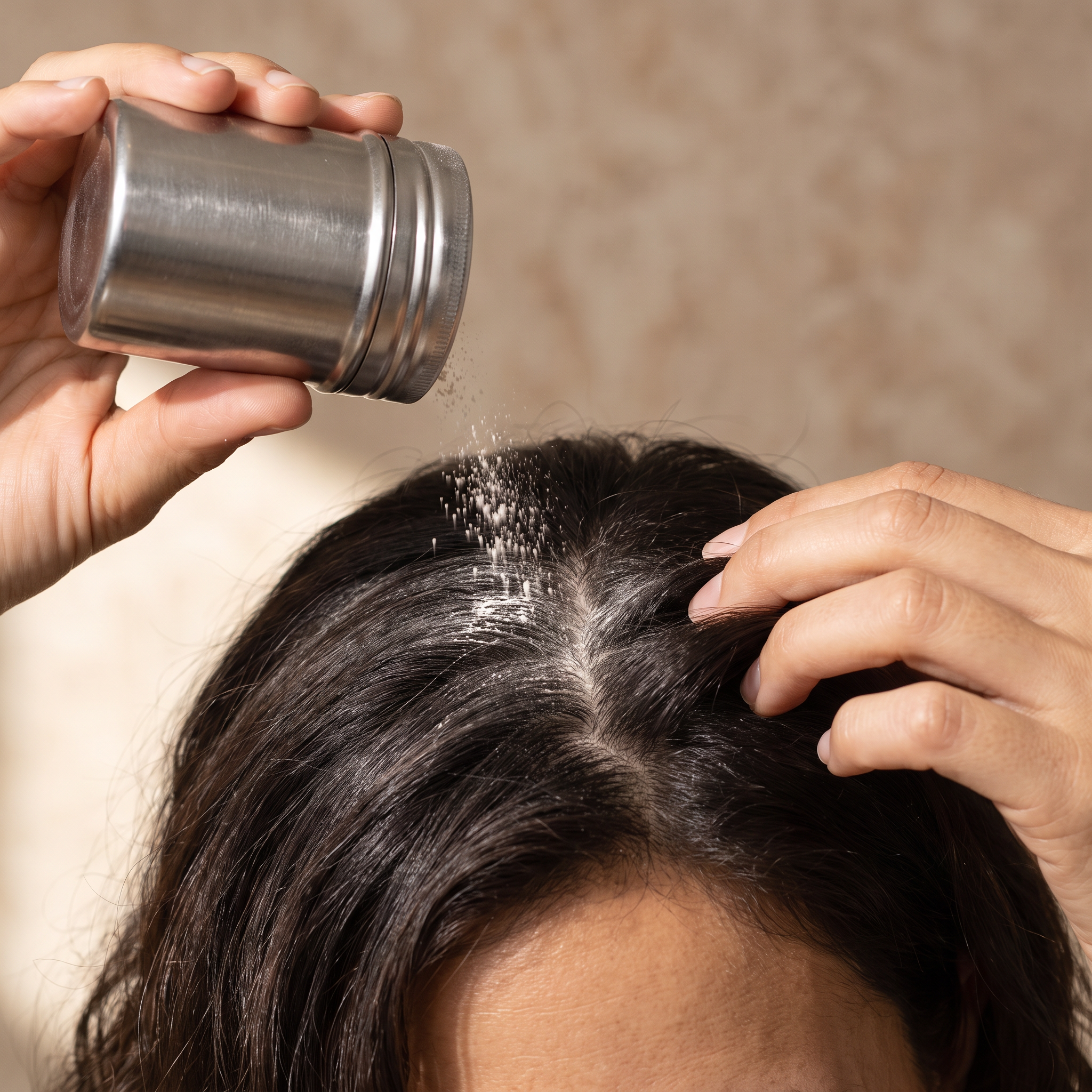
Apply texture powder to dry hair at the root, in thin sections, using far less than feels right. Work it in with your fingertips, then shape. Over-application is the most common mistake, and it leaves powdered hair with a chalky cast you cannot brush out. None of this technique has been tested in a study, so treat it as practical guidance.
Step by step
- Start on dry hair. Powder is a finishing product. Apply it after drying and styling, never before a blow-dry.
- Part and section. Lift a section of hair so the root area is exposed. Work through the head in layers.
- Hold the shaker back. Keep a short distance from the root instead of pressing it against the scalp. You get a lighter, more even dusting.
- Use a light dusting per section. One or two taps is usually enough. You can always add more, and you cannot easily take it away.
- Stay at the root. Keep the powder off the mid-lengths and ends. Those areas are drier and show a cast faster.
- Work it in. Tousle the root with your fingertips so the powder spreads evenly.
- Shape as usual. Style with your fingers or a brush. If it looks chalky, you have already used too much.
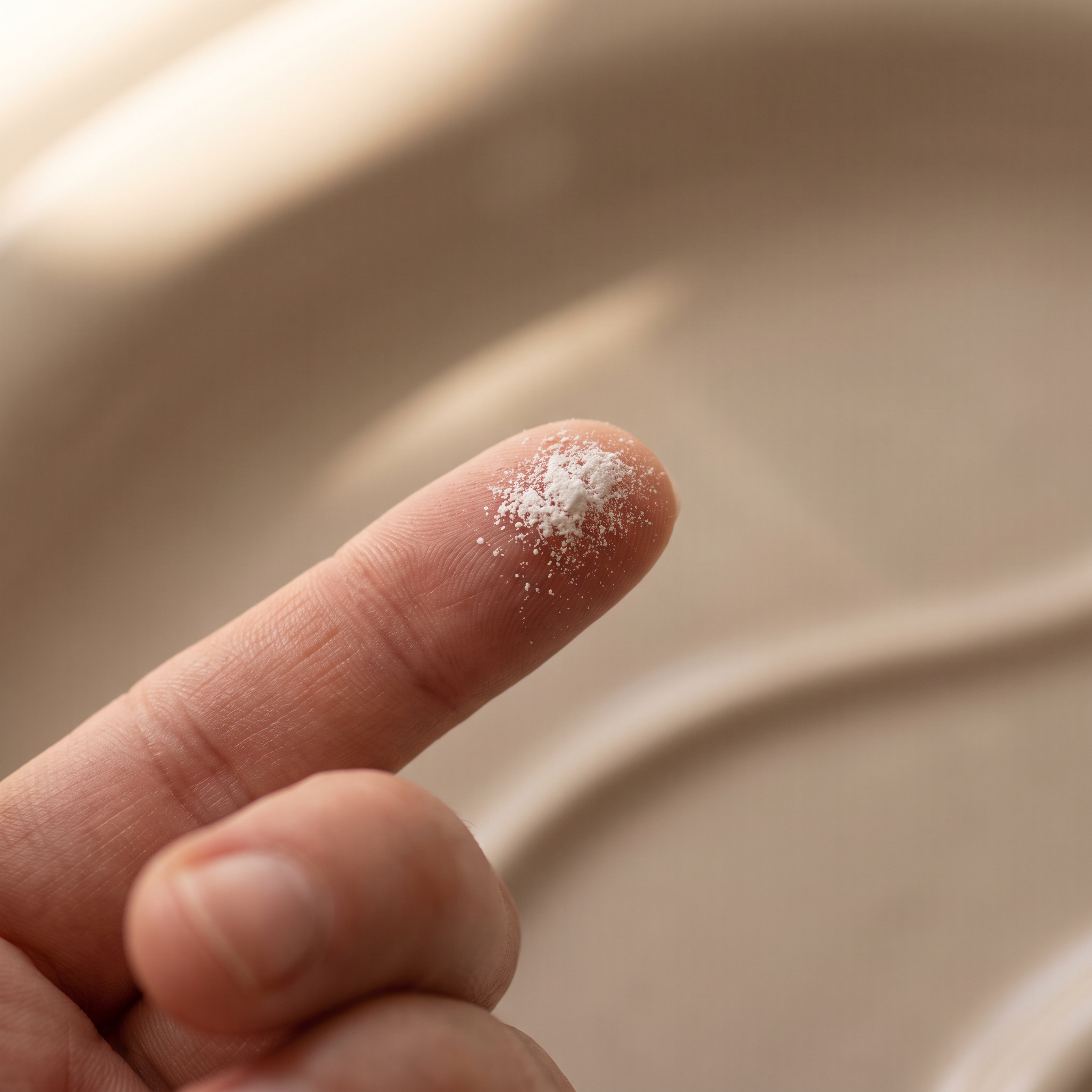
If the powder is visible, it is already too much. Do not try to work it in further, because that spreads the cast. Shampoo it out and start again with less. This is the single most common reason people give up on texture powder.
Heat tools and powder
Nobody has studied what happens when you put a hot tool over a layer of powder. It is reasonable to expect that baked residue is harder to remove, so let the powder settle before you use irons or tongs. Treat that as caution rather than a finding.
Which Hair Types Suit Texture Powder
Fine, straight hair gains the most from texture powder, because it has the least natural stiffness to begin with. Wavy and thick hair also respond well. Curly and coily hair need more care, because powder is drying and those hair types already run dry. Very long hair gains little.
One clarification before the detail. The popular 1A to 4C typing system is a consumer convention, not a scientific classification. The peer-reviewed scheme comes from a study of 2,449 people across 22 countries. It derived eight hair-shape groups from measured curve diameter, curl index, waves and twists [13]. A 2023 appraisal in the International Journal of Cosmetic Science concluded that even that scheme may be too complex to reproduce consistently [14]. Use the everyday language by all means. Just do not present it as science.
Who gains the most
- Fine, straight hair. The smallest diameter means the least natural bending resistance [4], so it has the most to gain from anything that adds bulk and friction. It is also the type most prone to looking flat.
- Wavy hair. Wavy hair showed the highest measured friction of the three shapes tested [2]. Powder can restore some of the contact between fibres that waves lose.
- Short hair. There is less mass to lift, so root lift is proportionally more visible.
- Straight, thick hair. It already has stiffness, so it needs less powder. It still benefits from the friction and the grip.
Who should be careful
- Coily and 4C hair. Structurally this hair has the smallest, most elliptical cross-section and the highest lipid level [14], and African hair shows lower density and slower growth [15]. This group also carries the highest documented burden of traction alopecia and related scalp conditions, and hair-care practice is a known contributor. Adding a drying, friction-raising, residue-leaving powder is not obviously helpful. No study exists either way, so treat this as caution rather than a prohibition.
- Chemically treated or bleached hair. Bleaching accelerates the loss of the outer lubricating layer and raises friction [1]. The fibre is already rough, so the marginal gain is smaller and the drying cost is higher. If you colour or lighten your hair, our blonde hair care guide covers the care routine that suits a compromised fibre.
- Permed hair. Chemical processing raises porosity and changes how the fibre behaves. See our guide to caring for permed hair before adding a drying product.
- Thinning hair. Less density means more visible scalp, so residue shows more. Many scalp conditions that accompany hair loss are inflammatory, and adding an occlusive powder is not advisable.
- Very long hair. Lipid content and tensile strength fall from root to tip [16], and long fibres carry more mass working against any lift.
- Dry or flaky scalp. There is little oil for an absorbent to take up, and a powder layer over flaking skin feels unpleasant.
If you wear braids or other protective styles, powder can help with the scalp line. Keep it light and wash it out promptly. Our braided hair care guide covers scalp care under a protective style.
Texture powder for men’s hair
Short, straight hair is the easiest case of all. There is little mass to lift and no length weighing the root down, so a small amount goes a long way. That is why a men’s hair styling powder has become a common swap for pomade and clay: it gives a matte, dry finish and real hold without the wet look or the greasy feel, and it rinses out with water instead of demanding a full wash. If you keep a cropped or textured cut, a hair powder for men will usually do more for root volume than a wax, because wax adds weight exactly where you are trying to add lift. The same rules apply as anywhere else: use a light hand, build up rather than correcting, and do not shake it into a cloud near your face.
The Honest Downsides of Texture Powder
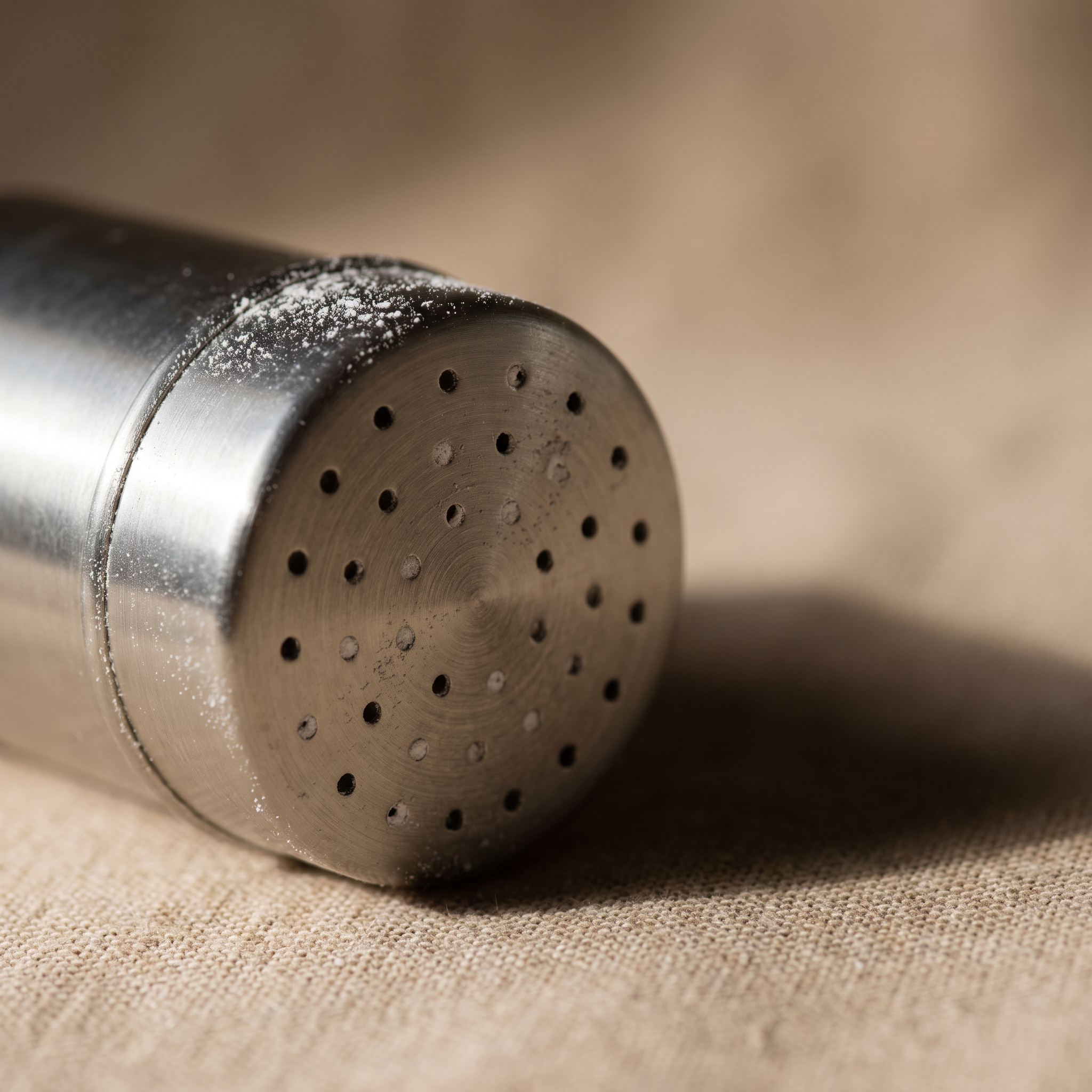
Texture powder leaves a residue, and it must be washed out. Shaking a fine powder near your face also creates an inhalable cloud. For most clays, the safety data for that exposure route are explicitly incomplete. These are real limitations, and good coverage of this product should state them.
Residue and build-up
Deposits on the hair surface are measurable. Laser scattering work shows that sebum, shampoo and conditioner all build up on the surface. That build-up changes how the surface reflects light. Clarifying shampoo partly restores the cuticle angle by removing it [17].
Inert silica does not dissolve, so water alone will not rinse it away. Starch will swell and can turn tacky with water. That is why you need shampoo, not just a rinse.
The gritty feel
Many users report a gritty or tacky feel, especially after using too much. That is mechanistically consistent, because a hard mineral particulate on a rough surface is a rough, high-friction interface [3]. Be careful with the claim though. No study has measured how texture powder feels to the touch. Report it as commonly described, not as established.
Inhalation, the risk nobody mentions
This is the most under-discussed real issue, and it is genuinely evidence-backed. Cosmetic powders require a specific inhalation safety assessment, because applying them generates airborne particles [18].
Researchers measured the particle cloud from applying talc-containing cosmetic powders. In the personal breathing zone it averaged around 1.0 mg/m³. The median aerodynamic diameter was 1.7 to 2.0 µm, and exposures lasted from under a minute to over ten minutes. They also observed secondary clouds forming as particles resuspended from skin and surfaces [19]. Particles in the 1 to 5 µm range sit in the respirable range.
The most directly relevant finding is this. The CIR panel concluded that kaolin is safe. For the other seven naturally sourced clays, it found the data insufficient to determine safety in products that may be incidentally inhaled [10].
Keep this in proportion. A shaker powder is not an aerosol and produces a far smaller cloud than a spray can. It is not the same situation as the 2022 recall of aerosol dry shampoos for benzene, which the FDA documented [20]. The honest statement is narrower and still worth making. Shaking a fine powder into your hair near your face does create an inhalable cloud. For non-kaolin clays, that exposure route is explicitly not well characterised. Use it in a ventilated space and do not deliberately breathe it in.
Scalp irritation
Be precise here, because this is where coverage often overreaches. There is no published study, case report or case series linking texture powder to folliculitis or contact dermatitis. Any claim that texture powder causes folliculitis is unsupported.
What is established is adjacent. Scalp allergic contact dermatitis from scalp-applied products is well documented, and dry shampoos have been shown to contain contact allergens [21]. In a 38,775-patient dataset, 9.0 percent had positive patch tests linked to hair care products. Those patients were significantly more likely to have scalp involvement [22].
Mineral particulates are chemically inert, and regulators have assessed silica, kaolin and starches as safe in cosmetics. The plausible risks are therefore mechanical rather than toxicological. You could occlude a follicle opening, or trap oil and skin flora against sebaceous skin. Fragrance and preservatives are the likelier sensitizers than the powder base itself. Treat this as reasoned caution, not a documented finding.
Sensible practice follows from that. Wash the powder out the same day or the next day. Do not apply it to a scalp that is broken, inflamed or actively itchy. Stop using it if you develop itching or pustules.
Frequently Asked Questions
How do I get volume in my hair with texture powder?
Apply it to dry hair at the root, in thin sections, using a light dusting rather than a heavy shake. Work it in with your fingertips so it spreads evenly, then shape the hair with your fingers or a brush. Start with less than you think you need, because over-application leaves a visible cast and feels gritty.
How do I make thin hair look thicker?
Root lift is the fastest way, because thin hair collapses at the scalp and that flattening is what reads as thinness. A texture powder lifts the root and holds it, which raises the hair away from the head and makes the whole shape look fuller. Keep the application light and concentrated at the root, and avoid the lengths, which show residue first.
How can I get rid of greasy hair without dry shampoo?
Texture powder is one option, because silica and starches are absorbents and will take up some surface oil. The difference is intent. Dry shampoo is built to make hair look cleaner, while texture powder is built to add lift and grip. A texture powder will absorb some oil as a side effect, but it is not a substitute for washing. Neither product removes the oil. Both leave it on the scalp until you shampoo.
What does dry shampoo do to your hair?
Dry shampoo absorbs surface oil so hair looks less greasy between washes. It is a cosmetic fix, not a clean. The oil and the powder both stay on the scalp until you wash them out. Build-up is a common complaint, and a clarifying shampoo is the usual answer. Some dry shampoo products have also been shown to contain contact allergens.
When should I use dry shampoo or texture powder?
Reach for dry shampoo when the problem is oil and you want to stretch the time between washes. Reach for texture powder when the problem is flatness and you want root lift and grip. If both problems apply, use a small amount of each at the root. Wash your hair that day or the next day in either case.
Why does my hair get greasy after one day?
Sebum spreads from the scalp along the shaft, and it starts moving quickly. One study found measurable sebum at the root 48 hours after shampooing, with a steady progression over time. Oilier scalps spread it further down the shaft. Genetics, hormones and how often you wash all affect the rate. A powder can absorb some of that oil, but it cannot slow the process down.
Is texture powder bad for your hair?
For most people it is not, provided you wash it out and do not over-apply. Silica, kaolin and starches have been assessed as safe in cosmetics. The real considerations are practical. It leaves residue that needs shampoo rather than water. It can dry out hair that is already dry or chemically treated, and shaking it near your face creates an inhalable cloud. Stop using it if your scalp becomes itchy or sore.
Editorial Sources & Methodological References
- Weiand, E., Rodriguez-Ropero, F., Roiter, Y., Angioletti-Uberti, S., Dini, D., & Ewen, J. P. (2025). Understanding and controlling the friction of human hair. Advances in Colloid and Interface Science, 345, 103580.
- Konno, S., Asanuma, K., & Nonomura, Y. (2024). Friction Dynamics of Straight, Curly, and Wavy Hair. Journal of Oleo Science, 73(5), 801–811.
- Galliano, A., Ye, C., Su, F., Wang, C., Wang, Y., Liu, C., Wagle, A., Guerin, M., Flament, F., & Steel, A. (2017). Particulate matter adheres to human hair exposed to severe aerial pollution: consequences for certain hair surface properties. International Journal of Cosmetic Science, 39(6), 610–616.
- Swift, J. A. (1995). Some simple theoretical considerations on the bending stiffness of human hair. International Journal of Cosmetic Science, 17(6), 245–253.
- Gao, J., Liu, C., Zhang, S., Techer, M. P., Bouabbache, S., Pouradier, F., & Panhard, S. (2019). Revisiting, in vivo, the hair regreasing process by the Sebuprint method. Skin Research and Technology, 25(1), 79–87.
- Burnett, C. L., Bergfeld, W. F., Belsito, D. V., Klaassen, C. D., Liebler, D. C., Marks, J. G. Jr., Shank, R. C., Slaga, T. J., Snyder, P. W., Fiume, M. M., & Heldreth, B. (2025). Amended Safety Assessment of Synthetically Manufactured Amorphous Silica and Hydrated Silica as Used in Cosmetics. International Journal of Toxicology, 44(3_suppl), 5S–35S.
- Bosch, A., Bott, J., Warfving, N., & Nolde, J. (2024). Investigation on the skin penetration of synthetic amorphous silica (SAS) used in cosmetic products. Toxicology Letters, 399(Suppl 1), 80–104. Note: industry co-author.
- Biyimba, B. N., Ekaette, I., & Cobbinah-Sam, E. (2025). Starch functionality in cosmetics and personal care products. Carbohydrate Polymers, 364, 123597.
- Akinsulie, A., Bergfeld, W. F., Belsito, D. V., et al. (2023). Aluminum Starch Octenylsuccinate. International Journal of Toxicology, 42(3_suppl), 12S–13S.
- Burnett, C. L., Bergfeld, W. F., Belsito, D. V., Cohen, D. E., Klaassen, C. D., Liebler, D. C., Rettie, A. E., Ross, D., Shank, R. C., Slaga, T. J., Snyder, P. W., Tilton, S. C., Fiume, M. M., & Heldreth, B. (2026). Amended Safety Assessment of Naturally-Sourced Clays as Used in Cosmetics. International Journal of Toxicology, 45(3_suppl), 65S–107S.
- Fiume, M. M., Boyer, I., Bergfeld, W. F., Belsito, D. V., Hill, R. A., Klaassen, C. D., Liebler, D. C., Marks, J. G. Jr., Shank, R. C., Slaga, T. J., Snyder, P. W., & Andersen, F. A. (2015). Safety Assessment of Talc as Used in Cosmetics. International Journal of Toxicology, 34(1_suppl), 66S–129S.
- Rafferty, D. W., Zellia, J., Hasman, D., & Mullay, J. (2009). The mechanics of fixatives as explained by polymer composite principles. Journal of Cosmetic Science, 60(2), 251–259.
- Loussouarn, G., Garcel, A. L., Lozano, I., Collaudin, C., Porter, C., Panhard, S., Saint-Léger, D., & de La Mettrie, R. (2007). Worldwide diversity of hair curliness: a new method of assessment. International Journal of Dermatology, 46(Suppl 1), 2–6.
- Daniels, G., Fraser, A., & Westgate, G. E. (2023). How different is human hair? A critical appraisal of the reported differences in global hair fibre characteristics and properties. International Journal of Cosmetic Science, 45(1), 50–61.
- Loussouarn, G., Lozano, I., Panhard, S., Collaudin, C., El Rawadi, C., & Genain, G. (2016). Diversity in human hair growth, diameter, colour and shape. An in vivo study on young adults from 24 different ethnic groups observed in the five continents. European Journal of Dermatology, 26(2), 144–154.
- Duvel, L., Chun, H., Deppa, D., & Wertz, P. W. (2005). Analysis of hair lipids and tensile properties as a function of distance from scalp. International Journal of Cosmetic Science, 27(4), 193–197.
- Puccetti, G., & Kulcsar, L. (2020). Hair surface quality: Laser scattering as a tool for characterizing the surface condition and deposits from shampoos and conditioners. International Journal of Cosmetic Science, 42(1), 89–98.
- Steiling, W., Almeida, J. F., Assaf Vandecasteele, H., Gilpin, S., Kawamoto, T., O’Keeffe, L., Pappa, G., Rettinger, K., Rothe, H., & Bowden, A. M. (2018). Principles for the safety evaluation of cosmetic powders. Toxicology Letters, 297, 8–18.
- Rasmussen, P. E., Levesque, C., Niu, J., Gardner, H. D., Nilsson, G., & Macey, K. (2019). Characterization of Airborne Particles Emitted During Application of Cosmetic Talc Products. International Journal of Environmental Research and Public Health, 16(20), 3830.
- U.S. Food and Drug Administration. (2022). Unilever Issues Voluntary U.S. Recall of Select Dry Shampoos Due to Potential Presence of Benzene.
- Newell, P., & Liszewski, W. (2021). Presence of Contact Allergens in Dry Shampoo Products. Dermatitis, 32(6), e129–e131.
- Warshaw, E. M., Ruggiero, J. L., DeKoven, J. G., et al. (2022). Contact Dermatitis Associated With Hair Care Products: A Retrospective Analysis of the North American Contact Dermatitis Group Data, 2001–2016. Dermatitis, 33(1), 91–102.