- Yarn that does not split: Tubular cotton cord with a nylon core keeps each loop whole while you learn.
- Pre-started ring: A started magic ring lets you practice tension before you form the first loop.
- Thick handle: A 12 mm to 15 mm grip lowers pinch force on a long first session.
- Locking marker: Clip the first stitch of each round so you can find the start again.
What a Crochet Kit for Beginners Must Include
A crochet kit for beginners is a boxed set of yarn, a hook, markers, and a lesson. Cheap packs often use twisted acrylic yarn that splits when the hook enters. A better beginner crochet kit uses tubular cord, a thick handle, and a video tutorial. That mix helps you learn one stitch at a time. Many crochet kits skip the video. Skip those if you are new.
This guide sits on the Beautyisles DIY isle. It shows how to pick a crochet starter kit, how to start the first hour, and how to stop common mistakes. If you want a gift, pick a kit with a pre-started ring and a clear tutorial. Amigurumi is a small stuffed shape, such as an animal. It is a good first project because you repeat one stitch in the round.
Every dependable crochet starter kit for beginners must include:
- Hook: Size 4.0 mm (G-6) to 5.0 mm (H-8) with a smooth tip and a non-slip rest for the thumb.
- Yarn: Tubular cord in a light or medium color. Avoid black, navy, or fuzzy yarn.
- Markers: Locking bulb clips that close on the working loop.
- Needle: A blunt yarn needle with a wide eye for hiding tails.
- Tutorial: Step-by-step video for the right hand and the left hand.
Yarn That Does Not Split: Tubular Cord vs Twisted Acrylic
Yarn structure controls how fast you learn. Most store starter packs use 4-ply worsted acrylic. That yarn is four loose strands twisted around a center. Under tension, those strands untwist. A new maker often catches only two or three of the four strands. The stitch then snags, and the row looks uneven.
Better kits use tubular cord, often called easy peasy yarn. The outer layer is a knitted cotton sleeve around a thin nylon core. Because the sleeve is round, it has no plies. The hook cannot split the strand, even if the angle is off. Hearle, Grosberg, and Backer describe this difference between twisted yarn and a knitted sleeve in their 1969 textile textbook.
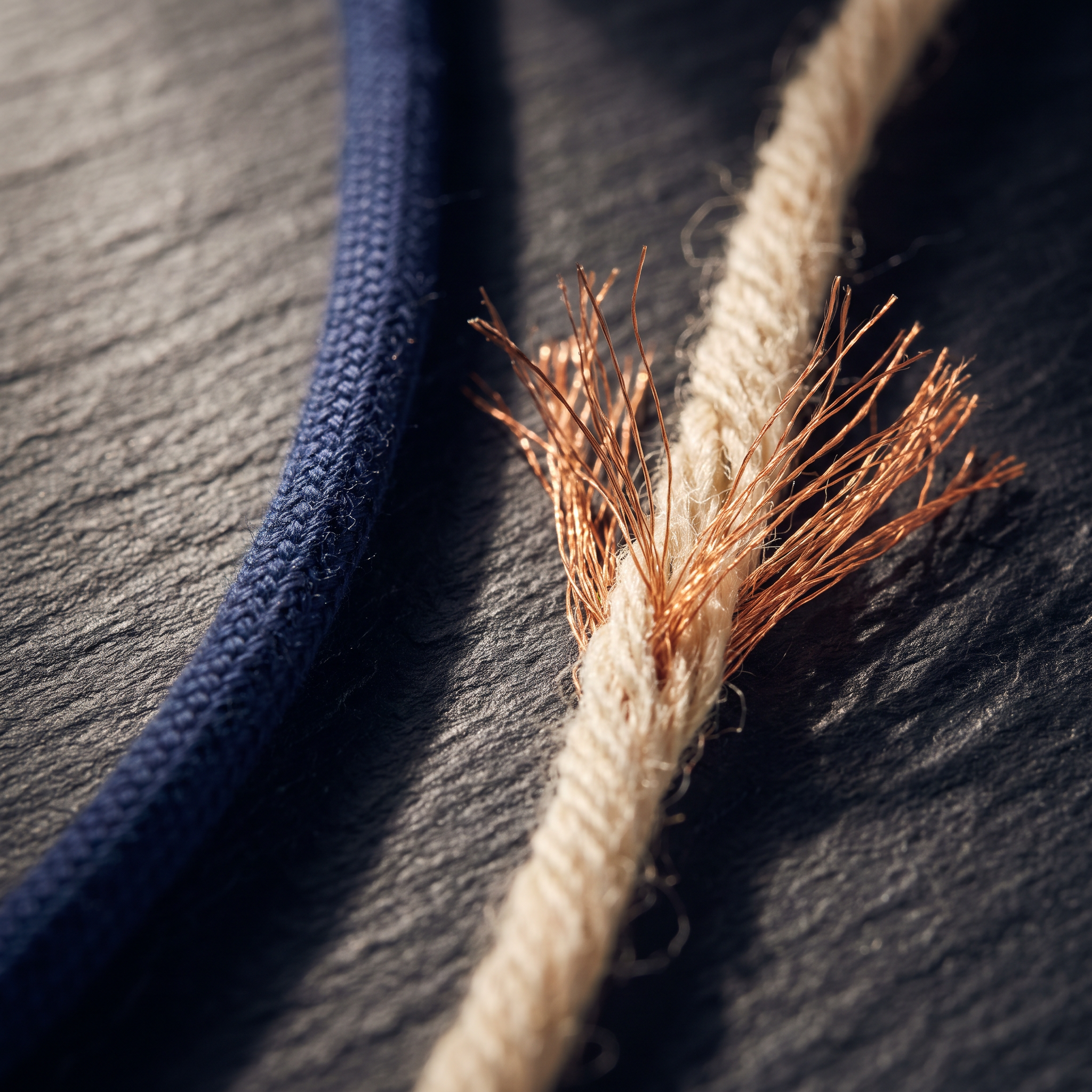
| Property | Tubular cotton-blend cord | Standard 4-ply acrylic |
|---|---|---|
| Ply split | None. The sleeve is knitted as a tube. | High. Twists open under the hook tip. |
| Stitch edges | Clear V shapes that you can count. | A soft halo that hides the stitch count. |
| Stretch | Steady, because of the nylon core. | Uneven under changing tension. |
| Beginner snags | Rare when the hook enters square. | Common on the first rows. |
Hook Shape and Grip: Inline vs Tapered
Crochet uses small, repeated moves of the wrist, thumb, and index finger. Handle size and throat curve change the load on the tendons. New makers often squeeze a bare metal shaft. That shaft is only 3 mm to 5 mm wide, so force concentrates on a small area.
An ergonomic hook uses a rubber or silicone handle 12 mm to 15 mm wide. Johnson (1990) showed that a larger handle on a hand tool can lower the pinch force needed for the same task. A thicker grip delays forearm fatigue during a long first lesson. The throat shape then splits into two families.
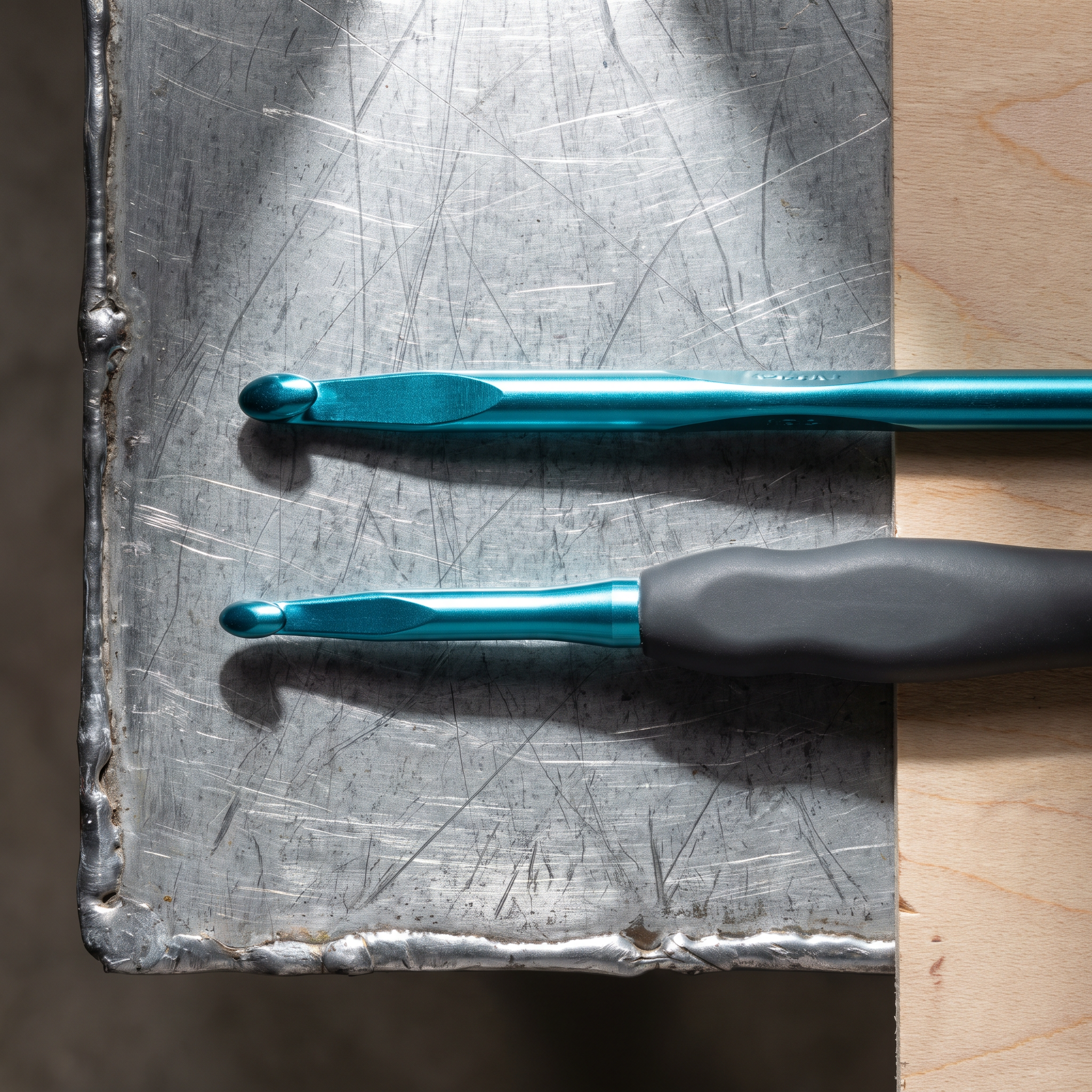
- Tapered throat (Boye / Clover): The shaft narrows toward a round point. The working loop slides onto the shank. This shape helps in spiral rounds.
- Inline throat (Susan Bates): A flat shelf is cut into the shaft. Loop size stays even. The sharper lip can catch twisted plies.
Four Crochet Starter Kit Picks You Can Learn With
We compared stitch clarity, handle comfort, parts in the box, and the lesson format. These four starter sets are each a crochet starter kit that a new maker can finish. One is a crochet animal kit. One is a crochet set for beginners with many hook sizes. Use the Amazon link to check the current listing. If you want more craft context, read the other DIY craft guides on this isle.
The Woobles Pierre The Penguin Beginner Crochet Kit
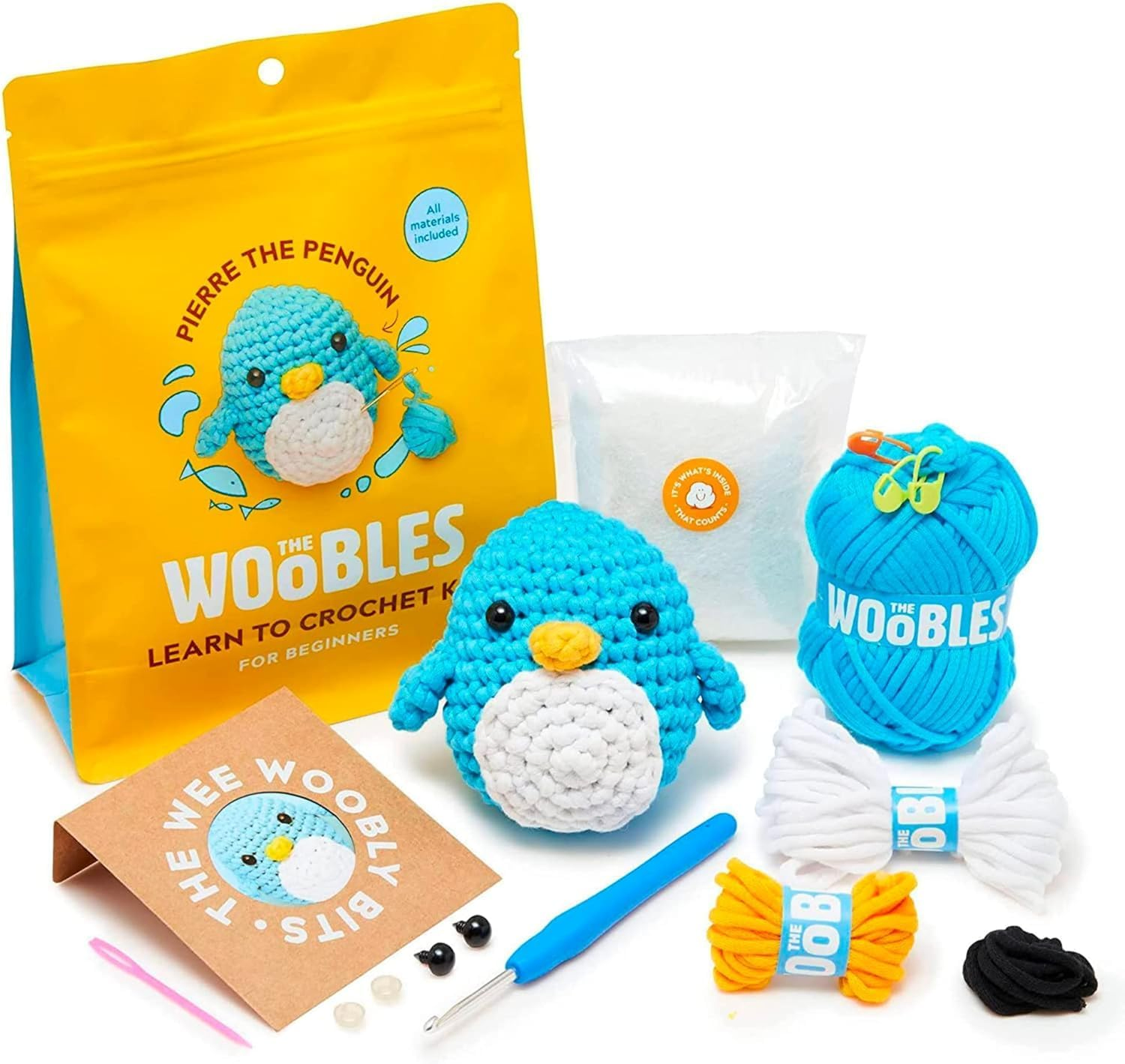
If the first loop fails, this crochet animal kit removes that hurdle with a pre-started piece and tubular yarn that does not split.
— Avery, Beautyisles AI Editorial Host
- Pre-started foundation ring avoids initial loop failures
- Tubular cotton-nylon yarn eliminates splitting filaments
- Step-by-step video lessons geared for left and right hands
- Single amigurumi project limits stitch exploration
- The 4.0 mm hook and yarn stay sized for this penguin only
Hearth & Harbor 73-Piece Complete Crochet Kit
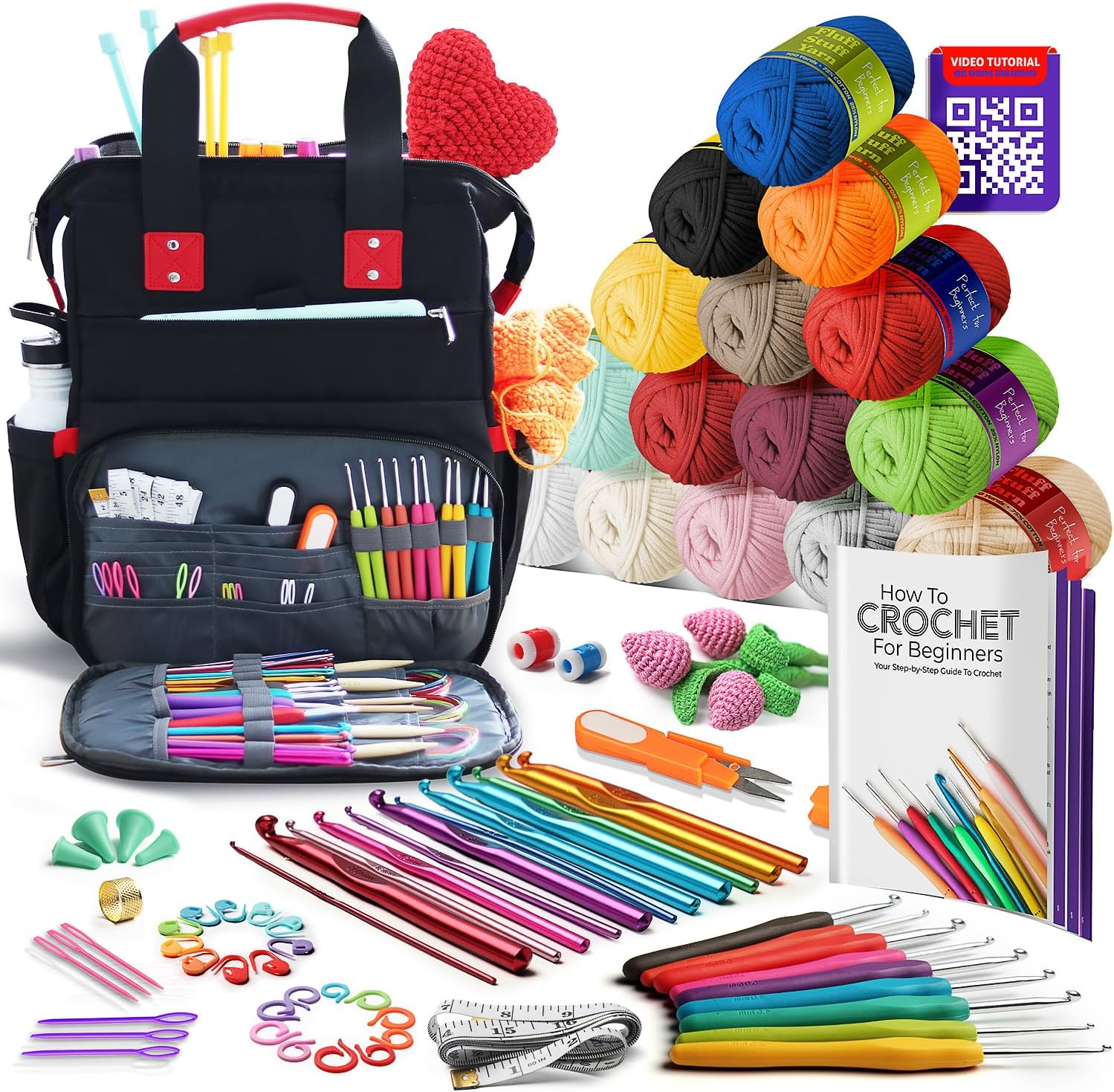
If you want a crochet set for beginners that you can keep using, this kit gives nine hook sizes and a tote for later projects.
— Avery, Beautyisles AI Editorial Host
- Nine full ergonomic hook sizes accommodate future projects
- Durable canvas storage tote organizes tools and working yarn
- Extensive accessory assortment including stitch markers and snips
- Standard 4-ply yarn requires careful attention to prevent splitting
- Compact yarn skein yardage best suited for small sample swatches
Crochetta Potted Plants 4-Pack Beginner Crochet Kit
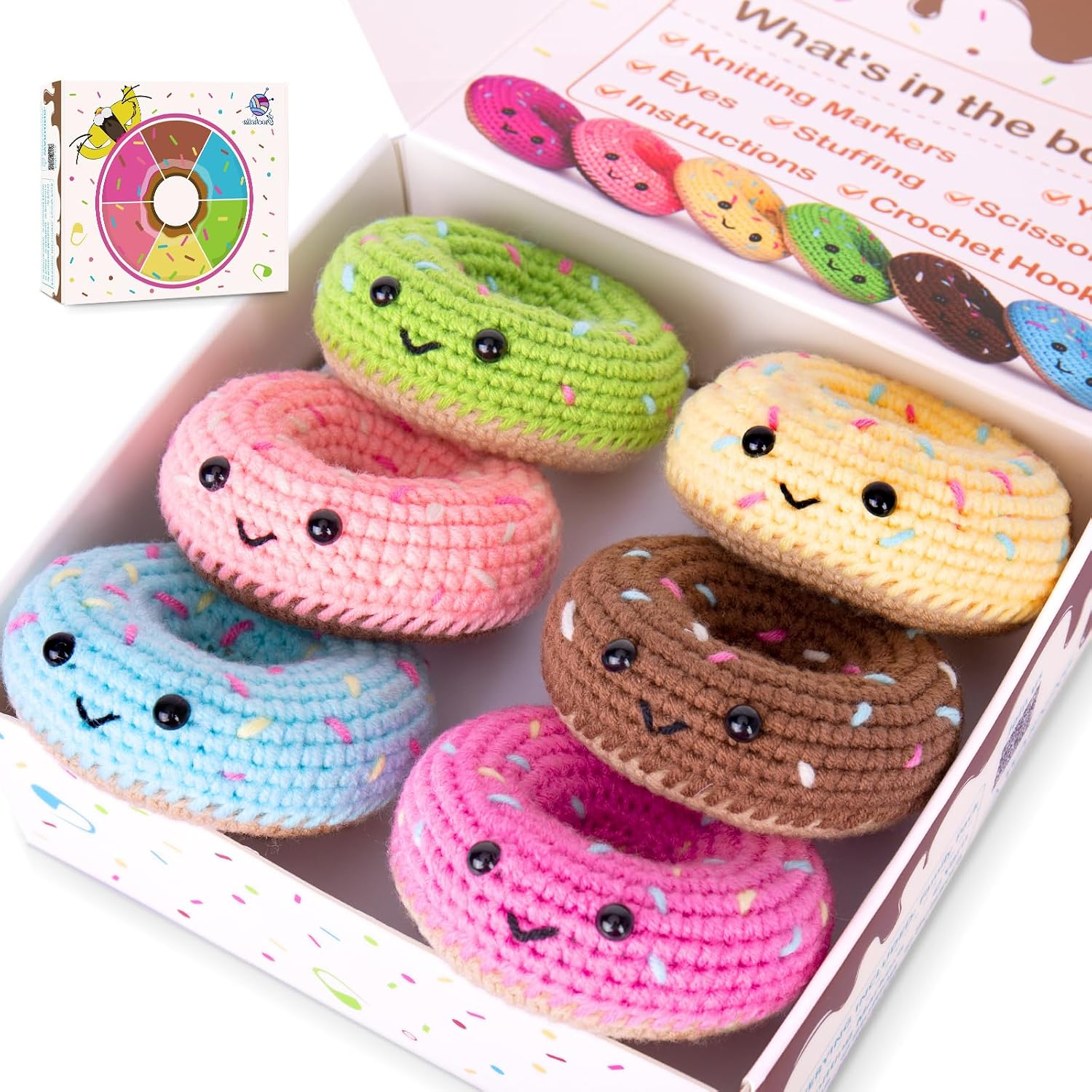
Four small plant projects keep learning going while you repeat circular rounds and simple shaping.
— Avery, Beautyisles AI Editorial Host
- Four distinct projects build confidence through repeated technique
- Includes forty percent extra yarn for tension calibration
- Video guides break down leaf assembly and wire support
- Wire assembly steps require careful finger dexterity
- Yarn texture is softer than heavy-gauge cotton cords
Mira HandCrafts 12-Skein Starter Crochet Kit
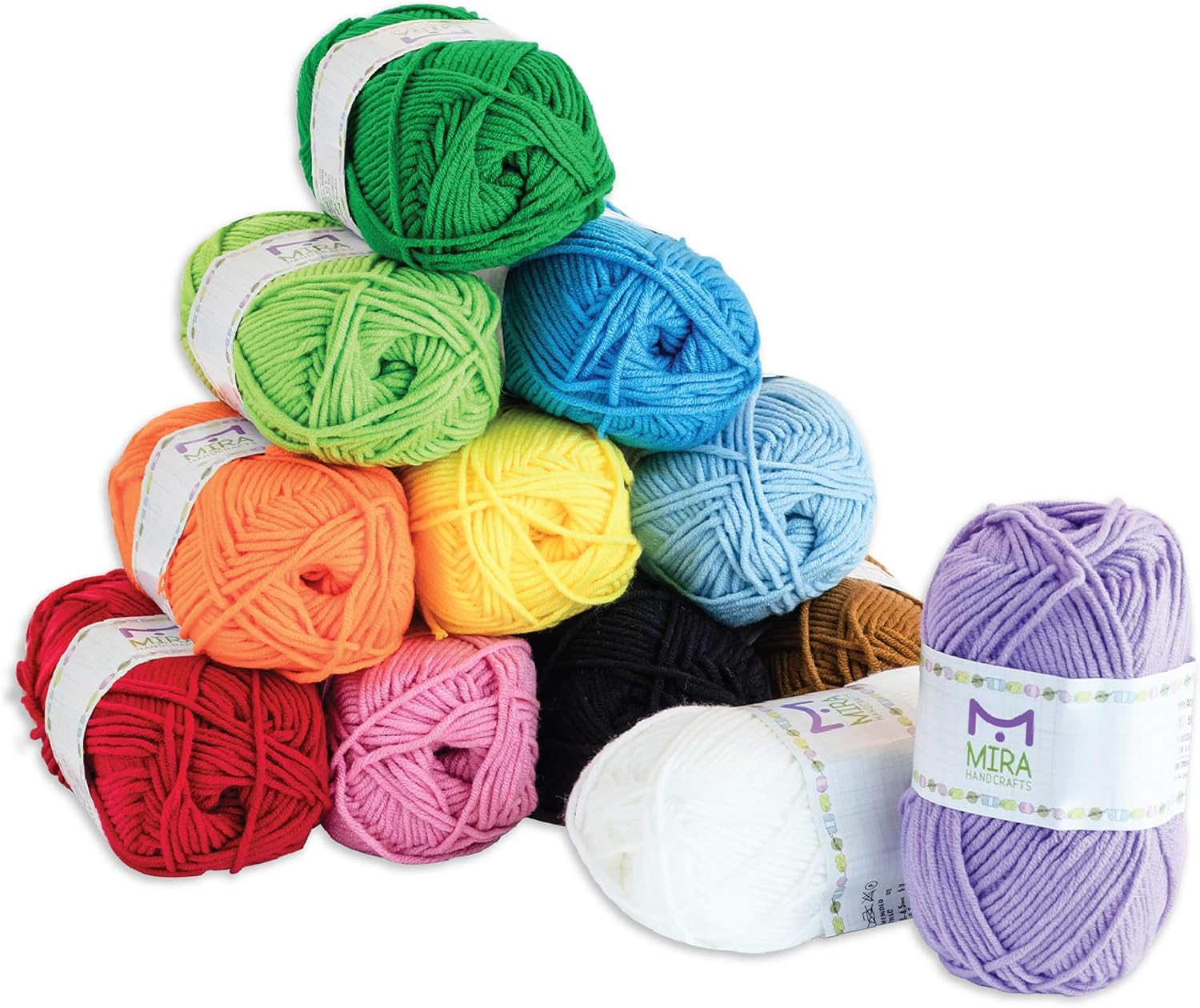
If you want a crochet starter kit for beginners for color practice, this yarn bundle gives low-stakes material for squares and cloths.
— Avery, Beautyisles AI Editorial Host
- Vibrant multi-color palette ideal for practicing color transitions
- Light worsted weight clarifies stitch crown and post geometry
- Budget-friendly entry point for non-prescriptive stitch training
- Does not provide interactive video tutorial progression
- Standard acrylic fibers require controlled hook entry
First Hour: Magic Ring to Single Stitch
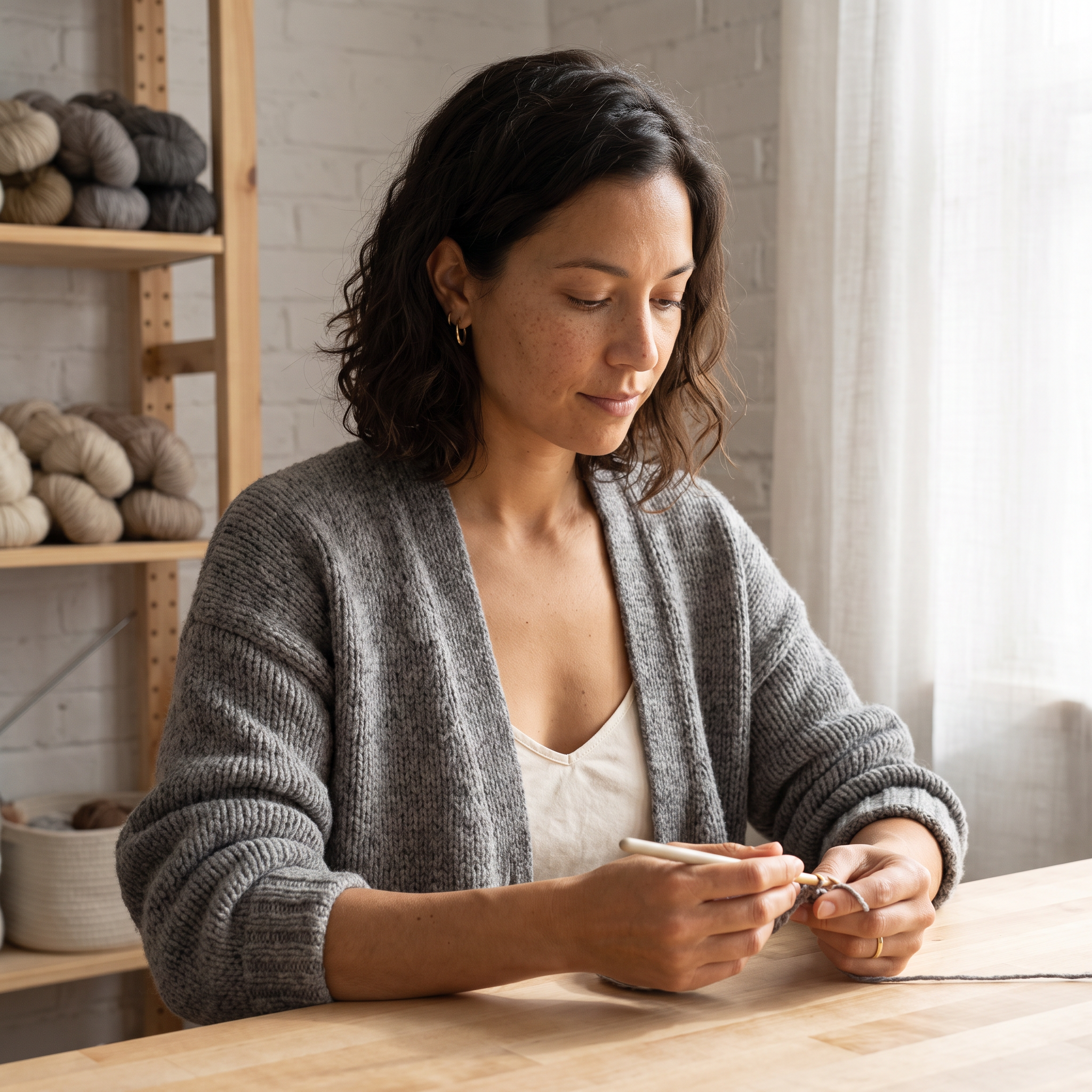
Most small stuffed pieces start with a circle, not a long chain. Amigurumi uses that circle as the head or body. Your first hour has four steps. Work them in order. Keep the yarn over your index finger and against your palm with the ring and little fingers.
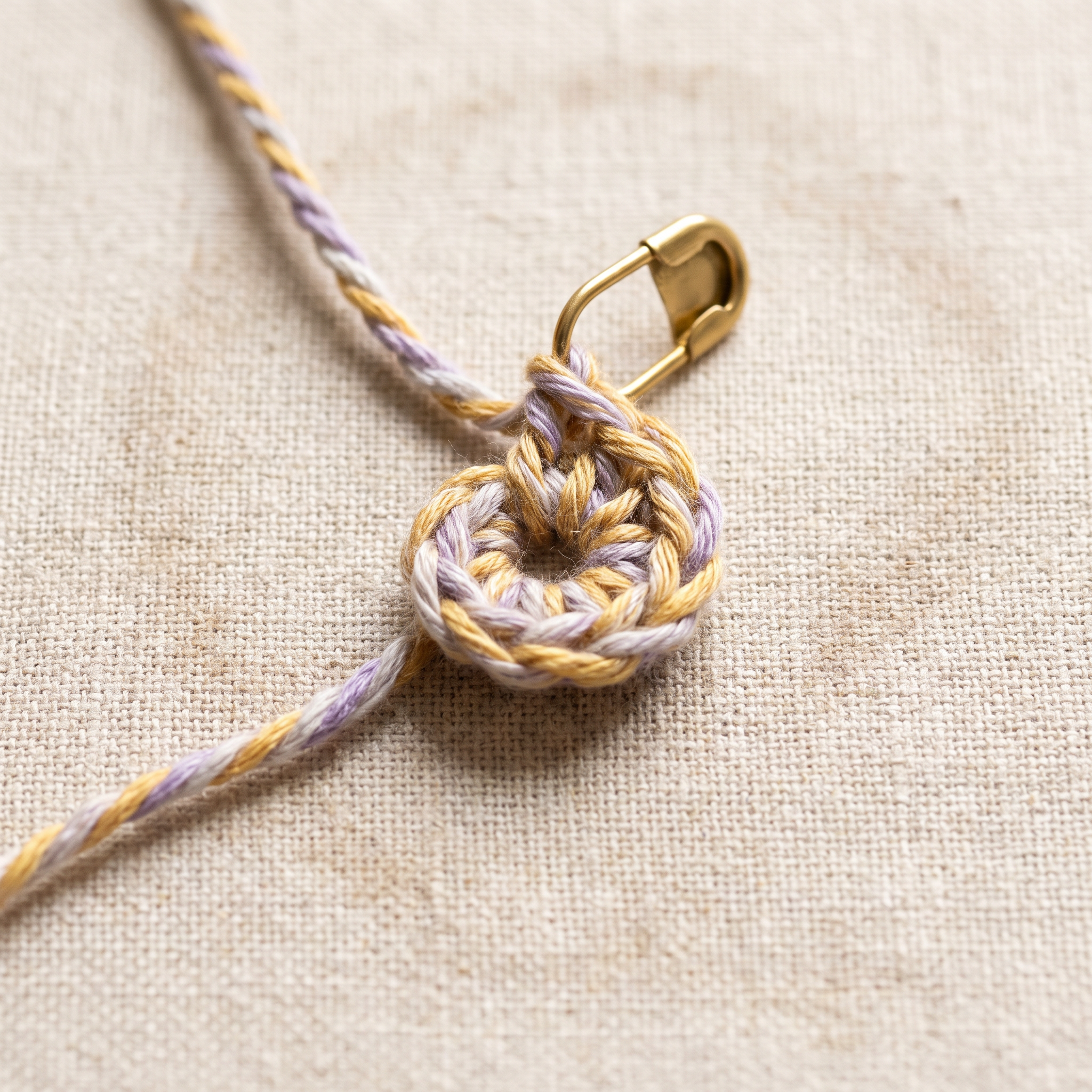
Step 1: The magic ring (adjustable loop)
The magic ring is a sliding loop that closes the center hole. Wrap the tail over your left index and middle fingers so the working yarn crosses on top. Insert the hook under the bottom strand, catch the working yarn, and draw up a loop. Yarn over and pull through to chain one. That locks the loop.
Step 2: Six single crochet stitches
Insert the hook through the center of the loop and the yarn tail. Yarn over and draw up a loop. You now have two loops on the hook. Yarn over and pull through both. That is one single crochet (sc). Repeat until you count six V shapes on the rim.
Step 3: Lock a marker in the first stitch
Clip a locking marker under both loops of the first single crochet. Spiral work does not join with a slip stitch, so the start is easy to lose. When you return to the marker, you finished one round.
Step 4: Close the ring
Hold the tail and pull. The ring shrinks and the six stitches meet in the center. Keep light tension on the working yarn. Do not yank. A hard pull distorts the first round.
Why Work Curls or Slants, and How You Fix It
Early errors have physical causes. Tight stitches, missed increases, and split yarn each leave a clear shape. If the fabric curls or slants, stop and count the V crowns before you add more rounds. The DIY category collects this kind of how-to for new makers.
- Stitches too tight to enter: You sized the loop on the thin throat. Slide every loop onto the full shank before you pull yarn through.
- Piece cups inward: You missed an increase, or tension got tighter. Count V crowns after each round. An increase is two single crochets in the same stitch.
- Edges grow or shrink: You worked into the turning chain, or you skipped the last stitch. Mark the first stitch and the last stitch of a flat row.
- Yarn splits again and again: The throat is too sharp for twisted yarn, or the entry angle is steep. Rotate the head 45 degrees down as you insert.
What to Learn After the First Kit
The kit hook is one size. Crochet hooks for beginners shows how to match that hook to the yarn in the box. A crochet hook set comes later, when one hook is not enough.
The yarn in a kit is a starting point. Beginner yarn for crochet explains which fibers stay easy to see.
The first stitch in most kits is the single crochet stitch. A flat motif starts with how to crochet a granny square. A round starts with how to crochet a circle.
After the swatch, a first project is a crochet scarf, a crochet hat, or a crochet blanket. A stuffed shape uses an amigurumi crochet kit for beginners.
Frequently Asked Questions About a Beginner Crochet Kit
What is the best crochet kit for a beginner?
The best crochet kit for a beginner uses yarn that does not split. It also needs a 4.0 mm to 5.0 mm hook with a thick handle, locking markers, and a video tutorial. A pre-started ring helps if the first loop is hard. The Woobles animal kits match that list. A large hook-and-yarn set is better if you want many later projects.
How to start crocheting for beginners with a kit?
Open the kit, watch the first tutorial, and make a slip knot on the hook. If the kit includes a pre-started ring, start there. Work six single crochet stitches in the ring, clip a marker in the first stitch, then close the ring. Keep the yarn over the index finger. Stop after one round and count the V shapes before you continue.
What should a beginner crochet kit include?
A beginner crochet kit must include a 4.0 mm to 5.0 mm hook. It must also include yarn that does not split, or a smooth worsted yarn, locking stitch markers, a blunt yarn needle, and a step-by-step video. Animal kits also add stuffing and safety eyes. A printed chart alone is not enough for a first session.
Is crochet easier than knitting for beginners?
Crochet is often easier than knitting for a first project because you hold one hook and work one live loop. Knitting keeps many live stitches on two needles, so a drop unravels a row. Crochet mistakes stay in one stitch. If you want a small toy, start with crochet. If you want a large flat fabric, knitting can still fit later.
What size crochet hook is best for beginners?
A 4.0 mm (US G-6) or 5.0 mm (US H-8) hook is the best size for beginners. The loops are large enough to see. The handle still fits the hand. Pair it with tubular cord or smooth worsted yarn. A tiny steel hook hides the stitch. A very large hook makes loose fabric that is hard to count.
Why does my crochet curl or slant as I work?
Work curls when stitches are too tight, or when you miss an increase in a round. Work slants when you skip the last stitch of a row, or when you work into the turning chain. Count the V crowns after each row or round. Slide each loop onto the full shank. Mark the first stitch and the last stitch on flat rows.
What type of yarn is best in a beginner crochet kit?
The best yarn in a beginner crochet kit is tubular cotton cord with a nylon core. It has no plies, so the hook cannot split it. The stitch edge stays clear. Light colors show the V shape. Fuzzy, dark, or loosely twisted acrylic hides mistakes and snags on a sharp throat.
What is the difference between inline and tapered crochet hooks?
An inline hook has a flat shaft and a deep notch cut into the metal. It helps keep stitch size even. A tapered hook has a round point and a smooth slope. Yarn glides over the neck with less catch. If your yarn splits, a tapered throat is the safer first choice.
Can you wash items made from beginner crochet kits?
Yes. You can wash cotton-blend or acrylic pieces from beginner kits. Place the item in a mesh laundry bag. Wash in cold water on a gentle cycle with mild soap. Dry flat on a towel. Do not use high heat. Heat can melt fibers and shift the stuffing.
Editorial Sources
- Hearle JWS, Grosberg P, Backer S. (1969). “Structural Mechanics of Fibers, Yarns, and Fabrics.” John Wiley & Sons, New York.
- Johnson SL. (1990). “Ergonomic design of handheld tools to prevent trauma to the hand and upper extremity.” Journal of Hand Therapy, 3(2):86–93. DOI: 10.1016/s0894-1130(12)80006-8.
- Satteson E, Tannan SC. (2023). “De Quervain Tenosynovitis.” StatPearls [Internet]. Treasure Island (FL): StatPearls Publishing. PMID: 28723034.