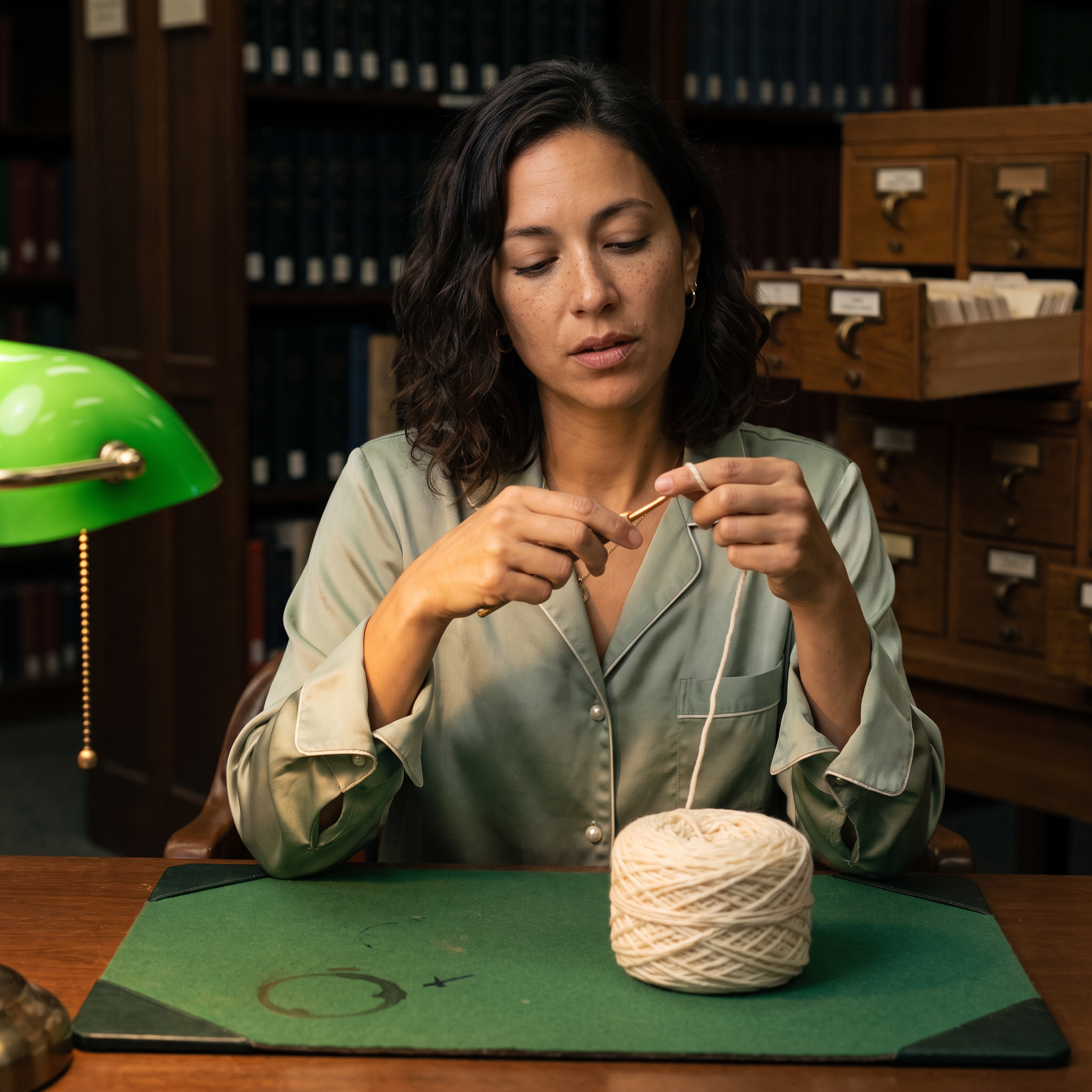
- See the V: Light, smooth worsted yarn shows each stitch to a first hook.
- Weight is thickness: Number 4 worsted matches a 5 mm hook.
- Fiber changes bounce: Acrylic slides. Cotton holds. Wool springs back.
- Join without a lump: Overlap tails for a few stitches. Do not hide a knot.
What Beginner Yarn for Crochet Must Show
Beginner yarn for crochet is a strand a first hook can see and a first stitch can hold. This lesson sits on the Beautyisles DIY isle. It picks fiber, thickness, and a join. It does not size a blanket. It does not pick a stuffed-animal yarn.
Use the hook from your crochet kit, then replace splitting kit yarn if the first rows snag. Pair the new skein with crochet hooks for beginners at 5 mm for worsted yarn. Light cream on a darker table makes each V easy to count. Nagy and Sanchez measured how a small color gap slows a visual search.
The best yarn for crochet at this stage is not a famous colorway. It is a smooth, light, number 4 strand. Dark navy hides the crown of the stitch. Fuzzy yarn hides the count under a halo.
- Color: Cream, ecru, or another light solid. Skip navy and black.
- Surface: Smooth twist. Skip pile, slub, and a heavy halo.
- Weight: Number 4 worsted, the thickness a 5 mm hook enters cleanly.
- Length: Enough for a swatch and a short rectangle.
Type of Yarn for Crochet: Acrylic, Cotton, Wool, and Bamboo
Type of yarn for crochet is the fiber in the strand. Four fibers cover a first buy: acrylic, cotton, wool, and bamboo. Hearle, Grosberg, and Backer describe how twist and packing change how a yarn behaves under a tool. Gupta and El Mogahzy mapped friction between fibers, and between fiber and metal.
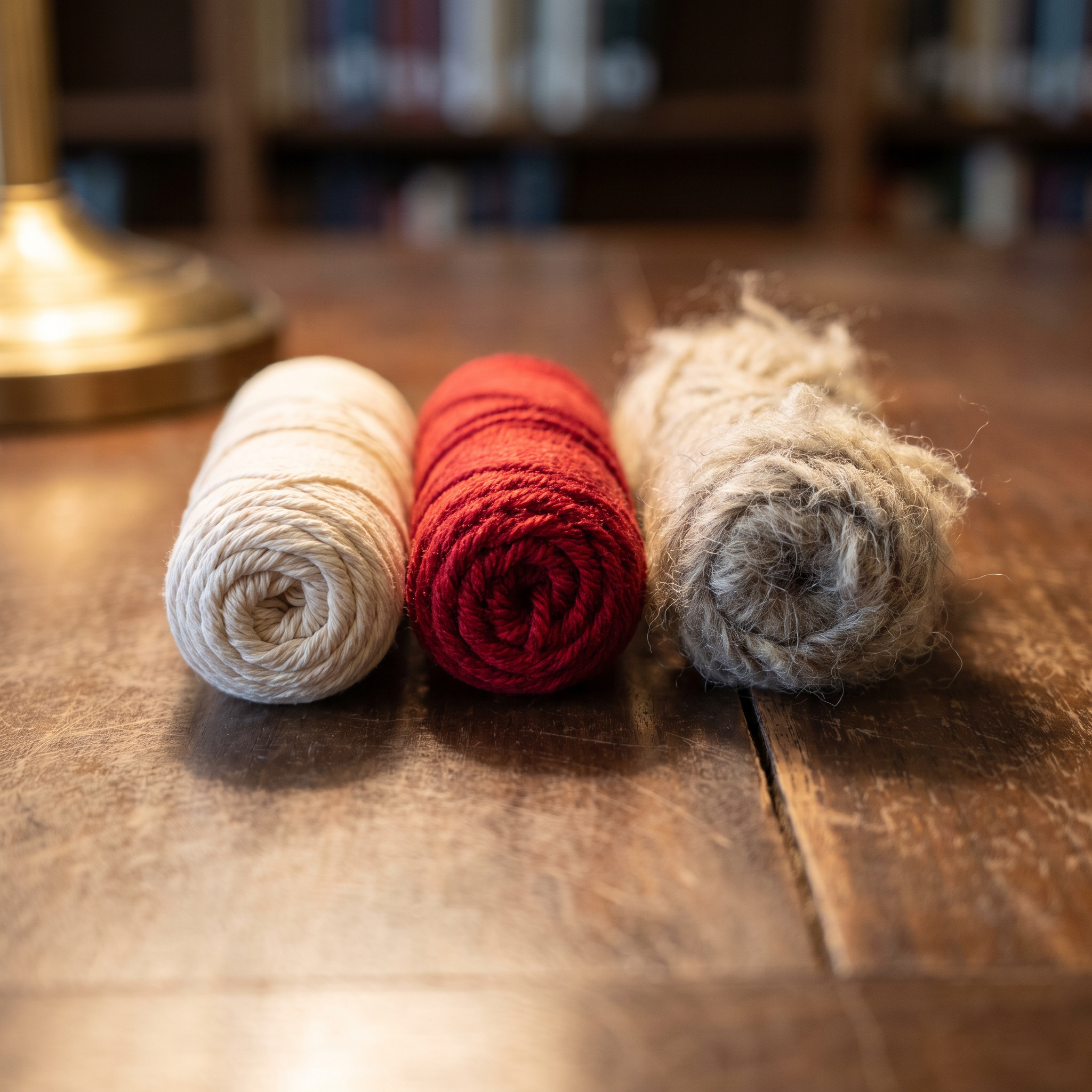
What is acrylic yarn for crochet? Acrylic is a manufactured fiber with low water take-up. Fuzek measured how common fibers take and give back water. Acrylic stays light when the air is damp. Acrylic crochet yarn slides on a metal hook. A tight, anti-pilling twist shows the V. A loose twist opens and splits.
What cotton yarn is good for crochet? A smooth, light, number 4 cotton. Cotton yarn for crochet has little stretch, so a first stitch stays the size you made. Matte cotton shows stitch edges. Cotton can feel stiff on the hands. Gupta and El Mogahzy showed that fiber friction is not the same for every fiber. Cotton grabs more than slick acrylic.
Crochet wool for beginners is a springy worsted strand. Worsted weight wool yarn stores bounce. Morton and Hearle describe elastic recovery in textile fibres. Uneven tension often evens after a rest. Wool can felt in hot water. A heather mix hides small faults. It also hides the count if the light is low.
What is bamboo yarn for crochet? Most bamboo yarn is regenerated cellulose, a viscose made from bamboo pulp. It takes water more readily than acrylic. The surface is often slick. Stitches can slide off the hook. Use a light, tight-twist bamboo only after a smooth acrylic or cotton feels easy. Skip dark bamboo for the first rows.
What Crochet Yarn Weight Means
What does crochet yarn weight mean? Weight is thickness you can see, not how heavy the ball feels in the hand. The band uses a number from 0 to 7. Number 4 is medium worsted. Number 4 matches a 5 mm hook for a first fabric you can count.

| Weight number | Name | First-hook note |
|---|---|---|
| 1 to 2 | Fingering to sport | Too thin. The V is hard to see. |
| 3 | DK | Workable. Drop the hook one size from 5 mm. |
| 4 | Worsted, medium | Kit default. Match a 5 mm H-8 hook. |
| 5 | Bulky | Faster fabric. Needs a larger hook. |
| 6 to 7 | Super bulky to jumbo | Pile and chenille often live here. Split risk is high. |
Is crochet yarn different than regular yarn? The fiber is the same. A ball labelled for crochet is still wool, cotton, or acrylic. Twist, thickness, and color control whether a first hook can enter. A knitting ball of the same weight works if the strand is smooth and light.
Do not count balls for a large object on this page. A first wearable rectangle lives on how to crochet a scarf.
Best Yarn for Crochet When You Use a First Hook
These three skeins are each a light, number 4 yarn a 5 mm hook can see. One is acrylic. One is cotton. One is wool. Use the Amazon link for the current listing.
Premier Yarns Anti-Pilling Everyday Worsted Yarn 3-Pack, Cream
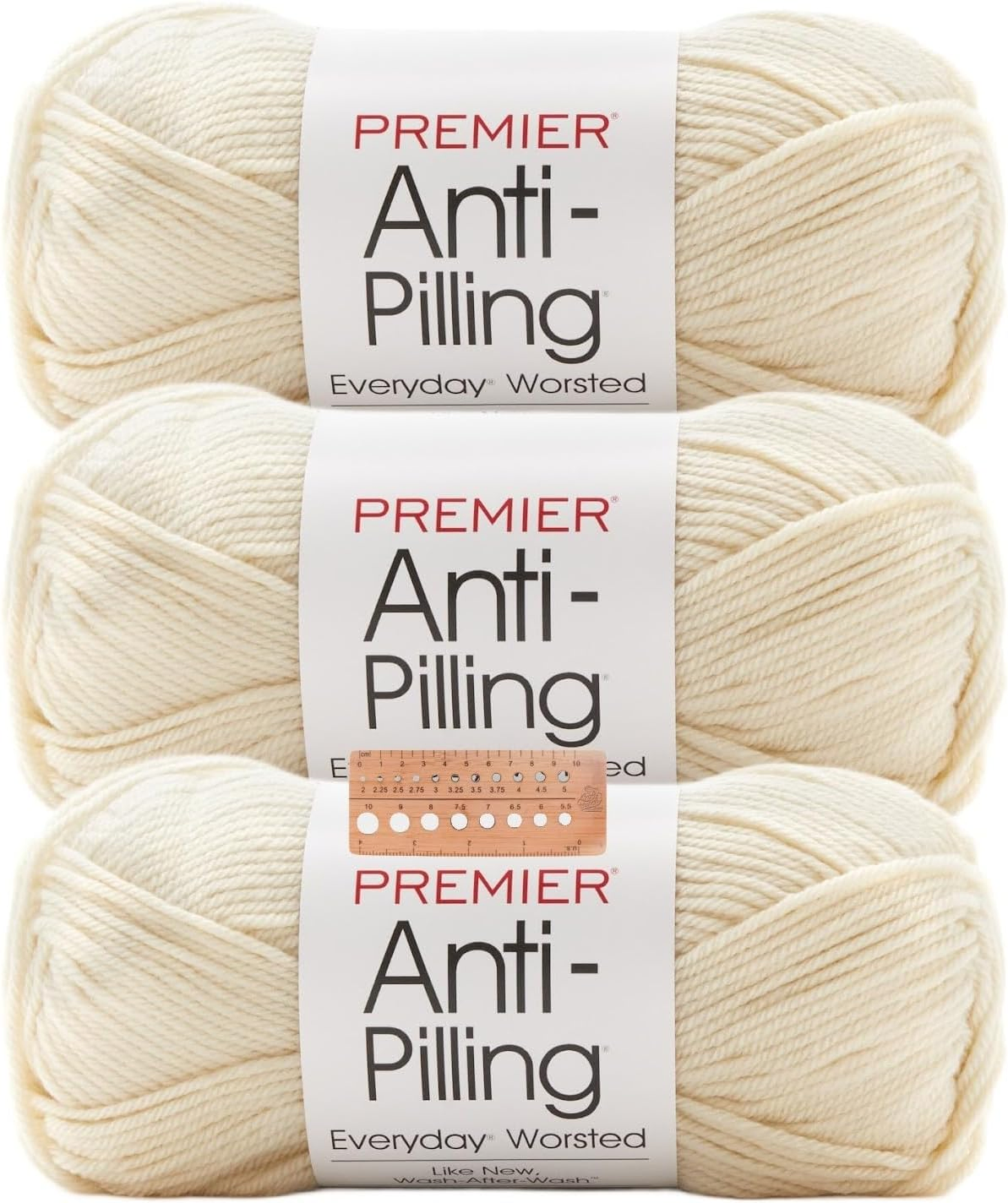
A light, smooth acrylic lets a first hook see each V. Cream shows stitch errors before they stack.
— Avery, Beautyisles AI Editorial Host
- Smooth anti-pilling acrylic that resists a fuzzy halo
- Light cream makes each stitch easy to count
- Three skeins cover a scarf or many swatches
- Acrylic holds less bounce than wool
- The 3-pack is more yarn than one swatch needs
Lily Sugar’n Cream Cotton Yarn Ecru 6-Pack
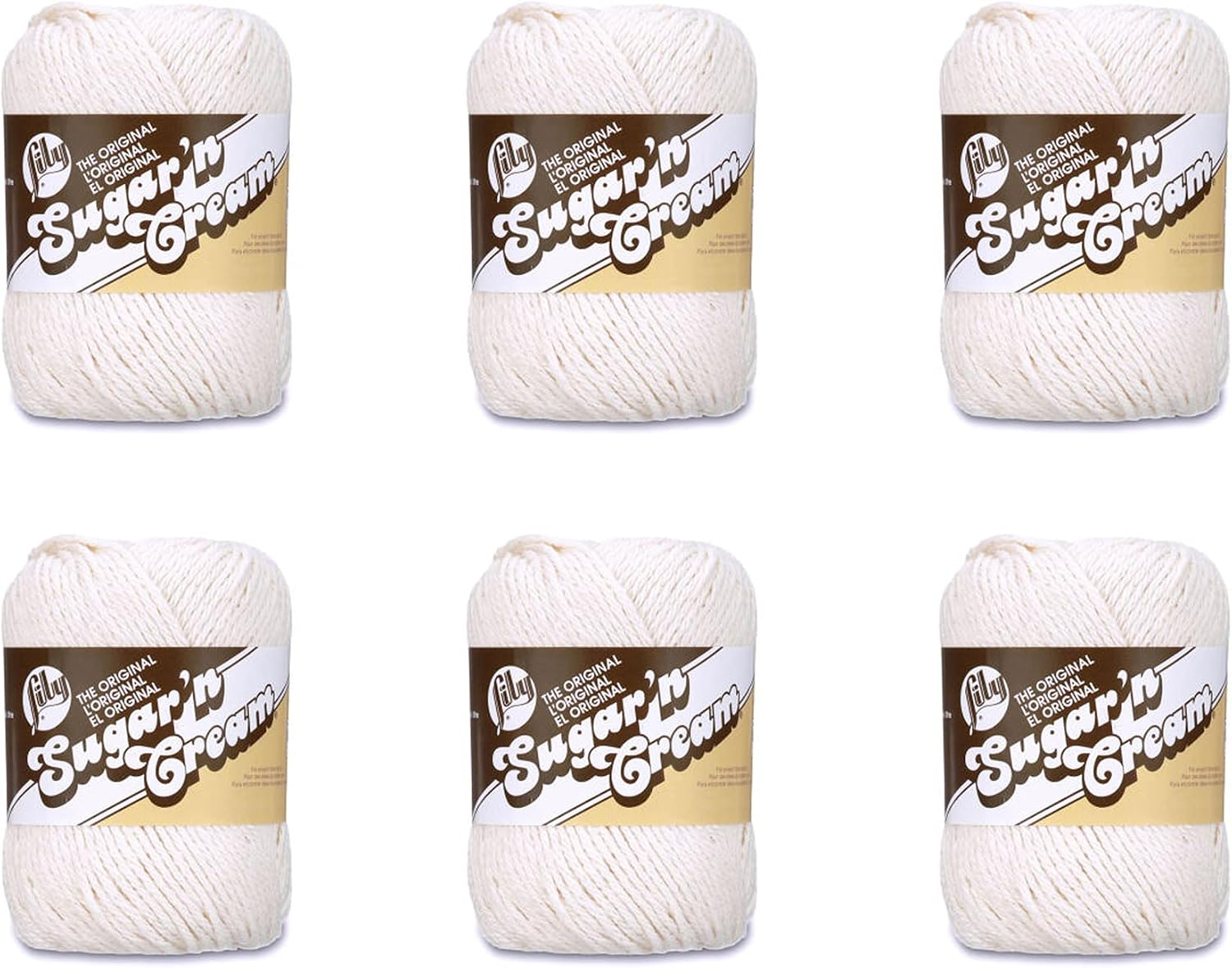
Cotton has little stretch, so a first stitch stays the size you made. Ecru shows the V crowns clearly.
— Avery, Beautyisles AI Editorial Host
- Low stretch keeps a first row from growing
- Matte cotton shows stitch edges
- Dishcloth-weight balls are short, so a join comes soon
- Cotton can feel stiff on the hands
- A short 120 yd ball needs a join on a long scarf
Patons Classic Wool Heath Heather Yarn 5-Pack
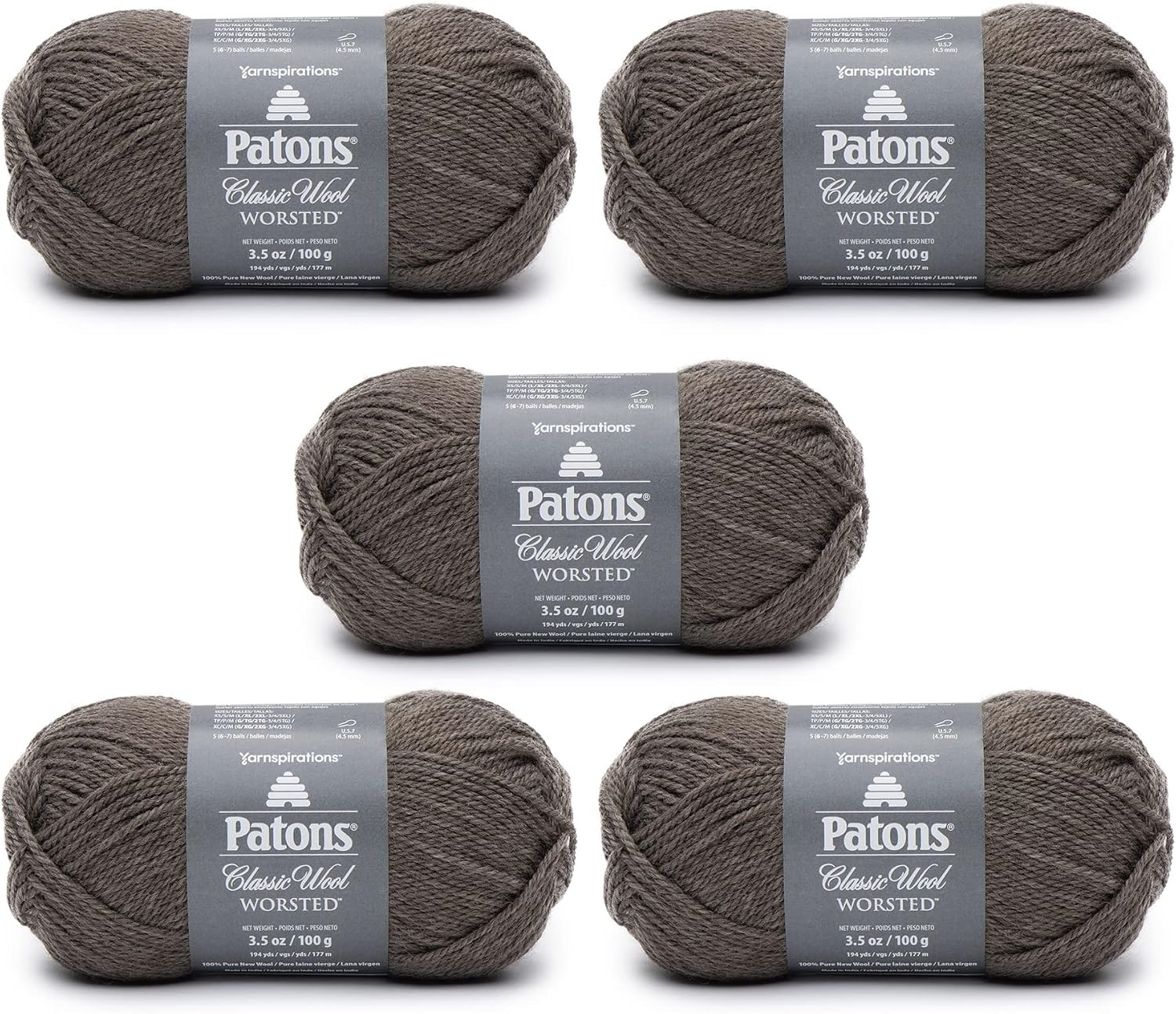
Wool springs back, so uneven tension evens out after a rest. Heather hides small mistakes.
— Avery, Beautyisles AI Editorial Host
- Wool bounce evens a slightly tight row
- Heather colour hides small stitch faults
- Worsted weight matches a 5 mm hook
- Wool can felt if you wash it in hot water
- A heather mix hides stitch count if the light is low
How You Join Yarn in Crochet
How do you join yarn in crochet? You hold two tails so the fabric does not show a lump. A knot on the face is a lump. Joining wool in crochet is often easier than joining slick acrylic, because wool friction is high.

Work a first overlap join in this order:
- Stop when about 15 cm of the old yarn remains.
- Lay the new tail beside the old tail for 8 cm to 10 cm.
- Crochet the next four or five stitches with both strands held as one.
- Drop the old tail. Continue with the new strand only.
- On the wrong side, weave each tail under the back of nearby stitches with a blunt needle.
- Do not knot the tails on the face of the work.
A needle splice threads one tail back into its own ply. That join is tidy on a long rectangle. Learn the overlap first. If the join sits in the middle of a row, the double strand is thicker for those few stitches. Plan the join near an edge when you can.
Why Chenille Kit Yarn Splits
Why does chenille kit yarn split? Chenille is a pile yarn. Cut loops sit on a core. The hook tip can enter the pile and miss the core. The stitch then holds only part of the strand. Hearle, Grosberg, and Backer treat this as a structure problem, not a skill failure.
Sawhney and colleagues compared core-spun yarns and showed how a core and a wrap can behave as two parts. Chenille is a related two-part strand. A sharp tapered lip makes the split worse. A rounder point and a slower hand help. A smooth worsted replacement helps more.
If the kit yarn is tubular cord with a nylon core, the sleeve has no plies and does not split that way. If the kit yarn is twisted acrylic or chenille, change to a light, smooth number 4 skein for the lesson rows. Keep the kit hook if it is 4 mm to 5 mm.
- Split stitches: The tip entered between plies or into chenille pile. Catch the whole strand.
- Lost count: The yarn is dark or fuzzy. Change to cream or ecru.
- Growing rows: The yarn stretches. Cotton holds size. Slide loops onto the shank.
- Lumpy join: A knot sits on the face. Overlap tails and weave them on the back.
Frequently Asked Questions About Beginner Yarn for Crochet
What is acrylic yarn for crochet?
Acrylic yarn for crochet is a manufactured fiber with low water take-up. A smooth, light, anti-pilling worsted shows each V. A loose twist splits. Acrylic holds less bounce than wool.
What cotton yarn is good for crochet?
A smooth, light, number 4 cotton is good for a first hook. Low stretch keeps a first row from growing. Matte ecru shows stitch edges. Cotton can feel stiff on the hands.
What does crochet yarn weight mean?
Yarn weight is thickness you can see. Number 4 is medium worsted and matches a 5 mm hook. Thinner yarn hides the V. Super bulky yarn often uses pile that splits.
How do you join yarn in crochet?
Overlap the old tail and the new tail for 8 cm to 10 cm. Work four or five stitches with both strands. Drop the old tail. Weave both ends on the wrong side. Do not knot the face.
What is bamboo yarn for crochet?
Most bamboo yarn is regenerated cellulose from bamboo pulp. It takes water more readily than acrylic and often feels slick. Stitches can slide. Use a light, tight twist after a smoother first yarn.
What is the best yarn for crochet?
For a first hook, the best yarn for crochet is a light, smooth, number 4 strand. Acrylic, cotton, and wool all work. Pick cream or ecru so you can count every V.
Is crochet yarn different than regular yarn?
The fiber is the same. A ball labelled for crochet is still wool, cotton, or acrylic. Thickness, twist, and color decide whether a first hook can enter. A smooth knitting worsted of the same weight works.
Why does chenille kit yarn split?
Chenille is a pile yarn. Cut loops sit on a core. The hook tip can enter the pile and miss the core. Change to a smooth worsted for lesson rows. Keep the kit hook if it is 4 mm to 5 mm.
Editorial Sources
- Hearle JWS, Grosberg P, Backer S. (1969). “Structural Mechanics of Fibers, Yarns, and Fabrics.” Wiley-Interscience, New York, Vol. 1, xiii+469 pp.
- Gupta BS, El Mogahzy YE. (1991). “Friction in Fibrous Materials.” Textile Research Journal, 61(9):547–555. DOI: 10.1177/004051759106100907.
- Sawhney APS, Ruppenicker GF, Kimmel LB, Robert KQ. (1992). “Comparison of Filament-Core Spun Yarns Produced by New and Conventional Methods.” Textile Research Journal, 62(2):67–73. DOI: 10.1177/004051759206200202.
- Nagy AL, Sanchez RR. (1990). “Critical color differences determined with a visual search task.” Journal of the Optical Society of America A, 7(7):1209–1217. DOI: 10.1364/josaa.7.001209. PMID: 2370588.
- Morton WE, Hearle JWS. (2008). “Physical Properties of Textile Fibres.” Woodhead Publishing, Cambridge (4th ed.). DOI: 10.1533/9781845694425.
- Fuzek JF. (1985). “Absorption and desorption of water by some common fibers.” Industrial & Engineering Chemistry Product Research and Development, 24(1):140–144. DOI: 10.1021/i300017a026.