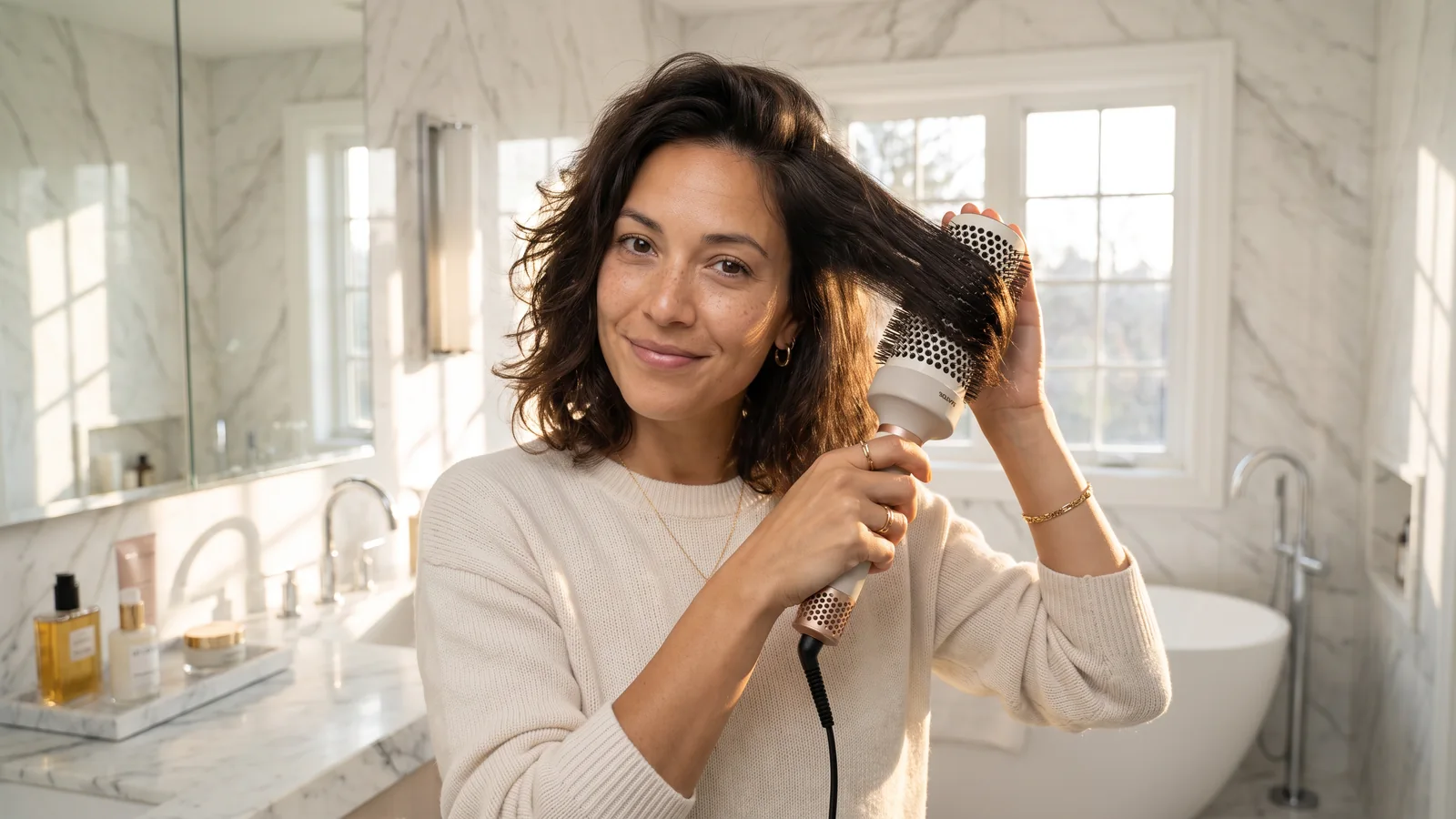
In short: The best blow dryer brush for most hair textures is the Revlon One-Step Volumizer Plus 2.0. It has a refined 2.4-inch ceramic-titanium barrel. It offers upgraded motor longevity and exceptional price-to-performance ratio. However, for fragile, bleached, or heat-sensitive hair seeking zero extreme heat damage, the Dyson Airwrap Multi-Styler remains the undisputed gold standard in convective aerodynamic styling.
For more from the desk on hair care and styling, explore our Hair Isle hub.
There was a time when a salon-grade blowout required juggling. You held a high-wattage hair dryer in one hand. You held a heavy ceramic round brush in the other. You needed the coordination of a professional stylist. Today, the hot air styling brush has transformed at-home hair care. It merges high-velocity convective airflow and calibrated mechanical tension into a single ergonomic tool. These hybrid tools maintain continuous contact with the hair shaft as it dries. They smooth the cuticle scales. They realign hydrogen bonds. They deliver lasting root lift in a fraction of traditional styling time.
What Makes the Best Blow Dryer Brush? Core Rules at a Glance
- Moisture Management (The 80% Rule): Never apply a hot air brush to dripping wet hair. Rough-dry or towel-blot until hair is 75% to 80% dry to prevent cortex boiling and tensile fractures.
- Barrel Diameter & Shape: Oval barrels (2.0″–2.4″) maximize root volume. Round barrels (1.25″–1.5″) create defined bends and curls for short hair. Flat paddle heads deliver ultra-sleek, pin-straight finishes.
- Barrel Metallurgy: Ceramic provides gentle, far-infrared heat for fine or fragile strands. Titanium offers ultra-fast heat transfer for coarse, low-porosity hair. Tourmaline boosts negative ion output to eliminate static frizz.
- Temperature Regulation: Fine, color-treated, or bleached hair must stay below 300°F (150°C), while coarse or textured patterns require 350°F–385°F (175°C–195°C) to reform hydrogen bonds effectively.
You may require a compact travel blow dryer brush for carry-on convenience. You may require a dual-voltage thermal hair brush for international styling. You may require a high-torque hair blow dryer brush for dense Type 3 and Type 4 coils, so start with our 4C hair blowout method before you buy. Selecting the wrong tool can lead to severe heat blisters and mechanical breakage. Below, we break down the underlying hair physics. We evaluate the 12 leading market performers across every budget and texture. We share the step-by-step styling framework recommended by hair-science research.
The Physics and Hair Science of Hot Air Styling
Understanding how a heated hair brush transforms hair requires examining the fundamental structure of the hair cortex and its bonding mechanisms. Human hair consists mostly of fibrous keratin proteins held together by three types of chemical bonds: disulfide bonds, salt bonds, and hydrogen bonds.
Disulfide bonds provide structural permanence and are only altered through chemical processing (such as perms or relaxers). In contrast, hydrogen bonds are temporary and highly sensitive to water and heat. When hair is wet, water molecules penetrate the porous cortex, breaking the hydrogen bonds and placing the keratin structure into a pliable, plasticized state.
As hair dries under the controlled tension of a best hair brush for blow drying, water evaporates. This allows hydrogen bonds to reform in the exact geometric shape dictated by the brush barrel. The mechanical drag of nylon and tufted bristles smooths the overlapping scales of the outer cuticle layer (the exocuticle and epicuticle). It flattens them against the shaft. This flat surface reflects light evenly, producing the mirror-like shine typical of professional salon blowouts.
Keratin has a “glass transition temperature” (Tg). This is the heat threshold where hair shifts from a rigid, glassy state to a moldable, rubbery state. In completely dry hair, Tg exceeds 140°C (284°F). In wet hair, water acts as a plasticizer, dropping Tg to about 60°C–80°C (140°F–176°F). Applying hot conductive surfaces to soaking wet hair causes rapid steam expansion inside the cortex, resulting in irreversible “bubble hair” deformities and structural splitting.
Barrel Metallurgy: Ceramic vs. Tourmaline vs. Titanium vs. 24K Gold
The material coating the barrel determines how heat transfers from the internal heating element to your hair strands. Choosing the wrong metallurgy can result in either insufficient smoothing power or severe thermal degradation.
| Material | Thermal Conduction | Ionic Emission | Best Hair Match | Primary Advantage |
|---|---|---|---|---|
| Ceramic | Moderate & Uniform | Low to Medium | Fine, damaged, color-treated, or fragile hair | Emits gentle far-infrared heat; completely eliminates hot spots. |
| Tourmaline Ceramic | Uniform & Stable | Ultra-High (Negative Ions) | Frizz-prone, dry, high-porosity hair | Neutralizes positive static charges; collapses water droplets for 30% faster drying. |
| Titanium | Rapid & Intense | Medium | Thick, coarse, resistant, Type 3/4 curls | Heats instantly; delivers maximum cuticle-flattening power on stubborn hair. |
| 24K Gold Surface | High & Consistent | Low | Medium to thick hair, salon-density locks | Superior heat conductivity maintains constant temperature throughout thick passes. |
| Coanda Aerodynamics | Convective Airflow Only | Variable (Engineered) | All hair types, especially compromised strands | Uses high-velocity airflow curvature rather than extreme contact heat. |
Quick Comparison: The 12 Top-Rated Blow Dryer Brushes
Compare the technical specs, barrel geometry, temperature profiles, and optimal hair suitability for our top-rated picks.
| Product | Winner Category | Barrel Specs | Technology | Heat / Speed | Weight |
|---|---|---|---|---|---|
| Revlon One-Step Plus 2.0 | Best Overall Value | 2.4″ Oval (Slim) | Ceramic + Titanium | 4 Settings (Low/Med/High/Cool) | 1.63 lbs |
| Dyson Airwrap Multi-Styler | Best Luxury Splurge | Multi-Attachment | Coanda Airflow System | 3 Heat / 3 Speed + Cold Shot | 1.50 lbs |
| Shark FlexStyle System | Best Versatility | Multi-Attachment (Rotates) | High-Velocity Airflow | 4 Heat / 3 Airflow + Cool Shot | 1.54 lbs |
| Drybar The Double Shot | Best for Thick Hair | 2.44″ Oval | Ionic + Ceramic Core | 3 Settings (Cool/Med/High) | 1.70 lbs |
| Amika Hair Blow Dryer Brush | Best for Fine Hair | 2.4″ Oval | Tourmaline + Negative Ion | 3 Settings (Cool/Low/High) | 1.16 lbs |
| T3 AireBrush Duo | Best Interchangeable | 2.5″ Round + 3.0″ Paddle | IonFlow Technology | 15 Heat/Speed Combinations | 1.30 lbs |
| L’Ange Le Volume 2-in-1 | Best Sleek Finish | 75mm Teardrop Titanium | Pure Titanium Barrel | 3 Settings (Low/High/Cool) | 1.25 lbs |
| Hot Tools Pro Artist 24K | Best Heat Conduction | 2.8″ Oval | 24K Gold Technology | Variable Rheostat Control | 1.60 lbs |
| Conair InfinitiPro Knot Dr. | Best for Detangling | Oval with Flexalite Pins | Tourmaline Ceramic | 3 Heat Settings + Cool | 1.10 lbs |
| Bed Head One-Step Volumizer | Best for Short Hair & Bangs | 1.5″ Small Oval | Tourmaline Ceramic | 3 Settings (Low/High/Cool) | 1.15 lbs |
| BaBylissPRO Rotating Brush | Best for Curly & Wavy Hair | 2.0″ Bi-Directional Barrel | Nano Titanium | 3 Heat / 2 Speed Controls | 1.45 lbs |
| CHI Volumizer 4-in-1 | Best Multi-Head Kit | 4 Interchangeable Heads | Ceramic + Ion Generator | 3 Settings (Low/High/Cool) | 1.20 lbs |
The 12 Best Blow Dryer Brushes of 2026: Expert Breakdown
Swipe or use the arrows below to compare specs, editorial verdicts, and key performance trade-offs for each model.
Revlon One-Step Volumizer Plus 2.0
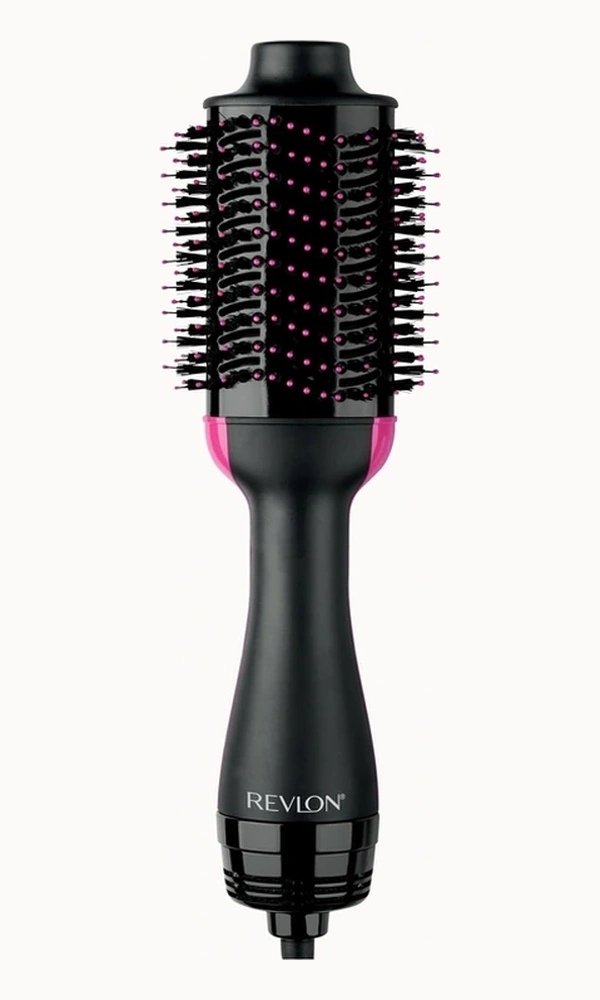
The Plus 2.0 refines the viral classic with a 30% slimmer head for closer root proximity and a dedicated Medium heat mode.
Avery, Beautyisles AI Editorial Host
- Outstanding price-to-performance ratio
- Slimmer barrel reaches closer to roots
- Detachable head allows easy travel
- High heat setting runs warm (use Medium)
- Motor sound is louder than luxury tools
Dyson Airwrap Multi-Styler
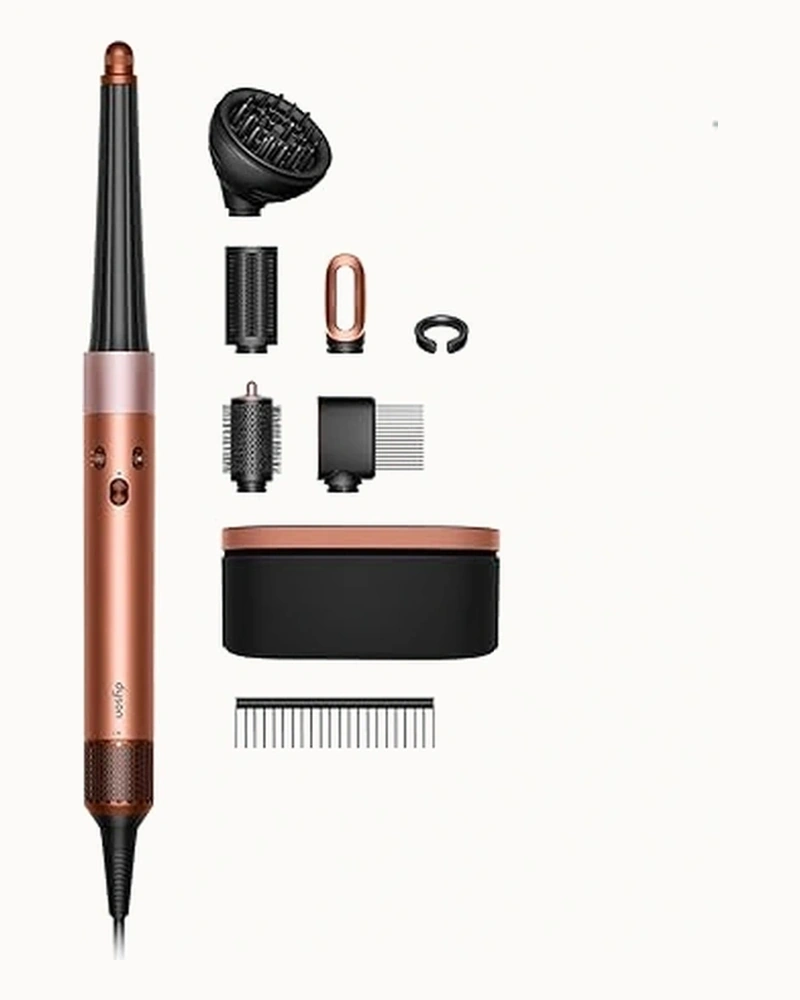
Replaces extreme heat with aerodynamic airflow, ensuring temperatures never exceed 150°C (302°F) to prevent damage on delicate hair.
Avery, Beautyisles AI Editorial Host
- Zero extreme heat damage (safe for color-treated hair)
- Unrivaled versatility: dries, smooths, curls, and shapes
- Balanced, lightweight design
- Substantial upfront investment
- Requires learning curve for curling barrels
Shark FlexStyle Air Styling & Drying System
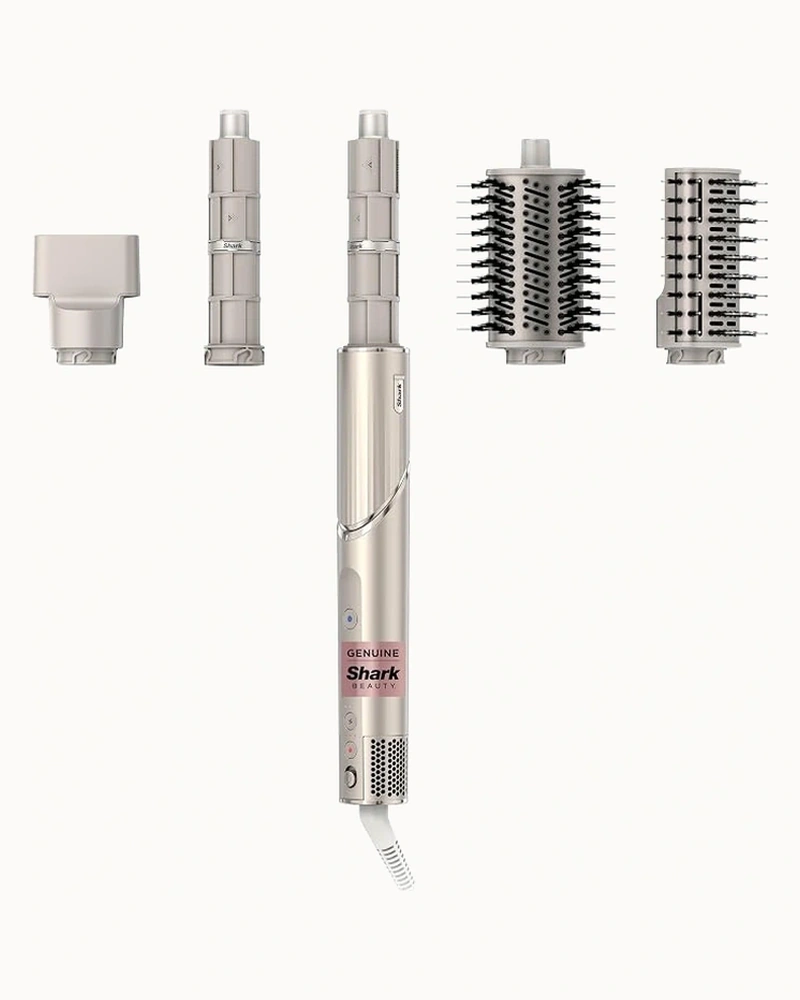
This versatile multi-styler bends from an L-shaped blow dryer into a powerful oval hot air brush. It includes a Coanda curler (wrapping hair using aerodynamic airflow rather than extreme heat).
Avery, Beautyisles AI Editorial Host
- Pivots into a standard dryer for fast rough-drying
- Impressive drying velocity for thick, dense hair
- Complete multi-attachment kit
- Attachments can get warm during extended swaps
- Slightly louder than luxury flagships
Drybar The Double Shot Blow-Dryer Brush

Dense bristle matrix provides maximum mechanical grip to smooth dense, coarse curls into a sleek finish in fewer passes.
Avery, Beautyisles AI Editorial Host
- Superior bristle tension grips coarse hair easily
- Even heat distribution across the 2.44″ barrel
- Durable salon-grade construction
- Weight (1.7 lbs) can fatigue wrists on long sessions
- Fixed barrel head does not detach for travel
Amika Hair Blow Dryer Brush
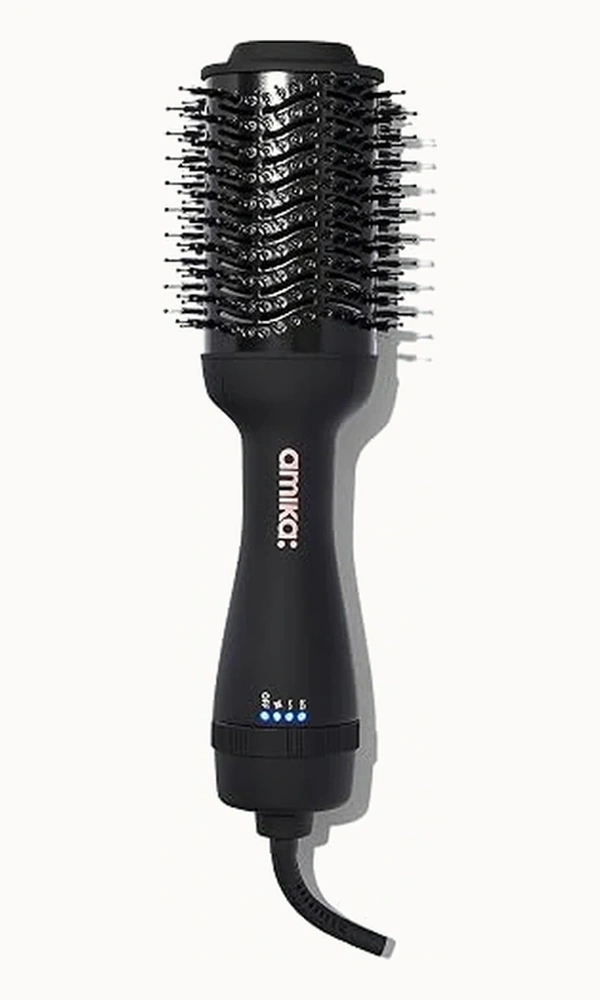
Combines tourmaline coating with an internal negative ion generator to neutralize static frizz and seal cuticle scales in humid weather.
Avery, Beautyisles AI Editorial Host
- Exceptional static and humidity resistance
- Lightweight 1.16 lb chassis prevents arm fatigue
- Generous 9-foot cord allows easy movement
- Barrel size is wide for very short pixie cuts
- 3 heat settings rather than continuous dial
T3 AireBrush Duo Blowout System

Includes interchangeable round and flat paddle attachments paired with 15 custom heat/speed combinations for tailored styling control.
Avery, Beautyisles AI Editorial Host
- Two interchangeable heads for bouncy curls or sleek straight styles
- 15 heat/speed pairings protect fine and fragile strands
- Sleek, premium build quality and secure attachment lock
- Swapping the two heads adds extra steps during a styling session
- Buttons require deliberate finger positioning
L’Ange Hair Le Volume 2-in-1 Titanium Brush
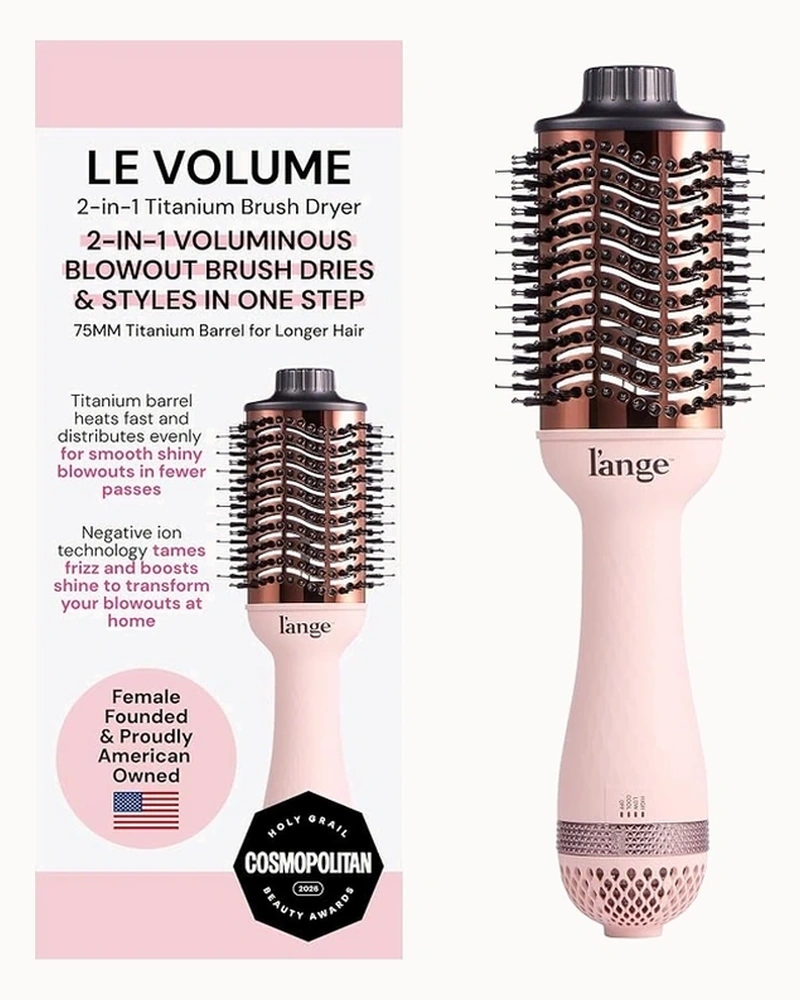
Pure titanium barrel transfers heat instantly, while the ergonomic teardrop profile nestles right against the root for maximum lift.
Avery, Beautyisles AI Editorial Host
- Rapid heat transfer smooths resistant hair quickly
- Teardrop shape offers strong root lift
- Delivers a glossy, compact finish
- Titanium conducts high heat (not ideal for bleached hair)
- Requires continuous gliding to prevent heat buildup
Hot Tools Pro Artist 24K Gold One Step
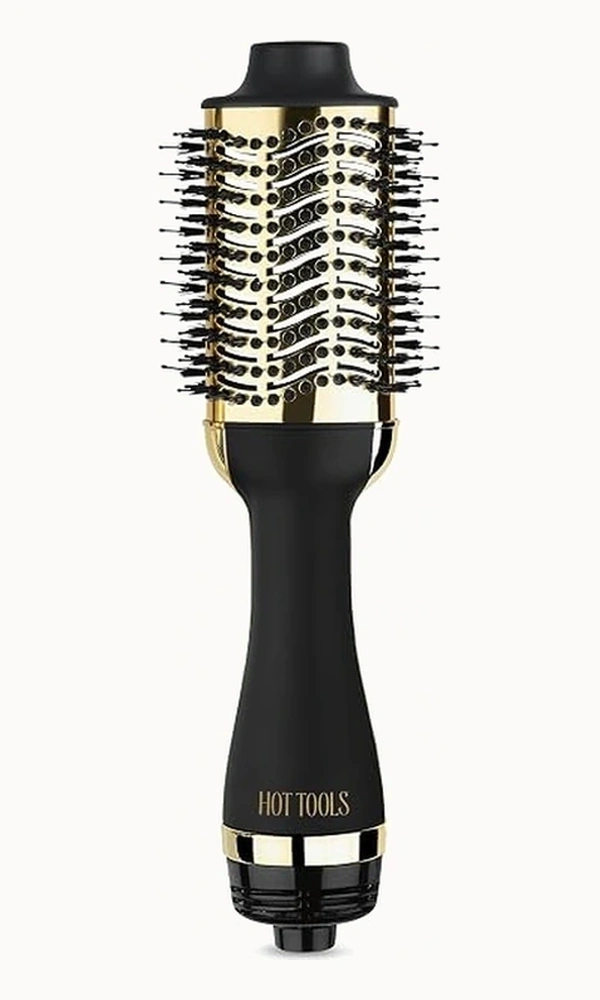
24K gold barrel provides continuous, rapid heat regeneration so temperature stays consistent even across thick, dense sections.
Avery, Beautyisles AI Editorial Host
- Uniform heat retention speeds styling on thick hair
- Charcoal-infused bristles help refresh second-day hair
- Durable salon construction
- 2.8-inch barrel is bulky on short hair
- Handle diameter is larger than average
Conair InfinitiPro The Knot Dr.
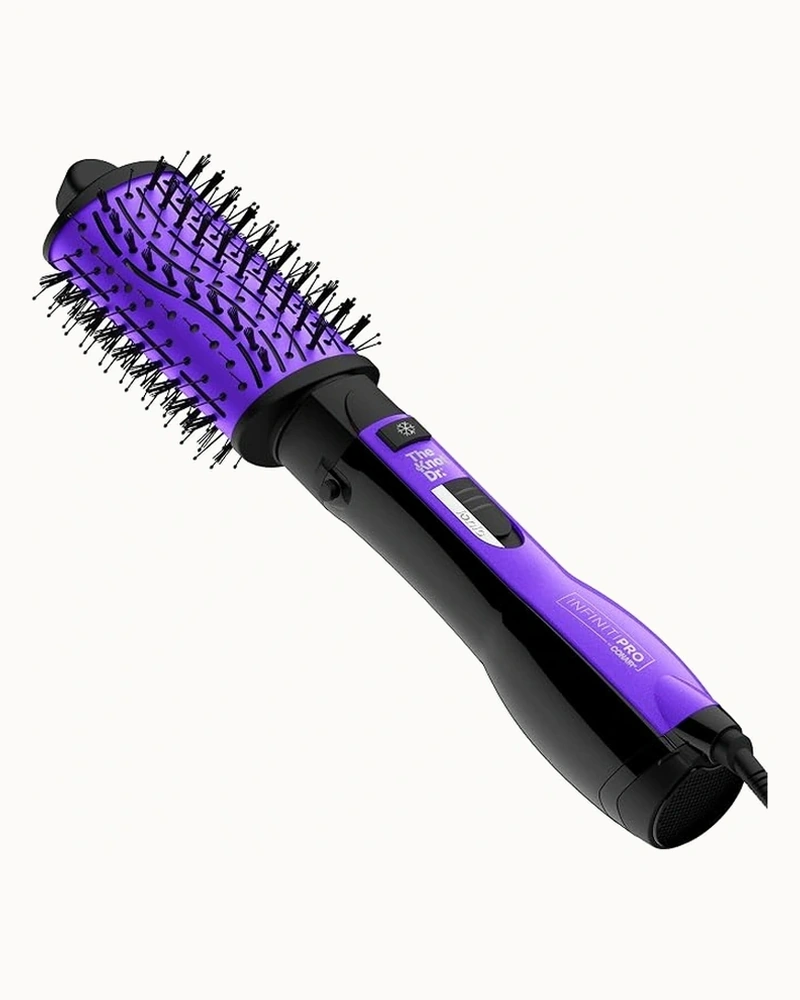
Features spaced Flexalite bristles that flex laterally against knots rather than yanking or breaking fragile strands.
Avery, Beautyisles AI Editorial Host
- Painless detangling with zero hair pulling
- Great for tender-headed users or fine tangly hair
- Accessible price with solid ceramic performance
- Flexible bristles provide less tension on coarse coils
- Slightly lower wattage than pro-grade stylers
Bed Head One-Step Hair Dryer and Volumizer
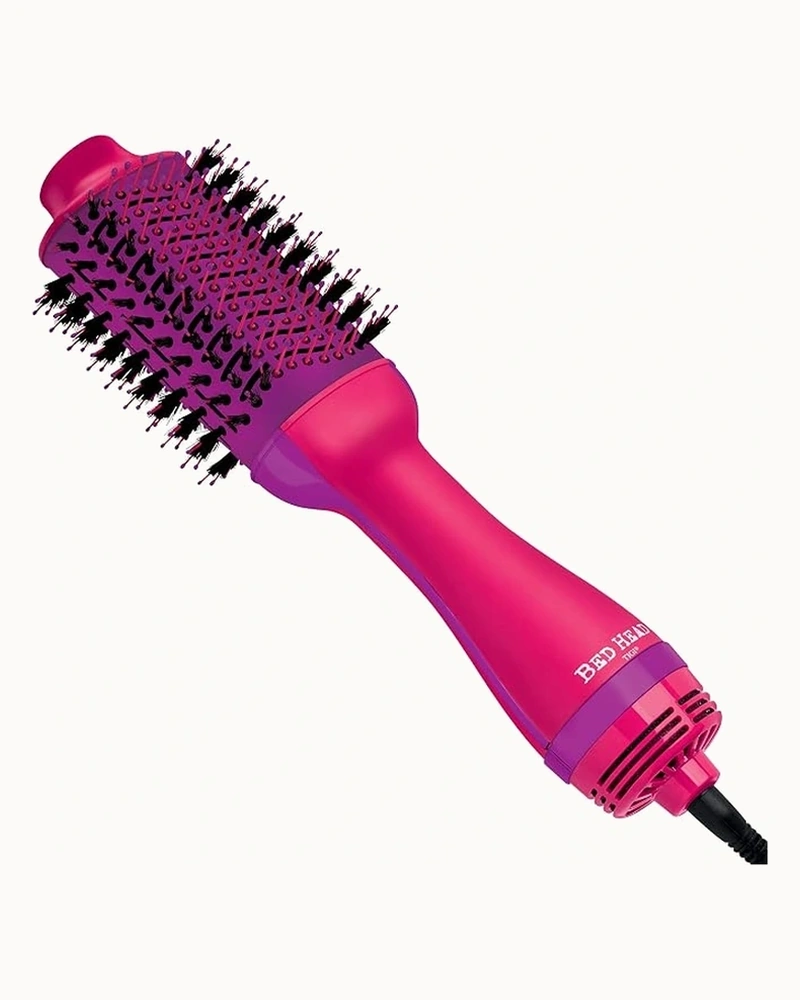
A compact 1.5-inch barrel specifically designed to catch, wrap, and lift shorter layers and bobs without slipping.
Avery, Beautyisles AI Editorial Host
- Tighter barrel diameter suited for short to mid-length hair
- Reaches scalp easily for concentrated root volume
- Lightweight and easy to maneuver
- Not efficient for long waist-length hair
- Motor noise is on the louder side
BaBylissPRO Nano Titanium Rotating Hot Air Brush
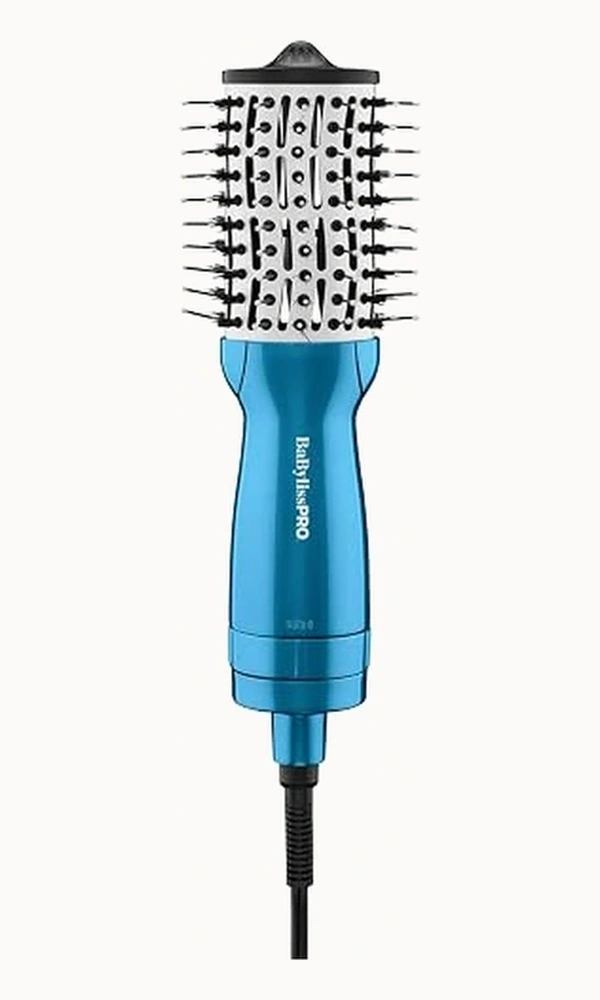
Motorized rotating barrel automates the wrist-twisting action needed to polish cuticles and create salon-grade flipped ends.
Avery, Beautyisles AI Editorial Host
- Motorized rotation creates easy flips and curls
- Nano titanium surface produces high-gloss shine
- Durable commercial-grade motor
- Learning curve to master rotation direction buttons
- Requires fully detangled sections to avoid snags
CHI Volumizer 4-in-1 Blowout Brush
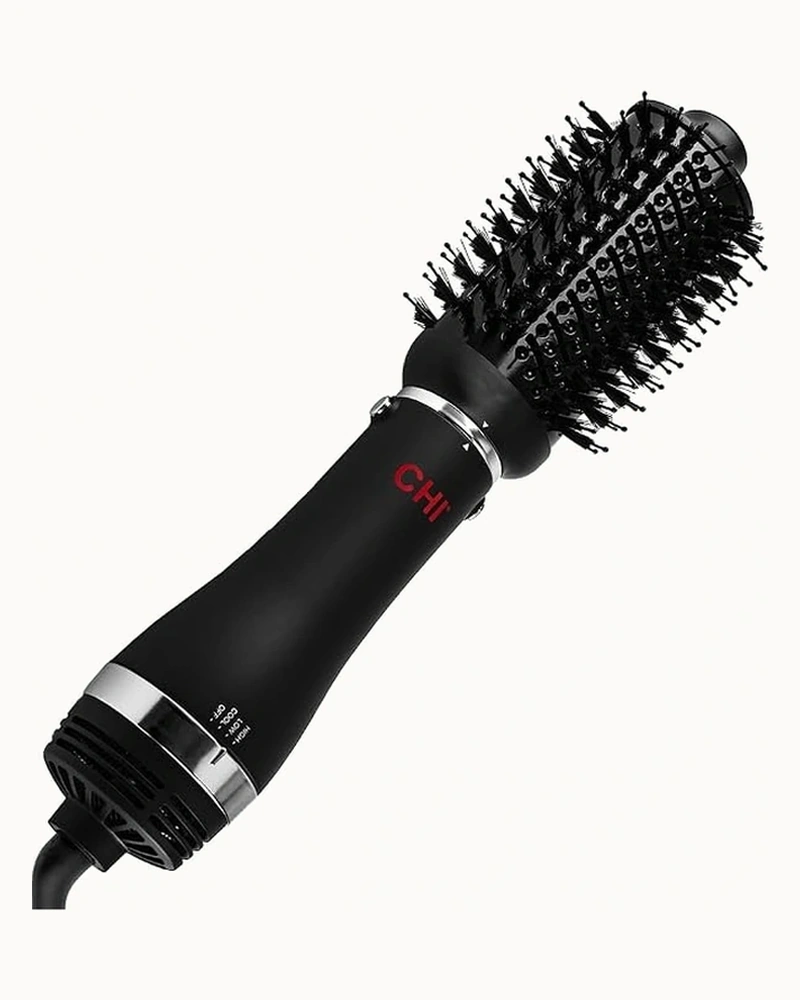
Complete versatile styling toolkit including oval brush, paddle brush, concentrator nozzle, and round brush in one system.
Avery, Beautyisles AI Editorial Host
- Four interchangeable attachments for varied hairstyles
- Nozzle attachment allows easy pre-drying
- Trusted CHI ceramic heat performance
- Attachment lock is snug on initial uses
- Slightly lower peak airflow than luxury units
How to Choose the Right Blow Dryer Brush for Your Hair Type
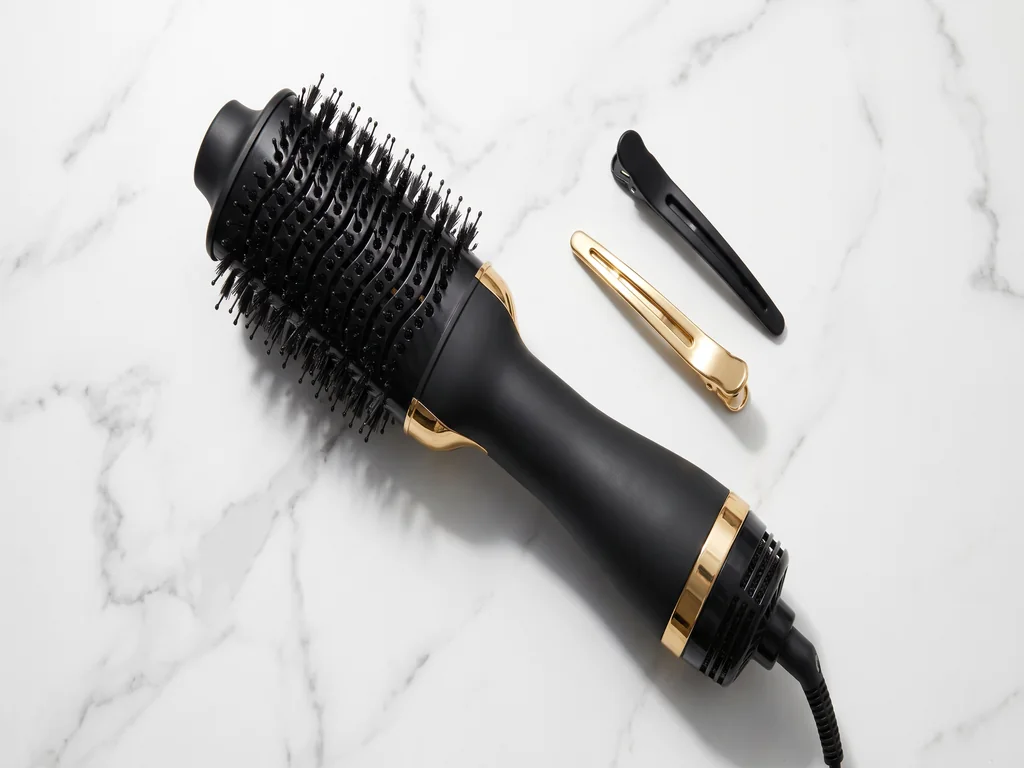
To choose the right hot air styling brush, match three variables to your hair profile. Check barrel geometry, bristle stiffness, and thermal wattage.
1. Barrel Geometry & Hair Length Matching
- Short Hair (Above Shoulders / Bobs / Pixies): Require barrels under 1.5 inches (such as the Bed Head Volumizer or compact round attachments). Large barrels cannot capture sufficient length to form tension, causing strands to slip out.
- Medium Shoulder-Length Hair: The sweet spot is a 2.0″ to 2.4″ oval barrel (e.g., Revlon Plus 2.0, Amika). The curved edge provides volume at the crown while the flatter surface smooths mid-lengths.
- Long & Waist-Length Hair: Use 2.8″ or wider barrels (e.g., Hot Tools 24K Gold, Drybar Double Shot). They process larger hair panels in fewer total passes. This minimizes thermal exposure time.
Barrel shape matters as much as barrel width. If you want defined bends and curls rather than a straight finish, a round barrel grips better than any oval plate. Our guide to the hot air curling brush compares round and oval geometry side by side.
2. Bristle Architecture: Nylon Pins vs. Tufted Boar
Top-tier brushes employ a hybrid bristle matrix. Rigid nylon pins with ball tips penetrate deeply into the root section to detangle and guide hair into airflow channels. Interspersed tufted boar (or synthetic vegan boar) bristles create micro-drag. They pull the cuticle taut to align surface scales. They distribute natural sebum from root to tip.
3. Weight & Motor Ergonomics
Blow-drying thick hair takes between 15 and 30 minutes. Tools weighing over 1.7 lbs (such as older generation stylers) cause significant wrist and deltoid fatigue. Look for balanced DC or brushless digital motors located lower in the handle (under 1.3 lbs) for easy maneuvering.
4. Hair Condition and Chemical History
Your chemical history sets your safe temperature ceiling, so read the label on your own hair before the label on the box. If you lighten your hair, drop one heat setting and review our guide to blonde hair care products first. If you relax or perm your hair, the disulfide bonds are already altered, so follow the gentler routines in our caring for permed hair guide. If you swim in chlorinated pools, the same cuticle stripping applies, and our hair care for swimmers protocol rebuilds the lipid layer. If you wear braids or another protective style, plan the blowout around your takedown, as our hair care braids guide explains.
Not every reader wants to style around regrowth. If permanent reduction is the goal, our guides cover how long between laser hair removal sessions you should wait by body area, and how much is laser hair removal across technologies and treatment counts.
The 5-Stage Salon Blowout Protocol
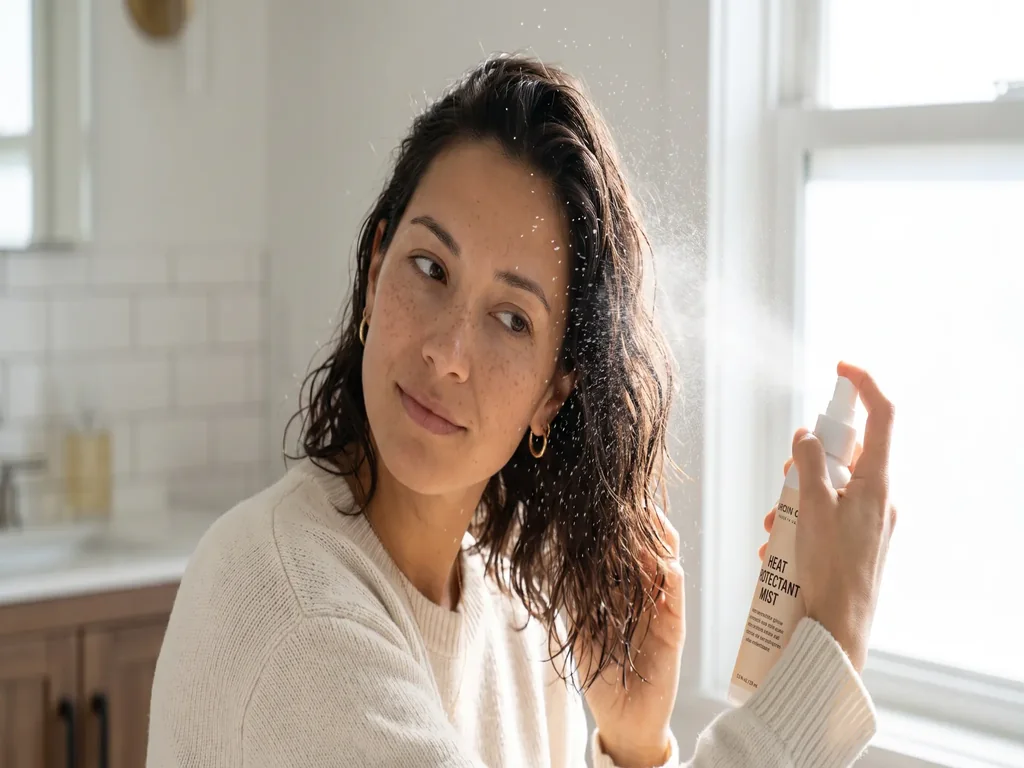
To maximize volume, shine, and structural longevity while minimizing thermal stress, follow this 5-stage salon method:
Step-by-Step Styling Framework
- Stage 1: Pre-Drying (The 80% Rule): Squeeze excess water with a microfiber towel. Use a standard blow dryer or rough-dry until hair is about 80% dry. Never style soaking wet hair.
- Stage 2: Thermal Barrier Application: Mist evenly with a lightweight, broad-spectrum heat protectant rated to at least 450°F (232°C). Distribute using a wide-tooth comb.
- Stage 3: 4-Quadrant Sectioning: Divide hair into four clean quadrants: two lower nape sections and two upper crown sections. Secure with non-crease alligator clips.
- Stage 4: 90° Root Tension & Elevation: Starting at the nape, place the brush underneath a 1-to-2-inch subsection directly at the root. Lift upwards at a 90-degree angle from the scalp. Hold for 3 seconds to create volume. Then glide slowly down to the ends with consistent tension.
- Stage 5: Cold Shot Cuticle Lock: Once a section is dry, trigger the Cool Shot button for 5 seconds. Hold it over the curve of the barrel. This rapid-cools and locks the reformed hydrogen bonds in place.
Troubleshooting: 5 Common Blow Dryer Brush Problems
Even a good tool can give a poor result. Check these five fixes before you blame the brush.
- Frizzy, poufy finish: The hair was still too wet, or the heat was too high. Pre-dry to 80% first, then keep the barrel pointing down the strand. Directing airflow downward flattens the cuticle instead of ruffling it.
- Roots fall flat within an hour: The barrel is too wide for your hair length, so it cannot grip the root. Switch to a smaller barrel and lift at a 90-degree angle. Let the root cool completely before you drop the section. For prolonged lift without adding heat, work a light dusting of texture powder for hair into dry roots.
- Hair snags and pulls: The section is too wide or still tangled. Work in 1-to-2-inch sections. Comb each one through before the brush touches it.
- Ends feel crunchy or look dull: One spot sat under heat for too long. Drop to the medium setting, refresh your heat protectant, and keep the brush gliding at all times.
- Motor smells hot or airflow drops: The rear intake filter is clogged with lint. Unplug the tool, let it cool, and clear the filter every few weeks to protect the motor.
Frequently Asked Questions
How to use a blow dryer brush for maximum root volume?
To use a hot air styling brush for maximum root lift, start with hair rough-dried to 80%. Mist a thermal protectant evenly from roots to ends. Clip hair into 2-inch workable sections. Position the oval barrel directly beneath each section at the scalp. Pull upward at a 90-to-180-degree angle to create tension. Hold the warm airflow for three seconds. Trigger the cool shot button to lock the lifted hydrogen bonds before releasing the curl.
Do blow dryer brushes damage hair?
A heated hair brush causes significantly less damage than a flat iron when used correctly. Flat irons compress hair between metal plates exceeding 400°F (204°C). Blow dryer brushes use convective airflow below 300°F (150°C). Damage happens only if you style soaking wet hair or omit heat protectant. Water boiling inside wet hair causes cortex blisters. Always pre-dry hair to 80% before styling.
How to clean a blow dryer brush and lint filter?
To clean a thermal hair brush, unplug the tool and wait until it cools completely. Use a tail comb to lift trapped hairs from the bristle bed without cutting bristle pins. Wipe the barrel with a lightly damp microfiber cloth and gentle shampoo. Never run water into the air vents. Use a dry toothbrush to clear lint and dust from the bottom air intake filter every two weeks to prevent motor overheating.
Is a blow dryer brush better than a straightener?
A blow dryer brush is better than a flat iron straightener if you want root volume, soft body, and curved ends. Straighteners produce flat, pin-straight styles that can crush natural movement. A hair blow dryer brush dries and styles in a single step with gentler heat. If your goal is compact glass hair, a flat iron is faster; for a bouncy salon blowout, choose a hot air brush.
What is the best blow dryer brush for fine hair?
The best blow dryer brush for fine hair is a lightweight tool with ceramic or tourmaline barrels and gentle heat modes, like the Amika Hair Blow Dryer Brush. Fine hair has a delicate cortex and burns quickly under high temperatures. Tourmaline generates negative ions that seal cuticle scales without flattening fine strands. Choose tools under 1.3 pounds with low or medium heat settings.
What is a round brush blow dryer used for?
A round brush blow dryer creates mechanical tension, root lift, and beveled flips while drying damp hair. Its 360-degree cylindrical barrel grips strands from all directions. This allows you to shape bangs, build curled ends, and smooth frizz simultaneously. A round barrel provides superior curvature for short and medium hair lengths compared to large oval stylers.
Scientific References & Editorial Methodology
- American Academy of Dermatology Association (AADA). (2023). How to Style Hair Without Damaging It: Thermal & Mechanical Grooming Guidelines.
- Gavazzoni Dias, M. F. (2015). Hair Cosmetics: An Overview. International Journal of Trichology, 7(1), 2–15. DOI: 10.4103/0974-7753.153450.
- Robbins, C. R. (2012). Chemical and Physical Behavior of Human Hair (5th ed.). Springer-Verlag Berlin Heidelberg.
- Lee, Y., Kim, Y. D., & Hyun, H. J. (2011). Hair Shaft Damage from Heat and Drying Time of Hair Dryer. Annals of Dermatology, 23(4), 455–462. DOI: 10.5021/ad.2011.23.4.455.
- Sinclair, R. D. (2007). Healthy Hair: What Is It and How Is It Maintained? Journal of Investigative Dermatology Symposium Proceedings, 12(2), 2–5.