
- Clinics Price the Zone, Not the Clock: Most providers quote per body area. A small zone such as the upper lip costs far less than a full leg course.
- Session Count Sets the Real Bill: Hair grows in cycles, so you need 6 to 8 sessions. The per-session price matters less than the total program.
- Technology Drives the Invoice: Nd:YAG and diode lasers cost clinics more to buy and run than broadband IPL. That gap reaches your quote.
- At-Home Devices Change the Math: One premium device covers years of sessions. It trades peak power for convenience and a lower cost per use.
How Much Is Laser Hair Removal? What Actually Sets the Price
Clinics rarely publish a single price list. Instead, they use four pricing models, and each one shifts the total you pay. Understanding the model matters more than comparing headline numbers, because laser hair removal prices vary so widely.
- Pay Per Session: You book and pay for one visit at a time. This option gives you the most freedom to stop. It also carries the highest total cost, because you never receive a package discount.
- Pay Per Zone: The clinic prices your chosen body area. A small zone such as the upper lip costs much less than a full leg course. The treated surface is smaller and the session is shorter.
- Prepaid Package: You buy a block of 6 to 8 sessions up front. Clinics discount this route because it locks in your full course and fills their schedule.
- Annual or Unlimited Membership: You pay one fee for a set period. Touch-up sessions are then included. This model suits readers who need maintenance across several zones.
Two clinics in the same city can quote different prices for the same zone. Three factors explain most of the gap. The provider type matters first: a dermatologist-led practice charges more than a chain medspa staffed by technicians. The device matters second, because a Nd:YAG or diode laser costs the clinic more to buy and maintain than a broadband IPL unit. Geography matters third, since rent, staffing and local demand all feed into the hourly rate.
Typical Cost Ranges by Treatment Area
The table below shows commonly advertised market ranges. Treat every figure as a starting point for your own quotes, not as a fixed national price.
| Treatment Area | Advertised Cost Per Session | Sessions Needed | Indicative Course Total |
|---|---|---|---|
| Upper lip | USD 50 – 150 | 6 – 8 | USD 300 – 1,200 |
| Chin | USD 50 – 200 | 6 – 8 | USD 300 – 1,600 |
| Underarms | USD 70 – 250 | 4 – 6 | USD 280 – 1,500 |
| Bikini line | USD 100 – 250 | 6 – 8 | USD 600 – 2,000 |
| Brazilian | USD 150 – 350 | 7 – 10 | USD 1,050 – 3,500 |
| Half legs | USD 200 – 300 | 6 – 8 | USD 1,200 – 2,400 |
| Full legs | USD 250 – 600 | 6 – 8 | USD 1,500 – 4,800 |
| Back | USD 200 – 600 | 6 – 8 | USD 1,200 – 4,800 |
| Full face | USD 150 – 350 | 6 – 10 | USD 900 – 3,500 |
| Full body | USD 500 – 2,000 | 6 – 8 | USD 3,000 – 16,000 |
Laser hair removal pricing is set by each clinic, not by a national tariff. The ranges above reflect commonly advertised market figures. They are not a published price standard. Always request a written quote that lists the number of sessions, the device used, and what happens if you need extra visits.
Laser Hair Removal for Men
Men usually book larger zones. A back, chest, or full-beard course covers more surface than an upper lip, so the per-session fee runs higher. Coarse beard hair also sits deeper in the skin, which can mean a longer course. The pricing models above still apply, but quotes track the total treated area rather than the client’s gender.
The Total Program Cost: Sessions, Spacing and Maintenance
Light destroys a hair follicle only while the hair sits in the active growth phase, called anagen. In this phase, the root stays connected to its blood supply and holds dense melanin pigment. That pigment absorbs the light flash. Follicles that rest in the telogen phase hold no connected root, so the flash passes through them without effect.
Because every follicle cycles independently, a single session never catches all your hair. Only a fraction of follicles sit in anagen at any moment. You therefore need repeated sessions, spaced far enough apart for resting follicles to wake up and grow a fresh pigmented root. Most clinical courses run 6 to 8 sessions. Larger zones and hormonal areas often need 8 to 10. We cover the exact timing per body zone in our guide to how long between laser hair removal sessions.
Two costs sit outside the headline package price. First, expect maintenance. Most providers recommend one or two touch-up sessions a year once the main course finishes. Second, expect variability. If your hair is hormonal, coarse, or light in colour, you may need extra sessions beyond the package. Ask what a single additional session costs before you commit.
Run the arithmetic before you choose. Multiply the per-session price by the realistic session count, then add two years of maintenance. A cheap per-session rate with a long course can cost more than a higher rate with fewer visits. For a full-body program, the total commonly lands between USD 3,000 and 16,000, which is why many readers compare the clinic route against a device.

Laser vs IPL: How the Technology Sets the Price
Both clinic lasers and at-home devices use the same physical principle, called selective photothermolysis. This term describes how light energy converts into heat inside one target structure without damaging the tissue around it. Dark melanin inside the hair shaft absorbs the light. The light turns into heat, travels down the shaft, and disables the follicle base.
The difference between systems is the wavelength, measured in nanometres (nm). A shorter wavelength is absorbed more strongly by melanin near the skin surface. A longer wavelength travels deeper and bypasses surface pigment. That single property decides which skin tones a device can safely treat, and it also drives the purchase price a clinic pays.
| Technology | Wavelength | Best Skin Tone Fit | Depth Reached | Why It Costs What It Does |
|---|---|---|---|---|
| Alexandrite | 755 nm | Fitzpatrick I – IV | Upper dermis | Strong melanin absorption makes it fast and effective, but pigment-change risk rises on deeper tones |
| Diode | 800 – 810 nm | Fitzpatrick I – V | Mid dermis | Requires contact cooling and regular consumables, so per-session running costs are higher |
| Nd:YAG | 1064 nm | Fitzpatrick IV – VI | Deep dermis | Longest wavelength bypasses surface pigment, making it the safe choice for deeper tones at the highest device cost |
| Broadband IPL / OPT | 500 – 1200 nm (filtered) | Fitzpatrick I – IV | Filter dependent | Cheapest to run per session, but peak energy stays below a true laser |
Alexandrite vs Diode Laser Hair Removal
Alexandrite laser hair removal uses a 755 nm wavelength. It is fast and strong on lighter skin tones, but the risk of pigment change rises on deeper tones. Diode laser hair removal uses 800 to 810 nm. It treats a slightly wider range of skin tones, and its contact cooling adds to the running cost of each session. Both systems cost a clinic far more than broadband IPL, which is why clinics that own them tend to charge more per visit.
One more mode is worth knowing. Some diode and IPL systems offer an in-motion setting, often labelled SHR or super hair removal. The device delivers many low-energy flashes per second while you glide it across the skin. A randomised split-leg study found this technique produced comparable hair reduction to a single high-energy pass, while scoring significantly lower on pain.

What Drives the Price Up or Down
Once you know the pricing model and the technology, you can predict your own quote. Six factors move the number.
- Provider Type: A dermatologist-led clinic charges the most. A nurse-led practice sits in the middle. A chain medspa with technician operators charges the least, but verify who holds the device.
- Device Class: Nd:YAG and multi-wavelength platforms cost the clinic more to buy, so they cost you more per session. Broadband IPL sits at the cheaper end.
- Cooling Requirement: Contact cooling and sapphire tips add hardware cost, but they make higher energy levels tolerable. That trade-off usually appears as a higher per-session rate.
- Zone Size: Price tracks the treated surface area and the time each session takes. Small facial zones stay cheap. Full legs and back sit at the top.
- Package Size: A prepaid block of 6 to 8 sessions usually lowers the effective per-session rate. Pay-as-you-go costs more per visit.
- Add-Ons: Numbing cream, post-treatment cooling, and aftercare products are often billed separately. Ask what is included before you compare two quotes.
IPL works by optical contrast between dark hair and lighter surrounding skin. If you have a deep Fitzpatrick skin tone, broadband IPL may not separate the hair root from surrounding pigment. The same limit applies to very light blonde, grey, or red hair. Ask specifically for a Nd:YAG laser if your skin tone is Fitzpatrick IV or deeper. Never choose a device on price alone. Protecting your skin during heat-based treatments follows the same principle as moderating heat during a 4C hair blowout routine.
At-Home Devices: Cost Per Use vs a Clinic Course
At-home devices change the cost structure. Instead of paying per visit, you buy the hardware once and run the sessions yourself. A premium laser hair removal device typically costs between USD 250 and 450. That single payment covers the whole program, plus years of maintenance. A clinic’s laser hair removal machine price runs far higher than an at-home unit, and that capital cost feeds into every session it sells.
The trade-off is energy. Home IPL hair removal runs at far lower power than a clinic laser. Clinical lasers deliver concentrated energy fluence, measured in joules per square centimetre (J/cm²), that reaches roughly 20 to 40 J/cm². At-home devices operate far lower, usually between 3 and 7 J/cm². Lower energy per pulse means you need more frequent sessions to reach the same result.
Does the lower energy still work? A published study tested a low-energy at-home intense pulsed light device. It reported 78 percent hair reduction at four weeks and 72 percent at three months, after six fortnightly treatments. A separate review pooled five randomised trials and 223 patients. It found long-term reduction from 30 to 84 percent, depending on the light source and body area. The honest summary is this: at-home devices reduce hair well, but they demand consistent scheduling, and they suit smaller zones better than a full-body program.
Compare the two routes on cost per use. Divide the device price by the number of sessions you will realistically run in two years. A USD 400 device used weekly for the first three months, then monthly, covers roughly 24 sessions in year one alone. That works out well below most clinic per-session rates. If you plan to treat only a small facial zone, a clinic course may still cost less overall.
Curated Luxury At-Home Hair Removal Devices
For readers choosing the device route, three models stand out for sensor safety, cooling comfort, and build quality. Each one suits a different reader profile.
Philips Lumea 8000 Series BRI932/03 IPL Hair Removal Device
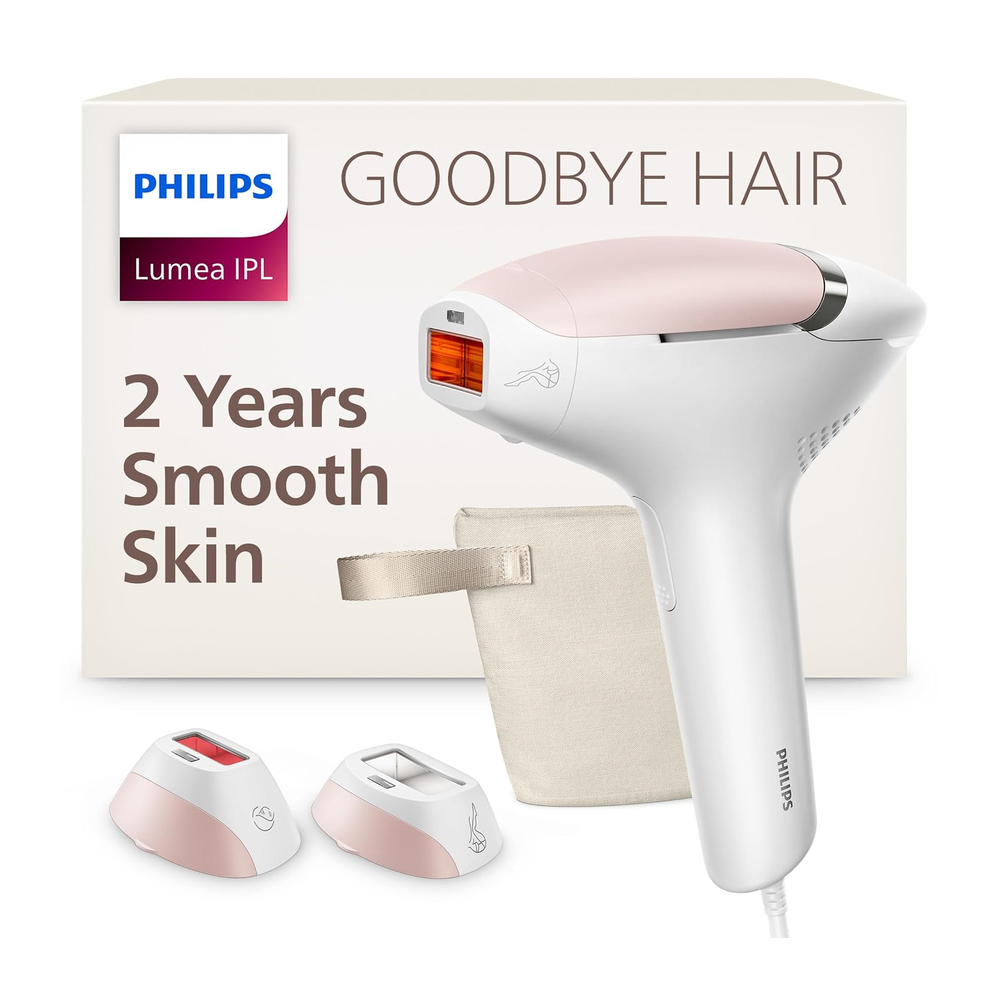
The Lumea 8000 is our top pick for readers who want one device for both face and body. Its SenseIQ sensors read your skin tone and adjust flash energy automatically, so you never guess a power level. The dedicated facial attachment adds a UV filter for upper lip and chin work.
— Avery, Beautyisles AI Editorial Host
- Automatic skin-tone sensing removes manual energy guesswork
- Dedicated facial attachment with UV filter for upper lip and chin
- 400,000-flash lamp covers years of scheduled sessions
- Corded design needs a power outlet beside your treatment area
- The handset and two heads need a dedicated drawer or case
JOVS Venus Pro Sapphire Ice-Cooling IPL Hair Removal Device
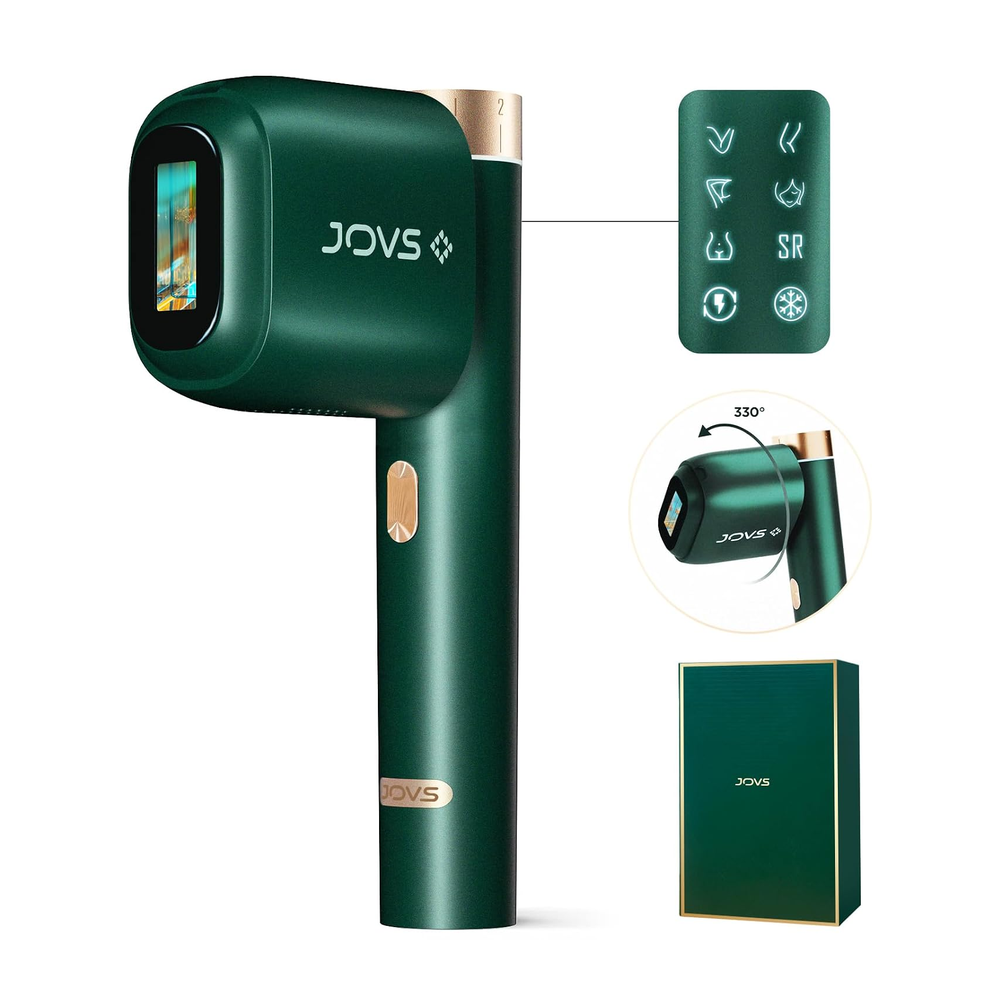
The Venus Pro targets comfort above everything else. Its sapphire head chills the contact surface, and the 330-degree rotating head reaches awkward angles on the underarm and bikini line. It also carries the largest review base of the three devices here.
— Avery, Beautyisles AI Editorial Host
- Sapphire ice-cooling keeps the surface comfortable during longer sessions
- 330-degree rotating head reaches underarm and bikini angles
- Six modes separate body, facial, and skin-rejuvenation routines
- No automatic skin-tone sensor, so you set the intensity yourself
Philips Lumea 7000 Series BRI931/03 IPL Hair Removal Device
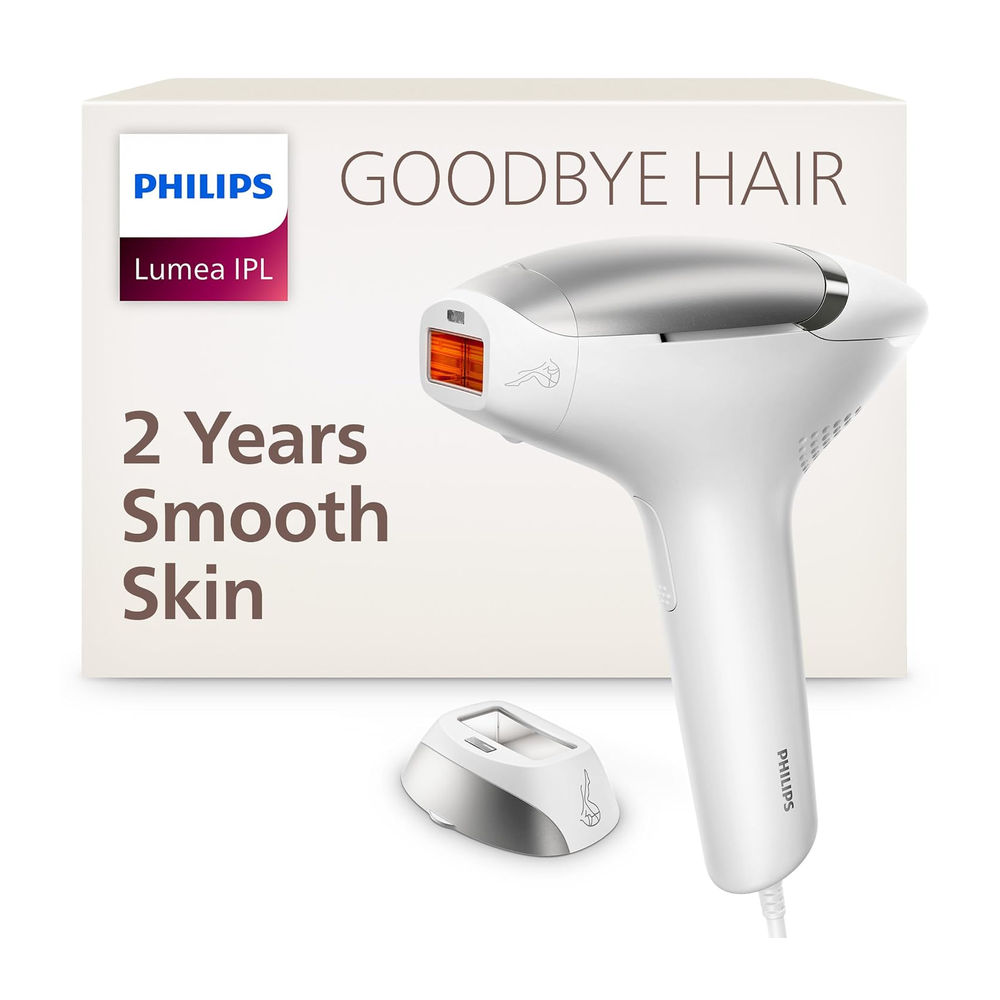
The Lumea 7000 is the lower-cost route into the same skin-sensing safety logic. It ships with one body attachment and skips the facial head, so it suits readers who only treat legs, arms, underarms, and bikini line.
— Avery, Beautyisles AI Editorial Host
- Same skin-sensing safety approach as the flagship at a lower price
- Body attachment suits legs, arms, underarms, and bikini line
- Simple five-level setup with no extra modes to learn
- No facial attachment, so it is not built for upper lip or chin
- Body-only scope limits it as a single-device solution
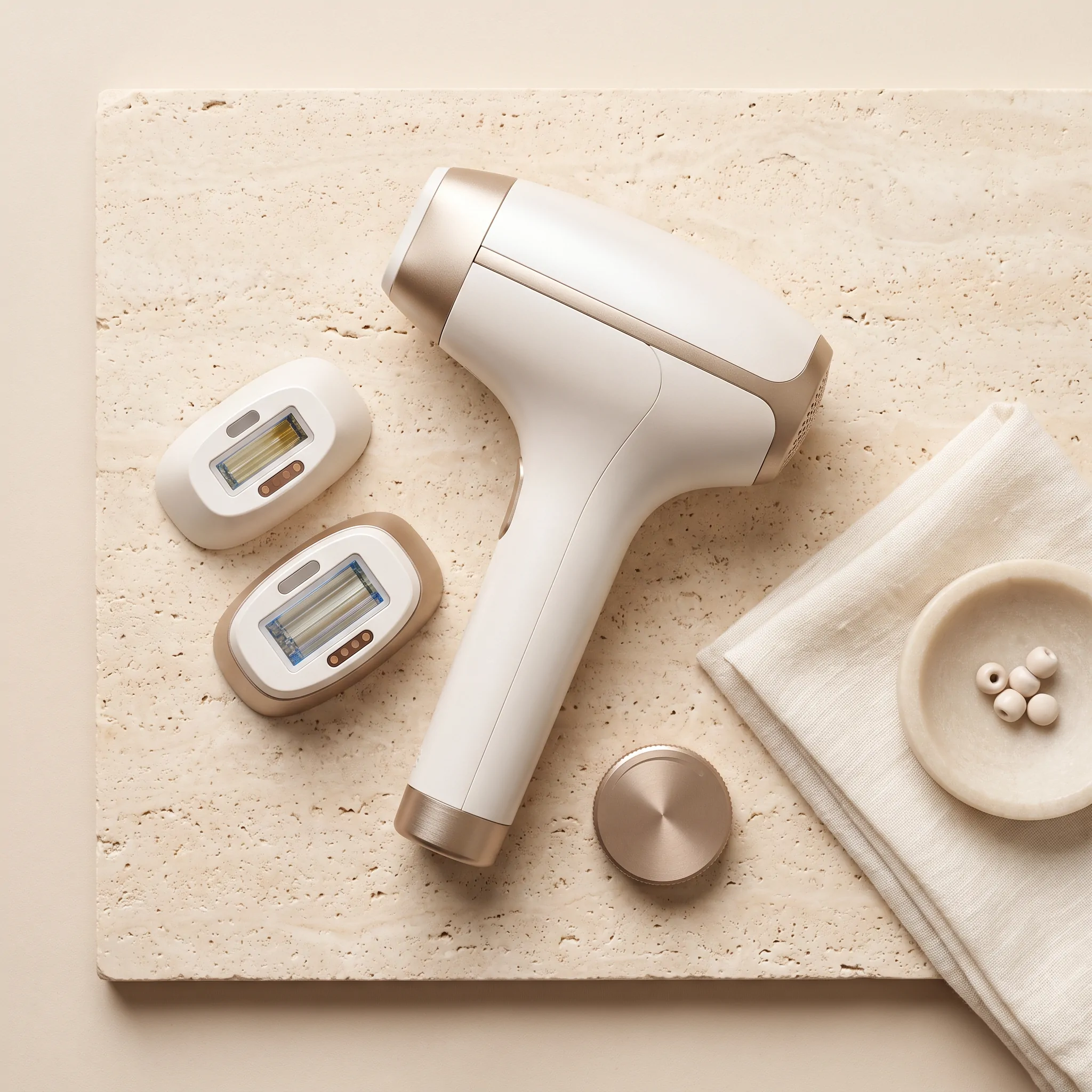
Comparing the Three Devices at a Glance
Each device answers a different question. Choose by the zones you actually treat and by how much hands-on control you want.
| Device | Technology | Cooling | Attachments | Best For | Pricing |
|---|---|---|---|---|---|
| Philips Lumea 8000 Series | IPL with SenseIQ sensors | Integrated contact cooling | Body head + facial head with UV filter | Face and body in one device | Check Price → |
| JOVS Venus Pro | IPL with six treatment modes | Sapphire ice cooling | 330° rotating head, no face head | Comfort on underarm and bikini areas | Check Price → |
| Philips Lumea 7000 Series | IPL with SmartSkin sensor | Integrated contact cooling | Body head only | Body-only programs on a budget | Check Price → |
Safety, Skin Tone and Who Should Not Treat
Light-based hair removal is well tolerated when the device matches your skin tone and you follow the recovery steps. The main risk is pigment change, not scarring. A systematic review of 43 studies in patients with Fitzpatrick skin types IV to VI found post-inflammatory hyperpigmentation in 8.1 percent of cases overall. The rate varied sharply by device: diode lasers produced 34.7 percent, Q-switched Nd:YAG produced 11.9 percent, and IPL produced 1.0 percent. No scarring cases were recorded across the pooled studies.
A second, less common reaction is paradoxical hypertrichosis. This term describes new, thicker hair growth in a treated area instead of reduction. A review of 7,381 patients found it in 25 people, or 0.34 percent. Most cases followed alexandrite laser treatment, and the upper arm was the most common site. Daily sun protection and diode-based in-motion treatment were linked to lower incidence.
Several groups should pause treatment entirely.
- Fitzpatrick IV to VI Skin: Request a Nd:YAG laser, which uses a longer wavelength that bypasses surface melanin. Never treat deep tones with an unfiltered broadband IPL.
- Pregnancy and Breastfeeding: Medical bodies advise postponing treatment. Hormonal shifts during lactation change hair growth and raise skin sensitivity.
- Isotretinoin and Photosensitising Medication: Certain acne and prescription drugs increase light sensitivity. Discuss timing with your doctor before booking.
- Recent Sun Exposure or Self-Tan: Tanned skin holds extra surface melanin. Postpone your session for at least two weeks to avoid surface burns and pigment marks.
- Hormonal Conditions Such as PCOS: A systematic review found light-based therapy effective for hirsutism in women with polycystic ovary syndrome. Results improve further when combined with medical treatment, so coordinate with your clinician.
- Active Skin Infection or Open Lesions: Wait until the area has healed. Treating broken skin raises the risk of infection and pigment change.
Protect your treated skin with the same care you give your hair during thermal styling. We cover this in our guides to scalp and follicle protection and the best blow dryer brushes. Apply broad-spectrum sun protection daily for two weeks after each session.
Frequently Asked Questions
How much is laser hair removal?
Most clinics quote between USD 90 and 600 per session, depending on the body zone. A full course across 6 to 8 sessions therefore commonly lands between USD 600 and 4,800. Small facial zones sit at the lower end. Full legs, back, and full-body programs sit at the top.
How much does laser hair removal cost?
The total cost equals the per-session price multiplied by the number of sessions you need. Underarms often cost USD 280 to 1,500 for a complete course, while full legs run USD 1,500 to 4,800. Add one or two maintenance sessions a year after the main course ends.
How long does laser hair removal last?
Results are long-term rather than permanent. A systematic review of five randomised trials found lasting reduction of roughly 30 to 84 percent depending on the light source and body area. Legs respond best because they have a long growth cycle. Facial hair responds least because its cycle is short. Most people need occasional maintenance sessions each year.
Is laser hair removal permanent?
Not fully. Regulators and clinicians describe the result as permanent hair reduction, not permanent removal. Treatment disables follicles that sit in the active growth phase during each session. Follicles that were resting survive and can produce new hair later, which is why touch-up sessions are needed.
Does laser hair removal hurt?
Most people describe a warm snap against the skin. Modern devices reduce discomfort in two ways. Contact cooling chills the skin surface during the flash, and in-motion modes spread many low-energy pulses instead of one high-energy pulse. A randomised split-leg study found the in-motion technique significantly less painful than a single high-energy pass.
How does laser hair removal work?
It relies on selective photothermolysis. Dark melanin inside the hair shaft absorbs the light flash and converts it into heat. That heat travels down the shaft and disables the follicle base, which is the structure that feeds hair growth. Hair must be in the active anagen phase for the flash to work.
What does laser hair removal do?
It disables individual hair follicles by targeting their pigment with light energy. Because follicles cycle at different times, each session only reaches the hairs currently in the growth phase. Repeated sessions progressively reduce the number of active follicles, which thins the hair and slows regrowth.
How many treatments of laser hair removal?
Most courses require 6 to 8 treatments. Facial zones often need 8 to 10 because their growth cycle is faster. The session count also rises with hormonal hair growth, coarse hair, and light hair colour. Ask your provider how many sessions the quoted price includes before you compare packages.
- Anderson RR, Parrish JA. Selective photothermolysis: Precise microsurgery by selective absorption of pulsed radiation. Science. 1983;220(4596):524-527.
- Gold MH, Foster A, Biron J. Long-term data for low-energy intense pulsed light for hair removal at home. Journal of the American Academy of Dermatology. 2011;64(2 Suppl 1):AB171.
- Krasniqi A, McClurg DP, Gillespie KJ, Rajpara S. Efficacy of lasers and light sources in long-term hair reduction: A systematic review. Journal of Cosmetic and Laser Therapy. 2022.
- Koo B, Ball K, Tremaine AM, Zachary CB. A comparison of two 810 nm diode lasers for hair removal: Low fluence, multiple pass versus a high fluence, single pass technique. Lasers in Surgery and Medicine. 2014;46(4):270-274.
- Hu S, Atmakuri M, Rosenberg J. Adverse events of nonablative lasers and energy-based therapies in subjects with Fitzpatrick skin phototypes IV to VI: A systematic review and meta-analysis. Aesthetic Surgery Journal. 2022;42(5):537-547.
- Inoue Y, Nishioka H, Inukai M, et al. What are the factors that induce paradoxical hypertrichosis after laser hair removal? Aesthetic Surgery Journal. 2024;44(5):NP347-NP354.
- Tan K, Coster T, Mousa A, et al. Laser and light-based therapies for hirsutism management in women with polycystic ovarian syndrome: A systematic review. JAMA Dermatology. 2024.
- StatPearls Publishing / National Center for Biotechnology Information. Laser Hair Removal: Mechanism, Indications, and Clinical Protocols. NCBI Bookshelf.
- American Academy of Dermatology. Laser Hair Removal: Pre-treatment Guidance and Safety Standards. AAD Clinical Guidance.