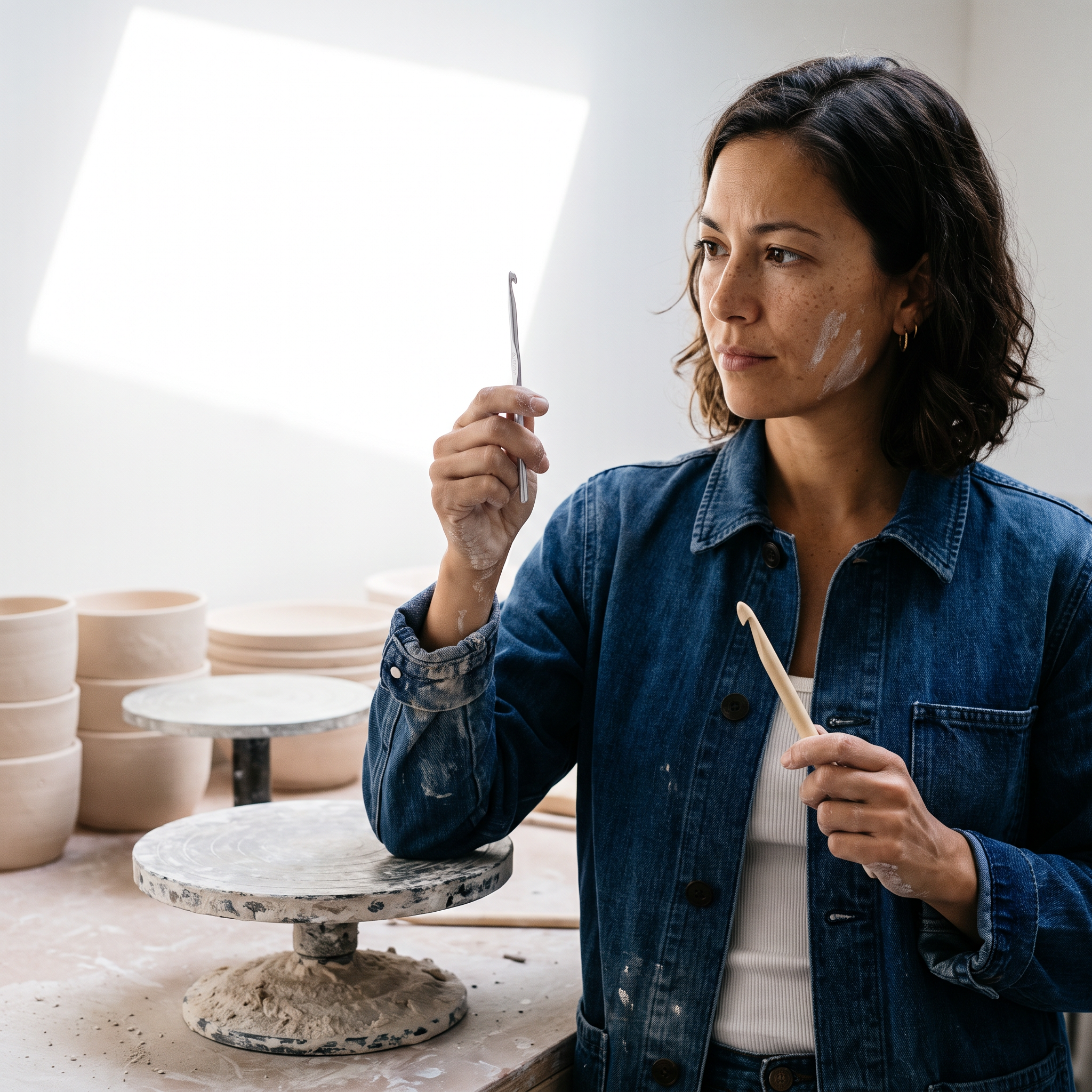
- Match the yarn: Pick one 5 mm H-8 hook if the kit yarn is worsted.
- One hook first: Choose aluminum, wood, or plastic. Do not buy a set yet.
- Read the stamp: Trust the millimetre mark. US letters vary by brand.
- Grip is a sleeve: A slip-on grip thickens a thin shaft. It is not a new size.
What Crochet Hooks for Beginners Must Match
Crochet hooks for beginners start as one hook that matches kit yarn. This lesson sits on the Beautyisles DIY isle. It picks a single first size and a material.
Use the yarn from your crochet kit. This page does not pick a kit. Searches for crochet needles for beginners mean this same tool. A crochet hook has a hooked tip. A knitting needle does not.
The best crochet hooks for a first hour are not a famous range. They are one shank that matches the yarn thickness. Pair the hook with beginner yarn for crochet that shows each V. Dark fuzzy yarn hides the stitch and fights the throat.
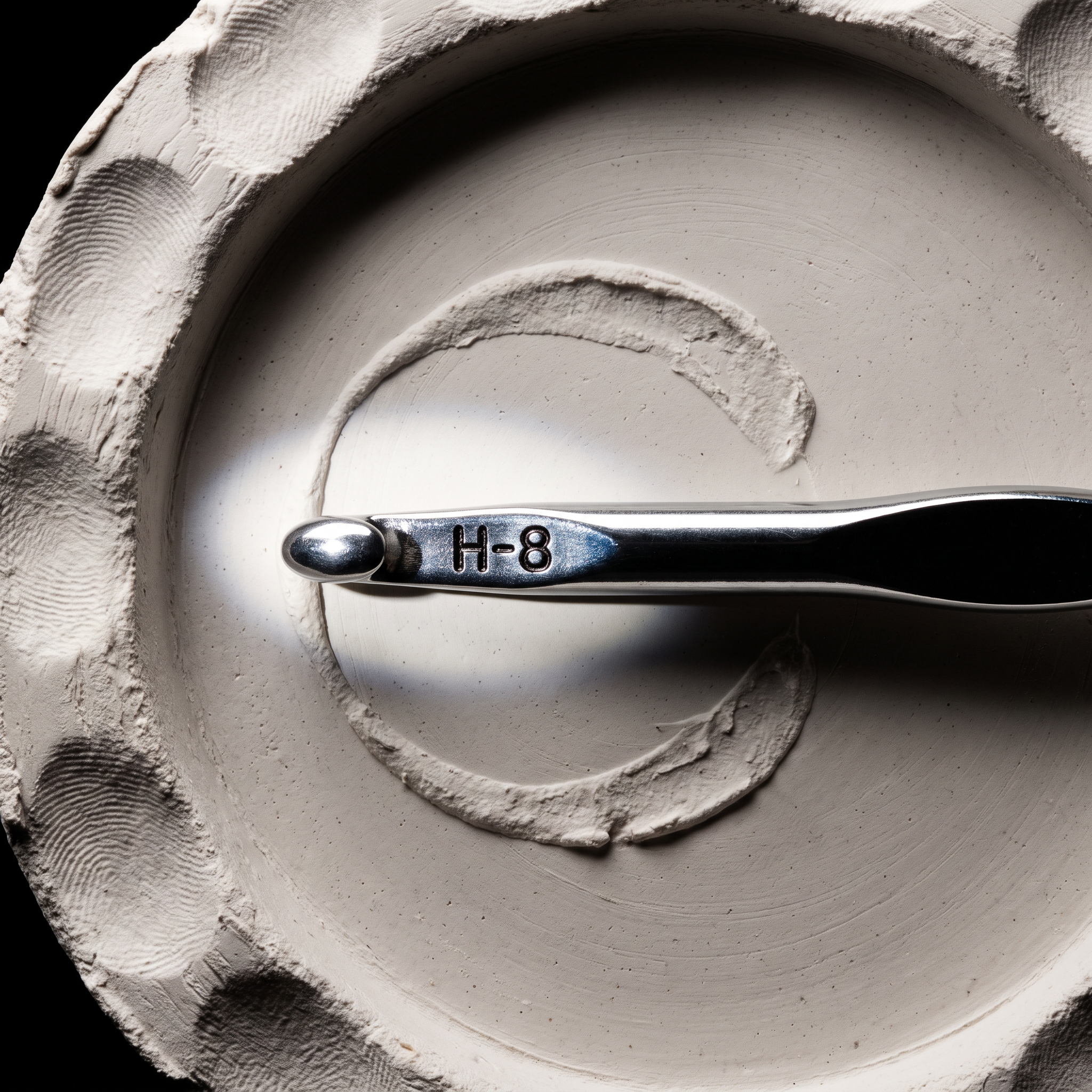
- Size: 4.0 mm to 5.0 mm for most kit yarn. 5.0 mm H-8 is the kit default.
- Stamp: A millimetre mark you can read without a ruler.
- Throat: Tapered or inline. Both work. Split yarn hates a sharp lip.
- Count: One hook. A set waits until one size is not enough.
Crochet Hook Sizes for a First Kit Hook
Crochet hook sizes are millimetres of shank width. The shank is the full-width shaft behind the throat. US letters sit beside those millimetres. Brands do not share one letter map. Trust the millimetre stamp.
What size of crochet hooks for beginner work? Stay in the G-6 4 mm through J-10 6 mm band. A 5 mm H-8 hook is the size most kits ship. What is a 5 mm crochet hook used for? Worsted yarn, the common kit thickness, and a first swatch you can see.
| US size | Millimetres | Beginner use |
|---|---|---|
| G-6 | 4.0 mm | Light worsted. Some kits ship this size. |
| 7 | 4.5 mm | A step between kit sizes. |
| H-8 | 5.0 mm | Kit default. Most worsted yarn. |
| I-9 | 5.5 mm | Soft worsted. A slightly looser fabric. |
| J-10 | 6.0 mm | Chunky yarn. A first bulky swatch. |
Which crochet hook works for chunky yarn? A J-10 6 mm hook, or the millimetre the yarn band names. Do not force chunky yarn onto a 5 mm hook if the band names 6 mm or 8 mm. Keep the 5 mm hook for the kit worsted you already have.
Steel hooks for thread sit below this chart. They are not a first hook. A long hook for Tunisian fabric is a different tool. Stay on a short, single-ended hook here.
Types of Crochet Hooks: Aluminum, Wood, and Plastic
What are the types of crochet hooks for a first buy? Material and throat. Material is aluminum, wood, or plastic. Throat is tapered or inline. That is the whole first choice.
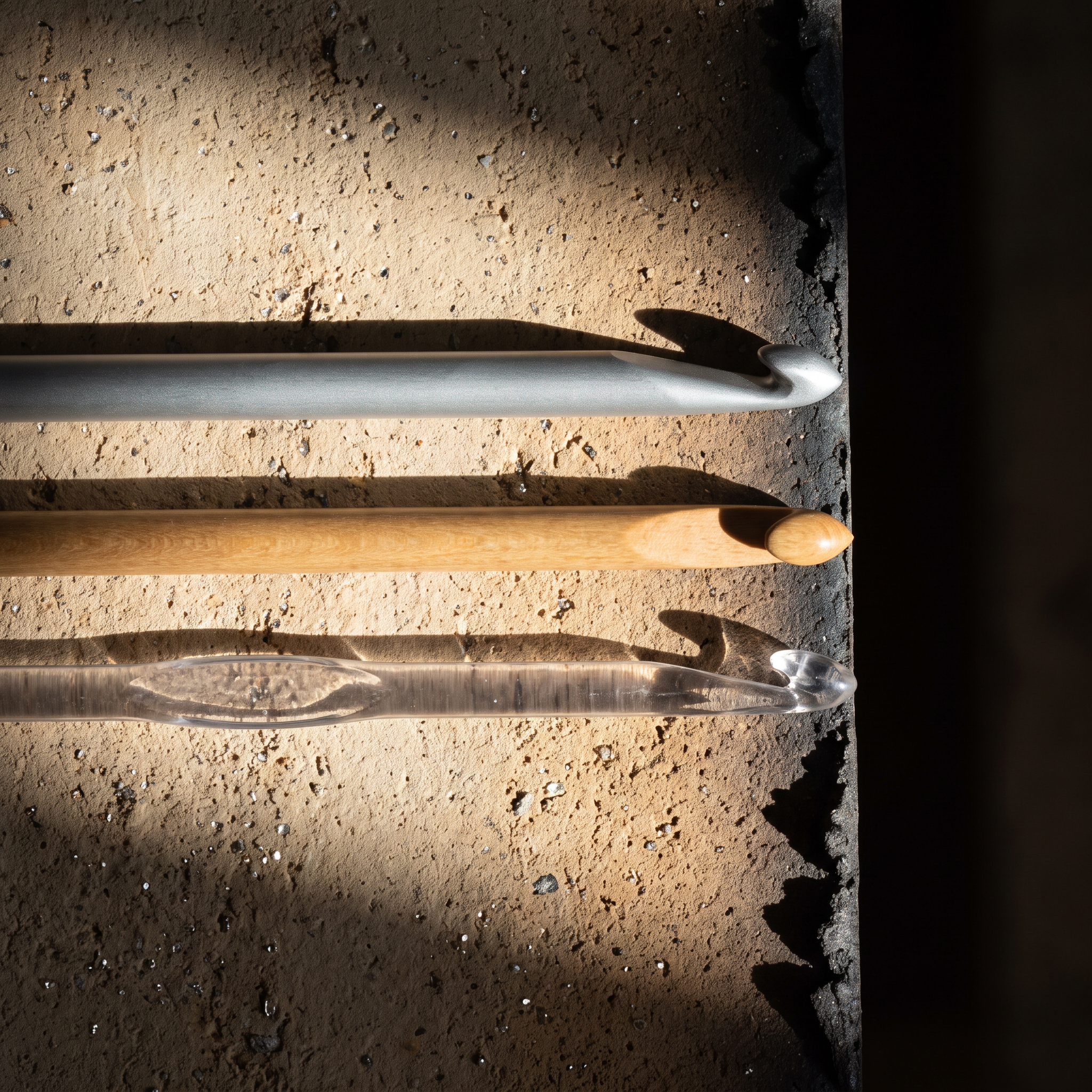
Aluminum crochet hooks are light and fast. Anodized metal is smooth. The yarn slides. A tapered throat, common on Boye, narrows toward a round point. The working loop slides onto the shank, so stitch size stays even.
Wooden crochet hooks warm in the hand. Birch adds friction, so cotton slips less. The shaft is often thicker than a thin aluminum hook. Wood can nick if it hits a hard floor.
A plastic crochet hook is the lightest of the three. An inline throat, common on Susan Bates, cuts a flat shelf into the shaft. Loop size stays steady. The sharper lip can snag loosely twisted acrylic.
Johnson showed that a larger handle on a hand tool can lower the pinch force needed for the same task. Kong and Lowe measured how cylinder diameter changes grip force. A 5 mm shank is thin, so pinch sits on a small area. That is a size fact, not a reason to skip the first hook.
A thick molded handle is a later choice. That topic lives on the DIY isle. This page stays on one slim hook that matches kit yarn.
Best Crochet Hooks for a First Kit Pair
These three first hooks are each a single 5 mm tool. One is aluminum. One is wood. One is plastic. Use the Amazon link for the current listing. When one size is not enough, move to a crochet hook set.
Boye Aluminum Crochet Hook Size H, 5 mm, 6 inch

A 5 mm Boye aluminum hook matches most kit yarn. The tapered throat slides the loop onto the full shank so stitch size stays even.
— Avery, Beautyisles AI Editorial Host
- Smooth anodized shaft that does not catch worsted yarn
- US H-8 / 5 mm is the size most kits ship
- Light enough for a long first session
- Bare metal is thin, so pinch force sits on a small area
- The tapered lip can split fuzzy or loosely twisted yarn
Brittany Crochet Hook Size H8/5mm

Birch warms in the hand and slows the yarn. Use it when aluminum feels too fast or too cold.
— Avery, Beautyisles AI Editorial Host
- Wood warms quickly and lowers slip on cotton
- The carved end is easy to find in a bag
- One size, so you do not buy a set yet
- Wood can nick if you drop it on a hard floor
- The shaft is thicker than a thin aluminum hook
Susan Bates Luxite Plastic Crochet Hook Size H8/5mm

A plastic hook is light and quiet. The inline shelf holds loop size, which helps a first row stay even.
— Avery, Beautyisles AI Editorial Host
- Very light, so the hand tires later
- Inline throat keeps loop size steady
- Translucent shaft shows the working loop
- Plastic flexes on tight, dense stitches
- The inline lip can snag loosely twisted acrylic
| Hook | Material | Throat | Pricing |
|---|---|---|---|
| Boye H-8 | Aluminum | Tapered | Check Price → |
| Brittany H-8 | Birch | Wood shaft | Check Price → |
| Susan Bates H-8 | Plastic | Inline | Check Price → |
Crochet Hook Grip and How You Hold the Hook
What is a crochet hook grip? A grip is a sleeve that thickens the shaft. It is not a new millimetre size. The stitch still matches the shank under the sleeve. Slide the sleeve onto a hook you already have if the thin metal pinches.
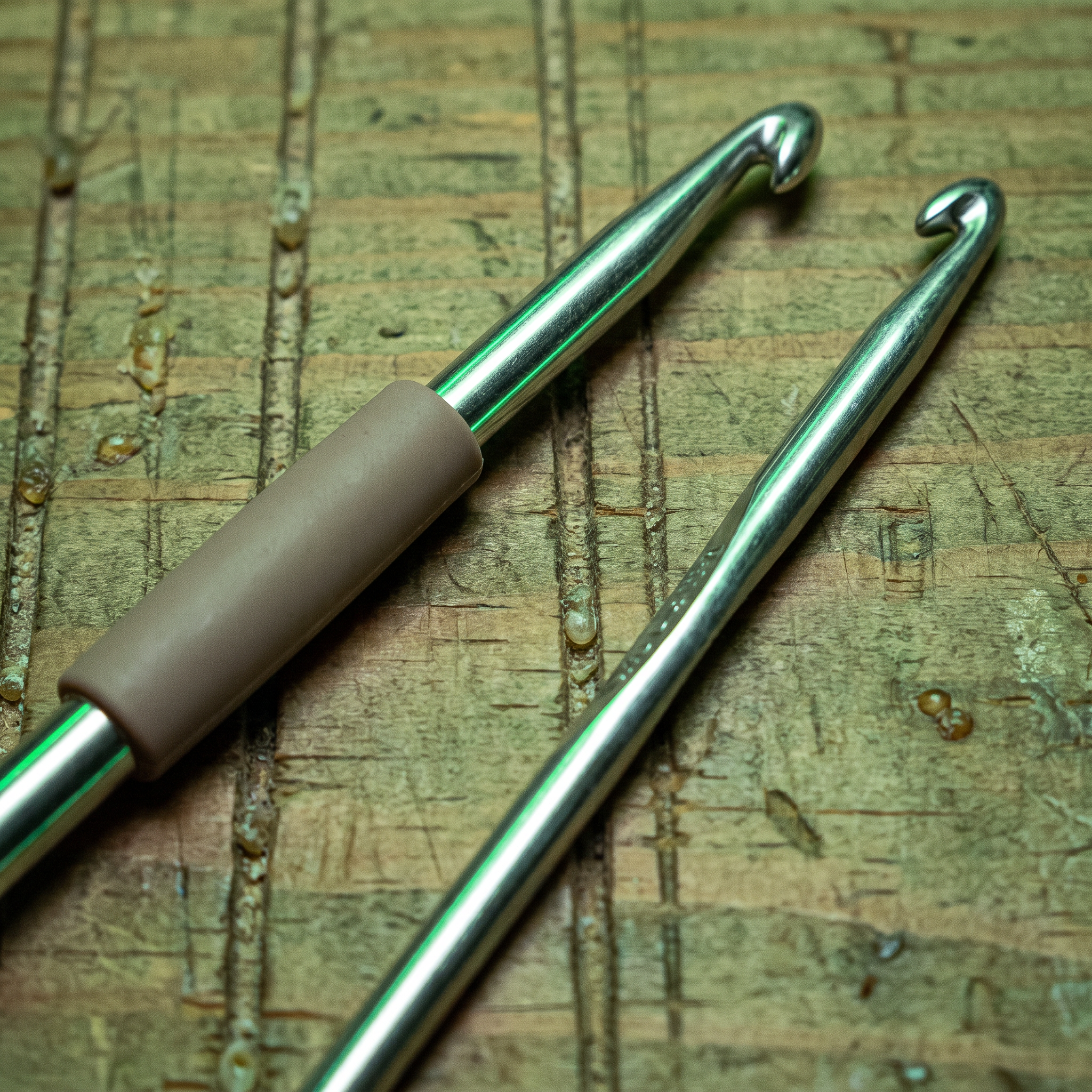
How do you hold a crochet hook? Two holds are common. A pencil hold places the shaft like a pencil, with the tip past the fingers. A knife hold places the shaft under the palm, with the thumb on top. Both work. Use the hold that keeps the wrist straight.
Hold the hook in the hand you write with. The other hand feeds the yarn. Armstrong and colleagues linked pinch force, repetition, and a bent wrist to hand and wrist tendinitis. Silverstein, Fine, and Armstrong tied repeated hand-wrist load to cumulative trauma in industry. Keep the wrist straight. Rest when the pinch aches.
- Stitches too small: You sized the loop on the throat. Slide it onto the shank.
- Yarn splits: The tip entered between plies. Catch the whole strand. A rounder point helps.
- Hand aches: The wrist is bent, or the pinch never rests. Straighten the wrist. Add a sleeve grip.
- Wrong size: You trusted a US letter across brands. Read the millimetre stamp.
When One Size Is Not Enough
Stay on one 5 mm hook until the first swatch holds even stitches. If the next yarn is lace or super bulky, one size is not enough. Buy a range then, not now.
A crochet hook set is the page for many sizes in one buy. When one size is not enough, go there next. A thick molded handle is a later choice on the DIY isle.
Is there a difference between cheap and expensive crochet hooks? Finish. A low-finish throat is rough and splits yarn. A higher-finish throat is smoother and stamps a clearer size. The millimetre still sets stitch size. Buy smoothness you can feel, not a set you do not need.
Frequently Asked Questions About Crochet Hooks for Beginners
What are the types of crochet hooks?
For a first hook, types are material and throat. Material is aluminum, wood, or plastic. Throat is tapered or inline. Steel thread hooks and long Tunisian hooks are later tools.
What is the best crochet needle for beginners?
A crochet needle in this search is a crochet hook. The best first tool is one 5 mm H-8 hook that matches kit yarn. Aluminum, wood, or plastic all work if the shank is 5 mm.
What is a 5 mm crochet hook used for?
A 5 mm crochet hook, US H-8, is the size most kits ship. It pairs with worsted yarn, number 4 on the yarn band. Use it for a first swatch you can see and count.
Which crochet hook works for chunky yarn?
A J-10 6 mm hook is the top of the beginner band for chunky yarn. If the yarn band names 8 mm or larger, that millimetre wins. Keep the 5 mm hook for kit worsted.
What size of crochet hooks for beginner?
Beginner sizes run from G-6 4 mm through J-10 6 mm. The kit default is H-8 5 mm. Read the millimetre stamp. US letters vary by brand.
What is a crochet hook grip?
A crochet hook grip is a sleeve that thickens the shaft. It spreads pinch force. It does not change the millimetre size of the stitch. The shank under the sleeve still sets the loop.
How do you hold a crochet hook?
Use a pencil hold or a knife hold. Keep the wrist straight. Hold the hook in the hand you write with. The other hand feeds the yarn. Rest when the pinch aches.
Is there a difference between cheap and expensive crochet hooks?
Finish differs. A rough throat splits yarn. A smooth throat glides and stamps a clearer size. The millimetre still sets stitch size. Buy one smooth 5 mm hook before you buy a range.
Editorial Sources
- Johnson SL. (1990). “Ergonomic design of handheld tools to prevent trauma to the hand and upper extremity.” Journal of Hand Therapy, 3(2):86–93. DOI: 10.1016/s0894-1130(12)80006-8.
- Kong YK, Lowe BD. (2005). “Optimal cylindrical handle diameter for grip force tasks.” International Journal of Industrial Ergonomics, 35(6):495–507. DOI: 10.1016/j.ergon.2004.11.003.
- Armstrong TJ, Fine LJ, Goldstein SA, Lifshitz YR, Silverstein BA. (1987). “Ergonomics considerations in hand and wrist tendinitis.” The Journal of Hand Surgery, 12(5 Pt 2):830–837. DOI: 10.1016/s0363-5023(87)80244-7. PMID: 3655257.
- Silverstein BA, Fine LJ, Armstrong TJ. (1986). “Hand wrist cumulative trauma disorders in industry.” British Journal of Industrial Medicine, 43(11):779–784. DOI: 10.1136/oem.43.11.779. PMID: 3790459.