

- Magic ring: An adjustable starting loop closes the hole in the center.
- Six even increases: Add six stitches each round to keep a single-crochet disc flat.
- Cup vs ruffle: Too few stitches cup. Too many stitches ruffle.
- Ball from a circle: Work even, then decrease the same way you increased.
How to Crochet a Circle That Stays Flat
How to crochet a circle is a lesson in even increases, not a toy pattern. How do you crochet a circle that stays flat? You start a ring, then add the same number of stitches each round, spaced like pie wedges. This lesson sits on the Beautyisles DIY isle.
Use the yarn and hook from your crochet kit. This page does not pick a kit. How to crochet a round uses the same math. The fabric is a disc of single crochet stitch.
Light yarn on a darker bench makes the increase wedges visible. Nagy and Sanchez showed that a small color gap slows a visual search. Mark the six increase points with a contrast strand or six clips.
When the disc can close into a ball, an amigurumi crochet kit for beginners uses that skill for a stuffed animal. This page does not sell a kit. It does not teach granny squares.
- Hook and yarn: The kit pair. Smooth, light yarn shows each V on the rim.
- Marker: A locking clip on the first stitch of every round.
- Contrast: A spare strand or six clips to mark the six increase wedges.
- Terms: US terms. Increase (inc) means two single crochets in one stitch.
The Magic Ring and the First Six Stitches
A magic ring is an adjustable starting loop that closes the hole in the center. Kit stuffed shapes start here. A chain-two start also works: chain two, then work six single crochets in the first chain. The chain start leaves a small hole. The magic ring can close flush. Work the ring in this order:
- Lay the tail over the index and middle fingers. Cross the working yarn on top.
- Insert the hook under the near strand, yarn over with the working yarn, and pull up a loop.
- Yarn over and pull through the loop on the hook. That chain one locks the ring for single crochet.
- Insert the hook through the center of the ring and under the yarn tail.
- Yarn over, pull up a loop, yarn over, pull through both loops. That is one single crochet into the ring.
- Repeat until you count six V crowns on the rim.
- Clip a marker in the first stitch.
- Pull the tail. The ring shrinks and the six stitches meet.
Do not join with a slip stitch if you will work in a spiral. A spiral is a continuous path with no join at the end of the round. The marker is the only start flag. Move it up after each round. If you join with a slip stitch instead, chain one, then start the next round in the first stitch.
Increase Math for a Flat Circle
How to crochet a flat circle with single crochet uses six extra stitches every round. Round one has six stitches. Round two has twelve. Round three has eighteen. The count is six times the round number. An increase is two single crochets in the same stitch.

Work the first five rounds in this order:
- Round 1: six single crochets in the ring. Count six.
- Round 2: two single crochets in each stitch. Count twelve.
- Round 3: one single crochet, then an increase. Repeat that pair six times. Count eighteen.
- Round 4: two single crochets, then an increase. Repeat six times. Count twenty-four.
- Round 5: three single crochets, then an increase. Repeat six times. Count thirty.
Each new round adds one more plain stitch between increases. The six increases sit as pie wedges. If you stack every increase on the increase below, the disc becomes a hexagon. That is not a fault for a coaster. For a smoother circle, move the increase one stitch later each round so the wedges spiral.
| Round | Repeat six times | Stitch count |
|---|---|---|
| 1 | Single crochet in the ring | 6 |
| 2 | Increase in each stitch | 12 |
| 3 | One single crochet, then an increase | 18 |
| 4 | Two single crochets, then an increase | 24 |
| 5 | Three single crochets, then an increase | 30 |
| 6 | Four single crochets, then an increase | 36 |
Taller stitches need more stitches in round one. A double-crochet disc often starts with twelve stitches, then adds twelve each round. This lesson stays on single crochet so the V is short and you can count it. If the rim is hard to see, change to a lighter yarn. Do not add random extra stitches to chase a curve.
Why a Circle Cups or Ruffles
If the disc cups into a bowl, you added too few stitches, or the tension got tighter than the round below. If the disc ruffles at the edge, you added too many stitches, or the tension got looser. The shape is the count talking. Read the edge before you add another round.
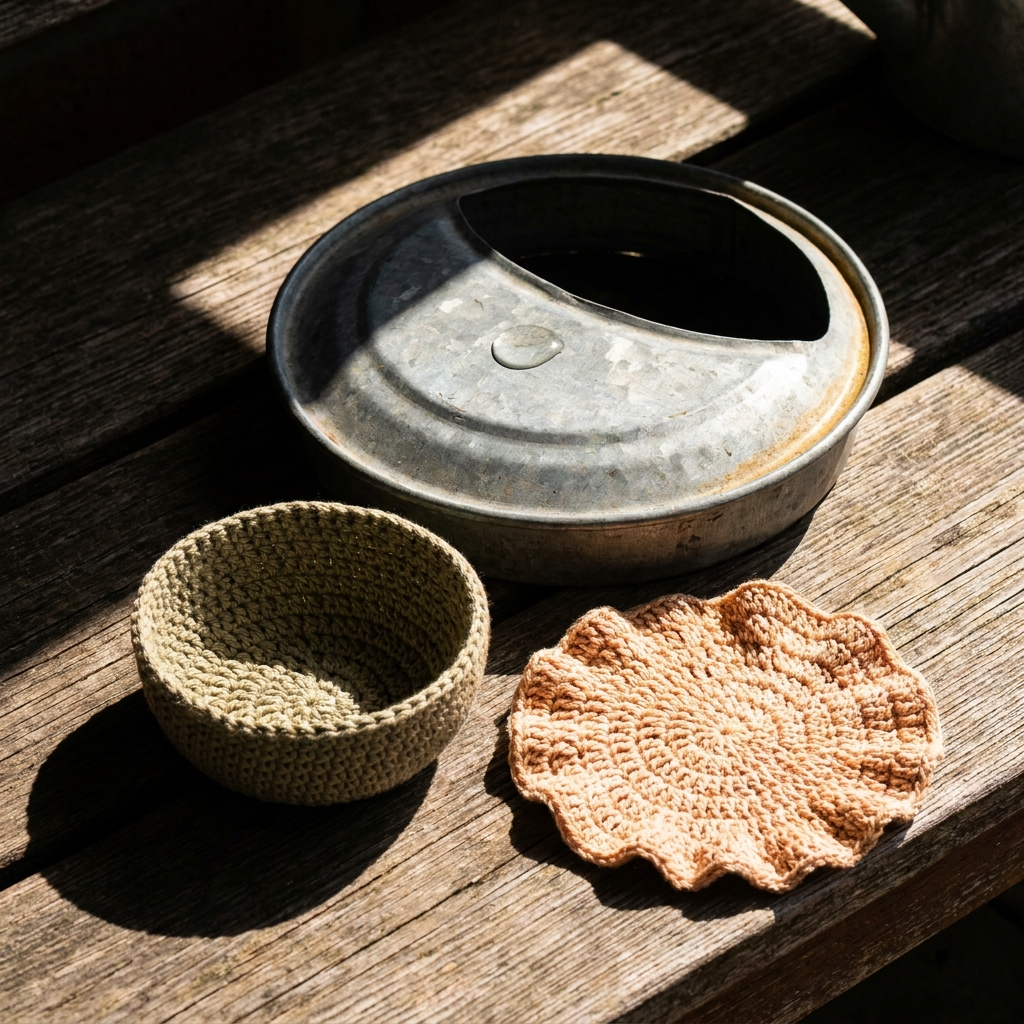
If the work cups, add more increases on the next round. A common fix is to treat the next round as if you skipped a round in the table. If round four cupped at twenty-four stitches, work the round-five repeat on those twenty-four stitches, then recount. If the cup is sharp, pull the tight round out and work it again with loops on the shank.
If the work ruffles, skip some increases. Work more plain stitches between increases. If round four ruffled, work (three single crochets, then an increase) on that round instead of (two, then an increase). The extra fabric at the rim is yarn you already used. Pulling that round out is cleaner than forcing it flat under a later round.
- Cups: Too few stitches, or loops sized on the throat. Add increases. Slide loops onto the shank.
- Ruffles: Too many stitches, or loose tension. Skip some increases. Pull a wild round out.
- Hexagon: Increases stacked in columns. Move each increase one stitch later.
- Lost start: The marker fell out of the spiral. Count V crowns from a contrast wedge.
How to Crochet a Ball or Sphere
How to crochet a ball is how to crochet a sphere. Grow a flat circle, stop increasing, then decrease the same way. The even rounds between grow and close form the equator, the widest belt of the ball. Stuff the hollow before the hole is too small for the filling.
- Work increase rounds until the disc matches the width you want for the ball.
- Work even rounds with no increases. One even round is a short ball. Three or four even rounds is a rounder sphere.
- Decrease in reverse of the last increase round.
- If the last grow round was three single crochets then an increase, the first close round is three single crochets then a decrease.
- Work a decrease as two stitches pulled through together.
- Repeat the reverse table: (two, decrease), then (one, decrease), then decrease in each stitch.
- When a small hole remains, stuff the ball.
- Thread the tail on a blunt needle. Run the needle through the remaining front loops, pull to close, and hide the tail.
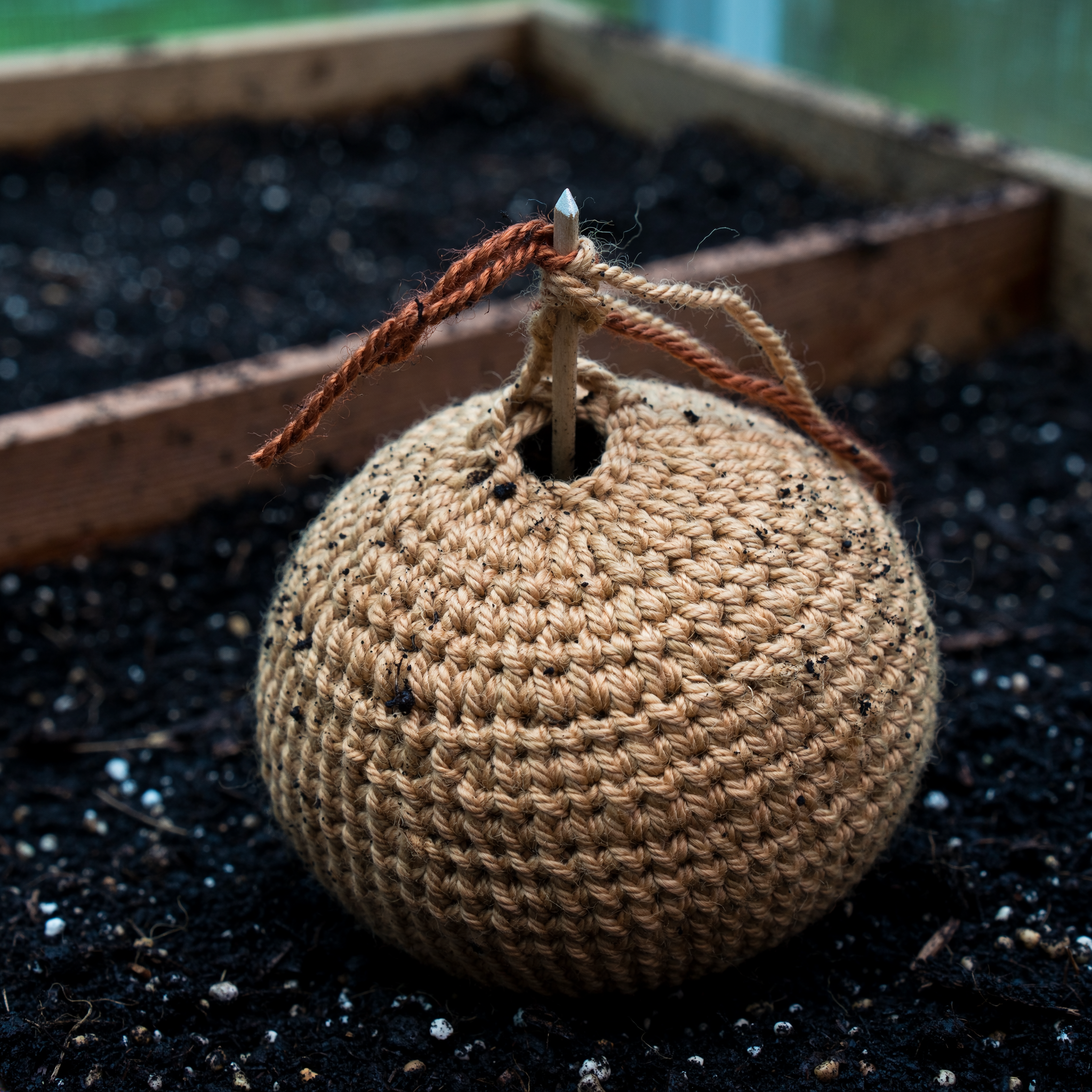
If the ball points like a lemon, you used too few even rounds. Add even rounds at the equator on the next ball. If the ball sags like a bean, you used too many even rounds, or the stuffing is light. This is the close skill under a stuffed-animal kit. Do not start a full animal chart on this page.
Star, Heart, and Triangle as Increase Variants
A star, a heart, and a triangle use the same idea as the circle. Place more stitches where the shape must grow. Place fewer stitches where it must pull in. You do not need a new stitch. You need a new map for the increases.
How to crochet a star: work a small flat circle, then put extra height at five or six even points. A point can be a short chain that you work back down. It can also be taller stitches with a chain at the tip. Between points, work single crochet so the edge pulls in. Five even points make a star.
How to crochet a heart: grow two bumps at the top and a point at the bottom. Place extra increases in two zones with a short dip of plain stitches between them. Then decrease on both sides toward one point. The two bumps are two partial circles that share a center.
How to crochet a triangle: keep three increase corners, not six. Each round, work two extra stitches at each of three even places. Work even stitches along the three sides. The corners grow. The sides stay straight.
Stop at the shape test. A star, heart, or triangle here is a disc you can lay flat. It is not a stuffed toy chart. If you want a closed form, return to the ball. If you want a project box, open the animal-kit guide.
Frequently Asked Questions About Crochet Circles
How to crochet a round?
Start a magic ring or a chain-two loop. Work six single crochets into it. Mark the first stitch. Add six increases each round, spaced like pie wedges. Move the marker up after every round.
How to crochet a flat circle?
Use six extra stitches every round for single crochet. Round n holds six times n stitches. Keep the six increases even. If the disc cups, add increases. If it ruffles, skip some.
How to crochet a ball?
Grow a flat circle to the width you want. Work even rounds for the equator. Decrease in reverse of the increase table. Stuff the hollow before the hole is small. Close the last loops with a needle and hide the tail.
How to crochet a star?
Work a small flat circle, then add extra height at five or six even points. A point can be a short chain worked back down, or taller stitches with a chain at the tip. Plain stitches between points pull the edge in.
How to crochet a heart?
Place extra increases in two zones at the top so two bumps form, with a short dip between them. Decrease on both sides toward one point at the bottom. The bumps are two partial circles. The point is a decrease column.
How to crochet a triangle?
Keep three increase corners instead of six. Each round, add extra stitches at three even places and work even stitches along the three sides. Count the three corners after every round so a fourth does not appear.
Why does my crochet circle cup or ruffle?
A cup means too few stitches or tighter tension than the round below. A ruffle means too many stitches or looser tension. Match the six-increase table, then adjust one round at a time. Pull a wild round out instead of burying it.
What is a magic ring in crochet?
A magic ring is an adjustable starting loop. You wrap the yarn, work the first stitches over the ring and the tail, then pull the tail so the center hole closes. A chain-two start leaves a small hole.
Editorial Sources
- Nagy AL, Sanchez RR. (1990). “Critical color differences determined with a visual search task.” Journal of the Optical Society of America A, 7(7):1209–1217. DOI: 10.1364/josaa.7.001209. PMID: 2370588.