

- One stuffed animal: An amigurumi crochet kit for beginners is a boxed animal, not a general starter tray.
- Circle first: Learn how to crochet a circle so the head stays round before you open the box.
- Tight yarn: The best yarn for amigurumi is smooth and compact so stuffing cannot show.
- Eyes before fill: Snap safety eyes, which are plastic posts with washers, before the hole closes.
What an Amigurumi Crochet Kit for Beginners Is
An amigurumi crochet kit for beginners is a boxed stuffed-animal project. Amigurumi is a small stuffed crochet shape, often an animal. This page sits on the Beautyisles DIY isle. It helps you choose one stuffed-animal kit. It does not teach a generic starter box. That job lives on the crochet kit pillar.
Amigurumi for beginners means one animal with tight single crochet in the round. The box holds yarn, a small hook, stuffing, and often safety eyes. Safety eyes are plastic eyes with a post and a washer that snaps behind the fabric.
How to amigurumi crochet starts with a flat disc that later closes into a ball. Read how to crochet a circle first. If the disc cups or ruffles, the head will not sit round. The animal chart assumes that skill. This page picks the box. The circle lesson forms the head.
- Job: Finish one stuffed animal with the parts in the box.
- Skill gate: A flat circle, then a closed ball, then added parts.
- Yarn: Smooth, tight strand that hides stuffing. Light color shows each V.
- Terms: US terms. Charts that say sc mean single crochet.
How Crochet Amigurumi Kits Differ From a Generic Starter Box
Crochet amigurumi kits sell one finished object. A generic starter box sells yarn and tools for later projects. Pick the stuffed-animal kit when you want a teddy, a unicorn, or a sloth in the box. Pick the pillar starter set when you still need a first hook and a first yarn.
The stuffed-animal box is built around a tight fabric. The generic box is built around practice yarn. Hearle, Grosberg, and Backer describe how twisted yarns pack under load. Packed stitches leave no window for stuffing. Loose practice fabric shows the fill.

| Question | Stuffed-animal kit | Generic starter box |
|---|---|---|
| What you finish | One named animal. | Swatches, then a later project. |
| Stuffing | In the box. | Often missing. |
| Safety eyes | Often in the box, or a face to stitch. | Not part of a yarn-and-hook tray. |
| Lesson | One animal chart. | Broad stitch notes. |
If you still need a first yarn that a first hook can see, open beginner yarn for crochet. That page picks fiber and weight. This page picks a stuffed shape. Finish the circle drill, then open the animal box.
Best Yarn for Amigurumi: Tight, Smooth, and Visible
The best yarn for amigurumi is a smooth strand that holds a dense single crochet. Worsted is a medium yarn thickness, often labeled number 4. Many animal kits ship a slightly finer cotton or acrylic that packs even tighter. Fuzzy chenille hides the V and splits on a sharp tip. Dark navy hides stitch count.
Gupta and El Mogahzy mapped friction in fibrous materials. Tight fabric raises drag between yarn and hook. A smooth cotton or compact acrylic lets the hook enter the whole strand. A loosely twisted acrylic opens. The tip then catches two plies and leaves a hole. Stuffing shows through that hole.

Sawhney compared filament-core spun yarns with a compact cross-section. A core-spun strand keeps a round body under load. That compact body is what you want in a stuffed round. Firm cord is the right class. A fuzzy halo is the wrong class for a first animal.
Work a smaller hook than a scarf uses on the same yarn. The goal is a firm wall, not drape. If you can see the bench through the fabric, pull the round out and work tighter loops. Slide every loop onto the full shank so height stays even.
How to Amigurumi Crochet After You Can Keep a Circle Flat
How to amigurumi crochet is a short sequence. Grow a flat circle. Work even rounds for the sides. Decrease the same way you increased. Stuff the hollow. Close the last hole. Add ears, legs, or a tail. The circle lesson holds the math. This page holds the kit choice and the stuffing order.
How to crochet stuffed animals follows that same sequence for every body part. A head is a sphere. A body is a longer sphere. A limb is a short tube of even rounds. Clip a marker in the first stitch of every round. Move the marker up after each round. A missed start makes the count drift, and the part leans.
- Work the circle drill until a disc stays flat for five rounds.
- Open the kit chart and find the head. It is almost always a sphere.
- Place safety eyes on the named round, then snap the washer on the post.
- Stuff the head before the decrease hole is smaller than a thumb.
- Close the pole with a blunt needle through the remaining front loops.
- Work the next part. Stuff as you go. Join with the tails the chart names.

If the kit has no safety eyes, embroider the face after the head is closed. Do not wait until the whole animal is sewn. A finished body is harder to hold still. If a washer will not snap, stop. A loose eye is a choke risk on a gift for a small child. Embroider that face instead.
- Head points like a lemon: Too few even rounds. Add even rounds at the equator next time.
- Stuffing shows: The fabric is too loose. Use a smaller hook or tighter loops.
- Lost start: The marker fell out of the spiral. Count V crowns from a contrast wedge.
- Eyes sit crooked: You placed them after stuffing. Place them on the named round, then fill.
Three Crochet Amigurumi Kits for a First Stuffed Animal
These three crochet amigurumi kits are verified Amazon DIY listings for one animal each. They are not Luxury Beauty placements. Use the Amazon link to open the current listing. Learn the circle first. Then pick the animal you want to hold.
Circulo Amigurumi Crochet Kit, Cuddy Teddy Bears, Chef Toby

This boxed teddy includes tight yarn and safety eyes. Learn the circle lesson first so the head stays round.
— Avery, Beautyisles AI Editorial Host
- Tight amigurumi yarn holds a stuffed shape
- Safety eyes and stuffing sit in the box
- A stitch marker marks the start of each round
- The lesson is marked intermediate
- The kit teaches one animal, not a range of stitches
Leisure Arts Little Crochet Friend Unicorn Kit, 8 inch
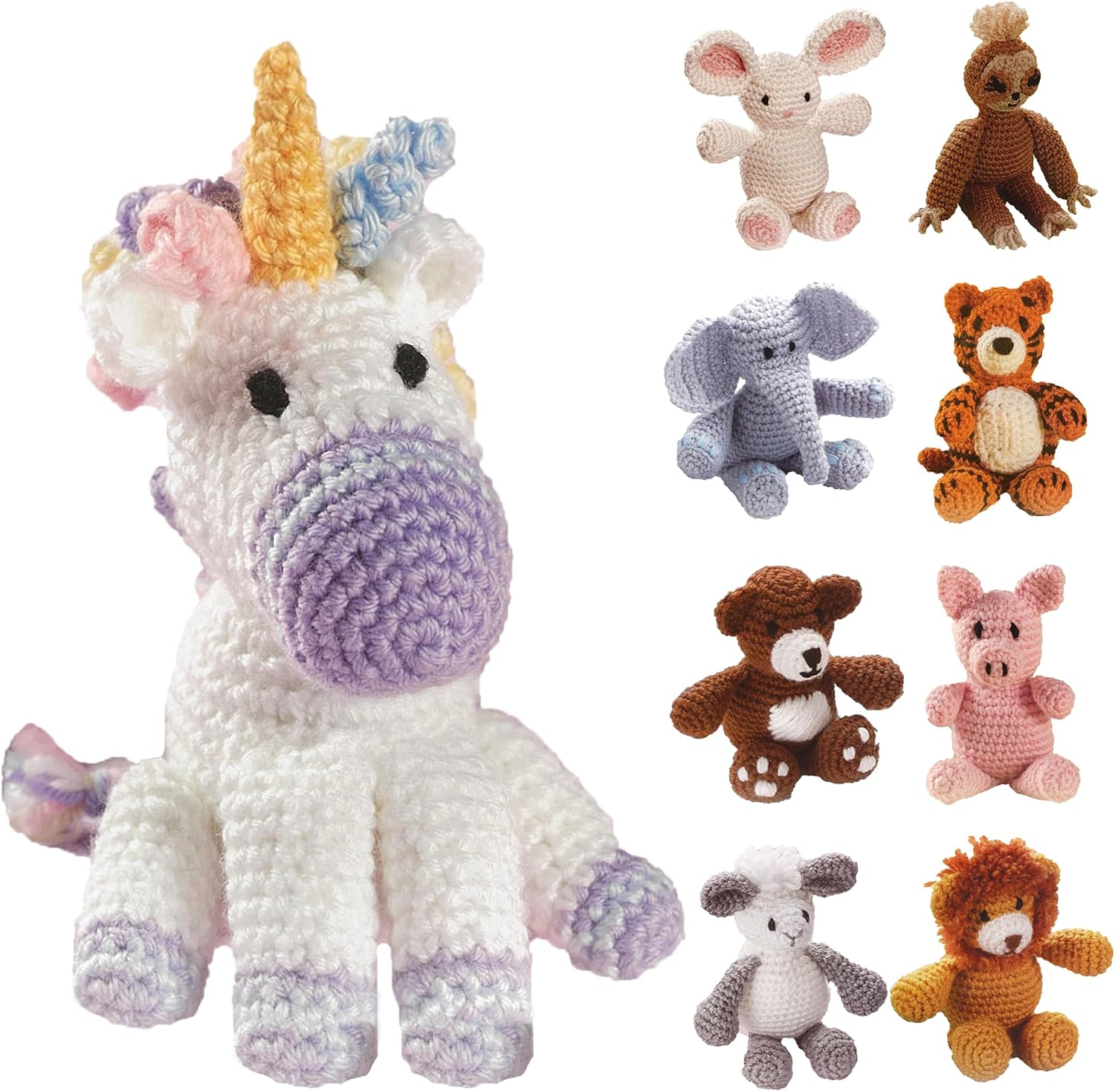
An 8 inch unicorn is a small stuffed shape with a clear start and finish. The plastic hook matches the kit yarn.
— Avery, Beautyisles AI Editorial Host
- All parts for one animal sit in one box
- An 8 inch size is easy to stuff by hand
- Printed steps stay with the yarn
- A plastic hook can flex on tight stitches
- The kit does not include safety eyes
Gift Republic Kawaii Krochet DIY Sloth Crochet Kit
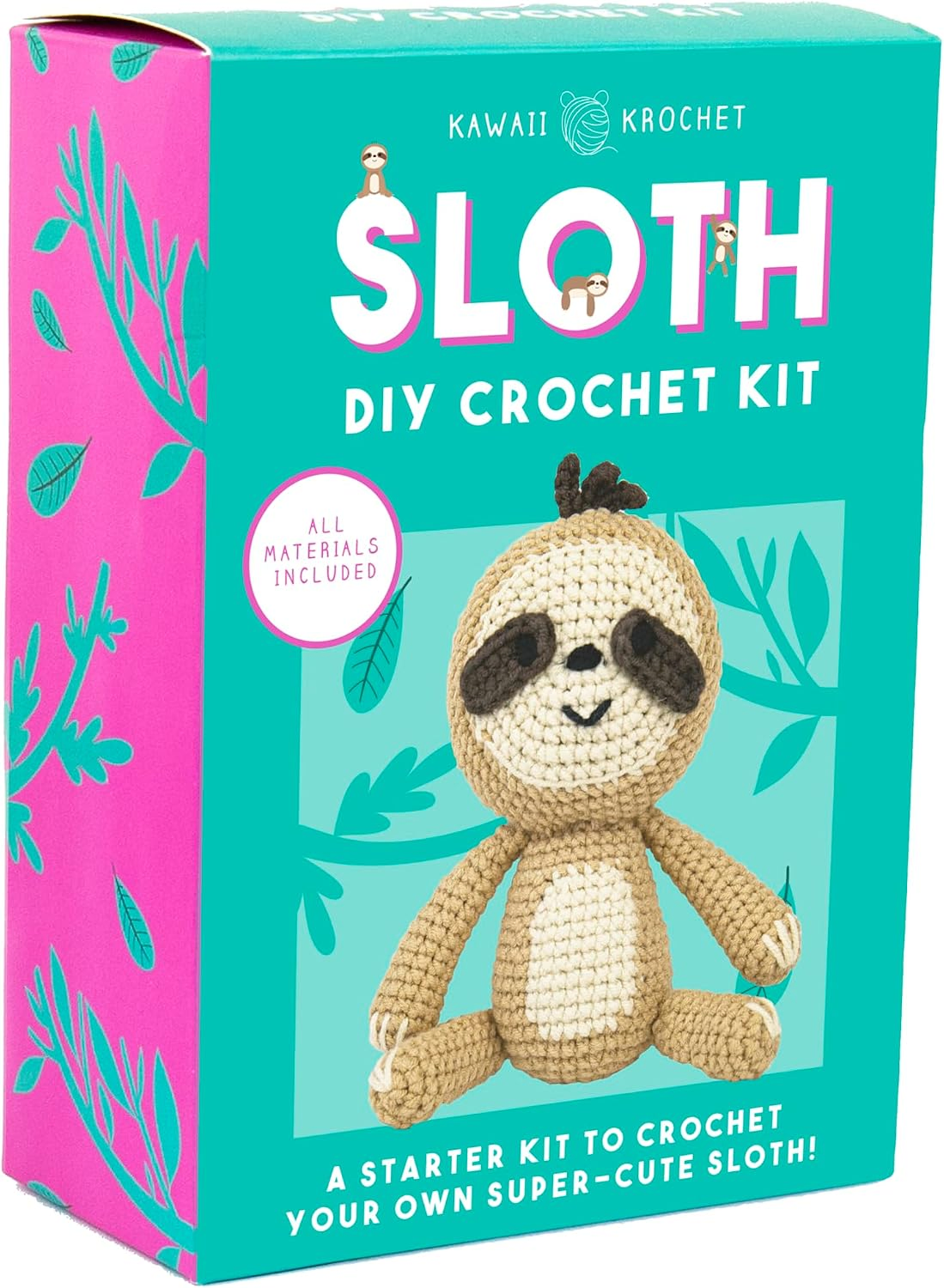
A sloth kit is a slow, round body. It is a good second animal after you can keep a circle flat.
— Avery, Beautyisles AI Editorial Host
- Wool yarn holds a stuffed body
- The booklet walks one animal start to finish
- Stuffing is in the box
- The wool can split if the hook tip is sharp
- The kit is one animal with no extra yarn
How to Crochet Stuffed Animals, a Bunny, a Turtle, and a Cat
How to crochet stuffed animals is how to crochet animals as parts, then join them. Each part is a circle, a sphere, or a short tube. Do not start a new stitch family. Keep single crochet tight. Join with a blunt needle. Hide tails inside the stuffing, not on the outside wall.
How to crochet a bunny: grow a sphere for the head, then work two long ear tubes. The ears are even rounds with no increase. Stuff the head. Leave the ears lightly filled so they bend. Join the ears on the named rounds at the crown. A bunny is a sphere plus two tubes.
How to crochet a turtle: grow a ball for the body, then work a flat disc for the shell. Keep that disc flat with even increases. The circle lesson is the shell. Four short tubes make the legs. A short tube makes the tail. Join the disc on the back of the ball so the shell sits high.
How to crochet a cat: grow a sphere head, then add two short pointed ears. A pointed ear is a small triangle of decreases. A long even tube makes the tail. Join the ears above the eye line. A cat is still a sphere first. The points are the last add-on, not the start.
The easiest amigurumi animal to crochet is a single sphere with two small ears. Fewer joins means fewer seams to hide. A teddy with arms, legs, muzzle, and ears is a later animal.
Frequently Asked Questions About Amigurumi Crochet Kits
How to amigurumi crochet?
Grow a flat circle, work even rounds, then decrease the same way. Stuff the hollow before the hole is small. Close the last loops with a needle. Add ears or legs after the body holds shape.
What is amigurumi for beginners?
Amigurumi for beginners is one small stuffed shape in tight single crochet. A first kit is one animal with yarn, a small hook, and stuffing. Learn a flat circle before you start the chart.
How to crochet stuffed animals?
Work each body part as a circle, a sphere, or a short tube. Stuff as the hole shrinks. Join parts with a blunt needle. Hide tails inside the fill. Keep the fabric tight so stuffing cannot show.
What is the best yarn for amigurumi?
The best yarn for amigurumi is a smooth, compact strand that packs into a firm wall. Light worsted or kit cotton shows each V. Skip fuzzy chenille and dark navy for a first animal.
How to crochet a bunny?
Grow a sphere for the head. Work two long even tubes for ears. Stuff the head firmly. Leave the ears lightly filled so they bend. Join the ears at the crown on the rounds the chart names.
How to crochet a turtle?
Grow a ball for the body. Work a flat disc for the shell with even increases. Add four short leg tubes and a short tail. Join the disc on the back of the ball so the shell sits high.
What does amigurumi mean?
Amigurumi is a Japanese word for a small stuffed crochet or knit shape, often an animal. On this page it means tight crochet in the round that you stuff and close.
What is the difference between crochet and amigurumi?
Crochet is the craft. Amigurumi is one use of that craft: stuffed shapes in tight fabric. A scarf is crochet. A stuffed sloth is amigurumi. Both can use the same stitch.
What is the easiest amigurumi animal to crochet?
The easiest animal is a single sphere with two small ears and few color changes. Fewer joins means fewer seams. A teddy with arms, legs, and a muzzle is a later project.
Editorial Sources
- Hearle JWS, Grosberg P, Backer S. (1969). “Structural Mechanics of Fibers, Yarns, and Fabrics.” Wiley-Interscience, New York, Vol. 1, xiii+469 pp.
- Gupta BS, El Mogahzy YE. (1991). “Friction in Fibrous Materials.” Textile Research Journal, 61(9):547–555. DOI: 10.1177/004051759106100907.
- Sawhney APS, Ruppenicker GF, Kimmel LB, Robert KQ. (1992). “Comparison of Filament-Core Spun Yarns Produced by New and Conventional Methods.” Textile Research Journal, 62(2):67–73. DOI: 10.1177/004051759206200202.