
- Yarn first: Buy one dye lot, then start the first row.
- Straight edges: Count every stitch. The last V hides at the edge.
- Easiest blanket: One stitch in even rows, not a first granny grid.
- Border last: A single-crochet border levels the sides after the fabric is done.
How to Crochet a Blanket as a First Large Object
How to crochet a blanket starts with a yarn plan and a straight first row. It does not start with a finished bed cover. This lesson sits on the Beautyisles DIY isle. It is the first large object after squares. It is not a scarf lesson.
Use the hook from your crochet kit, then add yarn sized for a throw. A crochet blanket for beginners is a rectangle you can measure on a sofa. A bed cover waits until this rectangle stays square. Light yarn on a darker floor shows each V on the edge.
A granny square blanket joins finished squares. Do not rebuild the motif here. The motif lives on how to crochet a granny square. This page plans width, yarn, the first row, and the border.
- Yarn: Super bulky chenille, a fuzzy pile yarn, or a worsted cake. Worsted is medium thickness, labeled number 4.
- Hook: Match the ball band. Super bulky often uses 8 mm. Worsted often uses 5 mm to 6 mm.
- Marker: A locking clip on the last stitch of every row.
- Terms: US terms. Chain (ch), single crochet (sc), double crochet (dc).
Yarn Plan for a Crochet Blanket for Beginners
Plan yarn before you chain. Fiber and thickness change how fast the fabric grows. Hearle, Grosberg, and Backer describe how fibers pack into yarns and how yarns pack into fabric. A thick chenille strand fills space faster than a thin worsted strand.
Pick beginner yarn for crochet you can see, then buy enough of one dye lot. A dye lot is a factory color batch printed on the ball band. Mix lots and the color shifts in a stripe you did not plan.
Fuzek measured how common fibers take up and release water. Polyester chenille holds little water. Wool holds more, so a wet wool throw is heavier and slower to dry. Morton and Hearle map how fibers recover after stretch. Wool springs back. Acrylic holds the shape you made.
Find the yarn mass with a swatch, a small test square. Work them in this order:
- Crochet a 4 inch square in the stitch you will use.
- Count stitches across and rows up.
- Divide the width you want by 4, then multiply by that stitch count.
- That number is the starting chain, plus the turning chain.
- Do the same for length and rows.
- Weigh the swatch. Scale that weight to the full area. That is the yarn mass to buy.
- Buy every ball from the same dye lot. Add extra yarn for the border.

A lap throw covers the legs when you sit. Chain a width that covers your lap, then work until the length covers your knees. A sofa throw matches the seat width. A bed cover is a later project. Super bulky yarn uses more grams and fewer rows. Worsted yarn uses more rows and a lighter fabric.
| Yarn class | Typical hook | What it builds |
|---|---|---|
| Super bulky chenille | 8 mm / L-11 | A plush lap throw in fewer rows. |
| Worsted cake | 5 mm to 6 mm | A lighter throw with built-in stripes. |
| Kit worsted | Kit hook, often 5 mm | A slower, denser blanket. |
How to Start a Crochet Blanket
How to start a crochet blanket is a counted chain, then even stitches into that chain. A foundation chain is a row of empty loops that you then stitch into. A turning chain is a short lift for the hook at the end of a row.
The easiest blanket to crochet is a rectangle of one stitch. Single crochet is short and dense. Double crochet is taller and grows faster. Pick one stitch and keep it for every row on a first throw. Work the start in this order:
- Make a slip knot and place it on the hook.
- Chain the count from your swatch, plus one turning chain for single crochet.
- For double crochet, add three turning chains instead of one.
- Skip the turning chains. Insert the hook in the next chain.
- Work one stitch in each remaining chain. Count the V crowns at the end.
- Clip a marker in the last stitch. That stitch hides at the edge.
- Make the turning chain. Turn the work like a page.
- Work into the first stitch, not into the turning chain. Repeat even rows.

If the count drops, you skipped the last stitch. If the count rises, you stitched into the turning chain. Pull the row out to the last correct stitch. Do not bury a wrong row under more fabric. A basic crochet blanket stays honest only if every row matches the first count.
Foundation single crochet builds the chain and the first row together. If you want a firm lower edge, use it. If the pattern wants a decorative chain edge, skip it. Keep the base-chain count and the V-crown count the same.
Easy Crochet Blanket Rows Versus a Granny Square Blanket
An easy crochet blanket is even rows of one stitch. A granny square blanket is a grid of finished squares. Both are valid. The row method is the faster first large object. You count one edge, not four corners on every motif.
If you already have flat squares, join them into a granny square blanket here. Do not rebuild the ring, the clusters, or the corners on this page. Finish the motif and one seam on the granny guide. Then lay squares on the floor until the width and length match the sofa or bed. Count the grid. Buy extra yarn for the join and the border.
Join-as-you-go attaches a new square on its last round. A needle seam joins two finished edges. Both belong to the square lesson. This page only places the grid and adds the outer border after the fabric is one piece.
How to crochet a blanket for beginners stays with the row method until the edge is straight. When the rectangle lies flat, the same border works on a granny grid. The border does not care how the center was built. It cares that the outer edge has a stable stitch to enter.
Two Yarns for a Basic Crochet Blanket
Amazon Luxury Beauty does not stock these DIY yarns. The two picks below are verified Amazon listings. Super bulky chenille fills a lap throw fast. A worsted cake adds stripes without extra ends. Match the hook to the ball band before you chain the first row.
Bernat Blanket Yarn, Sonoma

Chenille fills space fast. Pair it with a large hook so a first blanket grows in hours, not weeks.
— Avery, Beautyisles AI Editorial Host
- Super-bulky yarn builds fabric quickly
- Soft chenille surface feels plush on a throw
- One big ball starts a lap blanket
- Chenille splits if the hook tip is sharp
- The fabric is heavy, so a large throw needs several balls
Caron Cakes Self-Striping Yarn, Blueberry Shortcake
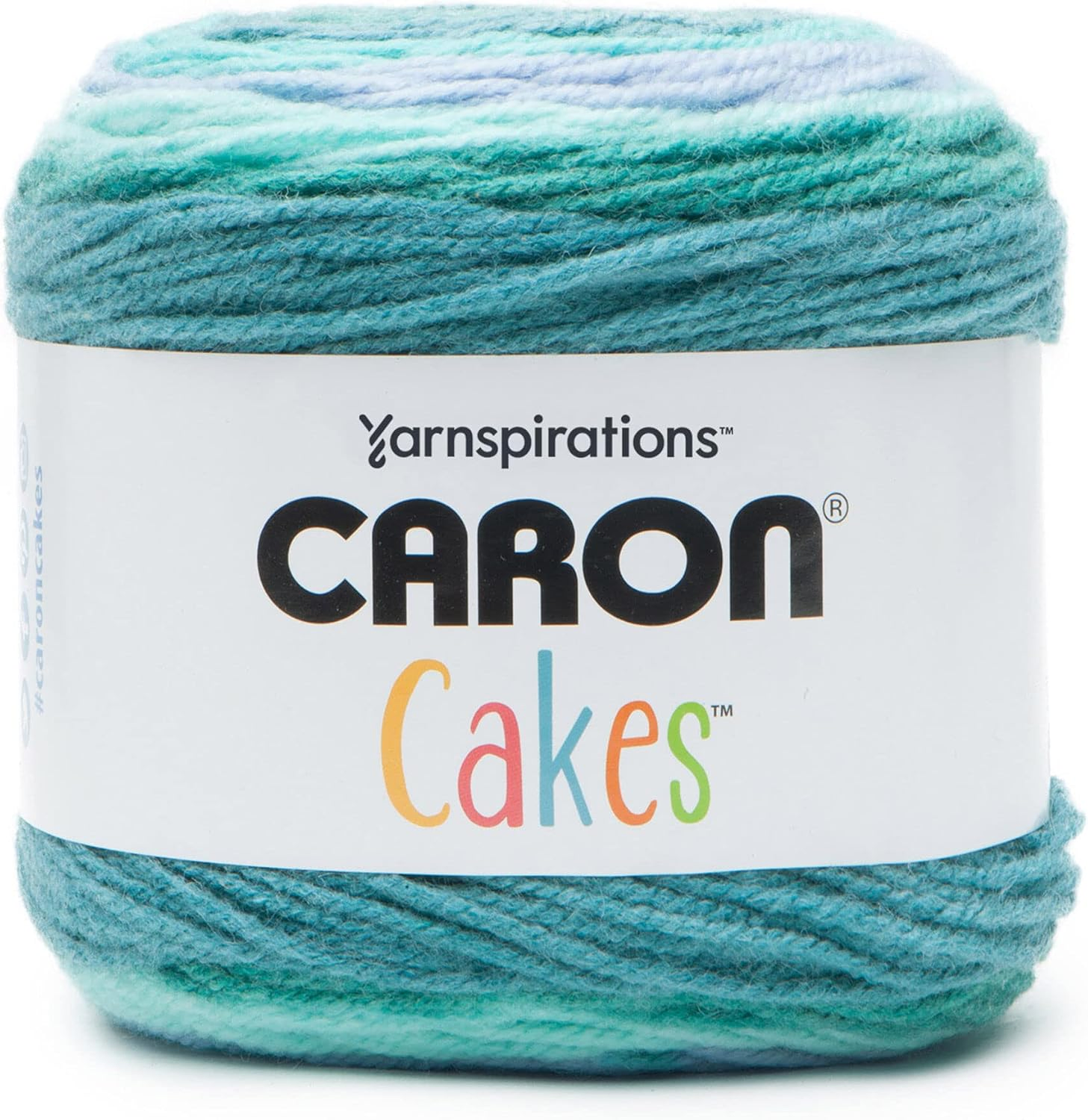
A cake changes color as you work, so a plain stitch still makes stripes. Use it for a first throw that must stay interesting.
— Avery, Beautyisles AI Editorial Host
- Self-striping color without extra ends
- Worsted weight matches a 5 mm to 6 mm hook
- Wool blend adds a little bounce
- Color changes land in the middle of a row on some cakes
- One cake is not enough for a bed-size blanket
How to Crochet a Blanket Border
How to crochet a blanket border is a final even round that levels the sides. Add it after the rectangle or the granny grid is one piece. The first border stitch is single crochet. It sits short and fills gaps in row-ends.
Work the first border round in this order:
- Do not turn at the end of the last row.
- Chain one. Work one single crochet in each stitch across the top.
- At each corner, work three single crochets in the same corner stitch so the corner stays flat.
- Down each side, work one single crochet in each single-crochet row-end.
- If the rows are double crochet, work two single crochets in each row-end so the side does not pull.
- Match the three-stitch corner at every corner. Join in the first single crochet.
- For a second round, work one single crochet in each stitch. Keep three in each corner.

If the blanket curves at the edge, the row count drifted before the border. A missed last stitch pulls that side in. Extra stitches in the turning chain push that side out. Count the last V before you turn. A border hides a small wave. It does not hide a growing or shrinking rectangle.
Silverstein, Fine, and Armstrong tied repeated hand-wrist load to cumulative trauma in industry. A blanket is a long session. Keep the wrist straight. Rest when the pinch aches. Slide every loop onto the full shank so the stitch stays even and the hand does not fight the throat.
- Edge curves in: You skipped the last stitch. Mark it before you turn.
- Edge flares out: You worked into the turning chain. Skip that chain.
- Border pulls: Side stitches are too few. Add one more stitch per tall row-end.
- Corner cups: The corner had one stitch. Put three in the same stitch.
- Chenille splits: The hook tip entered between plies. Catch the whole strand.
Frequently Asked Questions About How to Crochet a Blanket
What is the easiest blanket to crochet?
The easiest blanket to crochet is a rectangle of one stitch in even rows. Single crochet is dense. Double crochet grows faster. Count every stitch. Leave granny grids until one motif and one seam already lie flat.
How to start a crochet blanket?
Swatch a 4 inch square, then chain the stitch count for the width you want, plus a turning chain. Skip the turning chain. Work one stitch in each remaining chain. Mark the last stitch. Turn and repeat even rows.
How to crochet a blanket for beginners?
Choose yarn you can see. Super bulky chenille on an 8 mm hook is a fast first throw. Chain a lap width. Work even rows until the length covers your knees. Add a single-crochet border last.
How to crochet a blanket border?
Work single crochet around the finished fabric. Put three stitches in each corner. On the sides, put one stitch in each short row-end, or two in each tall row-end. Join. If the edge still looks thin, add a second round.
How to hand crochet a blanket?
Hand crochet on this page means you work with a hook, not a machine. Arm crochet is a different method that uses the arm as a hook with super-bulky yarn. For a first throw, use a large hook and chenille instead of your arm.
How do you make a granny square blanket?
Build flat squares on the granny guide, then join them into a grid. Lay the squares on the floor until the size matches the sofa or bed. Count the grid. Join the edges. Add the outer border on this page.
How much yarn does a crochet blanket need?
Make a 4 inch swatch, weigh it, and scale that weight to the full width and length. Super bulky yarn uses more grams per area. Worsted uses more yards. Buy one dye lot, plus extra for the border.
Why does my blanket curve at the edge?
The stitch count drifted. A missed last stitch pulls the edge in. Extra stitches in the turning chain push the edge out. Mark the last V before you turn. A border levels a small wave. It does not fix a shrinking rectangle.
Editorial Sources
- Hearle JWS, Grosberg P, Backer S. (1969). “Structural Mechanics of Fibers, Yarns, and Fabrics.” Wiley-Interscience, New York, Vol. 1, xiii+469 pp.
- Morton WE, Hearle JWS. (2008). “Physical Properties of Textile Fibres.” Woodhead Publishing, Cambridge (4th ed.). DOI: 10.1533/9781845694425.
- Fuzek JF. (1985). “Absorption and desorption of water by some common fibers.” Industrial & Engineering Chemistry Product Research and Development, 24(1):140–144. DOI: 10.1021/i300017a026.
- Silverstein BA, Fine LJ, Armstrong TJ. (1986). “Hand wrist cumulative trauma disorders in industry.” British Journal of Industrial Medicine, 43(11):779–784. DOI: 10.1136/oem.43.11.779. PMID: 3790459.