

- Read the oil load first: A body mist carries a few percent aroma oil. A parfum carries several times more, so it lasts longer and reaches further.
- Hydrate before you spray: Moist skin releases fragrance more slowly. Dry skin lets the scent escape fast.
- Layer light under heavy: Spray the mist first, then a stronger scent on top. The light layer lifts the heavier one.
- Cover a wide area: Hold the bottle 15 to 20 centimeters away and sweep across the skin in short passes.
- Look for a base note: Musk, amber, cedar or vanilla keeps a mist from collapsing into one flat note.
A body mist is the lightest way to wear fragrance. It sits close to the skin, it fades quietly, and it costs less than a full perfume. That lightness is a design choice, not a defect. This guide places the mist on the fragrance concentration scale. It explains why a mist suits an office or a hot day. It also shows how to layer a mist so a stronger scent lasts longer. You will learn how a hydrating mist differs from a straight fragrance mist, and how a hair mist differs from a body spray.
What Is Body Mist and How It Differs From a Body Splash
What is body mist
The mist is a fragrance product that carries a small amount of aroma oil in a light liquid. That liquid is mostly water and ethanol, the alcohol that perfumers use as a carrier. You spray it as a fine cloud over a wide area of skin. The oil load is low, so the scent stays close to the body and fades within a few hours.
The oil load sets the format. In one controlled study, body splash formulas held 1, 3 or 6 percent coffee oil. The 1 to 3 percent versions lasted under two hours. The 3 to 8 percent versions lasted about two to three hours. The 3 percent formula scored best with testers, because the scent was not too strong and left no stain.
That study measured a body splash, which sits at the same end of the scale as a mist. Both use a high share of water and alcohol. Both ask you to spray more often. That is the trade for a scent that never crowds a room.
Body splash vs body mist and body mist vs body spray
The three names overlap, and brands do not use them in a fixed way. A body splash and a mist are close cousins. Both are light, both are sprayed, and both fade in about two to three hours. A body splash often has a slightly higher water share and a thinner feel on the skin.
A body spray can mean two different things. In drugstore aisles it often means a deodorant or an antiperspirant spray. In fragrance it means a light scented spray, close to a mist. Read the label for the words fragrance mist, or look for a body mist perfume listing. A body spray for women usually carries a lighter oil load than a cologne, so it behaves like a mist.
Judge the product by its oil load and its base notes, not by the word on the front of the bottle. A mist with a real base note will wear better than a splash with only top notes.
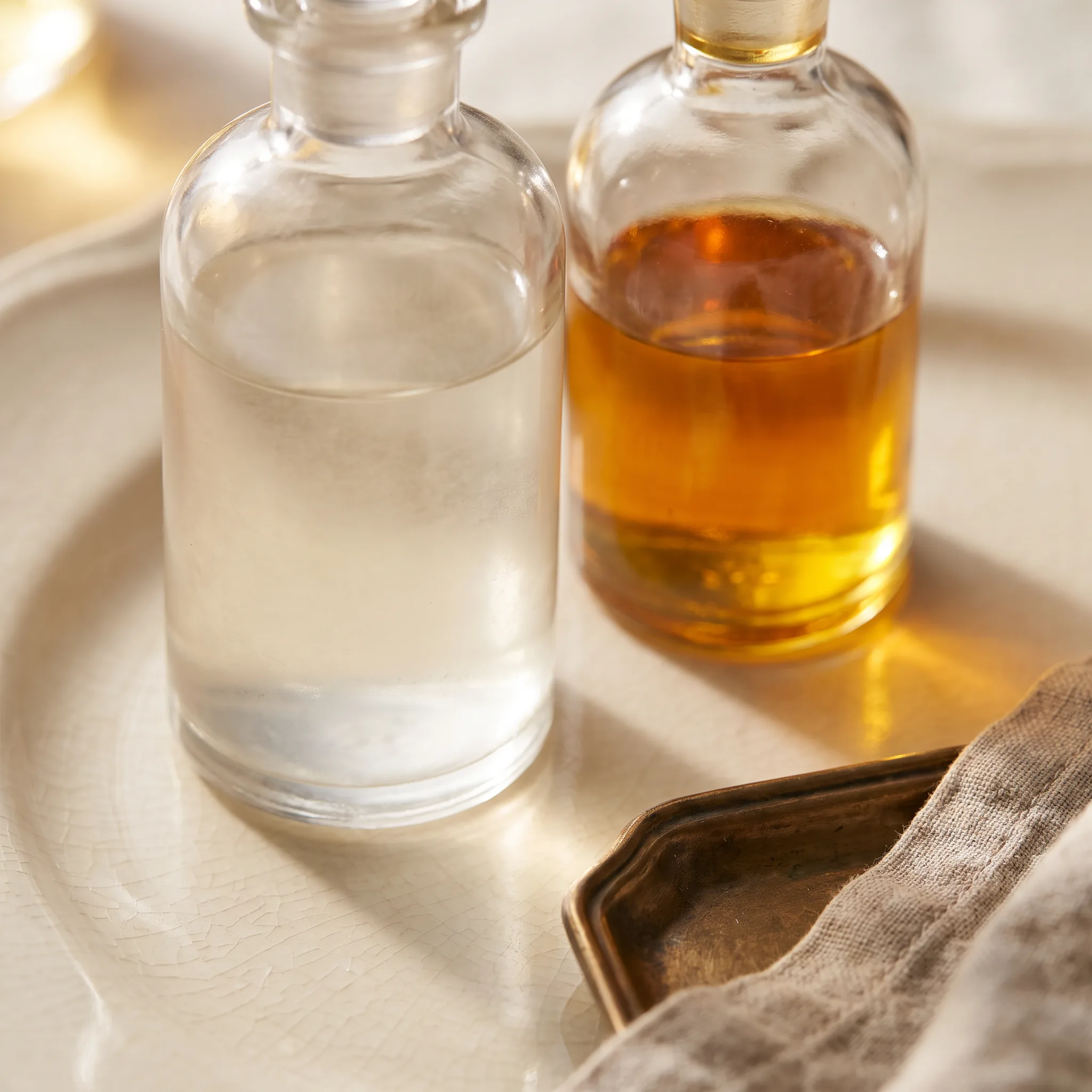
Body Mist vs Perfume: Reading the Concentration Scale
Fragrance formats sit on one scale. The scale measures how much aroma oil the liquid holds. The mist sits at the bottom. Eau de cologne sits just above it. Eau de toilette, eau de parfum and parfum rise in turn, with parfum at the top. A higher oil load puts more scent into the air and keeps it there longer.
Where a mist sits on the scale
A mist holds a few percent aroma oil at most. A parfum holds several times that amount. This gap explains the price gap and the wear-time gap. A mist that lasts two to three hours is behaving as designed. A parfum that lasts eight hours or more is also behaving as designed.
Wear time also depends on the molecules in the blend. A perfume is a mixture of top, middle and base notes in a carrier such as ethanol and water. Top notes last 15 to 30 minutes. Middle notes last 3 to 4 hours. Base notes last more than 4 hours. A mist leans on light molecules, so it shows the top and middle phases and very little of the base.
Why the scale does not predict wear on its own
Concentration is only one input. Evaporation also depends on the vapour pressure of each molecule, its share in the blend, and the solvent around it. Vapour pressure is the force that pushes a molecule from liquid into air. Ethanol is volatile and leaves fast, so it carries the opening with it.
The surface matters just as much. A 2025 evaporation study on volunteers found that skin hydration was the strongest skin factor. Well-hydrated skin had lower evaporation rates, because the water in the skin helped retain the fragrance. Dry skin released the same molecules faster. A mist on dry skin can vanish in under an hour.
This is why the same bottle can behave differently on two people. It is also why the full guide to luxury perfumes starts with skin, not with the label.
Why a Body Mist Suits an Office, a Hot Climate or a Commute
The same low oil load that limits wear time also limits how far the scent travels. That is a benefit in shared spaces. A mist stays near the wearer, so it reaches the people close by and stops there.
In a shared office
An office has still air, closed windows and many noses. A heavy spray fills that air and stays for hours. A mist does not. It gives a small personal zone instead of a cloud. Some people are sensitive to fragrance, so a light format is the polite choice in a shared room.
Spray products also release fine particles into the air. A 2026 study measured these particles and found that nozzle design and formula change the amount. Particle size decides how deep the particles travel into the airway. A short, low spray puts less into the air than a long one.
In heat and humidity
Heat speeds evaporation. Molecules leave the skin faster when the air is warm. A high-oil perfume can turn loud and heavy in the heat. A mist behaves better, because it has less material to release and its opening is already light. Reapply once in the afternoon instead of starting with a heavy dose in the morning.
On a commute
A commute mixes warm trains, crowded lifts and long walks. A small mist in a bag lets you refresh at the other end of the journey. One or two sprays reset the scent without building up. This is where a travel-size mist earns its place in a handbag.
How to Layer a Body Mist Under a Stronger Scent
Layering means wearing two scents that share a mood. The light one goes on first, and the stronger one goes on top. The aim is a longer, rounder wear, not a fight between two smells. Hydrated skin holds the molecules longer, so a body cream under the mist helps. Finish with the heavier scent on the neck or wrists.
Start with hydrated skin. Moist skin holds fragrance molecules longer, as the 2025 evaporation study showed. Apply an unscented lotion or a scented body cream, then wait a minute. Then spray the mist across the chest and arms. Let it settle. Finish with one spray of the stronger scent on the neck or wrists.
A fixative helps the base notes hold. A fixative is an ingredient that slows evaporation and keeps light molecules on the skin. In a 2025 study, a non-odorant film-forming fixative cut the first 15 minutes of base-note evaporation by about 17 to 31 percent. It left 8 to 12 percent of the base notes still on the test surface after eight hours.
Some solvents do the same job. Dipropylene glycol is a common fragrance solvent with a high retention ability. It lowers odour intensity while it stretches the scent over time. A mist that lists a glycol or a resin among its ingredients tends to hold its shape longer.
Apply body cream first, then the mist, then the stronger perfume. Spray the heaviest scent last and in the smallest amount. If the two scents share one note, such as vanilla or rose, the blend reads as one scent instead of two.
Hydrating Body Mist and Essential Oil Body Mist: What the Labels Mean
A hydrating mist and a plain fragrance mist differ in one way. The hydrating version adds skin-care ingredients to the fragrance base. Those additions change how the skin feels and how the scent fades. A humectant such as glycerin draws water into the skin, and hyaluronic acid holds it at the surface. Better-hydrated skin releases fragrance more slowly.
Hydrating body mist
The main addition is a humectant. A humectant is an ingredient such as glycerin that draws water into the skin. Glycerin is the workhorse of the group. In a double-blind study, a cream with 20 percent glycerin raised skin hydration over ten days, measured with a corneometer. A corneometer is a device that measures the water content of the skin surface.
Hyaluronic acid is another common humectant. It holds water at the skin surface. The benefit for fragrance is indirect. Better-hydrated skin evaporates fragrance more slowly, so the scent stays longer. A hydrating mist gives you two things at once, a softer skin feel and a slower fade.
Essential oil body mist
An essential oil mist uses plant oils instead of, or alongside, synthetic aroma molecules. The idea sounds gentler. That is not always true. Fragrance materials can cause contact allergy, and oxidized terpenes are stronger allergens. Limonene and linalool, two common citrus and floral molecules, become potent sensitizers after they react with air.
If you choose an essential oil mist, read the ingredient list and check the date. Store the bottle away from light and heat. Heat and air speed the oxidation that turns a mild molecule into a stronger allergen. Patch test on the inner arm before you spray a large area of skin.
Hair & Body Mist: Why an Alcohol-Heavy Spray Dries the Hair Shaft
Hair is mostly protein, with a small lipid layer that coats the surface. That lipid layer is only 1 to 9 percent of the dry weight. It does a lot of work. It keeps the surface smooth, holds water inside the fibre, and protects the hair from damage.
Ethanol dissolves that layer. A 2023 review found that ethanol penetrates the hair fibre quickly, faster than the surfactants in shampoo. When surface lipids leave, the fibre becomes less water-repellent. Surface friction rises, so hair feels rough and dry. Tensile strength falls, so hair breaks more easily.
Water content matters just as much. Hair takes up and releases water, and its mechanical behaviour changes with that water. Two humidity transitions shape the fibre, one near 30 percent relative humidity and one near 60 to 70 percent. A fibre that loses water becomes stiffer and more brittle.
A hair mist that is mostly alcohol will dry the shaft over time. A better hair mist pairs a lower alcohol share with oils or fatty alcohols. Argan oil and vitamin E are common additions. They leave a light film that replaces some of the lost lipids and softens the surface.
Spray hair mists from about 20 centimeters away and keep them off the scalp. Use them on damp or dry hair, not on hair that is still hot from a styling tool. Let the mist dry before you brush.

How to Apply Body Mist for Even Coverage
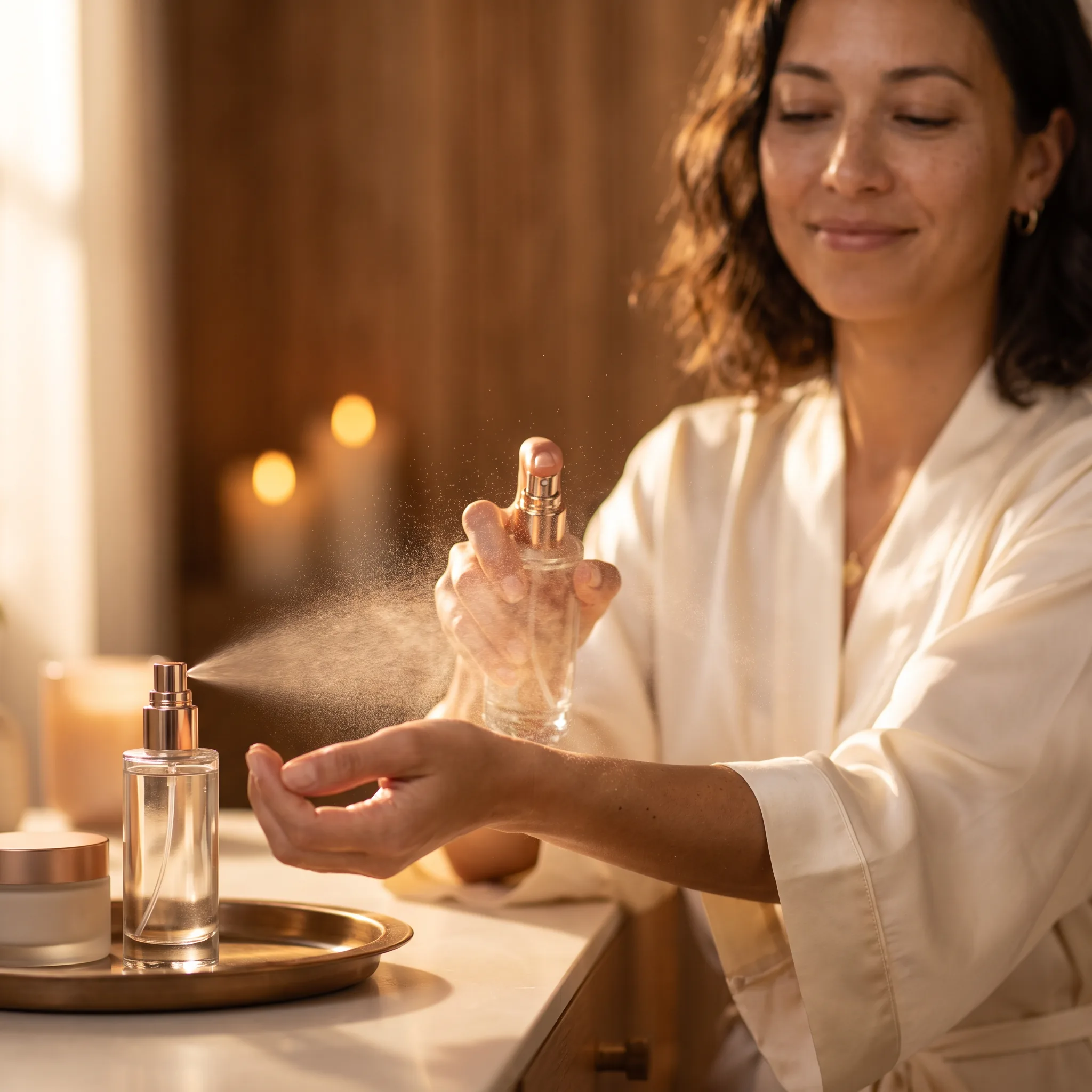
Most people spray one stripe on the neck and stop. That gives a strong hit in one place and nothing anywhere else. Coverage works better. A wide, light layer releases scent steadily and fades evenly.
Hold the bottle 15 to 20 centimeters from the skin. A spray at that distance lands as a fine, even mist. A spray too close soaks one spot and drips. A spray too far wastes most of the product into the air.
Sweep the bottle across the chest, the shoulders and the upper arms in one slow pass. Turn and do the back of the neck. Add a light pass over the hair if the formula allows it. Keep each press short. Two short passes cover more skin than one long press.
Spray on moisturized skin, not on broken skin or skin you just shaved. Let each layer dry before you add the next. Do not rub the skin after spraying, because rubbing warms the surface and pushes the top notes off faster.
If you can taste the scent in your own throat, you sprayed too much. Step into the mist or spray toward the body, never toward the face. Good ventilation keeps the particles out of your lungs and off the people nearby.
How to Choose a Mist That Does Not Collapse Into One Flat Note
A cheap mist can smell sharp for ten minutes and then disappear. That flatness comes from the formula. Light molecules leave first. If the blend holds only light molecules, nothing is left to carry the scent after the opening.
Look for a base. Musk, amber, cedar, sandalwood, vanilla and tonka point to heavier molecules, and the musk perfume guide explains how those base notes settle on skin. These molecules leave the skin slowly and hold the shape of the scent. A mist with a real base reads rounder and lasts longer than its oil load suggests.
Look for a fixative or a glycol. Both slow the release of the base notes. A film-forming fixative cut early base-note evaporation by about 17 to 31 percent in one 2025 study.
Smell the mist on skin, not on paper. Paper shows the opening and hides the dry-down. Spray your wrist, wait 30 minutes, and smell it again. If the scent still has a shape, it will wear well.
Rose body mist and floral body mist
A good floral mist is not one note. Rose fragrance alone contains more than 400 volatile compounds. Two of them, beta-ionone and beta-damascenone, have very low odour thresholds. An odour threshold is the smallest amount a nose can detect. Those two molecules shape the rose character even in tiny amounts. A floral mist that lists several flowers and a musk base will smell fuller than a single-note spray.
Vanilla body mist
Vanilla sits in the base, so it leaves the skin slowly. That makes a vanilla mist a strong layering base. Spray it first, then add a floral or a woody scent on top. The vanilla holds the lower register while the second scent carries the opening. For a deeper version, see the best vanilla perfumes guide.
The Beautyisles Edit: Body Mists by Use Case
These four picks cover the main ways people wear a mist. Each one has a clear job. Match the mist to the room and the weather, then layer it if you want more wear. The office pick stays close, the sweet pick suits heat, the rose pick builds a base, and the oil-rich pick doubles as hair care.
OUAI St. Barts Hair and Body Mist
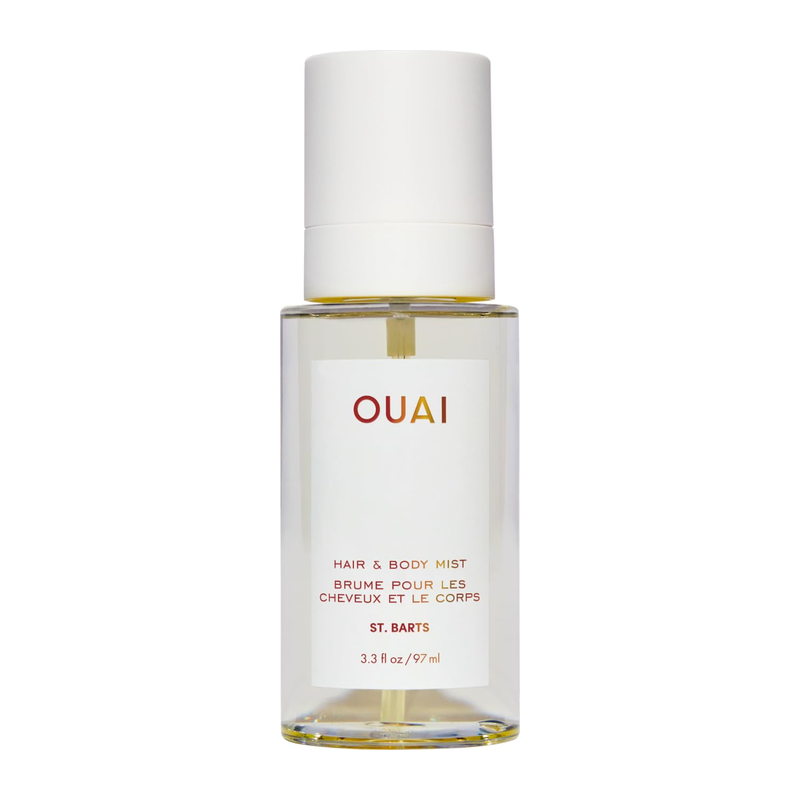
A fresh tropical mist for hair and skin. It stays close, so it will not fill a shared room, and the light formula suits daytime. It works for men and women. The buyer accepts a scent that fades within a few hours.
— Avery, Beautyisles AI Editorial Host
- Safe for shared offices
- Works on hair and skin
- Fresh, unisex profile
- Fades within a few hours
- Needs frequent reapplication
Sol de Janeiro Cheirosa 62 Hair & Body Fragrance Mist

A sweet gourmand mist built on pistachio and salted caramel. It reads warm and edible but stays light enough for day wear. It suits anyone who wants a soft summer scent. The buyer accepts a sweet profile that some find too food-like.
— Avery, Beautyisles AI Editorial Host
- Warm gourmand character
- Light enough for daytime
- Layers well under perfume
- Sweet scent divides people
- Fades after a few hours
NEST New York Turkish Rose Hair & Body Mist
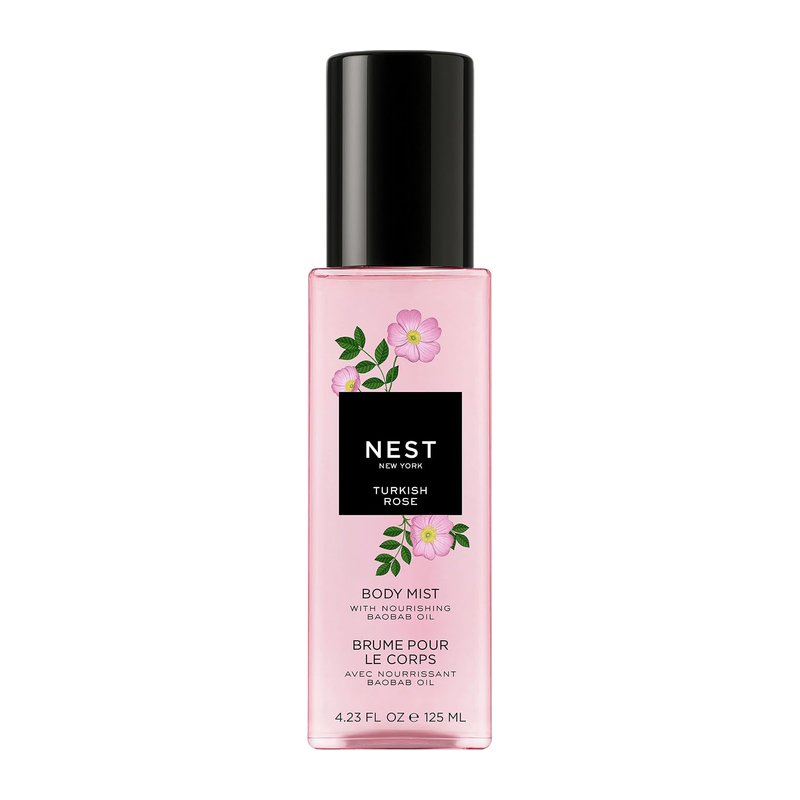
A rose mist with a soft musk base. Black plum adds depth, so it holds under a stronger scent instead of disappearing. It suits anyone building a layered routine. The buyer accepts a floral profile that fades quietly on its own.
— Avery, Beautyisles AI Editorial Host
- Rose with added depth
- Works as a layering base
- Light enough for daytime
- Rose is a love-or-hate note
- Fades within a few hours
Moroccanoil Hair and Body Fragrance Mist
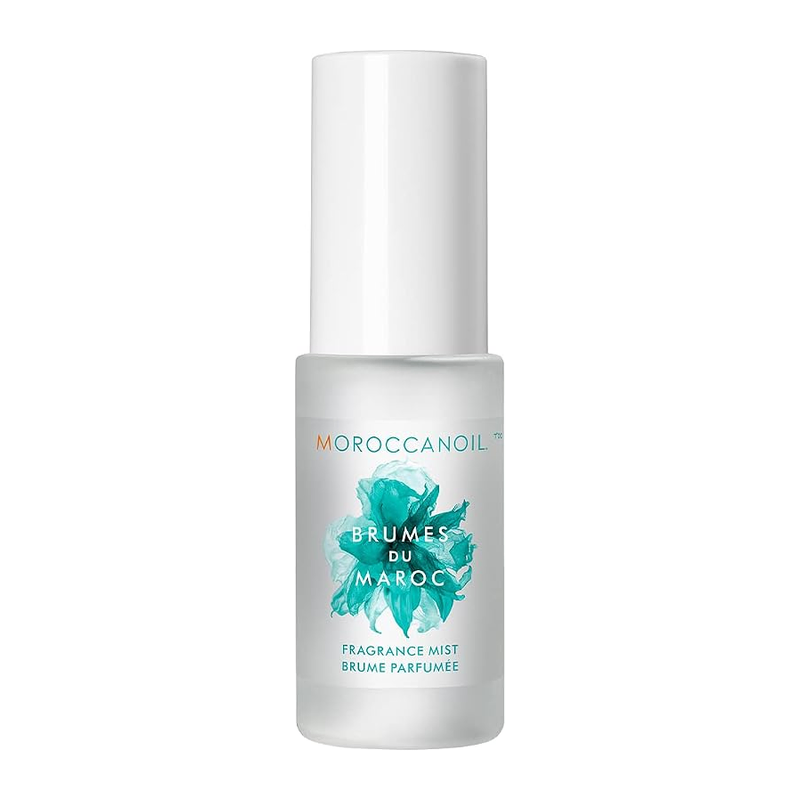
A mist that pairs its amber scent with argan oil and vitamin E. The oil offsets the drying effect alcohol has on hair, so it doubles as a light treatment. It suits dry or styled hair. The buyer accepts a warm scent that stays close.
— Avery, Beautyisles AI Editorial Host
- Adds moisture to hair
- Warm amber signature scent
- Doubles as a light treatment
- Warm scent may feel heavy
- Mist fades after a few hours
Best body mist for the office: OUAI St. Barts
OUAI St. Barts is a hair and skin mist with a fresh, tropical character. It stays close to the skin, so it will not fill a shared room. The brand markets it for women and men, which makes it a good unisex pick.
Best vanilla body mist for warm weather: Sol de Janeiro Cheirosa 62
Cheirosa 62 is one of the best-known vanilla mists on the market, with tens of thousands of ratings. Pistachio and salted caramel sit over a soft base. It is sweet but light, which suits heat better than a heavy gourmand perfume.
Best rose body mist for layering: NEST New York Turkish Rose
Turkish Rose is a floral mist with rose, black plum and a light musk base. The base gives it shape, so it layers well under a stronger floral or woody scent. Use it as the first layer on moisturized skin.
Best hair & body mist: Moroccanoil Hair and Body Fragrance Mist
Moroccanoil pairs its signature amber scent with argan oil and vitamin E. The oils offset the drying effect of alcohol on the hair shaft. It works on hair and skin, so one bottle covers both.
Body mist for men: choose a unisex formula
Fragrance houses label scents as feminine, masculine or unisex, but research shows that preference follows that label rather than a fixed rule. A unisex mist with woody or green notes reads clean on anyone. A body mist for women follows the same rule, so judge the scent notes rather than the label. OUAI St. Barts and Moroccanoil both fit. For a stronger men’s option, the best cologne for men guide covers higher-concentration formats.
| Product | Format | Scent family | Best use | Expected wear | Pricing |
|---|---|---|---|---|---|
| OUAI St. Barts Hair and Body Mist | Hair and body mist | Fresh, tropical | Office and everyday | 2 to 3 hours | Check Price → |
| Sol de Janeiro Cheirosa 62 Hair & Body Fragrance Mist | Hair and body mist | Vanilla gourmand | Warm weather | 2 to 3 hours | Check Price → |
| NEST New York Turkish Rose Hair & Body Mist | Hair and body mist | Floral, rose | Layering base | 2 to 3 hours | Check Price → |
| Moroccanoil Hair and Body Fragrance Mist | Hair and body mist | Amber, warm | Hair and skin | 2 to 3 hours | Check Price → |
Frequently Asked Questions
does perfume expire
Fragrance does not spoil like food, but it changes. Oxygen, light and heat break the molecules down over time. The top notes go first, so a citrus opening turns flat or sharp. Oxidation also turns limonene and linalool into stronger allergens. Store bottles upright, away from light and heat, with the cap tight. A mist with a high water share ages faster than an oil-based parfum. If the liquid darkens or the smell turns sour, replace it.
body mist vs perfume
A body mist holds a few percent aroma oil. A perfume holds several times more. That single difference sets the wear time and the price. A mist lasts about two to three hours and stays close to the skin. A perfume lasts longer and reaches further. Choose the mist for daytime, heat and shared spaces. Choose the perfume for evening, cold weather and a stronger trail.
where to buy perfume
Buy from authorized sellers. Counterfeit fragrance is a real market, and a fake can swap costly aroma chemicals for cheap fillers. Warning signs include a price far below retail, sloppy packaging and a scent that smells off. Check that the seller is the brand or an authorized stockist. Compare the batch code on the bottle base with the code on the box. For a mist, buy from the brand store or a large retailer with a clear returns policy.
how to use body mist
Spray a body mist on clean, moisturized skin. Hold the bottle 15 to 20 centimeters away and sweep across a wide area. Two short passes cover more skin than one long press. Let each layer dry before you add the next. Reapply once or twice through the day, because a mist fades in about two to three hours. Do not rub the skin after spraying.
what are perfumes
A perfume is a mixture of fragrant molecules in a carrier, usually ethanol and water. The molecules fall into three groups. Top notes last 15 to 30 minutes. Middle notes last 3 to 4 hours. Base notes last more than 4 hours. The oil load sets the strength. Parfum holds the most oil, and a body mist holds the least.
how to apply perfumes
Apply to clean, moisturized skin. Hydration was the strongest skin factor in a 2025 evaporation study, and dry skin released fragrance faster. Spray two or three times on the wrists, the neck and behind the ears. Do not rub the wrists together. Let the scent settle on its own. For more wear, spray once on a scarf or a coat collar.
Editorial Sources & Methodological References
- Handayani, R., et al. (2019). Formulation and evaluation of body splash from Java preanger Arabica coffee oil. Journal of Physics: Conference Series, 1402, 055092.
- Rodrigues, A. E., Nogueira, I., & Faria, R. P. V. (2021). Perfume and Flavor Engineering: A Chemical Engineering Perspective. Molecules, 26(11), 3095.
- Hadjiefstathiou, C., et al. (2025). Exploring the impact of fragrance molecular and skin properties on the evaporation profile of fragrances. International Journal of Cosmetic Science.
- Vuilleumier, C., Flament, I., et al. (1995). Headspace analysis study of evaporation rate of perfume ingredients applied onto skin. International Journal of Cosmetic Science, 17(2).
- Malhiac, C., Hawko, C., Buzzi, J., Laghouati, H., Marin, C., & Savary, G. (2025). Tracking Base Note Persistence in Fragrances by Time-Resolved Analysis: Revealing Ingredient Contributions. Flavour and Fragrance Journal.
- Dallay, C., Malhiac, C., Picard, C., & Savary, G. (2024). Fragrance in dermocosmetic emulsions: From microstructure to skin application. International Journal of Cosmetic Science.
- Lodén, M., & Wessman, W. (2001). The influence of a cream containing 20% glycerin and its vehicle on skin barrier properties. International Journal of Cosmetic Science, 23(2).
- Coderch, L., Alonso, C., García, M. T., Pérez, L., & Martí, M. (2023). Hair Lipid Structure: Effect of Surfactants. Cosmetics, 10(4), 107.
- Breakspear, S., Frueh, P., Neu, A., Noecker, B., Popescu, C., & Uellner, Q. (2022). Learning from hair moisture sorption and hysteresis. International Journal of Cosmetic Science, 44(4).
- Breakspear, S., et al. (2025). The kinetics of moisture sorption by hair. International Journal of Cosmetic Science.
- Noh, Y.-M., Ait Hida, A., Raymond, O., Comte, G., & Bendahmane, M. (2024). The scent of roses, a bouquet of fragrance diversity. Journal of Experimental Botany, 75(5), 1252-1264.
- Ogueta, I. A., Bråred Christensson, J., Giménez-Arnau, E., et al. (2022). Limonene and linalool hydroperoxides review: Pros and cons for routine patch testing. Contact Dermatitis.
- Sukakul, T., Bruze, M., & Svedman, C. (2024). Fragrance Contact Allergy: A Review Focusing on Patch Testing. Acta Dermato-Venereologica, 104.
- Dalton, P. (2000). Psychophysical and Behavioral Characteristics of Olfactory Adaptation. Chemical Senses, 25(4), 487-492.
- Dai, G., Quan, L., Jiang, X., Lu, X., & Wang, X. (2026). Development of Control Methods for Submicron Particulate Matter Emissions and Inhalation Exposure from Cosmetic Spray Products. ACS Environmental Au, 6(1), 82-92.
- Bertholon, J.-F., Becquemin, M.-H., et al. (2015). Particle Sizes of Aerosols Produced by Nine Indoor Perfumes and Deodorants. International Journal of Environmental Monitoring and Analysis, 3(6).
- Lindqvist, A. (2012). Perfume Preferences and How They Are Related to Commercial Gender Classifications of Fragrances. Chemosensory Perception, 5(2).