In short: Effective caring for permed hair requires waiting 48 to 72 hours before washing, reducing wash frequency to once or twice weekly, and eliminating harsh sulfates that strip cortex moisture. Chemical perms break and reset covalent disulfide bonds, which permanently lowers hair elasticity and removes the protective 18-MEA lipid layer. When blow-drying, never pull wet curls with high-tension blowout brushes. Instead, rough-dry to 80 percent, apply a silicone-based thermal protectant, and cup curls gently with a bowl diffuser on low heat below 300°F (150°C) to prevent bubble hair fractures.
- The 72-Hour Chemical Lock: Secondary atmospheric oxidation needs 48 to 72 hours to stabilize nascent disulfide bonds. Keep hair dry and avoid clips, ties, or hats during this window.
- Low-Frequency, Sulfate-Free Cleansing: Wash permed hair only once or twice a week with an acid-balanced (pH 4.5 to 5.5) cleanser to protect natural scalp lipids.
- Thermal Defense and Bubble Hair Prevention: Wet hair has a lower glass transition temperature. Never apply high heat to dripping hair. Diffuse on low air speed below 300°F.
- The Moisture-Protein Equilibrium: Alternate weekly humectant-rich moisture masks with bi-weekly hydrolyzed vegetable protein treatments to prevent limp hygral fatigue.
- Friction-Free Night Care: Sleep on a 100 percent mulberry silk pillowcase or wear a loose satin bonnet to prevent cuticular abrasion and mechanical curl frizz.
A fresh chemical perm gives you bouncy coils, natural body, and enduring wave definition. Yet beneath that springy bounce lies an altered biological fiber. Chemical lotions break the internal structural bridges that give virgin hair its mechanical strength. When you leave the salon, your hair fiber is lighter, thirstier, and more porous than before. If you treat permed hair like natural hair, curls stretch out, split ends multiply, and strands become frizzy within weeks.
Successful perm hair care demands a scientific balance between hydration, protein reinforcement, and thermal discipline. If you use high heat or high tension, you destroy delicate curl clusters. If you want full-head blowout transformations or comprehensive tool evaluations, read our guide to the 12 best blow dryer brushes. If you want defined barrel curls and ringlets, read our guide to hot air curling brushes. In this guide, we break down perm reduction-oxidation chemistry, cuticular lipid loss, heat styling protocols, and the best hair care products for permed hair.
Biochemical Architecture: How Perms Alter Hair Structure
Human hair consists of 85 to 90 percent keratin protein arranged in alpha-helical polypeptide chains. Three chemical bonds cross-link these chains inside the hair cortex: weak hydrogen bonds, ionic salt bridges, and covalent disulfide bridges. Hydrogen bonds break easily with water and reform when hair dries. Disulfide bridges, made of cystine amino acids, are covalent sulfur-to-sulfur bonds. They dictate your natural hair texture, structural stiffness, and tensile strength.
During a perm, reducing lotions cleave roughly 20 to 30 percent of covalent cystine bonds into free cysteine thiols. Neutralizers then oxidize these thiols into new curled shapes around rods. Neutralization never reconnects 100 percent of bonds. Roughly 10 to 15 percent remain uncoupled, lowering overall fiber strength.
The Three-Stage Reduction-Oxidation Cycle
When getting a permanent wave, your hair undergoes three chemical phases:
- Stage 1: Softening and Cleavage: An alkaline lotion containing ammonium thioglycolate (pH 9.0 to 9.6) swells cuticles and enters the cortex. The reducing agent donates hydrogen atoms to cystine bonds, splitting each into two separate cysteine sulfhydryl groups. This softens the keratin core.
- Stage 2: Physical Mold Rearrangement: Softened keratin filaments slide against each other as your stylist winds hair around cylindrical rods under tension. Polypeptide chains shift into a new curled radius.
- Stage 3: Neutralization and Re-Bonding: An oxidizing neutralizer containing dilute hydrogen peroxide (pH 3.0 to 4.0) removes hydrogen atoms from the thiols. This re-establishes disulfide bridges in their new coiled position.
Because the neutralizer cannot reach every free sulfhydryl group, 10 to 15 percent of cleaved bonds stay broken or turn into cysteic acid. As a result, permed hair loses 15 to 25 percent of its natural dry tensile strength and 30 percent of its wet elasticity [1]. This structural deficit explains why comprehensive hair care for permed hair requires dedicated bond-repairing formulations.
Lipid Stripping and High Cuticle Porosity
Virgin hair cuticles carry a protective external lipid layer called the epicuticle. This layer contains 18-methyleicosanoic acid (18-MEA), a fatty acid bound to surface proteins. The 18-MEA layer makes virgin hair hydrophobic, meaning it naturally repels external water droplets and holds internal hydration intact.
The alkaline solutions in perm lotions dissolve thioester bonds and strip this 18-MEA barrier. Permed hair turns hydrophilic, meaning it absorbs ambient moisture rapidly and loses internal water just as fast. The cuticle scales stay raised and porous. When exposed to humid air, moisture rushes into the cortex, causing unorganized swelling. When exposed to dry heated air, water evaporates from the cortex, leaving strands brittle and stiff.
Hydrophilic hair also suffers from hygral fatigue. Hygral fatigue is the structural stress caused by repeated swelling and shrinking of the hair fiber during wash cycles. Because porous hair absorbs up to 35 percent of its dry weight in water, repeated swelling weakens cell membrane complexes. Proper hair care for perms must restore this protective barrier with lightweight lipids and film-forming polymers.
Thermal Styling Science: Safe Heat Protocols for Permed Curls
Many readers ask if they can blow-dry or heat-style permed curls safely. The answer is yes, but you must follow strict physical protocols. High temperatures and mechanical pulling will stretch softened keratin and break curl geometry permanently.
Never apply heated styling tools above 212°F (100°C) to soaking wet permed hair. Water trapped inside the porous cortex boils into high-pressure steam bubbles. This creates Swiss-cheese cavities inside the shaft called bubble hair deformity, leading to irreversible breakage.
The Glass Transition Temperature of Wet Keratin
Keratin exhibits a glass transition temperature (abbreviated as Tg). Above this temperature, the protein structure changes from a rigid, glass-like state to a pliable, rubbery state. Dry hair has a high glass transition temperature above 284°F (140°C). When hair is saturated with water, water molecules act as plasticizers, dropping Tg to between 140°F and 176°F (60°C to 80°C) [2].
If you apply hot styling tools to wet hair, the softened keratin deforms easily under light tension. In addition, if the heating surface exceeds the boiling point of water, moisture inside the cortex flashes into steam. The expanding steam cannot escape through lifted cuticles quickly enough. It expands outward, blowing microscopic cavities through the hair shaft. Dermatologists call this condition bubble hair deformity [3]. The hair develops brittle lumps and fractures longitudinally under gentle brushing.
Diffuser Bowls vs Hot Air Blow Dryer Brushes
Choosing the right heat tool determines whether your permed curls flourish or drop flat. Consider the physical differences between airflow delivery systems:
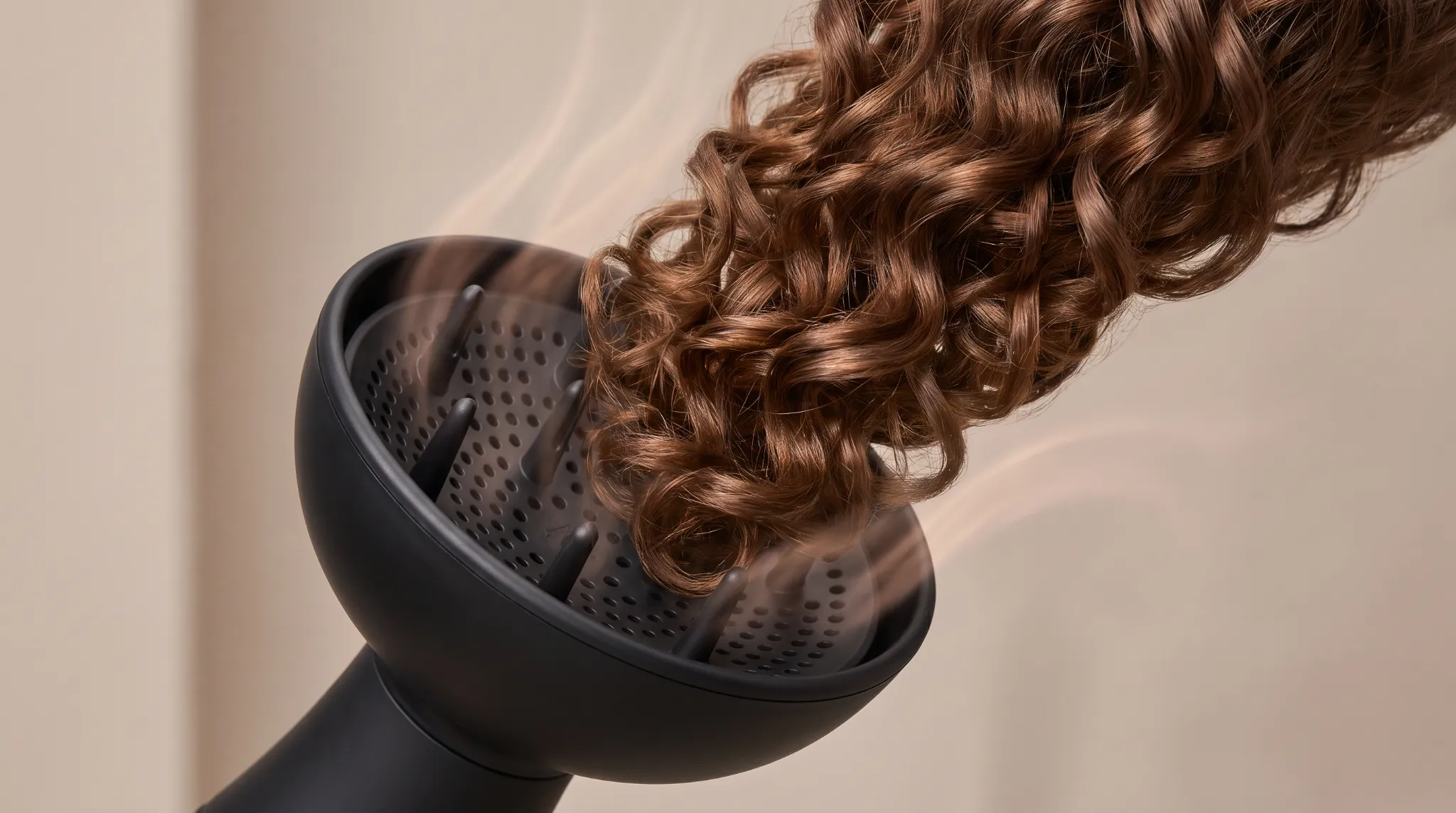
- Diffuser Attachments (The Gold Standard): A bowl diffuser features widely spaced prongs and hundreds of micro-vents. The broad bowl disperses high-speed air into a soft, convective breeze. You cup curls gently inside the bowl and press toward your scalp. The tool supports curl weight while drying, allowing natural clump formation without mechanical drag.
- Oval Blowout Brushes (High Risk): Oval blowout brushes measure 2.4 to 2.8 inches wide. Engineers design them with flat edges to apply strong directional tension while drying. If you pull permed curls over an oval brush under heat, the tension straightens out nascent waves. You lose your curl pattern and create severe surface frizz.
- Small Round Hot Air Brushes (Targeted Use): If you want to touch up bangs or crown volume, select a small 1.0 to 1.25-inch cylindrical round brush. Make sure that you set it to low heat below 300°F and low airflow. Wrap hair loosely without pulling, hold for five seconds, and blast with the cool shot button for ten seconds to lock in shape. If you travel frequently or need a compact styling companion for touch-ups, select a dual-voltage travel hair dryer brush for permed curls with adjustable gentle heat.
The 80 Percent Pre-Drying Rule and Plopping
To keep permed hair healthy, follow the 80 percent pre-drying protocol. Never bring a heat tool to dripping wet hair. Begin by gently pressing excess water out with a smooth microfiber towel or clean cotton T-shirt. Never scrub hair with terrycloth towels, as coarse loops catch lifted cuticles and shred curl clumps.
Next, use the plopping technique. Lay a microfiber hair towel flat on a bed or counter. Bend forward and accordion your damp curls down onto the center of the fabric. Wrap the towel firmly around your head and secure the ends. Leave hair wrapped for 15 to 20 minutes. Plopping compresses curls against your scalp, encouraging tight spiral definition while absorbing surface water.
Once you remove the wrap, apply your heat protectant and curl cream. Use a diffuser on low heat and low air speed until strands reach 80 percent dryness. Allow the final 20 percent to air-dry naturally. This keeps the cortex hydrated and stops bubble hair fractures completely.
Advanced Heat Protectant Chemistry
Before applying any heat, permed strands require triple-action thermal shielding. Effective formulations combine three protective ingredients:
- High-Molecular-Weight Silicones: Dimethicone and amodimethicone form an ultra-thin, breathable hydrophobic coat over lifted cuticles. Amodimethicone carries an amino group with a positive charge. It binds selectively to damaged, negatively charged areas on permed hair, providing targeted heat defense.
- Hydrolyzed Proteins: Hydrolyzed silk, wheat, and vegetable proteins penetrate shallow cuticle fissures. They reinforce tensile strength and buffer heat transfer to the inner cortex.
- Heat-Activated Humidity Polymers: Polymers like polyquaternium-55 and VP/DMAPA acrylates copolymer cross-link under gentle warmth. They build a flexible, weightless sheath around each curl clump that repels ambient humidity.
Formulation & Engineering Matrix: Perm Care Formulations
Selecting the best hair care products for permed hair requires matching ingredient mechanisms to your hair’s chemical porosity. The following matrix details five verified formulations and tools for maintaining permed hair:
These Amazon luxury haircare picks fit permed hair because they reduce friction, add slip, protect against heat, and keep curl clumps soft. Use one product for each job instead of layering every styling cream you own.
Oribe Gold Lust Repair & Restore Shampoo
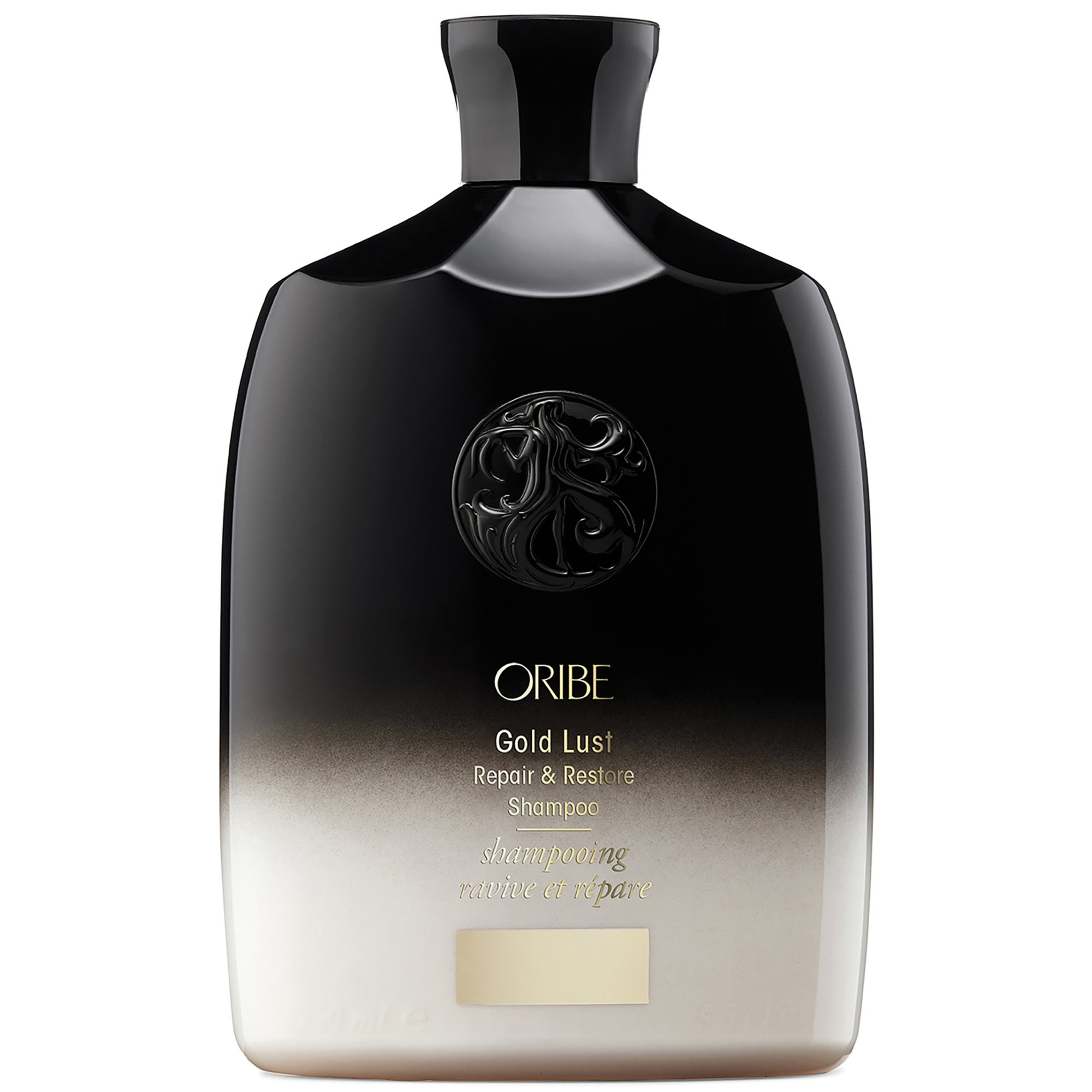
Use this as the wash-day cleanser when permed hair feels dry but your scalp still needs a proper shampoo. It fits the low-friction cleansing step.
— Avery, Beautyisles AI Editorial Host
- Good fit for damaged lengths
- Sulfate-free cleansing profile
- Luxury haircare category match
- Fragrance may not suit every scalp
- Not needed if your cleanser already works
Oribe Priming Lotion Leave-In Conditioning Detangler
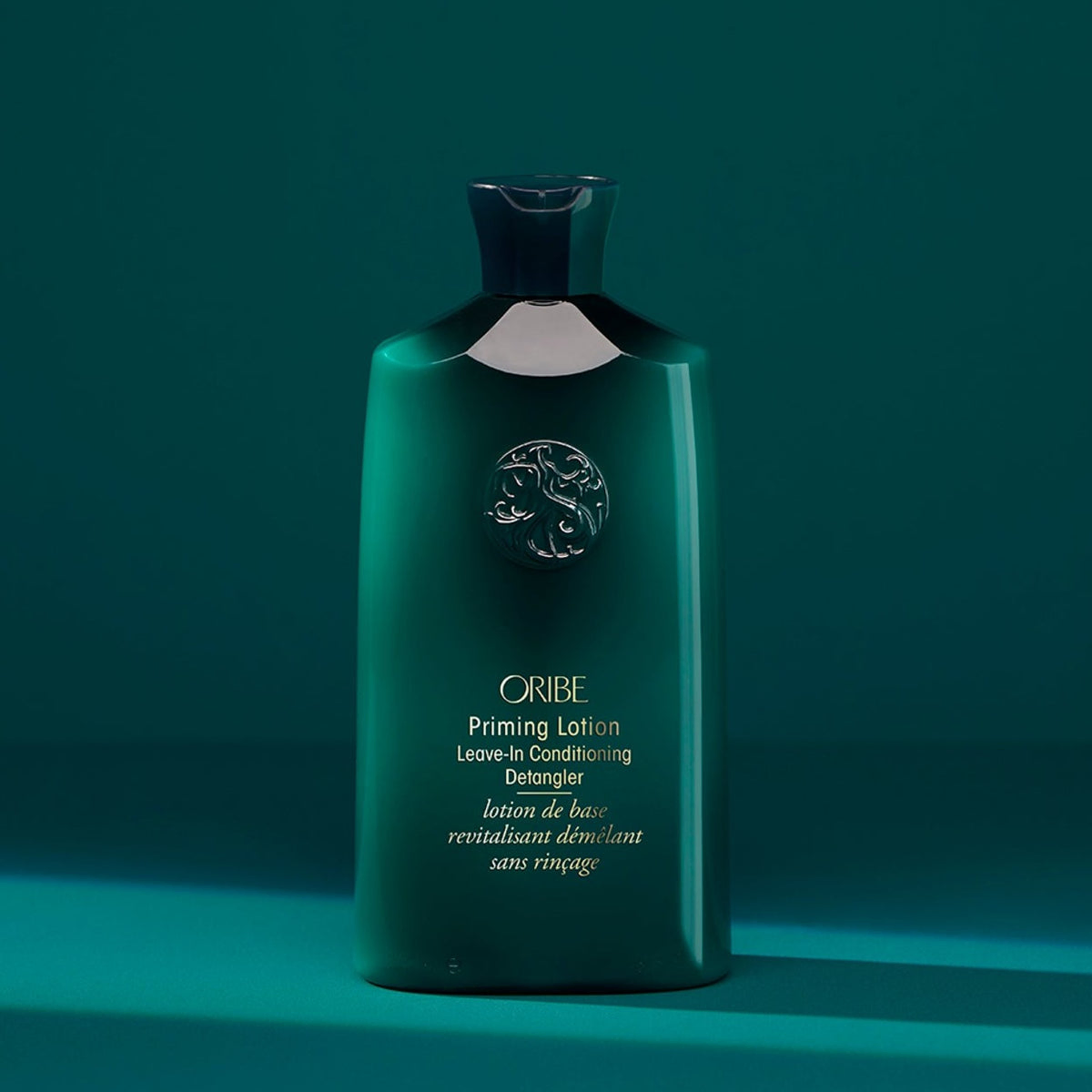
Choose this before finger detangling or wide-tooth combing. Permed hair breaks fastest when it is wet, swollen, and dragged without slip.
— Avery, Beautyisles AI Editorial Host
- Designed for waves, curls, and coils
- Helps reduce combing friction
- Works before air-drying or diffusing
- Can feel rich on fine hair
- Apply lightly near oily roots
Oribe Invisible Defense Universal Protectant Spray
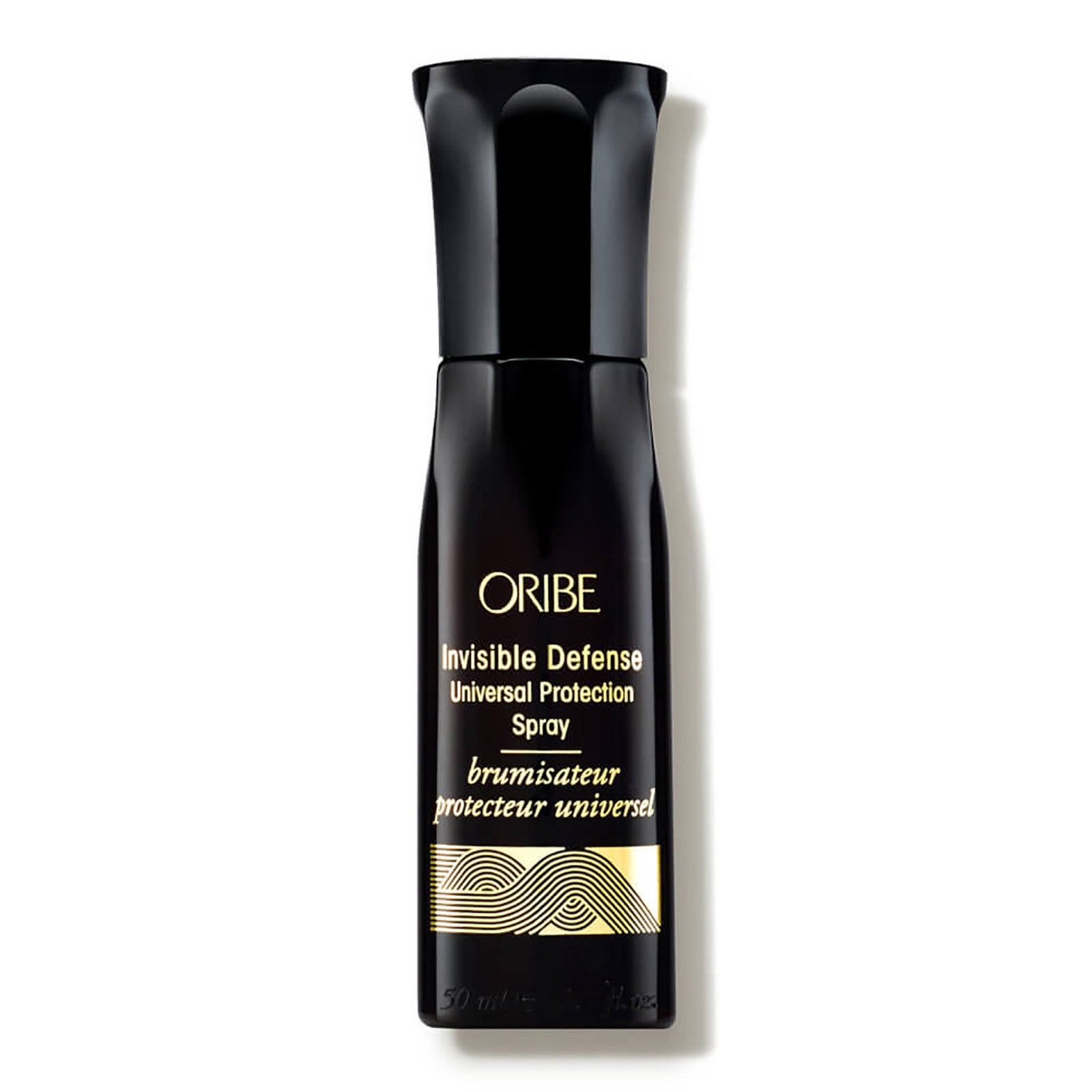
Use this before a diffuser or low-heat touch-up. Permed curls need thermal insurance before airflow, even when the dryer feels gentle.
— Avery, Beautyisles AI Editorial Host
- Direct fit for heat-protection intent
- Light spray format suits curls
- Useful before diffuser styling
- Still requires low heat
- Not a repair treatment by itself
Oribe Styling Butter Curl Enhancing Creme
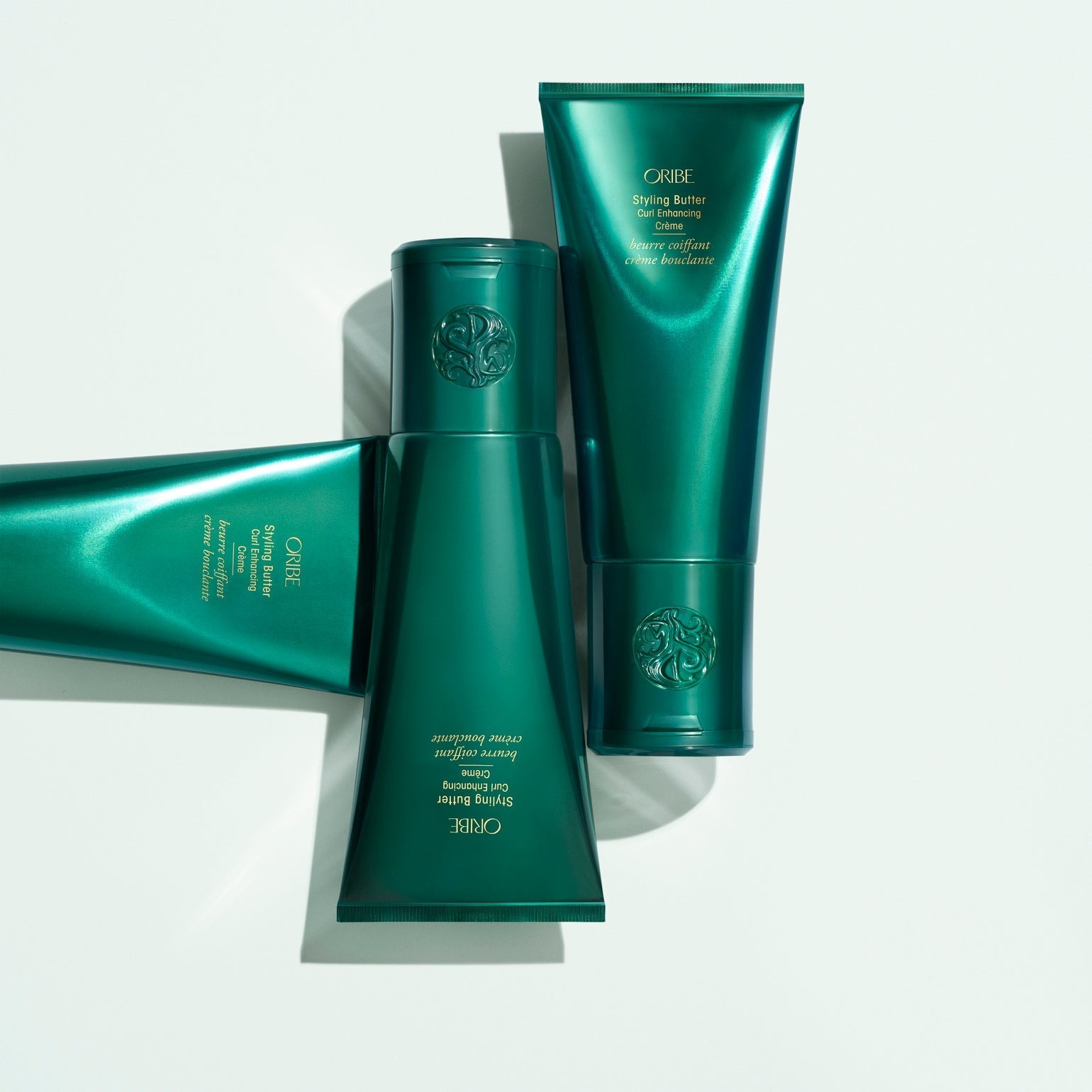
Use this when your perm needs shape after leave-in and heat protection. It gives curl clumps a richer finish without turning the routine into a mask.
— Avery, Beautyisles AI Editorial Host
- Best fit for richer curl definition
- Supports coily and dry textures
- Good final cream before diffusing
- May weigh down loose waves
- Use a smaller amount on fine hair
| Product | Routine Role | Best Fit | Use Cadence | Pricing |
|---|---|---|---|---|
| Oribe Gold Lust Repair & Restore Shampoo | Sulfate-free luxury cleanser | Dry, chemically sensitized lengths | 1 to 2 times weekly | Check Price → |
| Oribe Priming Lotion Leave-In Conditioning Detangler | Slip and detangling primer | Wet curls before finger-combing | Every wash day | Check Price → |
| Oribe Invisible Defense Universal Protectant Spray | Heat and frizz shield | Diffusing or low-heat touch-ups | Before heat styling | Check Price → |
| Oribe Styling Butter Curl Enhancing Creme | Curl definition cream | Dry, coily, or frizz-prone perms | After leave-in, before diffusing | Check Price → |
When selecting styling products, give each formula one job: cleanse gently, detangle with slip, shield against heat, or define curls. This keeps permed hair soft without heavy buildup.
The 48 to 72-Hour Care Window & Washing Cadence
The first 72 hours after leaving the hair salon dictate the lifespan of your perm. While your stylist applies an oxidizing neutralizer to stop the perming lotion, atmospheric oxygen completes the secondary oxidation. Ambient air takes 48 to 72 hours to lock remaining free thiol groups into stable covalent disulfide bridges.
Tap water has a neutral pH near 7.0. Compared to hair’s natural isoelectric point of pH 4.5 to 5.5, water is mildly alkaline. If you get your hair wet within the first 48 to 72 hours, water swells the hair shaft and breaks nascent hydrogen and salt bonds. This pulls apart the unhardened disulfide bonds, flattening your curl pattern before it cures.
During this critical 72-hour window, keep hair completely dry. Avoid high-humidity showers, saunas, and strenuous workouts that produce scalp sweat. Do not put hair into ponytails, barrettes, or tight clips. Do not push sunglasses onto your head or wear tight hats. Any mechanical pressure leaves a permanent dent in the soft, curing keratin.
Wash Frequency: Why Less Is More
Once the 72-hour curing window closes, establish a disciplined wash schedule. On straight hair, sebum flows smoothly from sebaceous glands down the fiber. On permed, curly hair, spiral twists block natural oils from traveling past the roots. The mid-lengths and ends starve for natural moisture.
If you wash permed hair daily, surfactants strip away the little sebum that reaches the shaft. This increases cuticle friction and makes curls dry and brittle. Wash permed hair only **once or twice a week**. This cadence cleanses the scalp skin while giving curly mid-lengths time to absorb protective conditioning lipids.
If your scalp feels sweaty or your curls lose definition between wash days, try co-washing. Co-washing means cleansing with a lightweight, silicone-free conditioner instead of shampoo. Cationic surfactants in the conditioner dissolve light sweat and dust without stripping cortex hydration.
Acid-Balanced, Sulfate-Free Cleansing Protocol
When wash day arrives, use cleansers formulated between pH 4.5 and 5.5. Acidic solutions tighten cuticle scales against the cortex, locking in moisture and reflecting light [4]. Avoid harsh anionic sulfates like sodium lauryl sulfate (SLS) and sodium laureth sulfate (SLES). Instead, choose mild cleansers made with coco-betaine, sodium cocoyl isethionate, or decyl glucoside.
Adopt a friction-free washing technique. Wet your hair with lukewarm water. Pour shampoo into your palms and massage it directly into your scalp with your finger pads. Never scrub or bunch curl lengths together like a sponge. When you rinse with lukewarm water, let the soapy suds run down your strands naturally. This cleanses hair lengths without tangling or disturbing delicate curl clusters.
Moisture-Protein Equilibrium & Scalp Hydration Protocols
Mastering care for permed hair requires balancing two vital elements: elastic moisture and structural protein. Permed hair needs both in equal measure. If hair receives too much moisture without protein, it turns limp. If it receives too much protein without moisture, it turns stiff and snaps.
| Fiber Condition | Visible Symptoms | Underlying Biological Cause | Corrective Treatment Protocol |
|---|---|---|---|
| Moisture Deficiency | Strands feel dry like straw; audible snapping during styling; dull matte surface. | Low cortex water content and stripped 18-MEA cuticular lipids. | Apply a weekly deep conditioning mask rich in glycerin, fatty alcohols, and plant oils. |
| Protein Deficiency (Hygral Fatigue) | Curls feel gummy or mushy when wet; hair stretches excessively and does not bounce back; limp curl drop. | Loss of cortex keratin and broken disulfide bonds from chemical perm processing. | Apply a hydrolyzed vegetable protein treatment or bond builder every two weeks. |
| Protein Overload | Hair feels rough, stiff, and rigid; curls lose soft touch; sudden breakage under light tension. | Excessive protein deposits bonding to cuticles without sufficient emollient hydration. | Wash with a gentle clarifying cleanser, then apply a protein-free humectant moisture mask for 20 minutes. |
Hair Shaft Hydration: Humectants and Emollients
When moisturizing hair fibers, apply the LOC or LGO method: Liquid, Oil, and Cream. Begin by misting clean, damp hair with a water-based leave-in spray containing humectants like glycerin, hyaluronic acid, or aloe vera. Humectants pull water molecules into the thirsty cortex.
Next, smooth a lightweight lipid oil over your mid-lengths and ends. Argan oil, jojoba oil, and squalane mimic your lost 18-MEA layer. They coat lifted cuticle edges, sealing in the water molecules and stopping rapid evaporation. Finally, apply a small amount of curl cream to group individual fibers into smooth curl clumps.
Scalp Skin Hydration: Protecting the Living Microbiome
Do not confuse hair shaft moisturizing with scalp moisturizing. Hair fibers are non-living keratin structures. Your scalp is living skin with an active microbiome populated by lipophilic yeasts such as Malassezia.
Never rub heavy plant butters, coconut oil, or thick hair masks directly into your scalp. Heavy oils clog hair follicles. Also, Malassezia feeds on free fatty acids in plant oils, releasing irritating byproducts that trigger dandruff, itching, and seborrheic dermatitis. If your scalp skin feels tight, apply a few drops of water-based scalp serum containing hyaluronic acid, niacinamide, or aloe vera directly to your skin parts. Massage gently with your finger pads to stimulate circulation without leaving greasy residue.
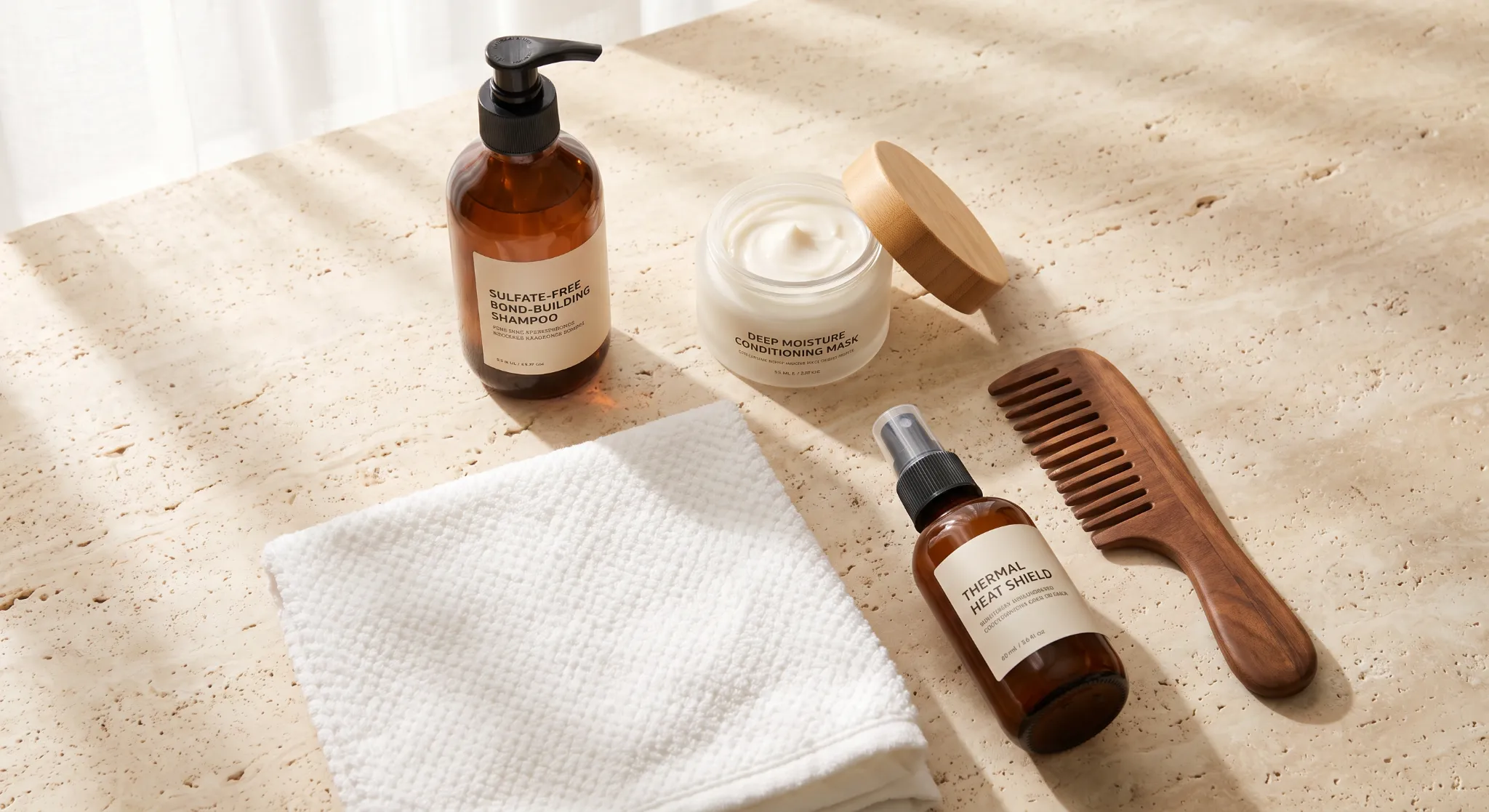
Step-by-Step Daily & Weekly Perm Maintenance Routine
Follow this evidence-backed weekly protocol to maintain springy, resilient permed waves for up to six months:
- Pre-Shower Detangling: Before entering the shower, detangle dry curls using your fingers or a smooth, wide-tooth sandalwood comb. Never use fine-tooth plastic combs or bristled paddle brushes on dry permed hair, as they tear fragile strands and shatter curl clumps.
- Scalp-Focused Cleansing: Wet your head with lukewarm water. Apply a quarter-sized amount of sulfate-free bond-building shampoo directly to your roots. Massage your scalp for two minutes, and rinse completely.
- Deep Conditioning: Squeeze excess water from your hair. Apply a generous scoop of deep moisture mask from mid-lengths to ends. Use your wide-tooth comb to distribute the formula evenly. Leave it on for ten minutes under a shower cap. The warmth opens cuticle shingles slightly, letting nutrients reach the cortex. Rinse with cool water to smooth cuticles flat.
- Plopping and Leave-In Application: While hair is damp, rake a nickel-sized dab of curl defining cream and a mist of heat protectant through your curls. Plop your hair inside a microfiber towel wrap for 15 minutes.
- Diffuser Styling: Attach a deep-bowl diffuser to your blow dryer. Set the heat to low and air velocity to low. Tilt your head to the side, cup a section of curls in the diffuser bowl, and press upward toward your scalp. Hold for 45 to 60 seconds without moving the tool. Move across your head until curls are 80 percent dry, then air-dry the rest.
- Silk Night Defense: Before sleeping, gather your curls loosely on top of your head using a soft silk scrunchie (the pineapple technique). Sleep on a pure mulberry silk pillowcase or wear a satin-lined sleep bonnet. Smooth silk eliminates friction, preventing moisture loss and morning bedhead frizz [5].
Frequently Asked Questions
How to moisturize hair?
If your hair feels dry, apply a water-based leave-in conditioner to clean, damp strands. Water-based products contain humectants like glycerin and aloe vera that attract moisture into the inner hair shaft. Next, smooth a few drops of argan oil or jojoba oil over your mid-lengths and ends. The oil acts as a sealant, meaning it forms a protective barrier that locks water inside the fiber. Repeat this routine two to three times a week to keep your hair soft, elastic, and free from frizz.
How to moisturize scalp?
If your scalp feels tight or itchy, apply a lightweight hyaluronic acid serum or aloe vera gel directly to your parted skin. Use the pads of your fingers to massage the liquid gently for two minutes. Do not apply heavy oils, butter, or thick hair masks directly to your scalp skin. Heavy oils trap dead skin cells and feed yeast, which can cause dandruff or scalp inflammation. If your scalp is very dry, apply three drops of pure jojoba oil right after washing while your skin is damp.
How often to wash hair?
How often you wash hair depends on your scalp oil production, hair texture, and physical activity. If you have an oily scalp and fine, straight hair, wash your hair every one to two days to remove excess sebum. If you have normal hair or wash after workouts, cleanse your scalp every three to four days. If you have dry, curly, textured, or chemically permed hair, wash your hair only once or twice a week. Washing curly hair too often strips away natural oils, leaving your strands brittle and frizzy.
Can you wash your hair after a perm?
You should wait at least 48 to 72 hours before washing hair after a chemical perm. Secondary atmospheric oxidation requires two to three full days to rebuild and harden nascent disulfide bonds. If you wet or shampoo your hair during this curing window, water breaks fragile bonds and flattens your new curl structure. After 72 hours, wash gently with an acid-balanced, sulfate-free cleanser and lukewarm water.
How long does a perm last?
A professional chemical perm typically lasts between three and six months depending on your hair length, curl tightness, and maintenance routine. Because perming permanently resets disulfide bonds within the cortex, the treated hair remains curled until it grows out or is trimmed. However, new root growth emerges with your natural texture, and daily mechanical friction can cause waves to loosen gradually over time.
How to keep curls in hair?
To keep curls bouncy and defined, wash hair only once or twice weekly using a mild, sulfate-free cleanser. Always apply a lightweight leave-in conditioner followed by a botanical oil or curl cream while strands are damp to seal cuticular lipids. Dry curls gently with a bowl diffuser on low heat below 300°F (150°C), and sleep on a pure mulberry silk pillowcase to prevent friction frizz.
- Robbins, C. R. (2012). Chemical and Physical Behavior of Human Hair (5th ed.). Springer Science & Business Media. DOI: 10.1007/978-3-642-25611-0.
- Lee, Y., Kim, Y. D., Hyun, H. J., Pi, L. Q., Jin, X., & Lee, W. S. (2011). Hair shaft damage from heat and drying time of hair dryer. Annals of Dermatology, 23(4), 455–462. DOI: 10.5021/ad.2011.23.4.455.
- Detwiler, S. P., Wong, M., & Hordinsky, M. (1994). Bubble hair: Case report and its induction by hair dryers. Pediatric Dermatology, 11(4), 314–318. DOI: 10.1111/j.1525-1470.1994.tb00100.x.
- Gavazzoni Dias, M. F. (2015). Hair cosmetics: An overview. International Journal of Trichology, 7(1), 2–15. DOI: 10.4103/0974-7753.153450.
- Swift, J. A. (1999). The mechanics of human hair: A review. International Journal of Cosmetic Science, 21(4), 227–239. DOI: 10.1046/j.1467-2494.1999.196564.x.