

- Match the ratio to the lid. Matte shapes and defines; shimmer reflects light and advances. Hooded lids need more matte, not less.
- Pigment load is a trade-off. A higher pigment load deepens color but blends less easily. A lower load builds slowly and blends cleanly.
- Binder decides fallout. Emollient binders such as dimethicone give slip but stay mobile, and mobile binder creases.
- Talc is not the hazard. FDA treats asbestos contamination as the concern, not talc, and no standardized test is currently mandated.
- Primer buys the workday. A base that resists lid sebum is what keeps powder out of the crease.
What “Nude” Actually Means in a Palette
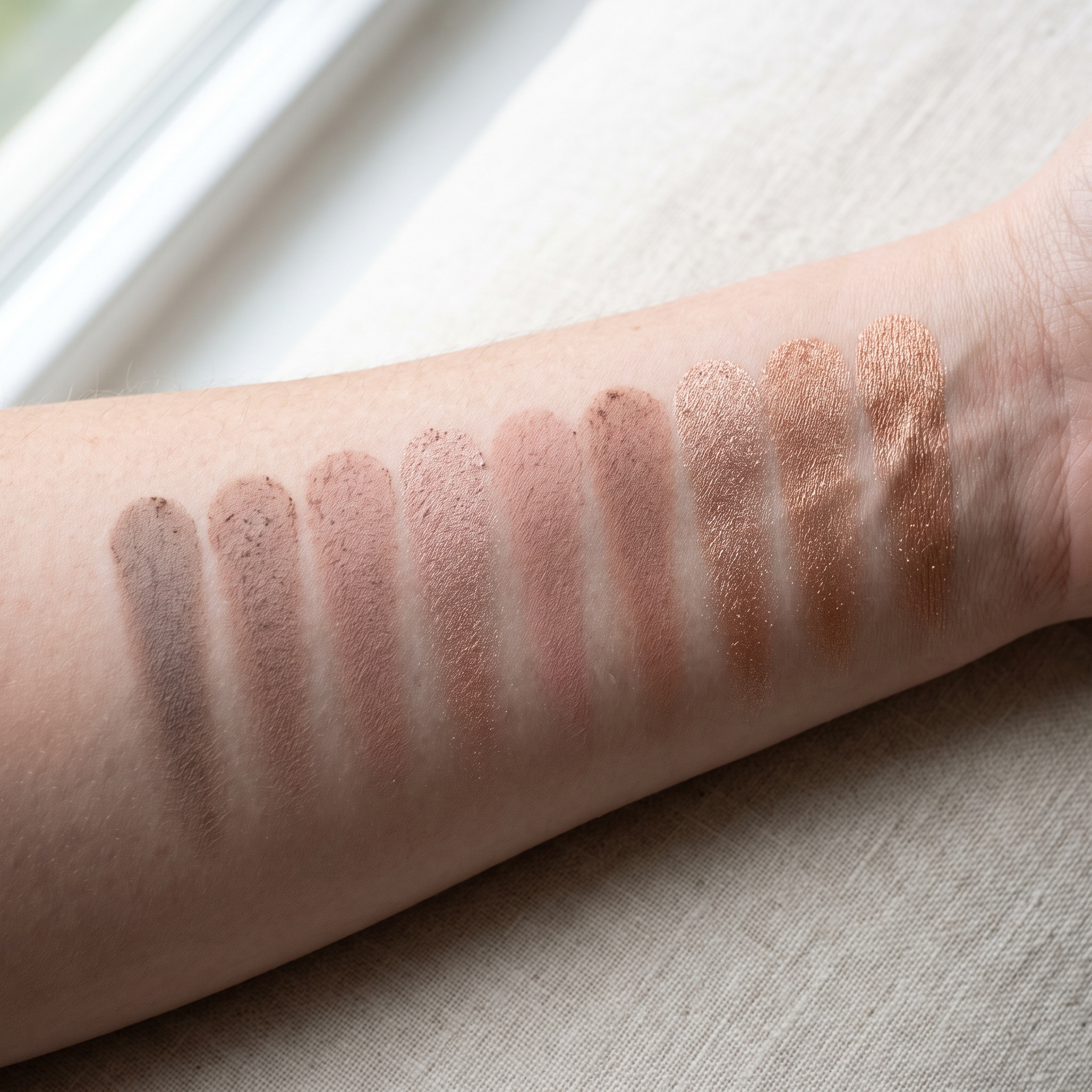
The word nude describes a finish as much as a color. In a palette it covers two different color directions. A cool nude runs taupe, gray and rose-beige. A warm nude runs bronze, tan and copper. The two read very differently on the eye, even though both sit in the same neutral family.
The color itself comes from insoluble mineral particles. Iron oxides supply the reds, yellows and browns, so they are the reason browns and taupes exist at all. Ultramarines supply the cool blue-violet cast that separates a true nude from a warm nude. Smaller particles scatter more light, so they read lighter and more opaque than larger ones.
One colorant behaves differently. Carmine, listed as CI 75470, is an aluminium lake of carminic acid. It is a dye, not a mineral, so it dissolves into the binder instead of sitting in it as discrete particles. Shades built on carmine often look deeper and more translucent than an iron-oxide shade of the same nominal color, and they can stain the lid.
That is why the word nude is a starting point, not a specification. Before you compare palettes, decide which direction you want. The cool taupe end flatters gray and blue eyes. The warm bronze end flatters brown and green eyes.
The color story also connects to the rest of the face. A crease shade works like a contour tone, because both use a deeper neutral to build shadow where light already falls.
Matte Versus Shimmer: What Each Finish Does to the Eye
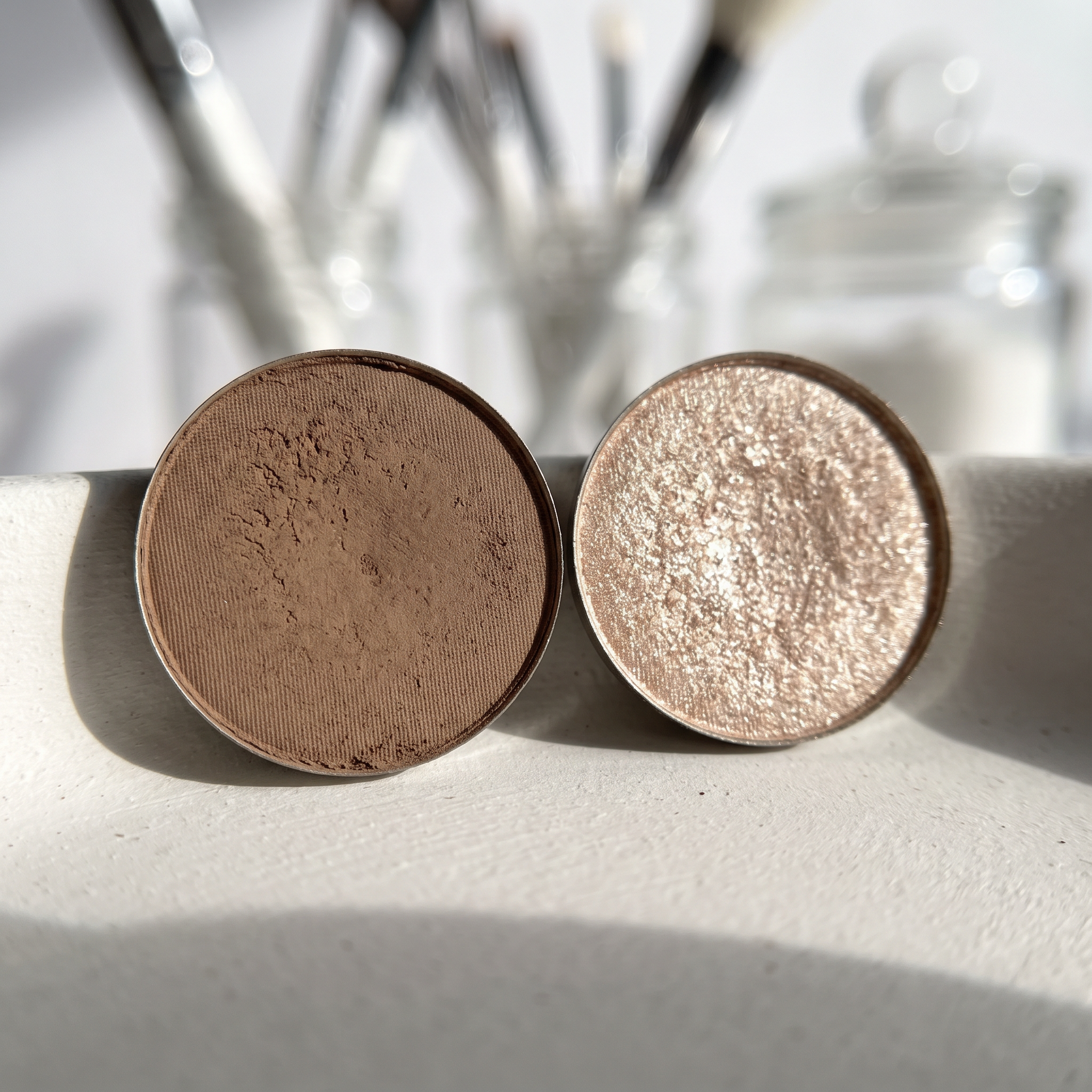
The two finishes fail in opposite directions, and the reason is optical.
A matte shade absorbs light, so it reads flat and recedes. A shimmer shade works by thin-film interference rather than by absorbing light. A mica platelet is coated with a very thin layer of a metal oxide, most often titanium dioxide. Light reflects off the top of the coating and off the platelet below, and the two reflections cancel or reinforce depending on wavelength. The coating thickness sets the color you see, and the viewing angle changes the path length. That is why shimmer shifts as your head moves.
The practical rule follows from that. Your eye reads brightness as proximity. A light-reflective pigment signals closer, and a light-absorbing pigment signals further away. This is the same depth cue an artist uses on a flat canvas.
So the ratio depends on your lid. If your lids are hooded or mature, a large shimmer area catches light across the fold and exaggerates it. Keep the shimmer small and let a matte crease shade restore the illusion of depth. If your lid is smooth and not hooded, shimmer on the center of the mobile lid reads as lift.
Two scope notes matter here. No published study was found that measures this matte-versus-shimmer effect on eyelids, or that compares wear time between the two finishes. Treat the rule as mechanism-based reasoning from optics and anatomy, not as a measured result. And the two papers behind the thin-film account were not measuring interference at all. The first measured titanium dioxide deposition onto mica and how precursor concentration changed the film. The second characterised the dielectric properties of a pearlescent pigment, not its optics. Both support the point that coating quality on the mica governs pearlescent performance, and neither tested the color shift you see.
The shimmer substrate is worth knowing too. Mica is the traditional mineral platelet and gives a soft sheen. Boron nitride is synthetic and prized for slip, so it blurs rather than sparkles. Synthetic fluorphlogopite is grown in a laboratory, and its uniform platelets make the pearl brighter and more consistent than natural mica. Calcium sodium borosilicate is a glass substrate used for larger, high-glitter particles. Bismuth oxychloride has a heavy, creamy feel and a strong lustre.
Bismuth oxychloride carries a long-standing reputation for itching in some wearers, and that reputation deserves a precise framing. Allergic contact dermatitis to a bismuth compound is documented in the literature, in a case involving bismuth subnitrate in an eye ointment. That case did not test eyeshadow, did not test bismuth oxychloride, and reported no reaction rate. There is no prevalence data for bismuth oxychloride in eye makeup. Some people report irritation, and a bismuth-compound allergy is a real but uncommon finding. The strong, creamy feel is the reason some palettes use it, and a sensitive lid is the reason to read the label first.
Count the pans before you buy. A palette that is roughly 80 percent matte and 20 percent shimmer suits daily wear. The mattes carry the shape and one or two shimmers add the lift. The reverse ratio suits evening looks, where the shimmer does the work. The ratio, not the shade names, is what decides how many looks a palette can actually build.
Pigment Load and Binder: Why Payoff and Blendability Fight Each Other
Two words explain most of what a palette will feel like in use, so they are worth defining at the start.
Pigment load is the share of the formula that is color. Binder is the liquid that holds the pressed powder together and glues it to the skin.
A pressed powder is pigment plus filler plus a small amount of liquid binder. Formulation guidance places that liquid binder at roughly 5 to 10 percent of the formula. Below that range the cake crumbles and drops powder onto the cheek, which is fallout. Above it the powder turns waxy and refuses to blend. Treat that range as formulation practice rather than a clinical result. The mechanism is simple: the binder forms bridges between particles. Too few and the cake fails under the brush. Too many and the powder smears instead of dispersing.
Pigment load then sets the tension you feel at the brush. Raising it deepens the shade and boosts coverage, but it leaves proportionally less filler and binder to carry the powder. The shade presses harder, kicks up more dust and blends less readily. A low-load formula blends beautifully and builds slowly. Filler and binder are what create slip, so a formula that spends its budget on pigment has less slip left.
The binder type decides where a formula sits on that trade-off. Dimethicone and caprylic/capric triglyceride are common binder and emollient phases. Dimethicone is a silicone that spreads easily and gives slip, which is why a high-dimethicone shadow feels buttery. Caprylic/capric triglyceride is a light ester that softens the powder. Both are lipids, and lipids on the eyelid are the mechanism behind creasing.
The filler is a separate choice. Talc is a platy mineral that gives powder its slip and pressability. A talc-free palette swaps it for mica, boron nitride, silica or starch. The sensory profile changes, and boron nitride in particular is prized for a smooth glide. The regulatory status of talc is why brands switch, not any difference in the pigments themselves.
One practical route around a high-load formula is to change the tool rather than the technique. A flat packing brush places color in one pass, and a soft fluffy brush diffuses the edge without pushing pigment around. If your liner is the step that usually pulls a nude look together, the same placement discipline applies. That discipline covers choosing and using a liquid eyeliner.
Tap the brush against the palette edge before it goes near your eye. If powder snows down onto your cheek, the binder ratio is working against you. The same pan will keep doing it, so pack with a lighter hand or switch to a brush with softer fibres. Fallout is a formula property, not a technique failure you can out-practice.
Why Eyeshadow Creases: Lid Skin, Sebum and the Primer Question
Creasing is a structural problem, not a formula defect. Two facts about the eyelid explain it.
The first is the skin itself. The eyelid is the thinnest skin on the body, measuring under one millimetre. Its subcutaneous layer holds very little fat. That fat is absent entirely from the pretarsal skin, the strip directly over the tarsal plate, and sparse elsewhere. The eyelids are the only external skin on the body with no fat layer of its own.
The consequence is mechanical. There is almost no tissue between the product and a moving muscle, so the skin folds and rubs against itself with every blink. Powder sitting on that surface is worked into the fold. Thin skin also means the product sits directly over muscle movement rather than on a padded surface.
The second fact is sebum, which is the chemical half of the same problem. The eyelid carries sebaceous glands, including roughly 25 meibomian glands per tarsus whose ducts open at the lid margin. The nasal portion of the eyelid skin has more sebaceous glands than the temporal side, which makes that skin oilier. Lid sebum migrates into the crease and mobilises the binder in the powder film. The pigment then slips and collects in the fold.
That is what a primer interrupts. An eyeshadow primer is a tacky base that gives powder something to grip. It creates a surface that resists lipid migration, so it slows the movement of sebum into the pigment film. It does not stop the skin folding, and no product does.
Shelf life is a separate boundary worth setting. Cosmetic products other than color additives do not need pre-market FDA approval. Preservative efficacy is assessed by challenge testing rather than by sterility, and powder products carry low water activity, which limits microbial growth. Low water activity slows growth but does not stop it, and the eye area is a thin barrier sitting next to the tear film. Reviews of eye cosmetics document migration of product across the eyelid margin, which is why the eye area rewards a clean routine. No source sets a specific number of months for eyeshadow. Replace a powder when the texture turns hard, the color shifts or the surface develops a film. Never share eye products during an infection.
Choosing by Use Case
Ratio first, then color. Four use cases cover most readers.
The full workday. Choose a matte-dominant palette with a workable ratio and enough shades to build a complete look without leaving the pan. Between the matte base, the taupe mid-tones and the deep crease shades, you get the full range. Metallic shades work best when they are concentrated in a small accent group, because that keeps the overall ratio balanced for daytime.
The small kit. If you travel or work from a limited surface, a compact all-matte pan does the same job in a smaller footprint. Twelve neutral mattes spanning light to deep give you crease definition and full-lid coverage without any shimmer interference. Magnetic interchangeable pans are a genuine advantage here, because the palette can be reconfigured rather than replaced.
The hooded or textured lid. This is the case that decides itself. A two-part ratio is not enough when the fold catches light, so choose a matte-only palette. Twelve matte shades across a light-to-deep range support both crease definition and full-lid coverage. On a smooth lid, a full-matte look can read flat without careful blending, so build in layers rather than all at once. If you want the eye to keep its definition, pair it with a lighter lash line. That is the logic behind a fine liquid liner.
The everyday neutral. If you want one palette that covers easy daily wear, look for a compact neutral range where each pan has a job. Five shades that span soft to intense and each work as a base, a highlighter or a liner will cover a full everyday look. A creamy, blendable pressed texture and an included brush applicator make that palette the lowest-effort option of the four.
Whichever case fits you, the layer underneath decides how the day goes. Powder grips better on a base that holds up, so the foundation you wear matters. Our pillar guide to luxury foundations covers that layer. For the palette itself, these are the picks that best match each case.
Cool taupe flatters gray and blue eyes, because the gray note in the eye repeats in the shadow. Warm bronze flatters brown and green eyes, because the warmth pulls a complementary tone out of the iris. This is a styling convention rather than a measured effect, so treat it as a starting point and adjust to your own lid. The finish ratio matters more than the direction: a ratio that suits your lid will look right in almost any nude.
Every palette in this edit is prestige-tier. If you want an affordable eyeshadow, judge the same three things: slip, fallout in the pan, and how a matte blends out.
Every palette in this edit is prestige-tier. If you want an affordable eyeshadow, judge the same three things: slip, fallout in the pan, and how a matte blends out.
A smoky eye is a different brief. A brown eyeshadow built up in thin layers gets closer than a pale nude, and a small nude palette is not built for it.
Talc, Clean Formulas and What the Evidence Actually Shows
This is the section where the honest answer is less alarming than the marketing.
Talc is a legal cosmetic ingredient, and FDA regulates it after market entry. FDA has made no safety determination on talc itself. The real concern is contamination. Talc and asbestos are both naturally occurring minerals, and they can be found close together in the earth. FDA states plainly that unlike talc, asbestos is a known carcinogen when inhaled, and that there is the potential for contamination of talc with asbestos. That is why FDA says mining sites must be selected carefully and the ore tested sufficiently.
A second question gets more attention than the evidence supports. FDA notes that published literature going back to the 1960s has suggested a possible association. The association is between talc powders used in the genital area and ovarian cancer. These studies have not conclusively demonstrated such a link. FDA’s position is that more research is needed. That association concerns genital-area powders, so it does not transfer to an eyeshadow pan.
The testing picture is where most readers are surprised. FDA published a proposed rule on 27 December 2024 titled Testing Methods for Detecting and Identifying Asbestos in Talc-Containing Cosmetic Products. That rule would have required manufacturers to test talc or the finished product for asbestos before use and to keep compliance records. FDA withdrew the proposed rule on 28 November 2025, citing scientific and technical issues raised in 49 public comments and legal considerations. FDA says it will issue a new proposed rule. No standardized asbestos test is mandated today.
All of that leads to one conclusion about shopping. A talc-free palette is a different filler choice, not a safer product. Mica, boron nitride, silica and starch change how the powder feels. They do not remove a hazard, because talc is not the hazard FDA names. If you prefer talc-free, buy it for the texture. Do not buy it for a safety claim the evidence does not support.
Read a non-toxic eyeshadow claim the same way. It describes an ingredient list, not a test result on your skin.
Making a Nude Palette Last
A nude look lives or dies on placement and upkeep, so the last section is practical.
Build in thin layers. Lay a matte base shade across the lid first. Then place a deeper matte in the crease and blend upward. Add shimmer last, and only on the center of the mobile lid. That order keeps the shape you built and stops the shimmer from spreading into the fold.
Then set it. A setting spray is the step that keeps a powder film in place through a long day. It matters most on the lid where the skin moves and produces sebum. Mist once, and let it dry without pressing.
Two brushes cover most nude looks. A flat packing brush places color, and a soft fluffy blending brush diffuses the edge. A small pencil brush is the third tool, useful for pushing a deep shade into the outer corner and along the lower lash line.
A nude palette earns a second job under the eye. Used with a light hand, a matte nude shade that matches your skin tone can softly define the lower lash line. A warm mid-tone can add warmth where the under-eye meets the cheek. Keep the layer thin, because the under-eye is the thinnest skin you have and heavy powder shows every crease there.
Finally, keep the pan clean. Tap the brush at the palette edge before it goes to the eye, and wipe the surface of a pan when it develops a film. A hard, shiny surface is powder that oil from the brush has pressed down. It will not pick up properly until you lift it.
The Verified Edit
Natasha Denona I Need a Nude Eyeshadow Palette
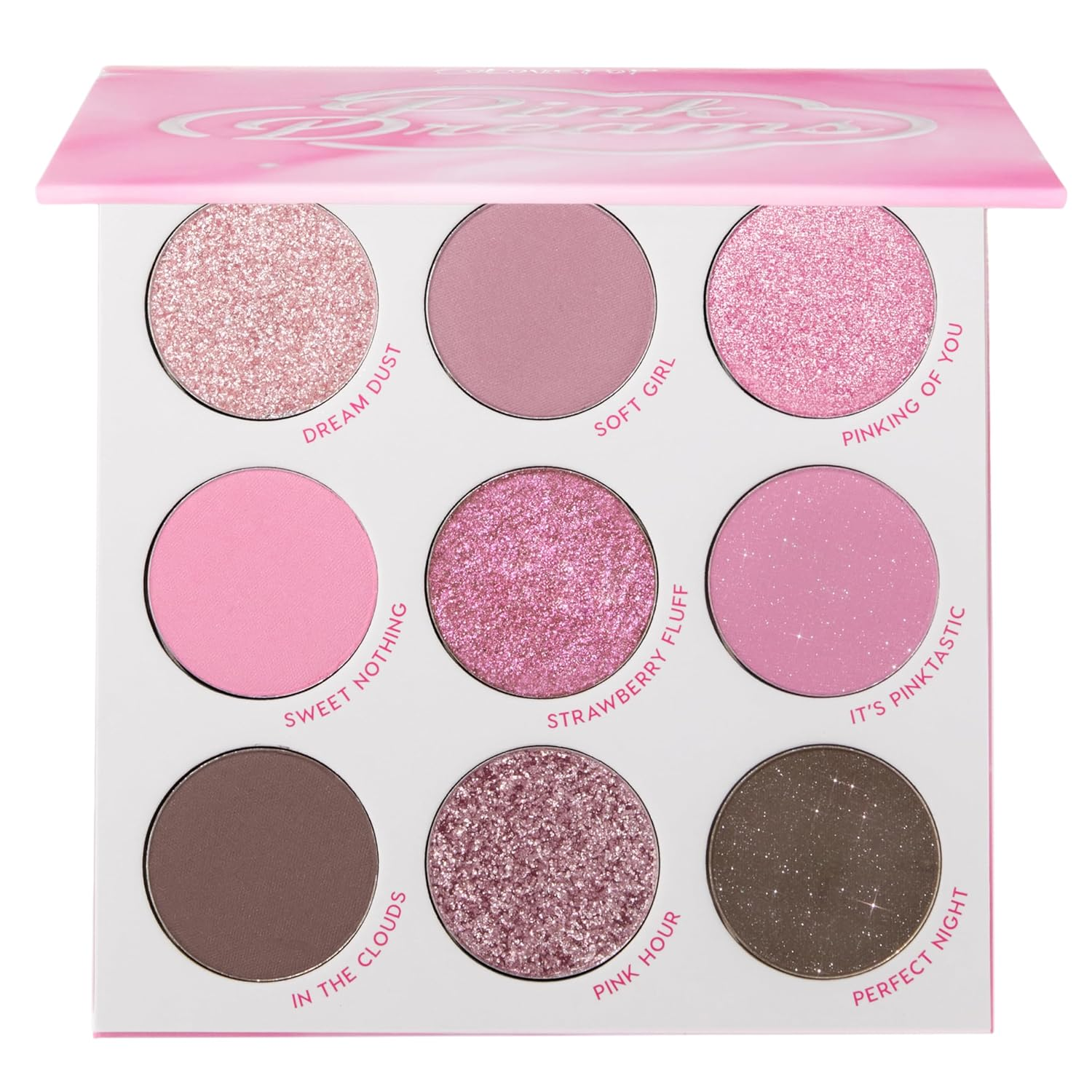
Best overall nude palette, with a balanced matte-to-shimmer ratio so a full look can be built from one pan. Fifteen cool rosy nudes run from a light matte base through taupes to deep crease shades.
Avery, Beautyisles AI Editorial Host
- Fifteen cool nudes from light base to deep crease
- Velvety mattes diffuse easily at the edges
- Metalles held to a small accent group
- Cool color story, so warm bronze nudes are absent
- High-pigment pressed shades kick up dust on the brush
Viseart Petites Pro Luxe Eyeshadow Palette (Neutral Mattes)
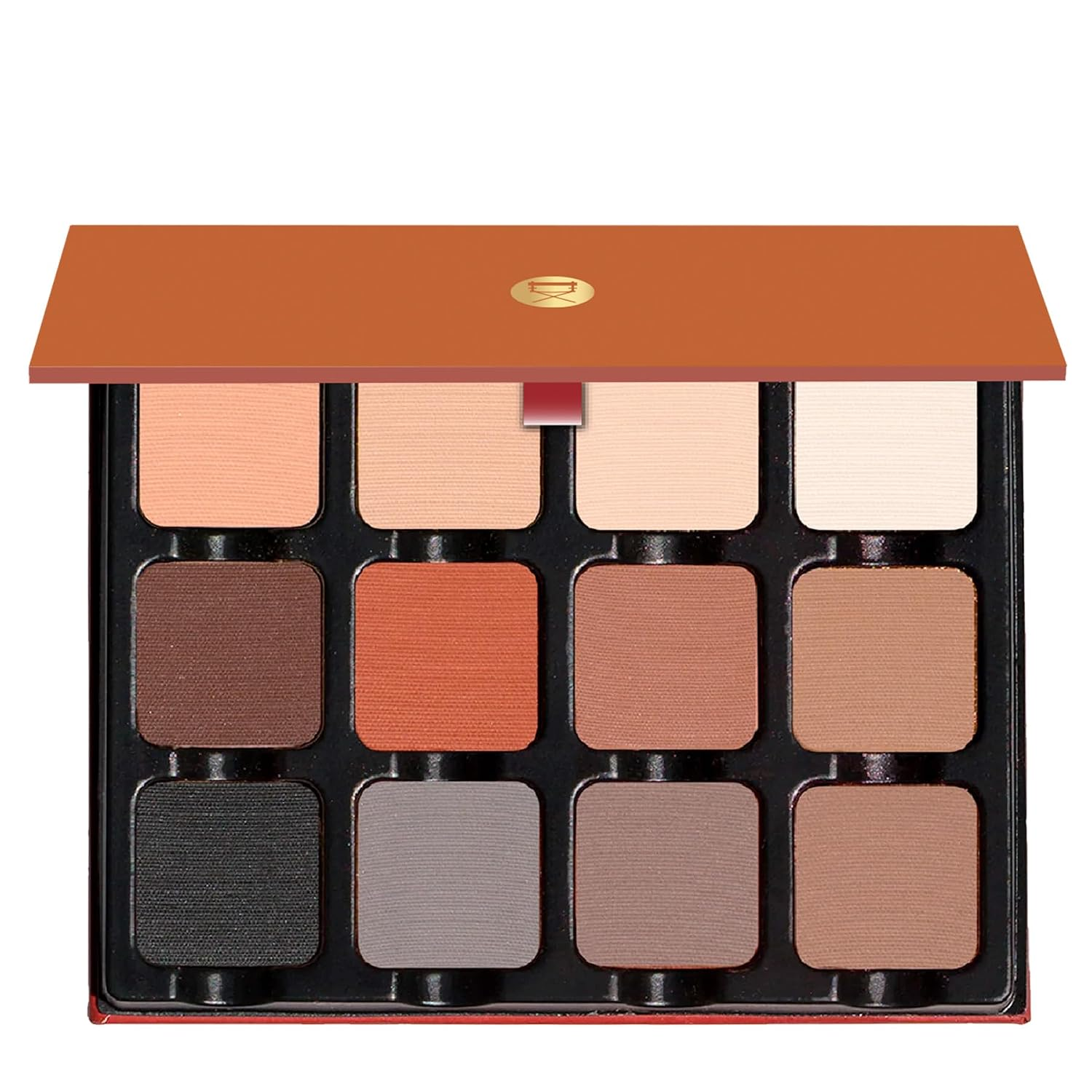
The compact all-matte nude: a travel-size format of a matte-only routine. Twelve magnetic neutral shades span light to deep, and the pans interchange with the brand’s larger palettes.
Avery, Beautyisles AI Editorial Host
- Twelve magnetic mattes span light to deep
- Pans interchange with the brand’s larger formats
- Compact Petites size suits travel and small kits
- No shimmer, so a lid accent needs a second product
- Deep mattes need a light hand to avoid a patchy pass
Makeup by Mario Master Mattes Eyeshadow Palette
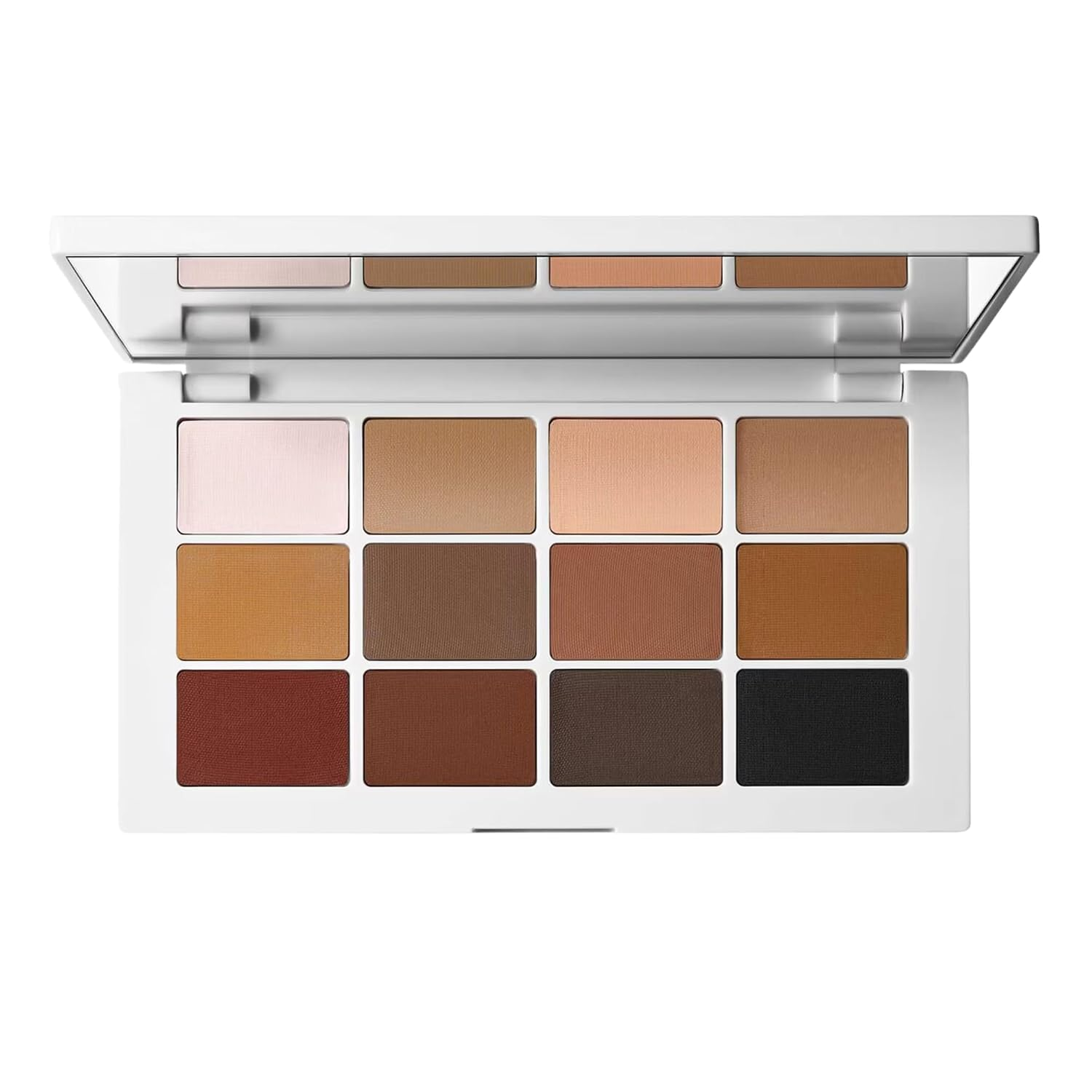
The best full-size matte-only palette, and the cleanest answer for a hooded or textured lid, where shimmer catches light across the fold. Twelve velvety mattes build in layers rather than depositing at once.
Avery, Beautyisles AI Editorial Host
- Twelve mattes cover crease definition and full-lid wear
- Builds in layers rather than depositing at once
- All-matte pan suits a hooded or textured lid
- No shimmer to lift the center of the lid
- Deep shades demand a light first pass
Chanel Les Beiges Healthy Glow Natural Eyeshadow Palette
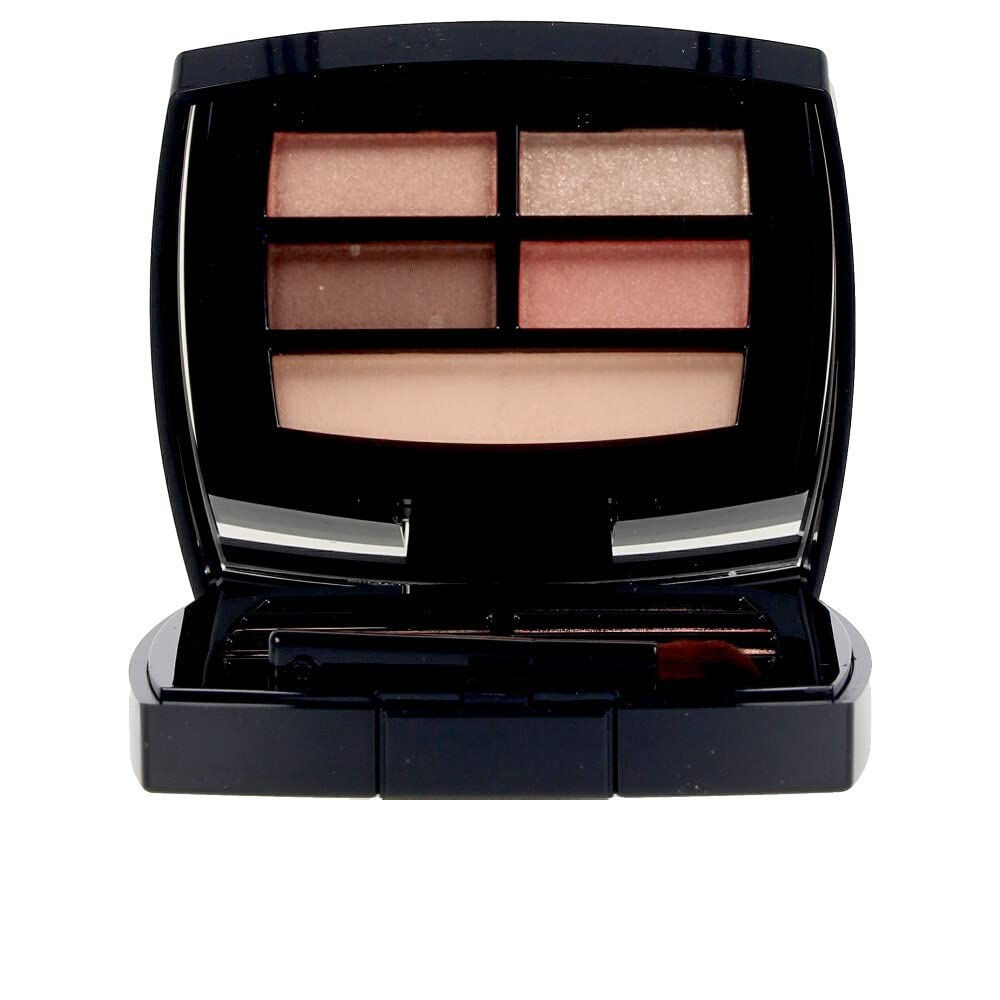
The everyday neutral baseline: a compact warm-neutral palette built for daily wear. Five shades span soft to intense, the formula presses creamy and blends, and it wears smudge-free through a workday.
Avery, Beautyisles AI Editorial Host
- Five neutrals from soft to intense in one compact
- Creamy pressed formula with a soft-hair brush
- Smudge-proof, long-lasting wear on a moving lid
- Five shades leave little room for a smoky eye
- Warm-leaning neutrals can pull peach on cool undertones
Frequently Asked Questions
How do you apply eyeshadow?
Build in thin layers. Lay a matte base shade across the lid first, then place a deeper matte in the crease and blend upward. Add shimmer last, and only on the center of the mobile lid. If your lids are hooded, keep the center-lid shimmer small so the fold does not catch the light.
How long is eyeshadow good for?
Powder eyeshadow lasts longer than cream because it holds little water. Replace it when the texture turns hard, the color shifts, or the surface develops a film. No cited source sets a specific number of months, so use those signs rather than a fixed date. Never share eye products during an infection.
What are the best eyeshadow brushes?
Two brushes cover most nude looks. A flat packing brush places color, and a soft fluffy blending brush diffuses the edge. A small pencil brush is a useful third tool for the outer corner and the lower lash line.
What is primer for eyeshadow?
A primer for eyeshadow is a tacky base that gives powder something to grip. It blocks lid sebum from reaching the pigment, which slows creasing. It does not stop the lid from folding, so it is a wear aid rather than a fix for a high-pigment formula.
What is eyeshadow primer?
Eyeshadow primer is a tacky base that gives powder something to grip. The eyelid carries roughly 25 meibomian glands per tarsus, and their sebum migrates into the crease and mobilises the binder in the powder film. A primer creates a surface that resists that migration, so the pigment stays where you placed it for longer.
How do you get eyeshadow out of carpet?
Lift the powder before you wet it. Vacuum the dry powder first, then blot the stain with a small amount of dish soap and cool water.
Editorial Sources
- Ansari MW, Nadeem A. Anatomy of the Eyelids. In: Atlas of Ocular Anatomy. Springer, Cham; 2016. doi 10.1007/978-3-319-42781-2_5.
- Hoagland TM. Eyelid Anatomy. Medscape Clinical Reference. Updated May 21, 2025.
- Wictorin A, Hansson C. Allergic contact dermatitis from a bismuth compound in an eye ointment. Contact Dermatitis. 2001;45(5):318. doi 10.1034/j.1600-0536.2001.450524.x. PMID 11722506.
- Wang MTM, Craig JP. Investigating the effect of eye cosmetics on the tear film: current insights. Clin Optom (Auckl). 2018;10:33-40. doi 10.2147/OPTO.S150926.
- Liu M, Li Y, Wang R, Shao G, Lv P, Li J, Zhu Q. Uniform deposition of ultra-thin TiO2 film on mica substrate by atmospheric pressure chemical vapor deposition: Effect of precursor concentration. Chinese Journal of Chemical Engineering. 2023;60:99-107. doi 10.1016/j.cjche.2023.01.008.
- Akinay Y, Akkus IN. Synthesis and characterization of the pearlescent pigments based on mica deposited with SiO2, AlN and TiO2: First report of its dielectric properties. Ceramics International. 2020;46(11):17735-17740. doi 10.1016/j.ceramint.2020.04.078.
- U.S. Food and Drug Administration. Talc. FDA Cosmetics. Updated 2025.
- U.S. Food and Drug Administration. Testing Methods for Detecting and Identifying Asbestos in Talc-Containing Cosmetic Products (proposed rule, 89 FR 105490, December 27, 2024; withdrawn 90 FR 54603, November 28, 2025). Federal Register.
- Published ingredient and product details: Natasha Denona I Need a Nude Eyeshadow Palette (B0GWPNKWVZ); Viseart Petites Pro Luxe Eyeshadow Palette, Neutral Mattes (B0CZYRHCMR); Makeup by Mario Master Mattes Eyeshadow Palette (B09ZGX8M9F); Chanel Les Beiges Healthy Glow Natural Eyeshadow Palette (B08DHRX9ZM).