
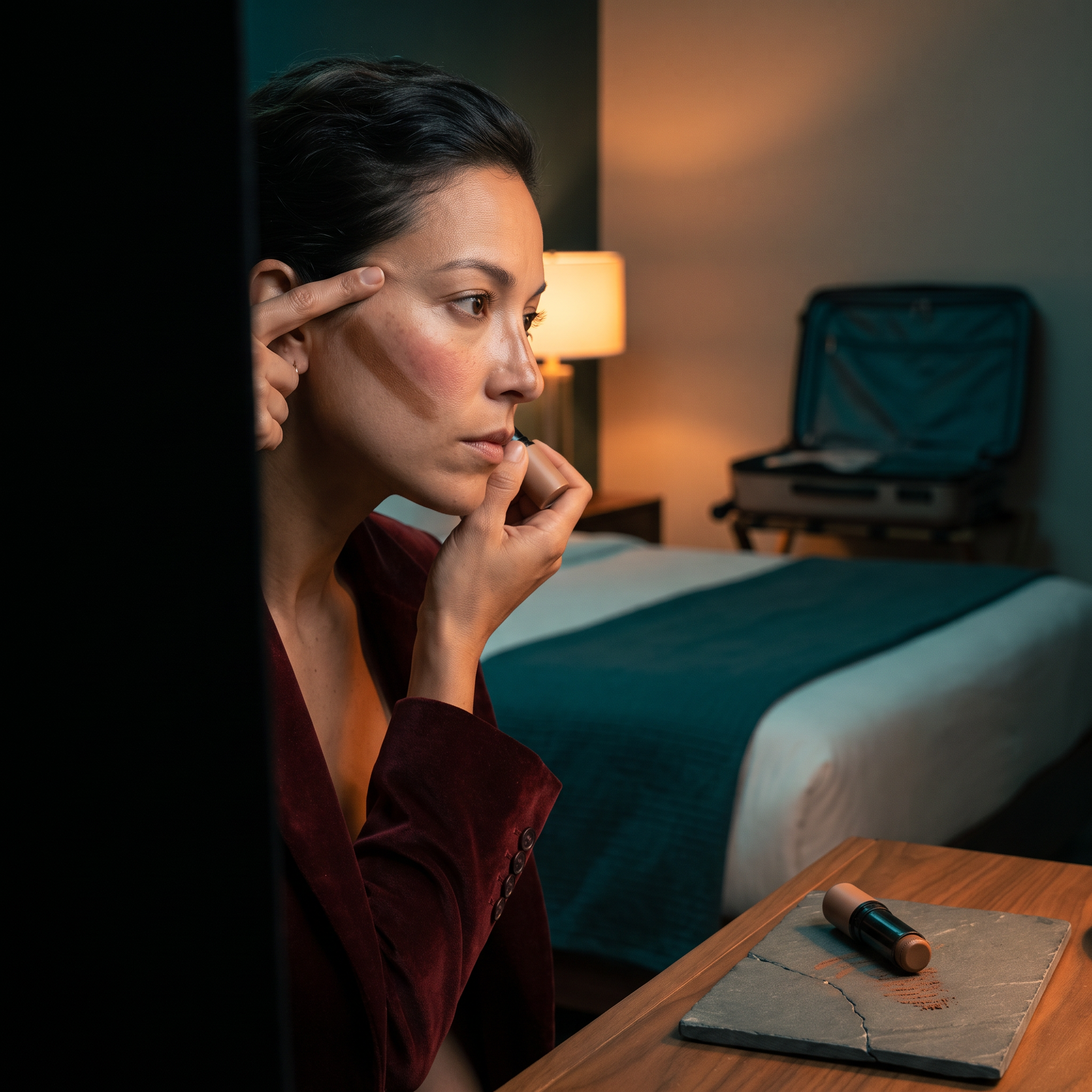
- Contour draws a shadow. Bronzer draws sun. Shadows are cool and gray. Sun is warm and orange. Buying the wrong temperature is the most common mistake.
- Go one to two steps deeper, not five. A contour shade that matches your skin depth can only be read as dirt. A shade two steps deeper reads as structure.
- Place it on bone, not on cheek. Follow the temple hollow, the cheek hollow and the jaw edge. Keep it off the center of the cheek.
- Cream before powder. A stick cannot spread over a powdered face. Contour first, set it afterwards.
- Oil shifts the shade. Sebum makes the film more transparent, so the contour reads darker by afternoon. Set it to slow that down.
What a Contour Stick Actually Does
A contour stick is a cream shaping product in a twist-up format. It draws a shadow. That is the job, and it is worth saying plainly, because most of the sticks on a shelf are doing a different job.
- Contour mimics a shadow. A shadow is cooler and less saturated than lit skin, so a contour shade is cool and gray-leaning.
- Bronzer mimics sun. Direct sun adds warmth and saturation to skin, so a bronzer is warm and orange-leaning.
- Pigment load is how much color a product carries. A stick carries less than a liquid, so it builds in thin passes rather than laying down a hard stripe.
A shadow and a sunlit patch of skin differ in temperature and saturation, not only in depth. A cast shadow removes direct light, so the skin underneath reads cooler and grayer. A sunlit patch gains warmth and orange. That is the physical reason a contour shade has to sit cooler and grayer than your skin. A bronzer has to sit warmer and more orange. It is why the two are not interchangeable.
Patch tests confirm the difference. Fabric swatches offer small color cues, and observers barely shifted their judgments of face shape when those cues changed. Larger patches of shading and shadow, the size a cheek hollow covers, changed the perceived shape clearly. A contour line is a large enough cue to do its job, provided the tone is right.
Once you know the difference, the rest of this page is practical. Choose a shade, place it on bone, blend it thin, then set it so oil does not take the color somewhere you did not choose.
Why Contour Follows Your Bone Structure
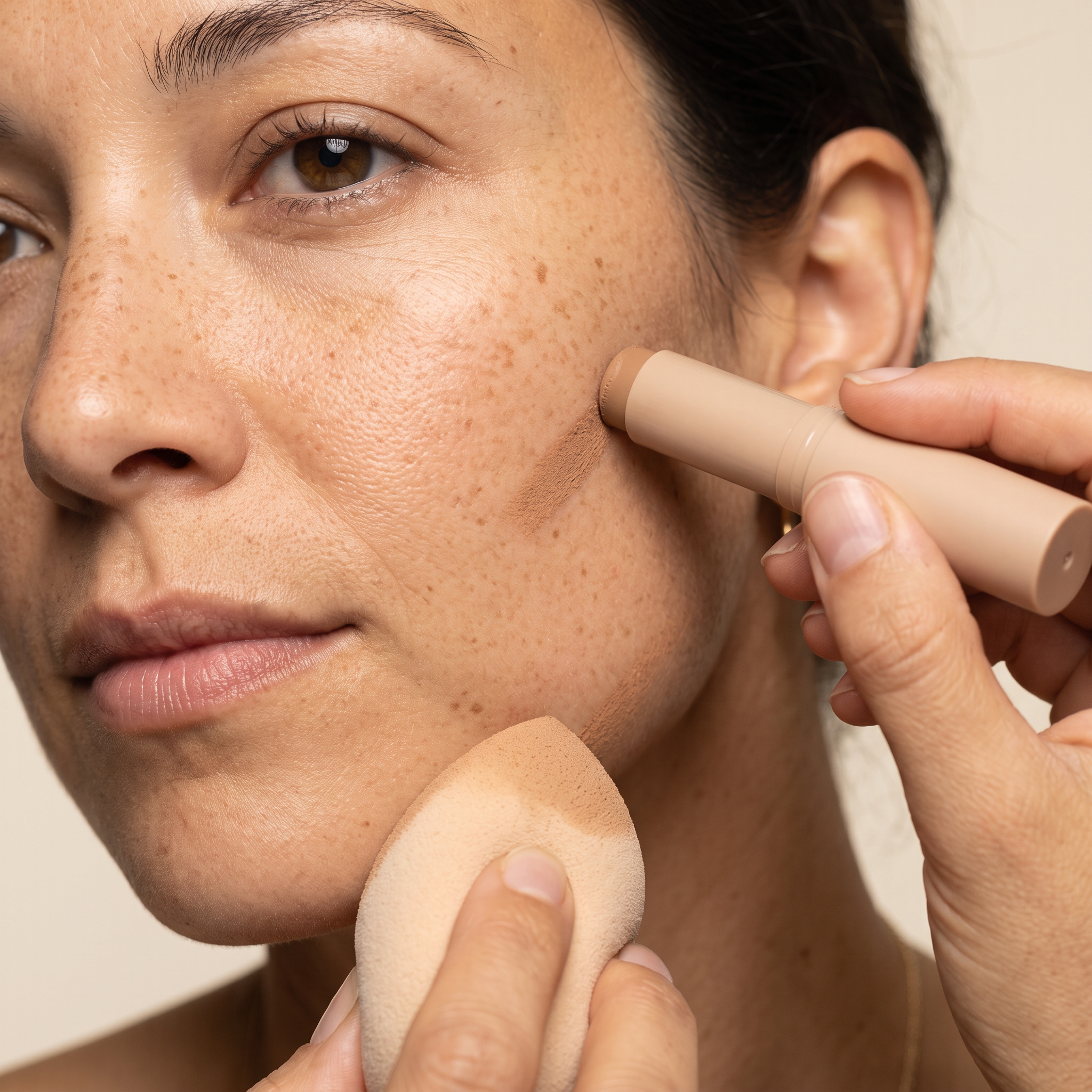
To place contour well, it helps to know why the line runs where it runs. It traces a shadow the bone already casts.
The visual system rebuilds a three-dimensional face from the pattern of light and shade across its surface. Change that pattern and you change the structure the eye reads, not only the color of the skin. Shading and shadow are a primary cue the brain uses to find and read a face. A shadow drawn in the right place is information, not decoration.
Four zones carry most of the work.
- The temple hollow sits just inside the outer brow, where the skull curves away from the light. A soft line here narrows the upper face.
- The cheek hollow is the diagonal just under the cheekbone. It runs from near the ear toward the corner of the mouth, but it stops well before the mouth.
- The jaw edge follows the line the mandible already makes, from under the ear down toward the point of the chin.
- The nose sides take a narrow line down each side of the bridge, from the inner brow. Nothing goes across the tip.
The jaw edge is the zone with the clearest evidence behind it. The angular relationship between a defined jaw and the other facial lines is measurable, and observers read those lines when they judge facial harmony. A sharper, more defined jaw angle reads as younger to an observer. Bone changes with age too, in both sexes. The mandible remodels over time, so the shadow under the cheekbone softens and the jaw edge blurs.
One honest note about that evidence. The study behind it measures bone geometry and asks observers to rate facial photographs. It does not test makeup, and it does not study contouring. What it establishes is that jaw geometry is measurable and that observers in this study read it. The claim that a contour shade restores that read is our own reading, not a finding in the paper. Treating a contour as a temporary optical restoration of a line the bone no longer makes is an inference, not a result.
That is also why placement beats intensity. A line drawn where the bone already casts a shadow looks like the face. A line drawn anywhere else looks like a line.
Cream Stick vs Powder: Which to Choose
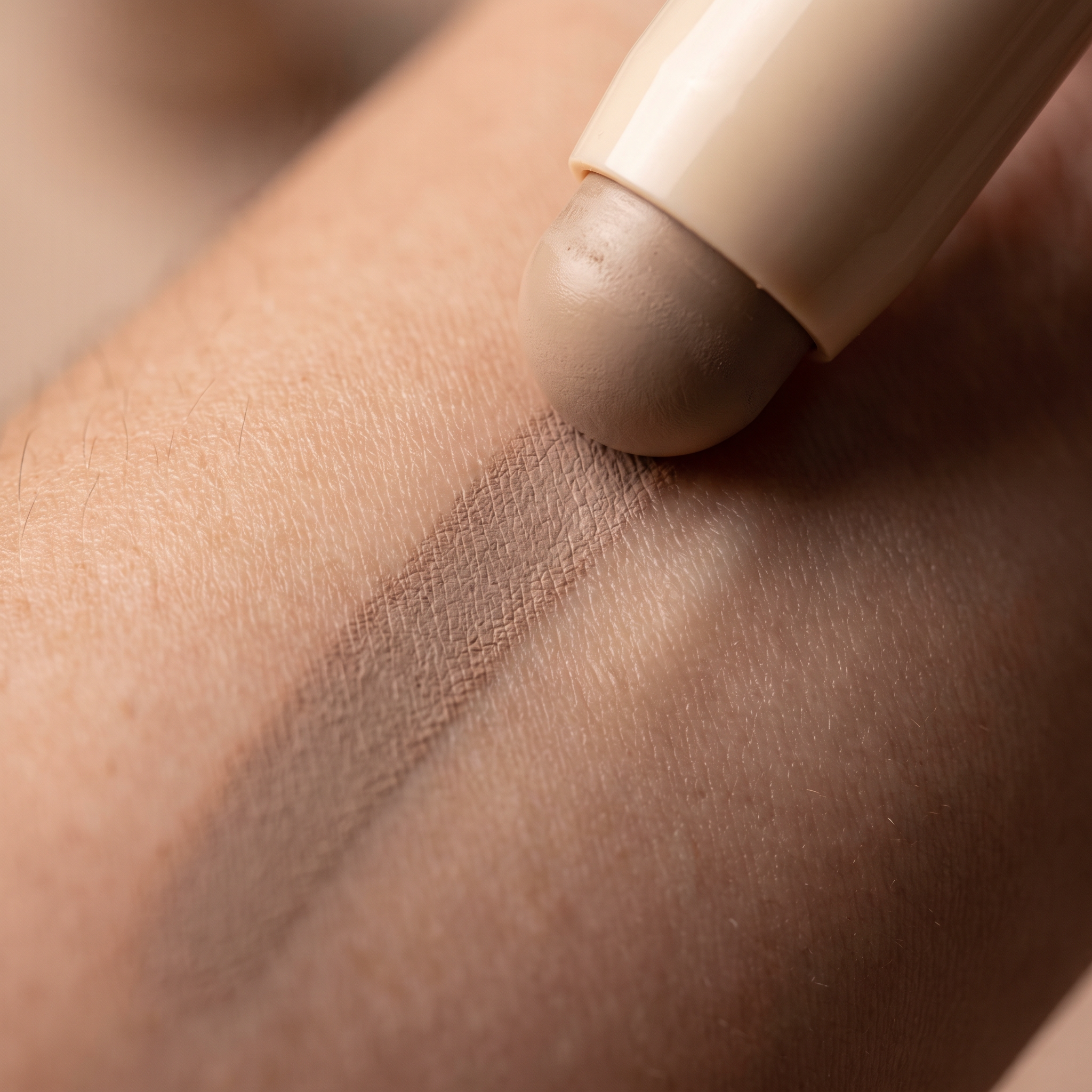
A stick is a structured solid. Wax gives it shape, and oil and ester give it glide.
The wax network holds the stick rigid at room temperature and melts at skin temperature. Esters and emollient oils sit inside that network and control how far the product moves once it touches skin. More oil phase gives easier blending and a dewier finish. More wax and powder gives a firmer stick that stays where you put it, but drags on the way there.
That single trade-off explains most of the choice. A cream stick draws a soft edge and blends with a fingertip, which suits the temple hollow and the jaw edge. A powder sits on the surface and gives a sharper edge with less slip. A cream stick also spreads poorly over a powdered surface, so cream goes first.
Powder over cream changes the finish as well as the wear. Setting powder sits on top of the cream film and scatters light at the surface. That flattens the sheen and lifts the perceived color slightly paler. Applied before the contour, it also holds oil back from the pigment layer, which matters for the color drift described later on this page.
The routine order that follows from the physical order is short. Foundation, then cream contour, then blend, then highlighter, then powder. If your highlighter is a cream, it goes before the powder. If it is a powder, it goes after. A cream stick cannot spread evenly over a powdered face, so the sequence is not a preference.
Contour sits on top of whatever base you built, so the base decides how well it blends. The shade work underneath it belongs to the right foundation underneath, which is where matching depth and undertone starts.
How to Choose Your Contour Shade

This is the decision that matters most. Get the temperature right and an ordinary formula looks good. Get it wrong and a good formula looks like dirt.
Start with depth. Go one to two steps deeper than your skin, not five. A shade that matches your skin depth can only be read as dirt, because it is neither shadow nor sun. A shade two steps deeper reads as structure. Two steps is enough because a shadow is not very dark; it is only unlit.
Then set the temperature. A contour shade must be cool and gray-leaning, because that is what an unlit patch of skin looks like. If the stick reads orange or golden on your skin, it is a bronzer with a different name.
Test on the jaw, in daylight. Indoor light is warm, so it flatters a warm shade and hides the error. Stand near a window, draw a short line along the jaw, and blend it. A shade that disappears into a soft shadow is your shade. A shade that sits on the skin as visible color is too deep or too warm.
Here is the part most guides leave out. Shade names vary by brand and by region, and a name tells you very little. One brand’s “medium” is another brand’s “deep”. A word like “taupe” means different things in different ranges. Read the undertone, not the label. If you can see the product, look at it beside a neutral gray. A contour shade should look closer to the gray than to an orange.
Deeper skin tones deserve the same care, not an afterthought. A range that runs neutral-cool through cool, and keeps its deepest shades cool instead of turning them orange, gives you a real contour. Ranges that only darken a warm shade produce a bronzer at the deep end. Check the deepest shade in the line before you trust the whole ladder. Some brands space the mid range widely, so you may sit between two shades.
Depth and temperature are the whole decision. Everything after this point is technique.
How to Contour: Placement Step by Step
Follow these steps in order. Each one prepares the surface for the next.
- Start with a base that has settled. Let your foundation sit for a minute. A cream stick drags on tacky skin and skips on dry skin.
- Draw the temple hollow. Make a short line just inside the outer brow, where the skull curves away. Keep it high and keep it soft.
- Draw the cheek hollow. Follow the diagonal under the cheekbone from near the ear toward the corner of the mouth. Stop well short of the mouth.
- Draw the jaw edge. Trace the line the bone already makes, from under the ear toward the point of the chin.
- Draw the nose sides. Make a narrow line down each side of the bridge from the inner brow. Put nothing across the tip.
- Blend upward and outward. Blend up into the cheekbone and out toward the hairline, so the edge never sits on the face as a line.
- Add highlighter where light lands. Top of the cheekbone, brow bone, bridge of the nose and cupid’s bow.
- Set with a light powder. If your skin is oily, set the contour before you leave the house. That is the practical defense against the afternoon drift.
Cream over cream blends; cream over powder skips. If you set your base with powder first, use a powder contour instead, or accept a harder edge.
Cheek color and contour sit next to each other, so they are easy to blur into one shape. Keep the two separate, and place the blush above the contour rather than on top of it. The rules for placing cheek color start where the contour line ends.
For a contour for beginners, one habit matters most. Build in thin layers, and blend before you add more.
Highlighter: Satin, Metallic and Wet-Look
Highlighter is the other half of the shape. Contour takes light away; highlighter puts it back. The finish you choose is a physical property, not a marketing word.
A pearl pigment is a thin flat platelet, usually mica, coated with a layer of high refractive index. Light reflects off the top and the bottom of that layer, and the two reflections interfere with each other. Platelet size and the difference in refractive index between the platelet and its coating decide how the reflection reads.
- Satin. Larger platelets give a broad, soft sheen. The reflection is wide and diffused, so the finish reads as lit skin rather than as metal.
- Metallic. Smaller, more uniform particles give a tighter, sharper reflection. The sheen is bright and defined.
- Wet-look. The sharpest end of the metallic range. It reflects strongly at a narrow angle, so it reads as a wet surface. It also shows skin texture more than the softer finishes do.
Published formulation work supports the same picture. Larger BiOCl crystals, in a high-luster dispersion, give a smooth and continuous sheen rather than a sparkling one. One paper states outright that those crystals are too small to make broad enough glints of reflected light. Those glints cannot be seen at normal viewing acuity. The result is a shine rather than a sparkle. Smaller crystals with more edges scatter more light instead, which makes a pigment more matte and more covering at the same time.
Match the finish to the surface underneath. If skin texture is a concern, a satin finish blurs it and a wet-look finish advertises it. If your skin is oily, a wet-look highlighter amplifies shine you are already managing, so choose satin and place it accurately. The placement matters more than the finish, and the card below sets out where it belongs.
Contour and Bronzer: Not the Same Thing
This is the question that decides whether the rest of the page works for you.
Contour mimics a shadow. Bronzer mimics sun. Shadows are cool and gray-leaning because they are unlit. Sun is warm and orange-leaning because it adds warmth and saturation to skin. A shadow and a sunlit patch differ in temperature and saturation, not only in depth. That physical difference is why one product cannot do both jobs.
The temperature difference comes from the light itself. A cast shadow removes direct light, so the skin reads cooler and less saturated. Direct sun adds warmth and saturation. That is a color-science argument about light and reflectance, not a measured product finding. No study we found tested a cosmetic against a sunlit-skin control.
Where they go follows the same logic.
- Contour goes in the hollows. Temple hollow, cheek hollow, jaw edge and nose sides. Those are the places where bone turns away from the light.
- Bronzer goes on the perimeter and the high points. Forehead, the outer edge of the cheek, and the bridge of the nose. Those are the places sun would reach.
You can wear both. Contour first into the hollows, then bronzer on the areas sun would catch. Finish with highlighter on the top of the cheekbone, the brow bone and the nose bridge. Blush is the warm color that sits between them.
If you own one product and it is orange, you own a bronzer. Keep it on the perimeter and do not draw it under your cheekbone.
What the Evidence Says About Oxidation
Many readers watch their contour turn darker by mid-afternoon and blame the formula. The mechanism is more interesting than that.
Sebum is skin oil. When it mixes into a makeup film, it raises how much light passes through the film. More of the darker skin beneath then shows through, so the whole layer reads darker. In a laboratory study, artificial sebum was added to a basic liquid foundation at different concentrations, and the mixture was measured with a spectrophotometer. Sebum added and the rise in transmissivity tracked each other closely, at a correlation of R2 = 0.852, p < 0.01.
Pigment behavior drives the rest. Pigments that disperse well in sebum shift less, because the film holds together. Replacing pigments with oil-fixing powders reduced the darkening significantly, at p < 0.01. That is a formulation choice, and it belongs to the manufacturer.
The scope matters here, so read it carefully. The study tested artificial sebum in a basic liquid foundation, measured on an opacity chart. It did not test a cream contour stick, and it did not test a stick format. We use it for the mechanism only: this is how skin oil shifts a makeup film darker over a day. Do not read a contour-stick result into it.
Two practical defenses follow. Set the contour with a light powder, which slows how much sebum reaches the pigment layer. And avoid over-blending early, because the film you move most is the film that thins first.
That is also the honest answer to what people call oxidation. The color shift is mostly the film becoming more transparent, plus some pigment wetting, not the pigment rusting. An oily-skinned reader will see more of it, and a reader with dry skin will see very little.
Oxidation is the everyday word for a contour turning darker or more orange through the day. The main cause is skin oil mixing into the makeup film. The film becomes more transparent, so more of your skin shows through and the shade reads deeper. It is not the pigment literally rusting.
The Verified Edit
Three products carry this article’s argument. Two are cream sticks and one is a liquid, so you can see the format difference as well as the shade difference.
Each one is assessed on formula, finish, shade range and blendability, and each earns its place for a different reason. One demonstrates a cool-leaning prestige range. One demonstrates the liquid method and the build-in-thin-layers habit. One states the undertone temperature in the shade names themselves.
Every card carries the specific pros and cons we found, including the limits. A card that lists only advantages is a page that is selling, not testing.
A foundation shade two steps darker than your skin still carries your skin’s undertone. A contour shade is a different color on purpose: cooler and grayer. Using dark foundation as contour is why so many first attempts look orange at the edges.
Westman Atelier Face Trace Contour Stick
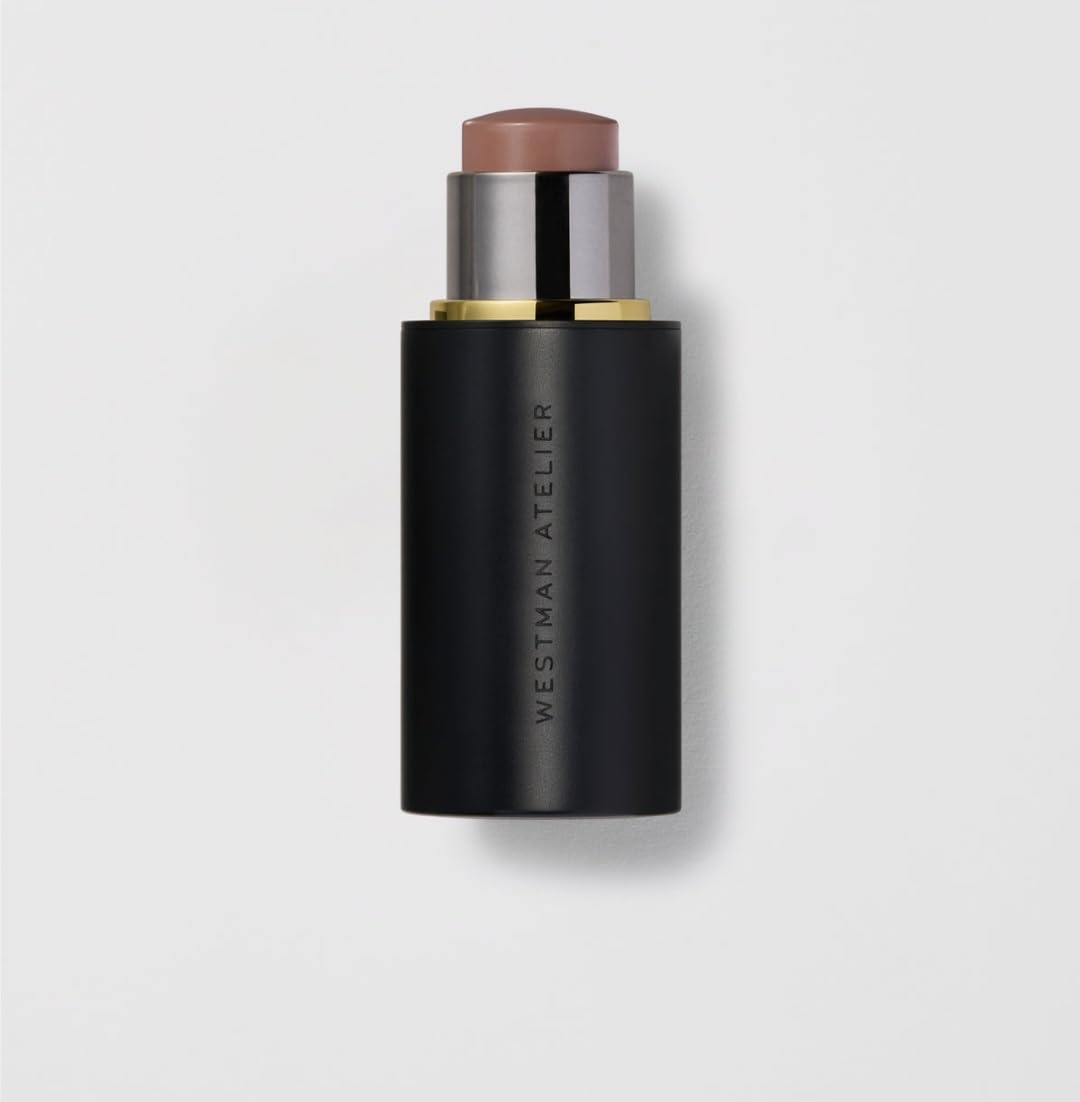
The prestige cream stick for a true shadow tone. The deeper shades stay cool instead of turning orange, and the trace-and-blend cream stays workable long enough to buff out with fingers or a brush.
Avery, Beautyisles AI Editorial Host
- Shadow-mimicking cool tones, not warm bronze
- Stays workable long enough to buff out
- Vegan, with no PEGs, fragrance or parabens
- Emollient cream moves on oily skin without powder
- Wide shade spacing leaves mid-range readers between two
Charlotte Tilbury Hollywood Liquid Contour Wand
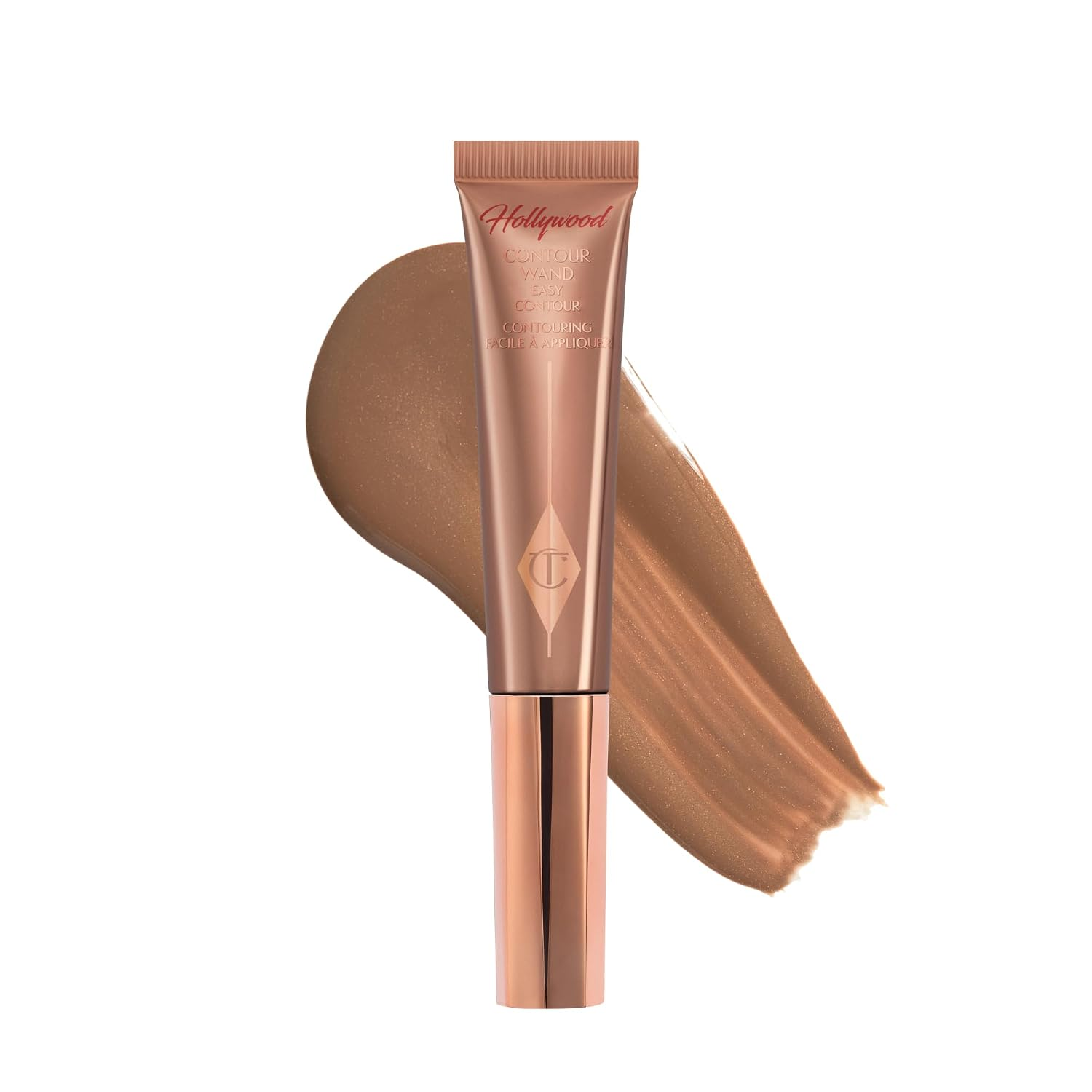
The liquid alternative for the build-in-thin-layers method. A liquid cannot go on as a hard stripe, so intensity comes from layering. The cushion tip places product in the temple hollow and along the jaw.
Avery, Beautyisles AI Editorial Host
- Featherlight liquid builds intensity in layers
- Cushion applicator places product in the temple hollow
- Deep shade in the range is explicitly cool-toned
- Fixed-dose tip dispenses more than a beginner needs
- Needs a brush or sponge; fingers leave edges
Kevyn Aucoin The Contrast Stick
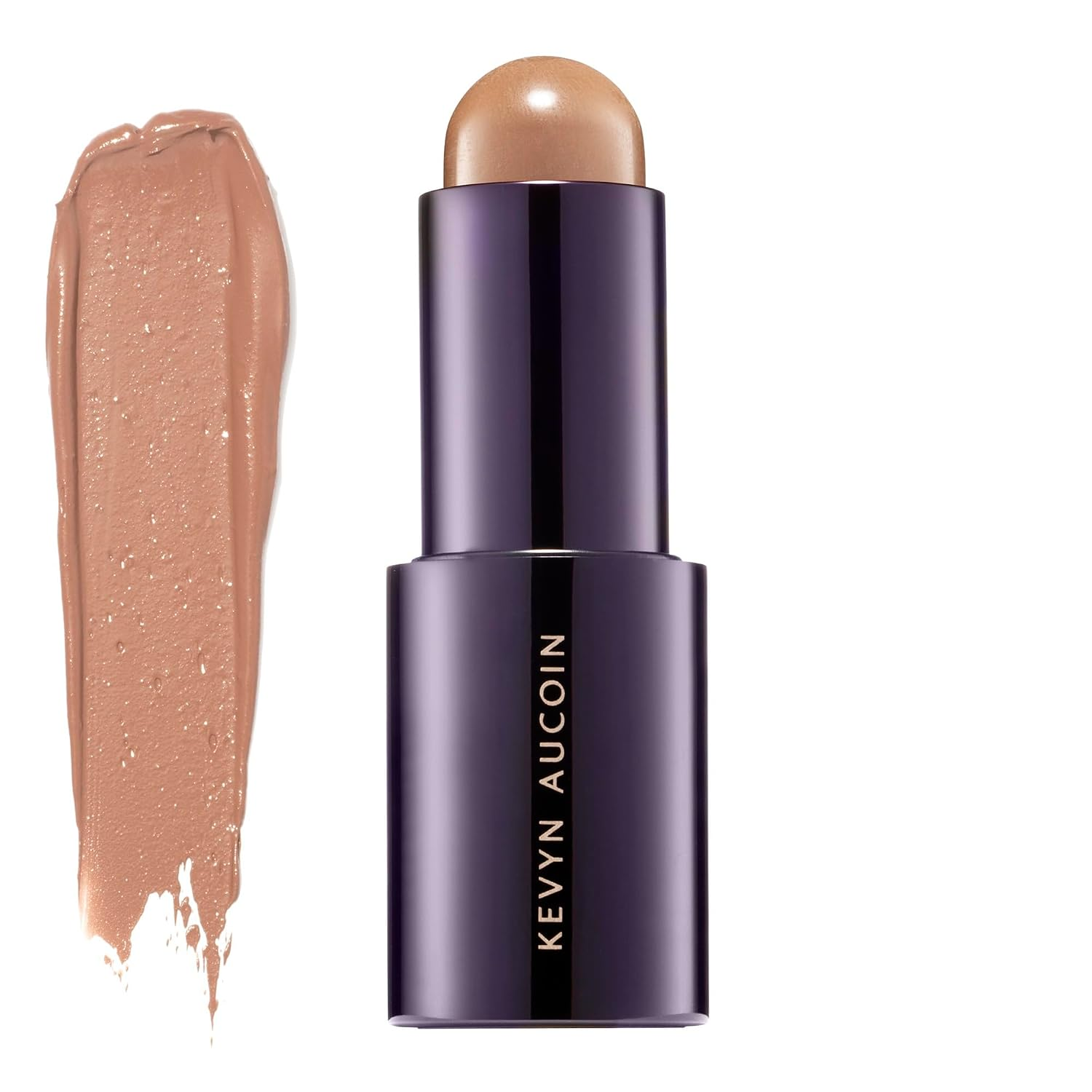
The card that makes the cool-versus-warm lesson concrete: its shades are named and sold by undertone temperature, and three of the four run cool. It works on bare skin or over foundation.
Avery, Beautyisles AI Editorial Host
- Creamy matte crayon works bare or over foundation
- Shades named by undertone temperature, cool or warm
- Vegan, fragrance-free and talc-free formula
- Four shades make a narrow ladder
- Sets fast, so blend immediately after drawing
Every stick in this edit sits at prestige pricing. A drugstore contour stick deserves the same test: cool pigment, a thin film, and no orange edge.
Frequently Asked Questions
These are the questions readers ask most often about contour sticks, shade choice and placement.
What is contour?
Contour is makeup that darkens chosen parts of the face to create a shadow. A shadow makes the area behind it look deeper or narrower. That is how a contour line changes the shape the eye reads. It is a drawing technique in cream or powder. It works because shading and shadow are how the visual system reconstructs a face in three dimensions.
How do you contour your face?
Work in three zones. Draw the temple hollow just inside the outer brow. Draw the cheek hollow along the diagonal under the cheekbone. Draw the jaw edge along the line the bone already makes. Blend upward and outward. Cream goes on before powder, because a stick cannot spread evenly over a powdered face.
What is a contour?
A contour is a zone, not a line. It is the shallow area where bone turns away from the light, such as the hollow under the cheekbone or the dip beside the jaw. Contouring means darkening that zone so it reads as a shadow. Contour is the product or the act; a contour is the shape itself.
How do you use highlighter?
Highlighter goes only where light would naturally land: the top of the cheekbone, the brow bone, the bridge of the nose and the cupid’s bow. Keep it off the cheek hollow. Match the finish to your skin type. Larger platelets give a soft satin sheen, smaller ones give a sharper metallic reflection, and oily skin reads better with the softer finish.
Where do you put contour and bronzer?
Contour goes in the hollows. Bronzer goes on the perimeter and the high points of the face. Think of where bone turns away from the light for contour, and where the sun would land for bronzer. If you wear both, contour first into the hollows, then bronzer on the areas sun would catch.
Where do you put bronzer and highlighter?
Bronzer goes on the outer face: the forehead, the outer edge of the cheek and the bridge of the nose. Highlighter goes on the cheekbone top, the brow bone and the nose bridge. Keep bronzer off the cheek hollow, and keep highlighter off it too. The hollow reads deepest when nothing bright sits inside it.
Is contour and bronzer the same?
No. Contour mimics a shadow and is cool and gray. Bronzer mimics sun and is warm and orange. They do different jobs and go in different places. A shadow removes light, so the skin reads cooler, and sun adds light, so the skin reads warmer and more saturated. If your product is orange, it is a bronzer whatever the label says.
How do you contour your nose?
Draw a narrow line down each side of the bridge, starting at the inner brow. Blend it hard, so no edge remains on the skin. Add a thin highlight down the center of the bridge. Put nothing across the tip, because a dark line there shortens the nose instead of narrowing it.
How do you pick a contour shade?
Start one to two steps deeper than your skin and cool. Test on the jaw in daylight, not indoors, because indoor light is warm and flatters the wrong shade. Read the undertone rather than the name, because shade names vary by brand and region. A contour shade should look closer to neutral gray than to orange.
What is eye contouring?
Eye contouring means using shadow near the crease and the outer corner to suggest a deeper socket. It is makeup shading, not an eye-cream product. The rules for eyeshadow placement start with the same idea. Darken where the socket already dips. Keep the bright shades off the deepest part of the crease.
Editorial Sources
- Palmer CJ, Goddard E, Clifford CWG. Face detection from patterns of shading and shadows: The role of overhead illumination in generating the familiar appearance of the human face. Cognition. 2022;225:105172. doi 10.1016/j.cognition.2022.105172.
- Banegas R, Miksa M, Ko E. Facial Structures and Their Impact on Visual Perception of Beauty and Youthfulness: Parallelism. Clin Cosmet Investig Dermatol. 2025;18:1207-1211. doi 10.2147/CCID.S513424.
- Yan Y, Lee J, Hong J, Suk HJ. Measuring and describing the discoloration of liquid foundation. Color Res Appl. 2021;46(2):362-375. doi 10.1002/col.22584.
- Zhang Q, Chen G, Hou Y, Wang S, Xia Q, Yu J. Investigating the impact of sebum secretion on liquid makeup foundation darkening and its solution. Int J Cosmet Sci. 2024;46(1):142-152. doi 10.1111/ics.12939. PMID 38225855.
- Chen G, et al. Research on the intrinsic mechanism of the darkening of liquid foundation. Skin Res Technol. 2022;29(1):e13236. doi 10.1111/srt.13236.
- Peng Q, Tellefsen M. Bismuth Oxychloride – A Multifunctional Color Additive. Cosmetics & Toiletries. 2003;118(9):53-56.
- Zhang M, Wang P, Wu M, Wu Q, Yang J, Liu J, Zhang J. High solid content preparation of size controllable BiOCl crystals as pearlescent pigment in solvent-free polyurethane coating. Colloids Surf A Physicochem Eng Asp. 2022;654:130129. doi 10.1016/j.colsurfa.2022.130129.
- Frigerio L, Padovano L, Conti S, Malacarne MC, Caruso E. Strategy for the development of a new stick formula without microplastics. Sustain Chem Pharm. 2024;37:101423. doi 10.1016/j.scp.2023.101423.