
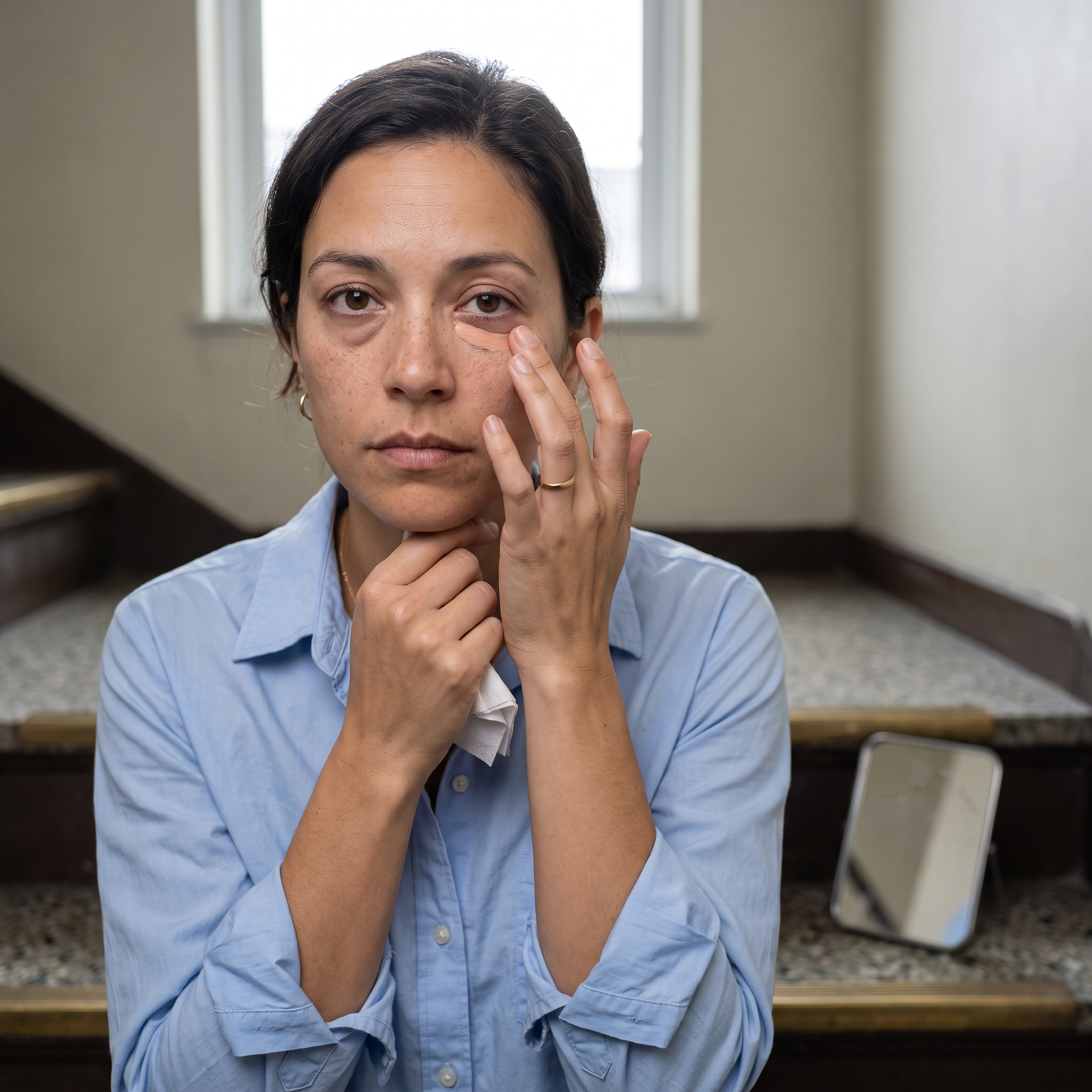
- Dark circles come in four types: pigmented, vascular, structural and mixed.
- Color correction works by canceling color. Peach and orange cancel blue and purple.
- A corrector is thinner than a concealer and always goes underneath it.
- Under-eye skin is the thinnest on the face. That is why product settles into lines.
- Sleep does not cause dark circles. Research found no link between sleep and severity.
- Anaemia and allergy can drive under-eye darkness. Those need a clinician, not a corrector.
What Dark Circles Actually Are
Dark circles are classed as periorbital hyperpigmentation. That is the clinical name for darkness in the skin around the eye. It is not one condition. It is four, and each type needs a different correction.
The accepted classification splits it into pigmented, vascular, structural and mixed types. The pigmented type is a brown hue from excess pigment. The vascular type is blue, pink or purple, and it comes from visible blood vessels. The structural type is a shadow cast by facial contours, such as a deep tear trough or an eye bag. The mixed type combines two or three of these.
You can narrow down your own type with a simple test. Gently stretch the skin under the eye and watch what happens. True pigment stays exactly where it is. A structural shadow fades as the contour flattens. Vascular darkness spreads and deepens when the skin is pulled.
Most darkness is pigment. In a study of 483 women, hyperspectral imaging measured what actually sits under the eye. The difference in melanin between under-eye skin and cheek skin tracked dark-circle severity closely. Blood volume and blood oxygen saturation together accounted for at least 13 percent of that difference. Oxygen saturation under the eye fell as severity rose, which points to pooled blood.
That split matters for shopping. A peach corrector does nothing for a shadow, because a shadow is not a color. It is a lack of light. If your darkness is mostly pigment, you need a warm shade close to your own tone. If it is mostly vascular, a stronger peach or orange does the work. For the base layer underneath it all, see our tested guide to luxury foundations.
Why Sleep Is Not the Cause
Most readers blame a run of late nights. The evidence does not support that.
One study tested eight separate sleep questions against measured dark-circle severity. None of them correlated. Overall sleep quality came in at p = 0.537 and hours of sleep at p = 0.889. Difficulty falling asleep was p = 0.937, and difficulty staying asleep was p = 0.148. Sleep medication use was p = 0.567. Morning tiredness scored p = 0.155, evening sleepiness p = 0.245, and daytime sleepiness p = 0.434. The authors concluded that dark circles are more likely to be familial in origin, and unlikely to be caused by sleep deprivation.
Read that carefully. The study found no link in this group of people. It did not prove that sleep never matters. An observational study can show the absence of an association, and that is all it can show here.
Family history was the strongest risk factor in the same study. About 71.9 percent of participants reported it, at p = 0.018. The average age of onset was 24, and an earlier onset predicted greater severity.
There is a second finding that deserves more attention than it gets. Iron-deficiency anaemia was present in half of one periorbital hyperpigmentation cohort of 200 patients. In anaemia, facial skin becomes paler while the blood under the eye does not. The contrast makes the under-eye look darker than it is. Atopic dermatitis is also strongly associated with under-eye darkness, and self-reported asthma was significant in the Brazilian cohort. Repeated rubbing and inflammation around the eye can leave pigment behind. That is sometimes called an allergic shiner.
None of this is a reason to buy a different corrector. It is a reason to rule out a health cause first. See a clinician if your dark circles appear suddenly or affect only one eye.
The Color Wheel, in Plain Terms
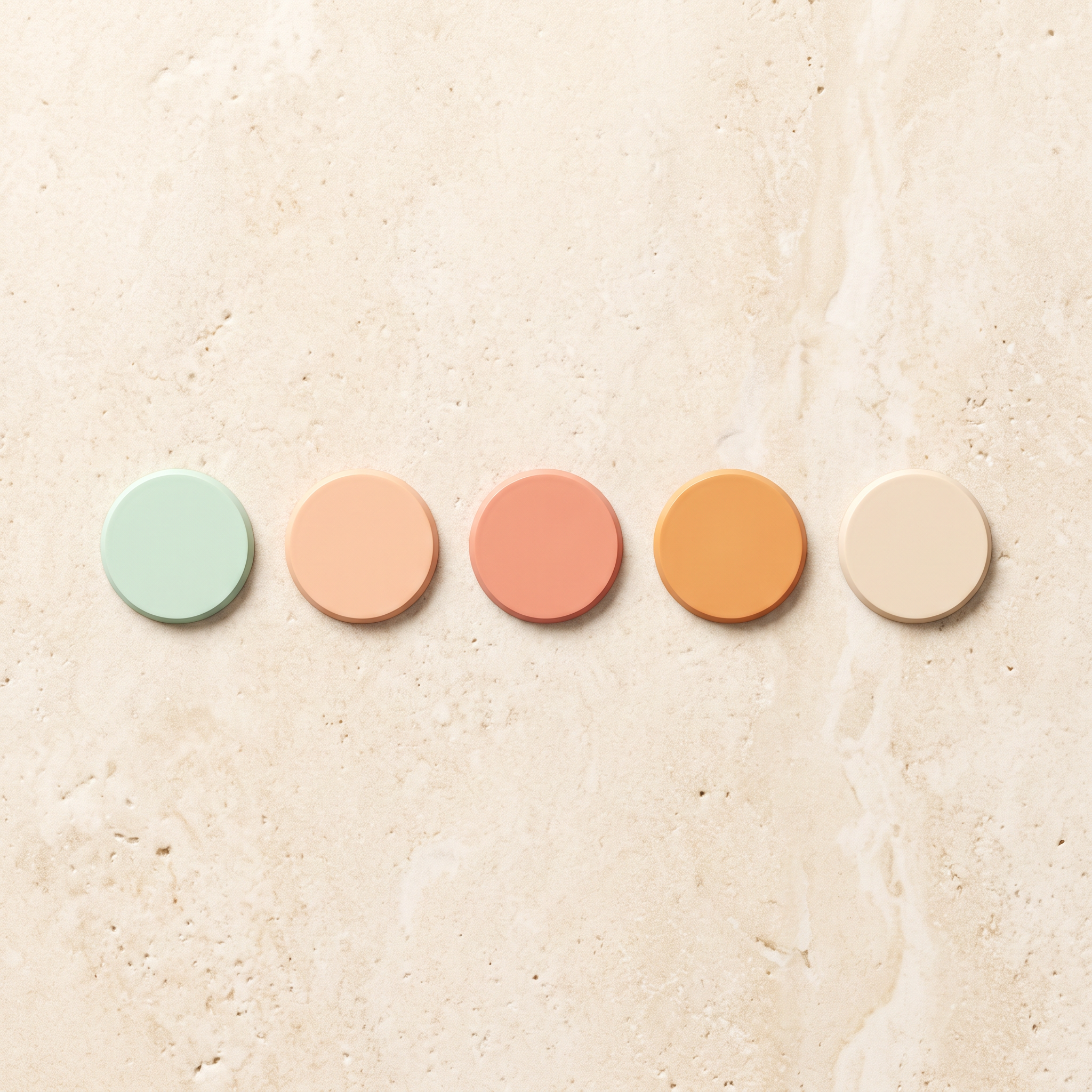
You may have read that the blue under your eye is the Tyndall effect. That explanation describes light scattering in a cloudy medium. It is a poor fit for solid skin, because it would scatter blue light evenly everywhere rather than only over veins. The better explanation is simpler.
Visible veins and blue naevi look blue mainly because their reflectance dips in the red part of the spectrum. This is subtractive color mixing. The eye then exaggerates the shift against the surrounding skin tone. In plain words, the blue you see is mostly missing red.
That tells you exactly what to do. Put red back. A peach, salmon or orange corrector raises red reflectance in that patch of skin, so the blue stops reading as blue.
The rest follows the ordinary artist’s color wheel. Peach and orange sit opposite blue and purple, so they cancel blue-purple vascular darkness. Green sits opposite red, so it cancels redness. A yellow-warm bisque sits opposite purple-blue, so it cancels that cooler cast. Warm yellow also cancels the brown-gray-green cast that settled pigment can leave.
A corrector is not a lighter concealer. It is a color chosen to cancel a specific color. Getting the color wrong makes the under-eye look gray or orange, however good the formula is. Read the shade name as a job description, then pick the one that matches your darkness.
The same logic runs through the rest of your makeup. If you are choosing the neighboring shade, the same undertone rules apply to picking a lipstick shade for the same undertone.
One universal peach shade is a marketing decision, not a color-science one. Prevalence of the four types varies widely by population. In one set of studies, mixed and vascular types dominated in Taiwan and Korea, while the pigmentary type was rarest in Malaysia at 6 percent. In India, constitutional and post-inflammatory types led at 51.5 percent and 22.5 percent. The review attributes this to ethnic and geographical factors. Your own coloring decides your shade.
Why a Corrector Sits Under Concealer
Order matters more than brand, and the reason is physical.
A corrector is formulated thinner than a concealer. It has to sit beneath another layer without adding bulk, so it carries a lighter pigment load and a lighter emollient phase. The concealer on top carries the pigment load and sets the finish. Two thin layers blend into skin. Two thick layers slide into each other, and both settle into the first available line.
The under-eye region explains why. It is the thinnest skin on the face, and it sits directly on the orbicularis oculi muscle, the muscle that closes the eyelid. There is very little tissue between the blood vessels and the surface. That is why blood color shows through at all. It is also why a heavy product has nowhere to go except into a crease.
The vascular type of periorbital hyperpigmentation comes from exactly this arrangement. Superficial blood vessels plus thin skin over the muscle produce a violaceous look. It is usually more pronounced toward the inner corner, and it is often accentuated during menstruation.
So the corrector does one job. It shifts a color. The concealer does a different job. It hides a surface. If you swap them, or use one product heavily to do both, you get gray color plus visible texture.
For a corrector built on this logic, the Bobbi Brown Skin Corrector Stick is a direct example. Its shade chart maps each shade to a discoloration rather than to a skin tone, so the color rule is written into the product line.
So do not start from a list of best concealer brands. Start from the color you need to cancel, then match the finish to your skin.
Why It Creases, and How to Stop It
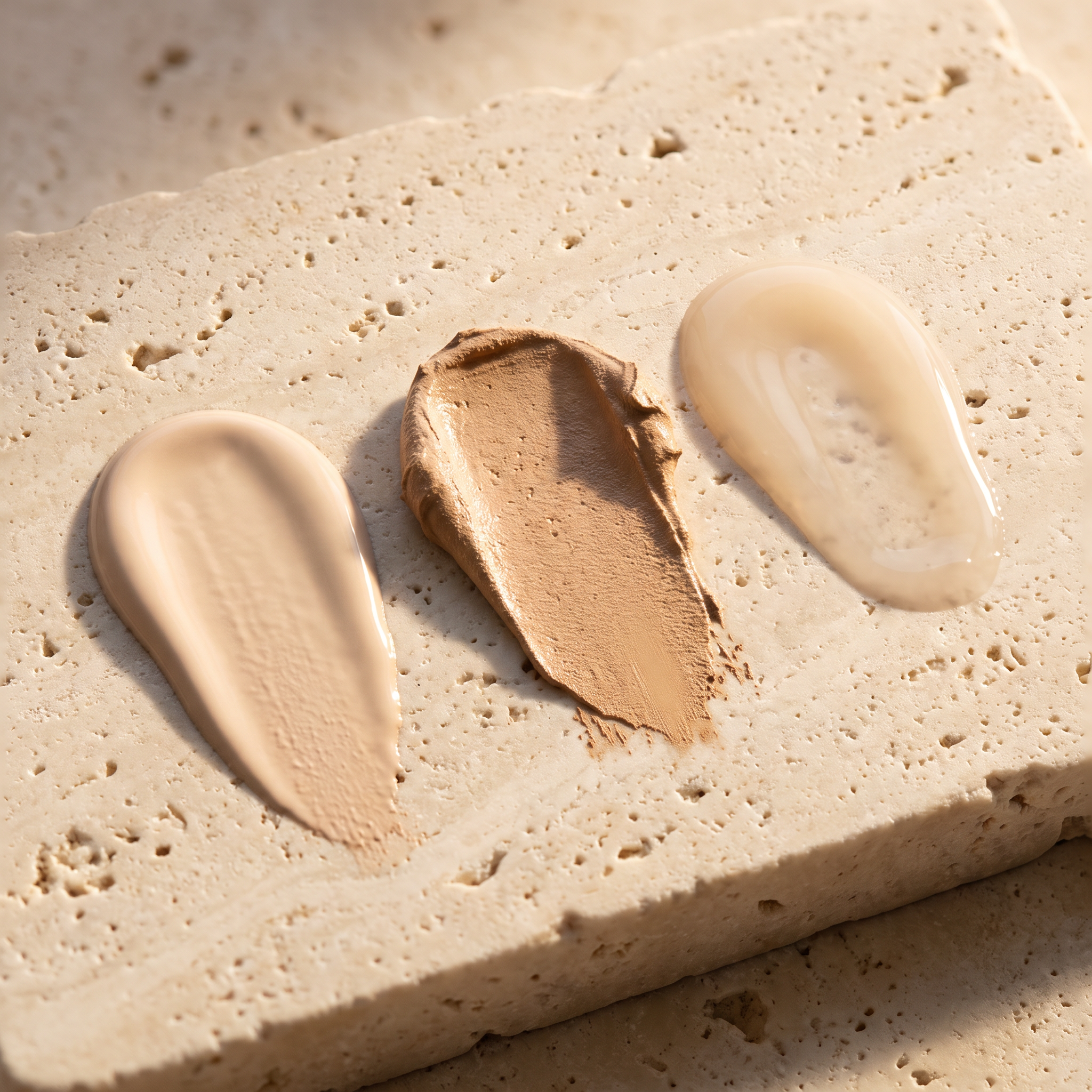
Texture, not pigment, is what makes a concealer fail under the eye. The area moves every few seconds through blinking and expression. It sits on a thin substrate with almost no subcutaneous fat.
Formulation matters here, and you can check it yourself. A concealer sold as crease-resistant names its mechanism somewhere on the ingredient list. Look for the film formers. Trimethylsiloxysilicate, dimethicone, dimethicone crosspolymer, polysilicone-11 and silsesquioxane are the names to hunt for. These form a flexible, stretchable film over the skin.
The mechanism is easy to picture. A film that stretches with your face creases far less than a stiff wax that cracks. Lighter silicones such as methyl trimethicone and phenyl trimethicone help the product glide instead of dragging.
There is a second valid route. Some products skip the film-former story and lead with a named active instead. Clarins Everlasting Concealer is a matte, transfer-proof fluid marketed on horse chestnut escin. That is a different mechanism, and it is worth reading critically rather than accepting at face value.
If none of those film-former names appear on a product, the crease-free claim rests on something else. That is the moment to ask what.
One more thing to expect, so it does not disappoint you. Fine lines can be softened, but not removed. Light-diffusing particles such as mica, silica, barium sulfate, bismuth oxychloride and aluminium oxide bounce light around the surface. Fine lines then read as softness rather than as lines. It is an optical effect, and the line is still there underneath.
If your dark circles sit alongside redness elsewhere on the face, the same color principles govern the rest of the eye look. The mascara shades that work for brown eyes follow the same logic of matching color to what is already there.
Light-diffusing particles such as mica, silica, barium sulfate, calcium aluminium borosilicate, bismuth oxychloride and aluminium oxide bounce light around the surface of the skin. Fine lines then read as softness rather than as lines. That is an optical effect, and the line is still there underneath. No particle removes a crease; it only changes how the crease catches the light.
Match the Formula to Your Under-Eye Texture
Your darkness type sets the color. Your under-eye texture sets the formula. Here are four common cases.
Dry and crepey. Choose an emollient cream corrector with slip, and avoid anything chalky. A cream with castor seed oil, squalane or glyceryl triacetyl ricinoleate spreads softly over dry skin. The tarte colored clay cc undereye corrector is built this way. Its base can read ashy on very dry skin if you layer it too heavily, so keep each pass thin.
Oily. Choose a thin silicone formula and set it lightly with powder. An emollient wax base can travel over a long day on oily lids without a setting powder to hold it. A fluid that sets to a matte finish holds better here, and it doubles as an eyeshadow primer.
Mature, with deep fine lines. Use the thinnest layers you can, with a flexible film former, and minimal powder. Powder settles into creases and makes them more visible, not less. If your under-eye is dehydrated, a matte finish can read dry on the thinnest facial skin.
Deep skin tones. Build in warm layers rather than one heavy pass, and avoid a cool ashy cast. The shade range matters more here than the formula. A corrector line that runs from an extra light peach to a very deep peach and a dark bisque gives you room to build. A single universal peach does not. Deeper corrector shades can also read too dark or too orange. That happens if you apply them at full strength on fair, cool-toned skin. Do not treat a full-coverage corrector as one shade that fits everyone.
Whichever case fits you, the rule is the same. Color first, then coverage, then as little powder as the day allows.
What the “Eye Actives” Actually Do
This is the honest section. Many under-eye products are sold on an active ingredient. Here is what the evidence supports.
Caffeine. A 3 percent caffeine pad used for one month by 11 healthy women reduced periorbital pigmentation and improved skin luminescence. The same review notes that caffeine improves lower-lid puffiness through lipolysis, the breakdown of fat. That is real, but thin. The dark-circle claim rests on a single small study with no reported effect size. Caffeine may help a little, and it may help puffiness more than pigment. It is not the reason to buy a corrector.
Vitamin K. The evidence is effectively absent. The review of popular eye cream ingredients has no dedicated vitamin K section. Vitamin K does not appear among the ingredients judged effective for hyperpigmentation. It appears only as a co-ingredient in a pad that also contains caffeine, so its own contribution cannot be separated out. For dark circles it is a label claim, not an evidence claim.
Retinol and hyaluronic acid. Neither has a dark-circle endpoint. Retinol has strong data for wrinkles and laxity. The review still notes a lack of clinical trials using retinoids in an eye cream on periorbital skin. Hyaluronic acid improved hydration and elasticity in 76 women over 60 days. Reported elasticity gains were 13 to 30 percent, and wrinkle-depth reduction was 10 to 20 percent. That is useful for texture and moisture. It does not lighten pigment.
The wider picture. The same review concludes that there is a lack of clinical trials aimed specifically at eye cream formulations and periorbital skin. Study designs and concentrations vary too much to compare. Eye creams are also classified as cosmetics rather than drugs, so trials are not required. That is why the strongest advice available for the under-eye is about color and texture, not about miracle actives.
A correction you cannot verify is not a promise. Treat the active on the label as a nice extra. Choose your corrector on color and on how it wears.
A crease-resistant concealer names its mechanism somewhere on the ingredient list. Look for trimethylsiloxysilicate, dimethicone crosspolymer, polysilicone-11 or silsesquioxane. Those are the flexible film formers that stretch with the face instead of cracking. If none of them appear, the crease-free claim rests on something else, and that is the moment to ask what.
Concealer corrects color, not shape. If your eyes look puffy as well as dark, a concealer for puffy eyes cannot flatten the shadow that the puff casts.
Application Order, Step by Step
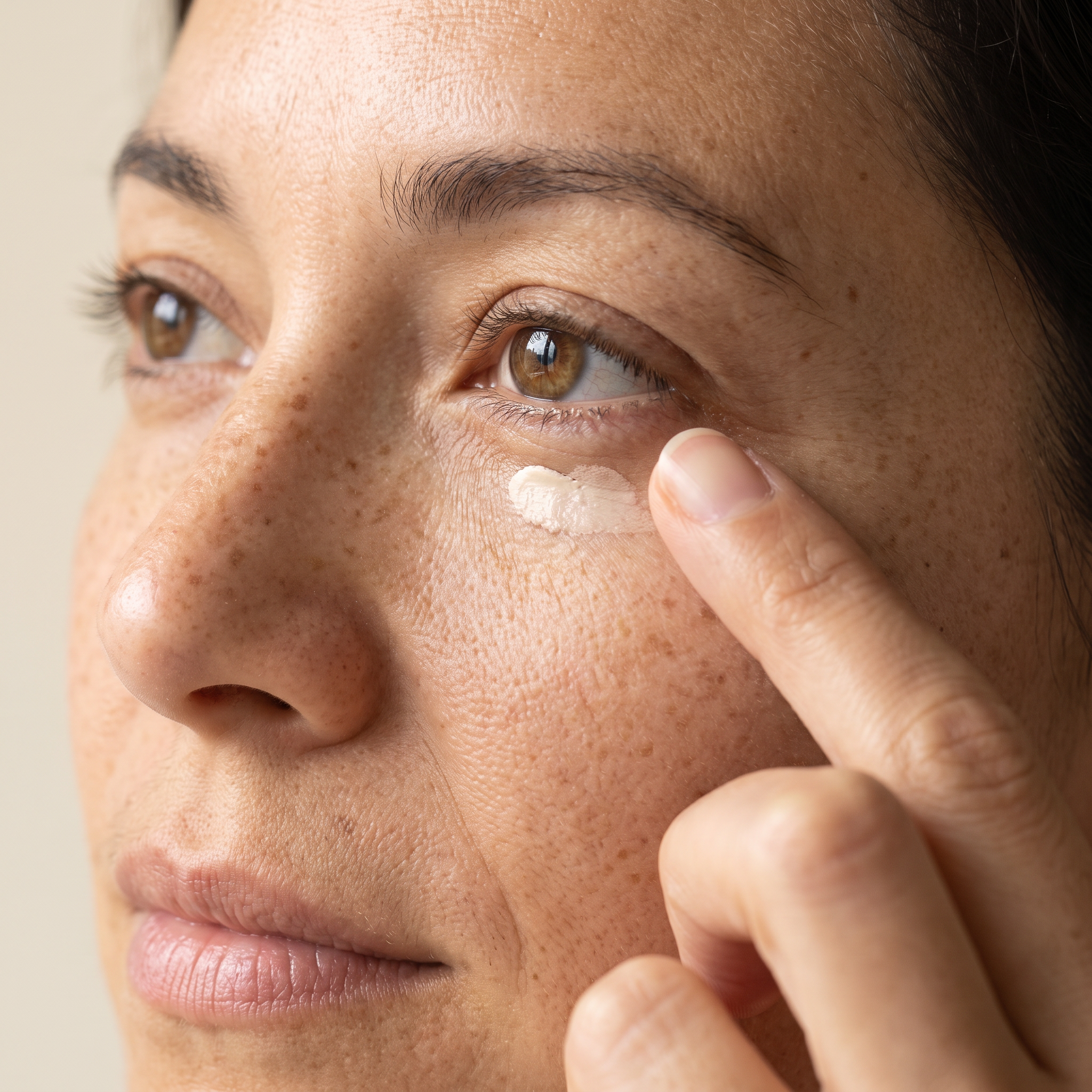
Follow these steps in order. Each one prepares the surface for the next.
- Moisturize the under-eye and let it settle for a minute. Dry skin pulls at product and shows every line.
- Place the thinnest layer of corrector with a fingertip. Start at the inner corner, where the vascular type concentrates, then work outward.
- Tap, do not drag. Tapping presses product into the skin. Dragging pushes it into the first line it crosses.
- Add concealer only where darkness remains. A corrector has already shifted the color, so most faces need much less coverage than they expect.
- Powder minimally, and only on the outer corner if you powder at all. The inner corner moves less and needs no setting.
Warm the product first if it comes in a stick. A stick can over-deposit when it is applied straight from the tube, especially in the small inner corner. Warming it on the back of your hand gives you control.
If it comes in a pot, take it out with a clean brush or a clean fingertip. Direct pot contact picks up grit and is unhygienic over time. When you are finished for the day, take the whole routine off properly. A gentle remover protects the thin skin you have just spent five minutes on.
When to See a Clinician
A corrector is the right answer for most under-eye darkness. It is the wrong answer for some of it.
Some causes sit outside cosmetics entirely. Anaemia, atopic dermatitis and asthma are all linked to under-eye darkness, and none of them responds to a color product. Puffiness is another one. Puffiness is fluid and structural rather than pigmented, so makeup cannot reduce it. Caffeine has limited evidence for lower-lid puffiness, and that evidence is thin.
Four patterns are worth a clinician’s attention. Sudden appearance. One eye only. Puffiness, itching or rash alongside the darkness. Fatigue, breathlessness or unusual pallor together with it. Any of those needs a diagnosis, not a new corrector.
Everything else on this page is about color and texture. Use it to choose the right shade. Use a clinician for anything that looks like a symptom.
Most under-eye darkness is cosmetic. It comes from pigment, visible blood vessels, or a shadow cast by the shape of the eye socket. A corrector can cancel those colors. Some causes are not cosmetic. Iron-deficiency anaemia was present in half of one periorbital hyperpigmentation cohort. Atopic dermatitis and asthma are also linked to under-eye darkness. A corrector does not treat any of these. See a clinician if your dark circles appear suddenly or affect one eye only. Get checked if they come with puffiness, itching or rash, or arrive alongside fatigue, breathlessness or unusual pallor. Those need a diagnosis, and Beautyisles does not provide one.
The Verified Edit
Bobbi Brown Skin Corrector Stick
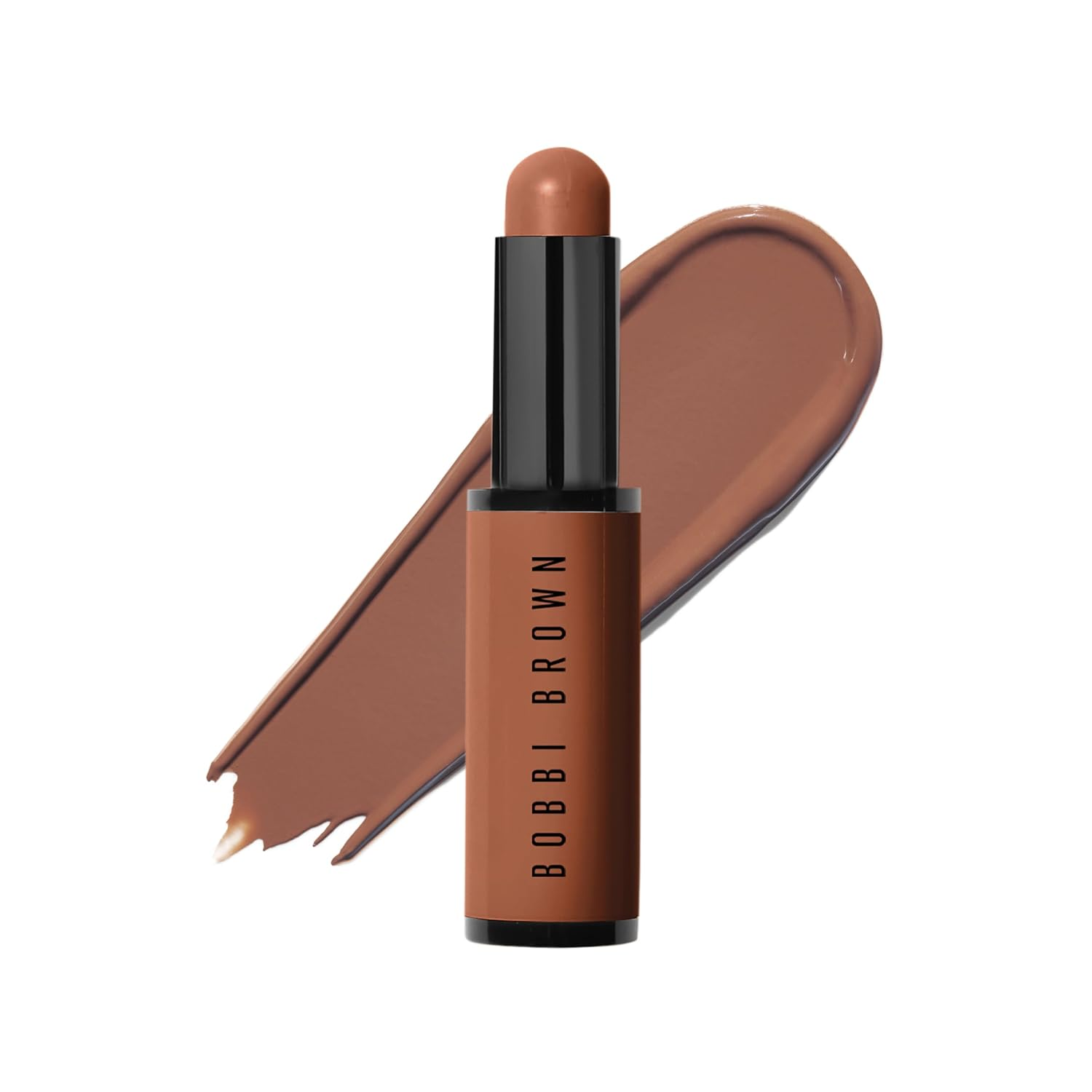
A dedicated corrector rather than a concealer, built on complementary-shade logic. The emollient wax stick glides straight onto inner-corner darkness and holds through sweat and humidity.
Avery, Beautyisles AI Editorial Host
- Emollient wax stick glides onto the inner corner
- Waterproof, sweat- and humidity-resistant film
- Peach ladder from 02 Extra Light to 16 Dark Bisque
- Light-to-medium coverage still needs a concealer on top
- Creamy base can migrate on very oily lids
Clarins Everlasting Concealer
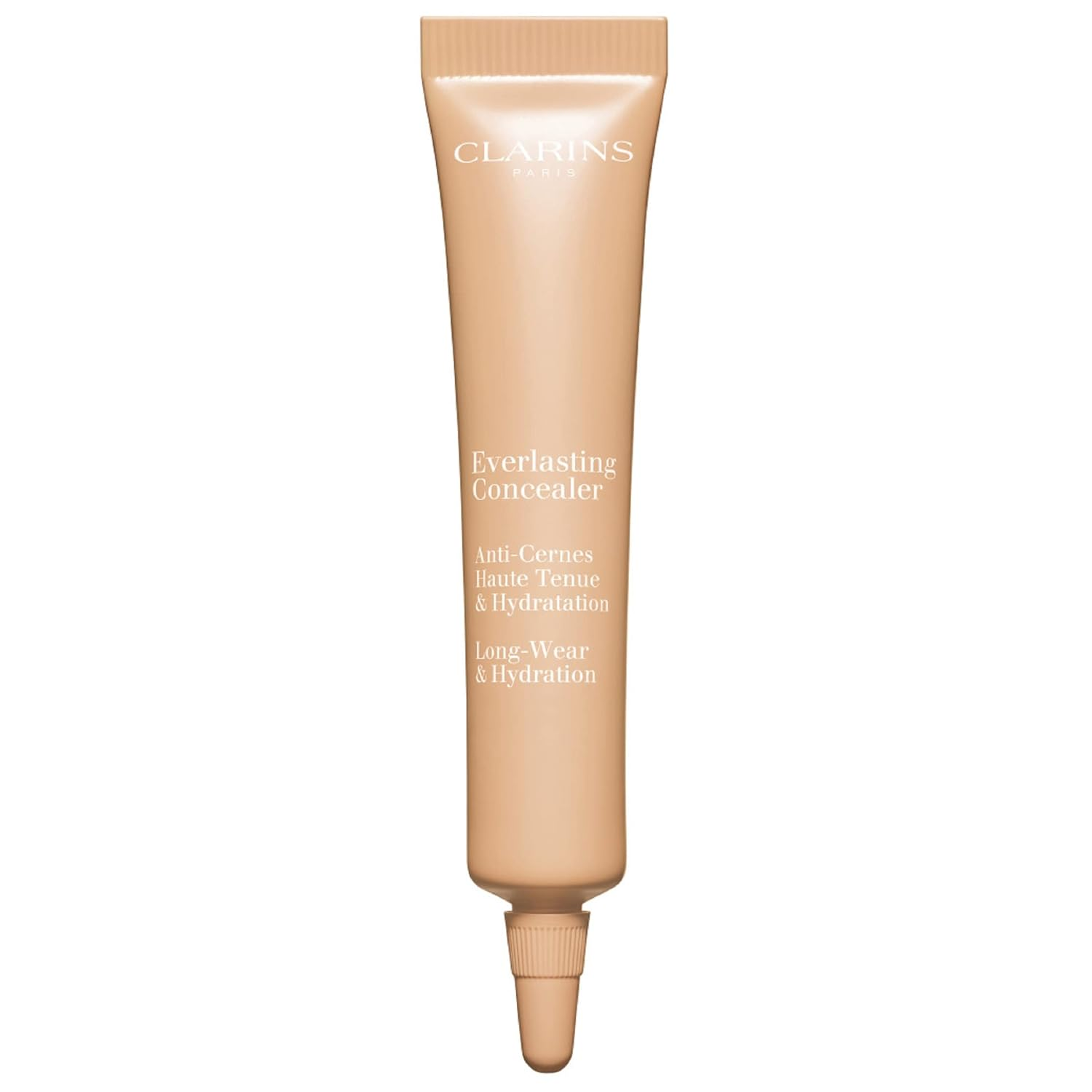
The layer that goes on top and carries the pigment load. A thin fluid that sets matte, wears transfer-proof, and includes horse chestnut escin, an active the brand associates with dark circles.
Avery, Beautyisles AI Editorial Host
- Spreads thin and sets to a matte finish
- Full coverage carries the pigment a corrector leaves out
- Long-wear, transfer-proof and sweat-proof film
- Matte finish reads dry on crepey under-eyes
- Heavy application emphasises texture instead of softening it
tarte colored clay cc undereye corrector
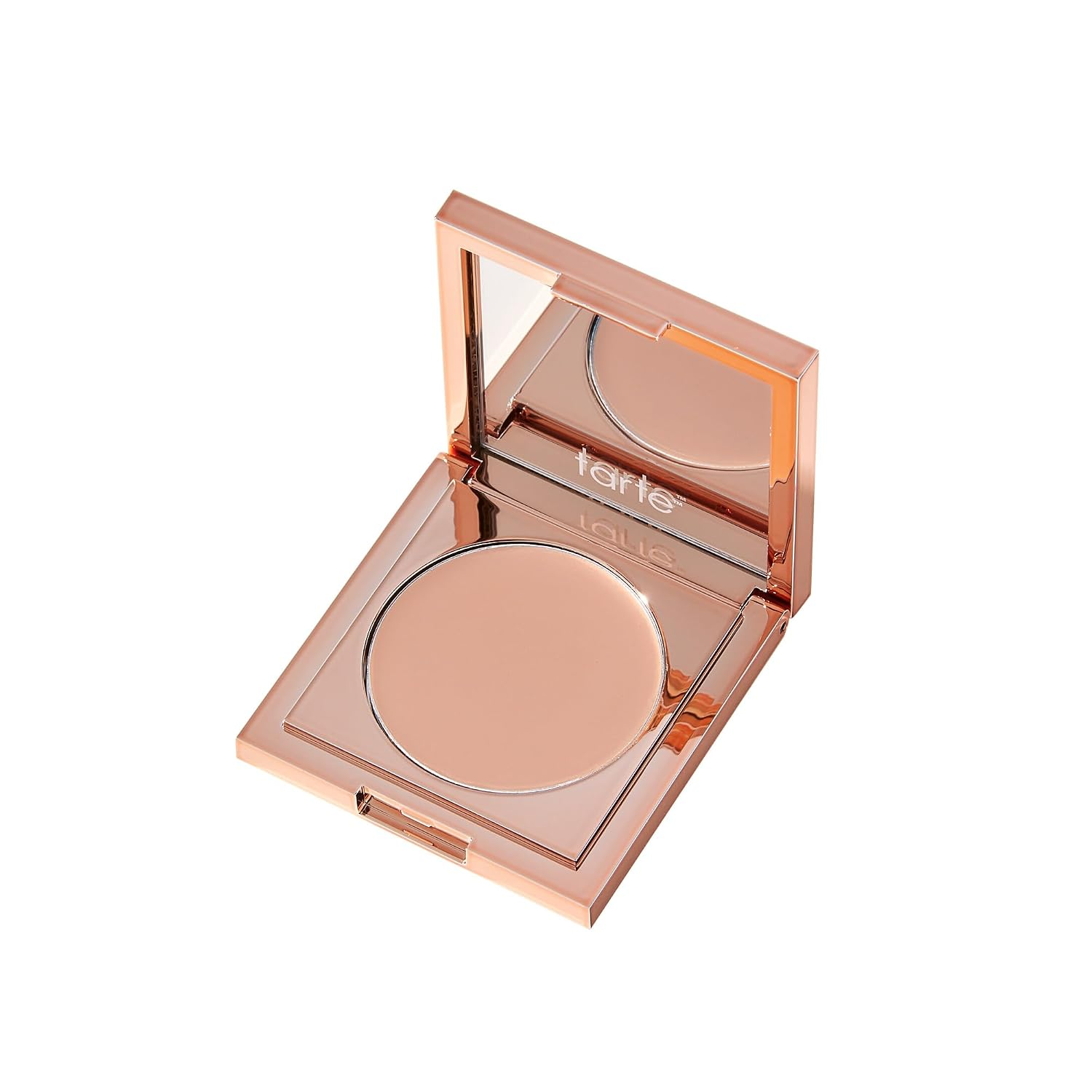
A cream corrector for drier under-eyes and heavier pigmented darkness. Castor oil and squalane give more slip than a wax stick, and the nutrient load works while you wear it.
Avery, Beautyisles AI Editorial Host
- Castor oil and squalane give more slip than a wax stick
- Full coverage in a corrector, so it can be worn alone
- Silicone-free, paraben-free and alcohol-free
- Pot cream needs a brush or a clean fingertip
- Shade reads too dark or orange on fair, cool skin
Frequently Asked Questions
How do you color correct dark circles?
Start by working out which color you are canceling. Blue-purple vascular darkness is canceled by peach, salmon or orange. Brown or pigmented darkness takes a warm bisque close to your own skin tone. Redness takes green. Apply the corrector as a thin layer under your concealer. Tap it rather than dragging it. Start at the inner corner, where vascular darkness concentrates.
What color corrects dark circles?
The correct color depends on the darkness. Peach and orange cancel blue and purple. Warm bisque cancels purple-blue and a cooler cast. Warm yellow cancels brown-gray-green. Green cancels redness. There is no single universal shade, and corrector ranges vary by population because the mix of pigmented, vascular and structural types differs between groups.
What color corrects purple?
Yellow and orange cancel purple, because they sit opposite it on the color wheel. For an under-eye purple-blue cast, a yellow-warm bisque does the work. For a stronger blue-purple vascular cast, choose a peach or orange corrector. It raises the missing red reflectance, which is what makes the vein look blue in the first place.
How do you apply concealer under the eye?
Moisturize first and let it settle. Then place the thinnest corrector layer with a fingertip, starting at the inner corner. Tap rather than drag, because dragging pushes product into the first line it crosses. Add concealer only where darkness remains, then powder minimally and only on the outer corner, if you powder at all.
Where should you put concealer?
Under the eye, start at the inner corner and move outward. The inner corner is where the vascular type of darkness concentrates and where a small amount of color does the most work. Stop at the outer corner. Do not carry the product up onto the lid or out onto the cheekbone. The product will find lines and texture there that were not the problem.
How do you pick the right concealer?
Work in two steps. First choose the color, based on whether your darkness is vascular or pigmented. Then choose the formula, based on your under-eye texture. Dry skin wants an emollient cream. Oily skin wants a thin silicone fluid set lightly. Very fine lines want thin layers and a flexible film former.
What is concealer?
Concealer is a pigmented cosmetic that covers what you want hidden. It carries a heavier pigment load than foundation and is applied in smaller areas. Under the eye it covers the surface, while a corrector underneath it shifts the color. The two are different products with different jobs.
Which concealer should you choose for your skin?
Match the formula to your under-eye texture, not to your face. Dry or crepey under-eyes suit an emollient cream corrector. Oily under-eyes suit a thin silicone formula with a light set. Mature skin with deep fine lines suits thin layers, a flexible film former and minimal powder. Deep skin tones need buildable warm shades rather than one universal peach.
What is concealer actually for?
Concealer covers a surface. A color corrector changes a color. Under the eye, the corrector goes on first and neutralises the blue, purple or brown cast. The concealer goes on top and covers whatever remains. The order matters more than the brand, because two thin layers blend while two thick layers slide and settle into lines.
How do you conceal dark spots on the face?
Dark spots are pigmented, so they are not the same problem as a shaded under-eye. A spot needs a pigmented concealer close to your skin tone that covers it, applied precisely and blended only at the edges. Under-eye darkness needs a corrector first, because it is a color problem rather than a coverage problem.
Editorial Sources
- Sarkar R, Ranjan R, Garg S, Garg VK, Sonthalia S, Bansal S. Periorbital Hyperpigmentation: A Comprehensive Review. J Clin Aesthet Dermatol. 2016;9(1):49-55. PMC4756872. PMID 26962392.
- Matsui MS, Schalka S, Vanderover G, Fthenakis CG, Ennis CJ, Bombarda PCP, Bueno JR, Viscomi BLI, Bombarda Jr MS. Physiological and lifestyle factors contributing to risk and severity of peri-orbital dark circles in the Brazilian population. An Bras Dermatol. 2015;90(4):494-503. PMC4560538. PMID 26375218.
- Goldman A, Goldust M, Wollina U. Periorbital Hyperpigmentation – Dark Circles under the Eyes; Treatment Suggestions and Combining Procedures. Cosmetics. 2021;8(2):26. doi 10.3390/cosmetics8020026.
- Hamie H, Yassine R, Shoukfeh R, Turk D, Huq F, Moossavi M. A review of the efficacy of popular eye cream ingredients. Int J Womens Dermatol. 2024;10(2):e156. PMC11175953. PMID 38873621.
- Shive M, Ho D, Lai O, Mamalis A, Miller KM, Jagdeo J. The Role of Subtractive Color Mixing in the Perception of Blue Nevi and Veins – Beyond the Tyndall Effect. JAMA Dermatol. 2016;152(12):1389-1391. doi 10.1001/jamadermatol.2016.2201.
- Amorello D, Ferrara M, Orecchio S. Titanium dioxide in face powders and eyeshadows: Developing an analytical methodology for accessing customer safety. J Cosmet Dermatol. 2024. doi 10.1111/jocd.16422.
- Under-Eye Concealer formulation C-2031-02. UL Prospector, Personal Care.
- Published ingredient lists: Bobbi Brown Skin Corrector Stick (B0FLC581RW); Bobbi Brown Skin Full Cover Concealer (B0B9XJV1PT); Clarins Everlasting Concealer (B08WJDMB3Z); tarte colored clay cc undereye corrector (B00LNC3JD4).