

- Skip the foam: Creamy facial cleansers use mild surfactants that lift grime without stripping barrier lipids.
- Mind the pH: A basic facial cleanser should sit between 4.5 and 6.0 to match your skin’s acid mantle.
- Know your surfactants: Sodium cocoyl isethionate and glucosides are far gentler than sodium lauryl sulfate.
- Match the texture: Cream suits dry and sensitive skin. Gels suit oily skin. Oils break down sunscreen.
- Affordable is fine: The best drugstore face wash often beats luxury formulas on price and simplicity.
Why You Need a Cream Cleanser for Dry Skin and Barrier Repair
When building a skincare routine for damaged skin barrier, the first step decides everything. It sets whether your skin calms down or stays irritated all day.
The outer layer of your skin, the stratum corneum, works like a brick wall. Skin cells are the bricks. A lipid mortar of ceramides, cholesterol and fatty acids holds them together. Ceramides make up roughly 40 to 50 percent of that mortar. Cholesterol adds about 25 percent. Free fatty acids fill the rest.
Most traditional face washes use high-lathering surfactants such as sodium lauryl sulfate. These strong agents cannot tell good oils from bad. They remove excess sebum, then keep going. They strip the lipids between your skin cells that hold them together.
A cream cleanser for dry skin works differently. It suspends much milder surfactants in a lotion-like base. Choosing a dedicated cleanser for dry skin means avoiding aggressive foaming bubbles. A hydrating cream cleanser or gentle cream cleanser lifts dirt, makeup and sunscreen without degreasing delicate surface layers. If you deal with redness, tightness or flaking, a non-foaming lotion texture is the safer choice.
That stripped feeling is a warning, not a win. After washing, water in your skin evaporates fast. This drives up transepidermal water loss, the rate at which moisture escapes through the skin. Over time, that steady loss leaves skin dry, tight and slow to calm down.
What Is A Good Cleanser? Three Non-Negotiables
Readers ask us one question more than any other: what is a good cleanser for sensitive skin? Texture is only part of the answer. Three rules matter most.
- Low pH. A basic facial cleanser should sit between 4.5 and 6.0. That range matches your skin’s natural acid mantle.
- Mild surfactants. Look for sodium cocoyl isethionate, cocamidopropyl betaine or a glucoside. Avoid sodium lauryl sulfate.
- A short ingredient list. Skip fragrance, essential oils and drying alcohols. Fewer ingredients means fewer chances to react.
Great facial cleansers respect these rules without charging a premium. Price has little to do with how gentle a formula is. A five-ingredient cream cleanser can outperform a luxury gel that lists forty.
One more test helps. Rinse a small patch and wait five minutes. If your skin feels tight or “squeaky clean,” the formula is too harsh for daily use.
Fragrance deserves a special mention. “Unscented” and “fragrance-free” are not the same claim. Unscented products may still contain a masking fragrance. Fragrance-free means no added scent at all.
How Surfactants Work: Why Foam Does Not Equal Clean
A surfactant molecule has two ends. One end loves water. The other end loves oil. This split nature lets it grab oil and grime, then pull them into water so they rinse away.
Surfactants fall into four groups by charge. Each group cleans and irritates differently.
| Surfactant type | Common example | Cleansing power | Irritation |
|---|---|---|---|
| Anionic | Sodium lauryl sulfate | High | High |
| Anionic (mild) | Sodium cocoyl isethionate | Good | Low |
| Amphoteric | Cocamidopropyl betaine | Moderate | Low |
| Non-ionic | Coco glucoside | Gentle | Lowest |
| Cationic | Benzalkonium chloride | Low | Moderate |
Anionic surfactants clean best and irritate most. They also make the richest foam. That is why so many drugstore face washes rely on them.
Here is the catch. Foam is a cosmetic signal, not a cleaning signal. A rich lather tells you nothing about how well a product respects your barrier. Many creamy facial cleansers produce almost no foam, yet remove sunscreen and makeup just fine.
Formulators often blend a mild anionic with an amphoteric or non-ionic surfactant. The mix lowers irritation while keeping cleansing power. This blend is the backbone of most barrier-safe formulas.
Non-ionic surfactants are the gentlest on skin proteins. At high levels, though, they can still dissolve skin lipids. Concentration matters as much as the surfactant name.
Contact time matters too. A surfactant needs only a few seconds to lift oils. It does not need a full minute of scrubbing. Rinsing well removes more residue than lathering longer.
The pH Question: What 5.5 Really Means for Your Barrier
Your skin’s surface sits at a pH between 4.0 and 6.0. This slightly acidic film is called the acid mantle. It keeps barrier enzymes working and holds resident bacteria in place.
| Product | Typical pH | Effect on skin |
|---|---|---|
| Healthy skin | 4.0 to 6.0 | Baseline acid mantle |
| Traditional soap | 8.5 to 11.0 | Swelling and lipid loss |
| Standard syndet | 5.5 to 7.0 | Mostly compatible |
| Newer syndets | 5.0 to 5.5 | Closest to skin |
Traditional soap is the problem. Soap is made through saponification, the reaction of fats with a strong base. That reaction always ends alkaline. When cleanser pH climbs above 8.0, skin proteins swell. Imaging studies show far more swelling under alkaline conditions.
Alkaline cleansers also ionize fatty acids in the lipid bilayer. Those fatty acids start to behave like soap themselves. This destabilizes the barrier. The result is dryness, flaking, redness and itch.
Syndets, or synthetic detergent blends, avoid this. Their pH overlaps with skin’s natural range. After a single wash, soap removes more water-soluble proteins and more cholesterol than a syndet does.
You can check a cleanser at home with a strip of pH paper. Dip it in a diluted drop of the product and compare the color to the chart. A result above 7.0 is a sign to leave that bottle on the shelf.
Cream vs Gel vs Foam vs Oil: Matching Texture to Skin Type
Texture is not marketing. It signals which surfactants and oils a formula uses. Match the texture to your skin and the rest gets easier.
| Texture | Best for | Why it works | Watch out for |
|---|---|---|---|
| Cream or lotion | Dry, sensitive, mature | Mild surfactants in an emollient base | Rinse fully to avoid residue |
| Gel | Oily, acne-prone | Light and rinses clean | Can feel tight if too alkaline |
| Foam | Normal, combination | Easy to spread, light feel | Foaming agents can dry skin |
| Oil or balm | Makeup and sunscreen removal | Dissolves oil-based residue | Needs a second cleanse |
| Micellar water | Quick refresh | Mild, no rinse needed | Not enough for heavy sunscreen |
Oily skin does not need harsh cleansing. It needs consistent, gentle cleansing. A mild gel used twice daily beats a stripping foam used once.
How to Wash Your Face the Right Way
The right product is only half the job. Technique decides how much your barrier keeps or loses.
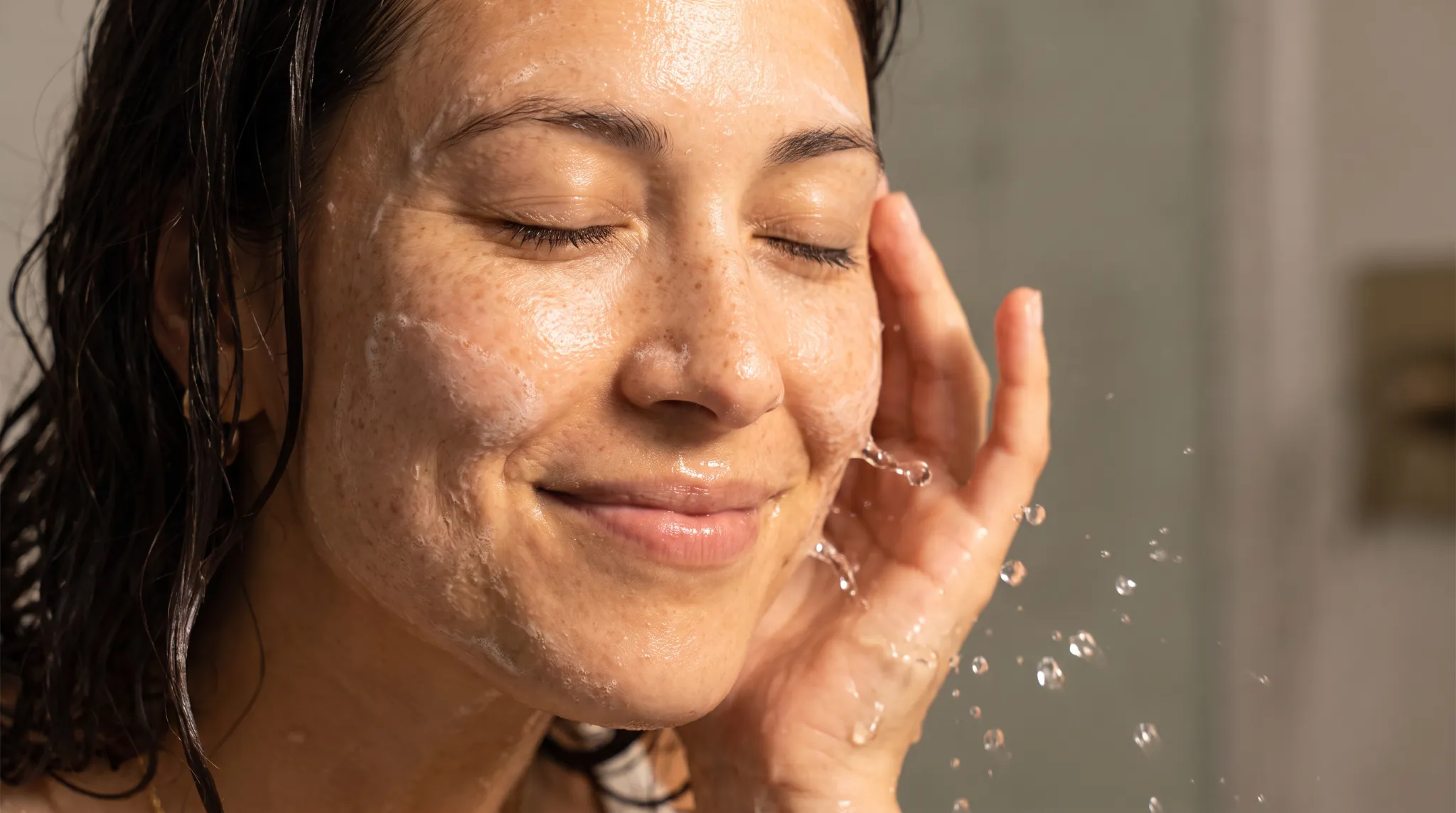
- Temperature check. Use lukewarm water. Hot water melts barrier lipids. Very cold water struggles to emulsify oils.
- Fingertips only. Washcloths, sponges and cleansing brushes add friction. Friction triggers redness on compromised skin.
- The 60-second rule. Massage for no more than 60 seconds. More contact time means more surfactant exposure, not a deeper clean.
- Pat, do not rub. Leave skin slightly damp. Then apply a ceramide moisturizer within a minute or two.
- Twice a day is enough. Morning and night suit most people. A third wash rarely helps and often irritates.
Use a dime-sized amount, or about a pea for a foaming formula. More product does not clean better. It only adds surfactant to your skin. Hard water can also leave a filmy residue, so a final splash of filtered water can help if your tap water is very hard.
Ingredient Watchlist: What to Avoid and What to Look For
You can judge a cleanser by reading the back of the bottle. Skip a product if any of these appear high on the list.
| Skip these | Why | Look for these |
|---|---|---|
| Sodium lauryl sulfate | Harsh anionic surfactant | Sodium cocoyl isethionate |
| Fragrance or parfum | Top cause of contact reactions | Cocamidopropyl betaine |
| Citrus and lavender oils | Natural sensitizers | Coco, lauryl or decyl glucoside |
| Denatured alcohol | Can dry and sting | Glycerin and panthenol |
| Scrubs with walnut or salt | Physical friction on barrier | Ceramides and niacinamide |
Ingredient order matters. Anything listed after the preservative is present in tiny amounts. A “ceramide” claim means little if the ceramide sits at the very bottom.
Some readers want a shortcut. The CeraVe hydrating line built its reputation on this exact logic: a face wash CeraVe designed around ceramides, no fragrance and a low pH. It is not the only option, and it is not the cheapest. But it shows how a simple, boring formula can beat a complicated one.
Cleansing by Skin Concern: Dry, Oily, Sensitive and Retinoid Users
One cleanser does not fit every face. Use this table to match a formula to your main concern.
| Skin concern | Choose | Frequency | Extra tip |
|---|---|---|---|
| Dry or eczema-prone | Acidified syndet cream | 1 to 2 times daily | Skip the morning wash if very dry |
| Oily or acne-prone | Fragrance-free gel or syndet | Twice daily | Treat with actives, not scrubbing |
| Sensitive or rosacea-prone | Non-foaming cream, short list | 1 to 2 times daily | Patch test new formulas for a week |
| Retinoid users | Gentle cream cleanser | Twice daily | Let the retinoid do the peeling work |
| Mature skin | Cream with glycerin or ceramides | 1 to 2 times daily | Barrier thins with age; avoid bars |
If you use a retinoid, your cleanser should be the calmest step in your routine. The active does the work. Your cleanser only has to remove the day without adding stress.
Double Cleansing: When It Helps and When It Hurts
Double cleansing means washing twice. The first pass uses an oil or balm. The second uses a water-based cleanser.
It helps when you wear water-resistant sunscreen, long-wear makeup or heavy SPF. Oil dissolves oil-based residue that a water cleanser alone may leave behind.
It hurts when your skin is already dry or reactive. Two surfactant passes remove more lipids than one. For most people with dry skin, a single creamy facial cleanser is enough at night.
If you do double cleanse, keep the second step gentle. Use the same mild cream cleanser you would use alone. Do not follow an oil cleanser with a foaming, high-pH wash.
Oil cleansers come as balms, liquid oils and cleansing milks. A balm is best for heavy makeup. A liquid oil suits normal to oily skin. Whichever you pick, rinse well before the second step.
The Best Drugstore Face Wash: Our Editorial Picks
You do not need to spend a fortune to clean your face gently. Many of the most barrier-respecting formulas sit in the pharmacy aisle for a few dollars.
Rather than list every product here, we keep our complete, evidence-backed picks in our main guide. If you want a facial cleanser Amazon delivers, see the full review. It ranks our top drugstore face wash options against our pH and formulation standards.
Before you buy, run through four quick label checks:
- Is the pH stated, or is the product marketed as pH-balanced?
- Does the first surfactant look mild, or is it sodium lauryl sulfate?
- Is fragrance listed, even as parfum or natural fragrance?
- Does the texture match your skin type?
Four yeses and you have a keeper. That simple filter beats most marketing copy.
Troubleshooting: Tightness, Redness and Breakouts After Washing
A cleanser should leave skin comfortable, not reactive. Use this table to trace the symptom back to its cause.
| Symptom | Likely cause | Fix |
|---|---|---|
| Tight, squeaky skin | Cleanser too alkaline or too harsh | Switch to a low-pH cream cleanser |
| Redness right after washing | Friction, hot water or fragrance | Use lukewarm water and a fragrance-free formula |
| Flaking and itch | Barrier lipids stripped | Cut to one wash daily and add a ceramide moisturizer |
| New breakouts | Over-cleansing or leftover residue | Stop scrubbing and rinse fully |
| Stinging on application | Compromised barrier | Pause actives and use a plain cream cleanser |
Most after-wash problems trace back to one of two things. The cleanser is too harsh, or you are washing too often. Fix both before you buy another product.
Frequently Asked Questions (FAQ)
What is a good cleanser for dry skin?
A good cleanser for dry skin is a non-foaming, fragrance-free cream or lotion formula. It uses mild surfactants like coco-glucoside or sodium cocoyl isethionate. It should have an acidic pH between 4.5 and 5.5 to match your skin’s acid mantle and prevent lipid loss.
What is the best facial cleanser for dry skin?
The best facial cleanser for dry skin removes sunscreen and impurities without stripping natural moisture. Dermatologists recommend hydrating lotion cleansers containing ceramides, glycerin, and hyaluronic acid. These conditioning ingredients leave skin feeling calm, supple, and hydrated rather than tight.
What is the best cleanser for dry skin?
The best cleanser for dry skin balances gentle dirt removal with barrier protection. Look for formulas with a minimal ingredient list and zero added fragrance or drying alcohols. If your skin feels tight or squeaky five minutes after rinsing, your cleanser is too harsh.
What is a cream cleanser?
A cream cleanser is a non-foaming facial wash with a rich, lotion-like texture. It contains conditioning emollients and mild cleansing agents suspended in a moisturizing base. Unlike bubbly foaming washes, cream cleansers lift debris while preserving essential stratum corneum barrier lipids.
Which cleanser is best for dry skin?
A pH-balanced cream or milk cleanser is best for dry skin. Look for syndet (synthetic detergent) bars or liquid cream washes with a pH around 5.0. Avoid traditional sodium-tallowate bar soaps, which are highly alkaline and extract protective intercellular lipids.
How to use cream cleanser?
To use a cream cleanser, splash your face with lukewarm water. Dispense a dime-sized amount onto your fingertips and gently massage over your face in circular motions for 30 to 60 seconds. Rinse thoroughly with lukewarm water, then pat dry with a soft, clean towel.
Sources & Methodology
At Beautyisles, we map every cleansing claim to clinical evidence and dermatological consensus. We do not publish unverified statistics or brand-supplied figures.
- Mijaljica D, Spada F, Harrison IP. “Skin Cleansing without or with Compromise: Soaps and Syndets.” Molecules. 2022;27(6):2010. Source for surfactant classes, skin and soap pH ranges, lipid matrix composition, stratum corneum swelling, and cholesterol removal findings.
- Ananthapadmanabhan KP, et al. “Cleansing without compromise: the impact of cleansers on the skin barrier and the technology of mild cleansing.” Dermatol Ther. 2004;17 Suppl 1:16-25. Source for mild surfactant technology, stratum corneum lipid preservation, and syndet formulations.
- Draelos ZD. “The science behind skin care: Cleansers.” Journal of Cosmetic Dermatology. 2018;17(1):8-14. Source for cleanser formulation logic and mildness testing.
- American Academy of Dermatology (AAD). “Face washing 101.” Source for washing frequency, water temperature and after-wash care.
- Journal of the American Academy of Dermatology (2024). “The Skin Acid Mantle: An Update on Skin pH.” Source for pH shifts and barrier integrity in dermatologic disease.