
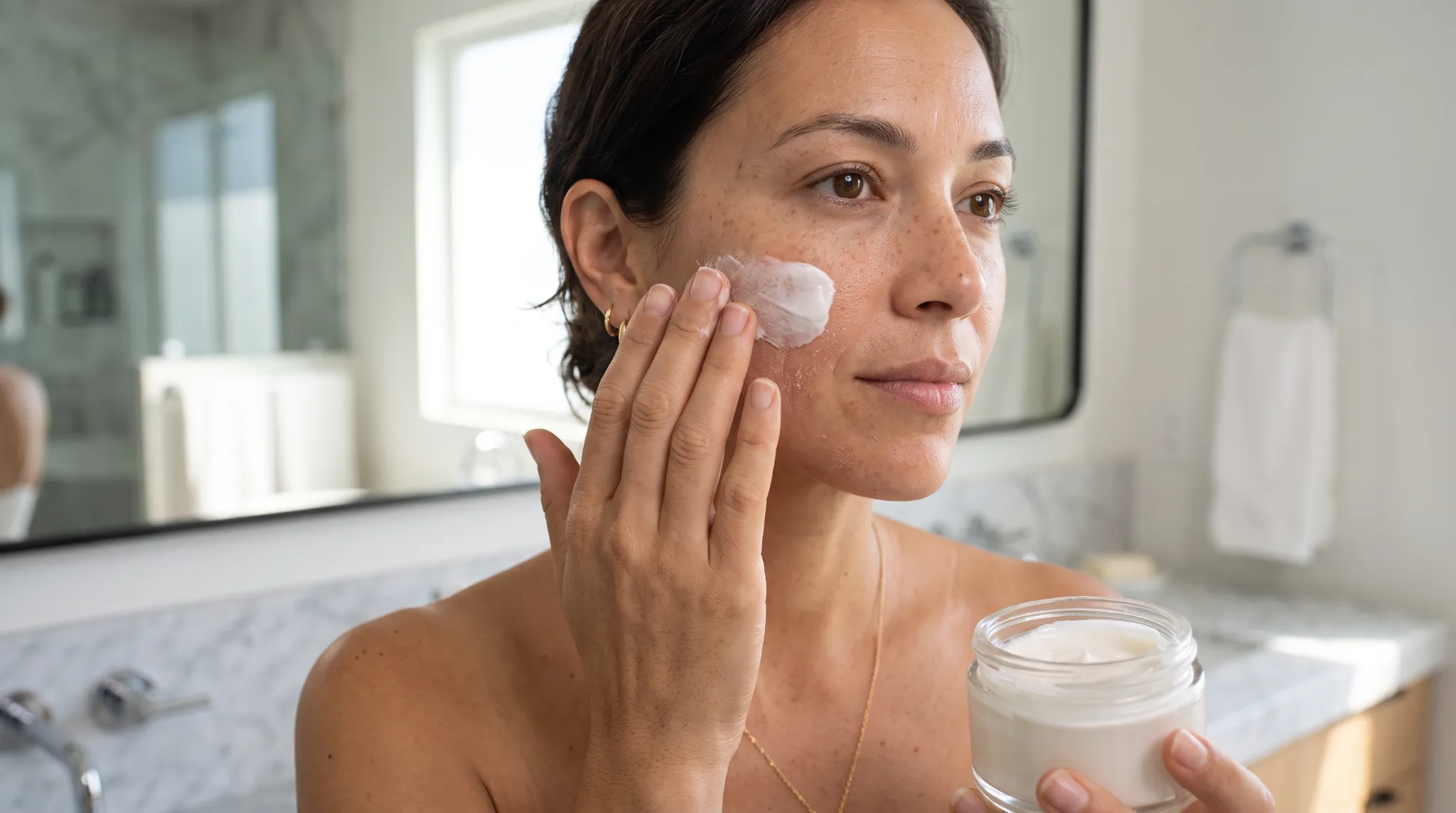
- Stop the actives: Continuing to apply retinoids over raw, peeling skin will only worsen retinol dermatitis.
- Hydrate and occlude: Use a heavy ceramide cream or cica balm to act as an artificial barrier while your skin heals.
- Buffer your application: When you resume, apply moisturizer before and after your retinol to slow absorption.
- Listen to the sting: If your gentle daily moisturizer suddenly burns, your barrier is severely compromised.
Retinol Purge vs. Retinol Burn
It is common to experience a mild adjustment period when starting vitamin A derivatives. However, there is a distinct difference between a normal “purge” and clinical retinol burn.
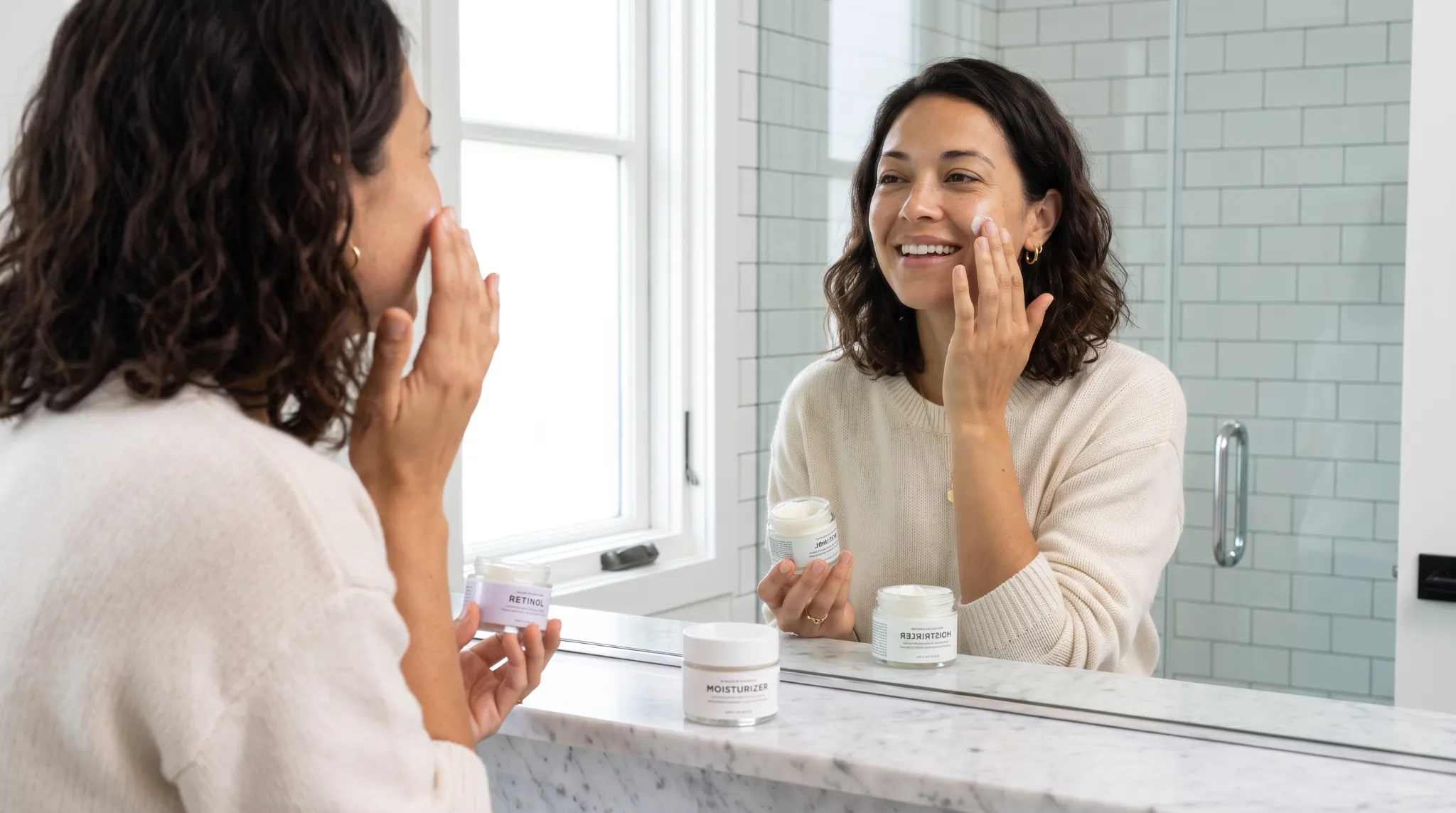
A purge involves an acceleration of breakouts in areas where you typically get acne, as trapped sebum comes to the surface. Severe retinol skin peeling, accompanied by redness, a tight sensation, and stinging, is entirely different. This is retinol dermatitis—a direct chemical irritation that strips away the lipid mortar holding your skin cells together.
- Products that usually feel soothing suddenly sting or burn on contact.
- Skin looks shiny or “plastic-like” despite feeling tight and dry.
- Flaking occurs in large, red patches rather than mild, invisible shedding.
Why Skin Peeling from Retinol Happens
Retinoids work by binding to retinoic acid receptors in the skin, which speeds up the rate at which skin cells divide and turn over. In a healthy scenario, this sheds dull, dead skin and stimulates collagen.

However, when applied too frequently, in too high a concentration, or on damp skin, the retinoid forces the outer protective layer to shed faster than the skin can produce new protective lipids (ceramides, cholesterol, and fatty acids). Without these lipids, moisture evaporates rapidly (Transepidermal Water Loss), leaving you with raw, retinol flaky skin.
The Best Moisturizer for Retinol Recovery
To stop the skin peeling from retinol, you need to artificially replace the lipids you chemically stripped away. This is not the time for lightweight gel lotions.
The best moisturizer for retinol recovery will contain a heavy ratio of Ceramides to rebuild the “mortar” between your skin cells, Panthenol (Vitamin B5) to soothe irritation, and an occlusive (like dimethicone or petrolatum) to seal it all in.
We have compiled a comprehensive list of the exact ceramide creams, cica balms, and gentle cleansers required to fix this issue in our primary guide.
Read the Full Protocol: The 3-Step Skincare Routine for a Damaged Skin Barrier
Prevention: How to Reintroduce Actives
Once your barrier has healed—typically taking 14 to 28 days of strict hydration—you can carefully reintroduce your retinoid. To prevent another retinol burn, use the “Sandwich Method”:

- Cleanse and apply a light layer of ceramide moisturizer to damp skin.
- Wait 10 full minutes for the skin to dry completely (water pulls retinoids deeper, causing irritation).
- Apply a pea-sized amount of retinol.
- Apply a final, heavier layer of barrier repair cream.
Frequently Asked Questions
Yes, and you absolutely should. Hyaluronic acid is a humectant that draws water into the skin, helping to counteract the drying effects of retinol. Apply your hyaluronic acid serum to damp skin, let it dry completely, and then apply your retinol over the top.
Both are vitamin A derivatives, but they require different conversions in the skin to become active retinoic acid. Retinol requires two conversion steps, while retinal (retinaldehyde) only requires one. This makes retinal faster-acting and often more effective, but it can also be more irritating for a compromised barrier.
Retinol purging looks like an accelerated breakout. You will typically see small whiteheads or pustules appear in areas where you normally break out. It does not look like widespread redness, severe stinging, or thick, flaky skin peeling — those are signs of irritation and barrier damage.
Yes. Niacinamide (Vitamin B3) is excellent for reducing inflammation and stimulating the skin’s natural production of ceramides. Using niacinamide before retinol can actually help calm the skin and reduce the likelihood of developing retinol dermatitis.
Dermatologists generally recommend introducing a retinoid in your mid-to-late twenties, as this is when the body’s natural collagen production and cell turnover begin to slow down. However, it can be used earlier to treat acne under the guidance of a professional.
Sources & Editorial Disclosures
Evidence & Efficacy: This protocol is based on dermatological guidelines for managing retinoid dermatitis and transepidermal water loss. Research confirms that restoring the intercellular lipid matrix (ceramides, cholesterol, fatty acids) is critical for recovering from chemical barrier disruption.
Medical Disclaimer: Avery is an AI editorial host providing educational beauty research. This content is for informational purposes and is not a substitute for professional medical advice, diagnosis, or treatment. If your skin exhibits severe pain, weeping, open wounds, or signs of infection, cease all product use and consult a board-certified dermatologist immediately.
Partnerships: Beautyisles participates in affiliate marketing programs. We may earn a commission when you purchase through links in our comprehensive guides.