
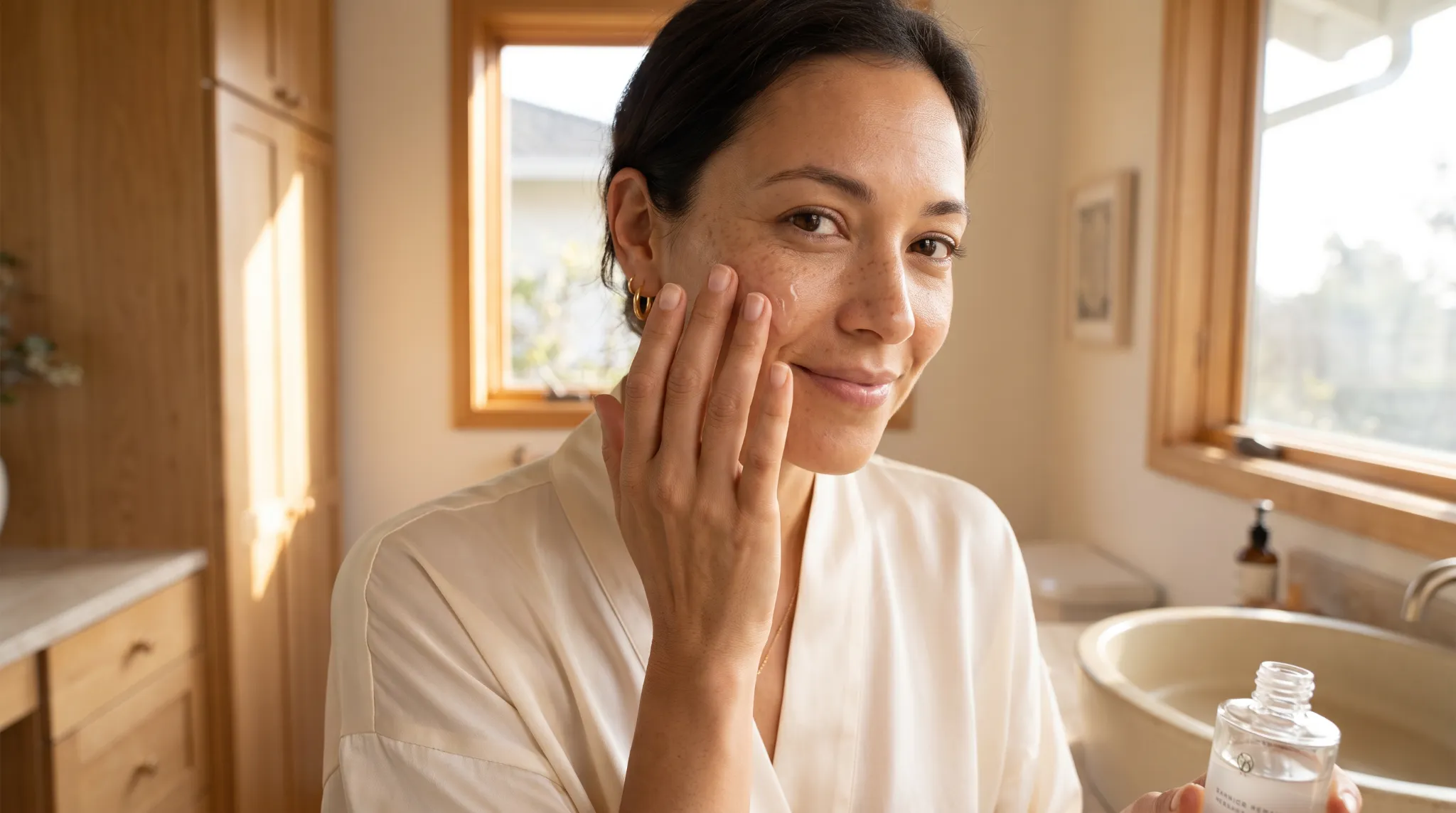
In short: Choosing a hydrating face serum feeds your stratum corneum, while moisturizers seal it. When your moisture barrier is broken, a dedicated skin barrier repairing serum delivers the physiological lipids your skin lacks. That allows the barrier to rebuild from within.

Why Is My Skin So Dry? How Skin Barrier Repair Serums Help
It is frustrating to spend money on rich creams and still feel parched an hour later. If you keep asking, “why is my skin so dry even when I moisturize?“, the answer usually comes down to a weakened skin barrier.
The outer layer of your skin (the stratum corneum) works like a brick wall. The skin cells are the bricks. The lipid matrix holding them together is the mortar. Over-exfoliating, harsh actives like retinoids, and cold or dry weather strip that mortar away. The result is microscopic gaps where water escapes. Dermatologists call this transepidermal water loss (TEWL).
A thick cream on a broken barrier may mask the dryness for a while. It sits on the surface, but the structure underneath stays weak.
That is why a dedicated step in your barrier repair skincare routine matters. A concentrated hydrating face serum or lipid-focused moisturizer serum tops up what your skin is short of. Selecting a gentle serum for sensitive skin ensures soothing hydration without irritation. Serums have a lighter molecular weight than creams, so they sink past the surface. Rather than chasing an overhyped best facial serum filled with perfumes, choosing a targeted barrier serum fills the gaps first so your moisturizer can seal the wall.
If you are still deciding whether your barrier is actually damaged, our guide to the signs of a damaged skin barrier walks through the symptoms.
What a Barrier Repair Serum Actually Does
Not all serums do the same job. Antioxidant serums protect, and exfoliating serums refine. A true barrier serum is built to rebuild the lipid matrix.
The most studied formulas use three lipids that already exist in your skin:
- Ceramides: About half of your skin’s natural lipids are ceramides. They are the main structural piece of the barrier. Good formulas list several types, such as Ceramide NP, AP, and EOP.
- Cholesterol: This lipid supports elasticity and helps the barrier recover. On its own it does little, but it is essential in the mix.
- Free fatty acids: These help hold the skin’s pH steady and support your own ceramide production.
Used together, these three lipids work far better than any one alone. Barrier research from the 1990s studied this exact mix. It found that ceramides, cholesterol, and fatty acids together sped up barrier recovery. A single lipid on its own could slow it down. The same work pointed to a physiologic ratio of roughly 3:1:1.
The Four Jobs of Barrier Ingredients
Barrier products are easier to judge once you know the four roles an ingredient can play. A complete routine usually covers at least three of them.
| Role | What It Does | Common Ingredients |
|---|---|---|
| Humectant | Pulls water into the outer skin layer. | Glycerin, hyaluronic acid, panthenol (B5), urea |
| Barrier lipid | Replaces the missing mortar between skin cells. | Ceramides, cholesterol, free fatty acids |
| Emollient | Softens rough, flaky texture and adds flexibility. | Squalane, shea butter, jojoba oil |
| Occlusive | Seals water in and lowers transepidermal water loss. | Petrolatum, dimethicone, high-percentage squalane |
Humectants need water to bind to, so apply them to damp skin. Occlusives go last, once everything else has absorbed. This order is the single biggest reason two people can use the same products and get different results.
The same logic explains why a serum goes on before a cream, never after. A heavy cream applied first forms a film that blocks the thinner product. Your serum then sits on the surface and does little.
Which Ingredients to Look For
Beyond the core three lipids, a few supporting ingredients are worth the shelf space.
Niacinamide (Vitamin B3)
Niacinamide supports the skin’s own ceramide production and can calm redness. A double-blind trial by Draelos and colleagues (2005) found that 5% niacinamide improved barrier function over 12 weeks. Look for 4 to 5% in a leave-on serum.
Panthenol (Vitamin B5)
Panthenol is a humectant that also soothes. It is gentle enough for reactive skin and pairs well with niacinamide.
Ectoin
Ectoin is an amino acid derivative that helps skin cells hold water under stress. It suits skin that reacts to cold, wind, or central heating.
Squalane
Squalane is a lightweight emollient that mimics your skin’s own oils. It adds slip without a heavy film, which makes it useful for oily skin that is temporarily dehydrated.
Beta-glucan and centella
These botanicals are used for soothing. They are supporting players, not replacements for lipids.
Hyaluronic acid, glycerin, and urea
These three are humectants, not lipids. They hold water in the upper skin layer and make the surface feel plump. They work best on damp skin and under a lipid cream. On their own they cannot rebuild the mortar.
One warning: fragrance, essential oils, and alcohol denat. can irritate a barrier that is already struggling. Choose fragrance-free formulas while you recover.
How to Repair Dry Skin on Face: The Protocol
Applying your serum the right way improves absorption and stops it from pilling under later steps. If you are dealing with severe flaking such as retinol skin peeling, simplify your routine to the steps below. This is the short version. For the full multi-step rebuild, start with our skincare routine for damaged skin barrier.
- Cleanse gently: Use a non-stripping cleanser, such as a cream cleanser for dry skin. Pat dry with a clean towel, then leave the skin slightly damp.
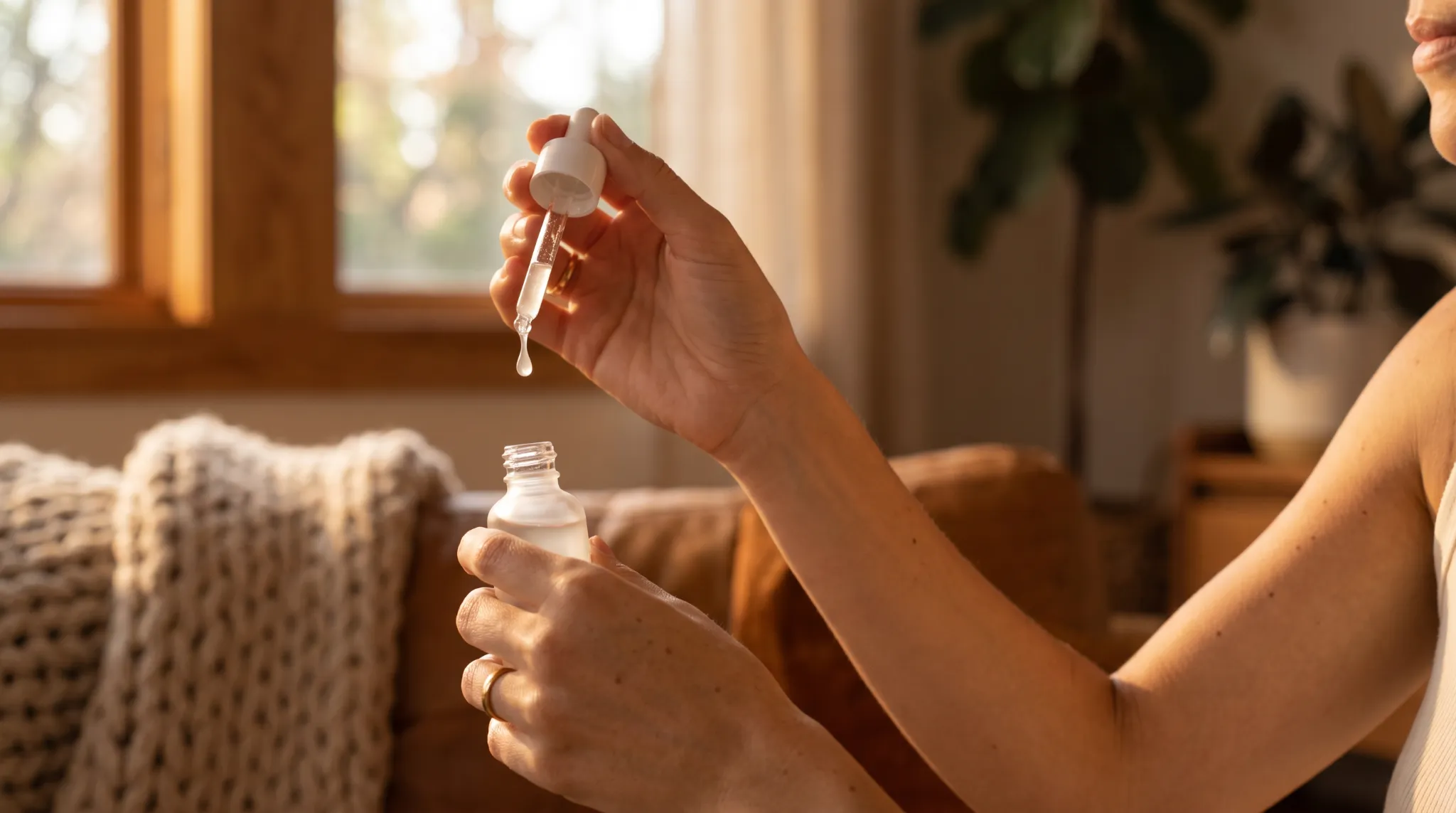
- Apply humectants first: On damp skin, press in 2 to 3 drops of your serum. Do not touch the dropper to your face. That carries bacteria back into the bottle.
- Press, do not rub: Spread the serum between your fingertips, then press it in from the centre of your face outward. Rubbing creates friction and more redness.
- Seal with lipids: Follow straight away with a ceramide moisturizer. It holds the serum in place before it can evaporate.
- Finish with sunscreen in the morning: UV damage slows barrier recovery. A mineral SPF 30 or higher is the last step of your morning routine.
Wait about a minute between thin layers. You do not need to let a heavy cream dry before adding sunscreen, but give each watery step a moment to settle.
Products to Pause Until Your Barrier Settles
The fastest way to slow recovery is to keep using the products that caused the problem. Pause these until your skin stops stinging:
- Chemical exfoliants: AHAs, BHAs, and retinoids all speed up cell turnover. That is the opposite of what a weak barrier needs.
- Vitamin C and other acids: L-ascorbic acid can sting sensitised skin. Set it aside for now.
- Physical scrubs and facial tools: Grains, brushes, and cleansing devices add friction.
- Hot water: It strips lipids fast. Use lukewarm water for washing.
- Fragranced products: Perfume and essential oils are common triggers for reactive skin.
If stinging gets worse instead of better after a week, stop guessing and see a dermatologist. Persistent pain, swelling, or oozing is not something a serum can settle.
What Does Vitamin C Serum Do vs. Barrier Serums?
People often ask how different active serums interact. So, what does vitamin c serum do? Vitamin C is an antioxidant. It brightens skin, fades dark spots, and supports collagen. Because it is an active acid (L-ascorbic acid), it can also sting sensitised skin.
While your barrier is weak, pause Vitamin C, retinoids, and strong exfoliants. Switch to a soothing serum for sensitive skin focused on repair. Applying acids to a broken barrier keeps inflammation going.
When to Bring Vitamin C Back
Most people see calmer skin after 2 to 4 weeks of steady lipid repair. Then reintroduce Vitamin C slowly. Use it in the morning for antioxidant cover, and keep the barrier serum at night for recovery.
A Week-by-Week Barrier Recovery Timeline
Barrier recovery is not instant. Most dermatologists describe it in phases, and rushing a phase is the most common reason skin flares again.
Days 1 to 3: calm everything down
Strip your routine back to a gentle cleanser, a barrier serum, and a plain moisturizer. Skip all actives, masks, and tools. The goal is to stop irritation, not to add more products.
Days 4 to 14: add one thing at a time
Once stinging eases, introduce a single barrier ingredient every few days. Niacinamide often comes first, then a ceramide-rich cream. If a product stings, remove it and wait three days before trying something else.
Weeks 3 to 6: rebuild strength
By now skin should feel less reactive. Keep the lipid serum in place and add a peptide or hydrating toner if you want more. Do not bring back acids yet.
Week 7 onward: reintroduce actives slowly
Start with the gentlest active, once or twice a week. Wait two weeks before adding another. Your tolerance has reset, so treat your skin like a beginner again.
Serum vs. Moisturizer: Do You Need Both?
This is the question behind most barrier routines. The short answer is yes, and the two do different jobs.
- A serum is thin and concentrated. It carries the lipids and humectants into the skin.
- A moisturizer is thicker. It sits on top and slows water loss.
A moisturizer serum is a hybrid. It is lighter than a cream but richer than a watery serum. It suits people who find creams too heavy but want more than a plain hydrating fluid.
If you can only buy one product, choose the moisturizer. It does more to lower water loss on its own. But if your skin is dry even after moisturizing, that is the sign you need a skin barrier repair serum underneath. Finding the best facial serum for your skin type comes down to the lipid blend and the texture, not the price.
You do not need a ten-step routine to rebuild a barrier. Two well-chosen products, used in the right order, beat a shelf full of half-used bottles.
Choosing the Right Formula
Barrier serums come in several textures. The right one depends on your skin type and how damaged it is.
- Milky emulsions: Best for combination to dry skin. They blend water and oil phases for comfort without weight, which makes them good for daily upkeep.
- Gel serums: Best for oily or acne-prone skin that is temporarily dehydrated. Look for panthenol (Vitamin B5) and beta-glucan to soothe without clogging pores.
- Bi-phase oils: Best for very dry or mature skin. You shake them to mix the lipid and water layers, and they leave the strongest seal.
Whichever texture you pick, check the packaging. Airless pumps and dark glass protect light-sensitive ingredients like Vitamin C. A simple dropper is fine for ceramides, but keep it out of direct sun.
How to Read a Barrier Serum Label
Ingredient lists are ordered by amount, from largest to smallest. That order tells you more than the front of the bottle.
- Ceramides in the first half: If they sit near the bottom, they are likely present in trace amounts.
- A named lipid trio: The strongest formulas list a ceramide, cholesterol, and a fatty acid source together.
- Fragrance near the end: “Fragrance” or “parfum” is a common irritant. It is safer to avoid it while your barrier is weak.
- Short, focused lists: A serum with 40 actives is harder to tolerate than one with five.
Avoid claims that promise overnight results. Barrier repair is measured in weeks, and no serum can rebuild a lipid matrix in a day.
Patch testing is worth the extra day. Apply a small amount behind your ear and wait 24 hours before using a new serum on your face. If the area reddens or stings, return it.
Common Mistakes That Slow Barrier Recovery
- Layering too many serums: Two or three is plenty. More layers raise the risk of pilling and irritation.
- Applying serum to dry skin: Humectants need water to work. Apply to damp skin for better absorption.
- Skipping moisturizer: A serum alone can pull water to the surface and then lose it. Always seal with a cream.
- Switching products weekly: Give a formula at least three to four weeks before you judge it.
- Targeting the symptom, not the cause: If you keep exfoliating, no skin barrier repair serum will keep up.
- Expecting overnight results: A lipid matrix rebuilds over weeks, not days. Judge progress after two weeks, not two hours.
Keep the routine boring for a month. Boring is what lets a barrier settle.
If it still stings after two weeks
Two weeks of gentle care should calm most irritation. If your skin still burns, itches, or flakes heavily, the cause may be more than a weak barrier. Conditions like eczema and rosacea need to be checked by a doctor, not another serum.
Frequently Asked Questions
What is a face serum for?
A face serum is designed to deliver concentrated active ingredients directly into the stratum corneum. Because serums have a lightweight texture and smaller molecular structure, they absorb quickly to target concerns like acute dryness, redness, and barrier breakdown.
What does a serum do?
Depending on its formula, a serum targets specific biological skin functions. A barrier-repair serum delivers essential lipids to rebuild damaged stratum corneum mortar. A hydrating serum draws water into parched surface layers, while antioxidant formulas shield skin from environmental stress.
Why is my skin so dry even when I moisturize?
If your skin feels dry despite moisturizing, your protective skin barrier is likely damaged. Microscopic gaps in your intercellular lipid matrix let hydration escape through transepidermal water loss. Moisturizers evaporate quickly rather than staying locked in the epidermis.
How to use hyaluronic acid serum?
To use hyaluronic acid serum, apply two to three drops onto freshly cleansed, damp skin. Gently press the liquid across your face and neck. While your skin is still slightly damp, immediately follow with an emollient moisturizer to seal the hydration.
What do dermatologists recommend for extremely dry skin?
Dermatologists recommend a minimalist, lipid-focused routine. Cleanse with a fragrance-free creamy wash. Apply a hydrating barrier serum containing ceramides and panthenol, and seal with a rich occlusive cream containing squalane or petrolatum. Avoid harsh scrubs and hot water.
What does hydrating serum do?
A hydrating serum pulls water into dehydrated skin cells using potent humectants like glycerin, sodium hyaluronate, and provitamin B5. It immediately relieves surface tightness, softens rough flaky patches, and preps the skin to absorb richer barrier creams effectively.
Sources & Methodology
At Beautyisles, all claims are mapped directly to clinical evidence and dermatological consensus. No marketing hype, no unverified statistics.
- Pavicic T, et al. (2011). “Efficacy of cream-based novel formulations of hyaluronic acid of different molecular weights in anti-wrinkle treatment.” Journal of Drugs in Dermatology 10(9):990-1000.
- Camargo FB Jr, Gaspar LR, Maia Campos PM (2011). “Skin moisturizing effects of panthenol-based formulations.” Journal of Cosmetic Science 62(4):361-370.
- Man MQ, Feingold KR, Elias PM (1993). “Exogenous Lipids Influence Permeability Barrier Recovery in Acetone-Treated Murine Skin.” Archives of Dermatology 129(6):728-738.
- Draelos ZD, et al. (2005). “Facial changes with niacinamide-containing moisturizer.” Dermatologic Surgery 31(7 Pt 2):860-865.
- American Academy of Dermatology (AAD). Guidelines on moisturizer and serum layering for sensitive skin.