


The Short Answer
To understand how to know if your skin barrier is damaged, look for sudden stinging from plain water or gentle moisturizer, persistent facial redness, and tight, flaky skin. When your stratum corneum loses its intercellular lipids, water evaporates rapidly. To identify skin barrier damage and treat a compromised skin barrier, stop all active acids and retinoids immediately. Cleanse with lukewarm water, apply a physiological lipid cream with ceramides and cholesterol, and use mineral sunscreen daily.
Your skin barrier is the stratum corneum, the outermost layer of your skin. It locks in essential moisture and blocks external irritants, bacteria, and allergens. When you experience damaged skin barrier symptoms, this protective shield develops microscopic fissures. Recognizing how to tell if your skin barrier is damaged allows you to start lipid repair before chronic dermatitis develops.
Knowing how do you know if your skin barrier is damaged prevents common skincare mistakes. Many people mistake barrier breakdown for acne or sudden product allergies. They apply drying spot treatments or exfoliating scrubs, which worsens the inflammation. Recognizing true signs of damaged skin barrier function allows you to rebuild the lipid matrix safely.
How to Know If Your Skin Barrier Is Damaged: What Healthy Skin Looks Like
A healthy barrier works like a brick wall. Dermatologists often use the “brick and mortar” analogy for the stratum corneum. The “bricks” are corneocytes—tough, dead skin cells packed with keratin and natural moisturizing factors (NMFs). The “mortar” is a dense lipid bilayer. It is made of ceramides (about 50%), cholesterol (25%), and free fatty acids (15%).
When the lipid matrix is intact, it forms an impermeable seal. It slows Transepidermal Water Loss (TEWL)—the passive evaporation of water from deeper skin layers. At the same time, it blocks microbes and allergens from reaching the deeper layers.
When the lipid ratio is depleted, the “mortar” crumbles. Causes include harsh alkaline cleansers, freezing wind, and acute UV radiation. Micro-cracks form in the shield. Moisture escapes, and irritants rush in. That triggers inflammation in the deeper epidermis.
Key Signs of a Damaged Skin Barrier
Barrier damage looks different on everyone. It depends on your skin type, skin tone, and the cause. Still, some universal symptoms point to a struggling stratum corneum.
Stinging and Burning Upon Application
Perhaps the most immediate sign of a damaged barrier is sudden stinging. If your usual moisturizer, serum, or even plain water suddenly burns, your barrier is compromised. The protective lipid layer is depleted, so products sink in too fast. They reach sensitive nerve endings in the lower epidermis and trigger pain receptors.
Persistent Redness and Inflammation (Erythema)
Erythema is the clinical word for visible redness. As irritants breach the barrier, the immune system dilates blood vessels. It sends white blood cells to the “injured” area. On lighter skin tones, this shows as a persistent pink or red flush. On darker skin tones, it may look like a deeper skin color or a purple-ish hue. Subtle hyperpigmentation can also linger for weeks.
A Tight, “Squeaky Clean” Sensation
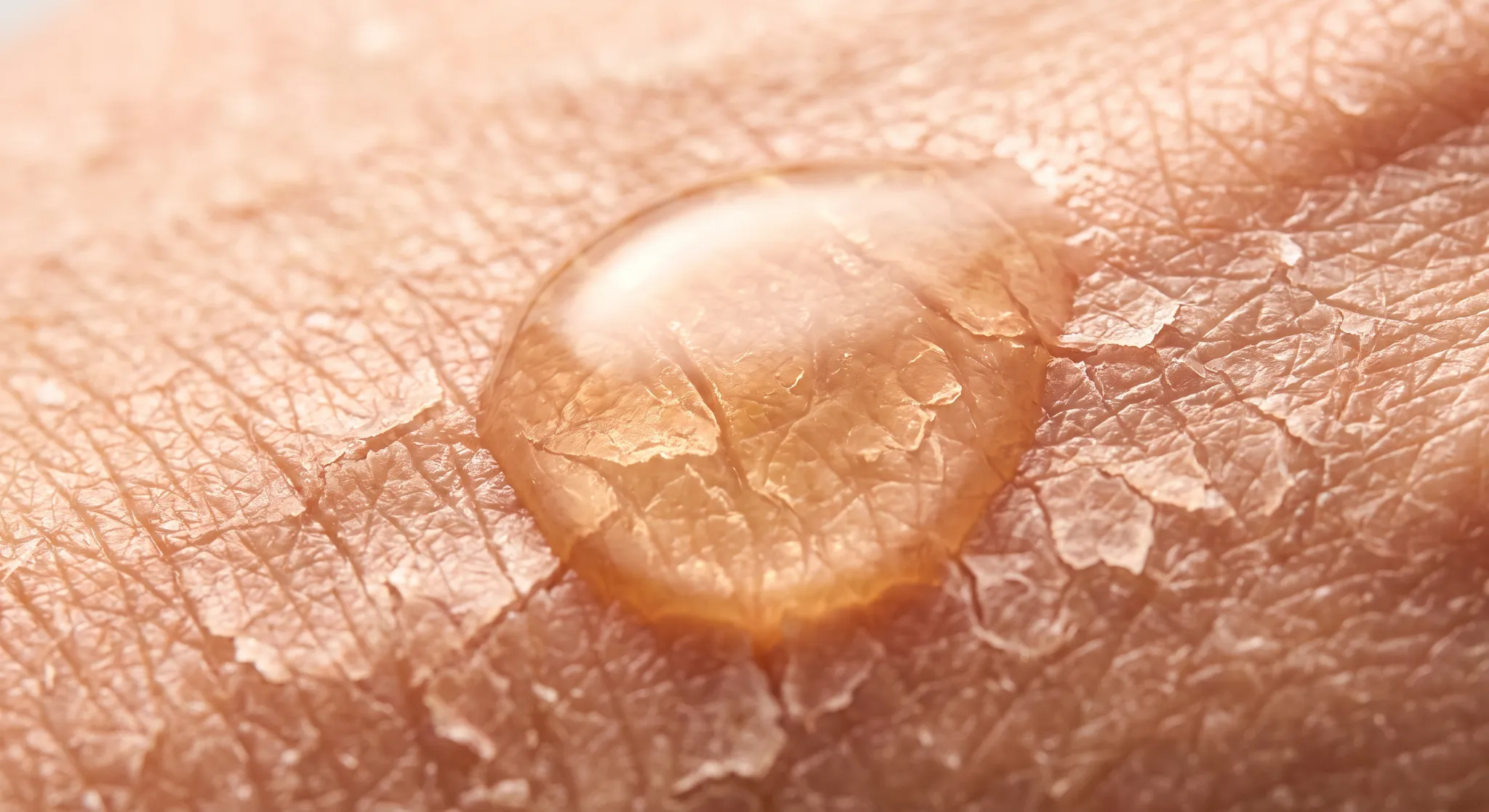
Healthy skin should feel supple, soft, and elastic. If your skin feels taut or tight—especially after cleansing—it is dehydrated. The lipids that give the stratum corneum flexibility have been stripped away. Many people link this “squeaky clean” feeling to good hygiene. In reality, it is the sound of your barrier asking for lipids.
Uncharacteristic Flaking and Roughness
Normal dry skin can flake, but barrier damage looks different. The roughness is scaly and does not fade with lightweight moisturizers. Without its lipid matrix, the turnover process (desquamation) becomes disorganized. Dead skin cells clump together and shed unevenly. The result is a rough, sandpaper-like texture. Makeup then sits unevenly on top.
Sudden, Unexplained Breakouts
Acne is not only caused by excess oil and clogged pores. When the barrier is damaged, the acid mantle is disrupted. That lets acne-causing bacteria multiply. Deep dehydration also pushes the sebaceous glands to overproduce sebum. This creates a perfect storm for irritation bumps and closed comedones.
Barrier Damage Triggers by Season
The environment changes your barrier’s workload. Cold air holds less moisture, and indoor heating dries it further. Winter is the peak season for tight, flaky, stinging skin.
Summer brings different stressors. UV radiation degrades lipids, sweat disrupts the acid mantle, and chlorine or salt water strips oils. Long sun exposure can undo weeks of careful repair.
Spring and autumn are milder, but wind and pollen still irritate a weak barrier. Pollen can also trigger itching that leads to scratching.
Match your routine to the season. In winter, add a heavier occlusive at night. In summer, switch to a lighter moisturizer and reapply sunscreen every two hours. Both seasons still need the same gentle cleanser.
How to Test Your Skin Barrier at Home
You can check your barrier at home with two simple tests. Neither needs special tools. Both rely on how your skin feels, not on lab equipment.
The Sting Test
Apply a product you know well to a small patch of clean skin. Choose something gentle, like a basic moisturizer. If it stings or burns within a minute, your barrier is likely compromised. A healthy barrier usually feels neutral.
The Cleanse-and-Wait Test
Wash with a mild cleanser, then wait 30 minutes without applying anything. If your face feels tight, itchy, or dry, the barrier is struggling. If it feels comfortable, your barrier is probably intact.
These tests are a guide, not a medical test. They cannot tell barrier damage apart from eczema or rosacea. If results stay bad for two weeks, see a dermatologist.
The Role of UV Radiation in Barrier Disruption
Sun exposure is a silent barrier disruptor. Chemical exfoliants and retinoids get the blame, but UVB rays do quiet damage too. UVB rays cause lipid peroxidation. In that process, free radicals break down ceramides and fatty acids in the stratum corneum.
This is why the right treatment for sun damaged skin is not just about fading spots. A severe sunburn is an acute inflammatory event. It dismantles barrier function completely. The peeling that follows is the skin shedding badly DNA-damaged cells. That leaves the tissue below raw and exposed to heavy moisture loss.
Differentiating Barrier Damage from Normal Dry Skin
Dry skin and a damaged barrier are not the same thing. Their treatments differ, so telling them apart matters. The table below compares the two.
| Symptom | Naturally Dry Skin | Damaged Skin Barrier |
|---|---|---|
| Onset | Chronic, lifelong condition, often worsening seasonally. | Sudden, acute onset, usually following a specific product or environmental trigger. |
| Product Reaction | Absorbs heavy creams well; products rarely sting or burn. | Even gentle, previously safe products (including water) cause burning or stinging. |
| Texture | Generally rough, tight, or dull across the entire face. | Rough, accompanied by localized micro-flaking, redness, and severe inflammation. |
| Acne | Rarely experiences sudden, cystic, or cluster breakouts. | Often accompanied by tiny, inflamed whiteheads or angry irritation bumps. |
How Long Does a Damaged Skin Barrier Take to Repair?
Repair time depends on how badly the barrier was damaged. Mild irritation from one product may settle in a few days. More serious damage can take several weeks.
A 2011 study by Andrews, Lee, and Prausnitz measured barrier recovery after microdermabrasion. In guinea pigs, the stratum corneum recovered within 12 to 24 hours. Human skin is thicker and repairs more slowly. Cited human TEWL studies in the same paper found recovery in one to two days. That study used a controlled injury, not months of product damage. So treat these numbers as a floor, not a promise.
| Timeframe | What You Should Notice |
|---|---|
| Days 1-3 | Stinging and redness begin to ease; keep the routine minimal. |
| Week 1 | Tightness fades and flaking slows as lipids rebuild. |
| Weeks 2-4 | Redness settles, breakouts calm, and skin feels softer. |
| Weeks 4-8 | Barrier function is largely restored; reintroduce actives one at a time. |
Rebuilding the lipid barrier is faster than replacing every skin cell. That is why the surface can feel calm before the deeper repair is complete.
When to See a Dermatologist
Barrier damage usually improves with a gentle routine. Sometimes, though, the redness is not just a barrier problem. Conditions like rosacea and eczema can look almost identical. A dermatologist can tell them apart and check your barrier function.
Book an appointment if any of these apply:
- Redness, burning, or stinging lasts more than two weeks.
- You get oozing, crusting, or open sores.
- Breakouts spread or worsen despite a minimal routine.
- Every product stings, even plain water.
- You have a history of eczema, rosacea, or psoriasis.
These signs may point to a condition that needs medical care, not just a new moisturizer.
What Slows Down Barrier Repair
Many “helpful” habits actually delay repair. If progress stalls, check this list first.
- Hot water and long showers strip lipids and speed up water loss.
- Exfoliating to “clear” flakes removes the cells your barrier needs.
- Piling on humectants in dry air can pull water out instead of in.
- Picking or scrubbing reopens micro-cracks and invites bacteria.
- Alcohol, fragrance, and essential oils irritate an already raw surface.
- Adding new actives too soon restarts the inflammation cycle. Retinol is the usual culprit, so read our guide to retinol skin peeling before you restart it.
Change one habit at a time. Give each change at least a week before judging it.
Barrier Repair Ingredients That Work
Not every “barrier” product earns its label. The table below shows which ingredients have a clear job.
| Ingredient | What It Does |
|---|---|
| Ceramides | Rebuild the lipid “mortar” between skin cells. |
| Cholesterol | Keep the lipid ratio balanced for a stable barrier. |
| Fatty acids | Support the lipid mix and soften rough texture. |
| Panthenol (B5) | Calm redness and support repair. |
| Centella Asiatica | Soothe inflammation and reduce irritation. |
| Niacinamide | Help the skin make its own ceramides. |
| Squalane | A light emollient that mimics skin’s own oils. |
| Petrolatum | Seal in water and block irritants (slugging). |
Look for short ingredient lists. A long list of plant extracts raises the odds of irritation.
The Path to Repair: Rebuilding the Stratum Corneum
The most effective response to skin barrier damage is patience paired with strict minimalism. For a step-by-step routine, read our guide: Skincare Routine for Damaged Skin Barrier: A Simple 3-Step Plan. Clinical barrier repair rests on three non-negotiable principles.
Cease All Aggressors
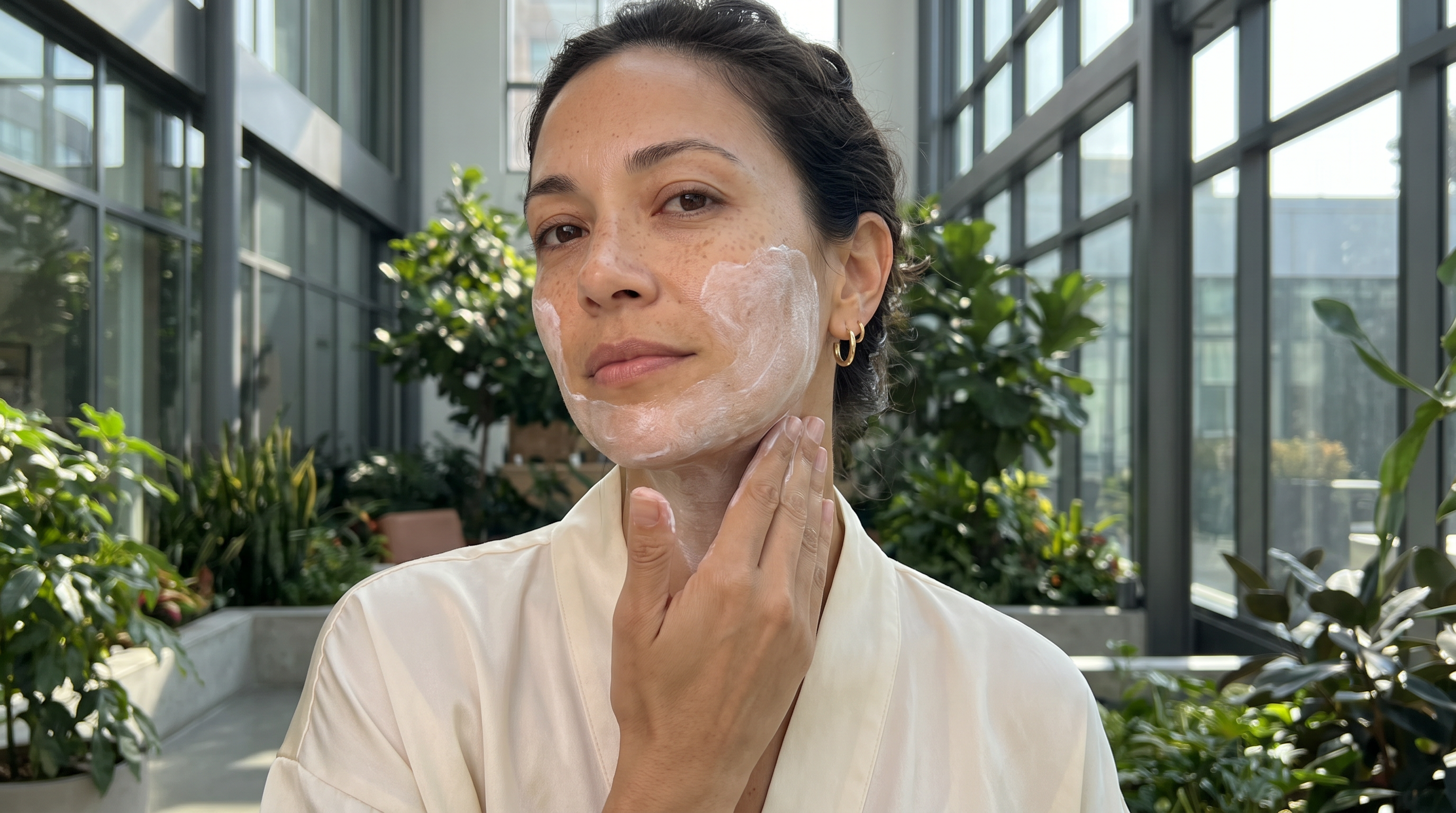
Stop all retinoids, AHA/BHA chemical exfoliants, Vitamin C serums, physical scrubs, and essential oils. Your daily routine must consist only of a mild cream cleanser, a physiological lipid cream, and a gentle mineral sunscreen. Never attempt to push through burning or stinging sensations.
Replenish the Lipid Matrix
To repair a compromised skin barrier, choose formulas that mimic natural human stratum corneum lipids. Select a physiological ratio of ceramides, cholesterol, and free fatty acids (ideally in a 3:1:1 molar proportion). These bio-identical lipids fill micro-fissures in the stratum corneum wall. Panthenol and Centella Asiatica soothe sensory stinging. Applying a leave-on barrier repair serum delivers lightweight humectants directly under your cream.
Halt TEWL with Occlusives
Humectants such as glycerin pull water into the epidermis, but compromised skin cannot hold water on its own. You need occlusives to stop evaporation. If your skin is severely reactive, apply a petrolatum-based ointment over your moisturizer at bedtime. This creates a temporary external shield while your keratinocytes regenerate underneath. If you prefer a lighter nocturnal treatment, our guide to the best overnight face mask for barrier repair compares breathable options.
Professional Interventions for Inflamed, Compromised Skin
If your skin barrier suffers from severe chemical irritation, avoid abrasive clinical procedures until healing is complete. Microneedling, medium-depth chemical peels, and ablative lasers inflict controlled micro-injuries that a compromised barrier cannot tolerate. Performing trauma on broken skin increases the risk of post-inflammatory hyperpigmentation.
Instead, consider non-thermal Red and Near-Infrared LED Light Therapy. Red light therapy calms tissue inflammation and supports mitochondrial repair without heat, friction, or topical irritants.
How to Reintroduce Actives After Repair
Once the stinging stops and redness fades, you can add actives back. Do it slowly.
- Wait until the skin is calm. Redness and stinging should be gone for at least a week.
- Start with one product. Never restart two actives in the same week.
- Use a low strength. Choose the lowest percentage available.
- Go slow. Begin once or twice a week, then build up.
- Buffer if needed. Apply moisturizer first, then the active, to reduce stinging.
- Stop if symptoms return. A flare means the barrier is not ready yet.
Keep your barrier cream and sunscreen in place the whole time. They protect the repair you worked for.
The Barrier and Your Skin Microbiome
The acid mantle keeps your skin slightly acidic, around pH 4.5 to 5.5. That mild acidity is not a flaw; it is a defense. It limits harmful bacteria and lets helpful microbes thrive.
Harsh alkaline soaps raise the surface pH. When pH climbs, the barrier weakens and the microbiome shifts. That shift can show up as irritation, odor, or more breakouts.
This is one reason gentle, low-pH cleansers matter. Check the label or test with a pH strip. If a cleanser leaves skin tight and squeaky, its pH is likely too high for daily use.
Supporting the microbiome is simple. Avoid antibacterial washes unless a doctor recommends one. Keep your routine short, and let the barrier do its job.
Frequently Asked Questions
How to tell if your skin barrier is damaged?
The clearest signs are sudden sensory stinging when applying gentle water or moisturizer, persistent facial tightness after washing, patchy dry flakes, and heightened sensitivity to products you previously tolerated.
How do you know if your skin barrier is damaged?
Inspect your facial skin under natural light. A damaged barrier looks dull and crepey yet feels tight and hot to the touch. You may notice tiny non-cystic irritation bumps alongside dry flaking around your nose and cheeks.
What causes damaged skin barrier?
Over-cleansing with high-pH alkaline soaps, excessive chemical peeling with AHA/BHA acids, aggressive physical face scrubs, cold dry winter wind, and introducing retinoids too quickly without adequate lipid buffering.
How to know skin barrier is damaged?
Perform the simple sting test. Apply a basic fragrance-free cream to clean skin. If your face burns or stings within 60 seconds, your protective stratum corneum lipid matrix is compromised.
What does a damaged skin barrier look like?
A damaged barrier appears shiny yet visibly parched. It exhibits localized redness (erythema), uneven rough texture, fine dehydration lines, and dry flakes that cling to foundation.
How long does it take to repair the skin barrier?
Surface stinging usually subsides within 7 to 10 days of minimalist care. Complete biological lipid regeneration and stratum corneum turnover typically requires 2 to 4 weeks.
- Elias PM. Stratum corneum defensive functions: an integrated view. J Invest Dermatol. 2005;125(2):183-200.
- Fluhr JW, Kao J, Jain M, et al. Generation of free fatty acids, lipid metabolism, and barrier repair in the stratum corneum. Exp Dermatol. 2001;10(5):335-346.
- Andrews S, Lee JW, Prausnitz MR. Recovery of skin barrier after stratum corneum removal by microdermabrasion. AAPS PharmSciTech. 2011;12(4):1393-1400.
- Cork MJ, Danby SG, Vasilopoulos Y, et al. Epidermal barrier dysfunction in atopic dermatitis. J Invest Dermatol. 2009;129(8):1892-1908.