

In short: The best overnight face mask is more than a thicker night cream. It pairs repair ingredients such as ceramides and glycerin with a breathable occlusive that keeps working for hours. Use one two to three nights a week, or nightly during a flare, to stop the tight, flaky mornings that signal a struggling barrier.
Why the Best Overnight Face Mask Matters for Barrier Repair
A damaged skin barrier — the stratum corneum — loses its ability to hold water and block irritants. This microscopic damage opens tiny cracks in the lipid matrix. The result is chronic dryness, irritation, stinging, and sensitivity. Your daytime routine focuses on defense. It shields skin from UV rays, pollution, and free radicals. At night, skin shifts into repair mode. A high-quality hydrating sleeping mask supports this nocturnal repair process by forming a breathable seal.
During the night, your skin’s temperature slightly rises and its permeability increases. While this allows active ingredients to penetrate more deeply, it also causes a phenomenon known as transepidermal water loss (TEWL) to peak. If your barrier is already compromised, this overnight water loss can leave you waking up with tight, red, and flaky skin. Apply a rich moisturizing face mask before bed. It traps active ingredients from your toners and serums, such as ceramides and hyaluronic acid. It stops water in your skin from evaporating into dry bedroom air. This matters most for severe dryness. It helps a compromised acid mantle. It helps over-exfoliation from harsh acids and retinoids.
Unlike a standard evening moisturizer, an overnight mask is designed with a higher level of film-forming polymers and humectants. It is not meant to absorb fully at once. It sits gently on the surface. It slowly releases hydration and repairing compounds over an 8-hour sleep cycle. For a closer look at a complete routine, see our guide on a skincare routine for damaged skin barrier.
- Halts Transepidermal Water Loss (TEWL): Creates a semi-permeable film that blocks moisture evaporation during the night’s peak TEWL window.
- Enhances Serum Efficacy: Increases the absorption rate of your underlying barrier repair serums by creating an occlusive seal.
- Reduces Erythema: Soothes inflammation and reduces surface redness (erythema) by morning through prolonged exposure to calming agents.
- Restores Lipid Ratios: Delivers a sustained dose of essential fatty acids, cholesterol, and ceramides directly to the stratum corneum.
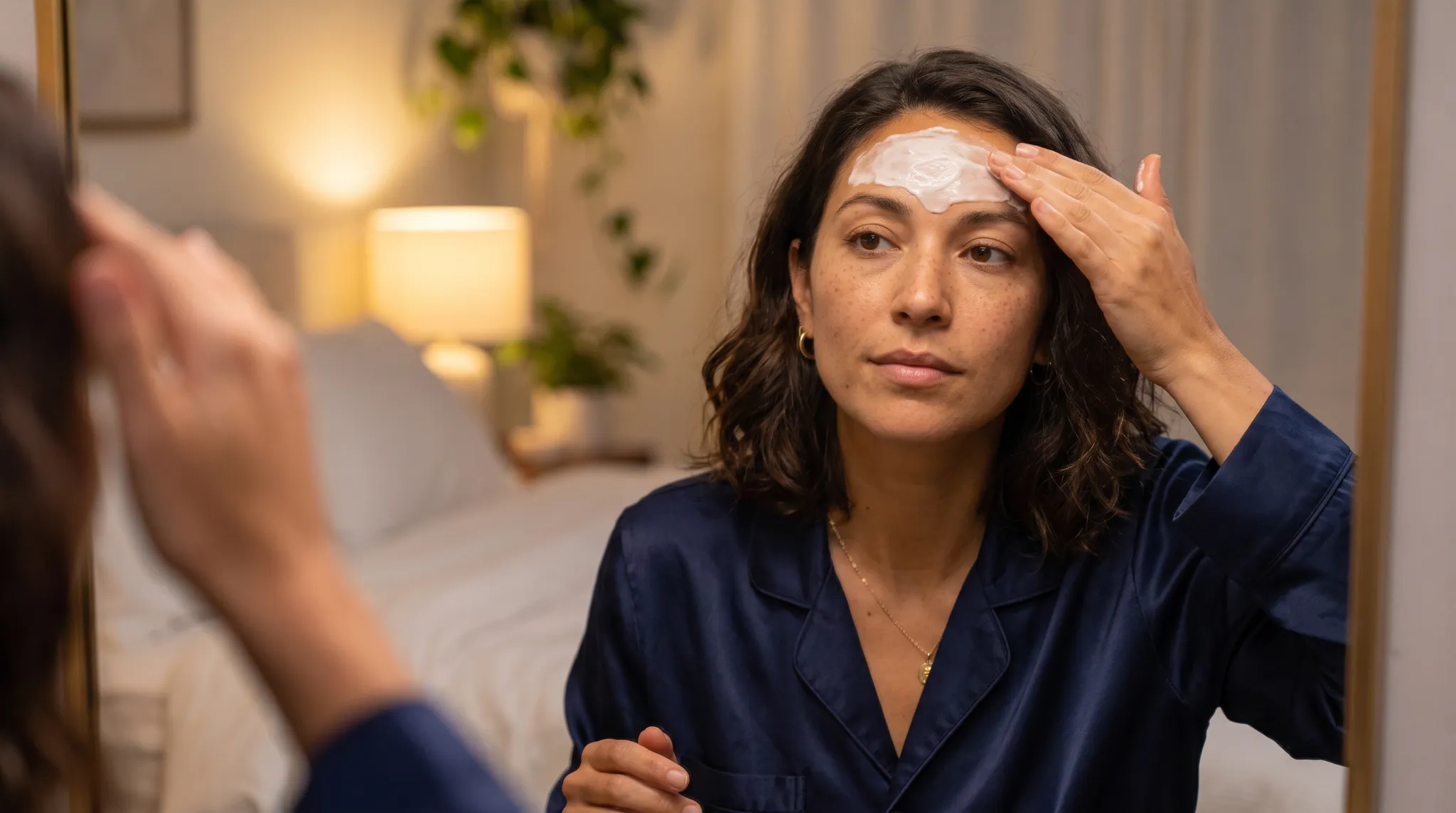
The clear difference between slugging and overnight masks
If you have been researching intensive barrier repair, you have almost certainly encountered the viral trend of “slugging.” But how does slugging differ from the best overnight facial masks? Which one suits your current state of barrier damage?
Slugging uses a thick layer of 100% pure occlusive agent. Common options are petroleum jelly and a heavy barrier ointment. Apply it as the final step in your nighttime routine. Petroleum jelly delivers strong occlusive properties. It blocks up to 99% of transepidermal water loss. However, it is biologically inert. It provides zero active hydration, no repairing ceramides, and no soothing botanicals. It acts as a physical lid, trapping whatever hydration you have already applied underneath it. If your skin is dehydrated and you fail to apply enough humectants before slugging, you seal in dryness.
In stark contrast, hydrating face masks designed for overnight use are multi-phase emulsions. They balance three groups to seal the skin. Humectants include glycerin, panthenol, and hyaluronic acid. They draw moisture from deeper dermal layers into the epidermis. Emollients include squalane and plant oils. They soften the rough texture of a damaged barrier. In addition, these masks often contain active repairing ingredients such as encapsulated ceramides, peptides, and soothing botanical extracts like Centella Asiatica. They offer a complete, self-contained repair treatment rather than just a physical barrier.
| Option | Best for | What it does | Main limitation |
|---|---|---|---|
| Overnight mask | Dehydrated, reactive skin | Combines humectants, emollients, an occlusive, and repair actives in one step | Can feel heavy on very oily skin |
| Night cream | Maintenance of a stable barrier | Steady moisture and light actives | May not seal in enough water during a flare |
| Slugging | Severely reactive, burning skin | Near-total block on water loss with petrolatum | No active repair ingredients of its own |
If your skin feels extremely reactive or burning, go plain. If nearly all active ingredients bother you, try slugging. Use a plain, inert ointment. It halts moisture loss without triggering a reaction. If your skin tolerates gentle formulas, choose an overnight mask. You get active, structural repair for the lipid matrix.
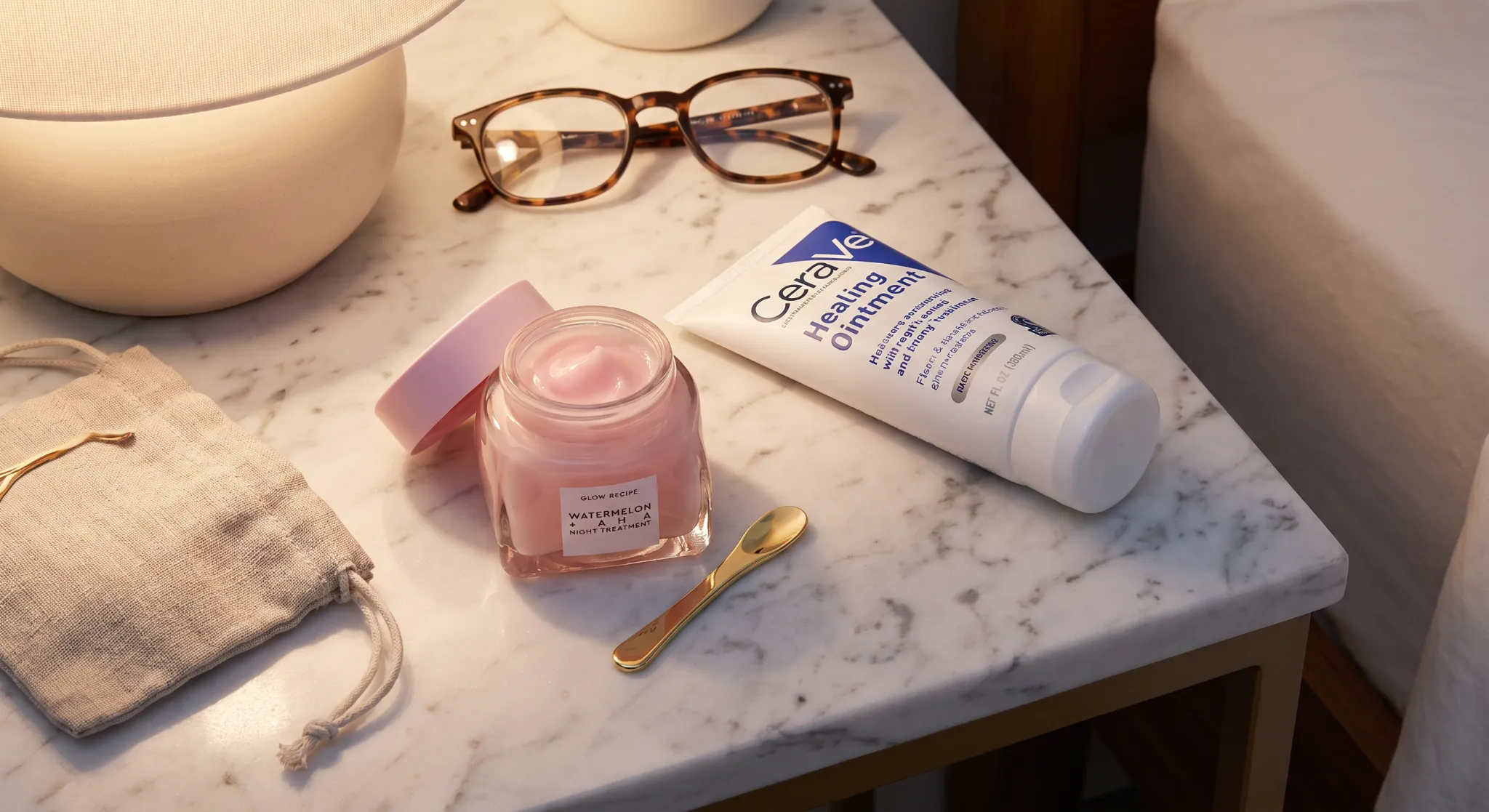
Core ingredient formulas to look for in a sleeping mask
Not all sleeping masks are created equal. When your goal is specifically to repair a damaged skin barrier, the ingredient list matters far more than the marketing claims. You need a formula that mimics the skin’s natural lipid structure while providing an environment that supports repair. If ceramides are your priority, our guide to a ceramide moisturizer for dry skin explains how to compare them.
Ceramides, Cholesterol, and Fatty Acids
The “mortar” that holds your skin cells (the “bricks”) together is primarily composed of ceramides, cholesterol, and free fatty acids. When the barrier is damaged, this mortar is depleted. The most effective overnight masks combine three lipids. They use a biologically recognized ratio, often 3:1:1. They patch holes in the stratum corneum directly.
Humectants: Glycerin and Panthenol (Vitamin B5)
Hyaluronic acid gets most attention. But glycerin is arguably the most effective humectant for a damaged barrier. It has a smaller molecular size. It penetrates deeply. Panthenol (Pro-Vitamin B5) is another powerhouse; it not only draws in moisture but actively reduces inflammation and speeds the repair of microscopic epidermal damage.
Soothing Botanicals: Centella Asiatica (Cica) and Allantoin
A compromised barrier is an inflamed barrier. Centella Asiatica (often labeled as Cica, Madecassoside, or Asiaticoside) is renowned for its ability to dramatically calm redness and stimulate collagen synthesis. Allantoin, naturally found in the comfrey plant, is a superb keratolytic agent that helps shed dead, flaky skin gently while deeply soothing irritation.
Occlusives: Squalane, Dimethicone, and Petrolatum
The occlusive is what makes an overnight mask a mask. It slows water loss by forming a film on the surface. Squalane and dimethicone are breathable choices that suit most skin types, including acne-prone skin. Petrolatum is the strongest option, but it is heavy and inert. A well-built mask pairs a light occlusive with humectants and ceramides, so it seals in water without smothering the skin.
Choosing the best overnight acne mask for breakout-prone skin
Heavy nighttime moisturizers and sleeping masks can trigger breakouts. That concern is valid. A damaged barrier often goes hand-in-hand with acne, as the lack of protection allows acne-causing bacteria (C. acnes) to enter the skin more easily. If you are prone to clogged pores, finding the best overnight acne mask that repairs the barrier without suffocating the skin is essential.
An effective acne overnight mask should stay strictly non-comedogenic. It should skip heavy mineral oils and cocoa butter. It should skip high levels of petrolatum (a purified mineral occlusive that blocks 99% of moisture loss). Skip heavy creams. Look for lightweight, water-burst gel textures. They rely on squalane or dimethicone (a breathable silicone polymer that creates a silky protective seal) as primary occlusives. Squalane is particularly excellent for acne-prone skin because it is bio-identical to human sebum but does not oxidize in the pores to cause blackheads.
Ingredients like Niacinamide (Vitamin B3) are also essential in these formulations. Niacinamide not only helps rebuild the ceramide barrier, but also regulates sebum production and visibly reduces post-inflammatory redness left behind by old breakouts. When combined with Centella Asiatica, it creates an environment where the skin rebuilds its barrier while calming active blemishes.
How often should you use an overnight face mask?
Frequency depends on how damaged your barrier is. For maintenance, two or three nights a week is plenty. During a flare, when skin is tight, stinging, or flaking, you can use a gentle, fragrance-free mask every night for one to two weeks. Then step back down to your maintenance schedule.
Watch for signs you are overdoing it. New clogged pores, small bumps, or a heavy, sweaty feeling by morning mean the formula is too rich for your skin. Oily and combination skin often do better with one or two nights a week and a lighter gel texture. Dry and mature skin can usually handle more.
You do not have to rinse every mask off. Many overnight masks are designed to absorb by morning. If yours still feels tacky, rinse it with lukewarm water and follow with a light moisturizer.
Layering an overnight mask with retinoids and exfoliating acids
Overnight masks and active treatments can coexist, but timing matters. Retinoids and exfoliating acids both speed up cell turnover. They can leave the barrier more vulnerable the next day. If your barrier is already damaged, read our guide on how to know if your skin barrier is damaged before you add actives back in.
The simplest approach is to alternate nights. Use your retinoid or acid one night, then an overnight mask the next. This gives skin a recovery window without pausing your actives completely. This pattern is often called skin cycling.
If you want both on the same night, apply the active first. Wait until it has fully dried, then use a small amount of a simple, fragrance-free mask. Stop and go back to basics if you feel stinging or burning. Never layer a strong acid under a heavy occlusive when your barrier is already irritated.
Step-by-step nighttime application protocol
To maximize the barrier-repairing benefits of your overnight mask, it must be applied correctly within your evening routine. Layering is key; the mask is only as effective as the hydration you trap beneath it.
| Step | Action | Why it matters for barrier repair |
|---|---|---|
| 1. Gentle Cleansing | Wash with a non-foaming, creamy cleanser using lukewarm water. | Removes daily pollutants without stripping natural lipids. Avoid hot water, which exacerbates barrier damage. |
| 2. Hydrating Toner (Optional) | Pat a milky or essence-like toner onto damp skin. | Damp skin acts like a sponge, drawing humectants deeper into the epidermis for maximum plumpness. |
| 3. Repair Serum | Apply a barrier repair serum rich in ceramides, peptides, or niacinamide. | Delivers concentrated active ingredients directly to the damaged cells to initiate structural repair. |
| 4. The Overnight Mask | Scoop a generous, dime-to-nickel sized amount and massage it evenly over the face and neck. | Seals in all previous steps, creating a semi-permeable barrier to halt overnight water loss (TEWL). |
Allow the mask to set for at least 15 to 20 minutes before getting into bed. This stops the product from rubbing off onto your pillowcase. It gives film-forming agents time to create a protective matrix on your skin.
Common mistakes that slow barrier repair
Even a good mask can underperform if you make one of these mistakes.
- Applying to bone-dry skin. Humectants such as glycerin and hyaluronic acid need water to work. Mist or pat skin damp first.
- Skipping the layers underneath. The mask seals in what you apply. Without a hydrating toner or serum beneath it, you seal in dryness.
- Using it over strong acids or retinoids. An occlusive layer can push actives deeper and increase irritation. Save the mask for a night off.
- Using far too much. A thin, even film is enough. Thick layers waste product and can clog pores.
- Expecting one night to fix everything. Barrier repair is gradual. Give a consistent routine several weeks.
What to do the morning after an overnight mask
Your morning routine protects the repair work your mask did overnight. Keep it simple and gentle.
Rinse with lukewarm water. If your skin feels clean, plain water is enough. If you used a heavier mask, a mild cleanser will remove any residue without stripping the barrier you just supported. Then apply a hydrating toner and a light moisturizer, and finish with a broad-spectrum sunscreen. Sunscreen is not optional. UV exposure breaks down the lipids your barrier needs, so skipping it undoes much of the previous night’s work.
You should start to see changes within a few days of consistent use:
- Skin feels less tight after cleansing.
- Stinging from water or light products fades.
- Flaking around the nose and cheeks settles.
- Makeup sits more smoothly instead of clinging to dry patches.
If nothing improves after several weeks, or if the mask causes burning, redness, or new breakouts, stop using it. A persistent reaction can point to a product sensitivity or an underlying skin condition that needs a dermatologist’s care.
Frequently Asked Questions
How to use face mask?
Apply an overnight face mask as the final step in your evening routine, roughly 20 minutes before going to bed. Cleanse gently, apply your hydrating serums, and smooth a thin layer over your face and neck. Allow the mask to form a breathable film on the skin. Rinse it off with lukewarm water the following morning.
How often should you use an overnight face mask?
Use an overnight barrier mask two to three times each week for routine hydration maintenance. If your skin barrier is acutely compromised by cold dry weather or retinol flaking, you can apply it nightly for seven to ten consecutive days until tightness subsides.
Do you wash off an overnight sleeping mask in the morning?
Yes, wash off your overnight mask in the morning with lukewarm water or a mild cream cleanser. Morning rinsing clears perspiration and residual film-forming polymers from your pores, preparing your skin for daily mineral sunscreen application.
Can you use an overnight mask every night?
You can use an overnight mask every night if the formula is free of exfoliating acids, retinoids, and fragrance. Non-comedogenic sleeping masks containing squalane, ceramides, and panthenol provide safe nocturnal barrier support without clogging pores.
What is the difference between a night cream and sleeping mask?
Night creams focus on lipid absorption and nourishment within the upper epidermis. Overnight sleeping masks create an external, film-forming seal over night creams that locks in humectants and stops transepidermal water loss throughout seven to eight hours of sleep.
Is an overnight mask safe for acne-prone skin?
An overnight mask is safe for acne-prone skin if you select an oil-free, non-comedogenic gel-cream formula. Choose sleeping masks formulated with squalane, dimethicone, and Centella Asiatica rather than heavy mineral waxes or solid plant butters.
Sources
- Matsui MS, Pelle E, Dong K, Pernodet N. Biological rhythms in the skin. Int J Mol Sci. 2016;17(6):801.
- Lyons AB, Moy L, Moy R. Circadian rhythm and the skin: a review of the literature. Clin Dermatol. 2021;39(4):618-624.
- Draelos ZD. Therapeutic moisturizers: Dermatologic clinics. Dermatol Clin. 2000;18(4):597-607.