
- A sugar wax kit stays at body temperature (30°C to 37°C). That range avoids the contact burn of a microwave-heated resin wax.
- Carbohydrate epilation spares viable keratinocytes because water-soluble sugar polymers adhere to dead corneocytes and hair shafts rather than living intercellular skin lipids.
- Pulling in the natural direction of hair growth reduces hair shaft fracture below 5 percent, substantially lowering the incidence of foreign-body pseudofolliculitis.
- Hair regrowth takes 3 to 6 weeks. Follicular stem cells in the root sheath bulge must rebuild the dermal papilla and hair matrix from scratch.
- Hair must measure at least one-quarter inch (4 to 6 millimeters) to generate sufficient surface contact area for clean root extraction.
- Immediate firm hand pressure on treated skin stimulates large A-beta nerve fibers, closing the spinal pain gate before nociceptive signals reach the brain.
- Plain warm water dissolves every sticky mistake instantly because hydrolyzed sucrose is entirely hydrophilic.
What At-Home Sugar Waxing Actually Is
At-home sugar waxing is a form of mechanical epilation. It extracts terminal and vellus hair shafts using a cooked blend of simple sugars, water, and citric acid. Dermatological literature calls this ancient practice sugaring. Traditional salon waxes rely on melted pine resins, beeswax, or synthetic polymers. In contrast, a true sugaring wax is an edible carbohydrate matrix that operates near body temperature.
The distinction between cosmetic wax and sugar paste comes down to fundamental polymer chemistry. Traditional waxes are lipophilic. This means they dissolve in oils and bind tightly to cutaneous surface lipids. Sugaring formulas are hydrophilic, so they dissolve in water. When cooked correctly, sucrose undergoes acid-catalyzed hydrolysis to form an amorphous viscoelastic matrix. This pliable gel wraps intimately around the microscopic cuticle scales of each hair shaft without fusing to the delicate moisture barrier of living skin cells.
Consumers encounter two distinct formats in a modern sugar wax kit:
- Strip Sugar Wax (Soft Gel). A fluid carbohydrate formula spread thinly over the skin with a spatula. Washable cotton strips remove the gel. This gives precision control on flat facial contours.
- Traditional Sugaring Paste (Hand-Flick Paste). A dense, low-moisture ball of caramelized sugar. The operator molds the paste against hair growth and flicks it away parallel to the skin without strips.
Understanding paste firmness is essential before choosing a kit. A firm sugaring paste contains lower moisture content. It resists melting in warm rooms and grips coarse, deeply anchored terminal hairs in intimate zones. A medium paste balances flexibility and grip. It suits arms, legs, and underarms. A soft paste spreads easily across large body areas but requires cooler ambient room temperatures or fabric strips to prevent sticky melting.
Sugar paste contains only food-grade sugars, water, and citrus juice. Traditional strip waxes contain colophony (pine resin) and esterified rosinates. Colophony oxidizes upon air contact into allylic hydroperoxides, which act as potent allergens that trigger contact dermatitis.
Why Sugar Waxing Spares the Living Skin Barrier
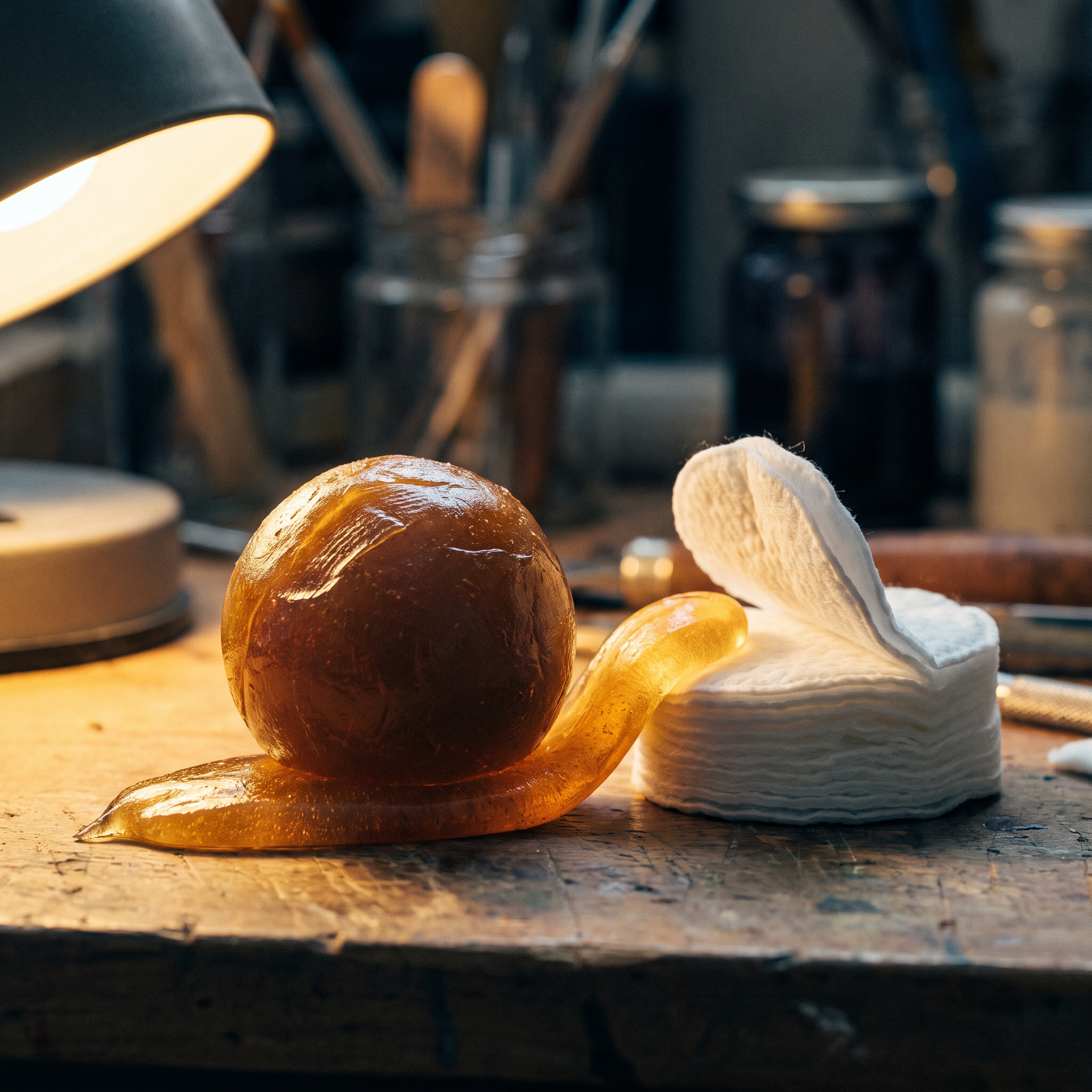
The stratum corneum is your skin’s outermost defensive barrier. It consists of protein-dense corneocytes embedded in an intercellular mortar of ceramides, cholesterol, and free fatty acids. Traditional hot resin waxes are chemically lipophilic. When spread across the body, traditional wax dissolves into and bonds directly with this extracellular lipid matrix. When you yank the wax strip away, it rips off multiple viable corneocyte layers alongside the hair. This mechanical epidermal avulsion causes burning redness, surface rawing, and marked transepidermal water loss.
A natural sugar wax kit behaves differently. Because inverted sugar is entirely hydrophilic, it repels skin lipids and cannot adhere to live, moisture-rich epidermal cells. Instead, the paste adheres exclusively to dry hair shafts and loose, dead desquamating corneocytes. The living epidermal barrier remains intact. Post-epilation redness typically fades within 30 to 60 minutes rather than lingering as inflamed erythema for days.
Extraction physics provides a second critical physiological advantage. In traditional waxing, the operator applies wax in the direction of hair growth and pulls backward against the growth. Human hair follicles exit the skin at an angle between 30 and 45 degrees. Pulling backward creates severe bending moments across the follicular opening. This shear force snaps between 15 and 30 percent of hairs below the surface. Fractured keratin fragments stay buried in the pore.
In contrast, sugaring hair removal applies paste against the hair growth to lift shafts upright and seep into the follicular ostium. The operator then flicks the paste in the natural direction of growth. This aligns tensile force along the follicular axis, removing the root bulb cleanly from the dermal papilla while cutting hair breakage below 5 percent.
Resin waxes heated in domestic microwave ovens routinely exceed 90°C (194°F) at the jar core due to uneven dielectric heating. Sugaring paste operates safely between 30°C and 37°C (86°F to 98°F), eliminating thermal contact burns.
How At-Home Sugaring Works on Face, Brow, and Body
Performing sugaring hair removal across diverse body zones requires adjusting your formulation density and mechanical application to match hair diameter and epidermal thickness.
Facial Epilation: Upper Lip, Chin, and Eyebrows
Facial skin features high sensory receptor density and delicate epidermal layers. Terminal hair on the chin and fine vellus hair on the upper lip require delicate handling. Strip-assisted soft sugar wax is optimal for facial grooming. Spreading a paper-thin layer of warm sugar gel with a wooden spatula gives millimeter-level edge precision along the brow arch. If you use precision grooming tools alongside topical skincare, see our full guide to the best facial tools to coordinate your routine safely.
Does sugar wax work on short hairs like a facial?
Sugar paste grips hair shorter than traditional hard wax can handle, but physics sets a firm lower boundary. The paste requires an exposed hair shaft length of at least 2 to 3 millimeters on the face to generate frictional shear. Very short facial stubble under 2 millimeters will slip through the paste, resulting in incomplete extraction and unnecessary skin tugging.
Is sugar wax less irritating than hard wax for the face?
Clinical data confirms sugar paste produces significantly less facial irritation than hard resin wax. Because sugar paste operates at skin temperature, it avoids cutaneous vasodilation that triggers persistent facial flushing. In addition, pure sugar pastes contain zero colophony derivatives, eliminating the allergic contact dermatitis frequently triggered by resin-based facial waxes.
Body Epilation: Legs, Arms, and Underarms
Large body planes like the calves and forearms are ideal for traditional hand-flick paste. Working with a golf-ball-sized portion of firm paste, you can mold and flick across broad areas repeatedly without changing paste pieces. Axillary underarm hair grows in multiple swirling growth vectors. When treating underarms, work in small postage-stamp-sized sections, checking the exit angle of each hair group before flicking.

Can you reuse sugar wax strips?
If your kit includes cotton or muslin epilation strips, you can wash and reuse them for dozens of sessions. Soak used strips in a basin of warm tap water for ten minutes. The sugar paste dissolves completely into the water, releasing trapped hair. Rinse the strips thoroughly, wash them in a hot laundry cycle with mild detergent, and dry them flat before your next epilation session.
Why does my skin break out after sugaring?
Post-epilation bumps usually fall into one of two non-infectious categories. Immediate small white bumps appearing within 2 hours represent a transient histamine reaction to physical follicular traction, which resolves on its own. Papules emerging 48 to 72 hours later often represent sterile pseudofolliculitis. When a hair shaft breaks beneath the surface, the sharp tip pierces the follicular wall. This triggers a sterile foreign-body granuloma rather than a bacterial infection.
Step-by-Step Preparation, Flicking Technique, and Pain Control
Mastering the hand-flick technique requires understanding skin stabilization and directional vector control. Executing the process methodically prevents bruising and maximizes clean bulb extraction.
| Phase | Action Required | Biomechanical Objective |
|---|---|---|
| 1. Exfoliation | Gentle scrub 48 hours prior | Clears loose corneocytes blocking the follicular canal |
| 2. Degreasing | Cleanse with 70% alcohol and dry | Removes surface sebum that prevents sugar adhesion |
| 3. Powder Prep | Dust lightly with pure cornstarch | Absorbs moisture and perspiration for consistent grip |
| 4. Application | Slowly smooth paste 3 times against growth | Seeps paste deep into follicular ostium around hair shaft |
| 5. Extraction | Flick briskly parallel with natural growth | Applies axial tensile force to pull bulb from dermal papilla |
| 6. Gating | Press gloved hand flat onto skin immediately | Stimulates A-beta mechanoreceptors to block spinal pain signals |
Preparing the skin starts two days prior. Using textured exfoliating gloves in the shower loosens cellular debris around follicle openings so hair shafts release smoothly. On treatment day, wash the skin thoroughly with gentle soap and dry completely. Wipe the area with 70 percent isopropyl alcohol to strip away body oils. Dust a thin veil of oil-free cornstarch or arrowroot powder over the zone. Never use talcum powder.
When executing the flick, maintain three points of skin tension. Use your non-dominant hand to stretch the skin completely flat and tight behind the paste ball. Loose skin stretches under traction. This causes bruising and severe burning pain. With your gloved dominant hand, mold the paste across the skin three times against the growth direction with light fingertip pressure. On the third pass, flick your wrist briskly parallel to the skin surface in the direction hair grows. Never pull upward away from the body.
Hair extraction stimulates thinly myelinated A-delta and unmyelinated C nociceptive fibers. Pressing your clean, gloved palm firmly against the skin immediately after each pull activates large, fast A-beta mechanoreceptors. Tactile signals reach the dorsal horn faster than pain impulses, exciting inhibitory GABAergic interneurons that close the neural gate to ascending pain.
Clinical Contraindications and Medication Pauses
Systemic oral isotretinoin (Accutane) is an absolute contraindication for all forms of waxing and sugaring. Patients currently taking oral isotretinoin, or who stopped within the preceding six months, must avoid epilation. Isotretinoin alters epithelial wound healing, downregulates sebaceous lipid production, and destabilizes epidermal basement membranes. These changes create severe risks of widespread epidermal tearing and scarring.
Topical retinoids like tretinoin, adapalene, and tazarotene require a strict procedural pause. Discontinue topical retinoid application on the treatment area for at least 7 to 14 days prior to sugaring. Pause chemical exfoliants including glycolic, lactic, and salicylic acids 3 to 5 days beforehand. This lets desmosomal cell adhesion recover.
The Truth About the Sugar Wax Recipe: Chemistry Versus Ready Kits
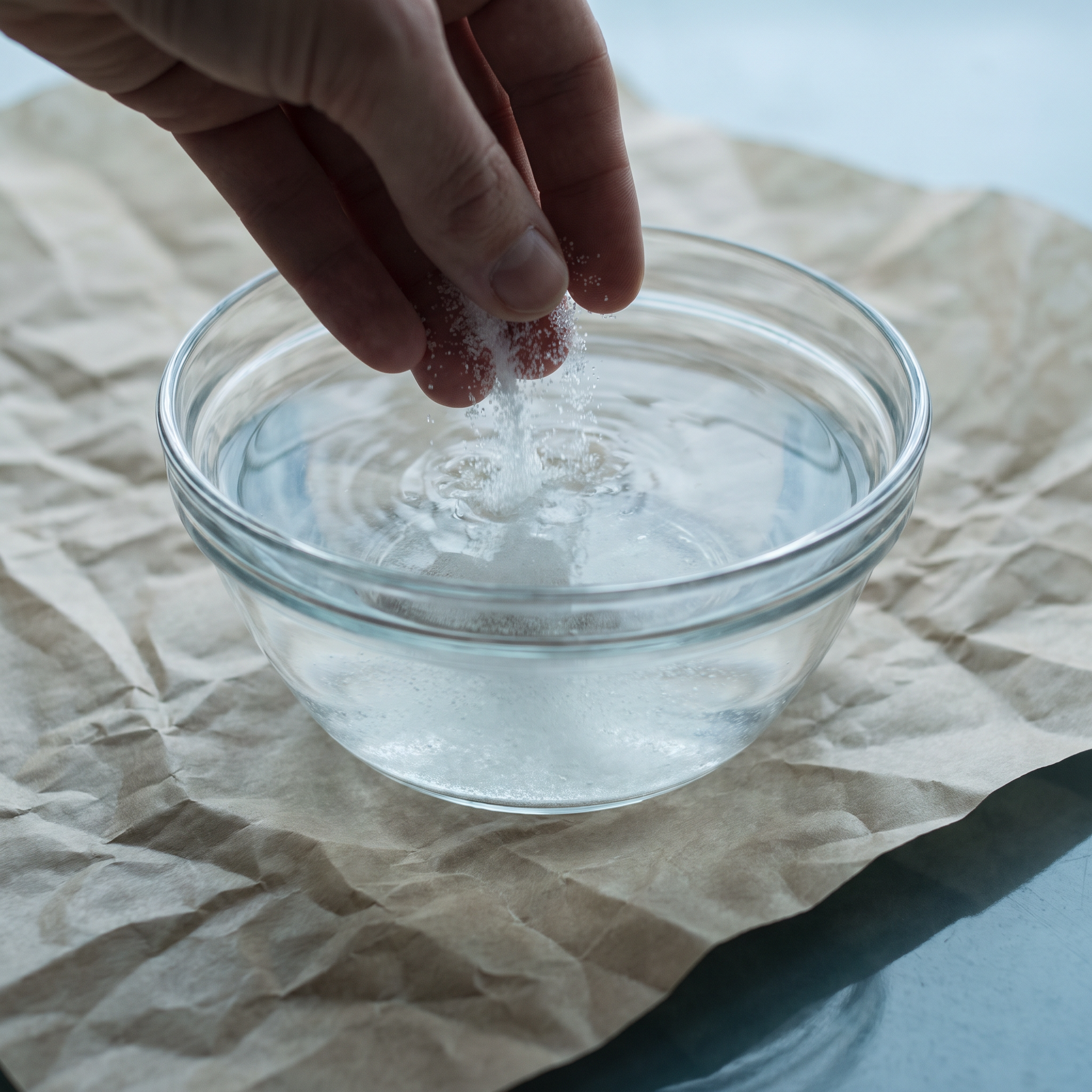
The internet abounds with DIY guides detailing a simple sugar wax recipe: 2 cups granulated sucrose, one-quarter cup water, and one-quarter cup fresh lemon juice. While the ingredients are household staples, the biochemical synthesis requires precise thermodynamic control.
When you boil sucrose in water with citric acid, hydronium ions cleave the glycosidic oxygen bond linking alpha-D-glucopyranose and beta-D-fructofuranose. This chemical reaction produces equimolar amounts of D-glucose and D-fructose, termed invert sugar. Because glucose and fructose possess distinct molecular shapes, they disrupt crystal lattice formation as the syrup cools. This produces an amorphous viscoelastic fluid rather than rock candy.
Achieving functional viscosity requires cooking the syrup precisely to the candy-making soft-ball stage, between 115°C and 118°C (239°F to 244°F). Under-cooking below 112°C leaves excess water in the matrix. This creates a runny syrup that melts into an unmanageable puddle on warm skin. Over-cooking above 122°C drives off too much moisture. This creates a brittle caramel. The caramel shatters when you try to mold it. Handling boiling sugar syrup at 118°C introduces severe burn hazards in home kitchens. Commercially stabilized kits eliminate cooking guesswork. They deliver calibrated rheology and shelf stability straight from the container.
Dense sugar pastes maintain an exceptionally low water activity below 0.60. Pathogenic bacteria like Staphylococcus aureus cannot grow in this high osmotic environment because osmosis pulls water out of microbial cells. However, introducing bath water or sweat into the container raises local moisture levels. This allows microbial proliferation. Never double-dip tools into the jar.
How to Undo the Mess When Sugar Waxing Goes Wrong
Every home epilation practitioner eventually encounters a sticky mishap. A paste ball gets overheated by warm hands, adheres to sweating fingers, or spreads into a tangled knot across hair without lifting cleanly. With traditional resin wax, this scenario creates panic because resin repels water and requires vigorous scrubbing with oils.
With a natural sugar formula, solving the problem requires basic solvation chemistry. Inverted sugar consists of polar carbohydrates displaying abundant hydrophilic hydroxyl groups. Plain warm water dissolves sugar paste within fifteen seconds. Follow this straightforward rescue protocol:
- Do Not Panic and Do Not Yank. Pulling repeatedly at a melted, stuck sugar blob tears epidermal tissue and causes painful subcutaneous bruising. Stop flicking immediately.
- Apply a Warm, Damp Washcloth. Soak a clean washcloth in warm tap water. Press the wet cloth directly over the stuck sugar patch and hold it in place for 15 to 30 seconds.
- Wipe Away Cleanly. The warm water forms hydration spheres around the glucose and fructose molecules, completely dissolving the paste matrix. The sugar wipes away effortlessly without residue, friction, or skin redness.
- Clean Fabrics and Towels. If sugar paste drops onto clothing, carpets, or bed linens, wash the fabric under warm running water. The sugar dissolves completely out of fabric weaves without leaving oily rings or permanent fabric discoloration.
The Verified Edit: Top Tested Sugar Wax Kits
Sugar Me Smooth Body Sugar Wax Kit – Gentle On Skin And Less Painful Hair Removal In A Simple System, No Strips, No Heat, Water Soluble All-Natural Solution For All Skin & Hair Types
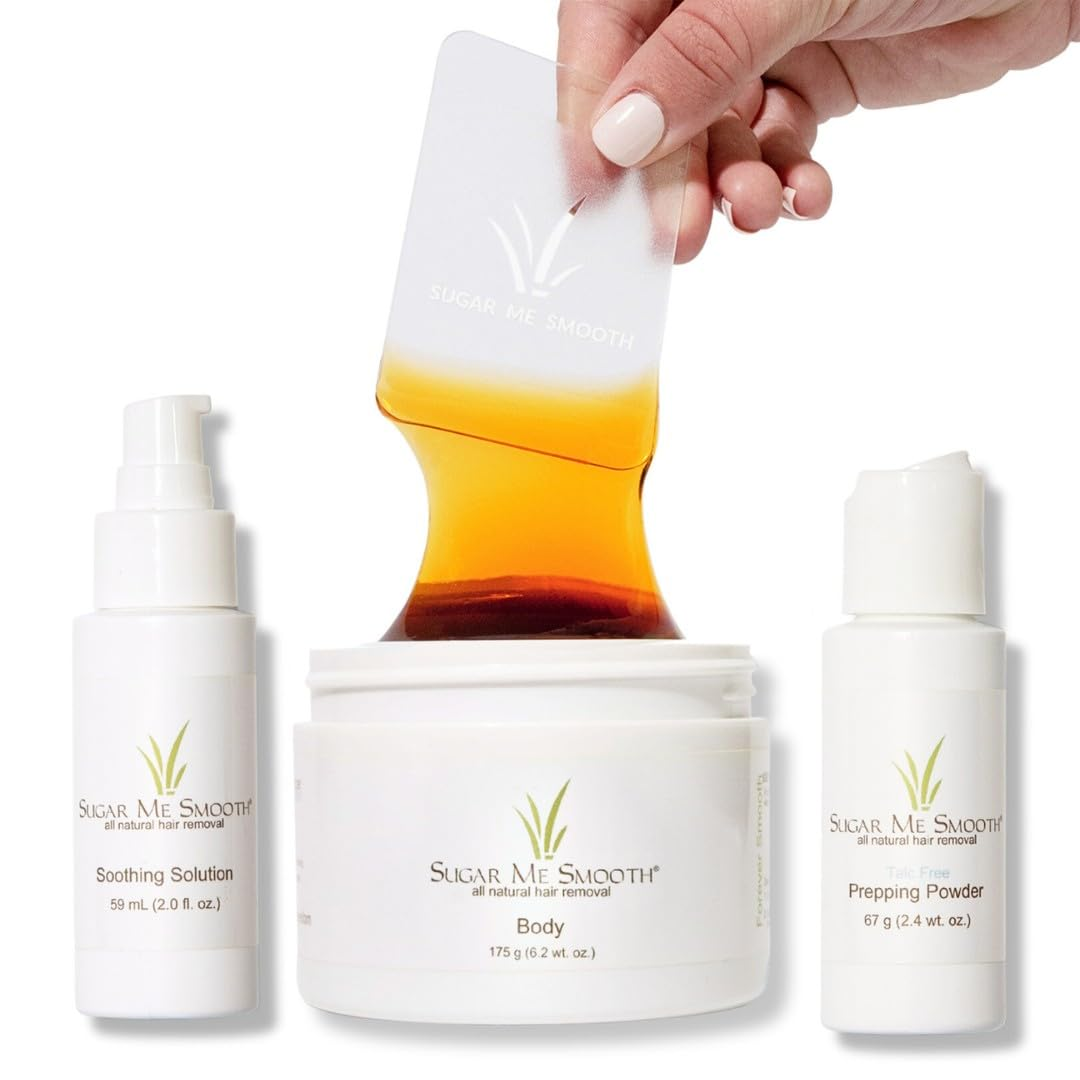
Sugar paste works at body temperature, so there is no heater and no burn risk. The included powder dries the skin first, which is the step that decides whether the paste grips hair instead of slipping.
Avery, Beautyisles Editorial Producer
- No microwave or warmer, so the kit travels as a closed box
- Prep powder absorbs oils so the paste holds the hair
- Rinses off with warm water and leaves no resin film
- Hand technique decides the result, and the first session is slow
- Warm hands soften the paste faster than you can roll it
Nad’s Natural Sugar Wax Kit, Vegan Hair Removal with Reusable Strips, 6oz

A strip-based sugaring kit, which is the easier route if hand technique is not your strength. The paste softens with body heat, and the cloth strips come back into service after a warm wash.
Avery, Beautyisles Editorial Producer
- Strips remove the paste evenly, so you avoid the learning curve
- Cleansing soap prep takes off lotion and oil before you wax
- Short six-ounce tub suits legs and arms without waste
- Strip waxing pulls the skin surface with the hair, which stings more
- Cloth strips lose their grip after several washes
Parissa Organic Sugar Wax Kit for Hair Removal | Face, Legs, Arms & Body
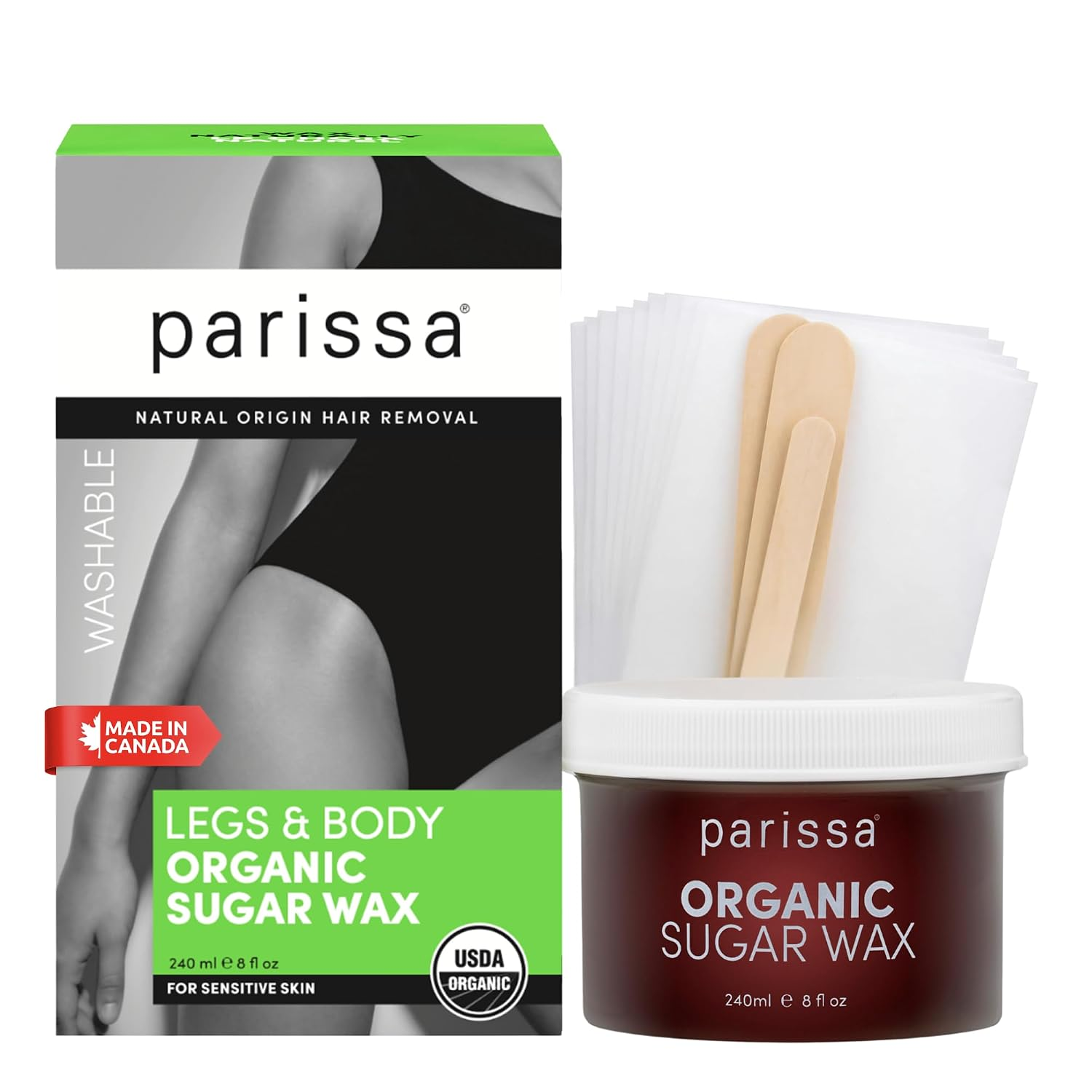
Parissa formulates for fine to medium hair, including facial down, and the chamomile base suits reactive skin. Brief microwave warming makes the paste thin enough to spread in a hair-direction film.
Avery, Beautyisles Editorial Producer
- Grips short, fine hairs that thick-body formulas miss
- Chamomile keeps the formula gentle on sensitive faces
- Fragrance-free and vegan, so fewer irritants on freshly waxed skin
- Coarse regrowth needs several sessions before the hair thins
- Overheating in a microwave makes the paste runny and hard to control
| Product | Format | Best For | Key Formula | Pricing |
|---|---|---|---|---|
| Parissa Organic Sugar Wax Kit | Strip-assisted soft sugar gel | Face, eyebrows, and sensitive areas | Organic sucrose, water, citric acid, chamomile | Check Price → |
| Sugar Me Smooth Body Hair Removal Kit | Traditional hand-flick paste | Full legs, bikini line, and body | Sucrose, fructose, water, lemon, olive oil | Check Price → |
| Nad’s Natural Sugar Wax Kit | No-heat molasses sugar gel | Beginners, arms, and fast cleanup | Molasses, sucrose, water, vinegar, lemon juice | Check Price → |
Frequently Asked Questions
How long does a wax last?
A proper epilation session keeps skin hair-free for 3 to 6 weeks. Unlike shaving, which slices the hair shaft at the surface plane, waxing and sugaring extract the intact root bulb from deep within the dermal papilla. Once you remove the root, the follicle stem cells in the outer root sheath bulge must rest. They receive biochemical growth signals, rebuild the hair matrix, and assemble a new keratin shaft. That new shaft must travel the length of the follicle canal to emerge. That biological synthesis takes 21 to 42 days. Because human follicles cycle asynchronously, hairs in late resting phases can emerge within 10 to 14 days. Consistent sessions synchronize follicle kinetics over time.
What removes wax from skin?
The correct remover depends entirely on whether your product is a carbohydrate sugar paste or a resin wax. Warm water removes sugar wax because inverted sucrose and fructose are completely hydrophilic. Pressing a damp, warm washcloth over sugar residue dissolves the matrix in 15 seconds without soap or friction. Traditional resin waxes are lipophilic and water-insoluble. Removing resin wax requires a non-polar plant or mineral oil, such as squalane, jojoba oil, or baby oil. Smooth the oil over the residue for 30 seconds to break down hydrocarbon bonds, then wipe clean with a cotton pad.
How to remove wax from clothes?
For sugar wax spills, rinse the garment under warm running tap water or run it through a standard warm wash cycle. The sugar dissolves completely out of fabric fibers without leaving stains or oily rings. For traditional resin wax, place an ice cube in a plastic bag over the stain. Once the wax hardens, gently scrape off surface chunks with a butter knife. Next, place brown paper bags or paper towels beneath and on top of the fabric. Press a warm household clothing iron without steam over the paper to melt and wick the wax out of the weave. Treat any remaining oily ring with liquid laundry detergent before washing.
How to make brazilian wax hurt less?
You can cut intimate epilation pain substantially by employing five evidence-based techniques. First, press your clean, gloved hand firmly onto the bare skin immediately after each pull. This manual pressure stimulates low-threshold mechanoreceptors. They send fast A-beta signals to the spinal cord, closing the dorsal horn gate before slow pain impulses reach the brain. Second, hold the surrounding skin bone-taut with your free hand to prevent skin dragging. Third, trim pubic hair to exactly one-quarter inch (4 to 6 millimeters). Fourth, schedule appointments during the follicular phase of your menstrual cycle, avoiding the pain-sensitive week before your period. Fifth, take 400 mg of ibuprofen 45 minutes prior to reduce inflammatory prostaglandins.
How long do pubes have to be to wax?
Pubic hair must measure exactly one-quarter inch long (4 to 6 millimeters), which matches the length of a single grain of long-grain rice. Coarse terminal pubic hairs sit anchored 3.5 to 4.5 millimeters deep in the dermis. Removing one hair takes up to 1.5 Newtons of tensile extraction force. If pubic hair is shorter than 4 millimeters, the paste cannot wrap around enough surface area. The formula slides off the shaft or snaps the tip without removing the root. If hair exceeds one-half inch (12 millimeters), the paste mats adjacent hairs together. This causes intense dragging and excessive pain. Trim long hair with scissors or an electric guard trimmer 24 hours beforehand.
What does paraffin wax do for feet?
Paraffin wax is an intensive conditioning treatment rather than a hair removal method. When you apply warm, melted medical-grade paraffin (heated safely to 48°C to 54°C) to the feet, it hardens into an impermeable hydrophobic coating. This occlusive seal drops transepidermal water loss to zero. It traps eccrine perspiration and heat within the thick plantar stratum corneum. The trapped moisture swells and softens tough intracellular keratin calluses while gentle thermal conduction dilates microvascular capillaries to soothe stiff joint tissues. Pair paraffin sessions with a dedicated at-home pedicure kit to smooth calluses and hydrate cracked heels effectively.
Editorial Sources
- Alder-Price AC, Watson K, Aston TL, Wagstaff MJ, Greenwood JE. Depilatory wax burns: experience and investigation. Eplasty. 2011;11:e25. PMCID: PMC3104899. PMID: 21625616.
- Chirife J, Herszage L, Joseph A, Kohn ES. In vitro study of bacterial growth inhibition in concentrated sugar solutions: microbiological basis for the use of sugar in treating infected wounds. Antimicrob Agents Chemother. 1983;23(5):766-773. PMID: 6870223. DOI: 10.1128/AAC.23.5.766.
- Chung JWY, Ng BMY, Wong TKS. An experimental study on the use of manual pressure to reduce pain in intramuscular injections. J Clin Nurs. 2002;11(4):457-461. PMID: 12100641. DOI: 10.1046/j.1365-2702.2002.00645.x.
- DeMaria AL, Flores M, Hirth JM, Berenson AB. Complications related to pubic hair removal. Am J Obstet Gynecol. 2014;210(6):528.e1-528.e5. PMID: 24486227. DOI: 10.1016/j.ajog.2014.01.036.
- Goossens A, Armingaud P, Avenel-Audran M, et al. An epidemic of allergic contact dermatitis due to epilating products. Contact Dermatitis. 2002;47(2):67-70. PMID: 12423402. DOI: 10.1034/j.1600-0536.2002.470202.x.
- Hoover E, Alhajj M, Flores JL. Physiology, Hair. In: StatPearls [Internet]. Treasure Island (FL): StatPearls Publishing; 2024. Bookshelf ID: NBK499948. PMID: 29763123.
- Karabey T, Karagözoğlu Ş. The effect of manual pressure after subcutaneous injection on pain and comfort levels. J Vasc Nurs. 2021;39(4):114-121. PMID: 34865724. DOI: 10.1016/j.jvn.2021.09.003.
- Khanna N, Chandramohan K, Khaitan BK, Singh MK. Post waxing folliculitis: a clinicopathological evaluation. Int J Dermatol. 2014;53(7):849-854. PMID: 24134338. DOI: 10.1111/ijd.12056.
- Melzack R, Wall PD. Pain mechanisms: a new theory. Science. 1965;150(3699):971-979. PMID: 5320816. DOI: 10.1126/science.150.3699.971.
- Olsen EA. Methods of hair removal. J Am Acad Dermatol. 1999;40(2 Pt 1):143-155. PMID: 10025738. DOI: 10.1016/s0190-9622(99)70181-7.
- Quain RD, Militello G, Crawford GH. Allergic contact dermatitis caused by colophony in an epilating product. Dermatitis. 2007;18(2):96-98. PMID: 17498415. DOI: 10.2310/6620.2007.06015.
- Spring LK, Krakowski AC, Alam M, et al. Isotretinoin and timing of procedural interventions: A systematic review with consensus recommendations. JAMA Dermatol. 2017;153(8):802-809. PMID: 28658462. DOI: 10.1001/jamadermatol.2017.2077.
- Tannir D, Leshin B. Sugaring: an ancient method of hair removal. Dermatol Surg. 2001;27(3):309-311. PMID: 11277903. DOI: 10.1111/j.1524-4725.2001.00175.x.
- Tiplica GS, Salavastru CM, Deleanu D, Cojocaru M, Bumbacea R. Association of glycerol and paraffin in the treatment of ichthyosis in children: an international, multicentric, randomized, controlled, double-blind study. J Eur Acad Dermatol Venereol. 2012;26(8):1024-1032. PMID: 22118417. DOI: 10.1111/j.1468-3083.2011.04304.x.
- Tous-Romero F, Vico-Alonso C, Pinilla-Martín B, Ortiz de Frutos J. Allergic contact dermatitis from a depilatory wax. Contact Dermatitis. 2020;83(1):51-52. PMID: 32212172. DOI: 10.1111/cod.13530.
- Truesdale MD, Osterberg EC, Gaither TW, Awad MA, Breyer BN. Prevalence of Pubic Hair Grooming-Related Injuries and Identification of High-Risk Individuals in the United States. JAMA Dermatol. 2017;153(11):1114-1121. PMID: 28813560. DOI: 10.1001/jamadermatol.2017.2815.
- Waked IS, Ibrahim ZM. Beneficial Effects of Paraffin Bath Therapy as Additional Treatment of Chronic Hand Eczema: A Randomized, Single-Blind, Active-Controlled, Parallel-Group Study. J Altern Complement Med. 2020;26(12):1179-1186. PMID: 33196289. DOI: 10.1089/acm.2020.0356.