
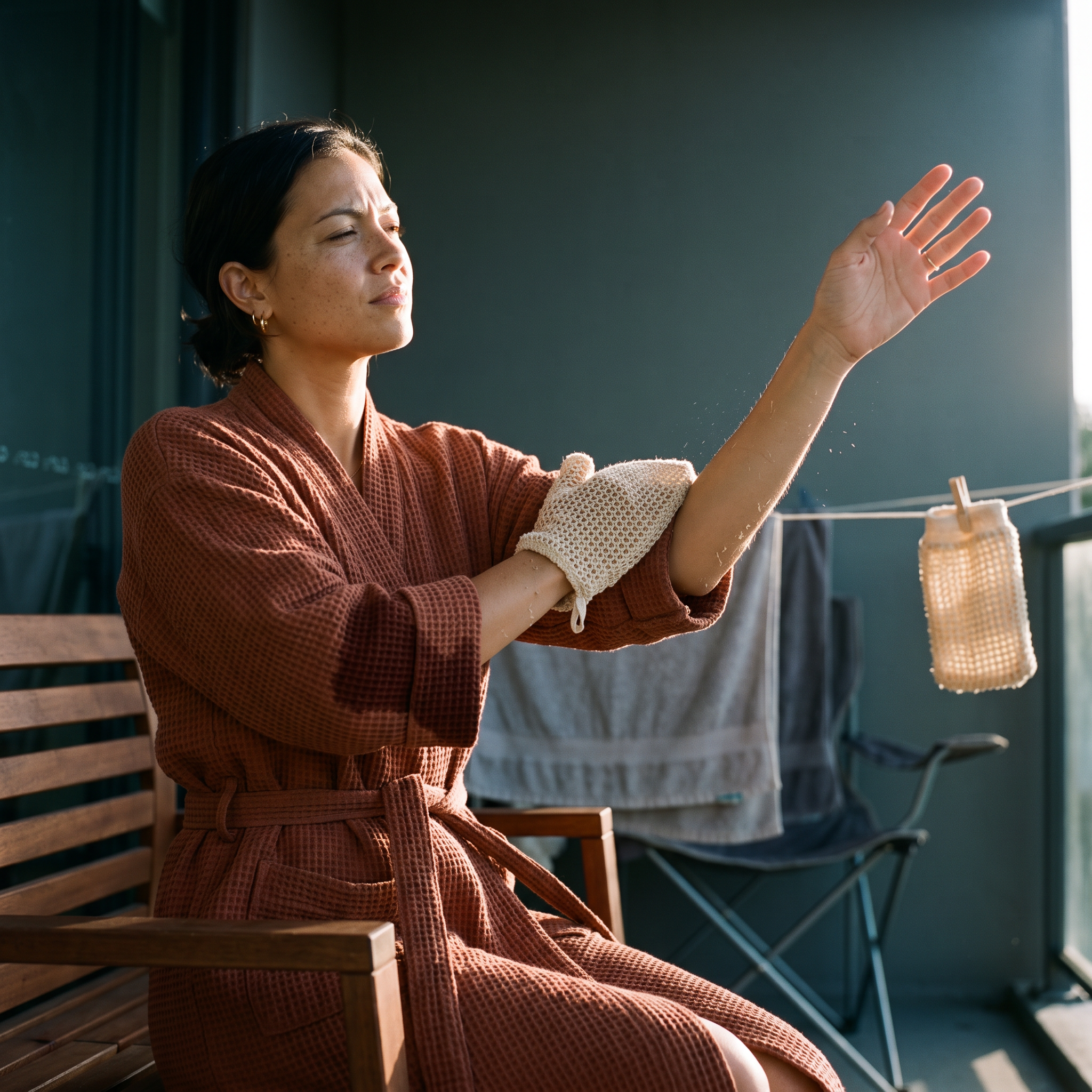
- Exfoliating gloves use friction, not desquamation, the skin’s own shedding of dead cells. Gloves pull whole cell sheets loose with shear force. They bypass your natural enzyme shedding process.
- Hydration triples textile drag. Water softens keratin and expands surface contact. You must keep hand pressure featherlight to prevent barrier tears.
- The fiber decides how safe a glove is. Viscose rayon, a soft plant fabric made from wood pulp, swells into rounded crepe ridges that roll dead cells away. Crepe means a fine crinkled texture. Stiff nylon mesh concentrates force like tiny rakes.
- Never scrub fresh shave zones. Shaving removes up to fifteen percent of your outer barrier. Scrubbing shaved skin causes severe burning and dermatitis.
- Protect your fragile zones. Keep coarse gloves away from the face, underarms, and bikini area. Use gentle chemical exfoliants or soft washcloths instead.
- Clean your gloves after every shower. Wet gloves trap shed skin cells and grow Pseudomonas biofilms, slimy layers of bacteria. Rinse, wring, and dry them outside the bathroom. Replace them monthly.
Stratum Corneum Desquamation and Friction Biomechanics
Your skin sheds dead cells every day through a quiet chemical sequence. Dermatologists call this outer layer the stratum corneum, the dead surface sheet of your skin. It works as a shield made of flattened, protein-rich cells called corneocytes. Tight microscopic protein bridges called corneodesmosomes hold these cells together.
Dermatologists call this natural shedding desquamation. It relies on specific enzymes. Two enzyme families, the kallikrein-related peptidases KLK5 and KLK7, break down these protein bridges. These enzymes work best in a moist, slightly acidic environment between pH 4.5 and 5.5. When moisture levels drop, enzyme activity slows down. Dead cells then stick together. They form dry, visible flakes across your skin.
Exfoliating gloves do not activate or assist these natural enzymes. Instead, exfoliating gloves apply direct mechanical force. When you drag abrasive fabric across your body, the fibers push sideways against your skin surface. If that force is stronger than the bonds between your cells, whole clusters of corneocytes break away at once.
Lab studies of friction show that soaking human skin in warm water raises its dynamic friction coefficient from 0.3 up to 1.2. This coefficient measures how hard two surfaces drag against each other. Waterlogged skin deforms easily under pressure. This broadens the contact area with synthetic textile fibers. Gentle strokes on dry skin become aggressive scraping forces on soaked skin.
Because wet skin triples textile drag, heavy scrubbing easily gouges past detached surface cells. Excessive force tears into the living layers of the epidermis, the skin under your surface. This strips vital ceramides and free fatty acids. Water from deeper tissues then evaporates rapidly into the air. Dermatologists track this moisture loss as transepidermal water loss, or TEWL. High water loss triggers a release of inflammatory messengers called interleukin cytokines. They leave your skin red, tight, and stinging.
Material Science: Viscose Rayon Crepe vs. Rigid Woven Nylon
Bath fabrics do not all behave the same way on skin. The way an exfoliating textile acts depends on two things: its fiber chemistry and its weave structure.
Viscose rayon comes from regenerated plant cellulose, a fiber made from wood pulp. When viscose fibers dry, they lie smooth and flat. Warm water changes that. The cellulose chains take in water and expand by twenty to thirty percent in diameter. This swelling forces the tightly spun yarn to pucker into microscopic ridges. We call this pattern a crepe weave, a fine crinkled texture.
When you sweep a damp viscose glove over soaked skin, these puckered ridges grip loose sheets of keratin, the protein inside dead cells. The ridges roll softened dead cells into visible grey cylinders. They do not puncture deeper tissue. Traditional Moroccan hammam treatments use this same rolling action to clean the body without harsh scratching.
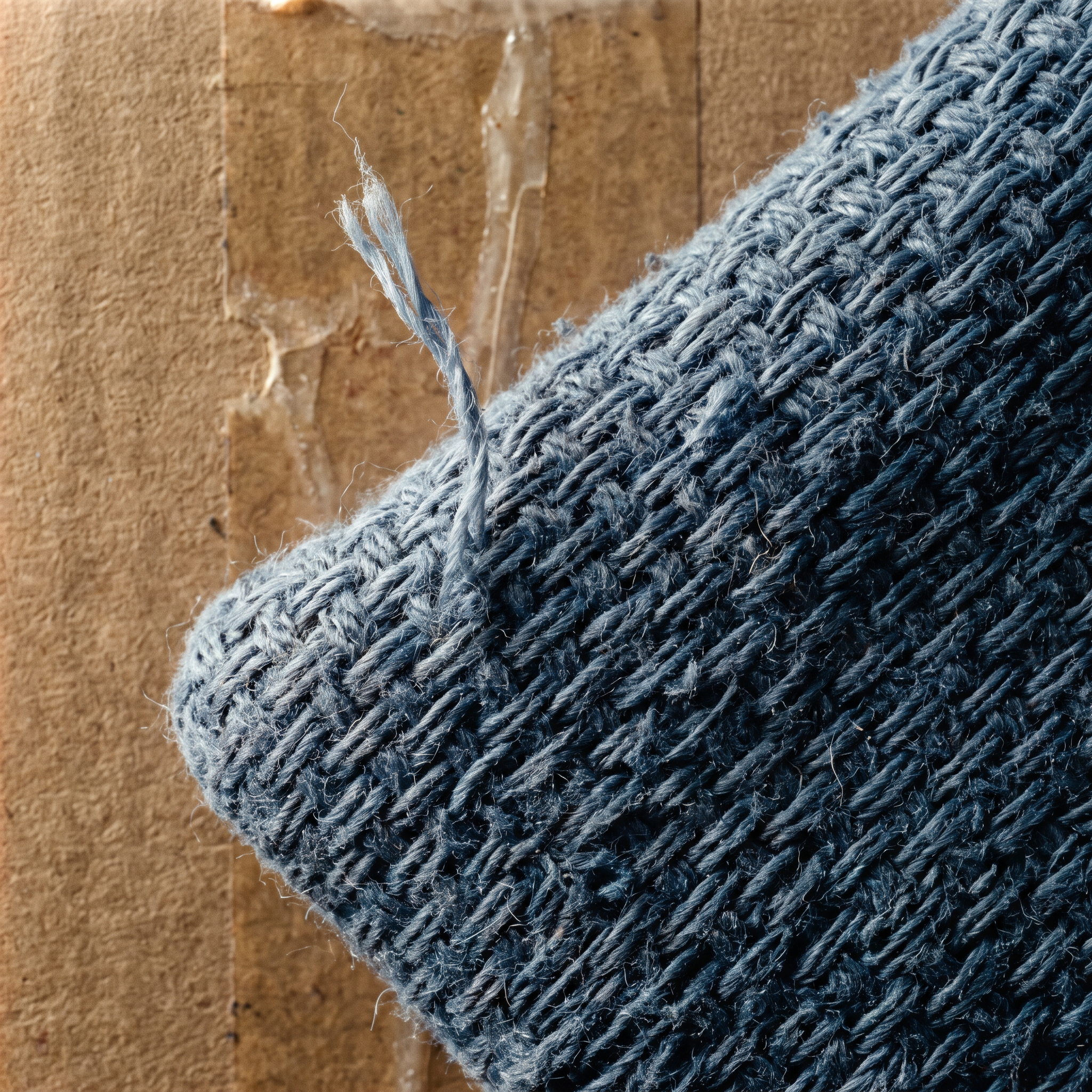
Standard mesh shower gloves use synthetic nylon or polyamide. Nylon is hydrophobic, so it absorbs almost no water. Its rigid filaments stay stiff and slick in a hot shower. The sharp crossings in woven nylon act like tiny rakes across your body. If you press hard over curved bones, those stiff filaments focus strong pressure onto tiny contact points.
| Textile Material | Fiber Architecture | Behavior When Wet | Skin Contact Mechanics | Primary Dermatological Risk |
|---|---|---|---|---|
| Viscose Rayon (Crepe Weave) | Regenerated wood cellulose | Swells 20–30%, forms puckered crepe ridges | Grips and rolls cohesive keratin cylinders | Excessive friction on unsoaked skin |
| Woven Nylon / Polyamide | Molded synthetic thermoplastic | Remains rigid. Does not soften or swell | Concentrates pressure on sharp filament apexes | Micro-scratches and friction melanosis, dark patches from rubbing |
| Terrycloth Cotton | Hydrophilic looped natural yarns | Softens completely with very low friction | Gently wipes loose squames without shear | Minimal abrasion. Safe for sensitive skin |
| Natural Sisal / Jute | Lignified coarse plant fibers | Maintains stiff, bristled point contacts | High point-load drag across surface relief | Barrier stripping and micro-fissuring |
The Physical Exfoliation Spectrum: Gloves, Mitts, Towels, and Brushes
Modern body care offers many physical tools to smooth rough skin. Every format applies mechanical shear differently across your skin barrier.
Two-Body Textile Friction vs. Three-Body Scrub Abrasion
A traditional body scrub works through three-body abrasive wear. The system has three parts: your hand, the skin surface, and loose grains held in an emulsion, a blend of oil and water. Sugar, salt, or crushed shells roll across your skin under manual pressure. Emollient oils in the formula act as a liquid cushion. They spread force evenly. However, a sugar body scrub dissolves as you rinse, so it limits abrasive exposure.
In contrast, exfoliating gloves provide direct two-body abrasion. There is no protective lotion buffer between the woven textile and your skin. The glove keeps abrading until you stop moving your hand. This gives you instant smoothness, but it also raises your risk of over-stripping the protective lipid barrier.
Handheld Mitts vs. Five-Finger Gloves
An exfoliating mitt has a broad palm sleeve without separate fingers. This paddle shape spreads hand force downward across a wide surface area. That prevents sharp fingertip pressure spikes. It works well across wide, flat areas like your thighs, calves, and torso.
Five-finger gloves give you more hand dexterity. You can clean easily around toes, heels, and wrists. However, users often press down with their bare fingertips. That creates concentrated friction points. If you choose a five-finger design, keep your palms flat so pressure spreads evenly.
Long-Reach Tools: Towels and Back Scrubbers
A woven exfoliating towel measures roughly thirty centimeters wide by ninety centimeters long. It comes from Japan and Korea. You grip both ends and scrub the back of your torso with a sawing motion. This two-handed pull multiplies fabric tension over curved bones.
A rigid back scrubber on a wooden handle creates similar force. Your fingertips cannot feel the pressure there, so people routinely press hard across the upper spine and shoulder blades. Clinical studies show that forceful daily rubbing with nylon back towels is the main cause of friction melanosis over bony prominences. If you clean your back with a long tool, use broad, gentle sweeps and avoid hard sawing across your vertebrae.
Dry Brushing Mechanics
A stiff dry brush works on dry, unhydrated skin before bathing. The bristles press pinpoint force onto dry corneocytes. dry brushing body routines bring redness to the skin surface. That flush comes from a nerve reflex that widens tiny dermal capillaries. It does not come from internal lymphatic cleansing. Stiff bristles can easily gouge micro-fissures into dry, stiff skin. If you have eczema, active breakouts, or xerosis, which means very dry skin, avoid dry brushing entirely.
Compliant Tools: Sponges and Washcloths
An open-cell exfoliating sponge bends easily when pressed against body curves. Saturated natural konjac sponges produce a slippery water cushion with very low friction. They sweep away loose debris safely, so they suit sensitive areas. However, porous sponges dry very slowly. Their internal pores trap dead skin cells and soap residue. The damp sponge then becomes a high-risk incubator for bacteria.
A clean cotton washcloth remains the clinical standard for low-shear cleansing. Soft looped cotton pile gives just enough texture to clear loose surface flakes. It does not disturb the lipid layers between your cells. If your skin barrier looks red and sore, or peels after sunburn, set aside rough tools. Cleanse only with a plush cotton washcloth.
Mechanical Tools vs. Chemical Body Exfoliators
Any full body exfoliator plan balances physical friction against chemical desmolysis, which means dissolving the bonds between dead cells. Physical tools lift loose, stuck-on flakes at once. Yet manual tools cannot fix uneven cell turnover inside hair follicles. Leave-on chemical lotions with lactic acid, salicylic acid, or urea dissolve those tiny bonds evenly. They smooth rough keratosis pilaris bumps without the tearing risk of manual scrubbing.
Vetted Luxury Exfoliating Gloves: Editorial Review
We tested dozens of bath mitts and shower gloves for material purity, seam durability, friction control, and easy cleaning. These three picks work well without damaging your skin barrier.
Baiden Mitten Superior Exfoliator Glove,Facial, Body Scrub,Best Firming Dry Skin Treatment,Repair Wrinkles Remove Blackheads Scars,Professional Grade (3pack)
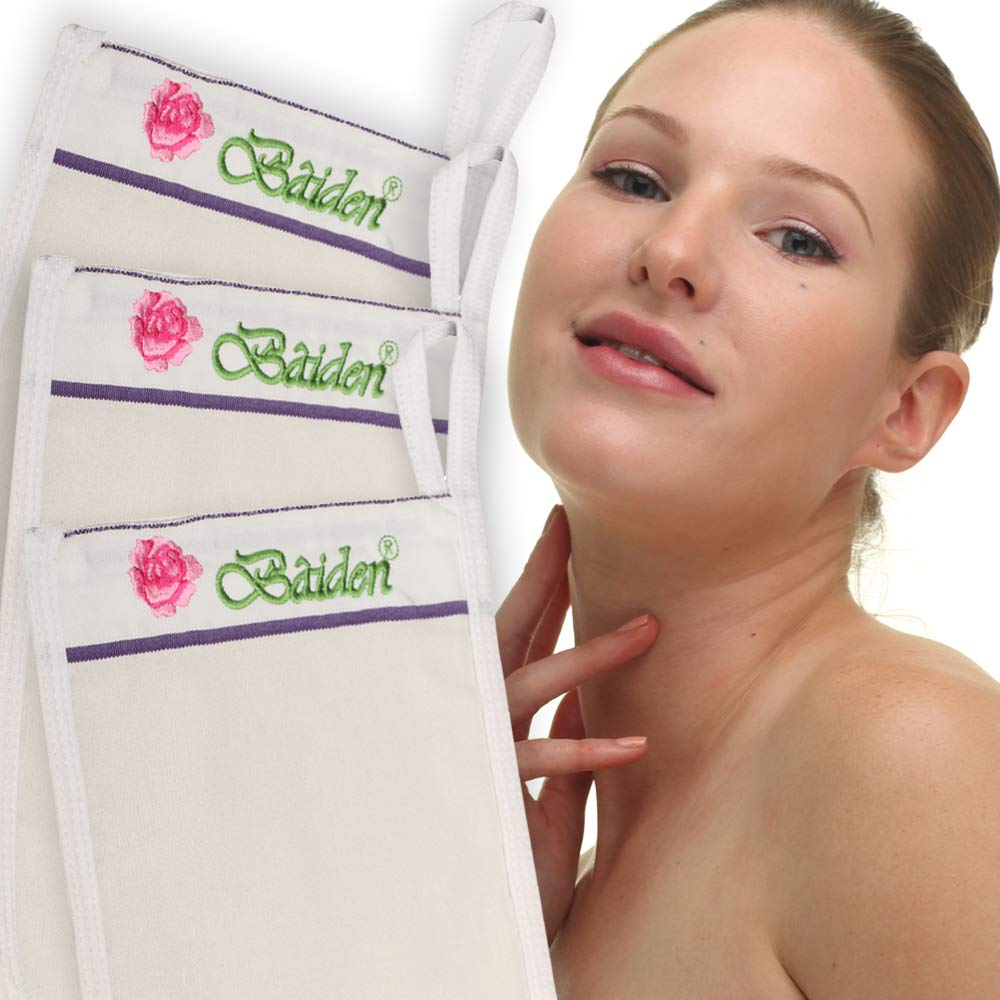
A pack of three coarse viscose mitts, which is the practical way to run a weekly routine. One stays at the house while the others dry, because a mitt that never dries is a bacterial problem.
Avery, Beautyisles Editorial Producer
- Rotating three mitts keeps a clean, dry one available
- Works with water alone, so no extra product is needed
- Coarse weave lifts visible flakes from the arms and legs
- Too abrasive for the face, neck or any sunburned skin
- The weave frays after months of machine washing
Original Deep Exfoliating Mitt for Body – Premium Turkish Kessa Dead Skin Remover & Body Exfoliator for Keratosis Pilaris & Self-Tan Removal, Natural Skin Care Glove for Smooth Skin
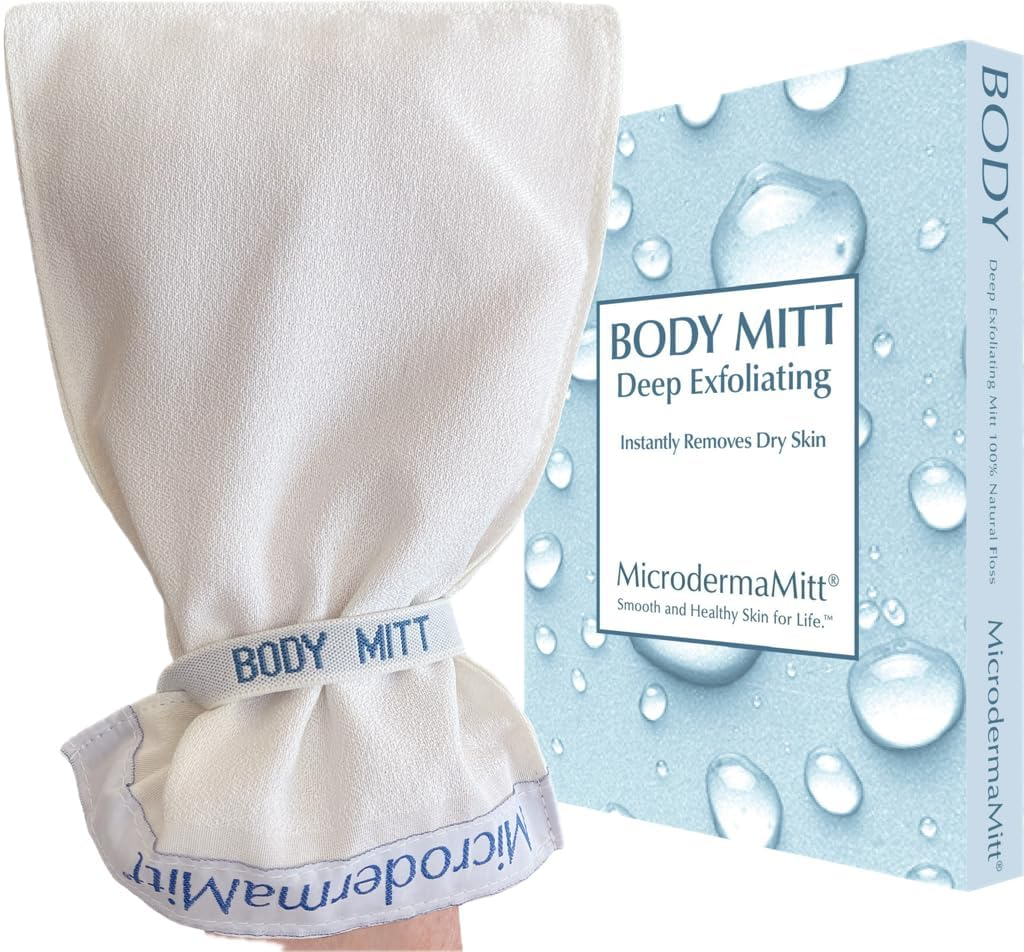
This is the hammam mitt, woven from plant floss rather than synthetic viscose. It grips soaked skin hard, so it belongs on the legs and back after ten minutes of steam, not on the face.
Avery, Beautyisles Editorial Producer
- Open natural weave lifts visible sheets of soaked skin
- Reinforced seams hold during a firm two-handed stroke
- Helps clear rough keratosis bumps on the upper arms
- Needs a long soak first, so the shower routine gets longer
- Stiff natural fibre feels harsh on delicate areas
Earth Therapeutics Exfoliating Hydro Gloves, Natural

A finer weave for readers who find a kesse mitt too aggressive. It takes off loose surface cells without the visible rolling, so it suits a twice-weekly routine on drier or reactive skin.
Avery, Beautyisles Editorial Producer
- Gentler texture suits skin that reddens easily
- Cuffed glove fit keeps the mitt from twisting mid-stroke
- Takes a normal cleanser instead of requiring water-only use
- One pair gives you no rotation while the other dries
- Lighter texture means less visible lifting on thick heels
| Tool Format | Material Structure | Contact Friction Profile | Target Body Area | Safe Frequency | Pricing |
|---|---|---|---|---|---|
| Baiden Mitten, three pack | Coarse woven viscose | High shear with visible rolling | Arms, legs, back and torso | Once every 1-2 weeks | Check Price → |
| Turkish Kesse Deep Mitt | Natural plant floss with reinforced seams | Deep mechanical drag after soaking | Legs, feet, upper arms and back | Once every 1-2 weeks | Check Price → |
| Earth Therapeutics Hydro Gloves | Fine textured nylon knit | Moderate lather friction | Full body wash, including the feet | 1-2x per week | Check Price → |
Clinical Step-by-Step Body Exfoliation Protocol
To clear dead surface keratin without damaging your barrier, follow this clinical protocol step by step. Rushing with dry gloves causes tiny epidermal tears at once.
Phase 1: The Ten-Minute Warm Soak
If you start scrubbing dry or only briefly wet skin, your stratum corneum stays rigid. Soak in a warm shower or bath for eight to ten minutes before you use any tool. Warm water softens keratin intermediate filaments and swells the clumps of dead flakes. This enzymatic loosening prepares dead cells to release easily.
Phase 2: Light Linear Sweeps
Slip on your wet viscose mitt. Step away from direct running water so soap does not make the glove slide out of control. Stroke your limbs in long, upward sweeps toward your heart. Never scrub in aggressive circular motions over the same patch of skin. Circular scrubbing concentrates shear force on thin epidermal peaks. That creates micro-abrasions.
Keep your contact pressure featherlight. Let the textured ridges catch softened cells. If you do not see dead skin rolling into visible curls, do not press harder. Rubbing skin that is not ready yet causes fresh barrier abrasion.
Phase 3: Respecting Anatomical Boundaries
Skin varies a lot across your body. The heels and outer thighs have thick, tough epidermal layers. Other zones stay fragile. For delicate facial care, read our guide to the best facial tools instead of body gloves.

Avoid dragging rough gloves across your collarbones, spine, and hip crests. Pressing thin skin against the bone below kills basal cells. In skin-fold regions, friction leaves dark marks after inflammation.
Phase 4: Immediate Three-Minute Moisture Sealing
Rinse away the loosened keratin flakes with lukewarm water. Step out of the shower and pat yourself dry with a clean cotton towel. Within three minutes of drying, apply a generous layer of barrier-repair lotion rich in ceramides, squalane, or petrolatum. Petrolatum is a heavy petroleum jelly that seals water in. Lotion applied right away locks that water film in place before high TEWL dries out living cells.
For thick calluses on the soles of your feet, mechanical gloves give too little abrasion. Use a specialized pedicure kit with calibrated foot files. If you plan full-body hair removal, read our protocol for a sugar wax kit. Clear your pores twenty-four hours beforehand, without surface chafing.
Shaving and Exfoliation Biomechanics: Pre-Shave vs. Post-Shave
Many people wonder whether to exfoliate before or after hair removal. The dermatological answer is firm: always exfoliate before shaving, and never exfoliate immediately after.
Why Pre-Shave Exfoliation Prevents Follicular Bumps
Blade shaving cuts hair at the entrance of the hair pore, the follicular ostium. Dead skin cells and sebum, your skin’s natural oil, collect around this tiny opening. When you shave over clogged pores, sharp cut hair tips often curl backward. They then re-enter the dermis, the living layer under your surface. This causes painful pseudofolliculitis.
Gentle exfoliation twelve to twenty-four hours before shaving clears the plugs inside hair follicles. It frees trapped hair shafts and levels the skin plane around them. Your razor blade can then glide cleanly across the surface. That reduces cuts and hair snags.
Why Post-Shave Scrubbing Causes Severe Dermatitis
Razor blades are surgical steel wedges with sharp microscopic edges. Clinical trials by Cowley and Vanoosthuyze show that blade shaving skims away ten to fifteen percent of your outer stratum corneum. Hair shafts come away with it. Shaving leaves your skin partly raw and very sensitive.
If you drag an abrasive glove over freshly shaved skin, you add a second physical injury on top of the first. Coarse fibers scrape the exposed granulosum layer, the living tissue just under your surface. That inflames nerve endings and triggers severe razor burn. Scrubbing freshly shaved skin also drives bath bacteria straight into open follicles. This causes acute pustular folliculitis.
Never squeeze inflamed post-shave bumps with your fingers. For clogged facial pores, use a precision comedone extractor under clean conditions. Do not scrape irritated follicles with body mitts.
Friction Melanosis, Macular Amyloidosis, and Skin of Color (Fitzpatrick IV–VI)
Aggressive scrubbing carries real risks to skin color, especially for people with melanin-rich complexions. Dermatologists group deeper skin tones as Fitzpatrick skin types IV, V, and VI. That scale ranks skin from I to VI by how easily you burn or tan.
Keratinocytes release inflammatory chemicals when friction injures them. Membrane damage then activates enzymes that synthesize prostaglandin E2 and endothelin-1. These signals attach directly to melanocyte receptors. They raise the activity of tyrosinase, the enzyme that makes melanin, so melanin forms faster. In deeper skin tones, melanocytes hold larger melanosomes, the packets that carry melanin, and those react harder to friction. So harsh scrubbing darkens underarms, inner thighs, and acne spots instead of brightening them.
Macular Amyloidosis (Nylon Towel Dermatitis)
Long-term friction causes an even more severe condition, macular amyloidosis. In it, shed protein clumps build up in the upper skin and leave dark, rippled patches. Japanese doctors first recorded it as nylon towel dermatitis. It stems from forceful daily scrubbing with stiff bath towels across the upper back and spine.
Repeated mechanical compression against the bone below destroys basal keratinocytes. Damaged keratin filaments then collapse into the upper dermis and harden into stubborn amyloid protein deposits. Melanin also leaks into the dermal layer, where macrophages, the skin’s scavenger cells, consume it. This leaves permanent, dark, rippled pigmentation across the back. Because that pigment sits deep within the dermis, standard cosmetic bleaching creams cannot remove it.
To avoid friction melanosis, stop using stiff nylon back scrubbers. If you have darker skin, limit manual mitt exfoliation to once every two weeks. Use light pressure. Or rely on non-shearing chemical exfoliants like five-percent lactic acid.
Decontamination Protocols and Preventing Pathogenic Biofilms
Bath mitts and shower gloves trap shed dead cells, moisture, and soap lather, so they quickly become microbial breeding grounds. Damp synthetic textiles hanging inside a warm shower stall give dangerous pathogens an ideal place to grow.
Microbial Threats: Pseudomonas and Staphylococcus
Landmark studies by Bottone and colleagues found that bath accessories carry huge bacterial populations within forty-eight hours of first use. Pathogen counts routinely exceed one million colony-forming units per gram of textile material.
The main organism there is Pseudomonas aeruginosa, a Gram-negative bacterium that thrives in warm, wet settings. Pseudomonas secretes a protective slime layer. That slime sets up tough bacterial biofilms inside the fabric weave. When you scrub your body with a glove full of germs, coarse fibers make microscopic openings. Those openings push bacteria straight into hair follicles. This causes widespread pseudomonas folliculitis, an intensely itchy rash of pus bumps at each follicle.
Damp bath textiles also carry Staphylococcus aureus and the oil-loving yeast Malassezia. Spreading these germs over warm trunk skin triggers stubborn folliculitis breakouts. Regular acne cleansers do not settle them.
Strict Glove Sanitization Protocol
To keep your exfoliating accessories safe, follow this three-stage hygiene routine:
- Clean it right after the shower. After every session, wash your glove well under hot running water with antibacterial soap, until no lather or skin residue remains. Wring out all excess water.
- Move it out of the bathroom. Never hang damp gloves inside a closed shower stall. Humid air stops drying and feeds fungal mold. Hang the clean glove in an airy, low-humidity room near a window or fan.
- Use hot water once a week. Wash synthetic gloves weekly in a washing machine on a hot cycle at sixty degrees Celsius (one hundred forty degrees Fahrenheit). High heat breaks down fungal spores and destroys bacterial cell walls. Or soak the glove for fifteen minutes in a ten-percent bleach solution, then rinse well.
- Replace them every month. Throw away and replace your synthetic exfoliating gloves every four weeks. Frayed micro-filaments hold biofilms that home laundering cannot remove.
Frequently Asked Questions
How to exfoliate face?
Never put coarse body exfoliating gloves or nylon scrub mitts on your face. Facial skin is much thinner than body skin. It has only eight to twelve cell layers. Facial tissue also carries a delicate network of surface capillaries. Heavy textile shear tears this fragile barrier. It breaks facial spider veins and triggers burning, rosacea flare-ups, or acne mechanica.
To exfoliate your face safely, choose mild chemical exfoliants such as five-percent lactic acid, two-percent salicylic acid, or gentle polyhydroxy acids. If you prefer manual cleansing, use a soft natural konjac sponge or a plush cotton washcloth with a gentle soap-free cleanser. Glide the wet sponge in featherlight circular motions for twenty seconds without downward pressure, then seal with a ceramide cream.
How to exfoliate skin?
Exfoliating body skin safely requires thorough pre-soaking and low contact friction. Stand in a warm shower or soak in a tub for eight to ten minutes to soften outer keratin bonds. Put on a thoroughly wetted viscose rayon mitt or soft shower glove. Step away from direct running water.
Apply gentle, upward strokes along your arms and legs. Keep hand pressure very light. Do not scrub back and forth or press hard over the same spot. Avoid thin skin over your collarbones and spine. Rinse away loose flakes with lukewarm water. Pat skin damp and apply a ceramide-rich barrier moisturizer within three minutes to prevent water loss.
Do you exfoliate before or after shaving?
Always exfoliate before shaving, and never exfoliate immediately after. Exfoliating twelve to twenty-four hours before shaving clears dead cell buildup around hair pores. This straightens the hair fiber. Razor blades then cut cleanly without catching, so painful ingrown hairs appear less often.
Blade shaving acts as an aggressive physical exfoliant. It removes ten to fifteen percent of your outer stratum corneum. If you scrub immediately after shaving, you drag rough fibers across raw, micro-nicked skin. This causes severe razor burn, acute irritant contact dermatitis, and long-lasting post-inflammatory dark marks.
How often should you exfoliate?
Exfoliate your body only once or twice per week at most. Epidermal cells take twenty-eight to forty days to mature and shed naturally. When you remove surface cells by friction, your skin needs twenty-four to seventy-two hours to rebuild its protective lipid matrix.
Daily glove exfoliation strips skin faster than cells can rebuild those lipids. This leads to chronic barrier breakdown, persistent moisture loss, dry tightness, and pathogen vulnerability. If your skin feels sensitive, itchy, or stings when you apply basic lotion, stop using physical tools for two weeks. That gives your barrier time to recover fully.
What is a good exfoliator for face?
A good facial exfoliator uses gentle chemical acids instead of abrasive friction. Chemical exfoliants dissolve the protein bonds between dead cells evenly. That avoids the micro-scratches and broken capillaries that physical scrubs cause.
For oily or breakout-prone skin, use a one-to-two percent salicylic acid serum. Salicylic acid dissolves the oil that clogs your pores without irritating the surface. For dry or sun-damaged skin, choose a five-to-ten percent lactic acid lotion. It adds moisture while it sheds dull cells. For reactive or sensitive skin, select gluconolactone, a PHA, at four to eight percent. It smooths the surface without burning.
How to exfoliate underarms?
Never scrub your underarms with coarse exfoliating gloves, stiff brushes, or gritty scrubs. The underarm is an intertriginous fold, a crease where skin rubs skin. It stays warm, holds trapped sweat, and faces constant friction. Its skin barrier is thin and slightly alkaline, so moisture softens it easily.
Scrubbing this fragile area causes friction burns, bacterial infections, and severe post-inflammatory darkening. Cleanse your underarms daily with a soft cotton washcloth, warm water, and a mild cleanser. To prevent ingrown hairs and body odor, apply a gentle leave-on toner. Use five-percent lactic acid or one-percent salicylic acid once or twice weekly on clean, dry skin. Wait twenty-four hours after shaving before you apply acid toners.
How to exfoliate bikini area?
The bikini line has thin, sensitive skin that faces constant friction from walking and clothing elastic. Coarse, curved pubic hairs curl back into follicles, so ingrown bumps appear easily there. Scrubbing this delicate area with rough gloves also causes micro-tears and dark pigmentation marks.
To smooth the bikini line safely, soak in a warm bath for ten minutes to soften coarse hair shafts. Gently wipe the outer skin with a plush cotton washcloth. Apply an alcohol-free two-percent salicylic acid serum to the outer bikini line two nights per week to keep pores clear. Put products only on external skin. Never use scrub mitts or chemical acids on delicate mucosal tissue.
Editorial Sources
- Caubet C, Jonca N, Brattsand M, Guerrin M, Bernard D, Schmidt R, Egelrud T, Simon M, Serre G. Degradation of corneodesmosome proteins by two serine proteases of the kallikrein family, SCTE/KLK5/hK5 and SCCE/KLK7/hK7. Journal of Investigative Dermatology. 2004;122(5):1235-1244. Documented enzymatic proteolysis as the natural pathway of stratum corneum desquamation. PMID: 15140227. DOI: 10.1111/j.0022-202X.2004.22512.x.
- Gerhardt LC, Strässle V, Lenz A, Spencer ND, Derler S. Influence of epidermal hydration on the friction of human skin against textiles. Journal of the Royal Society Interface. 2008;5(28):1317-1328. PMCID: PMC2607421. Demonstrated a three-fold surge in the dynamic skin-textile friction coefficient under hydrated conditions. PMID: 18331977. DOI: 10.1098/rsif.2008.0034.
- Rawlings AV. Trends in stratum corneum research and the management of dry skin conditions. International Journal of Cosmetic Science. 2003;25(1-2):63-95. Evaluated mechanical abrasive wear and cohesive corneocyte sheet detachment. PMID: 18494884. DOI: 10.1046/j.1467-2494.2003.00174.x.
- Fluhr JW, Feingold KR, Elias PM. Transepidermal water loss reflects permeability barrier status: validation in human and rodent in vivo and ex vivo models. Experimental Dermatology. 2006;15(7):483-492. Showed the rapid elevation of TEWL following mechanical surface trauma and subsequent 48-hour lipid recovery timelines. PMID: 16761956. DOI: 10.1111/j.1600-0625.2006.00437.x.
- Callender VD, St Surin-Lord S, Davis EC, Maclin M. Postinflammatory hyperpigmentation: etiologic and therapeutic considerations. American Journal of Clinical Dermatology. 2011;12(2):87-99. Detailed the stimulation of epidermal melanocytes by frictional shear via prostaglandin E2 cascades. PMID: 21348540. DOI: 10.2165/11536930-000000000-00000.
- Siragusa M, Ferri R, Cavallari V, Schepis C. Friction melanosis, friction amyloidosis, macular amyloidosis, towel melanosis: many names for the same clinical entity. European Journal of Dermatology. 2001;11(6):545-548. Clarified the histology of macular amyloidosis induced by synthetic bath towels over bony prominences. PMID: 11701405.
- Cowley K, Vanoosthuyze K. Insights into shaving and its impact on skin. British Journal of Dermatology. 2012;166(Suppl 1):22-28. Quantified that blade shaving physically excises 10% to 15% of the stratum corneum in a single session. Corroborated in Cowley K, Vanoosthuyze K. The biomechanics of blade shaving. International Journal of Cosmetic Science. 2016;38(Suppl 1):17-23. PMID: 22385029. DOI: 10.1111/j.1365-2133.2011.10783.x.
- Bottone EJ, Perez AA 2nd, Oeser JL. Loofah sponges as reservoirs and vehicles in the transmission of potentially pathogenic bacterial species to human skin. Journal of Clinical Microbiology. 1994;32(2):469-472. PMCID: PMC263059. Recovered massive biofilms of Pseudomonas aeruginosa and Staphylococcus aureus from in-use bath accessories. Corroborated in Bottone EJ, Perez AA. Pseudomonas aeruginosa folliculitis acquired through use of a contoured loofah sponge in an otherwise healthy host. Journal of Clinical Microbiology. 1993;31(9):2481-2483. PMCID: PMC265780. PMID: 8150959. DOI: 10.1128/jcm.32.2.469-472.1994.
- Kalra MG, Higgins KE, Kinney B. Intertrigo and secondary skin infections. American Family Physician. 2014;89(7):569-573. Examined moisture maceration and vulnerability to frictional barrier breakdown within intertriginous anatomical folds. PMID: 24695603.
- Ya-Xian Z, Suetake T, Tagami H. Number of cell layers of the stratum corneum in normal skin: relationship to the anatomical location on the body, age, sex and personal care products. Archives of Dermatological Research. 1999;291(10):555-559. Confirmed facial skin has fewer protective corneocyte layers than body skin. PMID: 10552214. DOI: 10.1007/s004030050453.
- American Academy of Dermatology Association. How to safely exfoliate at home. American Academy of Dermatology. 2021. Practice guidelines prohibiting mechanical exfoliation on inflamed, sunburned, or retinoid-treated skin.