
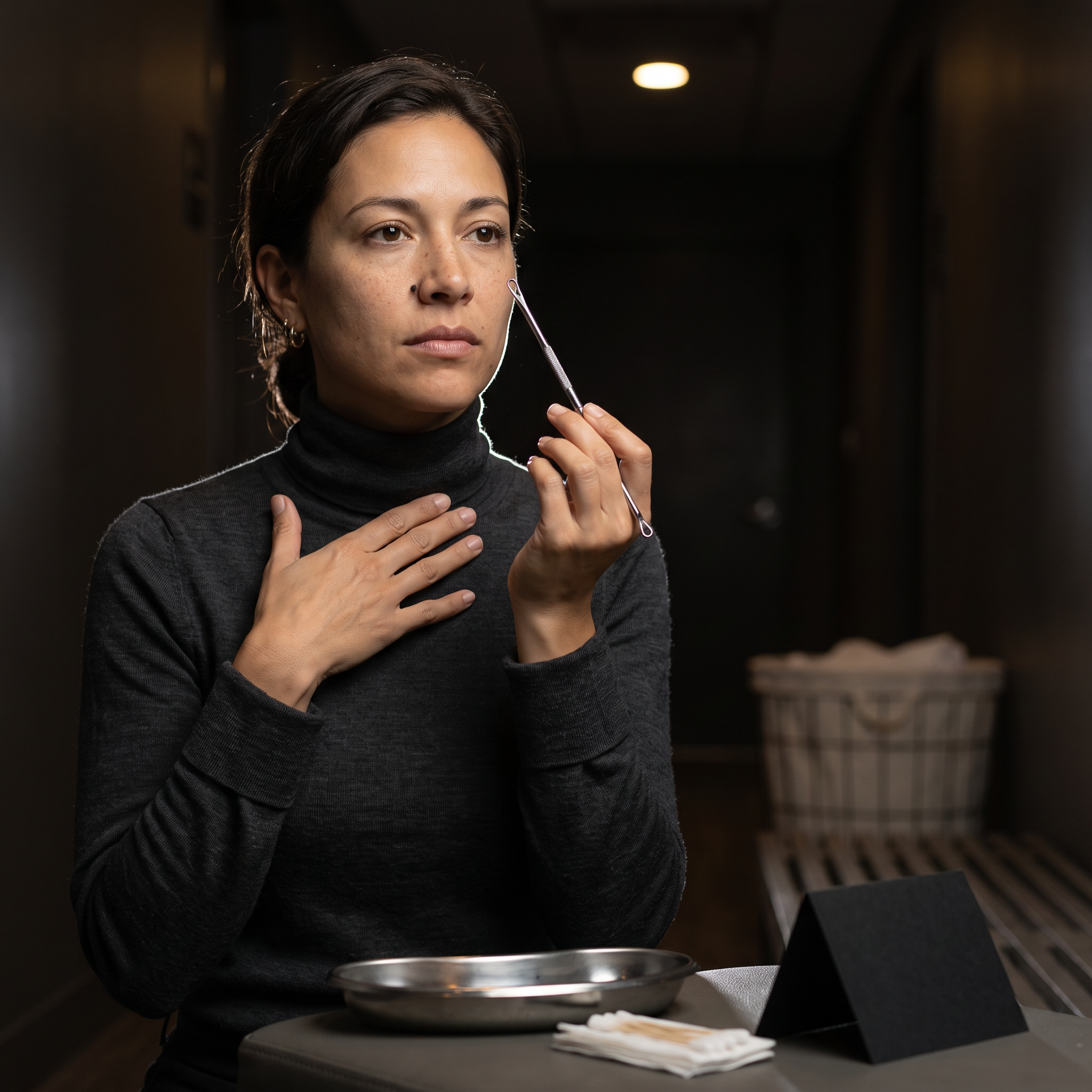
- Lateral Tension Beats Downward Force. A comedone extractor pulls across the pore at 45 degrees. Direct vertical pushing crushes capillaries and drives trapped debris into deep skin layers.
- Closed Comedones Are Off Limits. A closed comedone is a whitehead, a bump with no opening at the skin surface. It lacks an open exit canal. Loop extraction on a closed comedone causes dermal rupture, cystic inflammation, and pitted scarring.
- Sebaceous Filaments Are Normal Anatomy. A sebaceous filament is the normal oil channel that lines every pore. The uniform gray-yellow dots across your nose are these filaments, not blackheads. Squeezing them stretches pore margins, and they refill within 24 to 72 hours.
- 70% Isopropyl Alcohol Outperforms 90%. Isopropyl alcohol is rubbing alcohol, the usual pharmacy disinfectant. Disinfect metal instruments in 70% alcohol for two minutes. Higher concentrations evaporate too fast and seal bacterial cell walls without killing microbes.
- Respect the Danger Triangle. The danger triangle of the face is the area between the bridge of the nose and the corners of the mouth. Never extract inflamed or painful blemishes in this zone. Venous drainage links it directly to the cavernous sinus in the skull.
How Mechanical Extraction Works: Lateral Tension Versus Dermal Rupture
A comedone is a pore clogged with oil and dead skin cells. A dermatologist clears one in a clinic with a medical-grade comedone extractor. Correct technique removes a non-inflamed follicular plug with minimal surface trauma. Poor home technique often causes permanent tissue damage.
To understand safe extraction, examine the microscopic anatomy of a hair follicle. Doctors name the upper section of the follicular canal the infundibulum. In acne-prone skin, shed skin cells and waxy sebum pack tightly within this narrow tube. Sebum is the oil your sebaceous glands make. As the impaction grows, it thins and stretches the delicate epithelial lining. This thin wall separates follicular bacteria and fatty acids from the sterile dermis below.
A proper extractor tool works by circumferential tension, a ring of pressure that squeezes the skin evenly around the pore. Physicists call that hoop stress. When you center a rounded metal loop around a dilated pore and apply light pressure at a 45-degree angle, you generate a lateral pressure gradient. This directional tension pushes the skin inward beside the follicle. It lifts the compacted plug upward along its natural exit route.
When an untrained user presses an extraction tool straight down at a 90-degree angle, the mechanics fail completely. Downward vertical force compresses the follicular canal against rigid underlying bone or nasal cartilage. This vertical force spikes the fluid pressure inside the follicle. Because the impacted plug blocks the exit, the lateral walls absorb the force. When pressure exceeds the tensile limit of the infundibular lining, the follicle tears open beneath the surface.
This tearing under the surface pushes plug material into the dermis. Solidified keratin squames, oxidized lipids, and bacterial antigens from Cutibacterium acnes spill into the living dermis. The immune system treats these substances as dangerous foreign material. Neutrophils (white blood cells that arrive first) rush to the site and release aggressive lysosomal enzymes. Within hours, a harmless non-inflammatory blackhead becomes a swollen, painful inflammatory papule, pustule, or deep cystic abscess.
When an extractor tears a follicular canal, the resulting inflammation activates matrix metalloproteinases, specifically MMP-1, MMP-8, and MMP-9. These enzymes digest structural Type I and Type III collagen, the protein that holds skin firm. If the body cannot rebuild that destroyed scaffolding, the overlying skin collapses. The result is an atrophic scar, a permanent pitted mark.
These structural risks increase significantly for people with Fitzpatrick phototypes III through VI. In deeper skin tones, basal melanocytes react vigorously to physical shearing. Mechanical trauma triggers inflammatory cytokines such as interleukin-1alpha. Those signals tell cells to flood the injured zone with surplus melanin. One aggressive session with a metal tool often trades a temporary blackhead for months of dark post-inflammatory hyperpigmentation (PIH).
If you want clear skin without mechanical injury, add a non-invasive energy device from our guide to high-tech facial tools. You can pair gentle manual hygiene with an active facial wand. That pairing calms surface redness and supports skin metabolism without harsh physical trauma.
Loop Geometry: Schamberg Wire Versus Unna Fenestrated Cup
Dermatologic instrument makers forge authentic extraction tools from surgical-grade 304 or 410 stainless steel. High-grade alloys resist corrosion from chemical sanitizers and repeated heat sterilization. Low-grade nickel-plated tools can pit, rust, and cause contact allergies.
The tip design dictates how physical force spreads across your skin. The two classic clinical models are the Schamberg wire loop and the Unna fenestrated cup:
- Schamberg Wire Loop. It has a thin, crimped wire perimeter with an open center. The wire loop measures 1.5 to 2.5 millimeters in diameter. The slender wire concentrates pressure across a narrow boundary. An open comedone is a blackhead. Its pore opening stays wide, so the plug sits in reach. This focused edge lifts stubborn open comedones out of the curved creases of the nose. However, if you drag it flat, the thin edge can scratch delicate skin.
- Unna Fenestrated Cup. It has a flat, spoon-shaped head with a smooth central aperture. The opening measures 2.0 to 3.5 millimeters. The broad, beveled rim spreads mechanical contact over a wider surface area. That wider footprint cushions the force. It is safer on flat bone-backed zones such as the forehead, jawline, and chin.
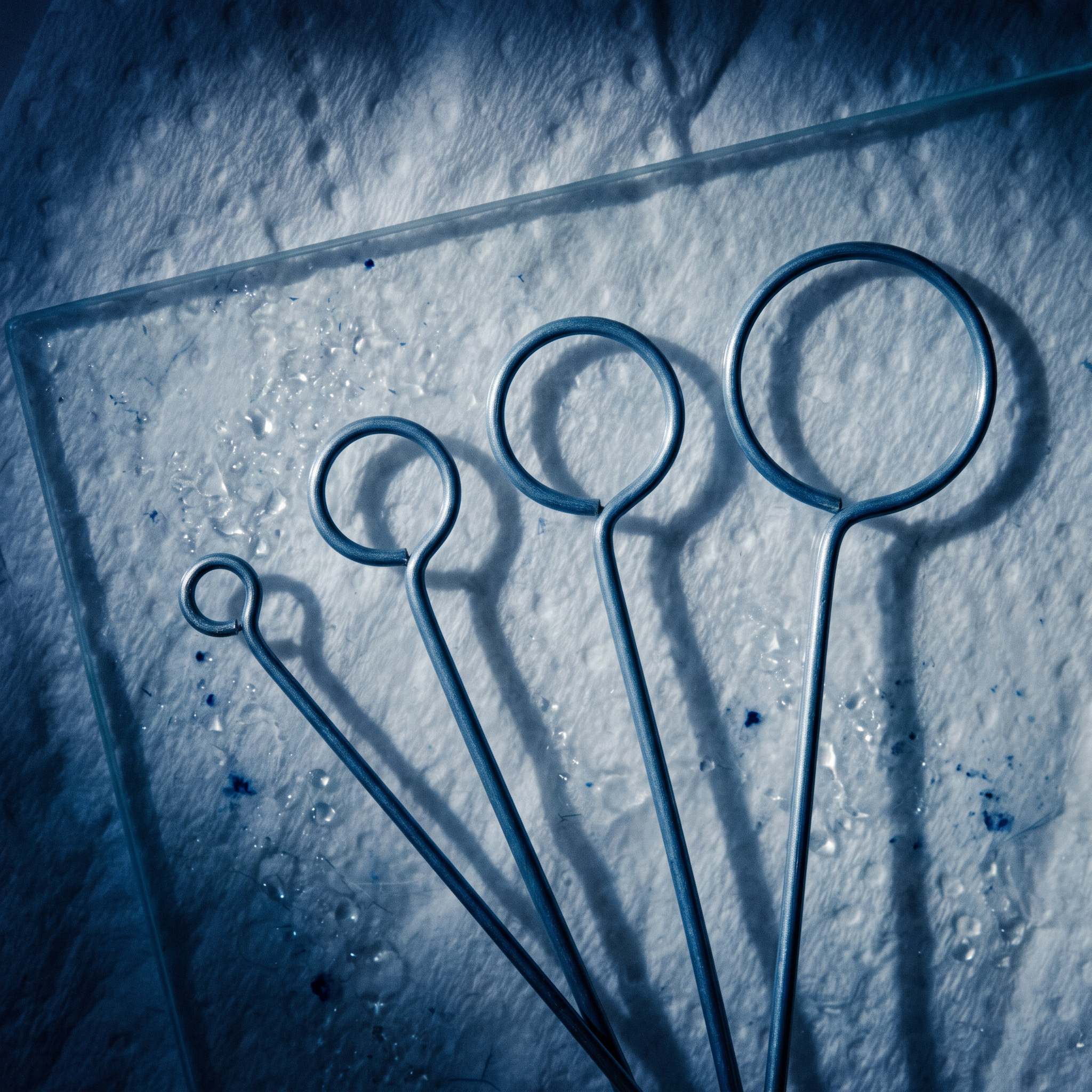
Wire loops concentrate extraction tension on small contours. Fenestrated spoon cups spread force across broad facial planes.
Which loop size fits which blemish?
An incorrect loop size is a frequent cause of bruising. Match the aperture of the blackhead removal tool to the physical boundary of the impaction:
- Small Wire Loops (1.5 to 2.0 mm). Reserve these for single oxidized blackheads on the nasal alae (the sides of the nose), the alar crease, and the chin cleft. The narrow frame applies pinpoint lateral pressure right at the follicular rim.
- Large Oval Loops (3.0 to 5.0 mm). Use these wider loops for broad macrocomedones on the fleshy cheeks, neck, or back. A macrocomedone is a large, soft plug. A broad loop spreads the force over soft tissue, so the wire does not cut into the epidermis (the outer skin layer).
- Flat Fenestrated Spoons. Choose a smooth, flat spoon head when you extract comedones on the forehead or temple. The wide plate rests flush against the surface. It seals around the pore and does not dig into underlying tissue.
Blackheads, Closed Comedones, and Sebaceous Filaments: Diagnostic Reality
Safe extraction begins with an accurate diagnosis. Most skin damage happens when people use a blackhead remover tool on a lesion that no loop can push out.
Comedones develop through comedogenesis, a step-by-step clogging process:
- Retention Hyperkeratosis. Keratinocytes lining the follicular canal fail to detach normally. They clump together inside the pore instead of shedding onto the skin surface.
- Sebum Overproduction. Sebaceous glands produce surplus sebum, which is rich in squalene and wax esters. This lipid blend glues the shed corneocytes into dense sebum plugs.
- Follicular Dilation. As the plug expands, it widens the pore opening (ostium) to form a visible comedo.
Blackheads look dark because melanin granules inside the clumped skin cells oxidize on contact with air. Surface lipids such as squalene also oxidize and darken. A blackhead is not dirt or poor hygiene. Aggressive scrubbing will not wash away oxidized melanin, but it will strip your skin barrier.
Learn how the three most common follicle conditions differ:
- Open Comedones (Blackheads). The pore ostium, the visible opening, stays widely dilated. Air reaches the plug, so gentle lateral hoop stress can slide the plug out safely.
- Closed Comedones (Whiteheads). In closed comedones, the pore opening stays microscopic or hides under an intact sheet of stratum corneum (the tough outer skin layer). There is no open passage. If you press a loop against a closed comedo, the force has nowhere to go except downward into the dermis. This guarantees canal rupture, sterile abscesses, and pitted scars. A dermatologist first makes a tiny micro-incision with a sterile surgical lancet, then clears the plug. Never attempt needle lancing at home. Instead, treat closed comedones with a topical comedolytic such as adapalene or salicylic acid. A comedolytic dissolves the clog inside the pore.
- Sebaceous Filaments. True blackheads appear as isolated, irregularly scattered, dark plugs. In contrast, the tiny gray or yellowish dots across your central nose and chin are physiological sebaceous filaments. A filament is a normal, healthy structure. It holds loose keratin layers, lipids, and one fine vellus hair. It works like a wick that channels protective oil to the skin surface. If you express a filament, the sebaceous gland starts to refill the pore at once. It refills within 24 to 72 hours and fully restores within 30 days. Many nose blackheads are normal filaments. Squeezing them repeatedly stretches the follicular rim and weakens skin elasticity over time.
Extractors Versus Alternatives: Suction Pore Vacuums and Adhesive Pore Strips
The consumer term blackhead remover covers three distinct methods: mechanical metal loops, motorized suction vacuums, and adhesive strips. Know the physical force behind each one. That knowledge protects your skin from avoidable trauma.
| Modality | Physical Mechanism | Extraction Depth | Primary Clinical Risk | Efficacy on Deep Plugs |
|---|---|---|---|---|
| Loop Comedone Extractor | Lateral hoop stress and circumferential tension | Full follicular infundibulum | Bruising or canal rupture if you press vertically | High (on open comedones) |
| Adhesive Pore Strips | Cationic polymer surface adhesion (polyquaternium-37) | Superficial stratum corneum tip only | Barrier stripping, higher water loss, irritant redness | Low (it snaps the plug and leaves the root intact) |
| Motorized Pore Vacuum | Negative atmospheric pressure (30–65 kPa) | Surface sebum pool only | Suction purpura, petechiae, permanent spider veins | Poor (cannot overcome plug cohesion) |
Commercial pore strips rely on cationic polymers like polyquaternium-37. When the strip is wet, the polymer softens and settles into skin contours. As it dries, it binds tightly to negatively charged keratin proteins on the surface of your skin. Peeling the strip away exerts high tensile pull. The peeled strip shows a layer of pulled plugs, but it also removes 30% to 50% of your protective stratum corneum. This trauma spikes transepidermal water loss, the escape of water through skin, and triggers rebound oil production. The strip also snaps the dry tip of the plug in most uses. The dense comedogenic root stays locked inside the follicle.
An at-home pore vacuum presents a different danger. These devices generate negative atmospheric suction between 30 and 65 kilopascals. A keratinized comedo sticks tightly to the rough follicular walls. The suction that pulls out a dense plug far exceeds the strength of delicate facial capillaries. Sustained suction pulls dermal microvessels upward until they collapse and burst. This produces petechiae (tiny flat red spots) and bruising, and clinicians name it suction purpura. The skin on the nose and cheeks is thin. There, pore vacuums frequently cause permanent telangiectasias (broken spider veins). Those marks need professional vascular laser therapy to correct.
If you want smoother texture across your body instead of pinpoint facial clearing, pair manual tools with gentle physical exfoliation from exfoliating gloves. If your face looks lax and your pores look larger after collagen loss, a clinical skin tightening device can rebuild dermal thickness.
Aseptic Step-by-Step Technique: How to Extract Without Scarring
If you choose to use an extractor at home, treat the procedure like a clinical minor surgery. Follow strict sanitation and hand mechanics to avoid spreading bacterial pathogens like Staphylococcus aureus across open pores.

Pinch the extractor near the center of the handle like a pencil to control your pressure and prevent tissue bruising.
Do you steam before you extract?
Do not hold your face over scalding steam or boiling water. Facial steam above 45°C strips essential barrier lipids, accelerates moisture loss, and causes neurovascular flushing. If you are prone to rosacea, high heat triggers persistent redness and broken capillaries. Instead, take a warm shower or hold a damp, lukewarm compress (38°C to 40°C) against your face for three minutes. Mild warmth softens hardened sebum, which melts between 32°C and 37°C, and it does not inflame delicate blood vessels.
How do you sterilize an extractor between pores?
Keep a small dish of 70% isopropyl alcohol on your counter during the process. Submerge the metal loop in the alcohol for at least 30 to 60 seconds between pores. If you prefer, wipe it thoroughly with a fresh 70% alcohol prep pad. Let the tool air-dry for ten seconds before you touch the next pore. Never wipe a dirty metal loop on a dry towel, tissue, or your fingers. That habit spreads bacteria from one pore to another.
Sanitizing tools with 90% or 99% alcohol works less well than standard 70% alcohol. High-strength alcohol clumps the outer proteins of a bacterium at once. That forms an impenetrable shell, and the shell shields the microbial enzymes inside. 70% alcohol carries 30% water. That water slows evaporation. It lets the alcohol enter the microbial cell wall and denature the enzymes completely.
Why does a comedone extractor bruise the skin?
Skin bruising happens when vertical pressure crushes dermal capillary loops against underlying cartilage or bone. The delicate microvessels burst. Red blood cells leak into the surrounding tissue. a tool leaves purple or dark red marks when you press down instead of rolling across. Those marks also mean the pore was not ready to release.
Follow this exact step-by-step extraction sequence:
- Cleanse. Wash your face thoroughly with a mild, non-stripping cleanser. Pat dry gently with a clean cloth.
- Soft-Warmth Prep. Press a damp, lukewarm cloth (38°C to 40°C) over the target area for three minutes to soften hardened keratin.
- Disinfect. Submerge your stainless steel tool in 70% isopropyl alcohol for two minutes. Wipe the skin with a fresh 70% alcohol swab, then let both surfaces air-dry completely. Never extract on wet, slippery skin. The metal can slide and cut your face.
- Position the Instrument. Hold the tool like a pencil between your thumb and index finger. Center the small wire loop directly over the open blackhead. Angle the handle at 45 degrees to the skin surface.
- Roll with Lateral Pressure. Press gently on one side of the blemish and roll the loop across the pore in one smooth sweeping motion. This motion creates hoop stress, and that force coaxes the plug outward.
- The Two-Attempt Rule. If the impaction does not release after two light rolling attempts, stop immediately. Continued force will crush the pore margin, rupture the follicle wall, and scar your skin. Leave the pore alone.
- Antiseptic Post-Care. Wipe the treated area with an antimicrobial hypochlorous acid spray or an alcohol pad. Do not apply strong acids, retinoids, or heavy makeup over freshly extracted pores for at least 12 hours. A retinoid is a vitamin A derivative that normalizes cell turnover.
Absolute Clinical Contraindications: When to Leave the Blemish Alone
Never touch certain skin conditions with a mechanical tool. Metal pressure on inflamed or infected lesions triggers severe complications.
| Blemish Type | Visual Appearance | Biological Reason to Avoid | Risk of Mechanical Extraction |
|---|---|---|---|
| Inflammatory Papule | Solid, raised, tender red bump with no visible opening | Intense dermal inflammation without an accessible plug | Crushes inflamed tissue, ruptures capillaries, causes scarring |
| Pustule | Elevated blemish with a tense yellow-white purulent head | High concentration of active neutrophils and bacteria | Forces pus deep into the subcutaneous tissue. an abscess then forms |
| Cystic Nodule | Deep, painful, fluctuant (soft and fluid-filled) or hard mass under the skin (> 5 mm) | Deep dermal and subcutaneous structural inflammation | Extensive dermal cavitation, severe rolling scars, nerve damage |
| Rosacea Blemish | Central facial red bumps with visible flushing background | Neurovascular hyperreactivity, an overreaction of facial nerves and vessels. This is not an acne comedo | Triggers severe vascular flares and broken capillaries |
| Milia | Tiny, hard, pearly-white 1–2 mm beads with no opening | Keratin cyst trapped under an intact epidermis | Cannot escape without a lancet. Tool causes severe surface bruising |
| Vascular Lesion | Cherry angioma or spider telangiectasia resembling a dark bump | Cluster of dilated blood vessels | Severe bleeding, vascular laceration, permanent mark |
| Active Cold Sore | Grouped fluid-filled blisters on an inflamed base | Active Herpes simplex virus replication | Spreads viral particles across the entire face |
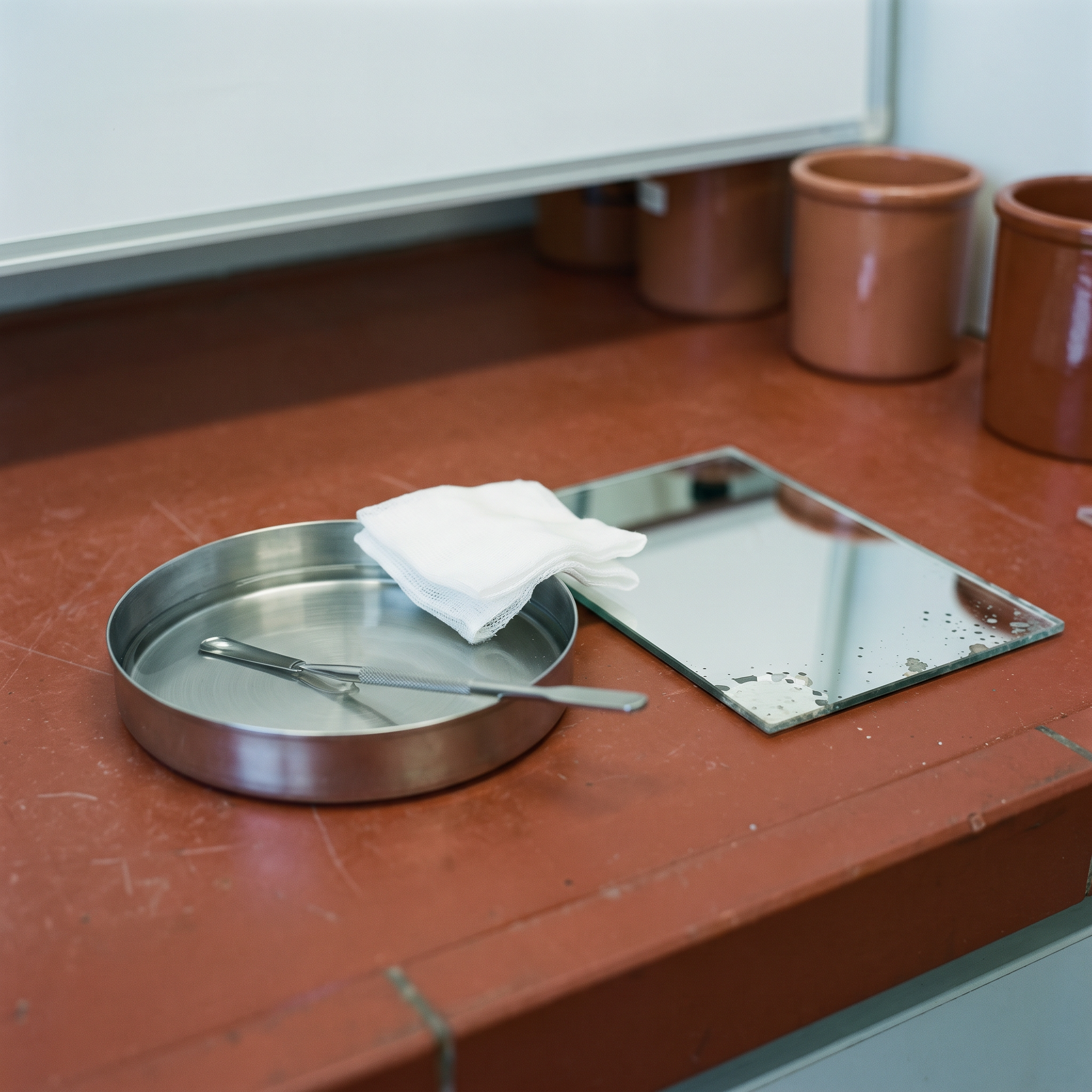
Maintain clinical disinfection discipline. Keep sterile 70% alcohol pads ready to wipe the instrument after every extraction.
Never squeeze or poke an inflamed blemish in this zone. The danger triangle of the face runs from the bridge of the nose down to the corners of the mouth. The facial and angular veins in that area have no valves. They connect to the superior and inferior ophthalmic veins, and those veins flow into the cavernous sinus inside the skull. Pressure on an infected blemish can push bacteria backward into the cranial venous system. That can trigger cavernous sinus thrombosis (CST). CST is a life-threatening neurological emergency. It brings fever, eyelid swelling, eye muscle paralysis, and blindness.
Master Comparison: The Top 3 Professional Comedone Extractors
Compare the surgical materials, loop configurations, clinical applications, and live pricing for our three chosen extraction instruments:
| Tool & Hardware | Construction Material | Loop Geometries | Primary Clinical Application | Pricing |
|---|---|---|---|---|
| Tweezerman Whitehead and Blackhead Remover | Polished stainless steel, dual-ended | Two fixed wire loops | Loose open comedones on the nose and chin | Check Price → |
| Seki EDGE SS-801 Extractor | Twice-tempered Japanese stainless steel | Two apertures, fine and broad | Mixed blackhead sizes across the T-zone | Check Price → |
| Suvorna Four-Piece Extraction Kit | French surgical-grade stainless steel | Lancet, needle, flat head and two loops | Milia, closed comedones and body pores | Check Price → |
The chosen Product Edit
Tweezerman Whitehead and Blackhead Remover Stainless Steel
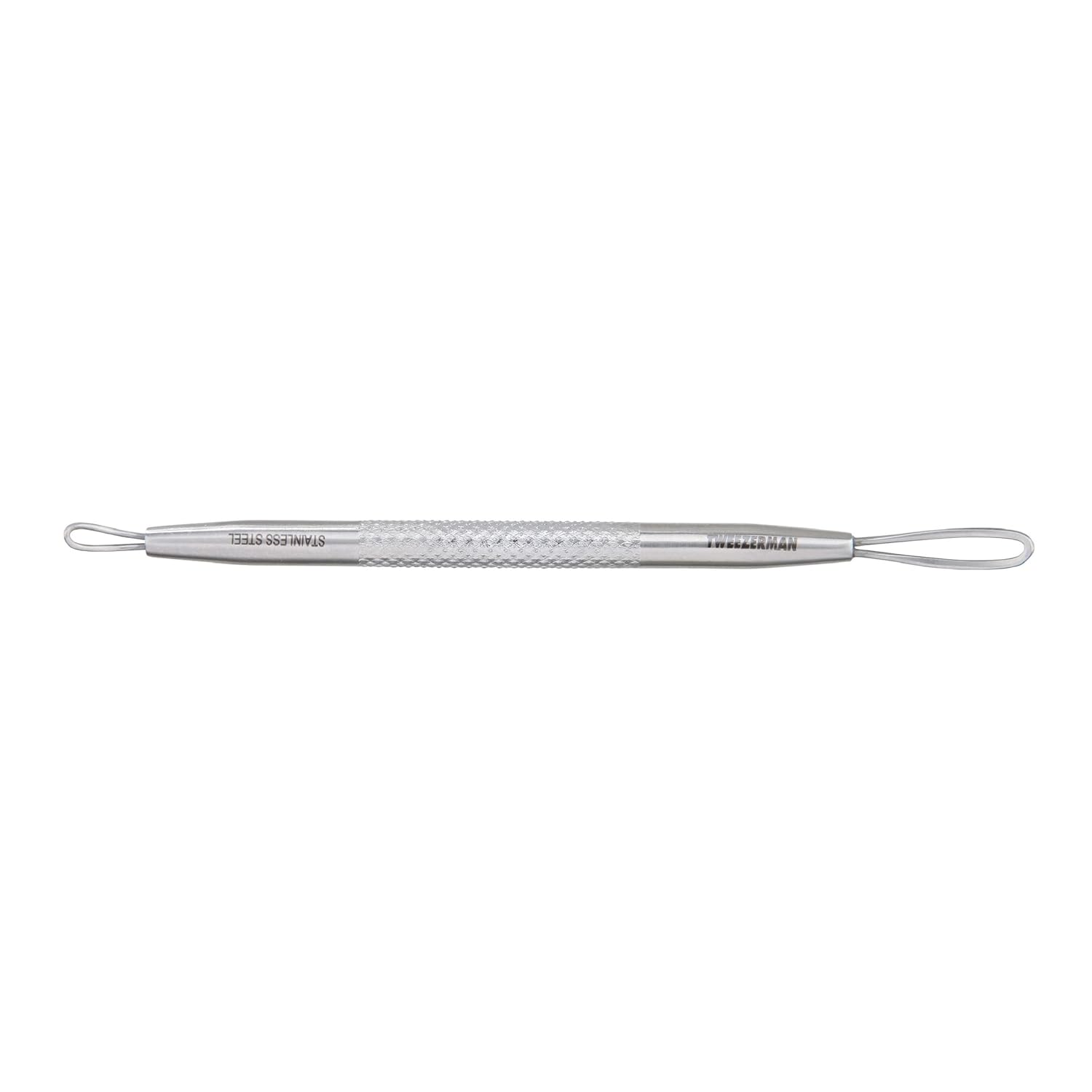
One hardened steel tool with a loop at each end. It clears loose blackheads on the nose and chin after a warm cloth, and it wipes clean between uses.
Avery, Beautyisles Editorial Producer
- Two loop ends cover the nose wings and the chin without a second tool
- Solid steel body does not bend when you press the loop flat
- Rubbing alcohol sterilizes the whole tool in seconds
- The loop needs steam or a warm cloth first, or it drags instead of lifting
- One tool carries every step, so a dull loop means a dull routine
Seki EDGE Blackhead Remover, SS-801, 1 Count

Two hole sizes let you match the loop to the spot instead of forcing one size across the face. This is the tool many estheticians hand you, and it behaves the same at home.
Avery, Beautyisles Editorial Producer
- Small loop clears one comedone without pressing its neighbours
- Large loop covers the bridge of the nose in fewer passes
- Thin edge slips under the pore opening with less downward pressure
- No case, so the edge rubs against other items in a drawer
- A single tool still has to do the whole extraction
Pimple Popper Tool Kit & Milia Remover, Blackhead Remover Tool, White Head Remover for Face & Comedone Extractor with Lancets for Facial Extraction – Acne Extraction Tools for Estheticians.
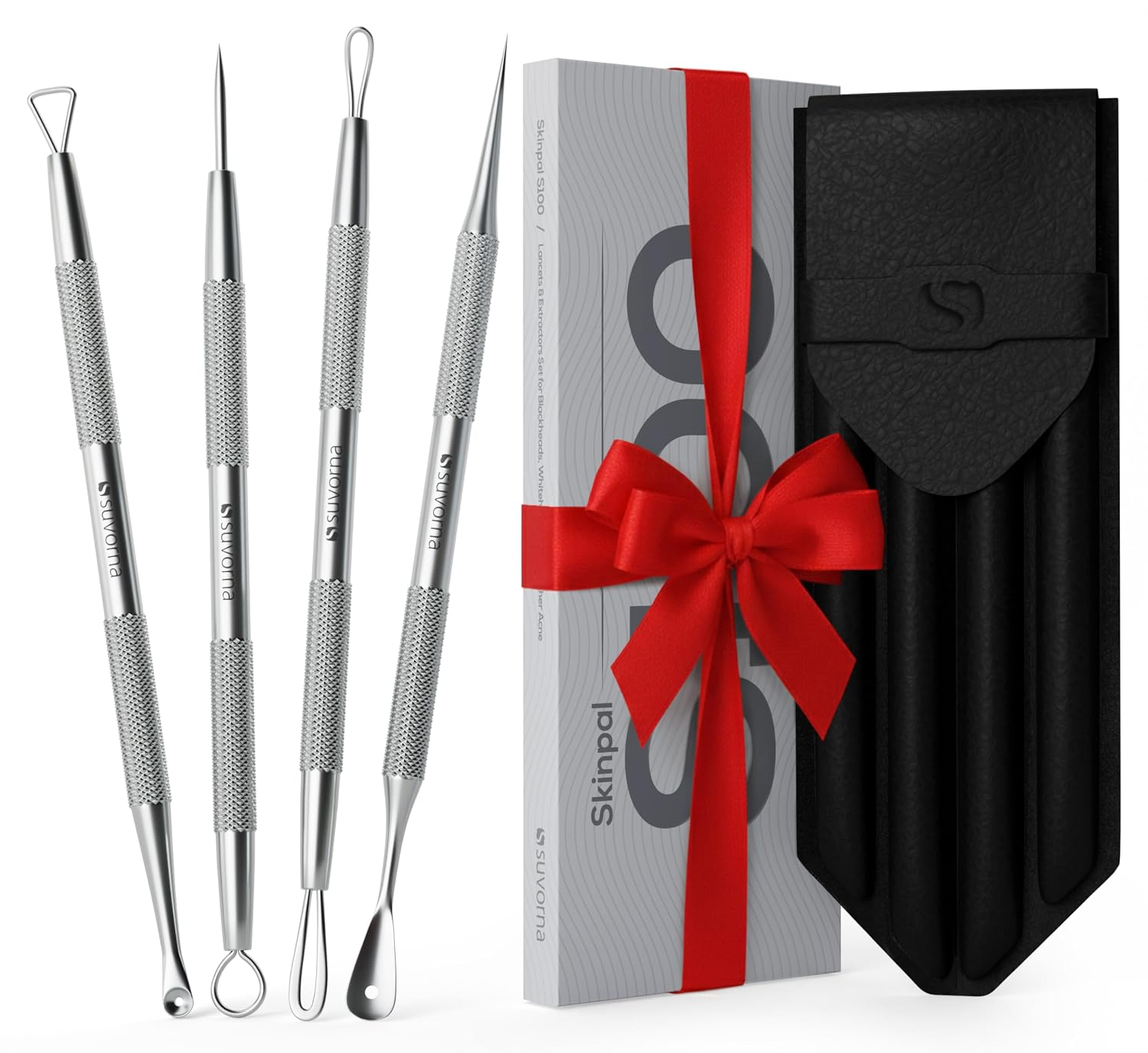
Four pieces cover jobs a single loop cannot. The lancet opens a sealed milia cyst and the flat head clears wider areas. Treat it as a professional kit and follow the hygiene steps.
Avery, Beautyisles Editorial Producer
- Lancet plus loop handles milia, which a plain loop cannot reach
- Flat extractor end suits the forehead and the jawline
- Surgical-grade steel holds a precise edge and resists rust
- The lancet breaks the skin, so skipping sterilization raises infection risk
- Four pieces mean four cleaning steps after every session
Frequently Asked Questions
How to use a comedone extractor?
To use a comedone extractor safely, cleanse your face and apply a warm, damp cloth for three minutes to soften the skin. Soak the stainless steel instrument in 70% isopropyl alcohol for two minutes. Center the small wire loop over the open blemish. Hold the handle at a 45-degree angle. Press lightly on one edge of the pore and roll the loop across in a single sweeping motion. If the impaction does not slide out after two gentle rolling attempts, stop immediately. Finish by wiping the skin with an antimicrobial spray.
How do you use a blackhead extractor?
Using a blackhead extractor requires lateral hoop stress rather than direct downward force. Position the curved loop aperture around the dilated pore opening. Angle the tool at 45 degrees. Press gently on one side of the metal ring to compress the tissue beside the pore, then roll the loop across the blemish. This motion coaxes the oxidized sebum plug upward. Never push straight down at a 90-degree angle, and never scrape sharp metal edges across dry skin.
How to use blackhead extraction tool?
Hold the blackhead extraction tool like a pencil between your thumb and forefinger. This grip limits mechanical force and prevents you from exerting excessive pressure on delicate facial tissue. Work under bright lighting with freshly sanitized hands. Submerge the metal tip in 70% isopropyl alcohol between every pore extraction. Wiping the metal head on a dry cloth spreads bacteria from one pore to neighboring follicles.
How to get rid of closed comedones?
an extractor loop alone cannot clear closed comedones. The pore opening sits under an intact layer of skin, so pressure has no exit. It drives the blockage deeper, and the follicle bursts into the dermis. The gold-standard treatment relies on topical comedolytics. Apply a topical retinoid like adapalene nightly to normalize cell turnover, and use a 2% salicylic acid wash to break down follicular lipids. If a closed comedo persists, a dermatologist must open the surface with a microscopic surgical lancet before extraction.
What is a blackhead remover?
A blackhead remover is any mechanical instrument, electrical device, or topical formula that clears open comedones. In clinical skincare, the name describes a surgical stainless steel tool with calibrated wire loops or fenestrated spoon cups. In consumer retail markets, the term also covers motorized suction pore vacuums and adhesive polymer strips. Manual loops lift surface plugs. They do not reduce sebum output or stop future comedones from forming.
How to get blackheads out?
The safest way to get blackheads out combines chemical dissolution with selective physical clearing. First, use a leave-on 2% salicylic acid serum daily. Salicylic acid dissolves in oil, so it enters the lipid-filled pore and breaks down the sticky keratin matrix. Second, apply a topical retinoid to keep the pore lining clear. For stubborn, widely dilated open blackheads, use a sanitized loop extractor and follow the 45-degree rolling protocol. Never pick, squeeze, or extract red, inflamed bumps.
Why do blackheads form?
Blackheads form through a three-step biological process called comedogenesis. First, retention hyperkeratosis makes dead skin cells inside the hair follicle clump together instead of shedding. Second, androgen hormones trigger sebaceous glands to produce excess sebum. That oil forms a waxy plug. Third, the plug expands and widens the pore ostium. When air reaches those cells, melanin granules inside them oxidize and turn dark brown or black. Contact with oxygen also oxidizes surface squalene. A blackhead is melanin that oxidized, not trapped dirt.
Editorial Sources
- Callender VD, Baldwin H, Cook-Bolden FE, Alexis AF, Stein Gold L, Guenin E. (2022). Effects of Topical Retinoids on Acne and Post-inflammatory Hyperpigmentation in Patients with Skin of Color: A Clinical Review and Implications for Practice. American Journal of Clinical Dermatology, 23(1), 69–81. PMID: 34751927. DOI: 10.1007/s40257-021-00643-2.
- Elston DM, White LC. Treatment of trichostasis spinulosa with a hydroactive adhesive patch. Cutis. 2000;66(6):373-374. PMID: 10916698.
- Goodhead DT. (1970). Electron spin resonance identification of melanin in comedones. British Journal of Dermatology, 83(2), 339–340. PMID: 4318115. DOI: 10.1111/j.1365-2133.1970.tb12881.x.
- Jacob CI, Dover JS, Kaminer MS. (2001). Acne scarring: a classification system and review of treatment options. Journal of the American Academy of Dermatology, 45(1), 109–117. PMID: 11423843. DOI: 10.1067/mjd.2001.113451.
- Kaidbey KH, Kligman AM. (1974). Pigmentation in comedones. Archives of Dermatology, 109(1), 60–62. PMID: 4271969.
- Karimipour DJ, Karimipour G, Orringer JS. (2010). Microdermabrasion: an evidence-based review. Plastic and Reconstructive Surgery, 125(1), 372–377. PMID: 20048628. DOI: 10.1097/PRS.0b013e3181c2a583.
- Khunger N; IADVL Task Force. (2008). Standard guidelines of care for acne surgery. Indian Journal of Dermatology, Venereology and Leprology, 74 Suppl, S28–S36. PMID: 18688101.
- Kligman AM. (1974). An overview of acne. Journal of Investigative Dermatology, 62(3), 268–287. PMID: 4274207. DOI: 10.1111/1523-1747.ep12676801.
- Metzker A, Merlob P. (1992). Suction purpura. Archives of Dermatology, 128(7), 997. PMID: 24860776. DOI: 10.4103/2229-5178.131149.
- Plewa MC, Hall WA. (2024). Cavernous Sinus Thrombosis. In: StatPearls [Internet]. Treasure Island (FL): StatPearls Publishing. Bookshelf ID: NBK448177. PMID: 28846357.
- Plewig G, Wolff HH. (1976). Sebaceous filaments (Follikel-Filamente) [author’s transl.]. Archives of Dermatological Research, 255(1), 9–21. PMID: 130839. DOI: 10.1007/BF00581673.
- Rutala WA, Weber DJ; Healthcare Infection Control Practices Advisory Committee (HICPAC). (2019). Guideline for Disinfection and Sterilization in Healthcare Facilities, 2008. Centers for Disease Control and Prevention (CDC), Update May 2019.
- Zaenglein AL, Pathy AL, Schlosser BJ, et al. (2016). Guidelines of care for the management of acne vulgaris. Journal of the American Academy of Dermatology, 74(5), 945–973.e33. PMID: 26897386. DOI: 10.1016/j.jaad.2015.12.037.