

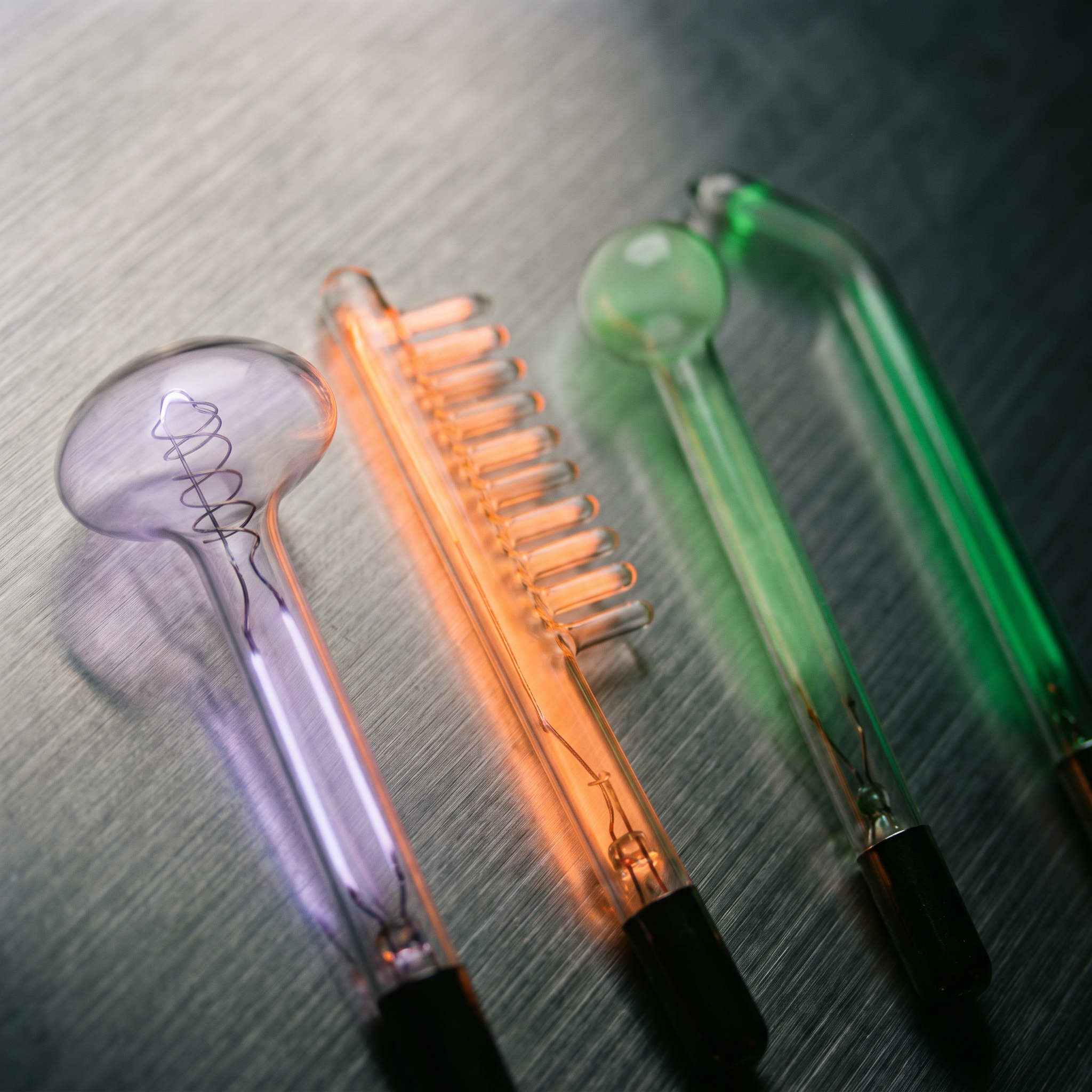
- Select Gas by Indication. A facial wand holds a gas-filled glass electrode. Violet argon electrodes generate cold atmospheric plasma to clear inflammatory breakouts. Orange neon electrodes generate gentle Joule heating to stimulate sluggish microcirculation.
- Cap Treatment Durations. Treat individual zones for 2 to 3 minutes maximum. Cap total full-face sessions at 10 to 12 minutes. Restrict targeted acne spot sparking to 3 to 5 seconds.
- Fitzpatrick Types IV–VI Protocol. Maintain flat gliding contact at all times. Never lift the electrode to create an open electrical spark. Open sparks trigger post-inflammatory hyperpigmentation in melanin-rich skin.
- Observe Strict Contraindications. Never operate a high-frequency current wand if you have a pacemaker, metal facial implants, or epilepsy. Postpone sessions if you are pregnant or experiencing an active facial rash.
- Glass Disinfection Standard. Clean glass attachments with mild soap, then wipe with 70% isopropyl alcohol for 2 minutes. Never submerge electrodes or place them in an autoclave.
Biophysics of High-Frequency Alternating Current
A modern facial wand relies on foundational electrotherapy principles discovered by Jacques-Arsène d’Arsonval in 1892. D’Arsonval discovered that electrical currents alternating above 10 kilohertz (kHz) pass through human tissue without causing muscle spasms or painful motor nerve stimulation. Clinical high-frequency wands operate between 100 kHz and 250 kHz. This oscillation rate is too rapid for nerve membranes to depolarize. You feel a gentle vibrational tingling and mild warmth rather than an uncomfortable electric shock.
The core architecture of a high frequency machine includes a solid-state high-voltage transformer and a Oudin induction coil. This coil steps up electrical voltage while dropping current down to safe milliampere levels. The current flows into a vacuum-sealed borosilicate glass electrode. As the alternating potential hits the glass wall, it establishes a dielectric barrier discharge. When you bring the glass near your skin, the electric field ionizes atmospheric air molecules across the microscopic gap. This capacitive displacement current treats the superficial epidermis without damaging deeper structural tissue layers.
Consumers often conflate every handheld tool labeled as a frequency wand. In aesthetic medicine, device frequencies dictate treatment depth. High-frequency D’Arsonval wands operate at 100 to 250 kHz to generate superficial ozone and light warming. Radiofrequency tightening devices run at 1 to 4 megahertz (MHz) to heat deep dermal water and contract collagen fibers. Microcurrent devices run at 0.5 to 500 hertz (Hz) to stimulate muscular tone. To understand how these systems compare, read our full guide to high-tech facial tools.
High-frequency current travels primarily across the surface of the stratum corneum. This shallow penetration depth makes the device exceptionally safe for at-home aesthetic routines. It stimulates superficial biological responses while protecting deeper vascular networks. Understanding the difference between high-frequency current and deep-tissue tightening prevents unrealistic expectations. If your goal is tightening loose skin along the jawline, a dedicated skin tightening device provides the necessary dermal depth.
Electrode Gas Chemistry: Violet Argon Versus Orange Neon
Noble gases at low pressure fill the glass tubes that attach to your wand handle. When the high-voltage electrical field energizes these sealed tubes, the gas molecules excite and emit visible light. The two primary gases used in clinical practice are argon and neon. Each gas produces distinct physical properties, biological mechanisms, and therapeutic outcomes.
Argon Gas Electrodes: Cold Plasma and Microbial Clearance
Argon gas emits a characteristic violet or purple glow when energized by high-frequency current. Argon has a low breakdown voltage. As electrical current passes through the glass, it produces an intense dielectric discharge at the skin interface. This discharge ionizes atmospheric oxygen ($O_2$), generating cold atmospheric plasma and transient ozone ($O_3$).
Ozone is a potent oxidizing agent with broad antimicrobial activity. *Cutibacterium acnes* is an anaerobic bacterium that proliferates inside oxygen-deprived sebaceous follicles. Because it lacks protective anti-oxidative enzymes, *C. Acnes* cannot withstand intense oxidative stress. The transient ozone generated by an argon high frequency facial triggers rapid lipid peroxidation in the bacterial cell wall. This reaction ruptures the bacterial membrane and reduces colony counts. A 2022 clinical trial in *Anais Brasileiros de Dermatologia* demonstrated significant reductions in acne pathogens following high-frequency electrode exposure.
Neon Gas Electrodes: Thermal Joule Heating and Circulation
Neon gas glows bright orange-red when energized. Unlike argon, neon produces a continuous, stable capacitive electric field with minimal dielectric sparking. The high-frequency alternating current encounters natural electrical resistance within epidermal tissue. This resistance converts electrical energy into gentle, therapeutic heat through the Joule effect.
This localized thermal rise of 1 to 2 degrees Celsius triggers transient axonal reflex vasodilation. Precapillary sphincters widen. More blood and oxygen then reach the dermal cells. Accelerated local blood flow speeds up cellular waste clearance and delivers essential nutrients. Neon electrodes are ideal for treating dull skin, sluggish recovery, and mild skin laxity. However, neon warming remains superficial. It does not heat the reticular dermis to the 40°C threshold needed for clinical neocollagenesis.
Standard wand systems include four specialized borosilicate glass electrode shapes:
- Mushroom Electrode. Broad, curved surface designed for large flat zones including the forehead, cheeks, jawline, and décolletage.
- Spoon Electrode. Angled concave tip contoured for the under-eye hollows, nasolabial folds, and sides of the nose.
- Point or Sparker Electrode. Precise conical bulb engineered for direct spot treatment on individual acne papules and pustules.
- Comb or Rake Electrode. Multi-tined glass comb designed to stimulate hair follicle circulation across the scalp.
Multi-Modal Face Wands: Red Light Phototherapy and Sonic Oscillation
The modern aesthetic device market extends beyond classical gas tubes. Many consumers choose a multi-functional face wand that combines optical photobiomodulation, micro-vibration, and targeted heat. While high-frequency machines rely on electrical gas ionization, modern multi-wave wands use light-emitting diodes (LEDs) and acoustic motors.

Photobiomodulation with a Red Light Therapy Wand
A true red light therapy wand emits narrow-band optical radiation between 630 nm and 660 nm. This optical process is photochemical rather than thermal. Photons penetrate 1 to 3 millimeters into the papillary and reticular dermis. Dermal fibroblasts absorb this light via a specific photoacceptor: cytochrome c oxidase (CCO), Unit IV of the mitochondrial electron transport chain.
Red light absorption displaces inhibitory nitric oxide from cytochrome c oxidase. This displacement restores normal electron transport, boosts mitochondrial membrane potential, and increases adenosine triphosphate (ATP) production. As cellular energy rises, downstream transcription factors activate genes responsible for type I procollagen synthesis. Wunsch and Matuschka evaluated red light phototherapy in *Photomedicine and Laser Surgery*. They confirmed that 633 nm light increases intradermal collagen density and softens fine lines. For readers interested in steady direct-current transdermal infusion, exploring a galvanic facial machine provides a compelling companion modality.
Sonic Micro-Vibration Biophysics
Handheld sonic wands incorporate compact eccentric rotating mass motors that deliver 8,000 to 15,000 mechanical oscillations per minute (130 to 250 Hz). These micro-vibrations generate acoustic shear waves across the stratum corneum. The oscillatory motion produces microscopic fluid displacement within intercellular spaces.
This mechanical action encourages excess interstitial fluid to move toward regional lymph nodes, specifically the submandibular and preauricular lymphatic chains. Sonic oscillation provides immediate, visible relief from morning facial puffiness and periorbital fluid accumulation. However, cosmetic sonic vibration cannot disrupt epidermal lipid bilayers. It cannot perform therapeutic deep drug delivery or rebuild dermal collagen structures.
A professional clinic face machine incorporates heavy copper step-up transformers, isolated ground circuits, and analog milliampere meters. Portable handheld wands integrate miniature solid-state circuitry inside an insulated wand handle. While clinical consoles offer fine-tuned energy calibration, quality handheld wands deliver comparable superficial electrical fields when operated with disciplined technique.
Safe Session Lengths, Protocols, and Fitzpatrick Considerations
Applying high-frequency alternating current requires strict adherence to clinical exposure limits. Overusing high-frequency wands does not accelerate skin improvements. Excessive electrical sparking generates high concentrations of ozone and free radicals that deplete natural barrier lipids, increase transepidermal water loss (TEWL), and cause rebound erythema.

Clinical Exposure Thresholds
To preserve skin barrier health, follow these evidence-based treatment boundaries during every high-frequency session:
- Quadrant Duration. Treat each facial quadrant (forehead, right cheek, left cheek, jawline) for 2 to 3 minutes maximum.
- Full-Face Treatment. Limit total active device contact to 10 to 12 minutes per session.
- Targeted Spot Sparking. Hold the sparker electrode over an individual inflammatory blemish for 3 to 5 seconds maximum.
- Weekly Frequency. Perform high-frequency treatments 2 to 3 times weekly for active breakouts. Reduce frequency to 1 session weekly for general maintenance.
Fitzpatrick Skin Phototypes and Post-Inflammatory Hyperpigmentation
Individuals with Fitzpatrick Skin Phototypes IV, V, and VI have highly active epidermal melanocytes. Any localized thermal, electrical, or physical trauma triggers rapid melanin deposition into surrounding keratinocytes. Lifting the glass tip 2 to 4 millimeters generates open electrical sparks. This popular sparking technique is dangerous for deeper skin tones.
Open electrical arcs cause localized micro-thermal trauma at the dermal-epidermal junction. In Fitzpatrick types IV through VI, this localized burn triggers stubborn post-inflammatory hyperpigmentation (PIH) that can take 6 to 12 months to fade. If you have medium to deep skin, follow three non-negotiable safety rules:
- Direct Gliding Contact. Keep the glass electrode in flat, uninterrupted contact with the skin at all times.
- Cotton Gauze Barrier. Place a clean sheet of dry medical cotton gauze over your face. The gauze disperses the electrical field evenly and prevents dragging.
- Low Power Calibration. Keep the intensity dial set in the lower third of the machine’s operating range.
Sanitization and Indoor Ozone Safety Standards
Borosilicate glass electrodes are delicate vacuum-sealed instruments. Never place high-frequency glass electrodes inside an autoclave or steam sterilizer. Extreme thermal pressure compromises the hermetic seal and destroys the internal gas vacuum. Never submerge the hollow metal electrode base in water, as trapped moisture corrodes contact terminals and creates electrical short circuits.
To sanitize glass electrodes safely, turn off and unplug the wand handle. Wipe away cosmetic residue with a clean microfiber cloth dampened with warm water. Next, saturate a lint-free wipe with 70% isopropyl alcohol and wipe the entire glass surface. Allow a wet contact time of at least 1 to 2 minutes to eliminate bacteria and viruses. Let the glass air-dry completely before storing it in its padded case.
High-frequency electrical arcs produce localized ozone gas ($O_3$). While surface ozone neutralizes bacteria on the skin, inhaled ozone is a potent respiratory irritant. The Occupational Safety and Health Administration (OSHA) caps acceptable workplace ozone exposure at 0.1 parts per million (ppm). The Food and Drug Administration (FDA) limits medical device ozone emissions to 0.05 ppm. Always operate your high-frequency wand in a spacious, well-ventilated room. Never inhale directly above the energized glass bulb, especially if you have asthma or reactive airway disease.
Chosen Luxury Facial Wand Edit & Comparison Table
We evaluated leading high-frequency and multi-wave devices based on electrical circuit stability, electrode glass integrity, user ergonomics, and clinical safety controls. Below is our comparative assessment of the three standout luxury devices available on Amazon.
| Device & Modality | Primary Technology | Electrode / Optical Spec | Treatment Cadence | Primary Clinical Indication | Pricing |
|---|---|---|---|---|---|
| NuDerma Professional Wand | High-Frequency D’Arsonval | 6 glass electrodes, argon and neon | 2-3x weekly, 10 minutes | Active breakouts and microcirculation | Check Price → |
| OxyGlow 2 Cordless Wand | High-Frequency D’Arsonval | 3 glass tubes, argon and neon | 2-3x weekly, 5-10 minutes | Facial warming and scalp care | Check Price → |
| TUMAKOU High Frequency Machine | High-Frequency D’Arsonval | 4 glass tubes, gas type not stated | 2-3x weekly, 5-10 minutes | Entry-level warming and post-extraction care | Check Price → |
The chosen Device Reviews
NuDerma Professional Skin Therapy Wand – Portable Skin Therapy Machine with 6 Neon & Argon Wands – Boost Your Skin – Clear Firm & Tighten
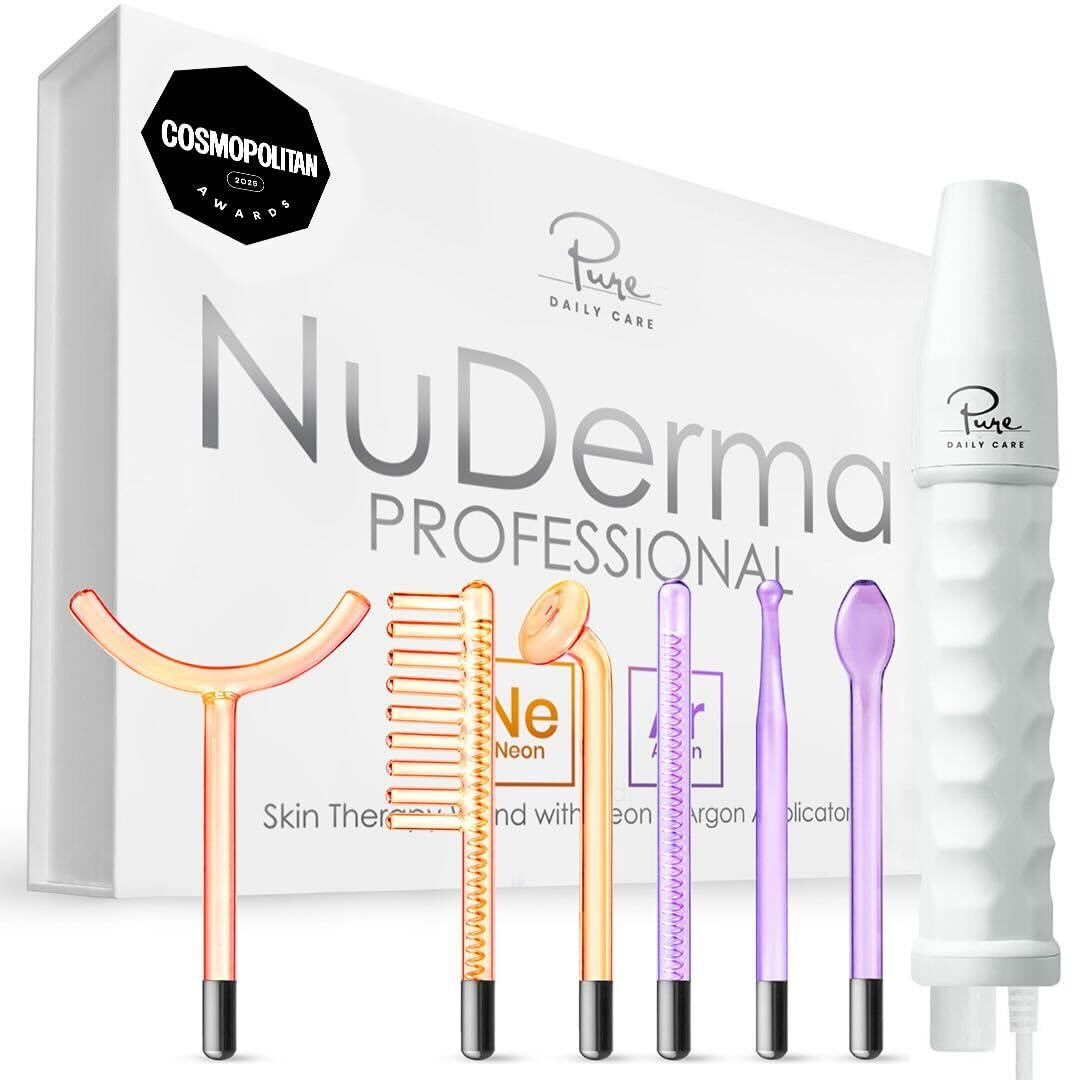
The reference machine for home high frequency. Argon tubes produce violet light for breakout control and neon tubes produce orange light for warmth and microcirculation, so one base covers both jobs.
Avery, Beautyisles Editorial Producer
- Six electrodes cover face, neck, scalp and body in one kit
- Argon and neon gases do different jobs, and both are supplied
- Power dial ramps the current smoothly instead of jumping
- Borosilicate glass tubes are fragile at the neck where they enter the base
- High frequency produces a noticeable ozone smell, so ventilate the room
OxyGlow 2 Cordless High Frequency Facial Wand for Face & Scalp Care

A cordless take on the same technology, which removes the trailing wire that makes many wands awkward around the jaw and hairline. Three tubes cover the face, the scalp and the contour areas.
Avery, Beautyisles Editorial Producer
- No cord, so you can treat the scalp and behind the ears freely
- USB-C charging works with the cable you already own
- Three tubes stay light enough for a two-minute session
- Battery runtime limits you to several sessions between charges
- Three tubes cover fewer shapes than a six-electrode kit
High Frequency Facial Machine – TUMAKOU Portable Handheld High Frequency
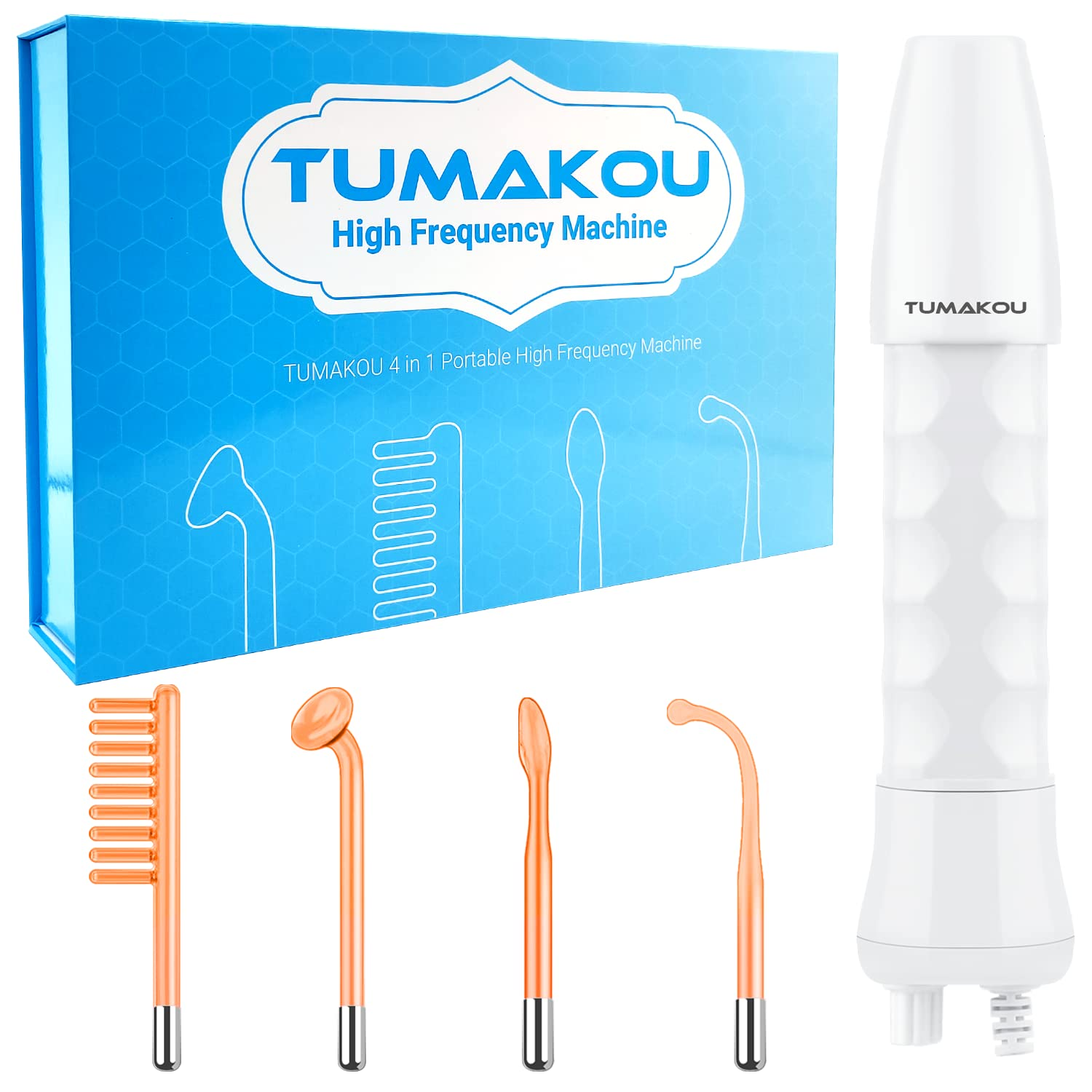
The cheapest way to test whether high frequency suits your skin before you commit to a clinical machine. Four tubes and two application methods cover the basics, and the build is correspondingly simple.
Avery, Beautyisles Editorial Producer
- Four tubes cover the face, the contour and the scalp
- Direct and indirect application are both documented for the base
- Low price makes the technology easy to trial
- Gas type is not stated per tube, so you cannot plan argon or neon work
- Lighter housing transmits more vibration into the hand
Cluster Knowledge Base: Targeted Skincare & Dermatological FAQs
How to get rid of facial lines?
Eliminating facial lines requires matching treatment to the biological type of wrinkle. Dynamic lines stem from repetitive facial muscle contractions, such as frowning or smiling. Topical skincare tools cannot eliminate dynamic lines. Neuromodulator injections like botulinum toxin remain the medical standard by blocking acetylcholine signals at the neuromuscular junction.
In contrast, static lines result from ultraviolet photoaging, loss of dermal thickness, and degradation of structural extracellular collagen. To reduce static lines, apply daily broad-spectrum SPF 50 sunscreen to block ultraviolet collagen breakdown. Pair sunscreen with nightly prescription tretinoin or stabilized retinol to trigger nuclear retinoic acid receptors and stimulate procollagen synthesis. Supplement your routine with 630 nm red light therapy 3 to 5 times weekly to boost mitochondrial ATP production. High-frequency wands cannot remove deep static creases.
How to remove facial lines?
Completely removing established facial lines requires clinical-grade aesthetic interventions rather than non-invasive consumer wands. Superficial fine lines soften with medical chemical peels and consistent red light photobiomodulation. These therapies accelerate epidermal turnover and restore papillary dermal hydration.
Moderate to deep dermal creases require in-office ablative fractional carbon dioxide ($CO_2$) lasers or deep trichloroacetic acid (TCA) peels. These medical treatments create controlled zones of thermal or chemical coagulation, forcing fibroblasts to produce dense new collagen networks. For deep resting folds around the mouth, dermatologists inject cross-linked hyaluronic acid dermal fillers to mechanically restore lost volume. Handheld wands serve as supportive maintenance tools. They do not replace clinical resurfacing.
Why is my face breaking out?
Facial breakouts develop through four interconnected pathological events inside the pilosebaceous follicle. First, retention hyperkeratosis causes dead skin cells to stick together, forming an obstructive follicular plug. Second, androgen hormones stimulate sebaceous glands to produce excess thick sebum. Third, trapped sebum creates an anaerobic environment where *Cutibacterium acnes* bacteria multiply rapidly.
Fourth, bacterial overgrowth triggers Toll-like receptors, initiating an inflammatory immune cascade that produces red papules and pustules. External factors worsen breakouts, including heavy comedogenic cosmetic oils, physical friction from face masks, and harsh over-cleansing that damages natural skin lipids. An argon high-frequency wand helps resolve active surface pimples by generating ozone that oxidizes bacterial walls. However, it cannot dissolve deep follicular plugs on its own.
What causes facial rashes?
Facial rashes stem from diverse inflammatory skin disorders that require precise clinical diagnosis. Irritant contact dermatitis starts when a harsh alkaline cleanser, an alcohol astringent, or an abrasive brush damages the stratum corneum, the outer layer of skin. Stinging and redness follow at once. Allergic contact dermatitis represents a delayed hypersensitivity immune reaction to fragrance compounds, preservatives, or nickel plating.
Perioral dermatitis presents as small inflammatory papules clustered around the mouth, often triggered by topical steroid creams or heavy petrolatum ointments. Seborrheic dermatitis produces greasy yellow scales along the eyebrows and nasolabial folds due to inflammatory reactions to *Malassezia* yeast. Rosacea causes central facial erythema, flushing, and dilated telangiectasias. If you develop an unexplained rash, stop using all electrical and sonic wands immediately. Applying current or vibration to inflamed skin exacerbates barrier damage.
How do facial peels work?
Facial peels use calibrated chemical exfoliating acids to induce controlled chemical ablation of defined skin layers. Superficial alpha-hydroxy acid (AHA) peels, such as glycolic and lactic acid, dissolve calcium ions within desmosomal cellular bridges. This desmolysis prompts gentle shedding of dead stratum corneum cells, smoothing rough texture and brightening superficial pigmentation.
Beta-hydroxy acid (BHA) peels using salicylic acid are lipophilic. Salicylic acid dissolves through sebaceous lipids into clogged pores, breaking down trapped sebum and calming follicular redness. Medium-depth trichloroacetic acid (TCA) peels work differently. TCA causes chemical protein denaturation, breaking structural bonds in keratinocytes and creating visible white frosting. The coagulated tissue sloughs away over 7 to 10 days. Never use high-frequency wands or sonic brushes within 14 days of a chemical peel, as post-peel skin is fragile and prone to scarring.
What does retinol do for your face?
Retinol is a fat-soluble vitamin A derivative that converts into active all-trans retinoic acid inside living skin cells. Retinoic acid enters the cell nucleus and binds to retinoic acid receptors (RARs) and retinoid X receptors (RXRs). This binding activates specific retinoic acid response elements on genomic DNA, altering cellular transcription.
This biological pathway accelerates basal keratinocyte mitosis, normalizing epidermal cell shedding and preventing clogged pores. In the dermis, retinoic acid stimulates fibroblasts to increase procollagen I and III synthesis while suppressing matrix metalloproteinase (MMP) enzymes that break down collagen. Retinol also disperses melanin clusters to fade hyperpigmentation. Because retinol can cause transient dryness and peeling during early weeks of use, avoid using high-frequency current on actively peeling skin.
Clinical Safety, Contraindications, and Usage Checklist
Electrical aesthetic devices require careful screening. High-frequency alternating currents create local electromagnetic fields and mild ozone discharges that can interact with underlying medical conditions. Review this clinical checklist before introducing a high-frequency wand into your skincare regimen.
Never operate a high-frequency electrical device if you have any of the following conditions:
- Cardiac Pacemakers or Defibrillators. Electromagnetic fields can disrupt device sensing algorithms and induce arrhythmias.
- Pregnancy. High-frequency electrical current lacks safety data regarding systemic bioelectric fields and fetal development.
- Epilepsy and Seizure Disorders. Flickering electrical gas discharges and sensory stimulation can trigger neurological seizure pathways.
- Active Malignancies. Electrical stimulation raises local blood flow. Do not use it over a suspected tumour.
- Metallic Facial Hardware. Large surgical metal plates, screws, or extensive orthodontic wire work can concentrate electrical current and cause localized heat.
Relative contraindications require postponing your session. If you have active rosacea, broken facial capillaries, or acute sunburn, avoid high-frequency current because vasodilation exacerbates redness. If you recently received a chemical peel, a microneedling treatment, or laser resurfacing, wait at least 7 to 14 days before resuming wand sessions. Allow the epidermal barrier to fully re-epithelialize before applying dielectric arcing.
Editorial Sources
- Bakircioglu CA, Turkmen D, Altunisik N, Kanat Z, Sener S, Colak C. (2026). Evaluation of the Efficacy of Plasma Shower and 585 Nm Q-Switched Laser in the Treatment of Mild to Moderate Acne Vulgaris. Journal of Cosmetic Dermatology, 25(4): e70876. PMID: 42011134. DOI: 10.1111/jocd.70876.
- Litchman G, Nair PA, Atwater AR, et al. Contact Dermatitis. StatPearls [Internet]. Treasure Island (FL): StatPearls Publishing; 2026. Bookshelf ID: NBK459230. PMID: 29083649.
- Borda LJ, Wikramanayake TC. (2015). Seborrheic Dermatitis and Dandruff: A full Review. Journal of Clinical and Investigative Dermatology, 3(2): 10. PMID: 27148560. DOI: 10.13188/2373-1044.1000019.
- Fisher GJ, Kang S, Varani J, Bata-Csorgo Z, Wan Y, Datta S, Voorhees JJ. (2002). Mechanisms of photoaging and chronological skin aging. Archives of Dermatology, 138(11): 1462–1470. PMID: 12437452. DOI: 10.1001/archderm.138.11.1462.
- Frommherz L, Reinholz M, Gürtler A, Stadler PC, Kaemmerer T, French LE, Clanner-Engelshofen BM. (2022). High-frequency devices effect in vitro: promising approach in the treatment of acne vulgaris? Anais Brasileiros de Dermatologia, 97(6): 729–734. PMID: 36109271. DOI: 10.1016/j.abd.2021.09.015.
- Hamblin MR. (2017). Mechanisms and applications of the anti-inflammatory effects of photobiomodulation. AIMS Biophysics, 4(3): 337–361. DOI: 10.3934/biophy.2017.3.337.
- Kafi R, Kwak HS, Schumacher WE, Cho S, Hanft VN, Hamilton TA, King AL, Neal JD, Varani J, Fisher GJ, Voorhees JJ, Kang S. (2007). Improvement of naturally aged skin with vitamin A (retinol). Archives of Dermatology, 143(5): 606–612. PMID: 17515510. DOI: 10.1001/archderm.143.5.606.
- Lee SY, Park KH, Choi JW, Kwon JK, Paik S, Wu WH, Bae XX, Chung JH. (2007). A prospective, randomized, placebo-controlled, double-blinded, and split-face clinical study on LED phototherapy for skin rejuvenation. Journal of Photochemistry and Photobiology B: Biology, 88(1): 51–67. DOI: 10.1016/j.jphotobiol.2007.04.008
- Mukherjee S, Date A, Patravale V, Korting HC, Roeder A, Weindl G. (2006). Retinoids in the treatment of skin aging: an overview of clinical efficacy and safety. Clinical Interventions in Aging, 1(4): 327–348. PMID: 18046911. DOI: 10.2147/ciia.2006.1.4.327.
- Nuvolone D, Petri D, Voller F. (2018). The effects of ozone on human health. Environmental Science and Pollution Research International, 25(9): 8074–8088. DOI: 10.1007/s11356-017-9239-3
- Occupational Safety and Health Administration (OSHA). (2020). Occupational Safety and Health Standards: Air Contaminants (Ozone). 29 CFR 1910.1000 Table Z-1.
- Polat BE, Hart D, Langer R, Blankschtein D. (2011). Ultrasound-mediated transdermal drug delivery: Mechanisms, scope, and emerging trends. Journal of Controlled Release, 152(3): 330–348. PMID: 21238514. DOI: 10.1016/j.jconrel.2011.01.006.
- Rinnerthaler M, Bischof J, Streubel MK, Trost A, Richter K. (2015). Oxidative stress in aging human skin. Biomolecules, 5(2): 545–589. PMID: 25906193. DOI: 10.3390/biom5020545.
- Samargandy S, Raggio BS. (2023). Chemical Peels for Skin Resurfacing. In statPearls [Internet]. Treasure Island (FL): StatPearls Publishing. PMID: 31613532.
- Searle T, Ali FR, Al-Niaimi F. (2021). Perioral dermatitis: diagnosis and management. Clinical and Experimental Dermatology, 46(8): 1414–1422. PMID: 41197738. DOI: 10.1016/j.jaad.2025.10.138.
- Soleymani T, Lanoue J, Rahman Z. (2018). A Practical Approach to Chemical Peels: A Review of Fundamentals and Step-by-step Algorithmic Protocol for Treatment. The Journal of Clinical and Aesthetic Dermatology, 11(8): 21–28. PMID: 30214663.
- Sutaria AH, Masood S, Schlessinger J. (2024). Acne Vulgaris. In statPearls [Internet]. Treasure Island (FL): StatPearls Publishing. PMID: 29083670.
- U.S. Food and Drug Administration (FDA). (2023). Maximum Acceptable Level of Ozone. 21 CFR 801.415.
- Ward AR. (2009). Electrical Stimulation Using Kilohertz-Frequency Alternating Currents Alternating Currents. Physical Therapy, 89(6): 585–593. DOI: 10.2522/ptj.20080060
- Wunsch A, Matuschka K. (2014). A Controlled Trial to Determine the Efficacy of Red and Near-Infrared Light Treatment in Patient Satisfaction, Reduction of Fine Lines, Wrinkles, Skin Roughness, and Intradermal Collagen Density Increase. Photomedicine and Laser Surgery, 32(2): 93–100. PMID: 24286286. DOI: 10.1089/pho.2013.3616.
- Zaenglein AL, Pathy AL, Schlosser BJ, Alikhan A, Baldwin HE, et al. (2016). Guidelines of care for the management of acne vulgaris. Journal of the American Academy of Dermatology, 74(5): 945–973. PMID: 26897386. DOI: 10.1016/j.jaad.2015.12.037.
- Zasada M, Budzisz E. (2019). Retinoids: active molecules influencing skin structure formation in cosmetic and dermatological treatments. Advances in Dermatology and Allergology, 36(4): 392–397. PMID: 31616211. DOI: 10.5114/ada.2019.87443.