

- Vertical Entry Prevents Forehead Tears. A derma stamp inserts needles at a ninety-degree angle. Cylindrical rollers enter and exit on an arc. That arc shears skin sideways over the rigid frontal bone.
- Depth Dictates Biological Action. Needle depth is how far the needles enter the skin, measured in millimeters. Needles of 0.20 to 0.25 millimeters increase serum absorption through the stratum corneum, the dead outer skin layer. Depths of 0.50 millimeters or deeper trigger true collagen remodeling in the living dermis below.
- Mandatory Four-Week Rest Window. Dermal collagen remodeling requires four to six weeks. Stamping deep needles weekly destroys migrating fibroblasts and causes chronic scar tissue.
- Hospital Disinfection Is Not Sterilization. Soaking in seventy percent isopropyl alcohol kills vegetative bacteria. It cannot destroy bacterial endospores or repair bent needle hooks.
How a Derma Stamp Differs from a Roller
Consumers frequently purchase cylindrical microneedling tools without understanding skin physics. Microneedling presses many fine needles into the skin to make tiny, controlled punctures. A traditional dermaroller mounts dozens of surgical needles on a rotating wheel. When you roll that wheel across your face, the needles enter at an acute angle of forty-five degrees. They reach their deepest point only at the bottom of the roll. Then they lever themselves out at an obtuse angle of one hundred thirty-five degrees.
This rotational pathway exerts mechanical torque on living tissue. Over soft cheeks, elastic fat partially absorbs this lateral drag. Over rigid bone, the tissue cannot flex. The curved motion creates lateral shear stress, which means sideways tearing force. Instead of producing clean vertical micro-punctures, rolling needles slice through the skin. They create jagged entry wounds, micro-vascular bruising, and ragged epidermal edges.
A derma stamp solves this biomechanical problem through pure linear geometry. The stamp houses an array of surgical needles on a flat head. You press the tool straight down at a strict ninety-degree angle. The needles penetrate vertically and withdraw along the exact same path. This linear vector eliminates lateral shear stress completely.
A stamp drives needles straight down at ninety degrees. The needles withdraw along the same path without rotating. This linear motion prevents the angular slicing that rolling drums create.
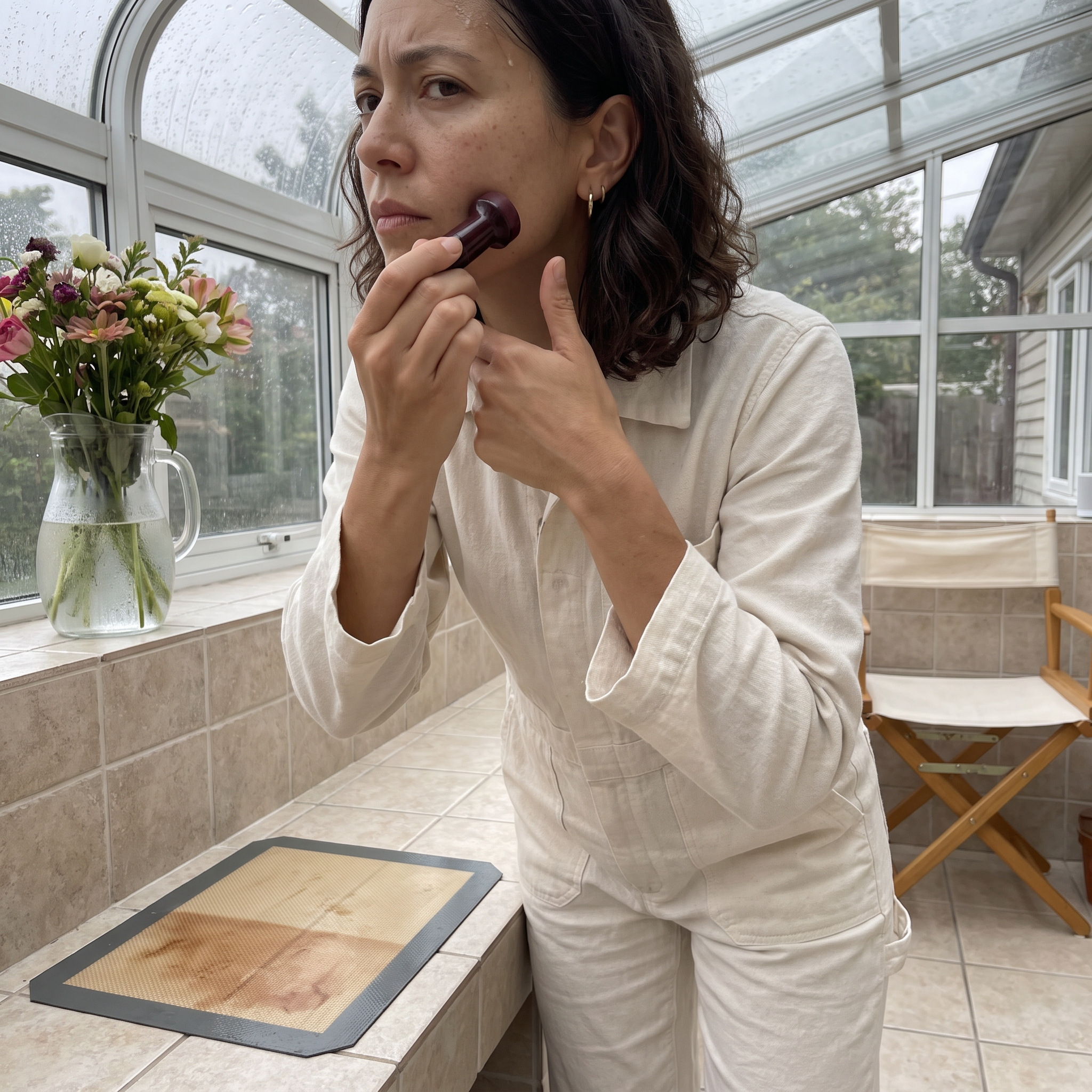
Clinical evidence confirms this mechanical advantage. A 2024 split-face comparative trial by El-Domyati and colleagues evaluated vertical stamping against manual rolling in patients with atrophic post-acne scars. Both tools stimulated significant scar remodeling with identical long-term scar elevation. However, vertical stamping caused significantly less patient discomfort, minimal pinpoint bleeding, and faster resolution of erythema, which means procedural skin redness. The rotational drag of rolling caused unnecessary surface trauma without producing any extra collagen.
Even the best derma roller cannot overcome the physics of a rotating drum. If you want controlled micro-injuries without mechanical slicing, vertical stamping is the superior tool design.
Why the Forehead Demands a Stamp Instead of a Roller
Facial skin thickness varies dramatically across facial zones. The medial cheek features a thick dermal cushion measuring 1.50 to 2.20 millimeters. It rests on a subcutaneous fat pad that compresses under pressure. In contrast, forehead skin is exceptionally thin. The total epidermal and dermal thickness over the forehead measures only 0.80 to 1.10 millimeters. This delicate layer sits directly over the frontalis muscle and the rigid frontal bone.
When you roll a needle drum over the forehead, the skin cannot compress. The needle points strike the hard bone surface almost immediately. Hand momentum pushes the roller forward while the needle tips stay anchored against bone. This levers the needles through the tissue like miniature crowbars. The result is linear epidermal gouging, severe bruising, and broken capillaries.
Dermatologists call this injury the tram-track effect. Pahwa and colleagues reported it in Dermatologic Surgery. Patients who used microneedle rollers over facial bones developed permanent linear rows of scarring. The rows resembled train tracks. Angled needles tore these tracks through the thin tissue.
Never roll a rotating drum across the forehead, temples, or orbital rims. Over thin skin and rigid bone, rolling needles lever sideways. They cut permanent linear scars into the tissue.
A stamp protects forehead tissue from this shearing force. Because you place the stamp flat against the skin before pressing, the needles enter perpendicularly. You control downward pressure with your fingertips. If a needle reaches the bone boundary, it stops cleanly without tearing sideways. You lift the stamp straight off before moving to the next spot.
If you have congested pores or blackheads on the forehead, avoid puncturing them with needles. Clear congestion first using sterile comedone extraction tools to remove sebum plugs without spreading bacteria across open micro-channels.
Needle Depth Calibration: Epidermal Absorption Versus Dermal Remodeling
Selecting needle length means knowing where the epidermis ends and the dermis begins. The epidermis is the outer skin layer. The dermis is the living layer beneath it. The outer protective skin layer, known as the stratum corneum, consists of compact, dead keratinized cells. It measures only ten to twenty micrometers thick. The full cellular epidermis measures 0.05 to 0.10 millimeters. Beneath this lies the living dermis, which houses blood vessels, nerve endings, and fibroblasts, the specialized cells that manufacture collagen.
When practicing microneedling at home, you must distinguish cosmetic epidermal treatment from medical dermal therapy. These two depths trigger completely different biological responses:
- Superficial Epidermal Depth (0.20 mm to 0.30 mm). These ultra-short needles penetrate only through the stratum corneum. They do not reach dermal blood vessels and do not stimulate fibroblasts. Instead, they create temporary micro-channels that bypass the hydrophobic lipid barrier. Research by Gomaa and colleagues demonstrates that 0.20-millimeter needles increase the absorption of topical skincare serums by up to one thousand percent. The clinical endpoint is mild erythema with zero bleeding.
- Deep Dermal Depth (0.50 mm to 2.50 mm). These needles penetrate past the basement membrane into the vascularized papillary and reticular dermis. This depth initiates formal collagen induction therapy. Collagen induction means the punctures push the dermis to build new collagen. The physical puncture shears microscopic capillaries. This starts platelet aggregation and a three-phase wound healing cascade. The clinical endpoint is uniform pinpoint bleeding.
During true collagen induction, blood platelets release signaling proteins. These include platelet-derived growth factor, a platelet signal that calls repair cells to the puncture site, and transforming growth factor-beta. These proteins recruit repair cells without causing the thermal tissue necrosis seen with ablative lasers. Recruited fibroblasts first deposit immature collagen type III. Over several months, enzymes replace it with strong, organized collagen type I lattice networks. Landmark research by Aust and colleagues showed an average four hundred percent increase in dermal collagen six months after percutaneous collagen induction.
The FDA classifies any device penetrating deeper than 0.30 millimeters as a Class II medical device. At-home stamping must remain at 0.25 millimeters for product absorption. Depths past 0.50 millimeters require strict clinical aseptic technique.
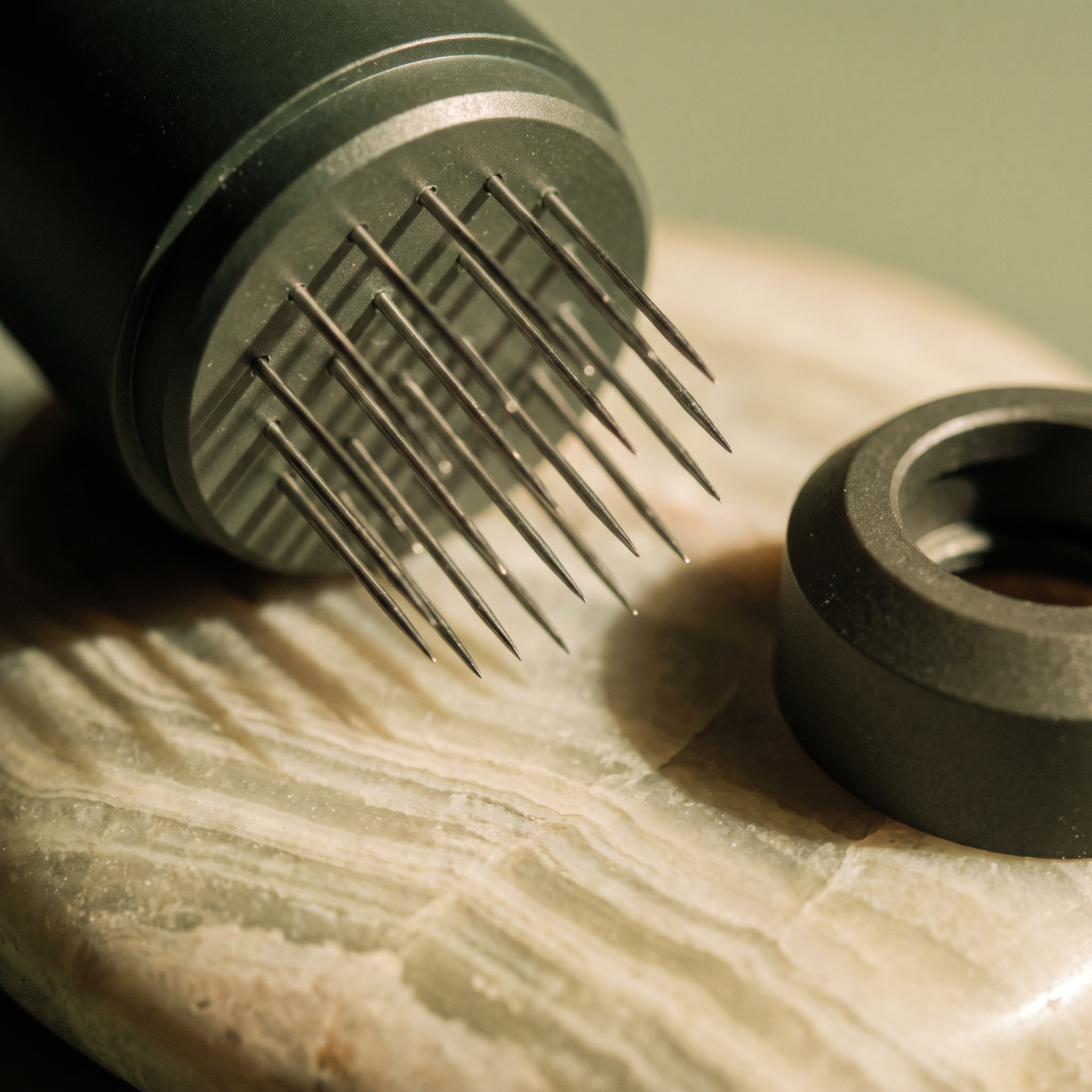
Because facial skin thickness changes across facial bones, a fixed-length tool creates uneven trauma. An adjustable derma stamp features a calibrated rotating collar. It lets you select exact needle exposure from 0.0 millimeters up to 3.0 millimeters. You can set the collar to 0.25 millimeters for the forehead, temples, and nose. Then you can adjust it to 0.50 millimeters or 0.75 millimeters for the thicker cheek pads.
If you are building an evidence-based personal care routine, read our pillar guide to the best facial tools. It reviews how microneedling integrates with microcurrent, cryotherapy, and facial massage tools.
Treatment Frequency: The Biological Clock of Collagen Remodeling
The most common mistake with at-home devices is treating skin too frequently. Many users believe that stamping every weekend will accelerate collagen production. In reality, stamping deep needles too often halts collagen formation and damages tissue.
Neocollagenesis, the medical term for new collagen creation, follows an unyielding biological timetable. When needles penetrate the dermis, tissue repair advances through three distinct chronological phases:
- Inflammatory Phase (Hours 1 to 72). Platelets aggregate, micro-clots form, and white blood cells clear cellular fragments. Growth factors flood the tissue.
- Proliferative Phase (Days 3 to 21). Fibroblasts multiply and secrete temporary glycosaminoglycans and fragile collagen type III. Angiogenesis, the formation of new capillary loops, restores blood supply.
- Remodeling Phase (Weeks 4 to 24). Matrix metalloproteinase enzymes break down immature collagen type III. Fibroblasts replace it with dense, organized collagen type I bundles. These fibers cross-link to restore dermal tensile strength.
If you stamp the dermis again after only seven or fourteen days, you disrupt this sequence. The new needles destroy migrating fibroblasts and crush fragile collagen type III fibers before they mature. Histological studies by Zeitter and colleagues demonstrated that repetitive trauma without recovery causes chronic inflammation. This inflammation raises destructive tissue enzymes. Those enzymes leave fibrotic scarring and skin thinning instead of healthy rejuvenation.
You can stamp at 0.25-millimeter depth once weekly for serum absorption. Dermal stamping at 0.50 millimeters or deeper requires a mandatory four to six week biological rest period.
How fast these micro-channels close also sets your recovery schedule. Research by Gupta and colleagues demonstrated that open micro-channels seal within two to four hours. Keratinocytes, the main skin cells, migrate and swell to close them. However, full barrier restoration takes twenty-four to forty-eight hours. Avoid makeup, chemical sunscreens, and active exfoliating acids during this recovery window.
If you want to maintain skin firmness during your four-week collagen rest windows, combine your regimen with non-invasive skin tightening devices. These devices deliver targeted radiofrequency energy. They do not puncture the epidermis.
Manual Stamps Versus Motorized Microneedle Pens
Consumers researching home treatments often compare manual stamps to automated motorized devices. In clinical clinics, practitioners use an automated microneedle pen, commonly known by the generic name derma pen. Understanding the mechanical differences helps you choose the right tool for your goals.
An automated motorized pen uses an internal electric motor to drive a needle cartridge vertically. The handpiece oscillates at eighty to two hundred Hertz. It delivers five thousand to twelve thousand punctures per minute. This high frequency creates thousands of channels quickly. The needles remain in tissue for mere milliseconds. That limits hand fatigue during full-face clinical treatments. Automated pens use disposable, single-use needle cartridges that guarantee fresh sterility for every session.
However, motorized pens carry distinct operational hazards in home environments. If an untrained user glides the vibrating pen across the skin without lifting it between passes, the oscillating needles act as a microscopic scalpel. This dragging motion slices the epidermis. It causes linear lacerations and severe bleeding.
A manual adjustable stamp offers superior tactile safety for targeted home use. Because you manually position and press the stamp, you control exact entry pressure and placement. There is zero risk of high-speed dragging or lateral slicing. Manual stamps require no charging cords or replacement battery cells. They provide an affordable, controlled solution for isolated acne scars, hairline stimulation, and forehead zoning.
Sanitation, Needle Wear, and Dermal Safety Protocols
When needles penetrate the protective barrier, they introduce foreign matter directly into living tissue. Strict hygiene protocols separate successful collagen stimulation from severe infections and permanent scarring.
Hospital infection control guidelines from the Centers for Disease Control and Prevention establish a critical distinction between disinfection and sterilization. Soaking a reusable tool in seventy percent isopropyl alcohol provides intermediate disinfection. It denatures cell proteins and kills vegetative bacteria within ten minutes. However, alcohol has zero sporicidal activity against bacterial endospores and cannot penetrate dried organic bio-burden.
Always use seventy percent isopropyl alcohol rather than ninety-nine percent alcohol. Pure alcohol rapidly coagulates surface bacterial proteins. That forms a hard shell that shields the pathogens inside. Seventy percent alcohol contains thirty percent water, which slows evaporation and lets the alcohol penetrate bacterial cell walls.
Tap water contains environmental bacteria like Pseudomonas and Mycobacterium fortuitum. These waterborne pathogens thrive in moist storage caps and cause stubborn, deep-seated skin infections.
Needle wear represents another serious physical risk. Medical needles measure ten to twenty micrometers at the tip. Under repeated impact against tough skin and underlying bone, these micro-fine points suffer plastic deformation. Scanning electron microscopy studies by Chu and colleagues reveal that reused needles bend into microscopic fishhooks. On insertion, a hooked tip punctures cleanly. On withdrawal, the barb catches and tears dermal collagen bundles. That produces subcutaneous micro-lacerations.
Cosmetic ingredient compatibility requires strict discipline. When channels reach the dermis, the immune system encounters topical formulas directly. Soltani-Arabshahi and colleagues documented severe facial foreign-body granulomas in patients who stamped unapproved cosmetic serums into their skin. Dermal macrophages cannot break down fragrances, preservatives, botanical oils, or cross-linked polymers. The immune cells encapsulate these chemicals into chronic, disfiguring inflammatory nodules. Only apply pure, sterile saline or sterile, unpreserved hyaluronic acid during and immediately after stamping.
Regarding skin tone, mechanical microneedling carries low risk across Fitzpatrick phototypes IV through VI. Unlike thermal lasers, mechanical needles create no heat. Melanocytes in the basal layer remain undamaged. This lowers the risk of post-inflammatory hyperpigmentation. However, excessive downward force or sun exposure can still trigger reactive pigment dumping. Always protect treated skin from direct sun exposure.
Do not perform microneedling if you have active pustular acne, open sores, or active cold sores. The needles will pick up pathogens and seed them across healthy skin. If you took oral isotretinoin within the past six months, avoid microneedling completely. Isotretinoin alters matrix metalloproteinase activity and impairs normal wound healing. That raises the risk of keloid formation.
The Verified Edit
Gin Amber Beauty Derma Stamp for Face – 80 Stainless Steel Needles, 0.25 mm
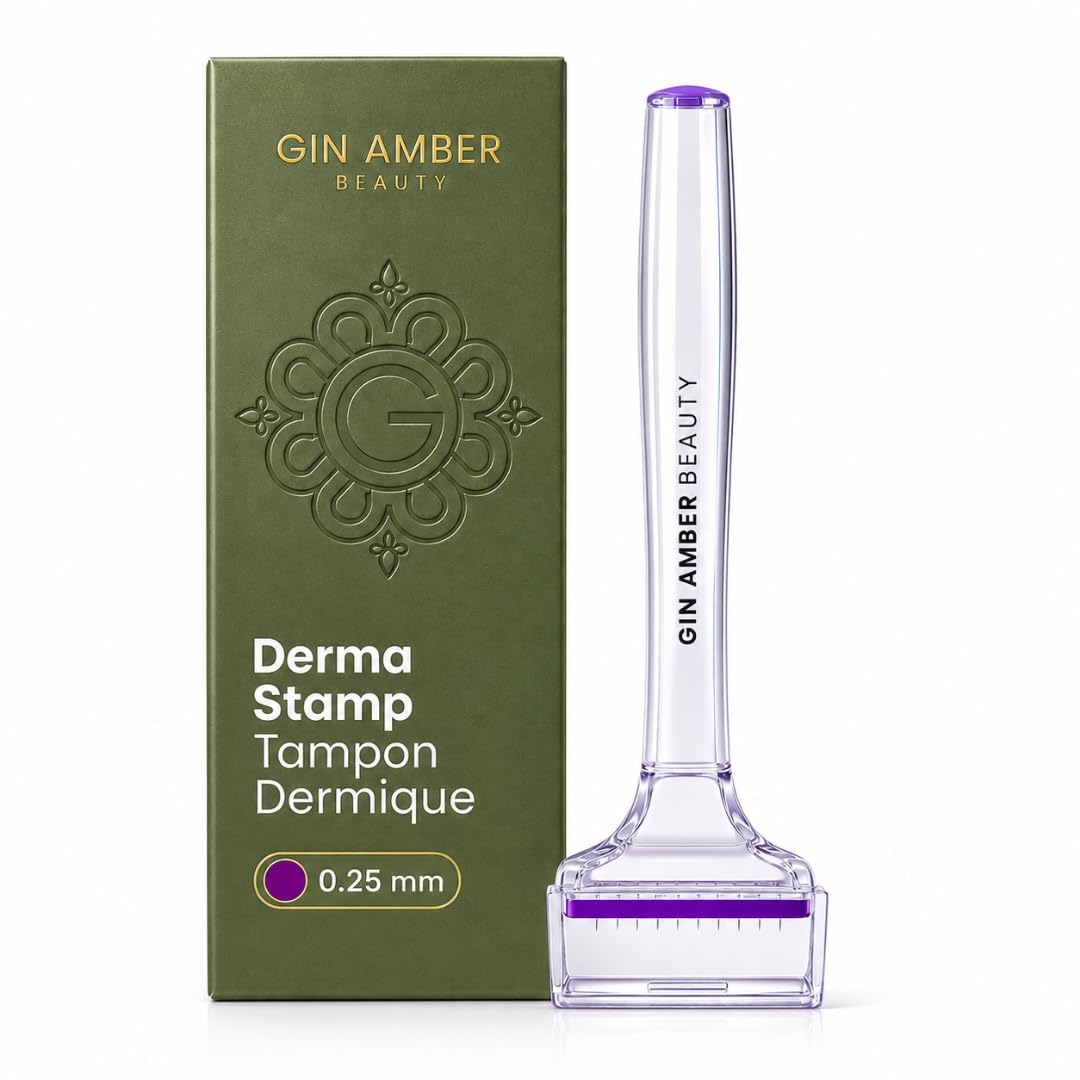
A 0.25 mm stamp sits at the shallow end, where the skin surface takes the least injury. The vertical press avoids the sideways dragging that a roller causes, and that difference is the point of a stamp.
Avery, Beautyisles Editorial Producer
- Short needles suit a first microneedling routine
- Stamp-and-lift motion avoids micro-tears from rolling
- Compact head reaches the nose folds and under the eye
- Stainless needles blunt faster than titanium, so the head needs replacing
- 0.25 mm stays in the upper epidermis, so deep scarring is out of scope
Hydra Microneedle Stamp with 0.25mm Titanium Pins – 5ml Refillable Applicator for Face Serum – Derma Roller Stamp Skin Care Tools for Men and Women
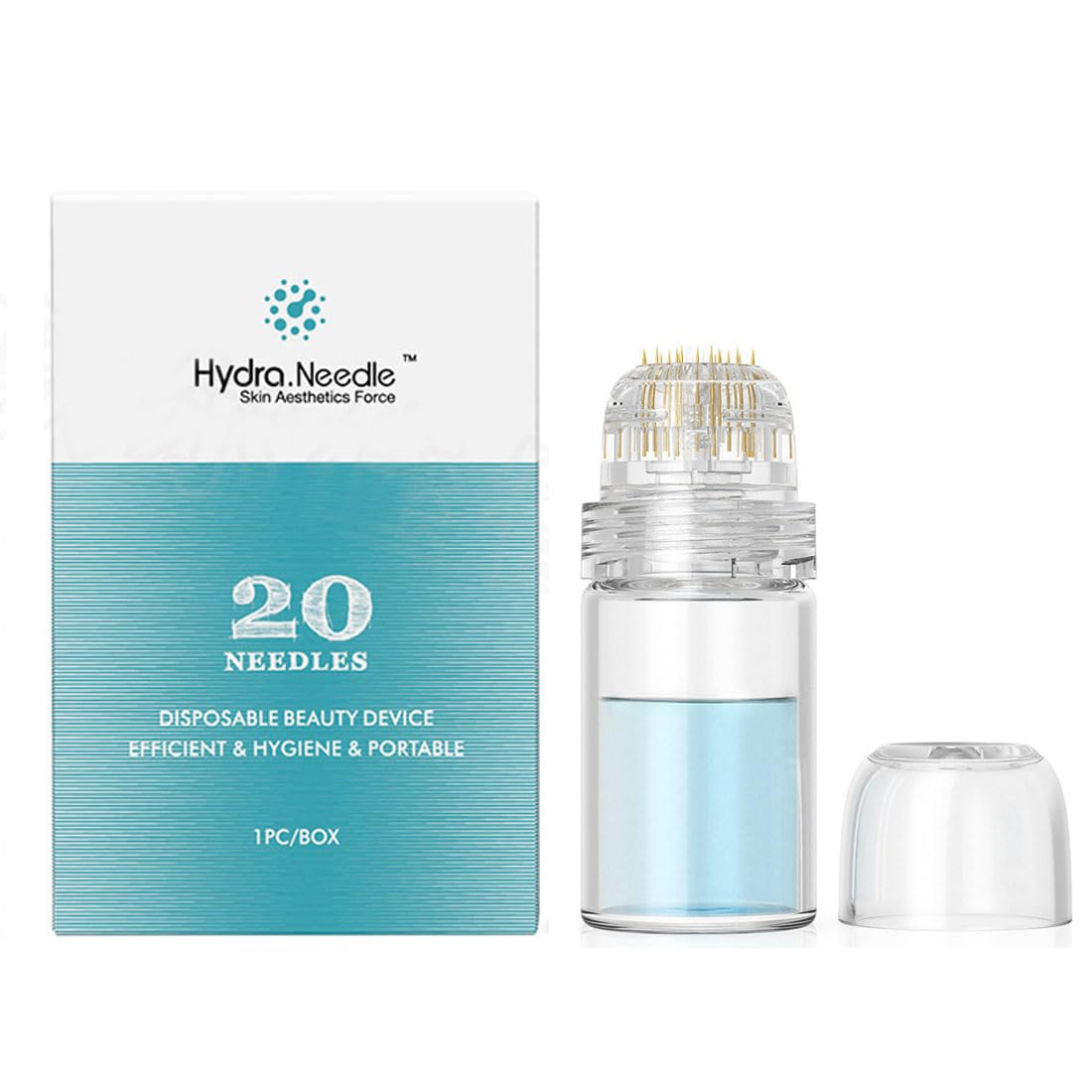
The reservoir holds your own serum and releases it as you press, so the product goes where the needles opened the surface instead of onto your hands. It also stops the drip that wastes half a bottle.
Avery, Beautyisles Editorial Producer
- Works with any serum you decant into it, not a branded cartridge
- Controlled flow reduces waste compared with a bare stamp
- Titanium pins keep their point longer than stainless
- The reservoir must be flushed after every session or the outlet clogs
- Thick oils and balms do not pass through the mechanism
Follicly Derma Stamp – Professional Microneedling Tool for Hair, Beard, and Skin Care – 140 Titanium Micro Needle Stamp for Home Use – for Men & Women
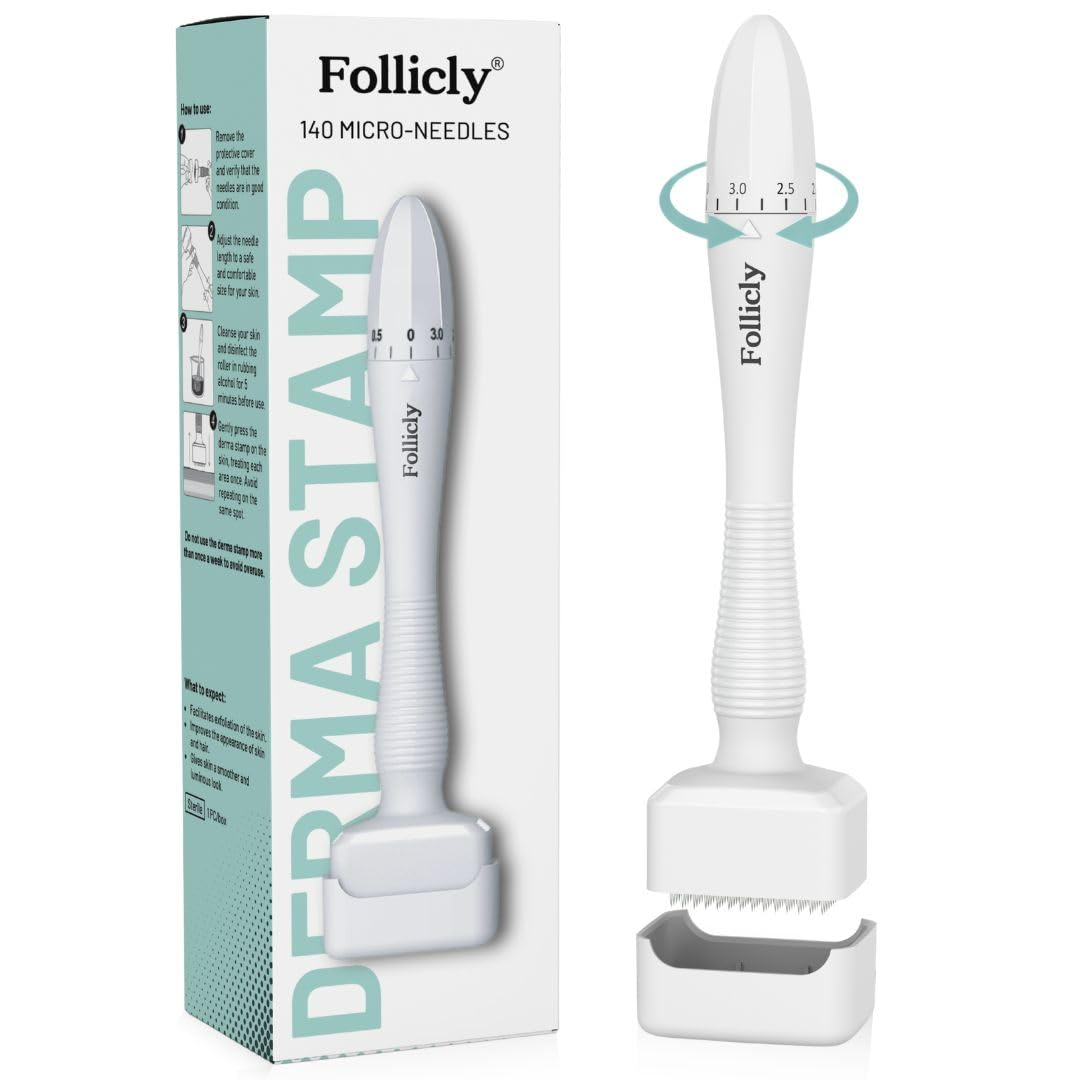
A dense 140-needle head covers the curved ground of a scalp or a beard line better than a small face stamp. The grip is shaped so a wet hand does not slide onto the needle plate.
Avery, Beautyisles Editorial Producer
- Wide head treats a scalp parting in a few presses
- Titanium needles resist bending against denser scalp skin
- Textured handle stays secure during a slow vertical press
- The broad head is clumsy in the nose folds and under the eye
- Hair catches in the needle plate and needs cleaning after each pass
Product Comparison Table
| Device Model | Needle Material | Needle Count | Depth Range | Best Suited For | Pricing |
|---|---|---|---|---|---|
| Gin Amber Beauty Derma Stamp | Stainless steel | 80 needles | 0.25 mm fixed | A first facial routine and shallow serum work | Check Price → |
| Dr.stamp Hydra 5 ml Stamp | Titanium | Fine pin array, count not stated | 0.25 mm fixed | Loading your own serum into the stamp | Check Price → |
| FolliRoll Follicly Stamp | Titanium | 140 needles | 0.25 mm fixed | Scalp, beard line and larger facial zones | Check Price → |
Frequently Asked Questions
What is microneedling?
Microneedling is a minimally invasive procedure that uses microscopic needles to create thousands of controlled micro-punctures in the skin. These punctures breach the stratum corneum into the living dermis. Instead of burning tissue with heat or removing layers with chemicals, microneedling triggers the body’s natural wound repair cascade. Blood platelets aggregate at the puncture sites and release signaling growth factors. These proteins stimulate fibroblasts to synthesize fresh collagen and elastin fibers, restoring firmness and smoothing atrophic scars.
What does microneedling do?
Microneedling stimulates natural tissue remodeling, boosts skin elasticity, smooths atrophic acne scars, and increases topical skincare absorption. When needles reach the dermis, they induce fibroblastic neocollagenesis, which thickens the dermal matrix and softens fine lines. Mechanical micro-punctures break down rigid fibrous bands beneath acne scars. New tissue then fills the space and raises the depression. Additionally, puncturing the stratum corneum creates open micro-channels that increase topical serum permeation by up to one thousand percent.
How much is microneedling?
Professional clinical microneedling costs between two hundred and seven hundred dollars per session. A complete treatment series of three to six sessions typically ranges from one thousand to three thousand five hundred dollars. When combined with Platelet-Rich Plasma or radiofrequency energy, clinical costs increase to seven hundred to fifteen hundred dollars per session. Manual at-home derma stamps cost between fifteen and forty dollars per device. at-home tools are affordable. Still, keep home use at superficial depths of 0.25 millimeters.
What is microneedling facial?
A microneedling facial is an in-office aesthetic treatment that combines mechanical micro-needling with clinical hydration serums. The aesthetician cleanses the skin, applies topical numbing cream for twenty minutes, and cleanses with an antiseptic solution. A motorized pen or manual stamp creates thousands of vertical channels while applying sterile hyaluronic acid as a glide medium. A cooling peptide mask calms immediate erythema. Patients experience mild sunburn-like redness for twenty-four to forty-eight hours before skin reveals a radiant texture.
How to microneedle face?
To microneedle your face safely, submerge your stamp head in fresh seventy percent isopropyl alcohol for ten minutes and allow it to air dry. Wash your face with a gentle cleanser and disinfect skin with hypochlorous acid spray. Apply pure sterile hyaluronic acid serum. Hold the stamp perpendicular to the skin at ninety degrees. Press gently, hold for one second, and lift straight off without twisting or dragging. Follow an overlapping grid pattern. Press two times per zone. Set depth to 0.25 millimeters on the forehead and 0.50 millimeters on the cheeks. Avoid makeup for twenty-four hours.
How often can I use derma roller?
You can use a shallow derma roller measuring 0.20 to 0.25 millimeters once or twice weekly for product absorption. However, you must wait four to six weeks between sessions for any needle measuring 0.50 millimeters or deeper. Shallow needles only penetrate the dead stratum corneum. Channels then reseal rapidly within hours. Needles of 0.50 millimeters or deeper enter vascularized tissue. Because dermal fibroblasts require four to six weeks to organize new collagen fibers, rolling deep needles weekly destroys developing tissue and creates chronic inflammation.
How often to do microneedling?
A clinic performs professional collagen induction microneedling once every four to six weeks. Plan for a series of three to six treatments. This schedule directly matches the biological phases of wound repair. Days one through three resolve inflammation. Days four through twenty-one produce temporary collagen type III. Weeks four through six convert that temporary scaffold into mature collagen type I. Treating skin before the four-week mark interrupts remodeling and destroys delicate new collagen bundles. After an initial cycle ends, maintain results with one or two sessions per year.
Editorial Sources
- Aust MC, Fernandes D, Kolokythas P, Kaplan HM, Vogt PM. Percutaneous collagen induction therapy: an alternative treatment for scars, wrinkles, and skin laxity. Plast Reconstr Surg. 2008;121(4):1421-1429. PMID: 18349665. DOI: 10.1097/01.prs.0000304612.72899.02.
- Aust MC, Reimers K, Repenning C, Stahl F, Jahn S, Guggenheim M, Schwaiger N, Gohritz A, Vogt PM. Percutaneous collagen induction: minimally invasive skin rejuvenation without risk of hyperpigmentation-fact or fiction? Plast Reconstr Surg. 2008;122(5):1553-1563. PMID: 18971740. DOI: 10.1097/PRS.0b013e318188245e.
- Singh A, Yadav S. Microneedling: Advances and widening horizons. Indian Dermatol Online J. 2016;7(4):244-254. PMCID: PMC4976400. PMID: 27559496. DOI: 10.4103/2229-5178.185468.
- Pahwa M, Pahwa P, Zaheer A. “Tram track effect” after treatment of acne scars using a microneedling device. Dermatol Surg. 2012;38(7 Pt 1):1107-1108. PMID: 22587597. DOI: 10.1111/j.1524-4725.2012.02441.x.
- El-Domyati M, Fathi MME, Abdel-Aziz RTA. Atrophic facial acne scars; bilateral comparison of two microneedle devices. J Cosmet Laser Ther. 2024;26(5-8):120-128. PMID: 39591948. DOI: 10.1080/14764172.2024.2433219.
- Litchman G, Nair PA, Badri T, Kelly SE. Microneedling. In: StatPearls [Internet]. Treasure Island (FL): StatPearls Publishing; 2024 Jan-. Available from: https://www.ncbi.nlm.nih.gov/books/NBK459344/. PMID: 29083607.
- Chu S, Foulad DP, Mesinkovska NA. Safety Profile for Microneedling: A Systematic Review. Dermatol Surg. 2021;47(9):1249-1254. PMID: 34448760. DOI: 10.1097/01.DSS.0000790428.70373.f6.
- Soltani-Arabshahi R, Wong JW, Duffy KL, Powell DL. Facial allergic granulomatous reaction and systemic hypersensitivity associated with microneedle therapy for skin rejuvenation. JAMA Dermatol. 2014;150(1):68-72. PMID: 24258303. DOI: 10.1001/jamadermatol.2013.6955.
- Zeitter S, Sichzkouski Z, Hassfeld S, Vogt PM. Microneedling: matching the results of medical needling and repetitive treatments to maximize potential for skin regeneration. Burns. 2014;40(5):966-973. PMID: 24513133. DOI: 10.1016/j.burns.2013.12.008.
- Gomaa YA, Garland MJ, McInnes FJ, Donnelly RF, El-Khordagui LK, Wilson CG. Effects of microneedle length, density, insertion time and multiple applications on human skin barrier function: assessments by transepidermal water loss. Toxicol In Vitro. 2010;24(8):1971-1978. PMID: 20732409. DOI: 10.1016/j.tiv.2010.08.012.
- Gupta J, Gill HS, Andrews SN, Prausnitz MR. Kinetics of skin resealing after insertion of microneedles in human subjects. J Control Release. 2011;154(2):148-155. PMCID: PMC3150536. PMID: 21640148. DOI: 10.1016/j.jconrel.2011.05.021.
- Rutala WA, Weber DJ; Healthcare Infection Control Practices Advisory Committee (HICPAC). Guideline for Disinfection and Sterilization in Healthcare Facilities, 2008. Centers for Disease Control and Prevention (CDC). Updated May 2019. Available from: https://www.cdc.gov/infectioncontrol/guidelines/disinfection/
- U.S. Food and Drug Administration (FDA). Regulatory Considerations for Microneedling Products: Guidance for Industry and Food and Drug Administration Staff. Silver Spring (MD): FDA Center for Devices and Radiological Health; 2020. 21 CFR § 878.4430. Available from: https://www.fda.gov/regulatory-information/search-fda-guidance-documents/regulatory-considerations-microneedling-products