
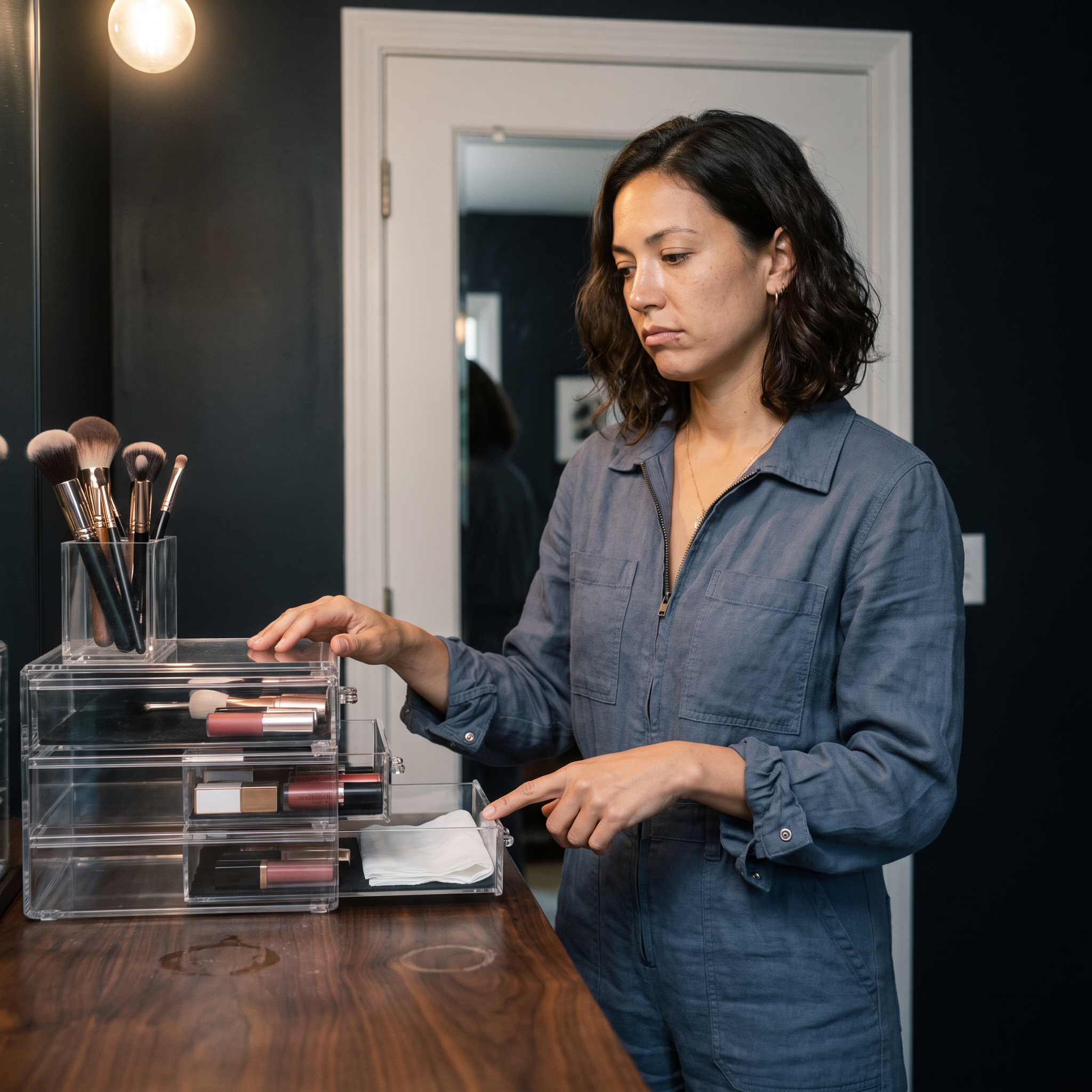
- Keep lower alcohols away from an acrylic makeup organizer. Isopropyl alcohol dissolves intermolecular polymer bonds and causes instant crazing fractures and a cloudy white haze.
- Zone your vanity by moisture levels. Never store damp blending sponges near dry pressed powders or inside sealed drawer units.
- Protect brush bristles from bioaerosols. Place open brush cups at least two meters away from toilets, or choose lidded holders.
- Dry washed brushes horizontally over an edge. Upright drying forces water into the ferrule cavity, dissolving structural adhesives and growing mold.
- Clean cosmetic sponges after each use. Open-cell foam holds moisture inside it. Bacteria then multiply fast, within twenty-four hours.
Why an Acrylic Makeup Organizer Outlasts a Cheap Bin
Most vanity clutter starts with good intentions and poor materials. Cheap storage bins bend under weight, yellow under sunlight, and scratch during normal dusting. Investing in durable makeup organizers, specifically a premium acrylic makeup organizer, solves these structural issues through precise polymer chemistry.
High-grade organizers use polymethyl methacrylate, commonly known as PMMA or cast acrylic. Polymethyl methacrylate is an amorphous thermoplastic polymer with exceptional optical physics. Cast PMMA achieves an optical light transmission rate of 92 percent. This transmission rate exceeds standard soda-lime window glass, which transmits between 88 and 90 percent of ambient light. It has a refractive index of 1.49. This property lets you identify lipstick shades and palette tones instantly through transparent drawer fronts without opening compartments.
Mechanical strength is the second advantage of cast PMMA. An acrylic organizer has a tensile strength of 70 megapascals. It delivers ten to seventeen times the impact resistance of standard glass. If an organizer slips onto a tiled bathroom floor, it resists shattering. This property makes it far safer than glass jars on hard countertops.
Consumers often group all clear containers under the broad label of a plastic makeup organizer. However, polymer selection dictates durability:
| Polymer Type | Chemical Name | Optical Clarity | Solvent Resistance | Impact Durability | Ten-Year Aging Stability |
|---|---|---|---|---|---|
| PMMA (Cast Acrylic) | Polymethyl methacrylate | Outstanding (92%) | Sensitive to alcohol and acetone | Moderate-High (shatterproof) | UV stable. No yellowing for over ten years |
| PS (Polystyrene) | Polystyrene | Moderate (88%) | Moderate resistance | Low (brittle. Micro-fissures easily) | Degrades under UV. Yellows within two years |
| PP (Polypropylene) | Polypropylene | Low (translucent / hazy) | High (chemical-proof) | High (flexible and tough) | High chemical resilience. Resists cracking |
| PC (Polycarbonate) | Polycarbonate | High (89%) | Sensitive to alkaline soaps | Extreme (impact-resistant) | Prone to surface scratching. Moderate UV resistance |
Budget storage units often use injection-molded polystyrene. Polystyrene saves manufacturing cost, but it carries low impact resistance. It develops micro-cracks under minimal physical load and turns dull yellow from ambient light exposure. In contrast, cast PMMA maintains crystal clarity for decades when washed with safe cleansers.
Before purchasing cosmetic storage, confirm the material is genuine PMMA acrylic rather than polystyrene. Polystyrene feels lightweight, produces a hollow ringing sound when tapped, and yellows under sunlight. Cast PMMA feels dense, stays silent upon light contact, and maintains optical clarity.
The Solvent Crazing Hazard: Why Alcohol Destroys Acrylic
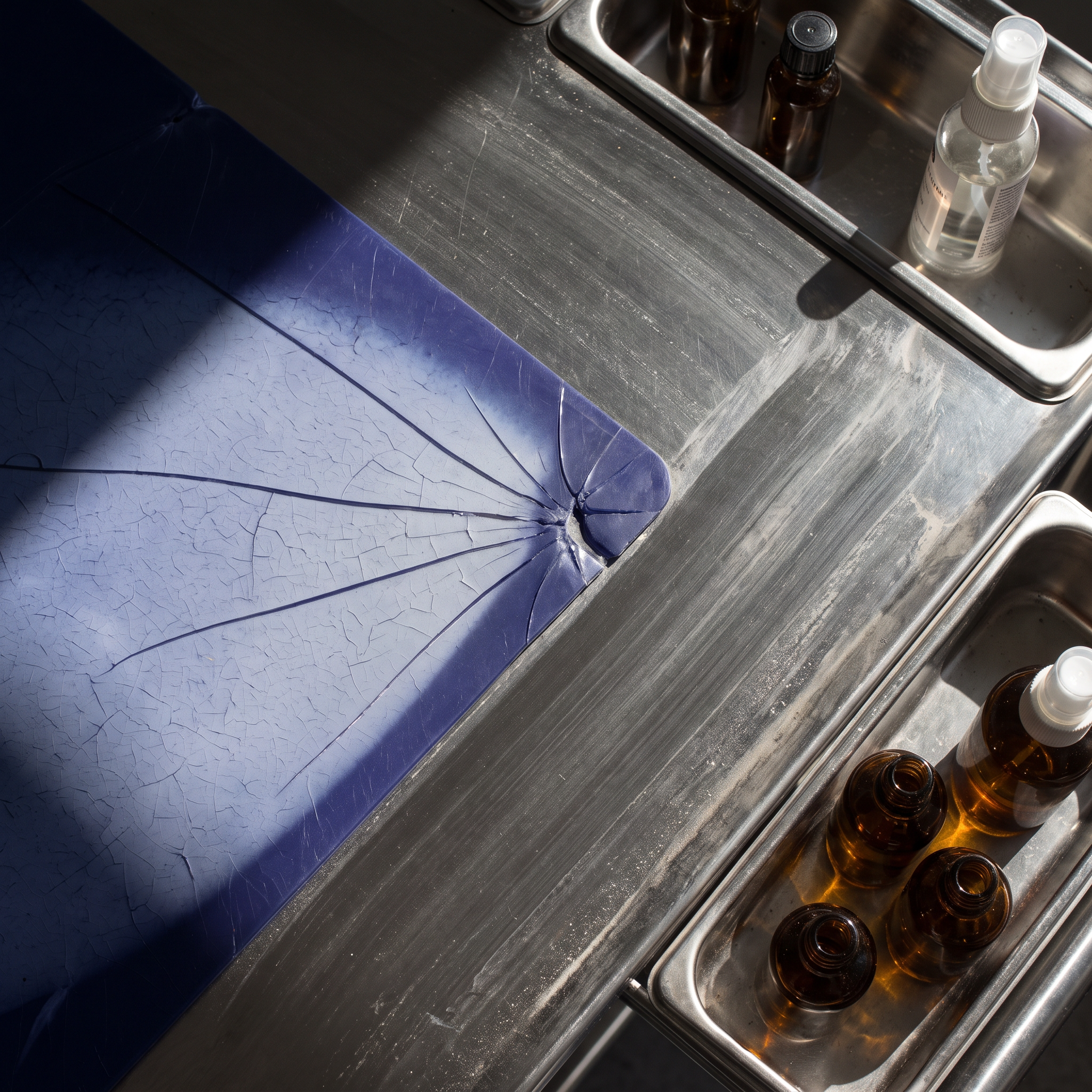
The fastest way to ruin a premium acrylic organizer is cleaning it with rubbing alcohol. Beauty enthusiasts routinely spray 70 percent isopropyl alcohol across trays to kill germs. When alcohol touches PMMA, catastrophic material failure begins within seconds.
Engineers call this failure environmental stress cracking, or ESC. Acrylic consists of long polymer chains tangled together. Manufacturing processes like molding, thermoforming, and laser edge-cutting leave residual tensile stresses locked within the material. Polymethyl methacrylate is an amorphous polymer without crystalline boundaries.
Lower alcohols act as aggressive organic solvents. When you apply isopropyl alcohol or ethanol to acrylic, solvent molecules diffuse into spaces between polymer chains. This solvent penetration weakens intermolecular Van der Waals bonds. The alcohol plasticizes the local polymer network. Weakened chains cannot resist internal residual stress. They slip apart, forming microscopic voids called crazes.
These micro-voids scatter light in every direction. The organizer instantly turns cloudy white. If stress continues, crazes merge into physical structural cracks. A study by Yan and colleagues confirmed that alcohol exposure cuts the crazing stress threshold of PMMA by 20 to 35 percent. Alcohol contact triples the polymer’s vulnerability to mechanical fracture.
Ketones and esters cause even worse destruction. Acetone in nail polish remover dissolves PMMA right through. It leaves gummy, melted craters where it lands.
Do not wipe acrylic organizers with rubbing alcohol, disinfectant wipes, or glass cleaner containing ammonia. Alcohol triggers irreversible crazing cracks. Acetone liquefies PMMA on contact. Clean acrylic using lukewarm water with mild dish soap or dilute hypochlorous acid.
PMMA carries a pencil hardness rating of 3H. This makes acrylic softer than architectural glass. If you wipe acrylic with wood-pulp paper towels or coarse kitchen sponges, you produce micro-scratches. These microscopic furrows collect makeup pigment and harbor bacteria. Clean acrylic using only seamless, optical-grade microfiber cloths with lukewarm water and mild liquid soap.
Spatial Vanity Zoning: Airflow, Microclimates, and Bioaerosols

Vanity architecture functions as a personal hygiene control station. High-performance makeup organizers do not merely hide countertop clutter. Instead, an acrylic drawer organizer creates distinct micro-environments that isolate clean tools from microbial contamination.
Cosmetic products possess different physical and biological vulnerabilities. Liquid foundations contain water and plant oils that support microbial growth once preservatives expire. Pressed powder eyeshadows and blushes require bone-dry storage to avoid fungal germination. Cosmetic applicators carry human sebum and shed skin cells.
When you store wet items next to dry cosmetics, cross-contamination follows. Enclosing a damp makeup sponge inside an unventilated drawer spikes local humidity above 80 percent. This moisture migrates into pressed powder pans. Trapped water breaks powder binders and activates mold spores like penicillium and aspergillus.
Bathroom vanities present a severe microbial hazard: toilet bioaerosol plumes. When a toilet flushes without a closed lid, fluid turbulence produces an aerosol plume. Microscopic droplets carry enteric bacteria into the air. Clinical research by Best, Sandoe, and Wilcox proved that these bioaerosols travel up to two meters laterally and vertically. Aerosolized bacteria remain suspended in ambient air for over thirty minutes before settling onto counters.
If you leave an open makeup holder on an exposed bathroom vanity, upward-facing bristles collect these settling droplets. Enteric microbes land on fibers that later touch facial skin and eyelid margins.
Position all cosmetic organizers at least two meters away from bathroom toilets. Always close toilet lids before flushing. If your counter space is small, choose a lidded organizer. or store your tools in a closed cabinet, so falling droplets miss clean bristles.
Divide your vanity into three clean zones. Zone one holds daily liquid emulsions and foundation pumps in accessible caddies. Zone two uses an acrylic drawer organizer for fragile powder palettes and compacts. Zone three houses sanitized tools in enclosed, dustproof storage.
Certain beauty items require specialized climates. While modular drawers handle dry compacts, temperature-sensitive serums and cooling cryo tools belong in a dedicated beauty fridge to stabilize delicate active formulas. Similarly, stainless steel extractors demand sterile, dry placement. Store your sanitized comedone extractor inside a silicone-lined tray rather than loose among soft cosmetic brushes. If you invest in devices from our guide to the best facial tools, store them in dry, isolated compartments away from humid sponges.
Tool Storage Architecture: Which Tools Deserve Their Own Slot
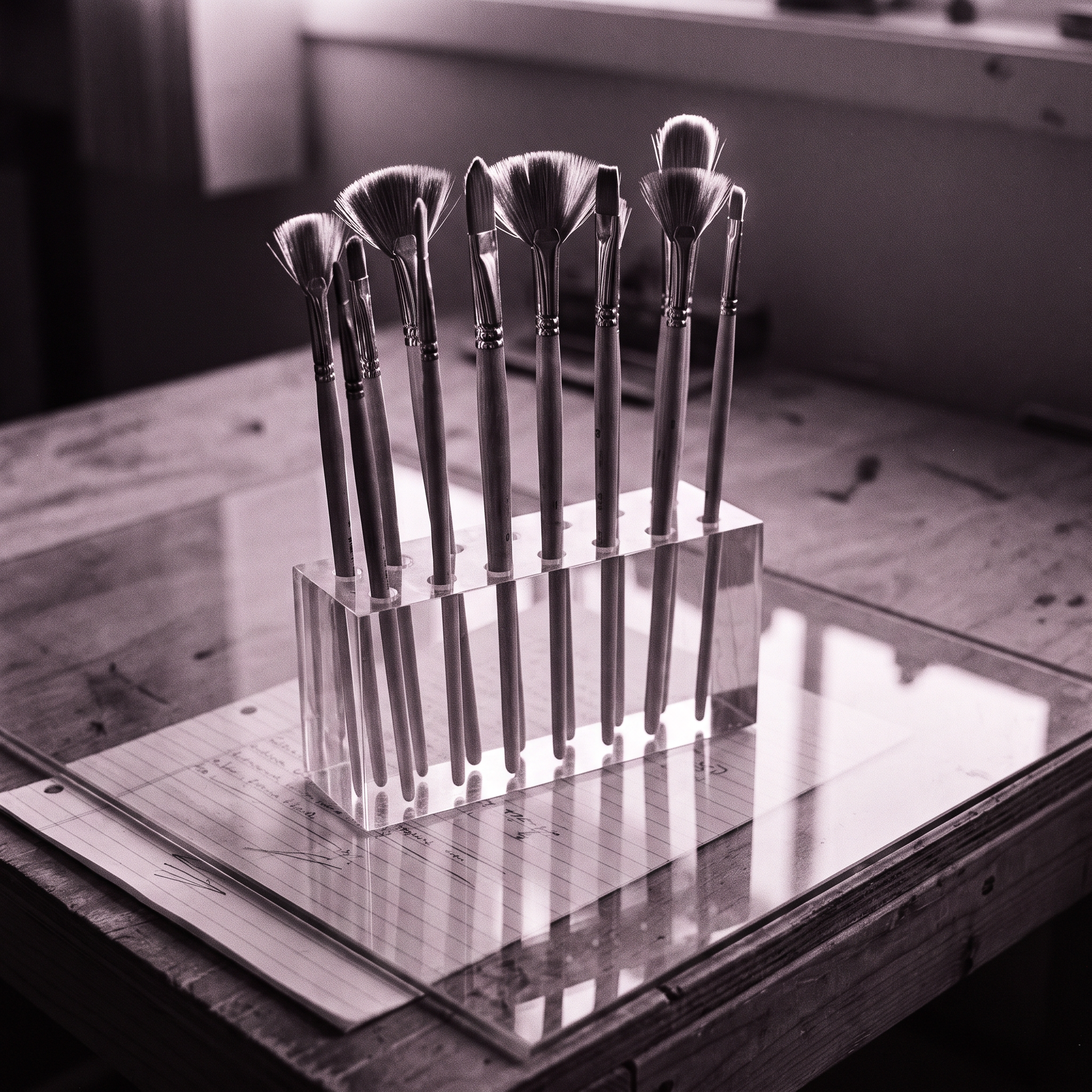
Every tool touching your face transfers sebum, dead corneocytes, and microbes. A dedicated makeup holder stabilizes individual applicators to prevent surface contamination and mechanical damage.
Eye applicators demand the most rigorous isolation. Eyelid skin measures approximately 0.05 millimeters in thickness. It represents the thinnest epidermal barrier on the human body. Eyelash follicles connect to delicate sebaceous glands of Zeis and meibomian lipid glands. When a dirty brush deposits staphylococcus aureus onto the lid margin, bacteria invade glandular ducts. Bacterial lipases hydrolyze meibomian lipids into irritating free fatty acids. This process triggers blepharitis, painful styes, and chronic dry eye disease. A contaminated brush can also scratch the corneal epithelium, the clear front layer of the eye. Pseudomonas aeruginosa can then cause corneal keratitis, which threatens sight.
Cosmetic applicators harbor dense microbial ecosystems. Microbiological testing by Bashir and Lambert revealed bacterial contamination in over 79 percent of used cosmetic tools. Makeup sponges showed the highest contamination rates, frequently exceeding one million colony-forming units per milliliter. Sponges contained enterobacteriaceae, staphylococcus, and fungal colonies.
Dirty tools also provoke bacterial folliculitis and acne mechanica. Normal facial skin hosts balanced communities of cutibacterium acnes. When unwashed brushes buff makeup across pores, stiff bristles push oxidized lipids and environmental debris into follicular openings. This friction damages the follicular wall, inducing hyperkeratinization and inflammatory pustules.
On Fitzpatrick skin types IV through VI, rough brush friction triggers post-inflammatory hyperpigmentation. Abrasive, product-caked bristles increase transepidermal water loss and stimulate epidermal melanocytes. The pigment cells release too much melanin, and it falls into the dermis. Dark marks result, and they take months to fade.
An acrylic makeup brush holder keeps bristles upright and separated. Vertical orientation prevents bristle tips from touching dirty tabletop surfaces. It also prevents bristle heads from rubbing against oily tool handles.
Many clear brush cups include decorative pearlescent plastic beads to hold brushes upright. These beads trap exfoliated skin cells, facial oils, and ambient dust. You cannot wash those beads cleanly. So every brush you insert re-contaminates the bristles. Choose slotted acrylic dividers instead.
Lidded holders provide complete physical defense against room dust and airborne droplets. However, you must observe one strict rule: brushes must be bone dry before you close the lid. Sealing damp bristles inside an airtight acrylic chamber traps evaporating moisture, producing fungal colonies within forty-eight hours.
Master Comparison: Architectural & Hygienic Vanity Organizers
Compare construction materials, zoning capabilities, bioaerosol protection, and pricing across our three tested vanity storage solutions:
| Organizer Model | Format & Architecture | Material & Build | Dust & Bioaerosol Protection | Best Suited For | Pricing |
|---|---|---|---|---|---|
| Sorbus Seven-Drawer Set | Seven drawers plus a divided top tray | Clear cast acrylic with a shelf liner | High, because the drawers close | Powder palettes and mixed tubes | Check Price → |
| STORi Audrey Fifteen-Compartment Tray | Fifteen open compartments, 12 x 8 x 3.6 inches | BPA-free clear moulded plastic | Moderate, open countertop design | Daily foundations, primers and upright bottles | Check Price → |
| HBlife Organizer With Brush Station | Two drawers, a top tray and six side slots | ABS plastic with a snap-together build | Moderate, the brushes sit open | Brush-heavy collections stored upright | Check Price → |
The Verified Edit
Sorbus Makeup Organizer, 7-Drawer Acrylic 2-Piece Set (Clear)
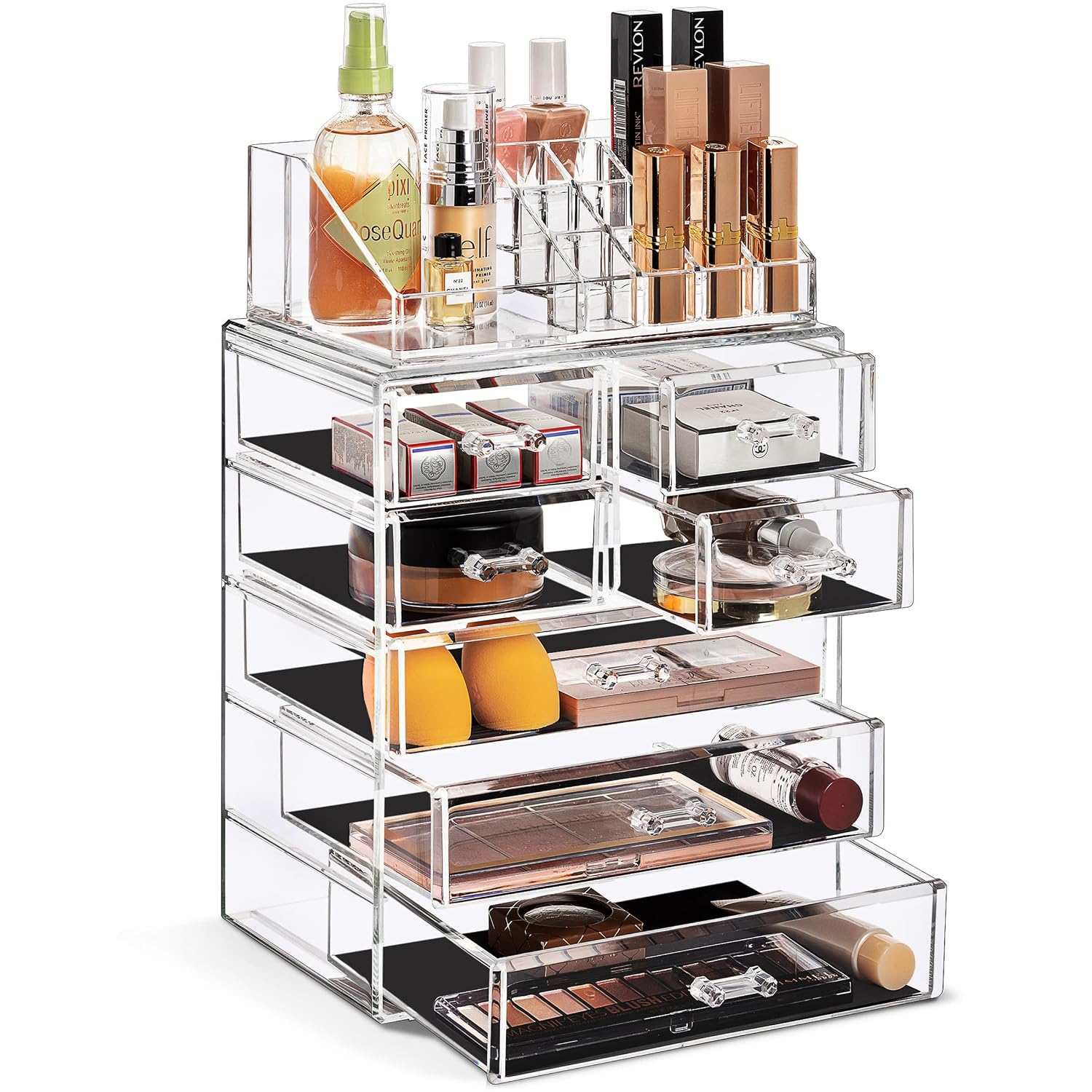
Drawers keep powder products closed, which matters because an open palette collects bathroom dust. Seven drawers plus a divided top give each category its own space instead of one deep jumble.
Avery, Beautyisles Editorial Producer
- Closed drawers protect loose powder and cream products
- Top compartments hold brushes upright and lipsticks visible
- Two-piece set stacks without a separate base
- Drawers fill up unevenly, so the large ones hold most of the volume
- Cast acrylic scratches if you drag a wet bottle across it
STORi Audrey Clear Vanity Makeup Organizer | 15-Compartment Holder for Brushes, Eyeshadow Palettes, & Beauty Supplies | Stacks on Audrey Storage Drawers | Made in USA
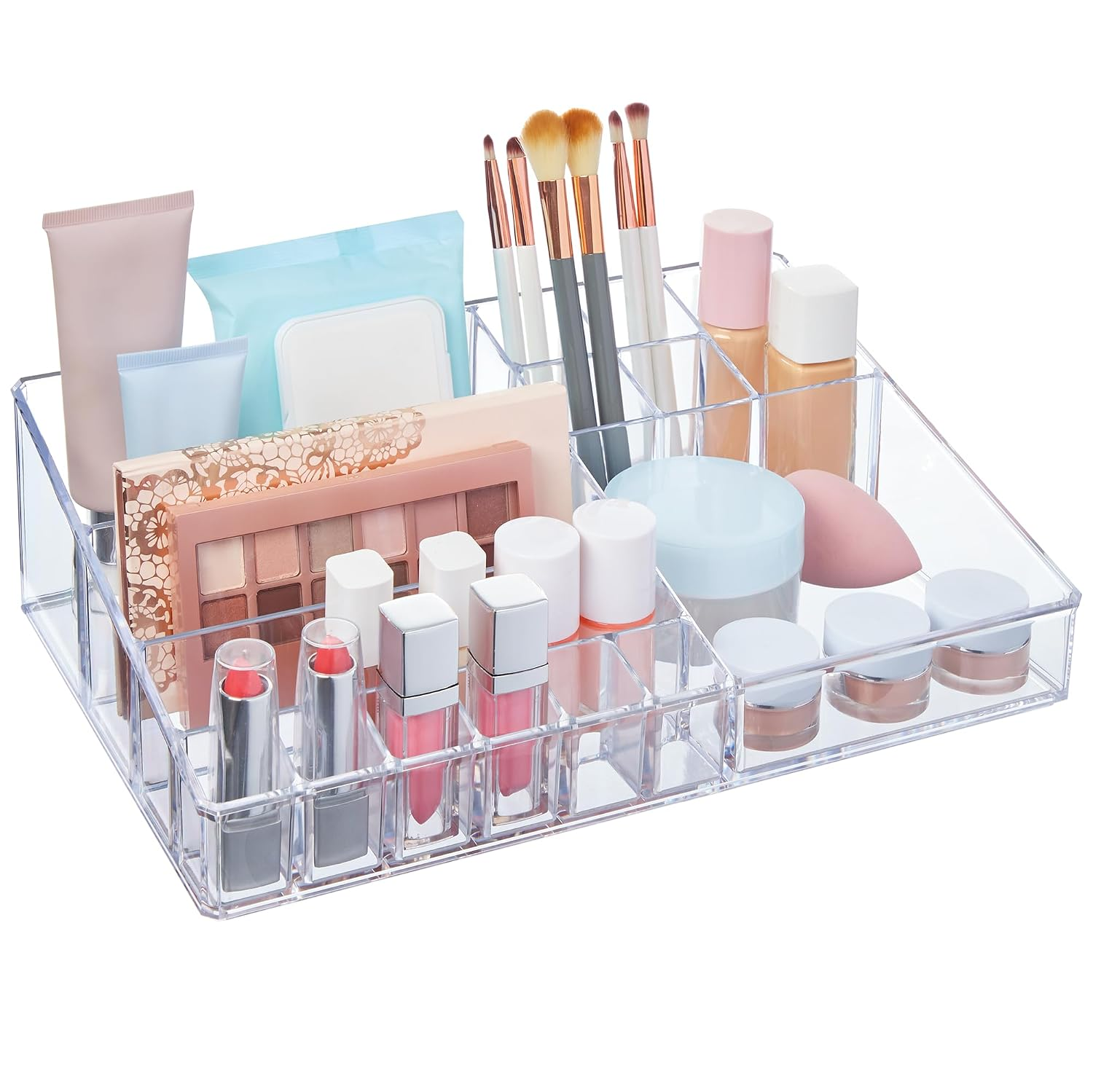
Everything sits open and reachable, which suits a routine you complete in one sitting. Fifteen compartments of different depths take tall primer bottles at the back and flat palettes at the front.
Avery, Beautyisles Editorial Producer
- Mixed compartment sizes fit bottles, palettes and brushes together
- Low 3.6-inch height keeps sightlines clear on a mirror wall
- Domestic production with BPA-free material, stated on the listing
- Open trays collect dust between uses, so covers help
- Lighter plastic flexes more than a thick cast acrylic case
HBlife Makeup Organizer for Vanity with Brush Holder, Large Bathroom Countertop Cosmetic Organizer Skin Care Storage, Easy to Store Lipsticks, Nail Polishes, Perfumes, Eyeshadow Palettes, All White
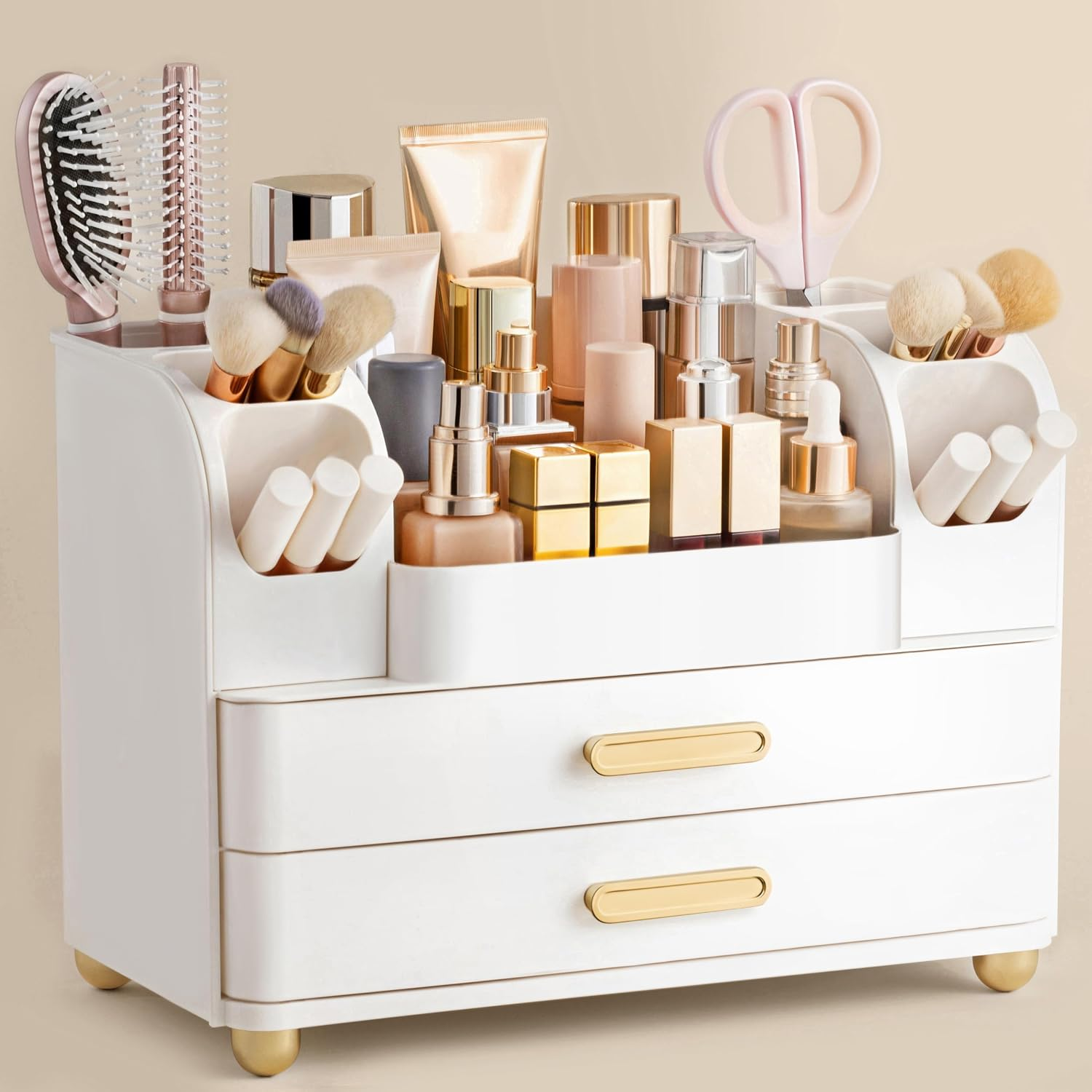
Brushes live in dedicated side slots instead of lying in a drawer, which is where most bristle damage happens. Two drawers and a top tray handle the rest, and the whole unit snaps together in seconds.
Avery, Beautyisles Editorial Producer
- Vertical side slots keep bristles off the base of a tray
- Tall 9.7-inch body stores bottles upright in two tiers
- ABS shell wipes clean with a damp cloth
- ABS plastic is less crystal-clear than cast acrylic
- Side slots suit short and medium brushes more than long-handled ones
Frequently Asked Questions
How to clean makeup brushes?
Clean makeup brushes by massaging bristles in lukewarm water mixed with a mild surfactant cleanser. Direct water flow downward over the tips. Swirl the head on a textured silicone cleansing pad until lather runs pure white. Press excess moisture out in a clean towel, reshape the head, and lay the brush flat to air dry.
How to wash makeup brushes?
Wash brushes every seven to ten days using water below forty degrees Celsius and a neutral shampoo. Never submerge the metal ferrule. Keep the handle dry and angled upward. Rinse until water runs completely clear. Place the brush flat on an elevated ledge with bristles extending over the counter edge to allow 360-degree airflow.
How to get makeup out of clothes?
Treat cosmetic stains on fabric immediately before adding water. For liquid foundation and lipstick, apply concentrated dish soap directly to dry fabric fibers. Work the detergent in with a damp cloth to break down oily binders. Wait ten minutes, rinse with warm water, and launder normally. For dry powder makeup, flick or vacuum excess dust off first without rubbing.
How to clean makeup sponges?
Clean makeup sponges after every use. Wet the sponge with warm water and rub a solid cleansing bar over the surface. Squeeze and release repeatedly under running water until all internal foundation flushes out. Blot thoroughly in a clean paper towel. Dry the sponge in an open, ventilated wire basket, and replace sponges every three months.
How to apply makeup with sponge?
Saturate the sponge completely with clean water and squeeze out all excess liquid in a clean towel. The damp sponge expands, preventing cosmetic foundation from soaking into the core. Bounce the rounded surface perpendicularly across the skin in gentle stippling motions. Never drag or wipe the sponge across your face, which disturbs the skin barrier.
What are the best makeup brushes?
The best makeup brushes feature smooth synthetic filaments made from polybutylene terephthalate anchored inside double-crimped brass or aluminum ferrules. Non-porous synthetic fibers resist lipid absorption, clean easily, dry rapidly, and maintain softness. Reserve natural cuticular animal hair exclusively for dry powder dusting, and choose synthetic filaments for liquid and cream makeup.
Editorial Sources
- Ananthapadmanabhan KP, Moore DJ, Subramanyan K, Misra M, Meyer F. Cleansing without compromise: the impact of cleansers on the skin barrier and the technology of mild cleansing. Dermatol Ther. 2004;17 Suppl 1:16-25. PMID: 14728695. DOI: 10.1111/j.1396-0296.2004.04s1002.x.
- Bashir A, Lambert P. Microbiological study of used cosmetic products: highlighting possible impact on consumer health. J Appl Microbiol. 2020;128(2):598-605. PMID: 31597215. DOI: 10.1111/jam.14479.
- Best EL, Sandoe JA, Wilcox MH. Potential for aerosolization of Clostridium difficile after flushing toilets: the role of toilet lids in reducing contamination. J Hosp Infect. 2012;80(1):1-5. PMID: 22137761. DOI: 10.1016/j.jhin.2011.08.010.
- Cua FT, Wilhelm KP, Maibach HI. Frictional properties of human skin: relation to age, sex and anatomical region, stratum corneum hydration and transepidermal water loss. Br J Dermatol. 1990;123(4):473-479. PMID: 2095179. DOI: 10.1111/j.1365-2133.1990.tb01452.x.
- Davis EC, Callender VD. Postinflammatory hyperpigmentation: a review of the epidemiology, clinical features, and treatment options in skin of color. J Clin Aesthet Dermatol. 2010;3(7):20-31. PMID: 20725554.
- Johnson DL, Mead KR, Lynch RA, Franke DL. Lifting the lid on toilet plume aerosol: A literature review with suggestions for future research. Am J Infect Control. 2013;41(3):254-258. PMID: 23040490. DOI: 10.1016/j.ajic.2012.04.330.
- Nair PA, Saleh HM, Salazar FJ. Acneiform Eruptions. StatPearls [Internet]. Treasure Island (FL): StatPearls Publishing; 2026. Bookshelf ID: NBK459207. PMID: 29083685.
- Pack LD, Wickham MG, Enloe RA, Hill DN. Microbial contamination associated with mascara use. Optometry. 2008;79(10):587-593. PMID: 18922495. DOI: 10.1016/j.optm.2008.02.011.
- Sullivan DA, da Costa AX, Del Duca E, et al. TFOS Lifestyle: Impact of cosmetics on the ocular surface. Ocul Surf. 2023;29:778-830. PMID: 37061220. DOI: 10.1016/j.jtos.2023.04.005.
- Winters RD, Mitchell M. Folliculitis. StatPearls [Internet]. Treasure Island (FL): StatPearls Publishing; 2026. Bookshelf ID: NBK547754. PMID: 31613534.
- Yan Y, Sun Y, Su J, Li B, Zhou P. Crazing Initiation and Growth in Polymethyl Methacrylate under Effects of Alcohol and Stress. Polymers. 2023;15(6):1375. PMID: 36987157. DOI: 10.3390/polym15061375.
- Załęcki P, Twardowska J, Nowicka D, Andrzejewski W. Effectiveness of the Disinfection of Reusable Make-Up Applicators-Initial Experiences. J Cosmet Sci. 2021;72(2):163-171. PMID: 35361322.
- American Academy of Dermatology Association. How to Clean Your Makeup Brushes. Dermatology A to Z Guidelines; 2021.