
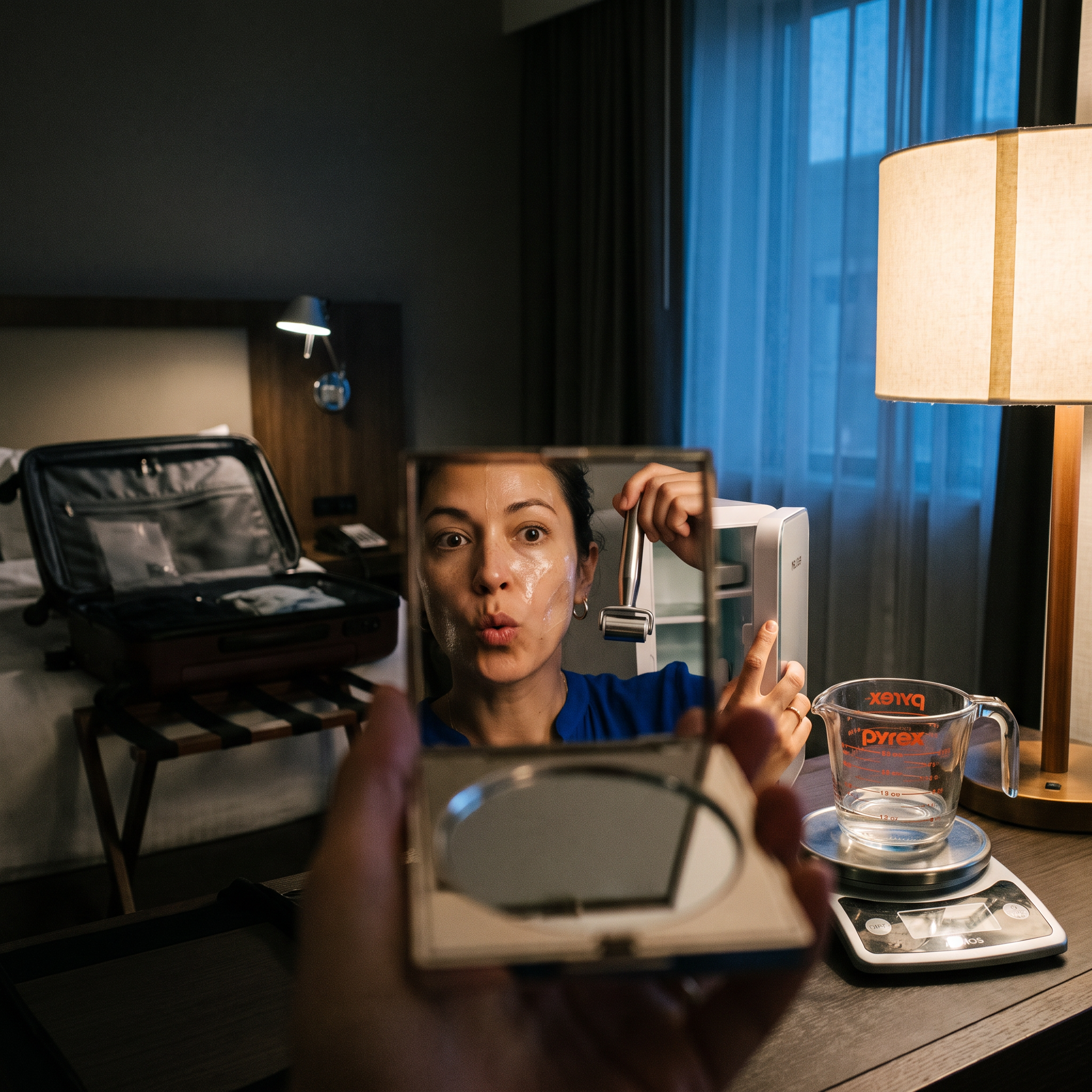
- The safe cooling range is 7°C to 12°C. Thermoelectric beauty fridges, which cool with electricity and no moving parts, operate between 7°C and 12°C. This moderate chilling protects temperature-sensitive active ingredients. It avoids the emulsion cracking, or separation, that colder kitchen fridges cause.
- Formulas That Benefit from Chilling. Store pure aqueous L-ascorbic acid (vitamin C), over-the-counter retinoids (vitamin A compounds that renew skin cells), hydrogel eye masks, and metal massage rollers. Chilled application narrows surface blood vessels. This quickly clears morning facial puffiness.
- Formulas Damaged by Cold. Never store pure plant face oils, anhydrous balms, or fine fragrances in cold storage. Cold induces polymorphic lipid crystallization that makes oils cloudy and gritty. It also causes terpene precipitation in perfumes.
- Sanitation and Condensation Management. Thermoelectric units pool moisture from ambient room air. Clean the internal chamber weekly with 70% isopropyl alcohol to prevent cold-tolerant Pseudomonas biofilms around bottle caps.
How Thermoelectric Vanity Coolers Differ from Kitchen Refrigerators
Dedicated cosmetic cooling units have surged in popularity across modern vanity setups. Many consumers assume a specialized skin care fridge is merely a smaller, pastel-colored version of a domestic kitchen refrigerator. From a thermodynamic and mechanical standpoint, that assumption is incorrect.
Domestic kitchen refrigerators use vapor-compression refrigeration circuits. These systems rely on chemical refrigerants, motorized mechanical compressors, condenser coils, and expansion valves. They actively cool internal air down to 1°C to 4°C (34°F to 39°F). This intense cold safely inhibits food-borne pathogens. However, mechanical compressors generate constant micro-vibrations. They also create abrupt thermal cycles that place physical stress on delicate colloidal cosmetic fluids.
In contrast, a countertop micro fridge built for cosmetics cools via the Peltier effect. In this effect, electricity moves heat from one side of a solid block to the other. This solid-state thermoelectric technology uses no chemical refrigerants, compressors, or mechanical pumps. Direct electrical current passes through two dissimilar semiconductor plates made of bismuth telluride. A semiconductor conducts electricity less freely than a metal, but better than an insulator. The current absorbs heat at one junction and discharges it at the other. A quiet internal aluminum cold plate absorbs thermal energy from the storage chamber. A small brushless DC (direct current) exhaust fan and rear heat sink then disperse that heat into the room.
Thermoelectric semiconductors create a fixed temperature differential (Δ T) rather than reaching an absolute cold setpoint. Most vanity units lower internal chamber temperatures by 15°C to 20°C (27°F to 36°F) below ambient room conditions. In a climate-controlled bedroom held at 22°C (72°F), the fridge interior rests steadily between 7°C and 12°C (45°F to 54°F). This moderate window is cold enough to slow chemical degradation while staying safely above the freezing point of water and cosmetic oil blends.
Thermoelectric cooling modules must vent heat continuously through their rear aluminum heat sinks. If you push a compact unit flat against a bedroom wall, trapped heat accumulates. Internal temperatures will rise above 15°C, canceling out the protective benefits for your active serums. Always keep at least 10 centimeters (4 inches) of open clearance behind the rear ventilation grill.
What is the lowest temperature a beauty fridge reaches?
Under normal household conditions, a thermoelectric mini beauty fridge reaches a floor between 7°C and 9°C (45°F to 48°F). Because Peltier cooling is strictly tied to ambient room temperature, the chamber cannot reach freezing temperatures unless the room itself drops below 15°C. If your bedroom climbs to 30°C (86°F) during hot summer months, your fridge interior will rise to roughly 13°C to 15°C. It will never drop low enough to freeze water into solid ice.
How long does a thermoelectric beauty fridge last?
A high-quality thermoelectric unit typically runs reliably for 2 to 4 years of continuous operation. The internal Peltier semiconductor plate has no moving parts and can theoretically run for up to 100,000 hours. The primary failure point is the brushless DC exhaust fan. These fans carry small sleeve bearings rated for roughly 15,000 to 30,000 hours of continuous rotation. To extend fan lifespan, vacuum dust from the rear intake vents every two months.
Why Kitchen Fridges Break Creams

Placing rich moisturizers, barrier creams, and liquid emulsions inside a standard domestic kitchen refrigerator below 5°C is a common storage mistake. Cosmetic creams and lotions are not simple homogeneous liquids. They are complex emulsions, mixtures of microscopic oil droplets suspended in water. Surfactant molecules, which act like soap, hold the oil and water together.
Each cosmetic emulsion relies on a delicate colloidal balance governed by interfacial tension, surfactant packing geometry, and lipid phase states. If you expose a standard oil-in-water emulsion to temperatures below 5°C, the triglycerides and fatty acids inside the suspended oil droplets begin to freeze. This process triggers lipid crystallization. As fats solidify, they form sharp, needle-like crystals that protrude through the surrounding surfactant film.
When partially frozen droplets collide during everyday handling, these protruding crystals pierce neighboring droplets and lock them together. Colloid scientists call this phenomenon partial coalescence. When you bring the cream back to room temperature, the locked droplets cannot separate cleanly. The emulsion collapses. The product separates into an unappealing top layer of oily liquid and a watery lower fluid. This irreversible phase separation destroys the smooth texture and even active distribution of your cream.
Dedicated vanity fridges prevent this physical failure. They hold the moderate 7°C to 12°C zone. That cools topicals without freezing common cosmetic lipids such as caprylic triglycerides and cetyl alcohol. Creams stay smooth, homogenous, and pleasant to apply.
Chemical Preservation: Vitamin C, Retinoids, and Thermal Oxidation
While standard hydrating lotions perform best at stable room temperatures, specific chemically unstable active ingredients benefit greatly from controlled cold storage. The two clearest examples are pure aqueous L-ascorbic acid and over-the-counter topical retinoids.
Pure L-ascorbic acid (vitamin C) is notoriously unstable in water. When room warmth and dissolved oxygen reach it, the molecule sheds electrons through oxidation. Oxidation means oxygen breaks a substance down as the substance loses electrons. It converts first into dehydroascorbic acid, and then breaks down irreversibly into inactive, brown 2,3-diketogulonic acid. This chemical breakdown turns clear or pale champagne serums into dark amber fluids, rendering them ineffective and potentially irritating to the skin barrier.
According to the Arrhenius equation, the rate constant of a chemical reaction scales exponentially with temperature. Lowering storage temperature from 25°C room temperature down to 10°C in a chilled unit cuts oxidative degradation by more than half. This temperature drop preserves the serum’s low acidity. pH measures how acidic or basic a liquid is. The serum needs a pH below 3.5 to penetrate the epidermis, the outer skin layer. The drop also protects the serum’s free-radical scavenging capacity over several months. Free radicals are unstable molecules that damage skin cells.
Topical retinoids are also vulnerable. This group includes retinol, retinaldehyde, and retinyl palmitate. Retinoids feature a delicate polyene hydrocarbon backbone with alternating double bonds. Heat and oxygen cause these double bonds to twist and degrade through thermal isomerization and photolytic oxidation. Trials in the Journal of Cosmetic Dermatology show retinol stored at 25°C loses up to 80% of active concentration within six months. Storing retinoids in a dedicated cool chamber halts this potency drop. The formula then delivers its intended cellular turnover benefits.
Do retinol and vitamin C need a beauty fridge?
Yes. If you invest in un-encapsulated aqueous L-ascorbic acid or potent over-the-counter retinoids, chilled storage offers clear chemical advantages. Both molecules break down through heat-driven oxidative reactions. A consistent 7°C to 12°C environment extends biological potency without exposing the liquid to freezing stresses that can crack glass dropper bottles.
Niacinamide (vitamin B3) does not require refrigeration. Unlike vitamin C, niacinamide features a stable pyridine ring that resists oxidation and heat across a wide pH range (pH 4.5 to 7.0). Storing niacinamide serums at room temperature causes zero chemical breakdown. However, applying a chilled niacinamide serum feels soothing on irritated, red skin.
What Belongs in a Beauty Fridge vs. What Does Not
Social media often depicts cosmetic refrigerators packed with every product from a consumer’s vanity. Indiscriminate cooling can ruin expensive cosmetic formulas. Use the physical chemistry guidelines below to decide what enters your mini skincare fridge and what stays on your vanity table.
| Product Category | Recommended Storage | Optimal Temperature | Primary Biochemical Rationale |
|---|---|---|---|
| Aqueous Vitamin C (L-Ascorbic Acid) | Chilled Storage | 7°C to 12°C | Slows first-order aerobic oxidation kinetics. Preserves active scavenging potency. |
| Topical Retinoids (Retinol / Retinal) | Chilled Storage | 7°C to 12°C | Prevents thermal polyene bond isomerization and active concentration loss. |
| Hydrogel Eye Masks & Sheet Masks | Chilled Storage | 7°C to 12°C | Enhances cutaneous alpha-adrenoceptor vasoconstriction to relieve periorbital edema. |
| Metal Facial Rollers & Cryo Globes | Chilled Storage | 7°C to 12°C | Delivers high thermal conductivity for lymphatic drainage without tissue freezing. |
| Pure Plant Facial Oils (Squalane, Rosehip) | Dry Vanity Cabinet | 18°C to 22°C | Cold induces polymorphic fat crystallization, clouding, and gritty texture collapse. |
| Wax-Based Balms & Lipsticks | Dry Vanity Cabinet | 18°C to 22°C | Chilling causes lipid blooming, wax embrittlement, and surface sweating (syneresis). |
| Liquid Foundations & Primers | Dry Vanity Cabinet | 18°C to 22°C | Cold spikes formula viscosity, the thickness of the fluid. Coverage turns streaky and pigment clumps. |
| Fine Fragrances & Perfumes | Dark Closet / Wardrobe | 18°C to 21°C | Cold precipitates delicate botanical terpenes. It also suppresses volatile top notes, which need warmth to evaporate and reach the air. |
The Myth of the Makeup Mini Fridge
Retailers frequently market small thermoelectric coolers under the label makeup mini fridge. In practice, never store decorative color cosmetics in a cold environment. Liquid foundations and silicone-based primers rely on carefully balanced viscosity profiles. Chilling these fluids increases their dynamic viscosity. The fluids turn thick and difficult to blend across facial contours.
Similarly, wax-based lipsticks and concealer crayons suffer structural damage in cold chambers. Chilling waxes can cause wax blooming. In this failure mode, low-melting lipid fractions migrate to the surface and recrystallize into a powdery white film. Powder eyeshadows and blushes fare even worse. High internal humidity inside a small cooling chamber introduces atmospheric moisture that hardens pressed powders into unusable cakes. Decorative cosmetics belong in a dry, room-temperature acrylic makeup organizer on your vanity.
Why a Perfume Fridge Ruins Fragrance
The concept of a dedicated perfume fridge has gained significant social traction, yet it contradicts fundamental fragrance chemistry. Fine perfumes are delicate solutions of volatile essential oils, natural resinoids, and synthetic aromatic compounds dissolved in high-proof ethanol and water.
Chilling a fine fragrance to 7°C suppresses the natural vapor pressure of volatile top notes according to Henry’s law. When you spray cold perfume onto warm skin, the ethanol takes longer to flash off. That delay masks delicate citrus and floral facets and releases an overly sharp alcohol blast. Cold temperatures also force heavy natural resins and plant terpenes to precipitate out of solution. Cloudy flocculates then gather at the bottom of the bottle. Keep fine fragrances away from direct sunlight, in a dry wardrobe at a stable room temperature.
How Cold Relieves Morning Swelling and Redness
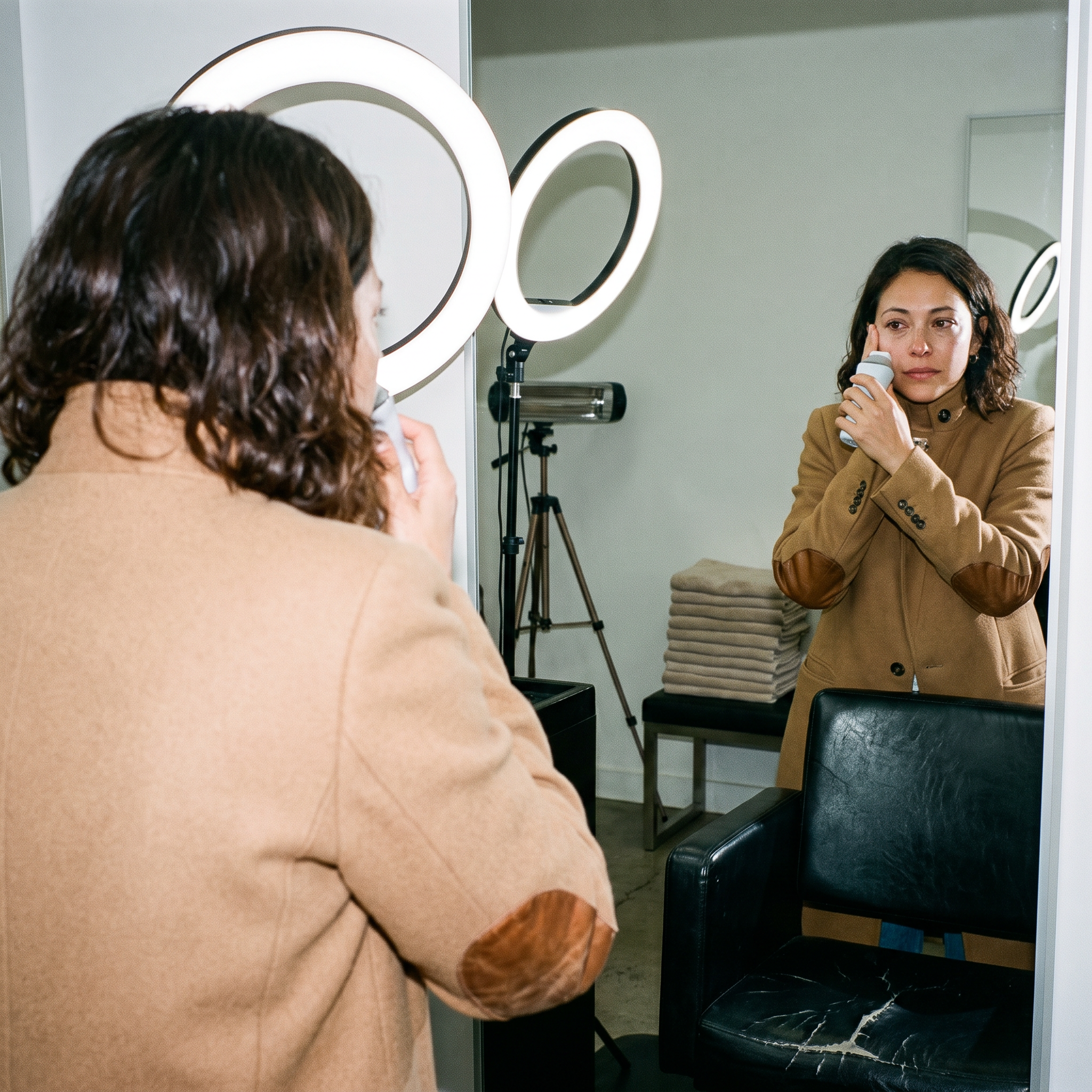
The most immediate clinical benefit of owning a cosmetic cooler is vascular relief. It calms morning facial puffiness and erythema, the visible redness of irritated skin. When you wake up, fluid accumulation around the eyes and cheeks is a normal physiological phenomenon governed by the revised Starling equation.
During eight hours of flat, recumbent sleep, your head loses the help of gravity. That help normally drains venous blood and lymph downward toward the heart. Lymph is the fluid that clears waste and extra water from your tissues. Cranial venous pressure rises, elevating capillary hydrostatic pressure within delicate facial tissues. Because the periorbital tissue around the eyes has low interstitial resistance and loose connective fibers, watery plasma filters out of capillaries into surrounding extracellular spaces. Because facial mimetic muscles remain motionless during deep sleep, lymphatic clearing slows. That leaves noticeable puffiness when you wake.
Applying topicals or massage tools chilled to 7°C to 12°C reverses this fluid build-up through neurovascular mechanisms. Cutaneous cold sensors (TRPM8 channels) detect the cold stimulus and trigger local sympathetic nerves to release norepinephrine. This neurotransmitter binds to alpha-2C adrenergic receptors on vascular smooth muscle cells.
Under normal body temperatures, alpha-2C receptors remain dormant inside the cell’s Golgi apparatus. Mild cooling stimulates their rapid translocation to the cell surface via a Rho-kinase signaling pathway. Once at the membrane, they trigger immediate arteriolar vasoconstriction. Narrowing these microvascular blood vessels lowers downstream capillary hydrostatic pressure. This pressure drop halts fluid leaking and allows interstitial fluid to reabsorb into the venous circulation, rapidly relieving facial swelling.
To maximize this depuffing, which means clearing facial puffiness, pair chilled tools with active lymphatic sweeping. Glide a cold roller outward toward the ears. Then sweep downward along the neck toward the collarbone. You can integrate this cryo-massage with active modern best facial tools and targeted facial wands to encourage deep microvascular circulation.
Never apply frozen ice cubes or sub-zero freezer tools directly to facial skin. Exposure to temperatures below 5°C triggers the Lewis hunting reaction (cold-induced vasodilation). To prevent cellular frostbite, blood vessels suddenly dilate wide open. This rebound causes severe redness, burning, and microvascular stress. A dedicated 7°C to 12°C vanity fridge delivers safe, sustained vasoconstriction without triggering rebound erythema.
Fitzpatrick Phototype Cautions & Post-Inflammatory Hyperpigmentation
Individuals with deeper skin tones (Fitzpatrick phototypes IV through VI) must approach facial cooling with care. Melanocytes, the cells that make skin pigment, are sensitive to physical and thermal stress in richly pigmented skin. If you apply aggressive, near-freezing tools to the face, the cold insult can provoke an inflammatory reaction that triggers excess melanin production. This response leads to stubborn post-inflammatory hyperpigmentation (PIH). Maintaining cooling tools at a moderate 7°C to 12°C provides safe relief from edema. Edema is the fluid buildup behind puffiness. This range avoids thermal injury to melanocytes.
Condensation Control & Sanitation Protocols
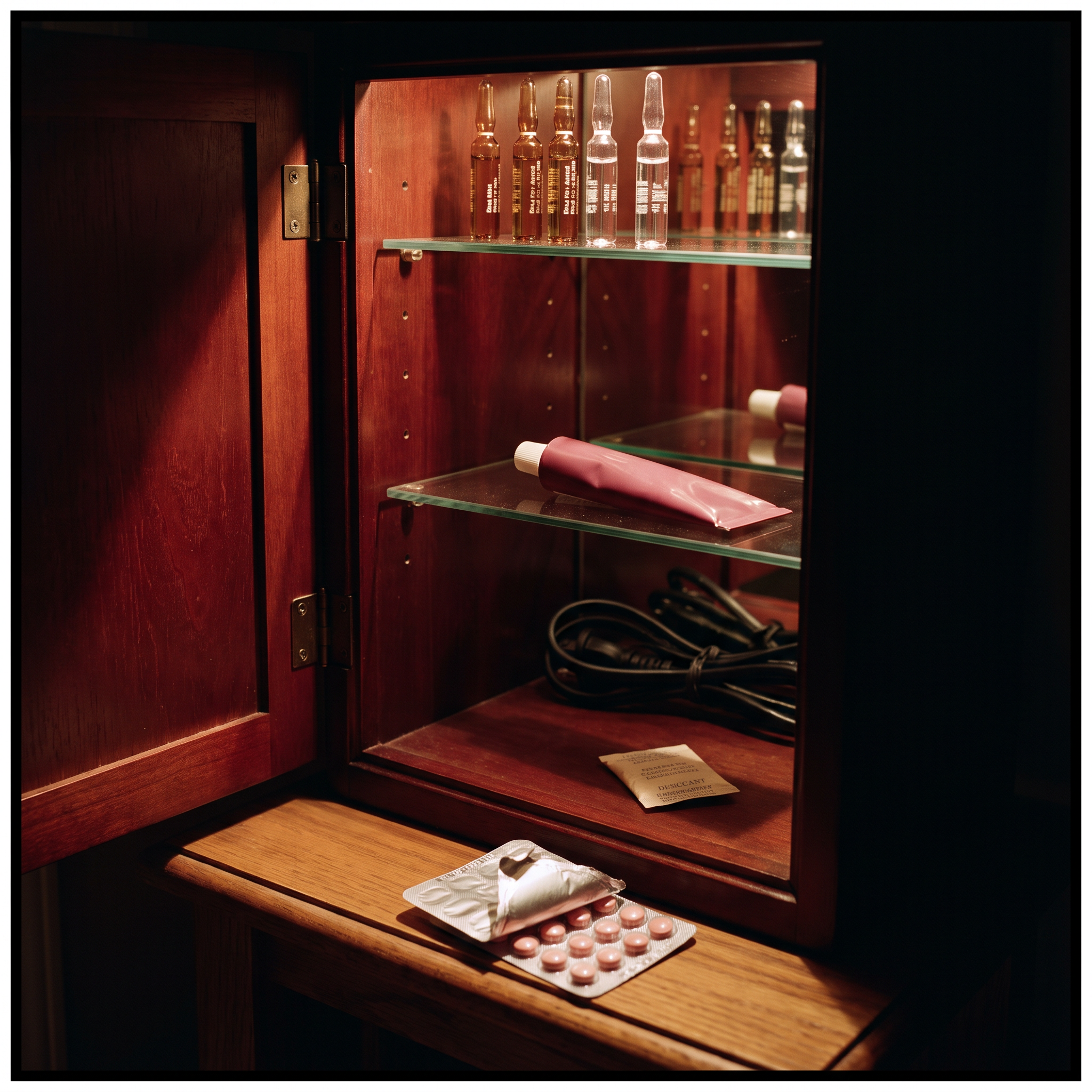
While thermoelectric cooling offers quiet, vibration-free operation, it has one major engineering limitation: a total lack of automated dehumidification. When you open the fridge door, warm, humid room air enters the cold chamber. Moisture condenses instantly on the cold aluminum backplate and drips down, pooling at the bottom of the unit.
If you leave standing water unmanaged inside a cool chamber, it creates serious cosmetic hygiene hazards. Atmospheric moisture gathers around bottle threads, rubber dropper bulbs, and jar lids. When you uncap a moisturizer, condensation droplets can drip into the product. This added water dilutes antimicrobial preservatives (such as phenoxyethanol or potassium sorbate) below their Minimum Inhibitory Concentration (MIC). This is the lowest amount that stops germs from growing.
In addition, cold-tolerant psychrotolerant bacteria like Pseudomonas aeruginosa and fungal molds like Penicillium and Cladosporium thrive in cool, damp environments between 7°C and 15°C. They can form slimy bacterial biofilms around wet jar threads, introducing contaminants to your fingers and face that risk bacterial folliculitis or ocular irritation.
Follow this strict sanitation protocol to keep your products safe:
- Weekly Water Blotting. Unplug the unit once every seven days. Remove all contents and use a clean microfiber cloth to absorb standing water from the bottom basin.
- Alcohol Wipe-Down. Disinfect the interior walls, removable shelves, and door gaskets using a cloth lightly dampened with 70% isopropyl alcohol. Avoid bleach or scented sprays that can degrade plastic linings.
- Airing Out. Leave the fridge door open for 15 minutes after cleaning so the interior dries completely before restoring power.
- Bottle Hygiene. Wipe bottle necks and dropper pipettes with a dry tissue before placing them back inside. Avoid placing wet sheet mask pouches directly on dry shelves.
Master Comparison: Top 3 Luxury Vanity Beauty Fridges of 2026
Compare the engineering designs, interior capacities, cooling differentials, and pricing for our top three vetted luxury beauty fridges:
| Model & Format | Chamber Capacity | Cooling Tech & Δ T | Key Design Highlight | Best Suited For | Pricing |
|---|---|---|---|---|---|
| Cooluli Glow 4L | 4 litres | Thermoelectric, cools and warms | Mirrored door with an adjustable LED ring | Vanities where you apply makeup at the unit | Check Price → |
| ECOWELL 4L LED Mirror Fridge | 4 litres | Thermoelectric, down to 3 degrees C | Three mirror light levels with AC and DC cords | Home and car use with certified electrical safety | Check Price → |
| COWE 4L Quiet Fridge | 4 litres | Thermoelectric, 35.6 degrees F cooling | 25 decibel fan with a hot and cold switch | Bedrooms where fan noise matters | Check Price → |
The Verified Edit: Tested Vanity Refrigerators
Cooluli Glow 4L Mini Skincare Fridge with Mirror & LED Light – Small Refrigerator for Skin Care, Makeup, Food & Drinks – Portable Mini Fridge for Bedroom & Office, 100-240V, White Mirror LED
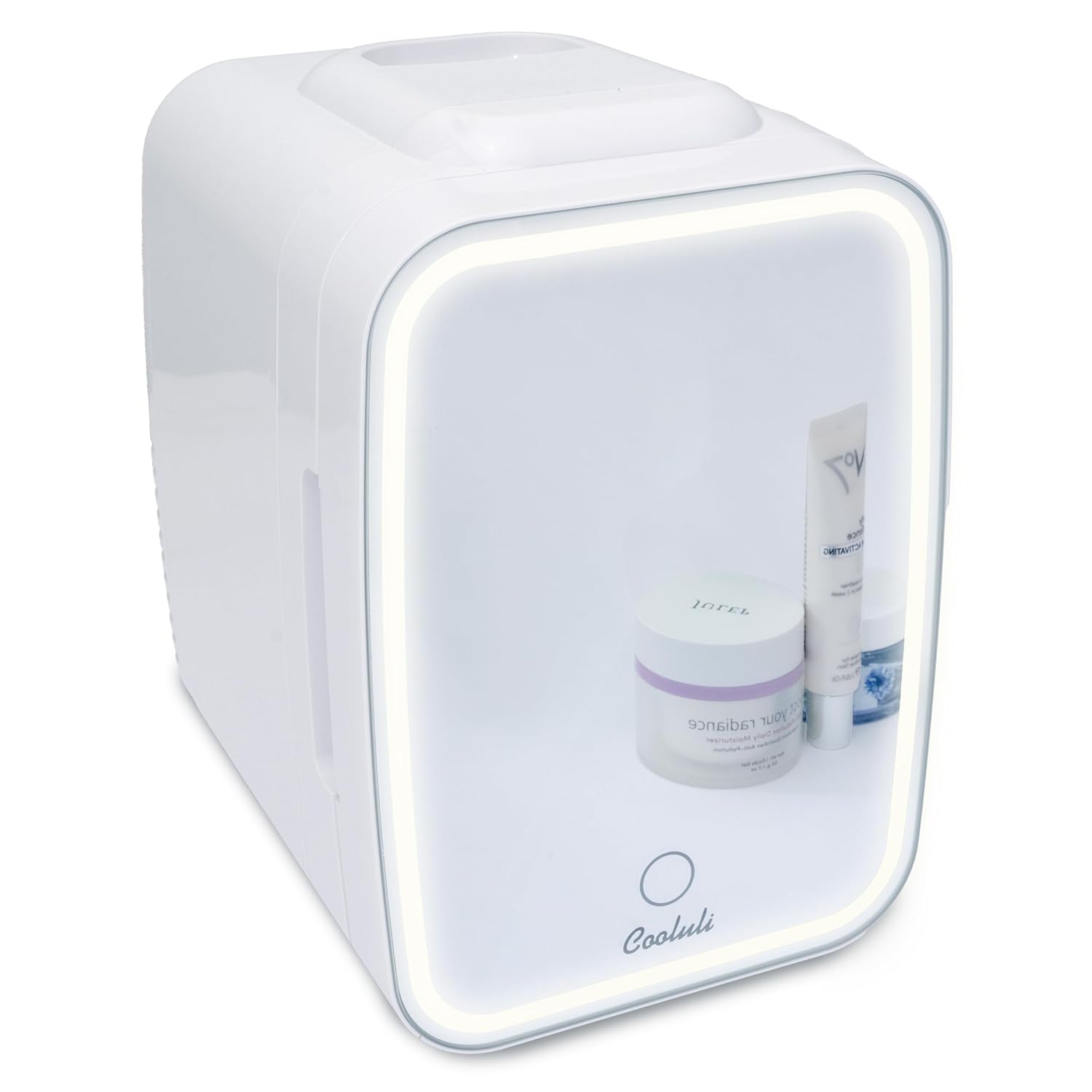
The mirrored door and LED ring make this the one unit you can actually apply makeup in front of, so it earns vanity space instead of only storing things. Cooling and warming modes run from the same body.
Avery, Beautyisles Editorial Producer
- Built-in mirror and light remove the need for a second vanity lamp
- Warm mode keeps towels and body products usable
- Quiet thermoelectric core suits a bedroom
- Four litres holds about eight standard bottles, so a large collection needs editing
- The mirror door shows fingerprints more than a plain panel
ECOWELL Skin Care Fridge for Cosmetic, Mini Skincare Fridge with LED Mirror
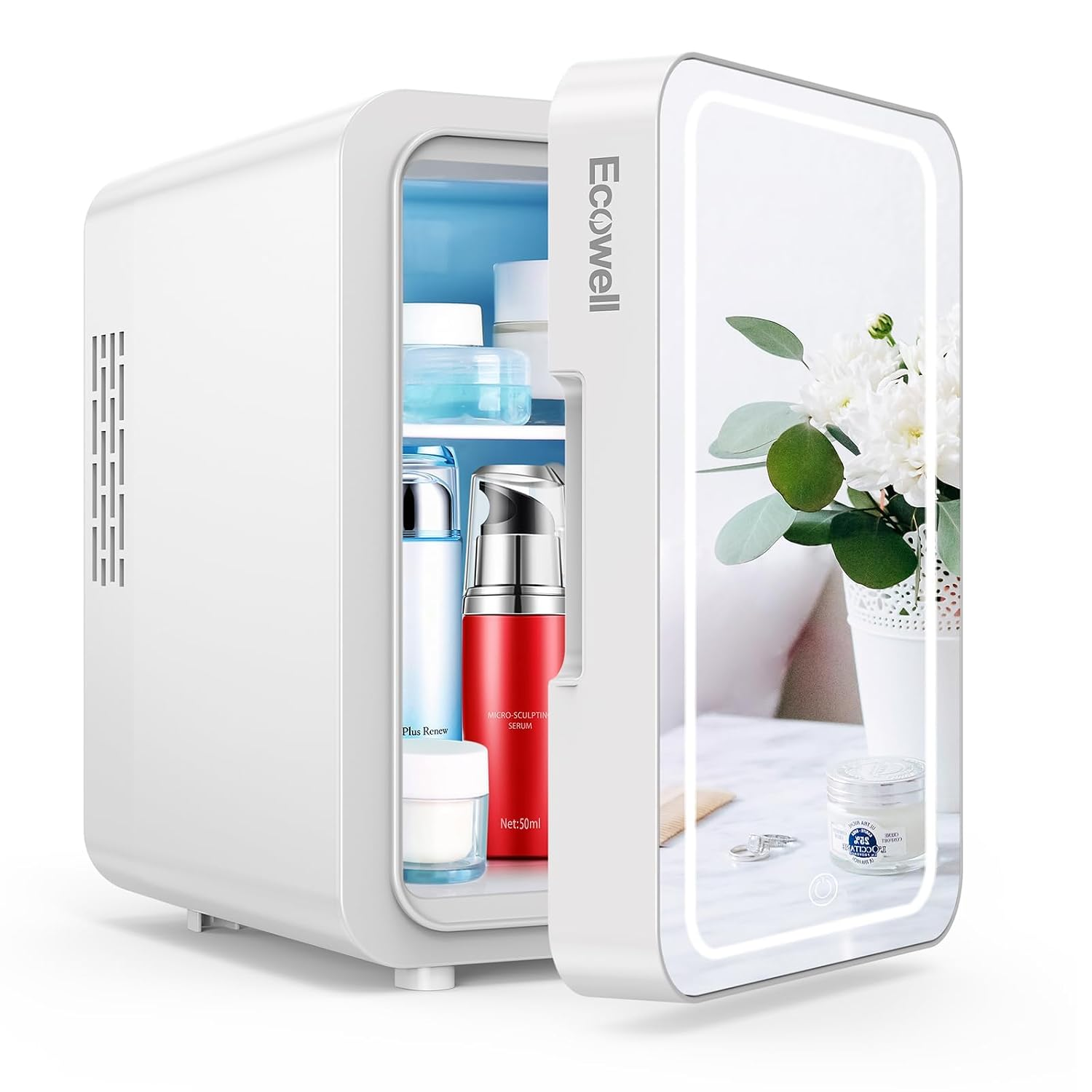
Both an AC and a DC cord ship in the box, so the same unit runs at a dressing table or on a 12-volt car outlet. Independent safety certification matters here, because a cheap thermoelectric box runs unattended overnight.
Avery, Beautyisles Editorial Producer
- Three mirror light levels cover warm, neutral and daylight
- Certified electrical safety rather than a self-declared claim
- Reaches a genuine cold range for metal rollers and sheet masks
- Thermoelectric cooling tracks room temperature, so a hot bathroom reduces the drop
- Four litres fills quickly with tall bottles
Skincare Fridge – 4L Makeup Fridge for Refrigerating Makeup, Skincare and Food, Mini Fridge for Bedroom, Office and Car, Cooler and Warmer, Beverage Cooler, Leather Pink

Rated at 25 decibels, which is quiet enough for a bedroom where the fan hum would otherwise keep you awake. It is the low-cost way to test whether chilled products change your routine at all.
Avery, Beautyisles Editorial Producer
- Quiet fan suits a nightstand or a shared room
- Hot and cold modes run from one switch
- Small draw keeps it cheap to leave on
- No mirror or interior light, so it works as storage only
- Interior shelving is fixed, so tall toner bottles crowd out jars
Frequently Asked Questions: Scientific Vanity Cooling Insights
How to depuff face?
To depuff the face effectively, combine cold vasoconstriction with directional manual lymphatic drainage. Apply a chilled facial roller, stainless steel tool, or hydrogel patch stored at 7°C to 12°C. Mild cold triggers cutaneous alpha-2C adrenergic receptors, constricting superficial arterioles and dropping capillary hydrostatic pressure. Gently sweep the chilled tool outward toward the ears. Then glide downward along the neck to the collarbone. Drink a tall glass of water to support renal sodium clearance and engage in light walking to activate muscular lymphatic pumps.
Why is my face puffy?
Morning facial puffiness occurs primarily because lying flat during sleep removes gravity-assisted venous and lymphatic drainage from the head. This recumbent posture elevates cranial capillary hydrostatic pressure. Because connective tissues around the eyes and cheeks are loose with low interstitial resistance, watery plasma filters out of blood vessels into extracellular spaces. At the same time, nocturnal motor stillness pauses the muscular contractions that pump lymph fluid. High dietary sodium, evening alcohol consumption, and luteal phase hormonal shifts further raise fluid retention.
How to reduce redness on face?
To reduce facial redness, narrow dilated superficial capillaries and restore the epidermal moisture barrier. Apply a cool compress or a chilled calming serum (stored at 7°C to 12°C) formulated with anti-inflammatory actives such as niacinamide, panthenol, or centella asiatica. Mild cold exposure stimulates sympathetic vasoconstriction, narrowing dilated blood vessels to decrease blood pooling. Avoid ice cubes, hot water, and harsh physical scrubs, which provoke severe rebound vasodilation (the Lewis hunting reaction). Follow with a lipid-rich ceramide moisturizer to reinforce barrier defense against environmental irritants.
How to reduce face swelling?
To reduce benign facial swelling, raise your head above your heart. Apply a chilled gel mask for 10 to 15 minutes, followed by light neck drainage. Mild hypothermia tightens endothelial cell junctions, restricting microvascular permeability and tissue fluid filtration. However, seek emergency medical care right away if swelling appears suddenly, hurts, affects one side only, comes with hives (angioedema), or makes breathing difficult. Systemic conditions like thyroid dysfunction (myxedema) or acute infections require physician diagnosis rather than cosmetic cooling.
How to debloat face?
Debloating your face requires balancing systemic fluid electrolytes and clearing local tissue congestion. Systemically, drink 2 to 2.5 liters of water and consume potassium-rich whole foods like avocados, spinach, and bananas. Potassium encourages your kidneys to excrete retained sodium, lowering extracellular fluid volume. Avoid high-sodium processed foods and late-night alcohol. Locally, use a chilled facial roller or gua sha stone held at 7°C to 12°C. Glide the tool from your chin along the jawline toward your earlobes. Then sweep down the neck to push stagnant interstitial fluids into the cervical lymphatic system.
What does niacinamide do for your face?
Niacinamide (vitamin B3) supports skin health through several biological pathways. Inside skin cells, it converts into coenzymes NAD+ and NADH to power cellular energy metabolism and repair DNA. Topically, 2% to 5% niacinamide stimulates the biosynthesis of ceramides and stratum corneum fatty acids. The stratum corneum is the outer layer of skin. This strengthens the epidermal moisture barrier and reduces transepidermal water loss (TEWL), the slow evaporation of water from skin. It downregulates inflammatory cytokines (like IL-8) to calm redness, balances facial sebum excretion rates, and inhibits melanosome transfer to gently fade hyperpigmentation.
Editorial Sources
- Zhao, D., & Tan, G. (2014). “A review of thermoelectric cooling: Materials, modeling and applications.” Applied Thermal Engineering, 66(1-2), 15–24 DOI: 10.1016/j.applthermaleng.2014.01.074.
- Fredrick, E., Walstra, P., & Dewettinck, K. (2010). “Factors governing partial coalescence in oil-in-water emulsions.” Advances in Colloid and Interface Science, 153(1-2), 30–42. PMID: 19913777. DOI: 10.1016/j.cis.2009.10.003.
- Gallarate, M., Carlotti, M. E., Trotta, M., & Bovo, S. (1999). “On the stability of ascorbic acid in emulsified systems for topical and cosmetic use.” International Journal of Pharmaceutics, 188(2), 233–241. PMID: 10518678. DOI: 10.1016/s0378-5173(99)00228-8.
- Temova Rakuša, Ž., Škufca, P., Kristl, A., & Roškar, R. (2021). “Retinoid stability and degradation kinetics in commercial cosmetic products.” Journal of Cosmetic Dermatology, 20(7), 2350–2358. PMID: 33206444. DOI: 10.1111/jocd.13852.
- Chotani, M. A., Flavahan, S., Mitra, S., Daunt, D., & Flavahan, N. A. (2000). “Silent alpha(2C)-adrenergic receptors enable cold-induced vasoconstriction in cutaneous arteries.” American Journal of Physiology – Heart and Circulatory Physiology, 278(4), H1075–H1083. PMID: 10749700. DOI: 10.1152/ajpheart.2000.278.4.H1075.
- Bailey, S. R., Eid, A. H., Sanchez-Guerrero, E., & Flavahan, N. A. (2004). “Rho kinase mediates cold-induced constriction of cutaneous arteries: role of alpha2C-adrenoceptor translocation.” Circulation Research, 94(10), 1367–1374. PMID: 15087420. DOI: 10.1161/01.RES.0000128407.45014.58.
- Levick, J. R., & Michel, C. C. (2010). “Microvascular fluid exchange and the revised Starling principle.” Cardiovascular Research, 87(2), 198–210. PMID: 20200043. DOI: 10.1093/cvr/cvq062.
- Daanen, H. A. (2003). “Cold-induced vasodilation, a review.” European Journal of Applied Physiology, 89(5), 411–426. PMID: 12712346. DOI: 10.1007/s00421-003-0818-2.
- Tanno, O., Ota, Y., Kitamura, N., Katsube, R., & Inoue, S. (2000). “Nicotinamide increases biosynthesis of ceramides as well as other stratum corneum lipids to improve the epidermal permeability barrier.” British Journal of Dermatology, 143(3), 524–531. PMID: 10971324. DOI: 10.1111/j.1365-2133.2000.03705.x.
- Lundov, M. D., Moesby, L., Zachariae, C., & Johansen, J. D. (2009). “Contamination versus preservation of cosmetics: a review on legislation, usage, microbiological concerns, and human health.” International Journal of Cosmetic Science, 31(2), 77–87. PMID: 19207376. DOI: 10.1111/j.1600-0536.2008.01501.x.