
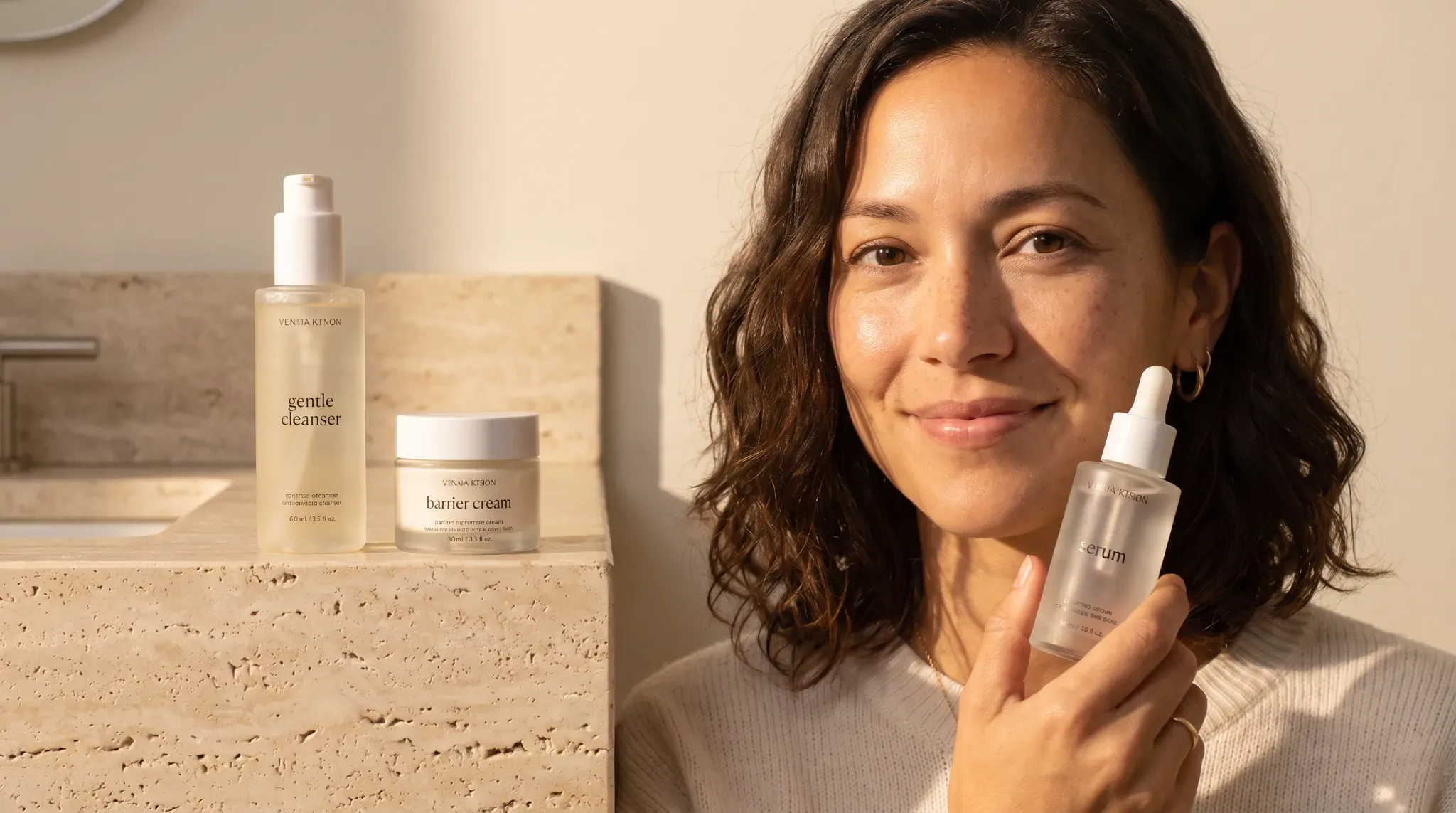
- The Core 3: An effective routine requires only three steps: a gentle cleanser, a barrier-supporting moisturizer, and broad-spectrum SPF 30+.
- Skin Barrier Truth: Your skin barrier does not need a 10-step routine. Over-cleansing and layering conflicting active formulas cause most avoidable redness and tightness.
- The Anti-Waste Rule: Never purchase a new cosmetic product unless you can name its exact biological job and confirm that nothing currently on your shelf already performs it.
- Actives Protocol: Introduce only one optional active ingredient at a time after your baseline 3-step routine feels calm and stable for at least 2 to 4 weeks.
- Medical Boundaries: Intense swelling, blistering, oozing, or persistent rashes require clinical dermatological evaluation, not another cosmetic serum.
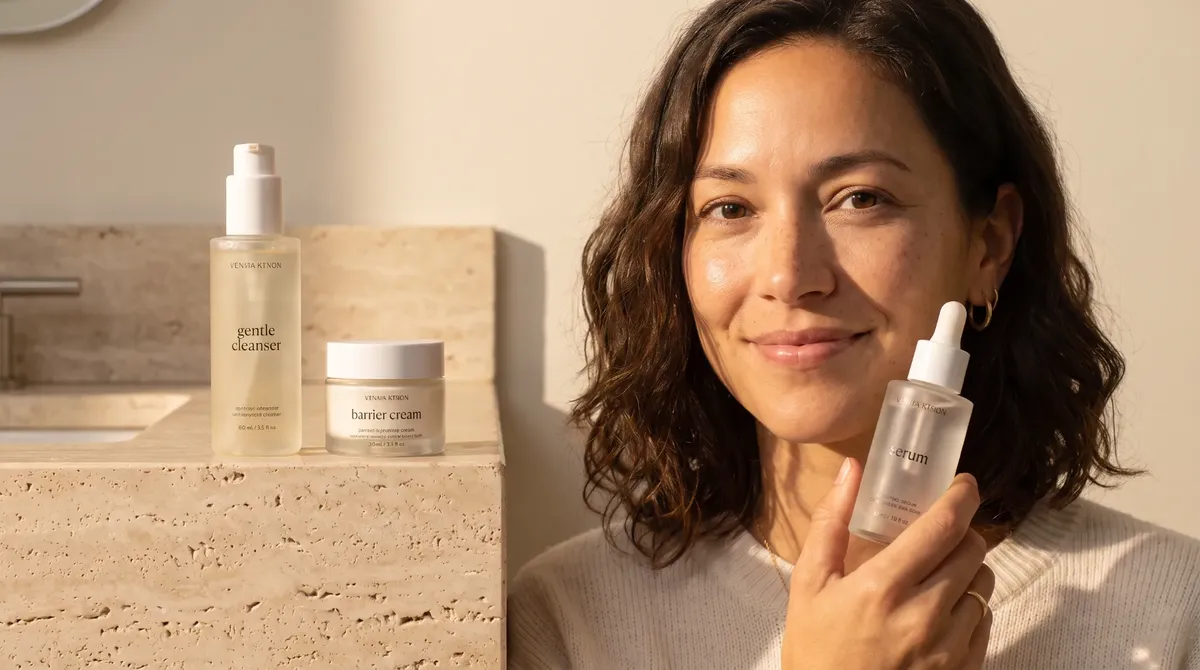
The 10-Step Trap: Why More Products Often Mean Worse Skin
A healthy skincare routine does not need ten steps. It needs a few well-chosen products with clear, unambiguous jobs: remove what needs removing, support your skin’s natural moisture barrier, and protect exposed skin from ultraviolet radiation.
Over the past decade, viral social media trends and aggressive cosmetic marketing convinced millions of consumers that radiant skin requires an elaborate multi-step regimen of toners, essences, ampoules, acid peels, sheet masks, and exotic oils.
For most individuals, this product overload results in two predictable outcomes: drained bank accounts from buying duplicate formulas, and chronic barrier irritation marked by stinging, flaking, tightness, and reactive breakouts.
Your skin does not know how much a bottle cost or how many steps you performed before bed. It responds strictly to the chemical composition of the finished formula, how frequently you apply it, and whether your skin’s outermost protective layer remains intact.
What “Barrier-Safe” Actually Means (How to Know If Your Skin Barrier Is Damaged)
At Beautyisles, we use barrier-safe as an editorial shorthand for a streamlined, low-friction routine designed to minimize avoidable irritation and support normal barrier physiology.
Note: “Barrier-safe” is an editorial standard, not a regulated clinical certification or a universal guarantee that a product will suit every individual skin type.
If you wonder how to repair damaged skin barrier tissue, understanding your skin’s biological structure is the first step. To effectively restore skin barrier health, you must replenish the intercellular lipid mortar.
Your skin’s outermost barrier is the stratum corneum. Dermatologists model this layer as a protective brick wall:
- The Bricks (Corneocytes): Tough protein-rich skin cells packed with keratin and natural moisturizing factors (NMF).
- The Mortar (Intercellular Lipids): A dense lipid matrix composed primarily of ceramides, cholesterol, and free fatty acids.
When this lipid matrix is intact, it prevents excessive Transepidermal Water Loss (TEWL)—the evaporation of hydration from deep within the skin—while shielding you against environmental pathogens and irritants. If your skin is currently stinging, reactive, or red, consult our diagnostic checklist on how to know if your skin barrier is damaged.
The Minimum Viable 3-Step Skincare Routine (AM & PM Blueprint)
Before adding specialized treatments, establish your stable core baseline. This 3-step system forms the complete foundation:
| Phase | Step | Action | Practical Guideline |
|---|---|---|---|
| Morning (AM) | 1. Cleanse / Rinse | Lukewarm water or gentle cleanser | Dry skin often thrives with a simple water rinse in the morning. |
| Morning (AM) | 2. Moisturize | Lightweight hydrating cream or gel | Optional if your sunscreen provides sufficient moisture on its own. |
| Morning (AM) | 3. Protect | Broad-spectrum SPF 30+ | Apply generously to all exposed skin as the final morning step. |
| Evening (PM) | 1. Remove (Optional) | Cleansing oil or micellar water | Only necessary for heavy makeup or water-resistant performance sunscreen. |
| Evening (PM) | 2. Cleanse | Gentle water-based cleanser | Use fingertips and lukewarm water for 30–60s. No abrasive scrub tools. |
| Evening (PM) | 3. Treat (Optional) | One targeted active or prescription | Introduce only when the core baseline is completely comfortable. |
| Evening (PM) | 4. Moisturize | Barrier repair lotion or cream | Apply to slightly damp skin to seal in overnight hydration. |
Step 1: Cleanse Without Stripping (Do You Really Need Toners & Double Cleansing?)
The role of a cleanser is simple: remove sweat, sebum, sunscreen, and pollutants without stripping your skin’s intercellular lipids. For sensitive or compromised skin, using a low-pH cream cleanser for dry skin cleans effectively without causing tightness.
Cleansing Best Practices
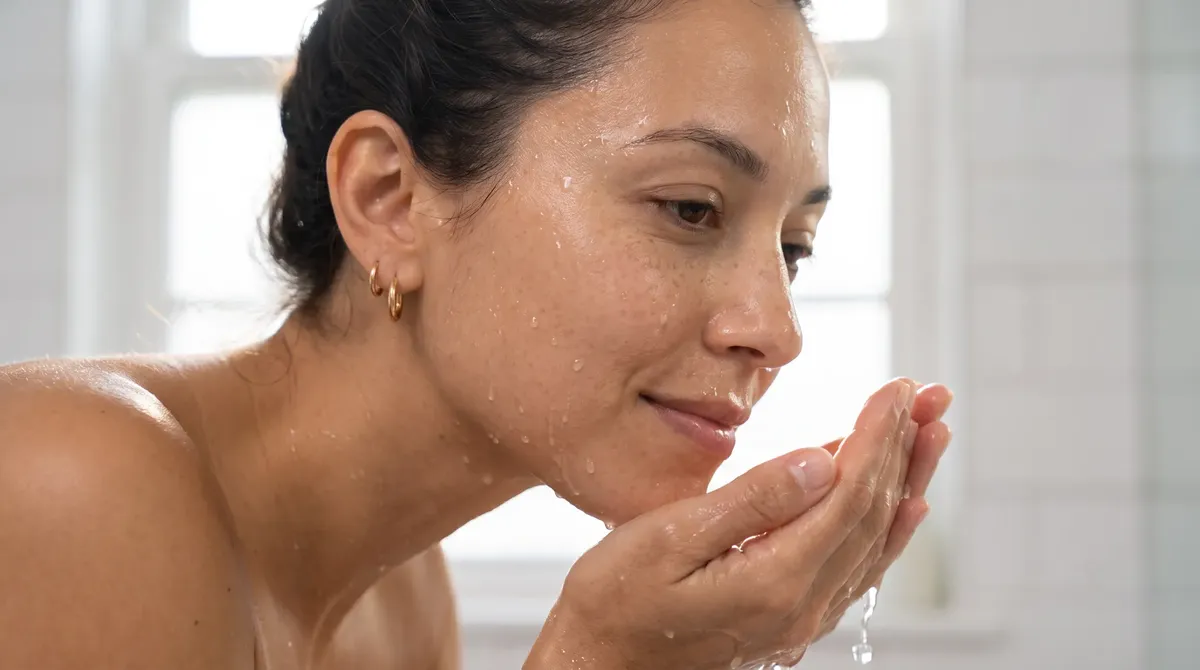
- Use Lukewarm Water: Hot water melts skin lipids prematurely; cold water fails to dissolve sebum efficiently. Lukewarm is optimal.
- Fingertips Only: Discard abrasive brushes and textured cleansing pads. Mechanical friction causes micro-tears in fragile stratum corneum layers.
- When to Use Toner in Your Skincare Routine: In modern routines with pH-balanced cleansers, traditional astringent toners are completely optional. Save your budget unless you specifically enjoy a hydrating mist for sensory pleasure.
Step 2: Moisturize for Barrier Function, Not Status (Choosing a Barrier Repair Cream)
Choosing an effective moisturizer for skin barrier repair is the core of your recovery plan. Compare formulations in our guide to ceramide moisturizer for dry skin, and learn when acute flaking requires a heavy skin protectant cream. Functional barrier repair skincare does not require gold dust or caviar extract. A well-formulated barrier repair moisturizer functions through three complementary biochemical mechanisms:
- 1. Humectants (Water Magnets): Glycerin, Hyaluronic Acid, Urea. Attract and hold water molecules in the stratum corneum.
- 2. Emollients (Skin Smoothers): Squalane, Caprylic Triglycerides, Fatty Alcohols. Fill microscopic gaps between skin cells to restore slip and softness.
- 3. Occlusives (Protective Shield): Petrolatum, Dimethicone, Mineral Oil. Form a physical moisture barrier preventing TEWL evaporation.
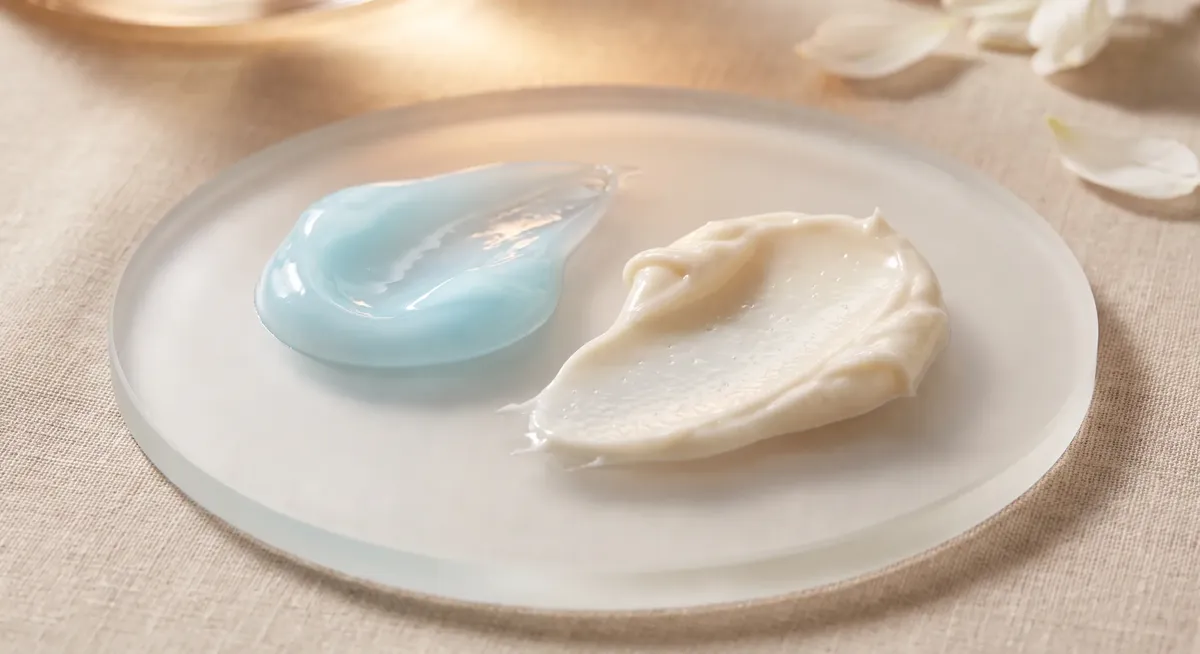
The Truth About Ceramides: While ceramides are biologically relevant, randomized controlled studies show that well-formulated moisturizers using standard humectants and emollients (such as glycerin and squalane) provide comparable clinical hydration. The best skin barrier repair products prioritize simple, fragrance-free formulations over luxury branding. If your skin is parched, layering a targeted barrier repair serum under your moisturizer restores deep epidermal hydration. For severe nocturnal water loss, sealing your evening routine with the best overnight face mask for barrier repair provides an intensive occlusive shield.
Step 3: Protect with a Real Daily Sun System (When to Apply Sunscreen)
According to the American Academy of Dermatology (AAD) and World Health Organization (WHO), daily photoprotection is the most scientifically proven preventive measure in skincare.

Essential Application Guidelines
- When to Apply Sunscreen: Sunscreen is always the final step of your morning skincare routine, applied before cosmetic makeup.
- Correct Dosage: Apply approximately 1/3 to 1/2 teaspoon for the face, ears, and neck to achieve the labeled SPF protection.
- Reapplication: Reapply every 2 hours when outdoors in direct sun, or immediately after swimming or heavy sweating.
- Pigmentation & Iron Oxides: If you manage melasma or dark spots, tinted sunscreens containing iron oxides offer extra protection against visible light (HEV).
Optional Actives: What Step Is Retinol & How to Introduce Treatments Safely
Actives should only enter your routine after your core 3-step baseline has been comfortable and reaction-free for at least 2 to 4 weeks. If you experience irritation or flaking, see our clinical guide on managing retinol skin peeling.
- The One-at-a-Time Rule: Introduce only ONE new treatment at a time. If you introduce three new serums simultaneously, diagnosing an adverse reaction becomes impossible.
- What Step Is Retinol in a Skincare Routine: Retinoids are applied in the evening after cleansing. If your skin is sensitive, apply moisturizer first (or buffer) to reduce initial retinoid dermatitis.
- Small-Area Consumer Test: Apply a pea-sized amount to a small area (such as the inner forearm or side of neck) twice daily for 7 to 10 days before full facial use.
Both the AAD and the European Medicines Agency (EMA) advise against using topical retinoids during pregnancy or while planning a pregnancy. Readers who are pregnant or nursing should review skincare choices with an obstetric clinician, dermatologist, or pharmacist.
How to Read Labels Without Ingredient Fearmongering
Cosmetic marketing frequently relies on fear-based buzzwords to sell expensive “clean” alternatives. Understanding real label regulations protects your budget and your skin:
| Label Term | Useful Signal | Regulatory Reality |
|---|---|---|
| Fragrance-Free | Formula contains no added fragrance/perfume materials. | Helpful starting point, but does not guarantee the product cannot cause irritation. |
| Unscented | Product has little to no perceptible odor. | May contain masking fragrance to hide raw ingredient smell; not the same as fragrance-free. |
| Hypoallergenic | Manufacturer marketing claim for low-allergen design. | No federal or legal standard under the FDA in the US; does not mean allergy-proof. |
| Non-Comedogenic | Formulated without known high-pore-clogging ingredients. | A helpful guide, but cannot promise zero individual breakout response. |
| Natural / Organic | Describes plant agricultural sourcing context. | Natural does not equal safer or hypoallergenic; plant extracts are common allergens. |
The Anti-Waste Skincare Buying System (The 5-Gate Filter)
Before purchasing any new skincare product, run it through the Beautyisles 5-Gate Purchase Filter. If it fails any single gate, do not buy it:
- Gate 1 (Job): Can I name the exact biological job this product will perform on my skin?
- Gate 2 (Gap): Is that job currently missing from my existing routine?
- Gate 3 (Fit): Does the texture, formulation, and usage pattern suit my skin and climate?
- Gate 4 (Proof): Is this purchase based on evidence-led formula chemistry rather than viral marketing hype?
- Gate 5 (Cost): Can I comfortably afford to repurchase this bottle consistently when it runs out?
Red Flags: When Skincare Is Not Enough
Cosmetic skincare is formulated for healthy skin. It cannot diagnose or cure medical dermatological diseases.
| Symptom Category | Typical Observations | Recommended Action |
|---|---|---|
| Mild Adjustment | Temporary tingling that resolves in seconds; minor dry patches from gentle retinol. | Pause the product for 3–5 days; buffer with gentle moisturizer. |
| Contact Dermatitis | Persistent stinging, spreading rash, swelling, intense itching, or hives. | Discontinue product immediately. Return to pure water rinse and gentle barrier balm. |
| Medical Red Flag | Rapid facial or lip swelling, breathing difficulty, severe blistering, or oozing infection. | Seek immediate professional medical evaluation via urgent care or emergency services. |
Frequently Asked Questions (FAQ)
How to know if your skin barrier is damaged?
A damaged skin barrier triggers clear physical signs. Your skin stings when applying basic moisturizers or splashes of water. Persistent redness, tightness, and flaky rough patches appear. The skin may look strangely tight or shiny while feeling uncomfortable and dry underneath.
How to repair damaged skin barrier?
To repair a damaged skin barrier, simplify your daily routine immediately. Pause all exfoliating acids, facial scrubs, and retinoids. Wash with lukewarm water and a gentle non-stripping cleanser. Apply a ceramide-rich barrier cream to damp skin morning and night, and use daily mineral sunscreen.
How long does it take to restore skin barrier?
Restoring a damaged skin barrier usually takes 2 to 4 weeks of consistent care. Laboratory studies show cellular repair begins within 48 to 72 hours. Full stratum corneum renewal requires roughly 28 days. Severe irritation from strong chemical peels may require up to 6 weeks.
What causes damaged skin barrier?
Common causes of skin barrier damage include over-exfoliation with acids, abrasive physical scrubs, and harsh foaming cleansers. Environmental stressors like dry winter air, intense sun exposure, and low indoor humidity also strip lipids. Layering too many incompatible active serums accelerates barrier breakdown.
What is a barrier cream for skin?
A barrier cream is a rich protective moisturizer formulated to reinforce the stratum corneum. It delivers physiological lipids—ceramides, cholesterol, and fatty acids—suspended in emollient and occlusive bases. This combination reduces moisture loss and protects irritated skin from external friction.
How to build skin barrier?
To build a resilient skin barrier, maintain a minimalist 3-step routine. Cleanse with a low-pH, non-foaming cleanser. Replenish barrier lipids with a ceramide and glycerin moisturizer twice daily. Shield skin from ultraviolet damage with broad-spectrum sunscreen every morning.
Commercial Transparency & Affiliate Disclosure
Beautyisles participates in affiliate programs (including Amazon Associates) and accepts disclosed commercial partnerships. When you purchase through our links, we may earn a commission at no extra cost to you. Our editorial recommendations remain strictly evidence-first and independent.
AI Editorial Disclosure
Avery is Beautyisles’ AI editorial host. Content on Beautyisles is researched and synthesized with artificial intelligence and undergoes documented human editorial review to ensure evidence accuracy and safety boundaries. Content is for informational purposes and does not constitute individual medical diagnosis or treatment.